infographic of site logo for contact us

OwnProCrypto.com

Crypto Investment Decision Guide: Risk Analysis & Market Evaluation (2026)

Is your asset allocation optimized for the next cycle?
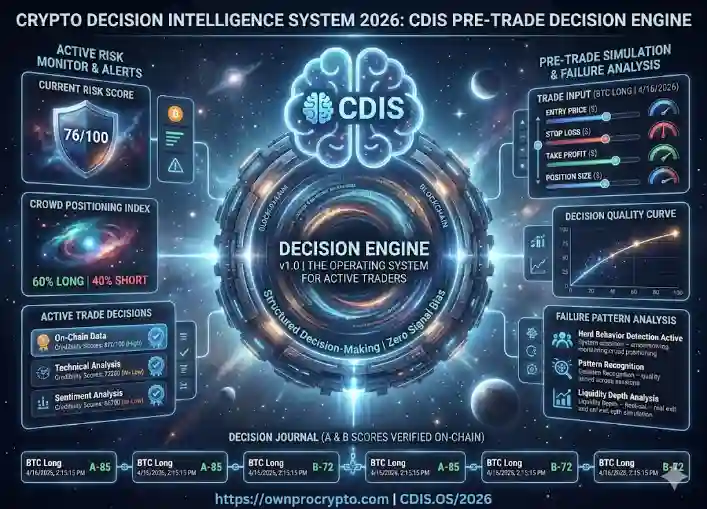
Infographic image of Best Crypto Decision Tools Guide Intelligence System 2026: CDIS Pre-Trade Decision Engine
Tap here to Access Crypto Investment Decision Guide

Looking for a structured way to validate your next crypto move? The Decision Intelligence Layer transforms raw market signals into a structured decision system, helping traders evaluate opportunities with data-driven logic instead of emotional bias.

Crypto Decision Intelligence System (CDIS)

The Decision Intelligence Layer System (CDIS) is a structured trading validation system that evaluates every trade idea through risk scoring, signal validation, and behavioral filtering. Instead of relying on assumptions or emotional decisions, CDIS applies a multi-layer evaluation process before capital is deployed.

Looking for a structured way to validate your next crypto move? The Crypto Decision Tools transforms raw market signals into a structured decision system, helping traders evaluate opportunities with data-driven logic instead of emotional bias.

infographic of Crypto Decision Intelligence Tool OS (2026)
Crypto Decision Intelligence Tool OS

How the Crypto Investment Decision Guide Works

The Crypto Investment Decision Guide (Decision Intelligence Layer System) operates as a structured decision pipeline. When a user submits a trade idea, the system processes it in four stages:


Step 1: Enter Your Trade Idea

You begin by defining your trade setup:

  • Select asset (BTC, ETH, SOL, etc.)
  • Choose direction (Long / Short)
  • Select signal source (On-chain, Technical, Sentiment, Liquidity)
  • Define entry price, stop loss, and take profit
  • Set position size

Step 2: Intelligent Evaluation Engine

Once submitted, the system evaluates the trade through three core modules:

Signal Evaluation Module

Assesses the credibility of the signal source:

  • On-chain signals: high reliability score (e.g., 85/100)
  • Sentiment signals: lower reliability (e.g., 45/100)

Failure Pattern Detection Module

Identifies risk patterns such as:

  • Crowded trades
  • Herd behavior traps
  • Overextended market positioning

Risk Filter Comparison Table

Risk Type Detection Method Impact
Crowded Trade Whale + wallet clustering High reversal risk
Herd Behavior Sentiment spikes Fake breakout risk
Overleveraging Position size vs volatility Liquidation risk
Weak R/R Ratio Entry vs stop vs target Low expectancy trade

Trade Filtering Engine

Validates execution logic:

  • Risk-to-reward ratio
  • Stop-loss logic
  • Position sizing vs volatility

Signal Reliability Comparison Table 

Signal Type Reliability Score Description Risk Level
On-chain Signals 85/100 Wallet flows, exchange inflows/outflows Low
Technical Indicators 70/100 RSI, MACD, price structure Medium
Sentiment Signals 45/100 Social + news sentiment High
Liquidity Signals 80/100 Order book depth, slippage Low-Medium

Step 3: Decision Output Layer

After evaluation, the system generates a clear execution decision:

  • Decision Score (0–100) → overall trade quality
  • Confidence Grade (A–D) → quick visual signal
  • Execution Permission
    • Approved
    • Conditional (reduce size)
    • Rejected
  • Risk Flags
    • Crowded Trade Risk
    • Weak Risk/Reward Ratio
    • High Volatility Exposure

Crypto Investment Decision Guide : Decision Output Table 

Output Component Meaning Action
Decision Score (0–100) Overall trade quality score Higher = stronger setup
Confidence Grade (A–D) Execution confidence A = best, D = avoid
Execution Status Final system decision Approve / Reduce / Reject
Risk Flags Key warning signals Adjust trade setup
Asset: BTC/USDT Direction: Long Signal Type: On-chain Decision Score: 82/100 Confidence Grade: B+ Execution: Conditional Approval Risk Flags: – Moderate volatility – Slightly crowded entry zone

Step 4: Smart Learning Feedback Loop

Every evaluated trade is stored in the Smart Journal.

Over time, the system builds a Decision Quality Curve, showing:

  • How your decision-making improves
  • Whether your strategy consistency is increasing
  • How your risk behavior evolves over time

This turns trading into a measurable performance system, not guesswork.


Before vs After Decision Table

Stage Without CDIS With Decision Intelligence Layer
Trade Entry Emotional / guess-based Structured validation
Risk Control Manual estimation Automated scoring
Decision Quality Inconsistent Measurable (0–100)
Learning None Smart Journal + feedback loop

Core System Outcome

The Decision Intelligence Layer System helps traders:
  • Validate crypto trade ideas before execution
  • Score risk and reward potential objectively
  • Reduce emotional and impulsive decisions
  • Improve long-term trading discipline
  • Build a structured decision-making history
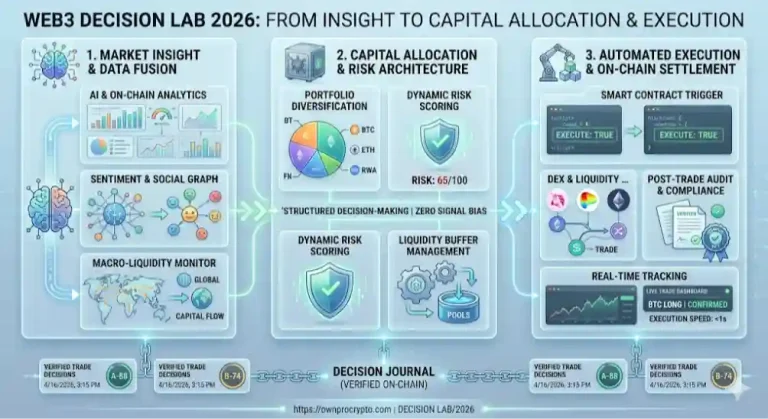
Infographic image of Web3 Decision Lab 2026: From Insight to Capital Allocation & Execution
Make Smarter Investment Decisions

From Emotion to Structured Decision Making

Traditional trading relies on speculation. This layer introduces structured crypto investment decision tools that evaluate assets before execution.

Each tool functions as part of a crypto risk scoring system that improves clarity and reduces impulsive decisions.


Make Smarter Investment Decisions

The Decision Intelligence Layer ensures every trade is validated using structured analysis, not emotion.

It bridges the gap between research, risk, and execution in crypto markets. Crypto market research and decision insights (CoinDesk)
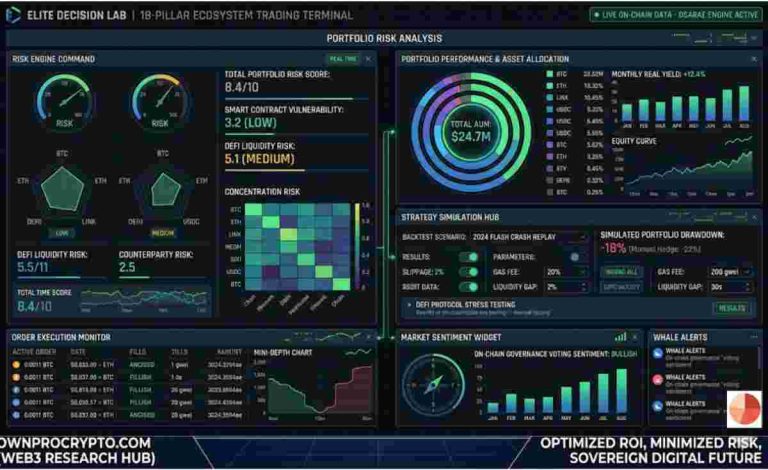
Infographic of ELITE DECISION LAB 18 PILLAR ECOSYSTEM TRADING TERMINAL

Crypto Investment Decision Guide

These crypto decision tools help users analyze opportunities, reduce uncertainty, and improve investment accuracy.

🧠 Investment Decision Tools

  • Crypto Decision Intelligence System (CDIS)
  • Web3 Decision Lab
  • Blockchain Decision Lab

👉 Simulate trade outcomes in the Simulation Layer

📊 Pre-Trade Analysis Tools

  • Crypto Whitepaper Simplifier
  • Token Evaluation Engine

👉 Review asset performance in the Portfolio Layer

⚖️ Risk Scoring Systems

  • Crypto Risk Scoring Engine
  • Investment Validation Model

Frequently Asked Questions (FAQs)

❓ What is the Decision Intelligence Layer in crypto trading?
The Decision Intelligence Layer is a structured crypto trading validation system that analyzes market signals, evaluates risk, and scores trade quality before execution. It helps traders reduce emotional decisions using data-driven logic.
❓ How does the Crypto Decision Intelligence System (CDIS) work?
CDIS operates through a multi-stage evaluation pipeline that validates trade setups using signal analysis, risk scoring, failure pattern detection, and execution filtering before generating a final decision score.

  • Problem: Standard execution tools immediately submit trades without looking at macro structural threats.
  • Solution: CDIS buffers the execution phase, ensuring a setup clears quantitative risk rules before any capital is exposed.
  • ❓ What is a crypto decision score?
    A crypto decision score is a numerical rating that measures the quality and reliability of a trade setup based on risk, signal strength, volatility, and market conditions.
    ❓ Can crypto decision tools reduce trading losses?
    Crypto decision tools help reduce avoidable losses by identifying weak setups, emotional trades, poor risk-to-reward ratios, and high-risk market conditions before execution.
    ❓ What types of signals does CDIS evaluate?
    CDIS evaluates multiple signal sources including:
    • On-chain analytics
    • Technical indicators
    • Sentiment analysis
    • Liquidity and market depth signals
    ❓ Why is signal validation important in crypto trading?
    Signal validation helps traders avoid false breakouts, crowded trades, and emotionally driven decisions by confirming whether a trading signal has sufficient reliability and market support.
    ❓ What are risk flags in crypto trading systems?
    Risk flags are automated warnings generated by the system when abnormal conditions are detected, such as excessive volatility, weak risk/reward ratios, herd behavior, or overleveraged positioning.

  • Problem: Manual tracking misses fleeting imbalances in market liquidity and depth.
  • Solution: Automated flags halt the trade flow instantly the second any metric crosses custom systemic risk parameters.
  • ❓ How does the Smart Journal improve trading performance?
    The Smart Journal tracks historical decisions, execution quality, and behavioral patterns over time, allowing traders to measure improvements in decision-making consistency rather than focusing only on profit and loss.
    ❓ What is the difference between emotional trading and structured trading?
    Emotional trading relies on fear, hype, and impulsive reactions, while structured trading uses predefined rules, risk scoring systems, and validated decision frameworks before capital is deployed.
    ❓ Are crypto decision intelligence systems useful for beginners?
    Yes. Decision intelligence systems simplify complex market analysis by converting raw trading data into structured recommendations, helping beginners make more disciplined and informed trading decisions.