
Table of Contents
ToggleThis text appears below the calculator.
The Asset Risk Assessment system helps organizations verify ownership, documentation, and compliance across digital and physical assets. In the complex financial landscape of 2026, where the lines between on-chain protocols and traditional finance blur, a reactive approach to risk is no longer sufficient. Establishing a proactive asset security audit protocol ensures that every entry in your ledger is backed by real-world validity, protecting institutional portfolios from the hidden “toxic debt” and fractional reserve risks that often plague unverified ecosystems.
Balancing traditional and digital assets is the core goal of the RWA Tokenization 2026: Guide to Real-World Asset Portfolios. Review the Yale Model for institutional endowment allocation principles.
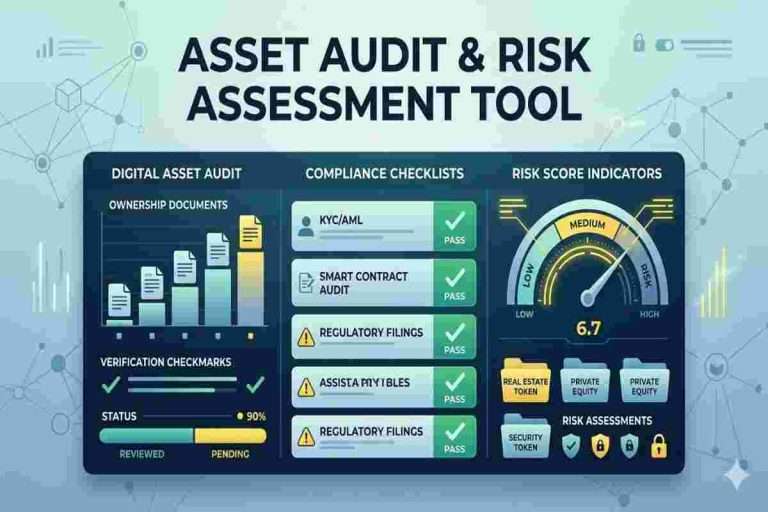
To meet the rigorous standards of modern regulators, institutions must move beyond surface-level reviews. A deep asset compliance check involves analyzing the entire lifecycle of an asset—from its origin in the “Macro Layer” to its current status in “Institutional Infrastructure.” By automating this process, organizations can ensure that every tokenized asset or sovereign instrument meets multi-jurisdictional standards without slowing down high-frequency execution.
The shift toward “Proof of Reserve” has made manual verification obsolete. Integrating an automated asset ownership verification layer allows for the mathematical tethering of off-chain holdings to on-chain reality. This prevents “Paper Asset” inflation by providing an immutable trail of custody, ensuring that the legal title and digital representation of an asset are always in perfect synchronization.
In a high-velocity trading environment, speed and accuracy are paramount. Deploying a specialized asset verification tool provides your risk team with a real-time “Command Center” to monitor for documentation gaps or ownership disputes. This technological firewall acts as the final line of defense, allowing your organization to scale its digital footprint while maintaining the highest level of structural integrity and portfolio protection.
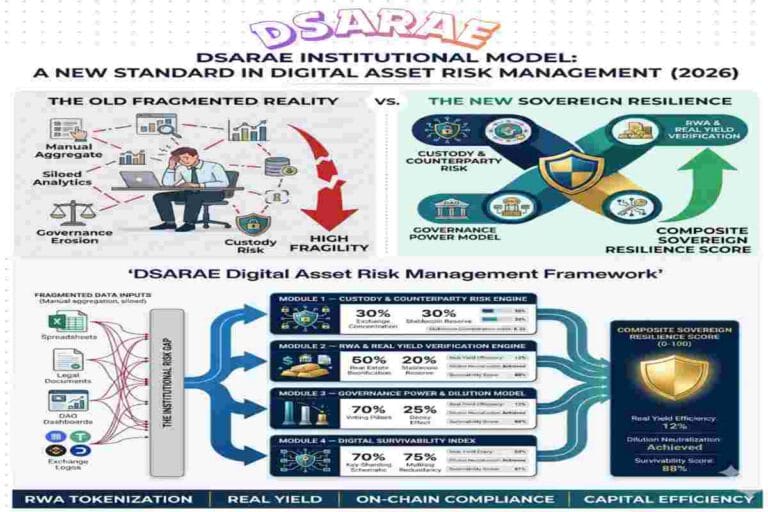
Most organizations believe their assets are “accounted for.” In reality:
Without a structured Asset Audit, businesses operate with blind spots—creating financial risk, cybersecurity vulnerabilities, and operational inefficiencies.
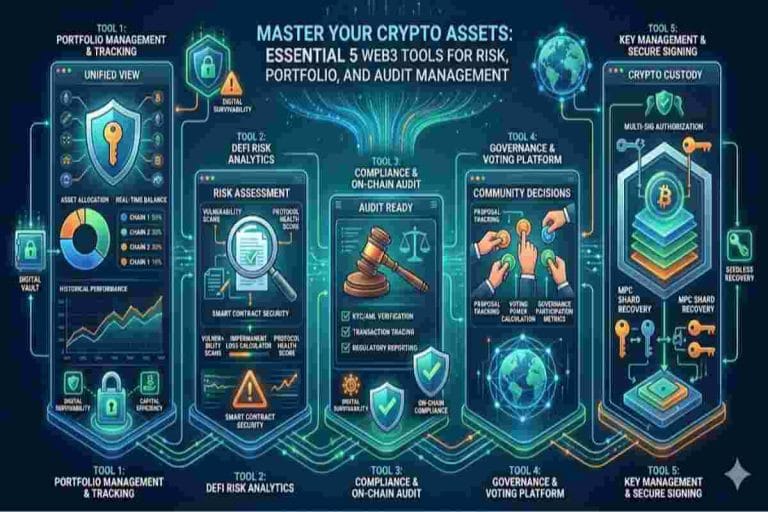
A properly executed Asset Audit delivers measurable impact:
Our Asset Audit tool simplifies complex verification into a structured diagnostic system:
Evaluates assets across three pillars:
Generates a categorized risk tier:
Pinpoints your weakest control point and generates a corrective checklist.
All processing happens locally—your audit data stays within your environment.
This system belongs to the Asset Security layer of the Web3 Decision Lab.
You may also explore:
– Generational Wealth Planning (Estate & Asset Protection)
– Startup Failure Simulator (Web3 Failure Analysis)
What is an Asset Risk Assessment Tool ?
An asset audit is a structured review process that verifies ownership, condition, location, and compliance status of physical, financial, or digital assets.
Why is asset audit important?
It prevents financial discrepancies, strengthens cybersecurity posture, and ensures regulatory compliance.
How often should an asset audit be conducted?
Most organizations conduct audits annually, but high-risk digital environments benefit from quarterly reviews.
What is included in an IT asset audit?
An IT asset audit covers hardware inventory, software licenses, access controls, cloud assets, and cybersecurity compliance.
How do you perform asset verification?
Asset verification involves physical inspection (if applicable), digital confirmation, reconciliation with accounting records, and documentation review.
Ultimately, an Asset Risk Assessment System is not just a regulatory hurdle; it is a competitive advantage. By prioritizing asset security audits and automated verification, sovereign institutions can navigate market volatility with the confidence that their underlying capital is audited, verified, and fundamentally protected. This framework ensures that your portfolio is built on a foundation of transparency, ready to withstand the systemic shifts of the next decade.For deeper compliance guidelines, review the U.S. Small Business Administration’s audit and financial management resources: http://www.sba.gov
Welcome to OwnProCrypto (Own & Pro Crypto) — a next-generation Bitcoin and blockchain education platform where the science of finance meets the power of AI-driven automation.
Our mission is simple: to equip you with the knowledge, frameworks, and tools needed to make smarter financial and business decisions in the Web3 economy.
Beyond analysis, OwnProCrypto focuses on transparency, verifiable data, and practical frameworks that investors and builders can actually use. Our goal is not hype — but clear thinking, disciplined analysis, and long-term value creation in the decentralized economy.
Our Background: Salim (Sam) is the founder and lead researcher behind OwnProCrypto, a Web3 intelligence platform focused on crypto security, digital ownership, stablecoin systems, interoperability, and institutional blockchain infrastructure.
Crypto Tools & Analysis:
Crypto Fundamental Analysis Tool | Protocol Evaluation System | DeFi Risk Analysis Tools | Crypto Portfolio Dashboard | Token Risk vs Reward Tool
Guides:
Crypto Fundamental Analysis | Blockchain Project Evaluation | Tokenomics Analysis | DeFi Protocol Analysis | Capital Efficiency
© 2026 OwnProCrypto — Built for smarter crypto decisions