
Unsure about your crypto tax exposure? This tool estimates capital gains, flags compliance risks, and provides a readiness checklist based on your transaction activity, location, and record-keeping habits.
| Area | Status | Risk Level | Recommendation |
|---|
Table of Contents
ToggleManaging crypto taxes can be confusing, especially with evolving regulations and complex transaction types. A crypto tax estimator simplifies this process by helping you calculate your tax liability and identify compliance risks in minutes.
Whether you trade, stake, or earn from DeFi, using a crypto tax calculator ensures you stay accurate and avoid costly mistakes. Modern asset allocation requires the strategic foresight found in our Legacy & Sovereignty: Securing Your Digital Life Beyond You (2026). For more on alternative investment benchmarks, visit Preqin.
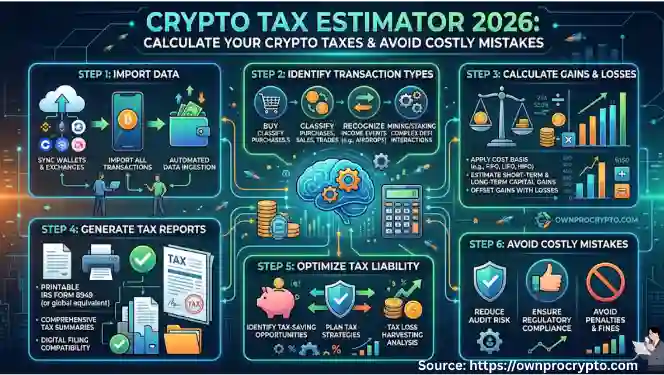
A crypto tax estimator is a tool that calculates your potential tax liability based on your crypto activity. Instead of manually tracking every transaction, it provides a structured overview of:
Platforms like CoinLedger and Koinly offer similar functionality, but a dedicated dashboard gives faster insights without complexity.
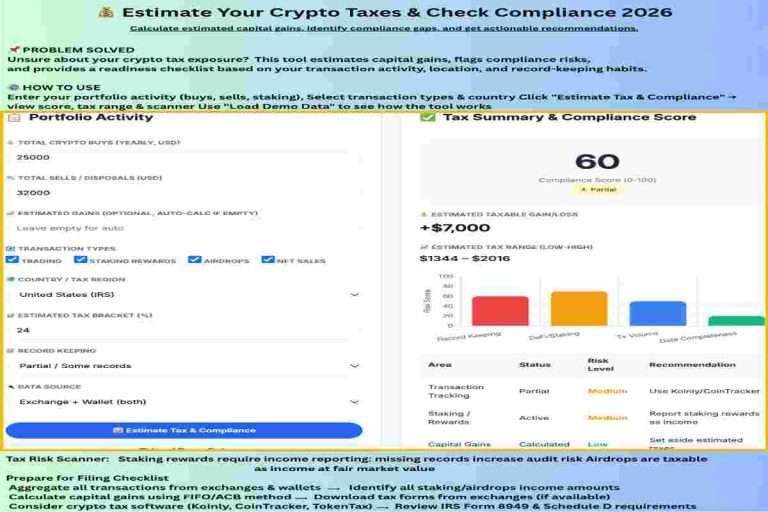
Using a cryptocurrency tax calculator is simple:
This allows you to calculate crypto taxes quickly without needing advanced accounting knowledge.

A modern crypto tax reporting tool includes:
Automatically estimates profits and losses from trades.
Identifies missing data and reporting gaps.
Flags high-risk areas like:
Provides a realistic low-to-high tax estimate based on available data.
Many investors make critical errors such as:
A reliable crypto tax estimator 2026 helps you avoid these issues by providing clear insights and recommendations.
A crypto tax estimator is essential for managing your digital asset taxes efficiently. It helps you:
In a rapidly evolving regulatory environment, using a cryptocurrency tax calculator gives you clarity, confidence, and control over your crypto finances.
How can I calculate my crypto taxes accurately in 2026?
You can calculate your crypto taxes accurately in 2026 by using a crypto tax estimator that tracks your transactions, applies capital gains rules, and estimates your total tax liability in real time. A reliable crypto tax estimator automatically analyzes trades, staking income, and transaction history, similar to tools like Koinly, helping you generate clear and accurate tax estimates.
Is there a free crypto tax estimator or crypto tax calculator I can use?
Yes, many platforms offer a free crypto tax estimator or crypto tax calculator with essential features like transaction tracking and capital gains estimation. Some tools, including CoinLedger, provide free previews through their crypto tax estimator, while advanced reporting and compliance features may require a paid plan.
What transactions does a crypto tax estimator consider taxable?
A crypto tax estimator identifies taxable transactions such as selling crypto for profit, trading between cryptocurrencies, earning staking rewards, receiving airdrops, and NFT sales. Using a crypto tax estimator ensures all taxable events are automatically detected, reducing the risk of missing important reporting details.
How do I track crypto taxes across multiple wallets using a crypto tax estimator?
A crypto tax estimator allows you to track crypto taxes across multiple wallets and exchanges by integrating data through APIs or manual input. This centralized crypto tax estimator dashboard consolidates all transactions, making it easier to calculate crypto taxes, monitor activity, and maintain accurate records for compliance.
Can a crypto tax estimator help me avoid costly crypto tax mistakes?
Yes, a crypto tax estimator helps you avoid costly mistakes by identifying missing cost basis, unreported income, and incomplete transaction histories. A good crypto tax estimator also provides compliance scores and risk alerts, allowing you to fix issues early and ensure accurate crypto tax reporting before filing.
Welcome to OwnProCrypto (Own & Pro Crypto) — a next-generation Bitcoin and blockchain education platform where the science of finance meets the power of AI-driven automation.
Our mission is simple: to equip you with the knowledge, frameworks, and tools needed to make smarter financial and business decisions in the Web3 economy.
Beyond analysis, OwnProCrypto focuses on transparency, verifiable data, and practical frameworks that investors and builders can actually use. Our goal is not hype — but clear thinking, disciplined analysis, and long-term value creation in the decentralized economy.
Our Background: Salim (Sam) is the founder and lead researcher behind OwnProCrypto, a Web3 intelligence platform focused on crypto security, digital ownership, stablecoin systems, interoperability, and institutional blockchain infrastructure.
Crypto Tools & Analysis:
Crypto Fundamental Analysis Tool | Protocol Evaluation System | DeFi Risk Analysis Tools | Crypto Portfolio Dashboard | Token Risk vs Reward Tool
Guides:
Crypto Fundamental Analysis | Blockchain Project Evaluation | Tokenomics Analysis | DeFi Protocol Analysis | Capital Efficiency
© 2026 OwnProCrypto — Built for smarter crypto decisions