
Search by title, topic or phrase
Use our Crypto Search Engine 🔍 to find the topics and keywords you're looking for.
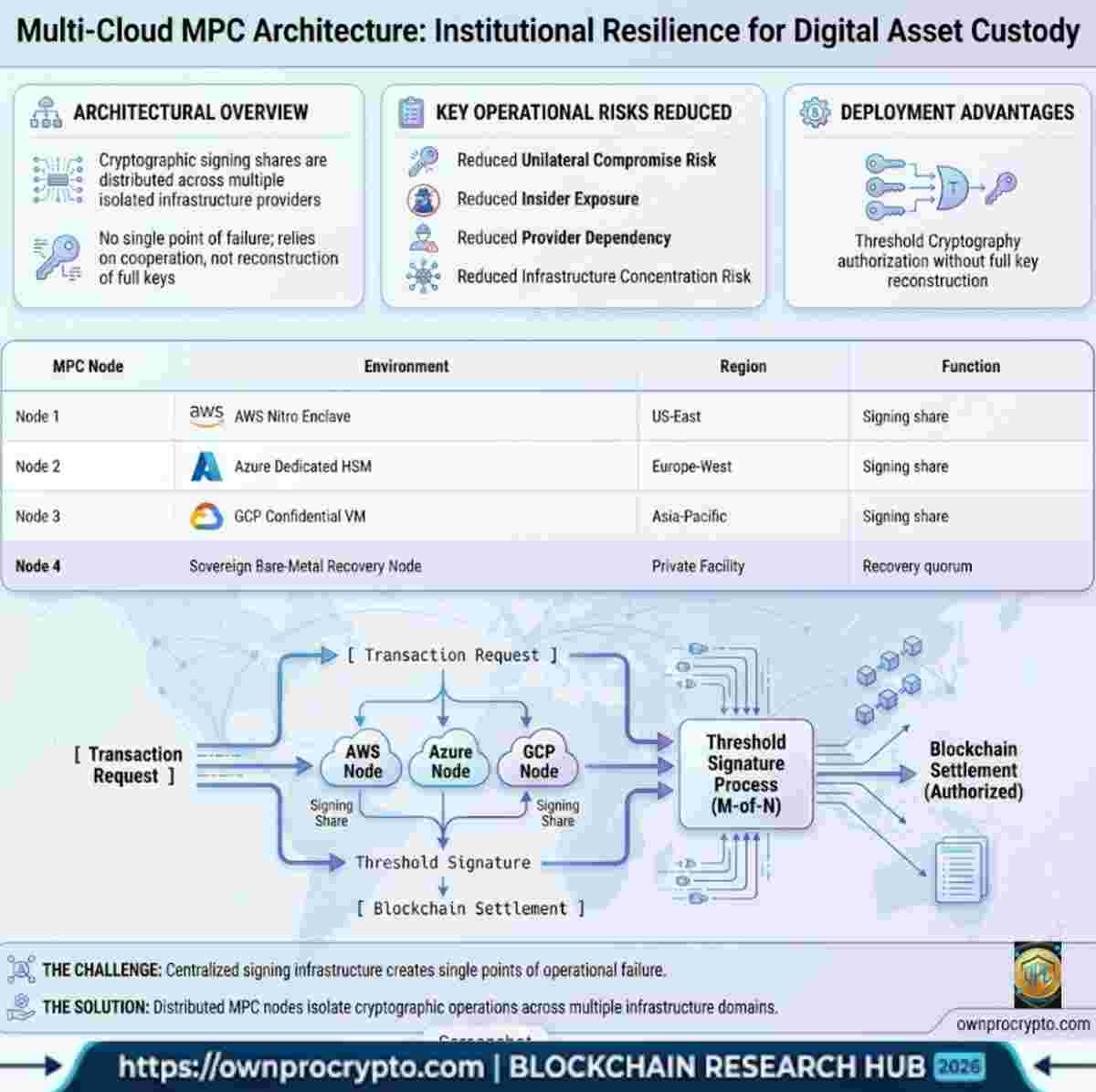
Table of Contents
ToggleMany digital asset teams focus on wallet security but overlook the broader crypto custody architecture behind operational resilience. Exchanges, family offices, ETF issuers, treasury managers, and custodians often struggle to evaluate whether their current setup can withstand insider threats, key loss, regulatory pressure, signer unavailability, or multi-jurisdictional operational failures.
The challenge is simple: most organizations cannot safely test real custody environments without introducing risk. As institutional digital asset adoption grows, decision-makers need a structured way to evaluate governance models, recovery readiness, compliance exposure, and custody design before deploying capital. That’s where the Institutional Crypto Custody Simulator helps bridge the gap between theory and operational reality.
The Markets in Crypto-Assets (MiCA) regulation, which went into full effect in 2024, for deep drive full article Visit hre, forcing stablecoins to behave more like regulated money market funds or narrow banks to ensure global financial stability.
The Institutional Crypto Custody Simulator helps institutions model custody configurations and identify weaknesses before they become costly security incidents.
Key benefits include:
Rather than relying on assumptions, institutions can use simulation-based analysis to improve custody resilience and operational decision-making.
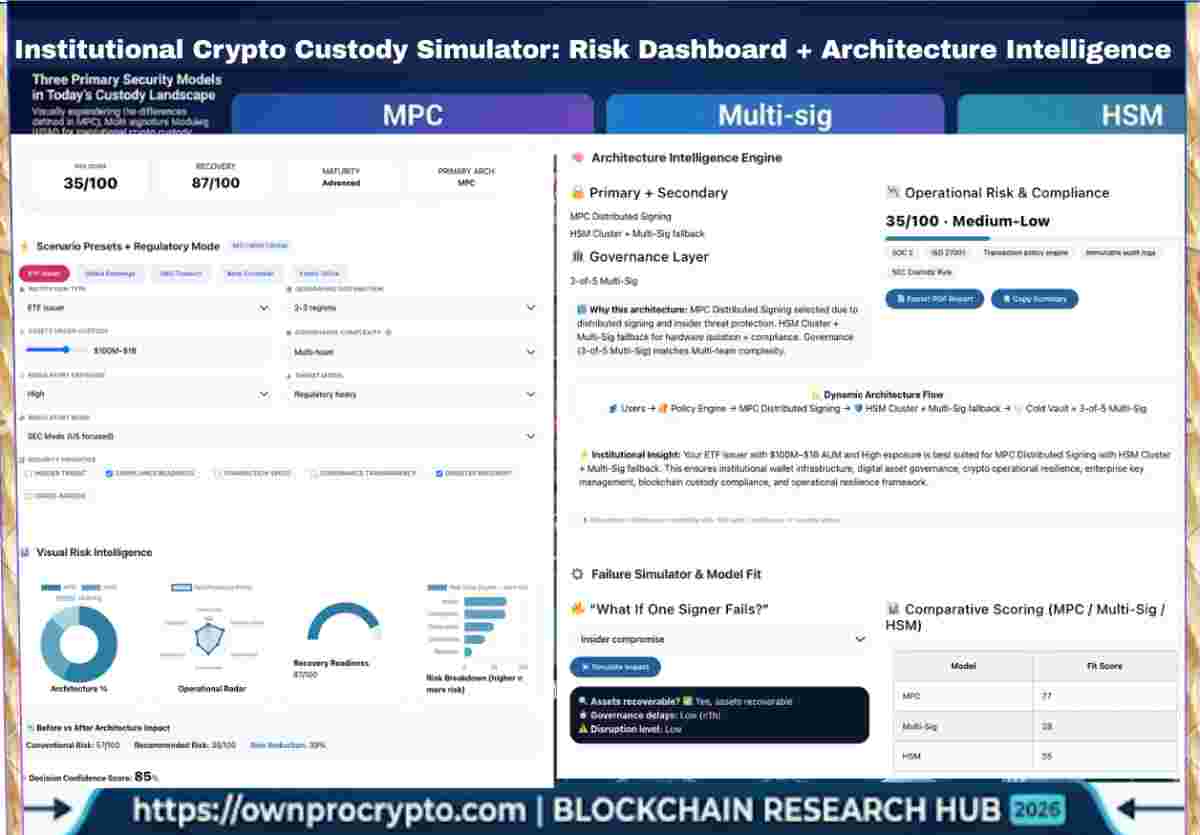
The simulator combines institution-specific variables with custody governance modeling to generate a recommended custody framework.
Select:
Choose priorities such as:
The system evaluates inputs and recommends an architecture that may include:
| Custody Layer | Purpose |
|---|---|
| MPC Custody | Distributed key signing and insider risk reduction |
| HSM Isolation | Hardware-based key protection |
| Cold Vault Multi-Sig | Offline recovery and contingency protection |
| Governance Policies | Approval workflows and transaction controls |
Run simulations against common institutional risks:
The simulator then produces risk scores, recovery estimates, governance insights, and custody maturity ratings.
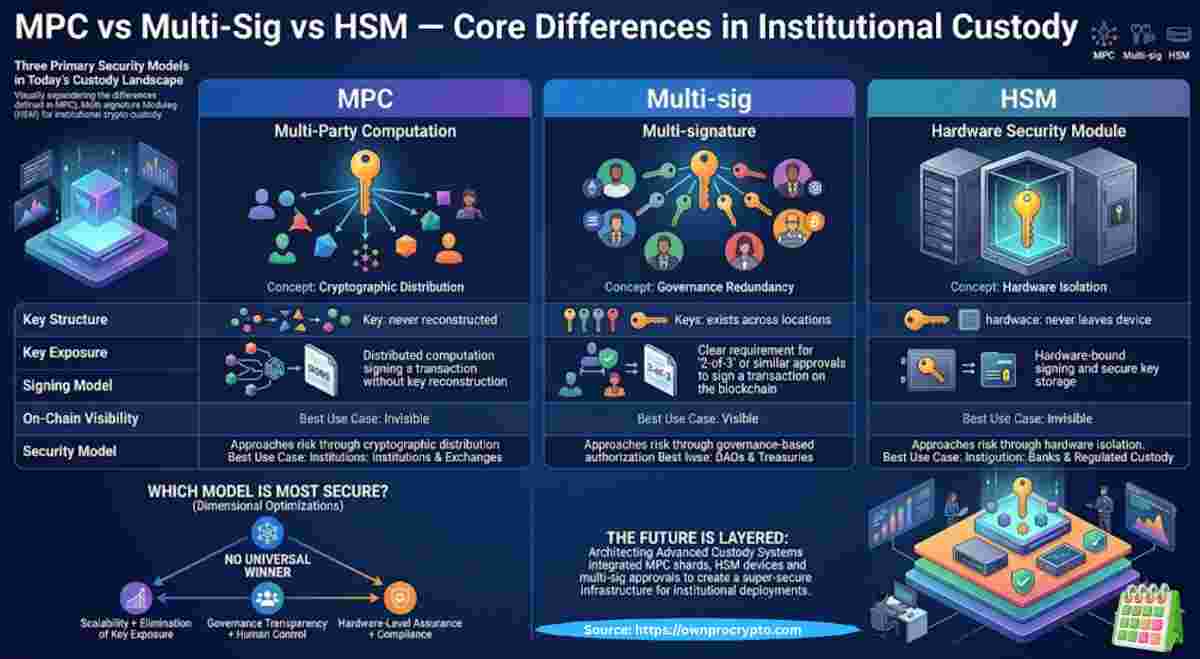
MPC custody (Multi-Party Computation) distributes signing authority across multiple parties without exposing a complete private key. This approach helps reduce single points of failure and improves institutional security controls.
A cold vault multi-sig design stores signing authority offline while requiring multiple approvals before transactions can be executed. This can significantly improve recovery readiness and asset protection during cyber incidents.
The tool is designed for exchanges, custodians, banks, ETF issuers, treasury managers, family offices, and digital asset organizations seeking to evaluate custody frameworks, governance controls, and overall crypto custody architecture before deploying institutional capital.