
Table of Contents
Toggle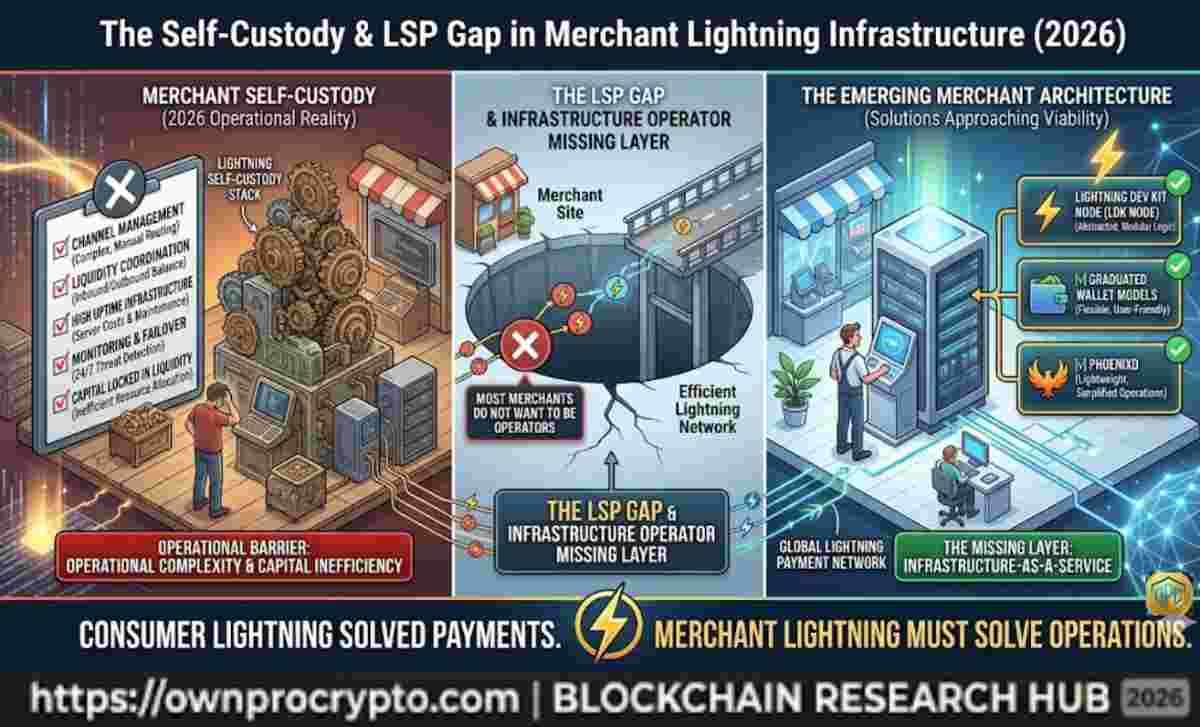
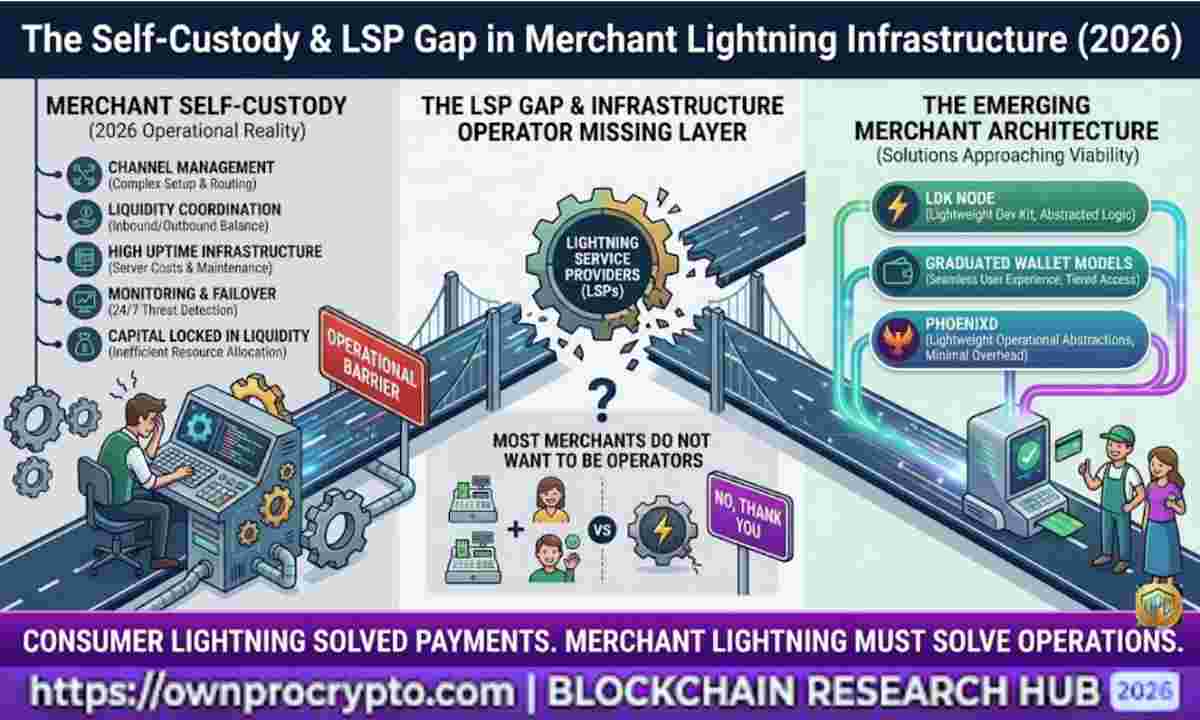
The Lightning Network solved consumer payments. Merchant infrastructure is still the bottleneck.
Most businesses accepting Bitcoin today rely on custodial providers like Strike or OpenNode because operating a self-custodial Lightning stack remains operationally complex. Managing inbound liquidity, channel balancing, uptime monitoring, and treasury allocation requires technical infrastructure most merchants do not have. This Merchant Lightning Capital Simulator helps operators quantify the hidden economics behind Lightning payment infrastructure.
Instead of focusing on wallet UX, the simulator models:
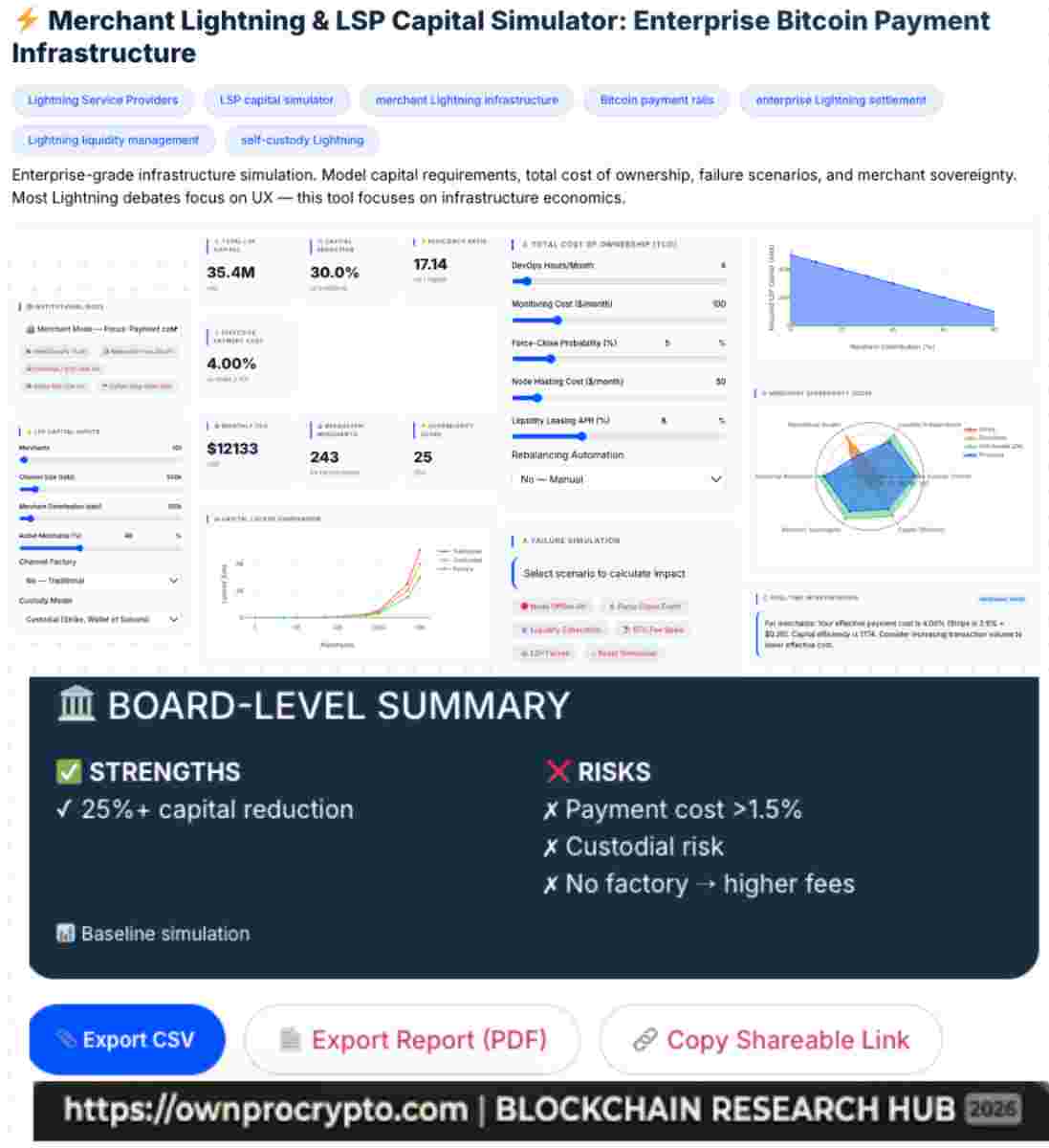
The simulator models Lightning infrastructure across four operational layers:
| Layer | Infrastructure Role |
|---|---|
| Merchant POS | Checkout and payment processing |
| LDK Node / Phoenixd | Self-custodial node operations |
| LSP Liquidity Layer | Provides inbound routing capacity |
| Bitcoin Settlement Layer | Final settlement and channel batching |
The simulator evaluates how much capital a Lightning Service Provider (LSP) must lock to support merchant payment channels.
Example:
| Merchant Count | Avg Channel Size | Traditional Capital Lockup | Graduated Wallet Model |
|---|---|---|---|
| 100 | 500k sats | 50M sats | 40M sats |
| 1,000 | 500k sats | 500M sats | 375M sats |
| 10,000 | 500k sats | 5B sats | 3.75B sats |
| Infrastructure Variable | Purpose |
|---|---|
| Merchant Count | Measures scaling pressure |
| Channel Size | Estimates inbound liquidity demand |
| Merchant Contribution | Reduces LSP capital dependency |
| Routing Fees (ppm) | Models operational profitability |
| Channel Factory Toggle | Simulates batched channel economics |
| Custody Model | Compares custodial vs self-custodial infrastructure |
| Model | Capital Efficiency | Custody Risk | Ops Complexity | Decentralization |
|---|---|---|---|---|
| Custodial LSP | Low | High | Low | Weak |
| Self-Custodial Node | Medium | Low | High | Strong |
| LDK + Phoenixd Stack | High | Low | Medium | Strong |
| Channel Factory Model | Very High | Low | Medium | Very Strong |
An Merchant Lightning Capital Simulator measures how much Bitcoin liquidity a Lightning Service Provider must lock to support merchant payment channels, routing operations, and inbound liquidity requirements.
Without capital-efficient channel management, Lightning risks centralizing around large custodial providers. Technologies like graduated wallets and channel factories reduce idle capital requirements and improve decentralization.
Custodial Lightning providers manage funds and liquidity on behalf of merchants. Self-custodial infrastructure gives merchants direct control over keys, channels, and treasury management using tools like LDK Node or Phoenixd.
Welcome to OwnProCrypto (Own & Pro Crypto) — a next-generation Bitcoin and blockchain education platform where the science of finance meets the power of AI-driven automation.
Our mission is simple: to equip you with the knowledge, frameworks, and tools needed to make smarter financial and business decisions in the Web3 economy.
Beyond analysis, OwnProCrypto focuses on transparency, verifiable data, and practical frameworks that investors and builders can actually use. Our goal is not hype — but clear thinking, disciplined analysis, and long-term value creation in the decentralized economy.
Our Background
Crypto Tools & Analysis:
Crypto Fundamental Analysis Tools | Protocol Evaluation System | DeFi Risk Analysis Tools | Crypto Portfolio Dashboard | Token Risk vs Reward Tool
Guides:
Crypto Fundamental Analysis | Blockchain Project Evaluation | Tokenomics Analysis | DeFi Protocol Analysis
© 2026 OwnProCrypto — Built for smarter crypto decisions