
Table of Contents
ToggleThe MPC vs Multi Sig Custody Wallets (2026) offers a comprehensive institutional custody architecture comparison, designed to help organizations evaluate and choose the right solution for secure digital asset management. This crypto custody decision tool 2026 enables institutions to analyze the MPC vs Multi Sig institutional security model and assess the mpc vs multisig custody Wallets for institutions in terms of risk, control, and scalability. By providing an institutional crypto custody security comparison 2026, the tool highlights differences in operational procedures, safeguards, and compliance requirements. It also guides enterprises through the mpc vs multisig custody architecture for enterprises, offering insights from a digital asset custody model comparison for institutions perspective. Additionally, users can explore crypto custody governance and key management comparison and apply an enterprise crypto custody decision framework MPC vs Multi Sig to determine the most suitable solution for their organizational needs.
That’s why we built the MPC vs Multi Sig Custody Wallets, an interactive decision engine that helps institutions, DAOs, and serious investors compare these two dominant security models side-by-side. No more guesswork. No more conflicting opinions. Just real-world simulation, cost analysis, and personalized recommendations based on your unique operational profile. Selecting the right custody model is a critical technical requirement for the Asset Security 2026: Setting Up Your Digital Fortress with Account Abstraction framework. Review Fireblocks for institutional security benchmarks.
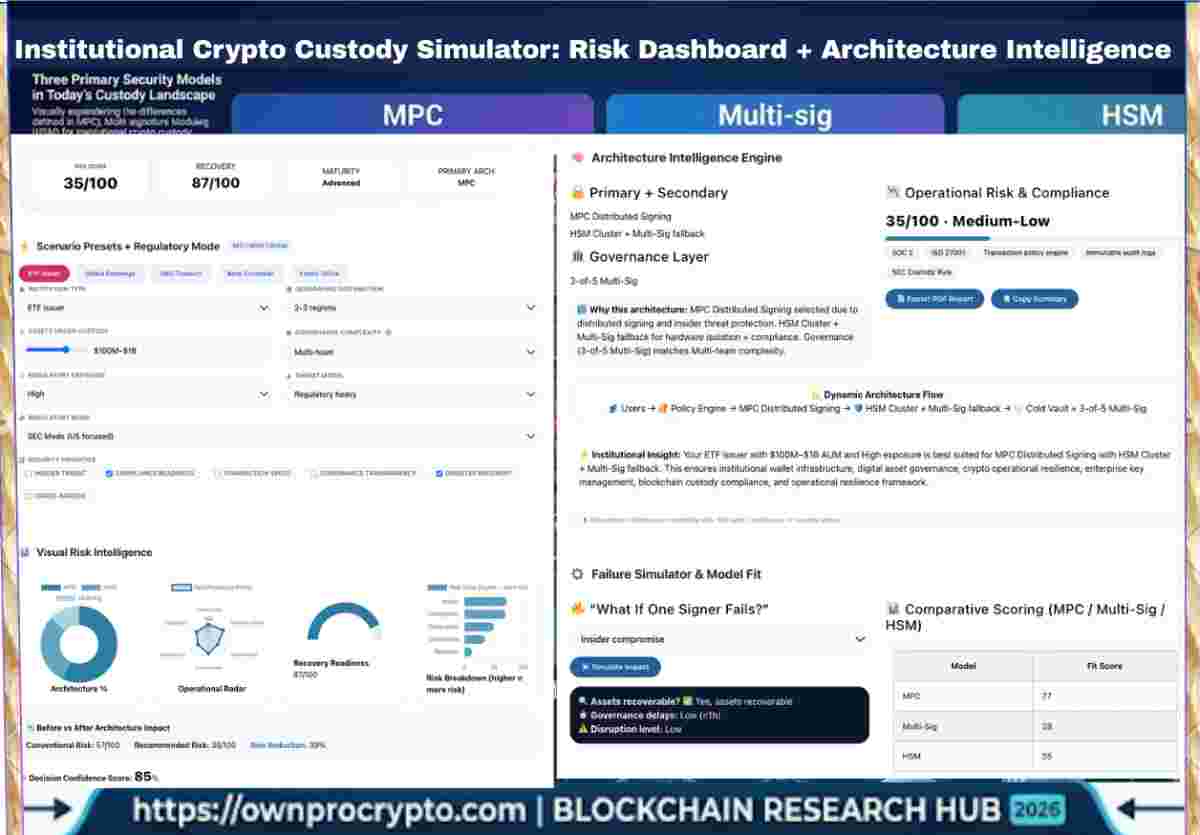
Crypto custody isn’t one-size-fits-all. Multi Sig — the battle-tested on-chain standard — offers transparency but can suffer from slow signing times and smart contract risks. MPC, the newer contender, provides operational speed and eliminates single points of failure but introduces new infrastructure considerations.
Institutions face:
Without a clear framework, decision-makers often default to whichever solution their preferred vendor offers — not necessarily what’s optimal for their risk profile.
Our Custody Battle Simulator transforms complexity into clarity. It solves:
Problem | Solution |
Unknown attack resilience | Attack Simulator shows real-world breach outcomes |
Cost uncertainty | Dynamic Cost Calculator estimates annual expenses based on signers, volume, and security tier |
One-size-fits-all advice | Institutional Quiz provides personalized MPC vs Multi Sig match percentage |
Technical opacity | Security Score Meter quantifies each method’s strengths |
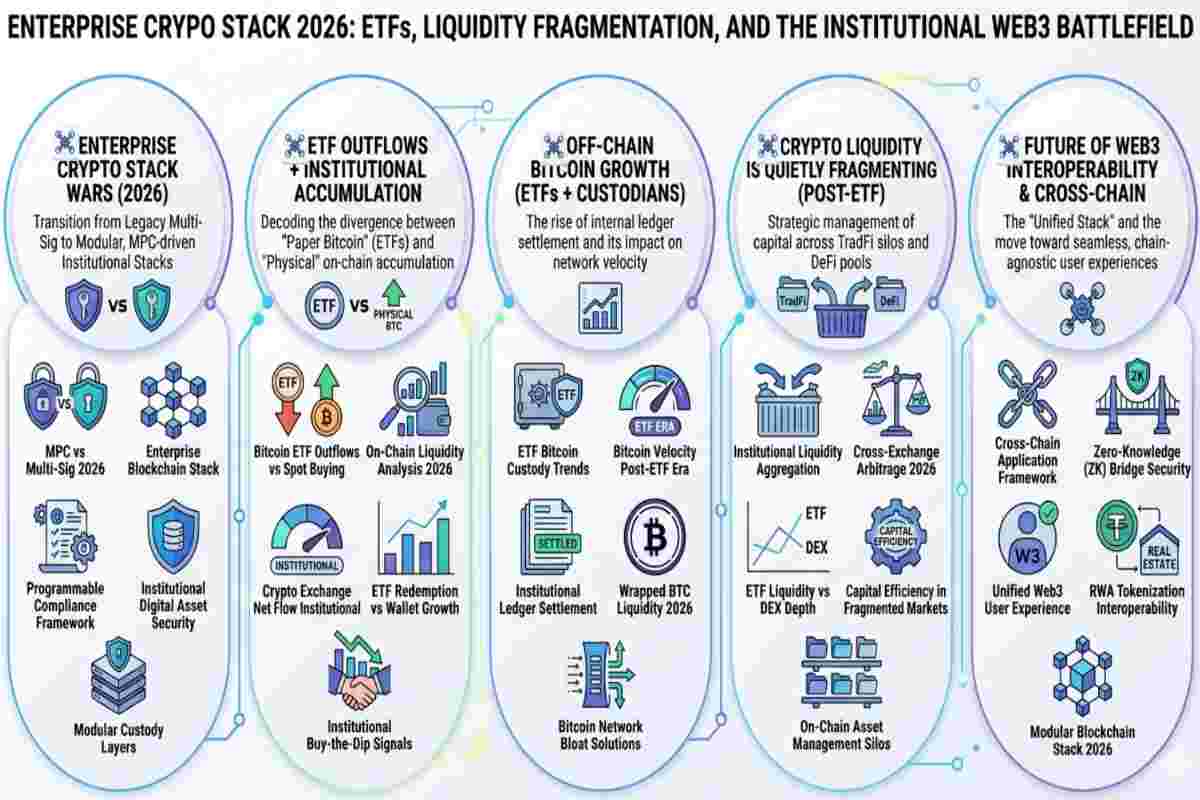
Using the tool is intuitive and takes less than 2 minutes:
All data stays local — nothing is stored on our servers.
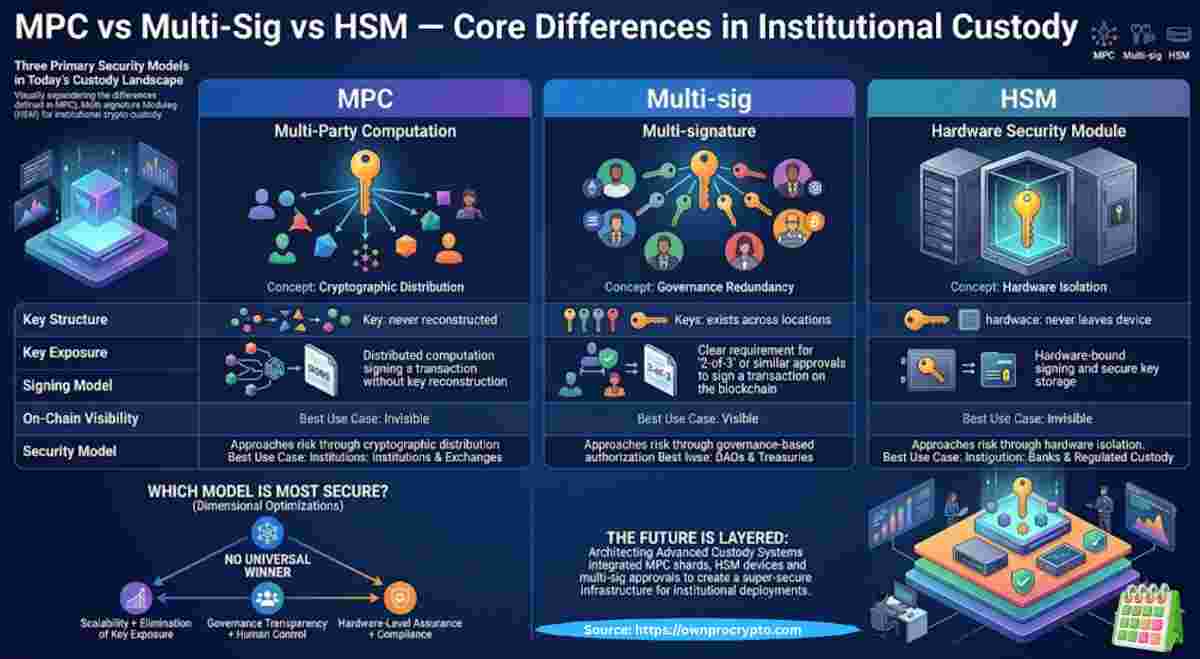
In 2026, crypto custody solutions are the bedrock of sovereign finance. By utilizing audited, regulated storage environments, institutions eliminate the vulnerabilities of retail-grade setups, ensuring that high-value portfolios remain resilient against both targeted cyber-attacks and physical hardware loss.
The multi party computation wallet (MPC) has replaced traditional storage by removing the “single point of failure.” By breaking access into mathematical shards distributed across secure locations, it ensures that no single compromised device can ever expose your assets to theft.
Effective crypto private key management shifts security from a manual burden to an automated governance layer. Through shard rotation and multi-sig approval flows, organizations can authorize complex transactions with total confidence, maintaining full control without the risk of a single lost key.
Is MPC or Multi Sig more secure for institutions?
There’s no absolute winner — it depends on your threat model. MPC excels against key leakage and smart contract exploits, while Multi Sig offers superior on-chain transparency and has a longer battle-tested history. Many leading institutions now use a hybrid: MPC for operational wallets, Multi Sig for long-term treasuries.
How much does enterprise custody cost annually?
Costs vary widely based on signer count, transaction volume, and service tier. Our calculator estimates MPC between $8,000–$28,000/year and Multi Sig between $5,000–$22,000/year, including gas estimates. Enterprise solutions often include SLAs and dedicated support.
Q3: Can I use both MPC and Multi Sig together?
A: Absolutely — and increasingly, institutions adopt a layered approach. For example, use MPC for high-frequency trading desks (speed + security) and Multi Sig for DAO treasuries or reserve funds (governance transparency). This hybrid model combines the strengths of both.
The 2025 “Key-Leak” incident, where an exchange lost $200M, occurred because they relied on a single-signature hot wallet. Had they implemented a multi party computation wallet linked to a robust crypto private key management protocol, the attacker would have needed to compromise four separate geographically distributed servers simultaneously—a feat that current hacking technology cannot achieve.
This system belongs to the Institutional Infrastructure Layer of the Web3 Decision Lab.
You may also explore:
– Digital Crypto Asset Risk Analysis Tool (DSARAE)
Custody isn’t just about keeping keys safe — it’s about aligning security architecture with operational reality. Whether you’re a DAO treasury, a family office, or an institutional investor, the Custody Battle Simulator gives you data-driven confidence to make the right choice.
Explore the MPC vs Multi Sig Custody Wallets above, run your scenarios, and share your findings with your team. The future of institutional crypto custody is modular, transparent, and tailored — and now you have the compass to navigate it.
Have questions about your specific setup? Drop them in the comments — we’re building resources based on what you need.
The MPC vs Multi Sig Custody Wallets (2026) provides institutions with a clear framework to compare crypto custody architectures, analyze security models, and evaluate governance and key management tradeoffs. This tool supports informed decision-making for enterprise-level digital asset custody.
Explore more insights on institutional crypto custody with our related posts on MPC vs Multi Sig Security Models, Enterprise Crypto Custody Governance, and Digital Asset Custody Architecture Comparison. These resources complement the MPC vs Multi Sig Custody Wallets (2026), helping institutions make informed decisions on security, governance, and key management tradeoffs.
For authoritative guidance on regulatory and compliance standards in crypto custody, refer to the official U.S. Securities and Exchange Commission (SEC) website.
Hover/click to reveal deep technical details (thresholds, blockchain vs off-chain)
Welcome to OwnProCrypto (Own & Pro Crypto) — a next-generation Bitcoin and blockchain education platform where the science of finance meets the power of AI-driven automation.
Our mission is simple: to equip you with the knowledge, frameworks, and tools needed to make smarter financial and business decisions in the Web3 economy.
Beyond analysis, OwnProCrypto focuses on transparency, verifiable data, and practical frameworks that investors and builders can actually use. Our goal is not hype — but clear thinking, disciplined analysis, and long-term value creation in the decentralized economy.
Our Background: Salim (Sam) is the founder and lead researcher behind OwnProCrypto, a Web3 intelligence platform focused on crypto security, digital ownership, stablecoin systems, interoperability, and institutional blockchain infrastructure.
Crypto Tools & Analysis:
Crypto Fundamental Analysis Tool | Protocol Evaluation System | DeFi Risk Analysis Tools | Crypto Portfolio Dashboard | Token Risk vs Reward Tool
Guides:
Crypto Fundamental Analysis | Blockchain Project Evaluation | Tokenomics Analysis | DeFi Protocol Analysis | Capital Efficiency
© 2026 OwnProCrypto — Built for smarter crypto decisions