
Build your multi-layer portfolio across Real Estate (Infrastructure), Gold (Protection), and Bitcoin/Crypto (Velocity)
Instead of asking "Which asset is best?" — this allocator answers "How should I allocate across layers?" Based on your risk profile, capital size, and time horizon, it builds a strategic portfolio across three wealth layers: Infrastructure (Real Estate), Protection (Gold), and Velocity (Bitcoin/Crypto).
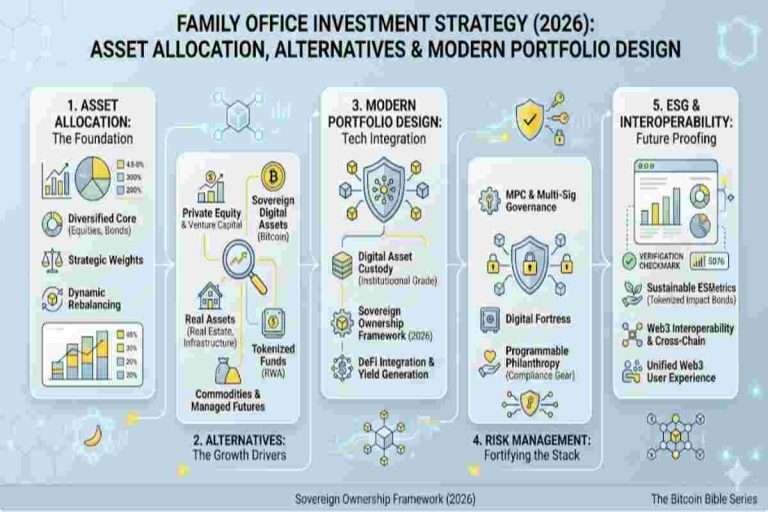
Building a resilient Portfolio Allocation Strategy in 2026 requires more than traditional investing—it demands a smart approach to diversification across emerging and stable asset classes. Investors are increasingly exploring how to diversify portfolio holdings by balancing tangible assets like property with digital opportunities. The debate around gold vs crypto allocation and real estate vs crypto investment is shaping modern financial decisions, as each asset class offers unique risk and return dynamics. A well-structured balanced investment portfolio combines these elements strategically, helping investors manage volatility while positioning for long-term growth in an evolving global economy.
This portfolio allocation strategy tool helps you allocate capital across multiple asset layers, combining stability, protection, and growth into a single, balanced framework. Balancing traditional and digital assets is the core goal of the RWA Tokenization 2026: Guide to Real-World Asset Portfolios. Review the Yale Model for institutional endowment allocation principles.
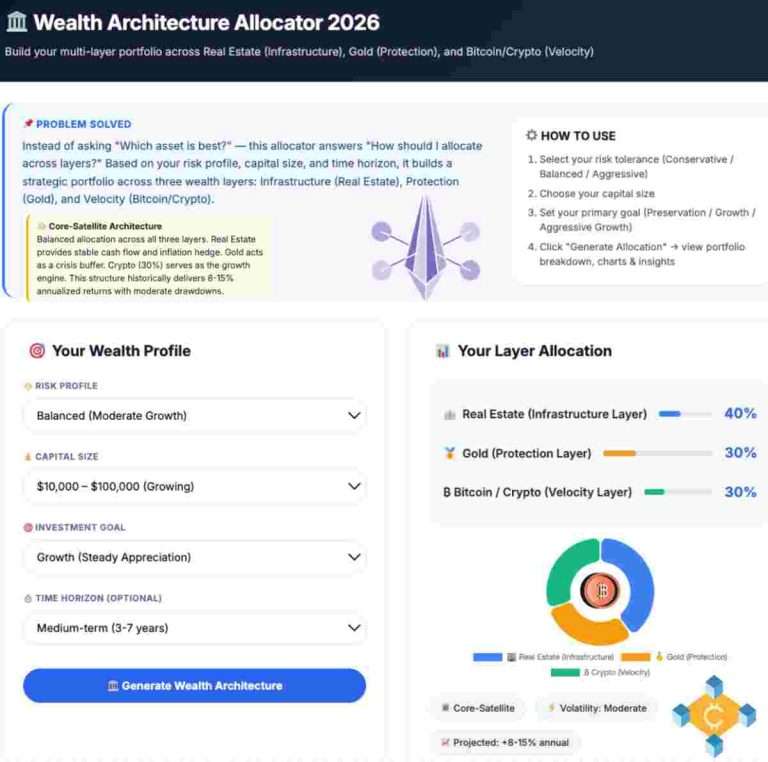
The allocator solves the “Siloed Investing” problem, where individuals over-allocate to a single asset class out of hype or fear. Most investors struggle with the question, “How much of each asset is too much?” This tool replaces emotional decision-making with a structural framework that ensures no single market crash can wipe out a user’s entire net worth, while still maintaining exposure to high-velocity digital assets.
This system belongs to the Sovereign Finance layer of the Web3 Decision Lab.
You may also explore:
– Web3 Investment Calculator (DeFi, Blockchain & Growth Channels)
– 5-in-1 Smart AI Crypto Portfolio & Trading Tool <—– use links
– Crypto Trading Intelligence & Risk Systems (Execution Framework)
Long-term wealth is not built through isolated bets—it is constructed through deliberate allocation.
By structuring your portfolio across multiple asset layers, you reduce dependency on any single market while maintaining exposure to growth opportunities. This approach transforms investing from reactive decision-making into a disciplined, repeatable system designed for resilience.
Global Strategy Reference: For deep dive into the Global Asset Decoupling 2026 and its impact on the global financial stack, explore the Global Asset Decoupling 2026.

A diversified portfolio spreads investments across different asset classes such as real estate, commodities, and digital assets. This reduces overall risk by ensuring that a decline in one sector does not significantly impact total wealth.
Gold is typically used for stability and protection during market uncertainty, while crypto offers higher growth potential but with greater volatility. A balanced allocation often includes both to achieve stability and upside.
The ideal allocation depends on risk tolerance and financial goals. Conservative investors may allocate a small percentage, while aggressive investors may increase exposure for higher growth potential.
Real estate provides steady income and long-term stability, while crypto is more volatile but offers faster capital appreciation. Combining both can create a more balanced investment strategy.
A balanced investment portfolio in 2026 involves diversifying across multiple asset classes such as real estate, gold, and cryptocurrencies. Investors need to evaluate risk tolerance, market trends, and liquidity before deciding allocations. Combining stable assets like gold and property with high-growth opportunities like crypto helps create a diversified strategy that can adapt to changing economic conditions while preserving long-term value.
Welcome to OwnProCrypto (Own & Pro Crypto) — a next-generation Bitcoin and blockchain education platform where the science of finance meets the power of AI-driven automation.
Our mission is simple: to equip you with the knowledge, frameworks, and tools needed to make smarter financial and business decisions in the Web3 economy.
Beyond analysis, OwnProCrypto focuses on transparency, verifiable data, and practical frameworks that investors and builders can actually use. Our goal is not hype — but clear thinking, disciplined analysis, and long-term value creation in the decentralized economy.
Our Background: Salim (Sam) is the founder and lead researcher behind OwnProCrypto, a Web3 intelligence platform focused on crypto security, digital ownership, stablecoin systems, interoperability, and institutional blockchain infrastructure.
Crypto Tools & Analysis:
Crypto Fundamental Analysis Tool | Protocol Evaluation System | DeFi Risk Analysis Tools | Crypto Portfolio Dashboard | Token Risk vs Reward Tool
Guides:
Crypto Fundamental Analysis | Blockchain Project Evaluation | Tokenomics Analysis | DeFi Protocol Analysis | Capital Efficiency
© 2026 OwnProCrypto — Built for smarter crypto decisions