
Table of Contents
ToggleMoving from Asset Access to Institutional-Grade Sovereign Wealth.
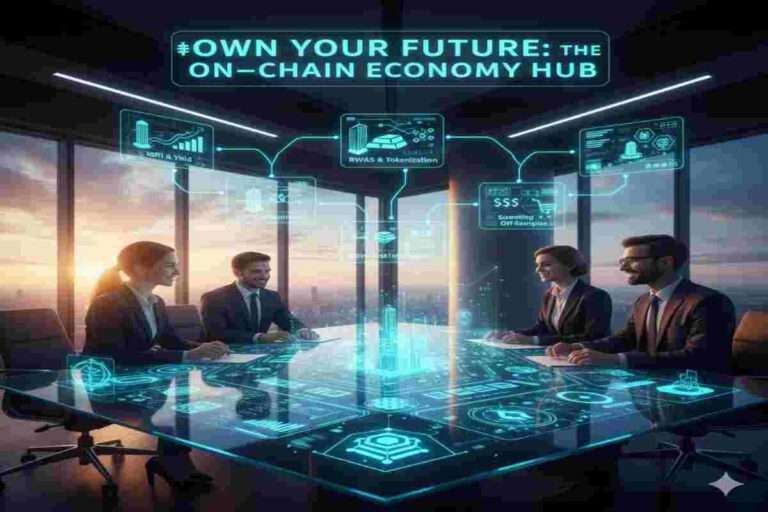
In 2026, digital ownership has matured into a strategic asset class defined by Real Yield and Programmable Control. The industry has pivoted from theoretical growth to measurable utility, where the “Sovereign Shift” allows individuals and family offices to bypass legacy financial friction and capture value directly through decentralized infrastructure.
The 2026 ROI Drivers:
Tired of renting your digital identity, assets, and income streams, only to have them frozen or erased at a platform’s whim? In 2026, Web3 is rewriting the rules of digital ownership, empowering individuals to fully control identity, tokenized assets, and governance rights through decentralized systems. By leveraging real yield crypto assets, interoperable DeFi positions, and the innovative OWN Stack — which integrates identity, reputation, governance, and programmable asset distribution — users can secure verifiable, transferable, and irrevocable digital rights.
This structural shift transforms fragmented protocols into a cohesive, productive ecosystem, enabling sustainable on-chain cash flow, maximizing crypto asset ROI, and creating a truly composable digital economy. Ownership enforced by code now outlasts platform permissions, marking the definitive advantage in the next phase of Web3: true digital sovereignty, productivity, and long-term value.
Not borrow it. Not rent it. Own it.
This Post explains how the OWN Stack functions—technically, economically, and strategically. It connects identity, tokenization, and value distribution into a unified system where rights are mathematically secured and enforced by programmable law.
In 2026, the real advantage in Web3 is no longer speculation. It is ownership.
Digital ownership fundamentals in Web3 focus on user control, blockchain verification, and permissionless access to digital assets. Unlike Web2 platforms, Web3 ownership is enforced through decentralized networks, self-custodial wallets, and cryptographic keys, ensuring users retain direct authority over their digital property. These foundations establish trustless ownership, asset portability, and censorship resistance as core principles of the decentralized internet.
Digital ownership in Web3 in 2026 describes the ability to own, control, and transfer digital assets directly on the blockchain without centralized intermediaries. Unlike traditional digital platforms where users only license access, blockchain-based ownership ensures verifiable rights enforced by decentralized networks. For example, when a user owns a crypto asset, NFT, or tokenized position in a self-custodial wallet, that ownership exists independently of any company or platform, forming the core of modern digital asset ownership.
True digital ownership means users retain exclusive control over their digital property, including usage rights, transferability, and value capture. In Web3 ecosystems, ownership is secured through cryptographic private keys rather than platform terms. For instance, owning a decentralized domain or blockchain-based asset allows users to operate without censorship, reinforcing the principle of user sovereignty and permissionless ownership in decentralized systems.
True digital ownership includes:
Web3 ownership differs from custody because custodial platforms retain control over user assets, even if balances appear owned. True blockchain ownership only exists when users hold their private keys in non-custodial wallets. A clear example is storing crypto on an exchange versus a self-custodial wallet—only the latter provides genuine control, asset portability, and decentralized ownership security.
Custody refers to holding keys or assets on a platform. Ownership in 2026 goes further — it means authority over the asset’s rights, use, transfer, and economic value, independent of intermediaries and with verifiable proof on a decentralized ledger.
The technical foundations of digital ownership are built on blockchain infrastructure, smart contracts, and interoperable protocols that enforce ownership rights on-chain. Smart contracts automate asset transfers, ownership verification, and rule enforcement, while interoperability enables assets to function across platforms and ecosystems. Together, these technologies create programmable, transparent, and scalable ownership systems in Web3.
Smart contracts enforce ownership rules by executing transactions automatically and immutably. When ownership conditions are met, asset transfers occur without manual intervention. For example, NFT marketplaces rely on smart contracts to ensure secure ownership transfers and royalty distribution, reducing fraud and trust dependencies.
Smart contracts automate asset rights, transfer rules, and economic logic. Because these contracts run on blockchain, ownership actions are verifiable, trustless, and tamper‑resistant, removing middlemen.
Modern smart contracts do more than just enforce transfers; they unlock asset composability. This allows digital assets to be used across multiple platforms and protocols simultaneously, turning every piece of digital property into a modular tool for wealth creation and interoperability ↑ Back to FAQs Menu
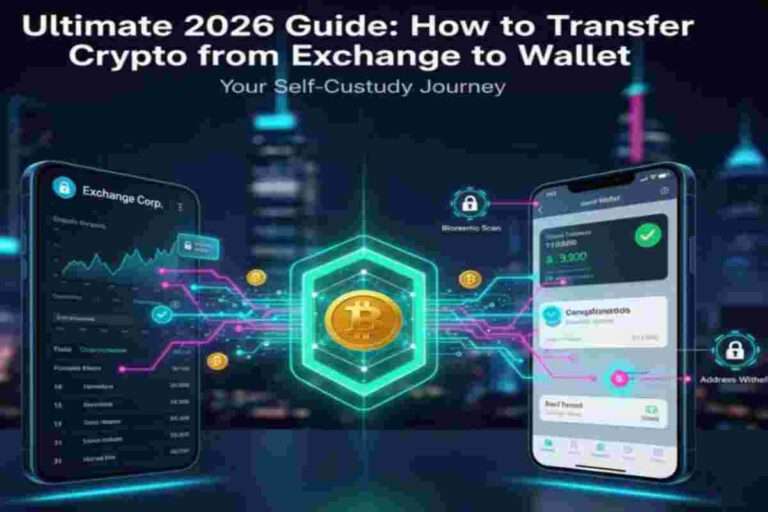
Ownership transferability in Web3 allows digital assets to be moved globally, instantly, and without intermediaries. Blockchain-based assets can be transferred peer-to-peer through smart contracts, enabling liquid digital markets. For example, tokenized assets can be sold or transferred across borders in seconds, reinforcing the efficiency of decentralized ownership systems.
Ownership transferability refers to the ability to move digital assets freely between users and ecosystems without permission. Because ownership lives on-chain, assets can be exchanged or used across applications.
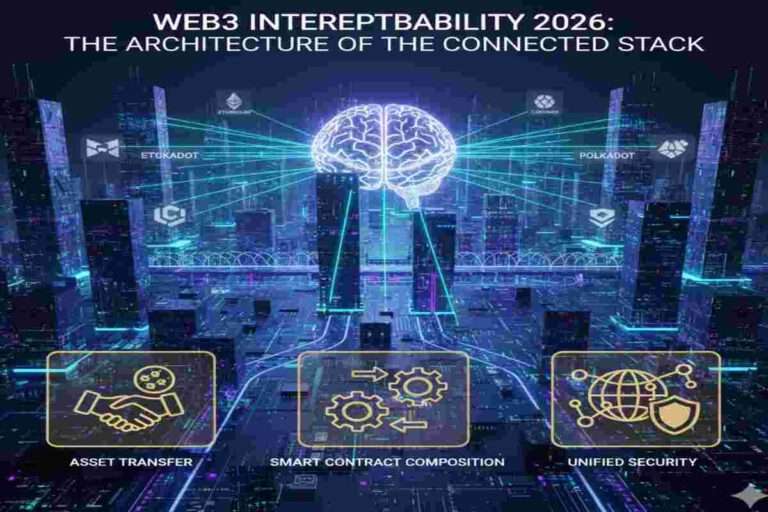
Interoperability ensures digital assets maintain utility across multiple platforms and blockchains. An interoperable NFT can be used in different metaverse environments or applications, increasing long-term ownership value. Without interoperability, digital ownership becomes fragmented, limiting asset usability and reducing network effects.
Interoperability ensures that assets and identity work across different blockchains and applications. True ownership requires that assets are usable and recognized in diverse contexts, not siloed in one platform.
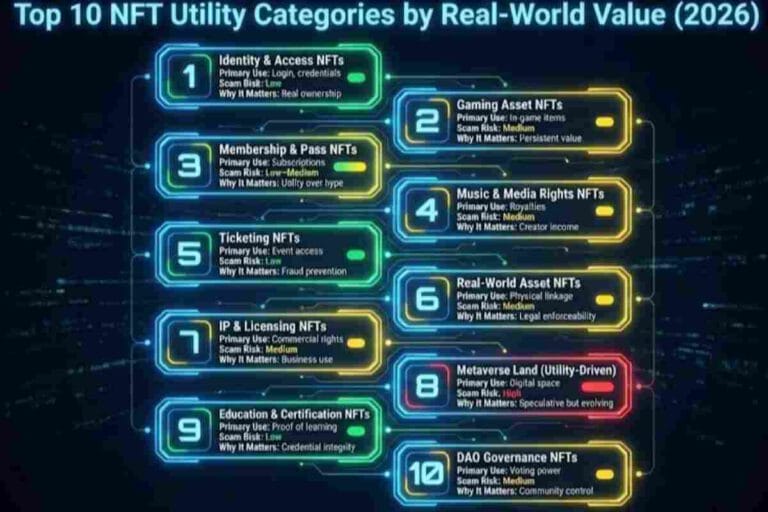
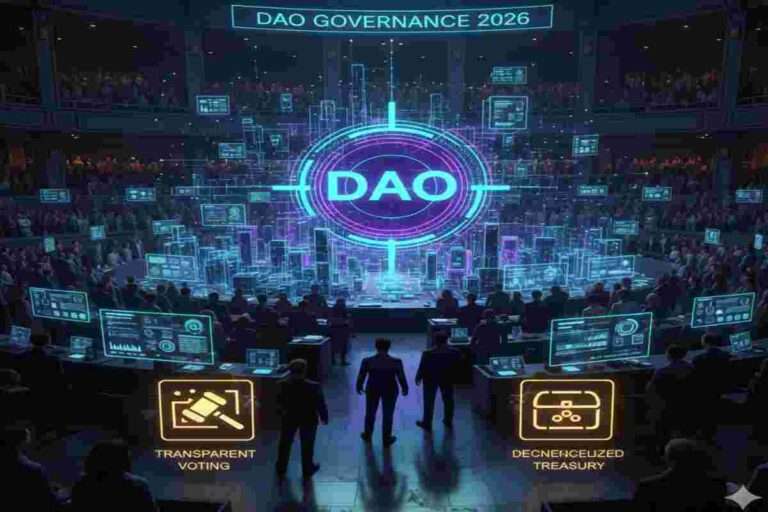
Decentralized Autonomous Organizations (DAOs) represent collective ownership models powered by governance tokens. DAO members participate in decision-making and value distribution based on token ownership. For instance, treasury-controlled DAOs enable transparent ownership economies where contributors share both governance rights and economic upside.
Decentralized Autonomous Organizations (DAOs) represent ownership economies where stakeholders collectively govern assets, protocols, and treasury funds. Owning governance tokens equates to shared decision‑making in the network.
The shift from simple token-based voting to true decentralized ownership economies marks the maturation of Web3 governance. Unlike 2024 models, these economies prioritize long-term sustainability by ensuring that participants are not just users, but sovereign stakeholders in the protocol’s growth and governance.
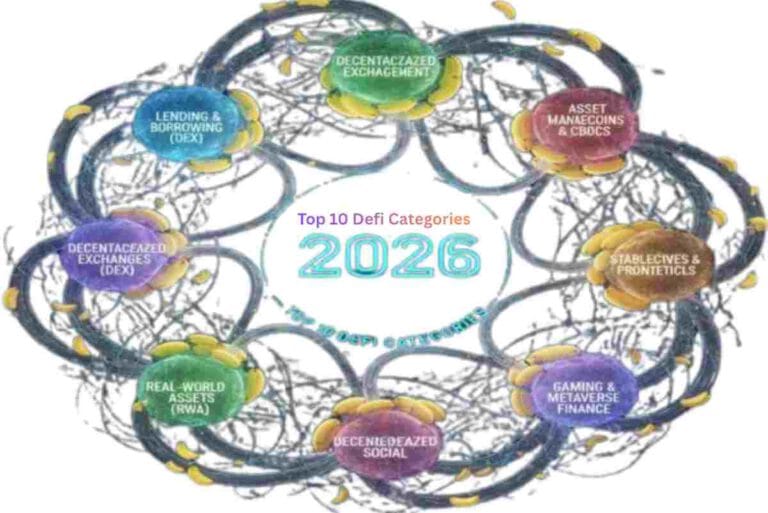
Financial ownership in Web3 allows individuals to directly own yield-generating positions, tokenized assets, and decentralized financial instruments. Through DeFi protocols, users participate in lending, staking, and liquidity provision without intermediaries, capturing value at the protocol level. This shift transforms ownership from passive holding into active value creation.
Web3 enables financial ownership by allowing users to directly control investments, lending positions, and yield-generating assets through decentralized finance (DeFi). For example, users who stake tokens or provide liquidity own the underlying financial position, capturing returns without relying on banks, custodians, or traditional financial intermediaries.
Web3 expands ownership to economic participation: tokenized assets, fractional ownership, and decentralized finance allow users to derive yield, lend, borrow, and invest without traditional intermediaries.
Moving beyond inflationary rewards, real yield crypto assets represent the next phase of financial ownership. By focusing on yield generated from actual protocol revenue and RWA (Real-World Asset) performance, these assets provide a stable foundation for a high-performance portfolio within the connected stack.
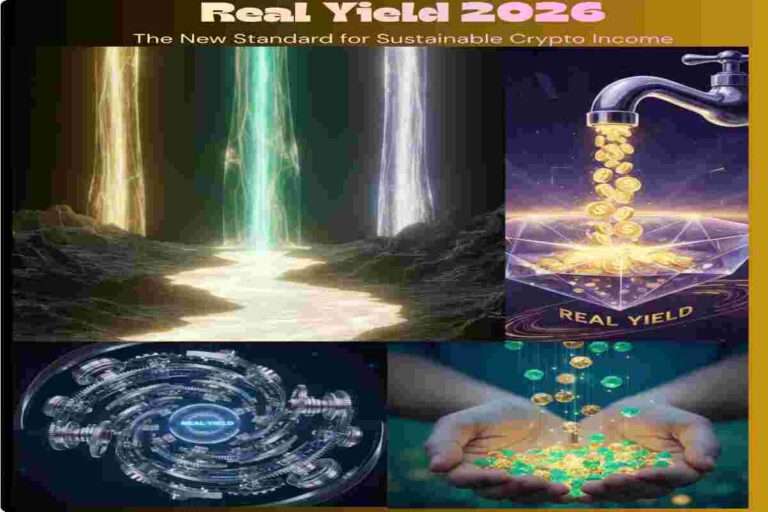
Digital ownership generates real yield when assets produce sustainable revenue rather than speculative appreciation. Examples include protocol fee sharing, staking rewards, and tokenized real-world assets generating cash flow. Real yield has become a key indicator of mature and sustainable Web3 ownership models.
Digital ownership can be combined with revenue‑generating mechanisms like staking, tokenized real‑world assets (RWA), decentralized finance, and royalties embedded in smart contracts creating income streams tied to digital assets. ↑ Back to FAQs Menu
Key ownership metrics include active holders, asset utility, revenue participation, and transfer velocity. For example, a digital asset with strong usage, recurring income, and high on-chain activity reflects healthier ownership value than purely speculative assets.
Ownership readiness in 2026 is measured by:
To evaluate the true health of a 2026 portfolio, we must look beyond vanity metrics and focus on crypto asset ROI. This measurement accounts for the total utility, yield performance, and capital efficiency of an asset, providing a clear picture of its value within the sovereign ownership framework.
The legal and regulatory landscape of Web3 ownership continues to evolve as governments define rules for digital assets, NFTs, and tokenized securities. Ownership rights, compliance requirements, and jurisdictional enforcement shape how blockchain-based ownership is recognized globally. Understanding this landscape is essential for mitigating legal risk and ensuring sustainable digital ownership adoption.
Web3 ownership faces legal risks such as unclear asset classification, jurisdictional conflicts, and enforceability challenges. For instance, ownership disputes involving DAOs or tokenized assets may cross international boundaries, complicating legal resolution. These risks highlight the evolving relationship between decentralized ownership and traditional legal systems.
While ownership rights are technical on‑chain proof, legal recognition varies by jurisdiction. Intellectual property, taxation, and regulatory frameworks are evolving — users must consider jurisdictional risk when asserting ownership in legal contexts.
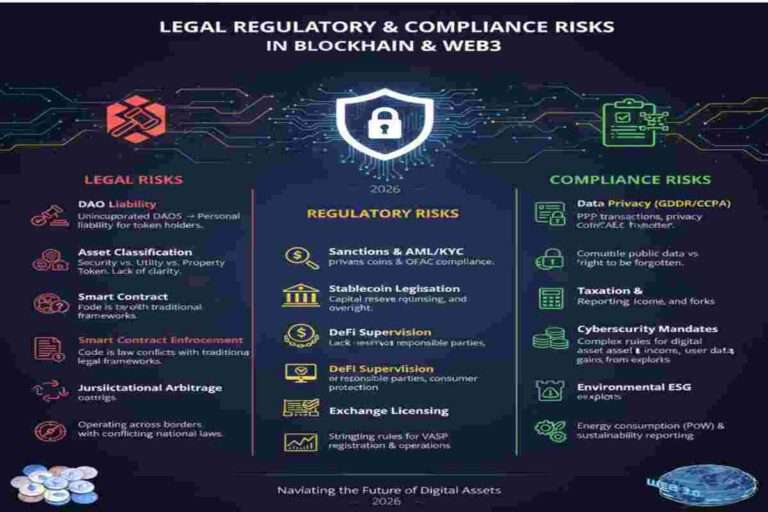
In 2026, regulation increasingly influences how digital ownership is structured, reported, and taxed. Governments are defining compliance standards for tokenized assets, NFTs, and custodial services. While regulation improves legitimacy and institutional adoption, it also introduces constraints that shape the future of decentralized ownership.
By 2026, Web3 ownership is intersecting with legal systems that define digital assets and rights. Regulation affects custody models, consumer protections, taxation, and institutional participation, shaping the durability of ownership claims.
Strategic ownership personas include builders, creators, investors, and end users, each interacting differently with Web3 ownership systems. Builders design infrastructure, creators monetize digital assets, investors seek yield and appreciation, while users prioritize access and utility. These personas collectively drive demand, innovation, and adoption across digital ownership ecosystems.
Digital ownership ecosystems are driven by distinct personas such as builders, creators, investors, and users. Builders focus on infrastructure, creators monetize intellectual property, and investors seek yield-bearing ownership assets. Understanding these personas helps align ownership design with market demand.
Key personas include:
Real-world applications of digital ownership demonstrate how blockchain-based assets generate tangible value across industries. Case studies in virtual land, tokenized real-world assets, and decentralized platforms show how ownership enables entrepreneurship, fractional investment, and new business models. These examples validate digital ownership as a practical and scalable economic framework.
Virtual land ownership enables users to build, rent, and monetize digital environments. Entrepreneurs generate revenue by hosting events, advertising, or leasing space, demonstrating how metaverse ownership mirrors real-world property economics within decentralized digital environments
Virtual lands in metaverse platforms illustrate that ownership enables economic ecosystems where assets can produce income, be developed, or rented — demonstrating digital ownership beyond collectibles into real economic activity.
Tokenized real-world assets (RWAs) allow fractional ownership of property, bonds, and commodities on the blockchain. A successful RWA portfolio may generate stable income through rental yield or interest payments, showcasing how traditional assets integrate into Web3 ownership frameworks.
Tokenized real‑world assets allow fractional ownership of real estate, commodities, and financial instruments, blending traditional investment models with digital ownership that enables liquidity, transparency, and global access.
Best practices include using self-custodial wallets, reviewing smart contract audits, understanding asset rights, and diversifying ownership exposure. These strategies protect digital asset ownership while maximizing long-term value and reducing systemic risk.
Digital ownership is evolving into a core layer of the internet, driven by blockchain infrastructure, tokenized assets, decentralized identity, and programmable ownership rights. As Web3 matures, digital ownership will extend beyond NFTs into financial ownership, data ownership, and on-chain identity, enabling users to control value, access, and participation across ecosystems. The future of digital ownership is increasingly defined by interoperability, self-custody, real yield generation, and composable ownership primitives that function across chains, platforms, and applications without centralized gatekeepers.
Digital ownership in 2026 is defined by decentralization, interoperability, and real yield. Users and organizations that understand ownership mechanics, compliance dynamics, and asset utility are best positioned to capitalize on the next phase of the Web3 economy.
Ownership in 2026 is not just custody — it is rights, power, economic participation, and cross‑ecosystem control, combining technical proof with legal and economic signals to define sustainable digital ownership.
As digital ownership expands, security and risk management become foundational to protecting blockchain-based assets. Self-custodial wallets place full responsibility on users, making private key management, smart contract risk assessment, and wallet hygiene essential. Best practices such as hardware wallets, multi-signature setups, transaction simulations, and audited protocols help reduce ownership risk. In 2026 and beyond, secure digital ownership will depend on user education, improved wallet UX, and embedded security layers that protect assets without compromising decentralization.
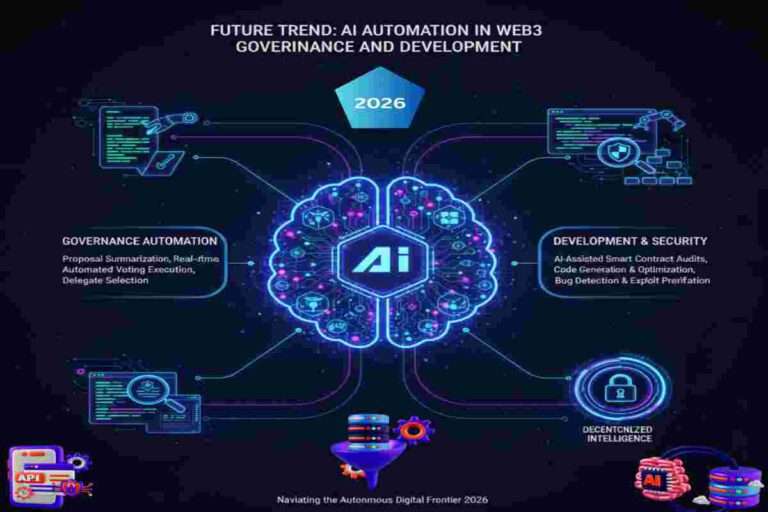
Beyond 2026, digital ownership will increasingly intersect with artificial intelligence, autonomous agents, and composable smart contracts. AI-driven agents will own wallets, execute transactions, manage portfolios, and participate in DAOs on behalf of users, redefining how ownership is exercised. Composable ownership will allow digital assets, identity credentials, and financial positions to seamlessly interact across protocols, creating programmable ownership stacks. This convergence will transform digital ownership from static possession into dynamic, automated, and utility-driven control within the decentralized economy.
Digital ownership is no longer a concept to debate—it is the operating system of the decentralized internet. Throughout this guide, we’ve broken down how Web3 ownership functions across tokenization, decentralized finance, identity, governance, and real-world assets, showing that ownership is not a single asset class but a layered value system. When enforced by blockchain, ownership becomes programmable, transferable, and productive.
What emerges is a clear framework: digital ownership works when control, interoperability, and real yield align. Self-custody secures assets, smart contracts enforce rights, DeFi converts ownership into cash flow, and decentralized governance distributes power. Together, these components form the OWN Stack—a practical blueprint for capturing value in Web3 rather than leaking it to platforms or intermediaries.
For institutions, digital ownership represents compliant innovation, tokenized markets, and new financial infrastructure. For investors, it reframes value around sustainable yield and ownership-based income. For builders and users, it offers sovereignty over assets, identity, and participation in on-chain economies.
The next phase of Web3 will not be defined by speculation, but by who understands ownership deeply enough to design, invest, and build around it. Digital ownership is not the future—it is already here. The advantage belongs to those who learn how to use it strategically.
Ownership today is:
Those who understand OWN don’t just participate in Web3.
They compound inside it.
What is digital ownership in Web3 in 2026?
Digital ownership means holding and controlling assets directly on-chain via private keys, without relying on platforms. It ensures verifiable, transferable, and programmable rights enforced by blockchain, not intermediaries.
How is Web3 ownership different from custody?
Custody means a platform controls your assets. Ownership means you control the private keys, giving full authority over access, transfer, and value.
What does true digital ownership mean?
True ownership combines on-chain proof, permissionless transfer, economic rights (yield/royalties), and governance participation—full control, not just access.
How do NFTs relate to ownership?
NFTs provide verifiable on-chain proof of ownership for unique digital assets, enabling scarcity, transferability, and marketplace liquidity.
What are the limits of NFT ownership?
NFTs usually prove token ownership only, not full intellectual property or legal rights. Usage rights depend on licensing terms.
What is ownership transferability in Web3?
It is the ability to move digital assets globally, instantly, and without permission through blockchain networks and smart contracts.
Why is interoperability important for ownership?
Interoperability allows assets and identity to function across multiple chains and applications, preventing platform lock-in.
How is self-sovereign identity linked to ownership?
Self-sovereign identity (SSI) connects assets and credentials directly to the user, making ownership portable and independent of platforms.
What are DAOs and ownership economies?
DAOs enable collective ownership where governance tokens give users voting rights and shared economic participation in protocols.
How do smart contracts enforce ownership?
Smart contracts automatically execute ownership rules—transfers, access, and revenue distribution—without intermediaries.
How does Web3 enable financial ownership?
Users directly control yield-bearing assets like staking, lending, and tokenized RWAs, capturing returns without banks.
How can ownership generate real yield?
Through protocol revenue, staking rewards, tokenized assets, and embedded royalties that produce ongoing income streams.
What ownership metrics matter in 2026?
On-chain control, utility, yield generation, interoperability, and governance participation define real ownership value.
What legal risks affect Web3 ownership?
Risks include unclear asset classification, jurisdiction conflicts, and limited enforceability of on-chain ownership in courts.
How does regulation impact digital ownership in 2026?
Regulation defines custody rules, taxation, and compliance frameworks, shaping how ownership is recognized and enforced.
Who are the strategic personas in digital ownership?
Builders, creators, investors, and DAO participants—each engaging ownership differently for control, yield, or governance.
LearnWeb3 is a beginner-friendly platform offering structured, hands-on Web3 learning resources trusted by the developer community.👉 U.S. Treasury Digital Asset Report
Welcome to OwnProCrypto (Own & Pro Crypto) — a next-generation Bitcoin and blockchain education platform where the science of finance meets the power of AI-driven automation.
Our mission is simple: to equip you with the knowledge, frameworks, and tools needed to make smarter financial and business decisions in the Web3 economy.
Beyond analysis, OwnProCrypto focuses on transparency, verifiable data, and practical frameworks that investors and builders can actually use. Our goal is not hype — but clear thinking, disciplined analysis, and long-term value creation in the decentralized economy.
Our Background: Salim (Sam) is the founder and lead researcher behind OwnProCrypto, a Web3 intelligence platform focused on crypto security, digital ownership, stablecoin systems, interoperability, and institutional blockchain infrastructure.
Crypto Tools & Analysis:
Crypto Fundamental Analysis Tool | Protocol Evaluation System | DeFi Risk Analysis Tools | Crypto Portfolio Dashboard | Token Risk vs Reward Tool
Guides:
Crypto Fundamental Analysis | Blockchain Project Evaluation | Tokenomics Analysis | DeFi Protocol Analysis | Capital Efficiency
© 2026 OwnProCrypto — Built for smarter crypto decisions