
Search by title, topic or phrase
Use our Crypto Search Engine 🔍 to find the topics and keywords you're looking for.
Web3 development is the process of designing, building, deploying, and operating systems that use blockchain networks, smart contracts, decentralized infrastructure, wallets, data systems, and application-layer interfaces.
The BUILD pillar is not intended to explain every blockchain technology in depth. Its purpose is to show how the Web3 stack fits together and direct builders toward the specialist architecture, infrastructure, application, AI, enterprise, and development resources they actually need.
How is the Web3 stack actually built? Start with the primitives, move through architecture and infrastructure, then connect those foundations to applications, AI systems, enterprise environments, tokenization, and specialized autonomous systems.

Table of Contents
ToggleWeb3 development combines blockchain infrastructure, smart-contract logic, application interfaces, wallets, data systems, and supporting services into a functioning product or protocol. This foundation connects smart contract development with Web3 application architecture, helping builders understand how the components fit together before exploring specialist topics.
A Web3 application therefore cannot be understood only by looking at its smart contracts. Developers must also consider the underlying blockchain, execution environment, wallet interaction, data availability, indexing, transaction lifecycle, security, and user experience. This BUILD navigator connects these architectural layers to the specialist guides and resources needed to explore each area in greater depth.
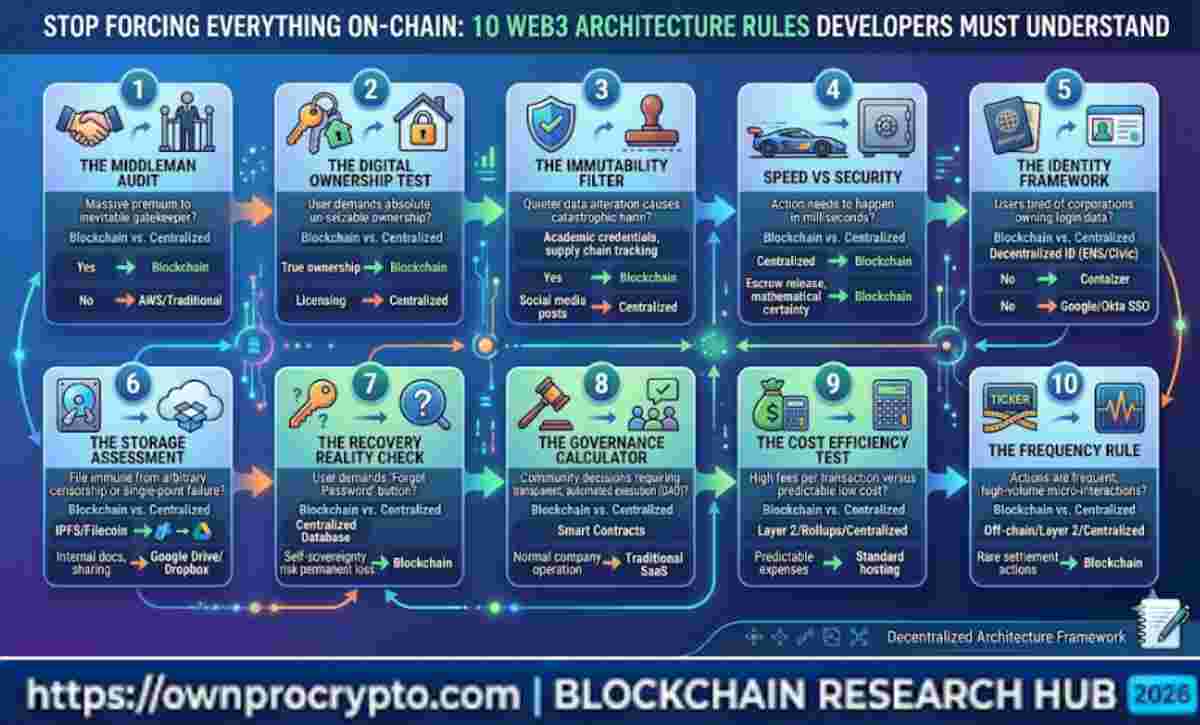
Web3 development sits inside a larger architecture. Applications depend on execution environments, blockchain networks, data infrastructure, wallets, interoperability, and supporting services.
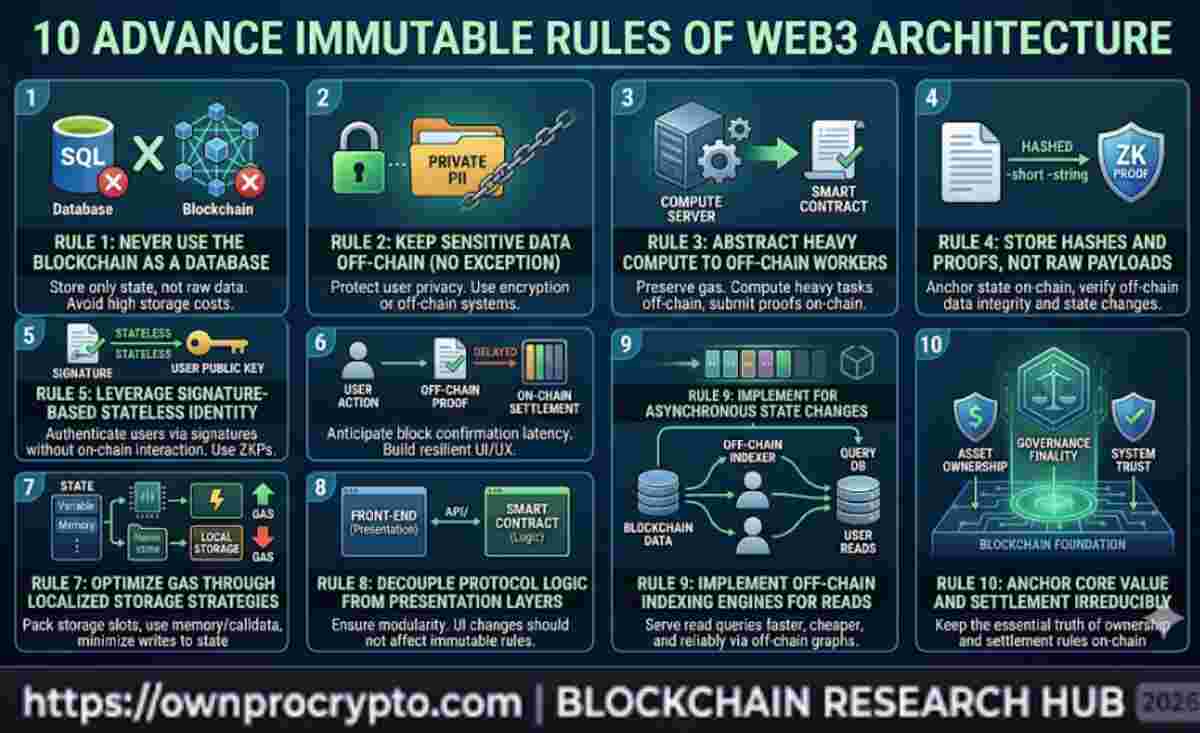
Applications require more than smart contracts. Developers need reliable blockchain access, nodes, RPC infrastructure, indexing, data services, deployment environments, monitoring, and supporting infrastructure.
The infrastructure layer determines how reliably an application can communicate with networks, retrieve state, submit transactions, process events, and operate at scale.
Once infrastructure and architecture are established, developers connect those layers to decentralized applications, smart contracts, wallets, protocols, and user-facing experiences. Web3 application architecture defines how these components interact to deliver a functioning product.
The application layer is where infrastructure becomes useful to users. The exact architecture depends on whether the system is a consumer dApp, DeFi protocol, DAO, enterprise application, marketplace, tokenized asset platform, or another specialized Web3 product.

AI adds another execution and coordination layer to Web3 systems. Instead of applications being controlled only through conventional interfaces, AI agents can interpret information, make decisions, call services, and interact with blockchain infrastructure.
This creates a specialized development path rather than a reason to duplicate the entire Web3 development stack inside the BUILD pillar.
Enterprise Web3 development introduces additional requirements around governance, infrastructure, security, custody, interoperability, compliance, operational resilience, and integration with existing systems.
The enterprise path therefore extends beyond ordinary application development. Organizations need to connect blockchain capabilities with established business and financial infrastructure.
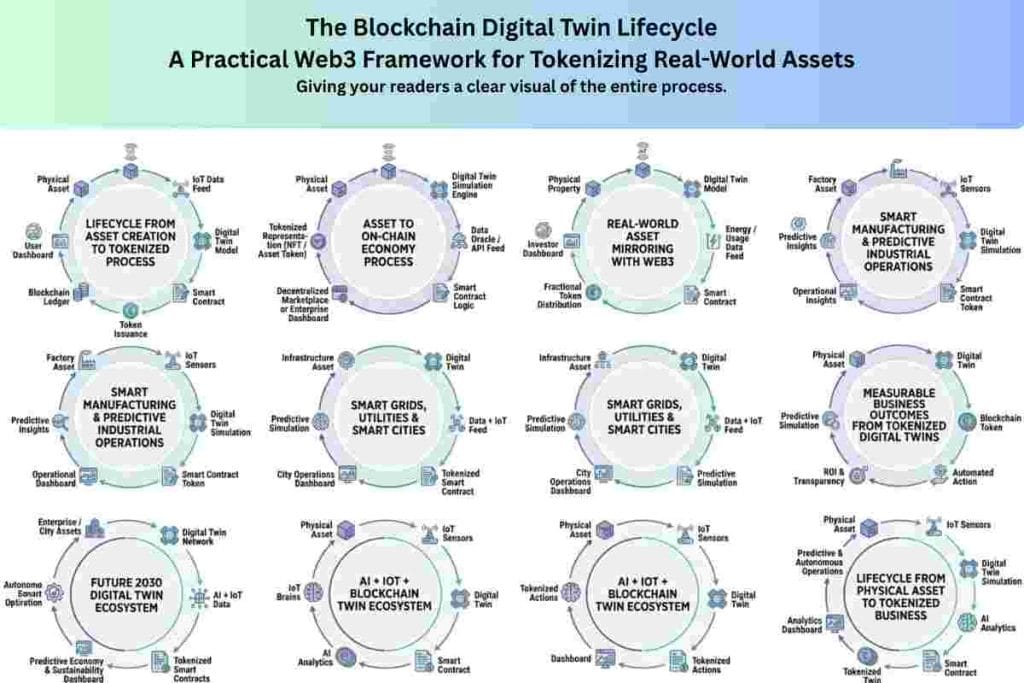
Tokenization connects blockchain infrastructure to real-world and digital assets by representing ownership, claims, rights, or economic interests through blockchain-based systems.
The technical requirements can extend across token standards, custody, compliance, liquidity, settlement, asset servicing, and application infrastructure. Tokenization therefore deserves its own specialist cluster rather than being treated as a small subsection of general Web3 development.

Web3 infrastructure can also support systems that operate continuously through programmable rules, smart contracts, automated strategies, and increasingly autonomous software agents.
These systems require more specialized architecture because execution, permissions, incentives, risk controls, and automated decision-making can interact continuously.
Once the architectural direction is clear, move from the BUILD map to the specialist resource that matches your implementation needs, whether you are exploring architecture, infrastructure, blockchain development tools, or specialized Web3 systems.
The BUILD pillar maps the Web3 construction stack. Use it to identify the layer you are working on, then follow the relevant specialist resource for deeper architecture guidance, infrastructure comparisons, development tools, or implementation decisions.
Explore the Web3 Development Hub →
Before building a Web3 application, developers need to decide which components belong on-chain and which should operate off-chain. The Web3 Architecture Decision Engine helps users evaluate architectural choices, understand system boundaries, and explore the implications of different design decisions. It connects directly with this BUILD pillar by turning foundational concepts into practical architecture planning, helping builders make more informed decisions about scalability, cost, execution, and system design before moving into infrastructure and application development. Alongside relevant blockchain development tools, it helps builders navigate the Web3 stack at the Architecture layer, bridging core blockchain primitives and the infrastructure required to build and operate decentralized applications.
The BUILD pillar is complete when you know which part of the Web3 stack you need to investigate next. Use the paths below to move directly from the architectural question to the appropriate specialist cluster.
| Path | Builder Need | Next Layer | Resource |
|---|---|---|---|
| 01 | I need Web3 development fundamentals. | Development Foundation | Explore Web3 Development → |
| 02 | I need Web3 architecture. | Architecture | Explore Web3 Architecture → |
| 03 | I need blockchain infrastructure. | Infrastructure | Explore Blockchain Infrastructure → |
| 04 | I am building a dApp or decentralized system. | Applications | Explore Blockchain for dApps → |
| 05 | I am building AI + Web3 systems. | AI + Web3 | Explore Web3 AI Build Guide → |
| 06 | I am building for an enterprise environment. | Enterprise | Explore Enterprise Crypto Stack → |
| 07 | I am building tokenization infrastructure. | Tokenization | Explore Tokenization Platforms → |
| 08 | I am building autonomous Web3 systems. | Specialized Systems | Explore Autonomous DeFi → |
You now have the construction map: Primitives → Architecture → Infrastructure → Applications → AI → Enterprise → Specialized Systems. Use the links above to leave this overview and continue into the specialist cluster that matches the system you are building.
Building Web3 systems is not simply a matter of writing smart contracts. A production-ready system connects blockchain primitives, architecture, infrastructure, applications, data, security, and operations into one coherent stack. The framework below summarizes the Build pillar and directs deeper implementation work to the relevant specialist resources.
This content is provided for educational and Web3 architecture framework purposes. Infrastructure, development, security, and deployment decisions should be evaluated against the specific technical, operational, regulatory, and risk requirements of the system being built.
External resource: Ethereum Developer Documentation — Learn how smart contracts work, how they fit into Web3 architecture, and how to build and deploy them using established developer tools.
These questions address the most important decisions builders face after understanding the Web3 construction stack: what to build, where it belongs, how the layers connect, and when to move into a specialist architecture.
Web3 development is the process of designing, building, deploying, and operating applications and protocols that use blockchain networks, smart contracts, wallets, decentralized infrastructure, and supporting data systems.
Start with the fundamentals: blockchain primitives, execution environments, wallets, transactions, smart contracts, application architecture, and the infrastructure required to connect applications to blockchain networks.
A practical Web3 build can be understood as a stack of primitives, architecture, infrastructure, applications, and specialized systems such as AI, enterprise, tokenization, and autonomous execution.
Yes. Smart contracts are only one part of the system. A production application may also require blockchain access, RPC infrastructure, indexing, data services, wallets, frontends, security controls, monitoring, and deployment infrastructure.
Put logic on-chain when transparency, verifiability, shared state, or trust-minimized execution is important. Computation that is private, highly intensive, or better handled outside the blockchain can often remain off-chain.
Architecture should come first. The required infrastructure depends on the application’s execution model, data requirements, security assumptions, scalability needs, interoperability requirements, and operational environment.
AI can operate as an additional execution and coordination layer. AI agents can interpret information, interact with services, automate workflows, and potentially interact with blockchain systems under defined permissions and controls.
Move into a specialist architecture when the system introduces requirements such as organizational governance, institutional infrastructure, custody, compliance, real-world assets, asset servicing, settlement, or integration with existing financial systems.
The BUILD pillar gives you the architectural map. From here, move into the specialist resource that matches your development problem instead of trying to understand the entire Web3 ecosystem at once.
Explore the Web3 Development Hub →