Tips, Personas & Case Studies
Expert Advice & Tips
- If you’re an investor:
Separate Bitcoin, blockchain infrastructure, and crypto assets in your portfolio logic.
- If you’re a business owner:
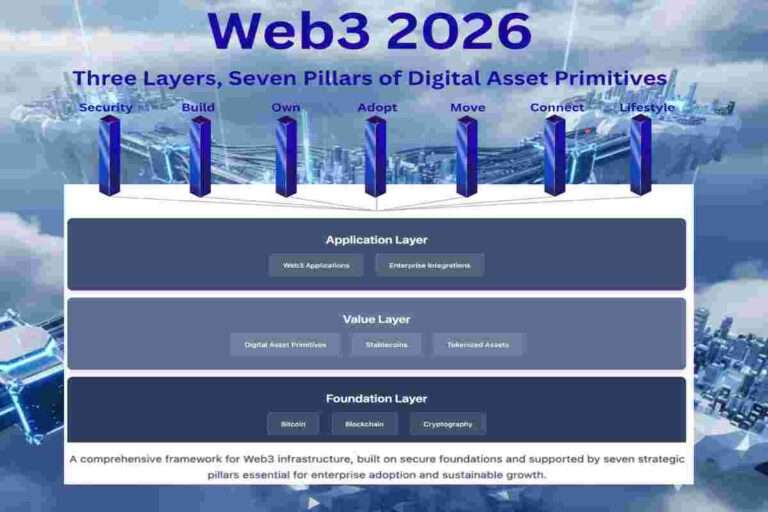
Ask which layer you’re actually adopting before choosing a vendor or protocol.
- If you’re an institution:
Treat blockchain like infrastructure, not software — procurement and risk models change.
- If you’re new:
Don’t chase apps. Learn the primitives once — they compound forever.
Personas: Who This Framework Is Built For
1. The Institutional Allocator
Cares about custody, settlement finality, correlation, and regulatory clarity.
2. The Business Owner / Operator
Evaluating blockchain for payments, identity, or asset issuance — wants clarity, not buzzwords.
3. The Long-Term Investor
Focused on durability, not cycles; separates base layers from experiments.
4. The Builder Transitioning from Web2
Understands infrastructure but needs mental models for decentralization and trustless systems.
Case Studies (Success & Failure)
Bitcoin as Treasury Infrastructure (Success)
Several public companies adopted Bitcoin not as a trade, but as:
- Long-term treasury reserve
- Inflation hedge
- Balance-sheet primitive
Why it worked:
They understood Bitcoin as base money, not a tech bet.
Stablecoins in Cross-Border Settlement (Success)
Enterprises using stablecoins for settlement achieved:
- Faster settlement
- Lower FX friction
- Reduced counterparty exposure
Why it worked:
They adopted at the value layer, not the application layer.
Case Study: The Rise of Digital Sovereignty
- Problem: Individuals need a way to store wealth and transfer value that cannot be devalued by inflation, frozen by a bank, or seized by a central authority.
- Objectives: To create a “Verifiable Reality” where ownership is proven by math (code) rather than a bank’s permission.
- Analysis / Situation: By using Bitcoin (Sovereign Store of Value) and Solana/Ethereum (Programmable Engines), users can hold assets in their own private wallets. The ledger is public; anyone can see that there will only ever be 21 million Bitcoin, making it impossible for a bailout to devalue the asset.
- Implementation: Users move from “Bank Accounts” to Self-Custody Wallets. They use smart contracts to automate transactions (like the 20% commission model discussed earlier) without needing a middleman to verify the deal.
- Challenges: The main challenge is Self Responsibility. If you lose your private keys, there is no Help Desk. Users must learn digital hygiene to protect their assets.
- Results / Outcomes: A parallel financial system has emerged that operates 24/7, settled in seconds, and is open to anyone with an internet connection. It has proven to be a successful Reality that offers an exit from the risks of legacy banking.
Case Study: The 2008 Global Financial Crisis (Success)
- Problem: The global banking system was built on “blind trust” where banks used customer deposits to make highly risky bets on the housing market without transparency.
- Objectives: To maintain high profits for executives while hiding the true risk of insolvency from the public and the government.
- Analysis / Situation: Banks were lending out significantly more money than they actually held (fractional reserve). When the housing market crashed, the “ledger” of these banks was revealed to be a mess of bad debt. Because the system was centralized and opaque, no one knew the system was failing until it was too late.
- Implementation: The government “solved” the problem by printing trillions of dollars in taxpayer-funded bailouts. This protected the bankers but devalued the currency of the average citizen.
- Challenges: The primary challenge was a total lack of transparency; customers could not verify if their money actually existed in the vault.
- Results / Outcomes: Millions lost their homes and savings. This event served as the “Big Bang” for Bitcoin, exposing that the legacy system is often a centralized “con” where the rules can be changed at the expense of the people.
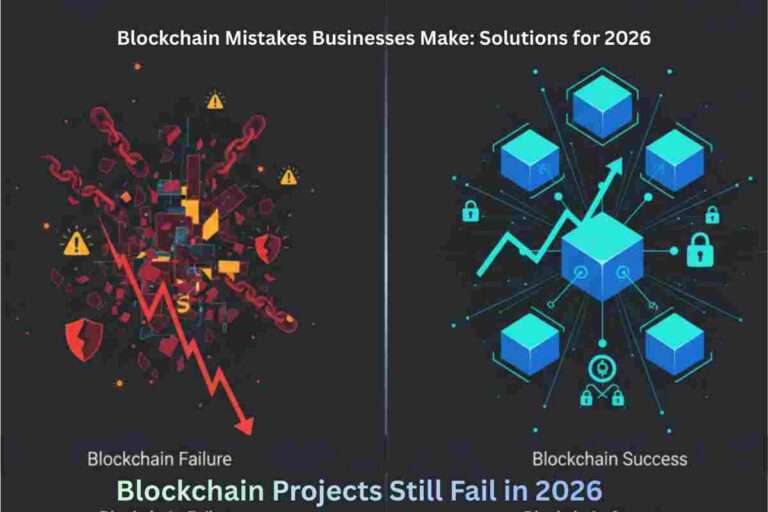
Chasing Yield Without Understanding Primitives (Failure)
Funds that piled into high-yield protocols without understanding:
- Custody assumptions
- Smart contract risk
- Layer dependencies
Result:
Permanent capital loss.
Why it failed:
They ignored the foundation layer.