
How do I evaluate a DeFi opportunity before I use it?
Looking for a reliable DeFi Risk Analysis Guide & Tools to stay safe & spot sustainable yield? Before you stake your assets, use this evaluation engine to separate real protocol revenue from temporary token incentives and maximize your long-term returns.
Understanding protocol risk is only the first step. The next step is building a decision system that helps you compare opportunities, manage exposure, and allocate capital with confidence.
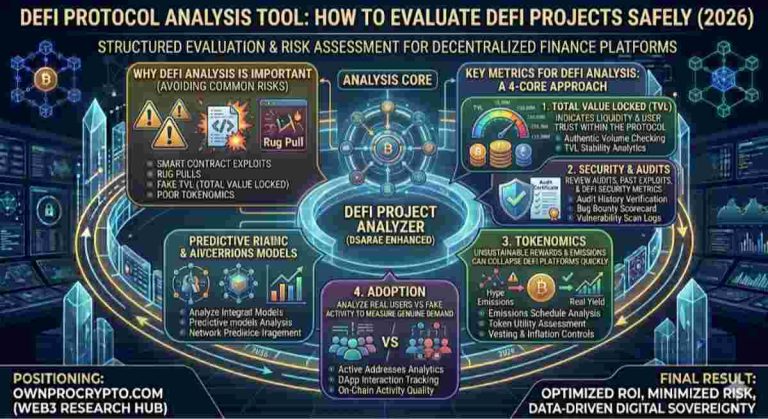
Table of Contents
ToggleDecentralized finance has created new ways to borrow, lend, trade, earn yield, and access financial services without traditional intermediaries. While these opportunities continue to grow, so do the risks.
A protocol can appear secure, offer attractive yields, and attract significant capital, yet still contain weaknesses that may not be obvious at first glance.
This is where DeFi risk analysis tools become essential.
Rather than relying on hype, social media discussions, or short-term performance, effective risk analysis helps users evaluate the strength, sustainability, and security of a protocol before committing capital.
This guide introduces a practical framework for analyzing DeFi opportunities using the same core principles applied by professional investors, researchers, and digital asset institutions.
Simple explanation of what investors, researchers, and institutions use to evaluate protocols before committing capital.
DeFi risk analysis tools are systems, frameworks, and evaluation methods used to assess the potential risks associated with decentralized finance protocols.
These tools help users answer important questions:
The goal is not to eliminate risk completely. The goal is to understand risk before making a decision.
The DeFi ecosystem has matured significantly, but the market continues to face challenges including smart contract exploits, governance failures, bridge vulnerabilities, liquidity shocks, and unsustainable incentive models.
As capital flows across multiple chains and protocols, users need structured ways to compare opportunities and identify hidden risks.
Strong risk analysis helps investors:
In a market driven by constant innovation, risk awareness becomes a competitive advantage.
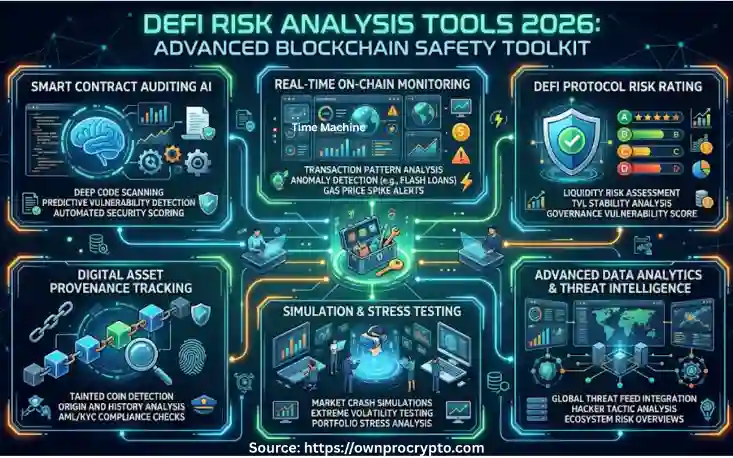
Every DeFi protocol ultimately depends on code.
Smart contract analysis focuses on understanding whether the protocol’s underlying contracts operate securely and as intended.
Areas to review include:
A protocol’s security model should be transparent and well documented.
Liquidity determines how easily users can enter and exit positions.
A protocol may show strong returns, but weak liquidity can create significant challenges during periods of market stress.
Key factors include:
Sustainable liquidity is often more important than headline yield.
Tokenomics influences how value moves throughout a protocol.
Poorly designed token economies often rely on excessive incentives that become difficult to maintain over time.
Areas to evaluate include:
Understanding tokenomics helps identify whether growth is organic or primarily driven by rewards.
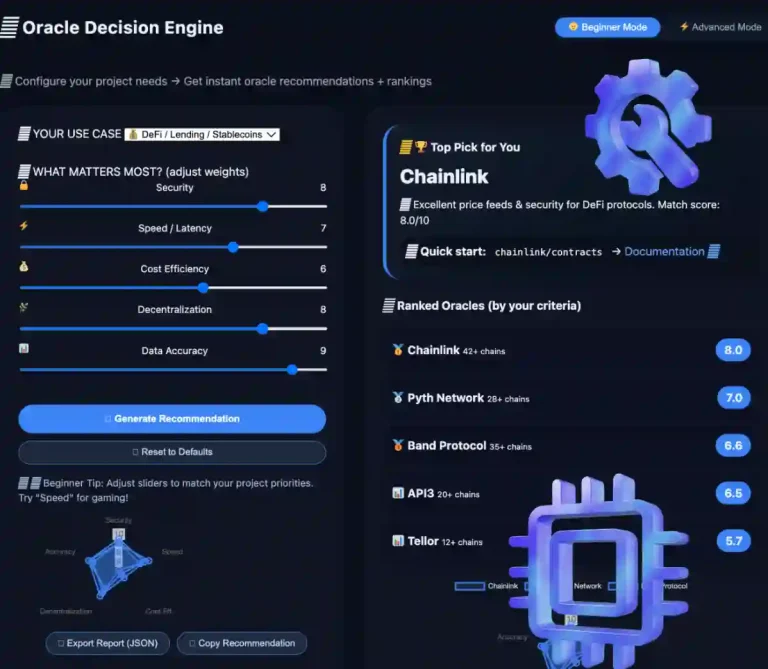
Many DeFi protocols depend on external data sources to operate correctly.
Oracle failures can impact lending systems, liquidations, pricing models, and settlement processes.
Key considerations include:
Reliable data infrastructure is essential for protocol stability.
Governance determines how a protocol evolves over time.
Even technically strong protocols can face challenges if governance becomes concentrated or ineffective.
Important areas include:
Healthy governance supports long-term sustainability.
Modern DeFi increasingly relies on assets and applications moving across multiple blockchain networks.
While interoperability creates opportunities, it also introduces additional risk.
Areas to analyze include:
Cross-chain exposure should always be considered when evaluating protocol risk.
Operational risk focuses on the human and organizational side of a protocol.
Even decentralized systems depend on teams, processes, and infrastructure.
Review factors such as:
Operational strength often influences a protocol’s ability to adapt and recover.
Before using any protocol, review the following:
✓ Smart contracts audited
✓ Liquidity appears sustainable
✓ Tokenomics are clearly documented
✓ Oracle infrastructure is reliable
✓ Governance is transparent
✓ Cross-chain risks are understood
✓ Team and operational structure are visible
✓ Security history has been reviewed
✓ Risk-to-reward profile is reasonable
✓ Position size matches personal risk tolerance
Before using any protocol, use the following Tempaltes:
| Project Name | Audit Firm | Audit Date | Audit Status | Critical Issues Found | Issues Resolved |
|---|---|---|---|---|---|
| AlphaSwap | SecureChain | 15-Jan-2026 | Completed | 2 | Yes |
| NovaDEX | BlockAudit Pro | 22-Feb-2026 | Completed | 1 | Yes |
| CryptoBridge | CertiTrust | 10-Mar-2026 | In Progress | 3 | No |
| YieldVault | SafeCode Labs | 05-Apr-2026 | Completed | 0 | N/A |
| MetaStake | ChainShield | 18-May-2026 | Completed | 1 | Yes |
| Project Name | Total Liquidity (USD) | Locked Liquidity (%) | Lock Expiry Date | Daily Volume (USD) | Sustainability Rating |
|---|---|---|---|---|---|
| AlphaSwap | 5,000,000 | 90% | 31-Dec-2027 | 450,000 | High |
| NovaDEX | 3,200,000 | 85% | 15-Jun-2027 | 300,000 | Medium |
| CryptoBridge | 1,500,000 | 70% | 01-Mar-2027 | 120,000 | Medium |
| YieldVault | 8,500,000 | 95% | 31-Dec-2028 | 900,000 | High |
| MetaStake | 950,000 | 60% | 15-Jan-2027 | 75,000 | Low |
| Project Name | Whitepaper Available | Token Supply Defined | Vesting Schedule Published | Utility Explained | Documentation Score |
|---|---|---|---|---|---|
| AlphaSwap | Yes | Yes | Yes | Yes | 95 |
| NovaDEX | Yes | Yes | Yes | Partial | 85 |
| CryptoBridge | Yes | Yes | No | Yes | 75 |
| YieldVault | Yes | Yes | Yes | Yes | 98 |
| MetaStake | Partial | Yes | No | Partial | 60 |
| Project Name | Oracle Provider | Uptime (%) | Data Refresh Frequency | Backup Oracle | Reliability Score |
|---|---|---|---|---|---|
| AlphaSwap | ChainOracle | 99.9 | 30 sec | Yes | 98 |
| NovaDEX | DataLink | 99.5 | 60 sec | Yes | 92 |
| CryptoBridge | OracleNet | 98.0 | 120 sec | No | 80 |
| YieldVault | ChainOracle | 99.95 | 15 sec | Yes | 99 |
| MetaStake | DataLink | 97.5 | 180 sec | No | 75 |
| Project Name | Governance Model | Voting Portal Public | Proposal History Available | Treasury Reporting | Transparency Score |
|---|---|---|---|---|---|
| AlphaSwap | DAO | Yes | Yes | Monthly | 95 |
| NovaDEX | DAO | Yes | Yes | Quarterly | 88 |
| CryptoBridge | Foundation | Partial | Yes | Quarterly | 75 |
| YieldVault | DAO | Yes | Yes | Monthly | 98 |
| MetaStake | Hybrid | Partial | No | Annual | 60 |
| Project Name | Supported Chains | Bridge Audit Status | Risk Assessment Completed | Incident Response Plan | Risk Rating |
|---|---|---|---|---|---|
| AlphaSwap | 4 | Completed | Yes | Yes | Low |
| NovaDEX | 3 | Completed | Yes | Yes | Medium |
| CryptoBridge | 7 | In Progress | Partial | Yes | High |
| YieldVault | 5 | Completed | Yes | Yes | Low |
| MetaStake | 2 | Not Audited | No | No | High |
| Project Name | Founders Public | Team Size | Organization Chart Available | Contact Information Public | Visibility Score |
|---|---|---|---|---|---|
| AlphaSwap | Yes | 35 | Yes | Yes | 95 |
| NovaDEX | Yes | 22 | Yes | Yes | 90 |
| CryptoBridge | Partial | 15 | No | Yes | 70 |
| YieldVault | Yes | 48 | Yes | Yes | 98 |
| MetaStake | No | 8 | No | Partial | 45 |
| Project Name | Past Incidents | Last Incident Date | Funds Lost (USD) | Recovery Status | Security Rating |
|---|---|---|---|---|---|
| AlphaSwap | 0 | N/A | 0 | N/A | Excellent |
| NovaDEX | 1 | 15-May-2025 | 50,000 | Recovered | Good |
| CryptoBridge | 2 | 20-Nov-2025 | 1,200,000 | Partial | Moderate |
| YieldVault | 0 | N/A | 0 | N/A | Excellent |
| MetaStake | 1 | 10-Jan-2026 | 250,000 | Not Recovered | Poor |
| Project Name | Expected Return (%) | Risk Score (1-10) | Volatility Level | Reward/Risk Ratio | Assessment |
|---|---|---|---|---|---|
| AlphaSwap | 18 | 4 | Medium | 4.5 | Good |
| NovaDEX | 25 | 6 | Medium | 4.2 | Acceptable |
| CryptoBridge | 50 | 9 | High | 5.5 | Speculative |
| YieldVault | 15 | 3 | Low | 5.0 | Excellent |
| MetaStake | 35 | 8 | High | 4.4 | Risky |
| Investor Profile | Portfolio Value (USD) | Max Risk % | Recommended Position Size (USD) | Current Position Size (USD) | Within Tolerance |
|---|---|---|---|---|---|
| Conservative | 50,000 | 2% | 1,000 | 800 | Yes |
| Moderate | 75,000 | 5% | 3,750 | 3,500 | Yes |
| Aggressive | 100,000 | 10% | 10,000 | 12,000 | No |
| Balanced | 60,000 | 4% | 2,400 | 2,000 | Yes |
| Growth | 150,000 | 8% | 12,000 | 10,500 | Yes |
Simple red flags:
Several warning signs deserve additional scrutiny:
These factors do not automatically indicate failure, but they should encourage deeper investigation.
Used to compare protocol fundamentals, governance structures, tokenomics, and sustainability metrics.
These tools help create a structured due diligence process before committing capital.
Focused on contract security, exploit history, permission monitoring, and threat detection.
Security tools provide visibility into technical risks that may not be obvious through performance data alone.
Designed to evaluate exposure across multiple protocols, assets, and chains.
These tools help users understand concentration risk and portfolio resilience.
Risk frameworks combine multiple data points into a repeatable decision process.
Instead of reacting emotionally, users can evaluate opportunities using consistent standards.
Risk analysis is only the first step.
The next stage is building a decision system that helps compare opportunities, allocate capital efficiently, and manage exposure across changing market conditions.
The strongest investors do not rely on predictions alone. They rely on repeatable processes that transform information into better decisions.
Understanding protocol risk provides the foundation. Decision intelligence builds on that foundation.
DeFi continues to expand the possibilities of digital finance, but every opportunity carries risk.
Successful participation requires more than identifying attractive yields or popular protocols. It requires understanding how systems operate, where vulnerabilities exist, and how risk is distributed across the ecosystem.
By applying a structured framework across smart contracts, liquidity, tokenomics, governance, oracle infrastructure, cross-chain architecture, and operational resilience, users can evaluate opportunities with greater confidence and discipline.
Risk analysis is not about avoiding innovation.
It is about approaching innovation with clarity.
|
Learn about fraud prevention, custody risks, and digital asset safety 👉 https://www.ftc.gov |
Crypto Security Tools Hub
        ↓
DeFi Risk Analysis Tools
        ↓
Protocol Evaluation System
        ↓
Risk Management Framework
        ↓
Portfolio Intelligence
        ↓
Decision Intelligence
DeFi risk analysis tools are frameworks and evaluation systems used to assess protocol security, liquidity, governance, tokenomics, and operational risks before investing or interacting with decentralized finance applications.
The biggest risk varies by protocol, but common concerns include smart contract vulnerabilities, liquidity shocks, governance failures, bridge exploits, and unsustainable token incentive models.
Liquidity affects how easily users can enter and exit positions. Low liquidity can increase volatility, slippage, and exit risk during market stress.
Institutional investors typically analyze security architecture, governance systems, liquidity quality, tokenomics, operational resilience, and long-term sustainability before allocating capital.
No. Audits reduce risk but do not guarantee safety. Users should combine audit reviews with broader protocol analysis and ongoing risk monitoring.
Beginners should start by understanding smart contract risk, liquidity quality, and protocol transparency before exploring more advanced areas such as governance structures and cross-chain exposure.
Welcome to OwnProCrypto (Own & Pro Crypto) — a next-generation Bitcoin and blockchain education platform where the science of finance meets the power of AI-driven automation.
Our mission is simple: to equip you with the knowledge, frameworks, and tools needed to make smarter financial and business decisions in the Web3 economy.
Beyond analysis, OwnProCrypto focuses on transparency, verifiable data, and practical frameworks that investors and builders can actually use. Our goal is not hype — but clear thinking, disciplined analysis, and long-term value creation in the decentralized economy.
Our Background: Salim (Sam) is the founder and lead researcher behind OwnProCrypto, a Web3 intelligence platform focused on crypto security, digital ownership, stablecoin systems, interoperability, and institutional blockchain infrastructure.
Crypto Tools & Analysis:
Crypto Fundamental Analysis Tool | Protocol Evaluation System | DeFi Risk Analysis Tools | Crypto Portfolio Dashboard | Token Risk vs Reward Tool
Guides:
Crypto Fundamental Analysis | Blockchain Project Evaluation | Tokenomics Analysis | DeFi Protocol Analysis | Capital Efficiency
© 2026 OwnProCrypto — Built for smarter crypto decisions