
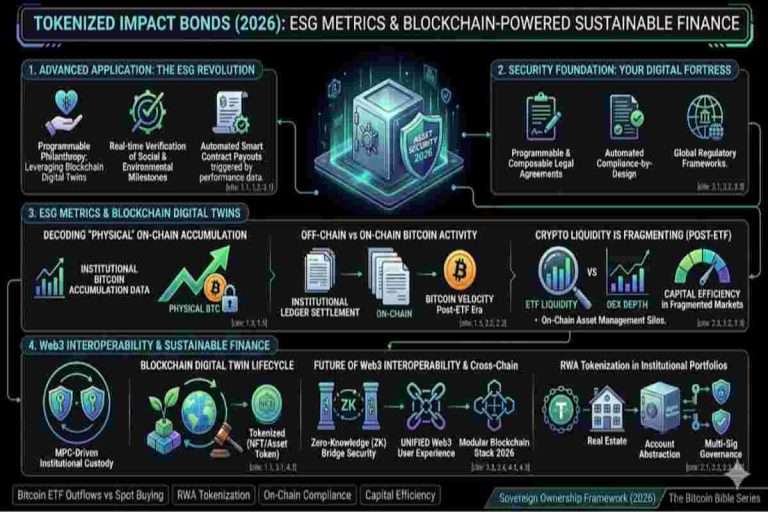
In 2026, capital markets are entering a programmable era where impact finance must become verifiable, automated, and globally accessible. Tokenized Impact Bonds are digital representations of impact-focused debt instruments that leverage blockchain technology to improve transparency, traceability, and accessibility. Unlike traditional ESG or green bonds, these bonds embed smart contracts that automate tracking of Environmental, Social, and Governance (ESG) metrics, ensuring that capital is deployed toward measurable impact. By combining impact finance principles with digital tokenization, these instruments enable fractional ownership, faster settlement, and enhanced accountability for investors seeking sustainable returns.
Sustainable change shouldn’t be slow, opaque, or uncertain—your capital should act with impact.”
With Tokenized Impact Bonds, your investments are linked directly to verified ESG outcomes, powered by blockchain and smart contracts. You gain instant insight, automated compliance, and auditable results, making it easier than ever to scale impact finance globally.
Promises of sustainability are easy—proving them isn’t. Until now. Turn sustainability promises into verifiable blockchain action.
Enterprises, asset managers, and governments gain:
Tokenized Impact Bonds make ESG measurable, investable, and accountable — on-chain.
Tokenized bonds could power global sustainable finance markets, creating automated, verifiable impact at scale.
These ESG-focused assets are becoming a staple in the modern portfolios detailed in our RWA Tokenization 2026 roadmap. You can monitor global sustainable finance standards at the United Nations ESG Portal.
Table of Contents
ToggleESG investment has evolved from manual reporting and traditional green bonds to more transparent, technology-driven solutions. Early ESG models relied heavily on self-reported corporate disclosures, often lacking verification and real-time monitoring. With the advent of tokenized impact bonds, investors can now access automated ESG compliance, real-time impact tracking, and on-chain reporting. This evolution reflects a broader trend in sustainable finance, where blockchain-enabled tools are reshaping how capital flows to measurable environmental and social outcomes.
Blockchain technology is critical for ESG finance because it enables secure, transparent, and immutable recording of impact metrics. By leveraging smart contracts and decentralized verification, tokenized bonds can automatically enforce ESG compliance, trigger impact-based payouts, and provide investors with auditable proof of social or environmental outcomes. The integration of blockchain ensures higher trust, reduces intermediaries, and opens ESG investment to a broader global investor base, creating scalable impact finance solutions.
Imagine every dollar you invest having a verifiable social or environmental impact. Tokenized Impact Bonds turn sustainability promises into on-chain, auditable action, allowing investors to directly link their capital to measurable outcomes.
Key benefits for enterprises, asset managers, and governments include:
Enterprises and investors are increasingly demanding measurable social and environmental impact alongside financial returns. Tokenized impact bonds combine blockchain transparency, automated smart contracts, and ESG metrics, enabling funds to be deployed with verifiable accountability.
By embedding blockchain technology at their core, tokenized bonds make ESG initiatives measurable, investable, and accountable. Smart contracts enforce compliance automatically, while decentralized verification ensures trustworthy impact reporting. These capabilities empower markets to scale sustainable finance globally, creating automated, verifiable impact at scale.
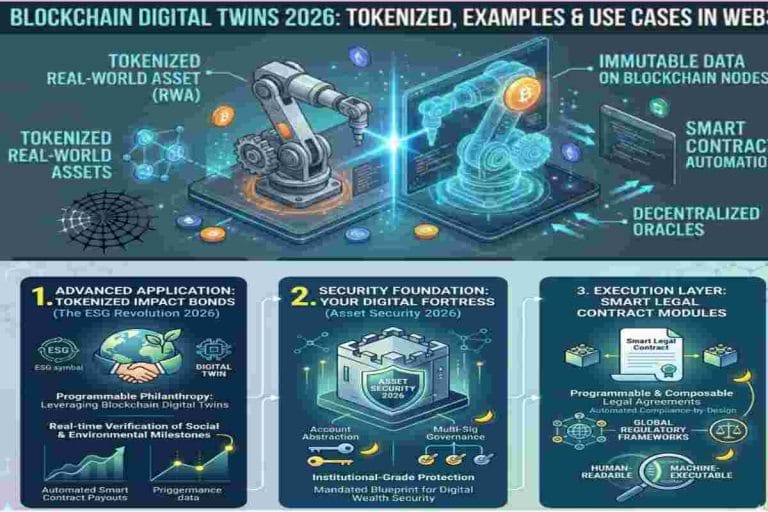
In 2026, Tokenized Impact Bonds revolutionize social and environmental financing by merging the accountability of traditional outcomes-based contracts with the efficiency of Web3. At their core, these bonds function as a digital agreement where capital is raised to fund a specific social goal—such as reforestation or healthcare access. This capital is locked in a smart contract and represented as tradable tokens. Unlike traditional bonds, the “yield” is triggered by real-world data; AI-powered Oracles verify whether the impact milestones have been met. If the pre-defined goals are achieved, the smart contract automatically releases payments to investors. This model ensures Capital Efficiency and radical transparency, as donors or governments only pay for proven results, while investors benefit from a liquid, programmable asset class tied to positive global change.
Table: Tokenized vs Traditional Impact Bonds
| Feature | Traditional Impact Bonds | Tokenized Impact Bonds |
|---|---|---|
| ESG Reporting | Manual, annual | Automated, real-time via oracles |
| Investor Access | Limited | Fractional, global |
| Transparency | Low | High, on-chain audit |
| Payout Execution | Manual | Smart contract-triggered |
| Liquidity | Moderate | High via token markets |
Diagram: Tokenized Impact Bond Workflow
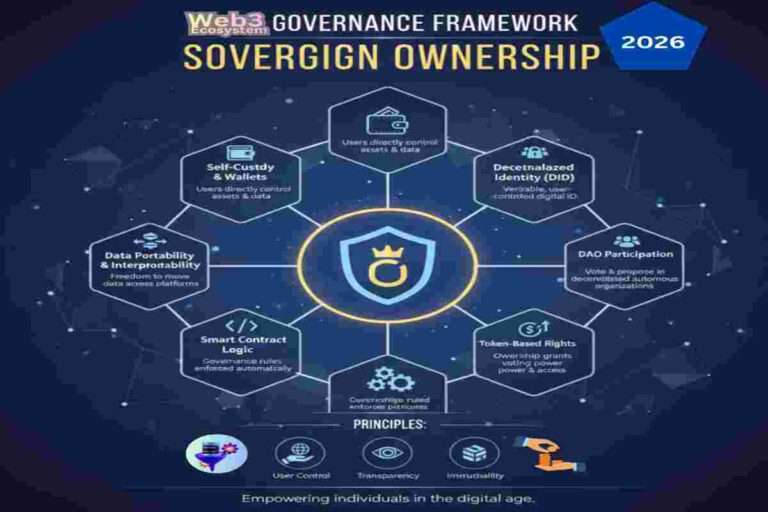
Table: Use Case Examples
| Sector | Example | Key Metric |
|---|---|---|
| Energy | Solar farm bonds | CO₂ reduction tons |
| Social | Education bonds | # of students reached |
| Carbon Credit | Forest restoration | Verified carbon credits |
| Infrastructure | Public transport | Reduced emissions & usage metrics |
| Model | Financial Return | Impact Measurement | Transparency |
|---|---|---|---|
| Traditional Bonds | Fixed coupon | Indirect | Limited |
| ESG Bonds | Financial + reported ESG | Periodic reporting | Moderate |
| Tokenized Impact Bonds | Programmable return | Real-time on-chain ESG | High |
This visually reinforces the transformation narrative.
Table: Next-Gen Features
| Feature | Benefit |
|---|---|
| AI ESG Analytics | Predictive impact assessment |
| DAO Governance | Transparent stakeholder voting |
| Cross-Chain Tokenization | Global accessibility & liquidity |
| Dynamic Incentives | Align investor & project goals |
Tokenized Impact Bonds are blockchain-based digital debt instruments designed to fund projects that generate measurable Environmental, Social, and Governance (ESG) outcomes. They use smart contracts to automate reporting, compliance, and in some cases, performance-based payouts tied to verified impact metrics.
Traditional ESG or green bonds rely heavily on periodic reporting and third-party verification. Tokenized Impact Bonds enhance this model by embedding ESG tracking directly on-chain, enabling real-time transparency, automated compliance, and improved investor accountability through blockchain technology.
Blockchain provides immutable, transparent record-keeping. When ESG data is recorded on-chain, it cannot be altered retroactively. Smart contracts can automatically verify milestones, trigger reporting updates, and ensure compliance—reducing fraud, greenwashing, and reporting delays.
Smart contracts act as programmable policy engines. They automate ESG metric tracking, enforce compliance conditions, and can trigger payments or interest adjustments based on predefined sustainability performance indicators (KPIs).
Depending on regulatory jurisdiction, Tokenized Impact Bonds can be available to institutional investors, accredited investors, or retail investors. Tokenization allows fractional ownership, potentially lowering minimum investment thresholds and broadening access to sustainable finance markets.
These bonds commonly fund renewable energy projects, climate resilience infrastructure, education initiatives, healthcare programs, carbon reduction efforts, and social development initiatives—any project with measurable ESG outcomes.
Verification may involve decentralized oracles, third-party auditors, IoT devices, or ESG data providers. The verified data is recorded on-chain, ensuring transparency and reducing the risk of manipulation or greenwashing. Oracles and AI analytics track project outcomes in real time for smart contract execution.
Yes, in most jurisdictions tokenized bonds are treated as securities and must comply with applicable securities laws, ESG disclosure standards, and financial regulations. Regulatory clarity is evolving as digital asset frameworks mature globally.
Enterprises, governments, DAOs, and DeFi protocols.
Risks may include regulatory uncertainty, smart contract vulnerabilities, liquidity constraints in secondary markets, data reliability issues, and broader market volatility. Investors should assess both financial and technological risks before participating.
Tokenized Impact Bonds represent a shift toward measurable, accountable, and scalable impact finance. By combining ESG investing with blockchain automation, they enhance trust, transparency, and capital efficiency—potentially accelerating global sustainable development goals.
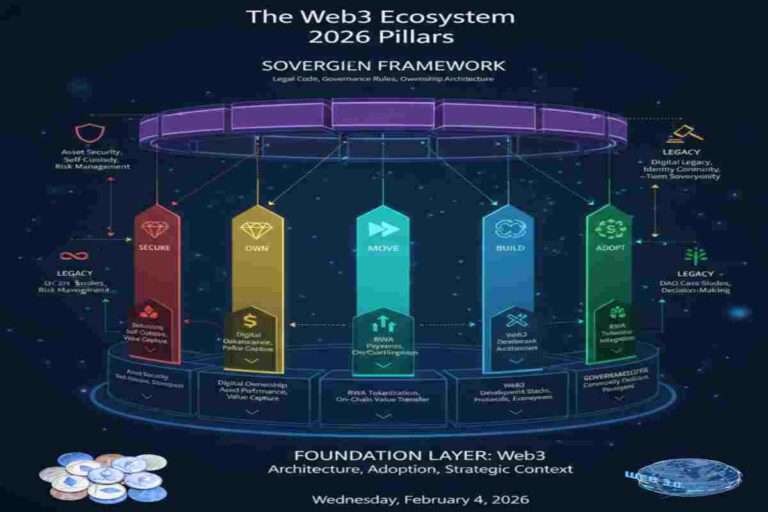
Explore related pillars:
Each pillar functions independently while forming a complete sovereign Web3 lifecycle model.
The convergence of blockchain, ESG metrics, and programmable finance is not an incremental upgrade — it is a structural shift in how global capital measures value.
Welcome to OwnProCrypto (Own & Pro Crypto) — a next-generation Bitcoin and blockchain education platform where the science of finance meets the power of AI-driven automation.
Our mission is simple: to equip you with the knowledge, frameworks, and tools needed to make smarter financial and business decisions in the Web3 economy.
Beyond analysis, OwnProCrypto focuses on transparency, verifiable data, and practical frameworks that investors and builders can actually use. Our goal is not hype — but clear thinking, disciplined analysis, and long-term value creation in the decentralized economy.
Our Background: Salim (Sam) is the founder and lead researcher behind OwnProCrypto, a Web3 intelligence platform focused on crypto security, digital ownership, stablecoin systems, interoperability, and institutional blockchain infrastructure.
Crypto Tools & Analysis:
Crypto Fundamental Analysis Tool | Protocol Evaluation System | DeFi Risk Analysis Tools | Crypto Portfolio Dashboard | Token Risk vs Reward Tool
Guides:
Crypto Fundamental Analysis | Blockchain Project Evaluation | Tokenomics Analysis | DeFi Protocol Analysis | Capital Efficiency
© 2026 OwnProCrypto — Built for smarter crypto decisions