

Table of Contents
ToggleBy 2026, Web3 interoperability has evolved from insecure token bridges into a fully connected execution layer powering the sovereign internet. Cross-chain infrastructure no longer exists merely to move tokens between isolated ecosystems. Instead, interoperability now coordinates liquidity, governance, identity, compliance, and smart contract execution across modular blockchain networks.
The modern interoperability stack is built around four structural shifts:
| 2026 Interoperability Driver | Core Function | Strategic Impact |
|---|---|---|
| Chain Abstraction | Hides blockchain complexity from users | Removes manual bridging friction |
| Intent-Based Execution | Executes outcomes instead of transactions | Improves UX and automation |
| Modular Infrastructure | Separates execution, settlement, and DA layers | Enhances scalability |
| Zero-Knowledge Verification | Verifies state trustlessly across chains | Reduces bridge security risk |
Web3 interoperability is the structural upgrade that transforms isolated blockchains into a unified digital economy.
Web3 interoperability is no longer optional—it is the structural foundation that turns isolated blockchains into a connected digital economy. Today, applications, liquidity, identities, and governance systems often operate in silos, limiting coordination, inflating operational complexity, and fragmenting value. Multichain communication enables smart contracts, DAOs, and institutions to interact seamlessly across networks, unlocking shared liquidity, improving capital efficiency, and unifying user experience. Success in the next phase of Web3 is not about choosing a “winning chain” but building on interoperable stacks that preserve sovereignty while abstracting complexity.
With modular execution layers, standardized messaging protocols, and interoperable identity frameworks, assets move freely, governance is streamlined, and economic coordination scales across ecosystems—turning fragmented protocols into integrated financial rails and ensuring that growth comes from connected networks, not just bigger chains.
Decentralization without interoperability is fragmentation by design.
From a capital markets perspective, fragmentation is expensive. Siloed liquidity inflates volatility. Disconnected governance slows decision-making. Operational complexity increases attack surfaces. Web3 interoperability reduces these frictions, aligning assets, compliance frameworks, and economic coordination across ecosystems.
This guide breaks down how interoperability actually works—technically, economically, and strategically. You will understand how multichain systems exchange data securely, how liquidity bridges evolve into native shared infrastructure, and how developers can design applications that operate seamlessly across networks. Because in the next phase of Web3, scale will not come from bigger chains. – – -> It will come from connected ones. ↑ Back to FAQs Menu
Blockchains solved trust.
Smart contracts solved execution.
Tokens solved incentives.
Interoperability solves coordination.
Without interoperability:
The next stage of Web3 growth depends on connected systems rather than isolated chains.
By 2026, the market no longer asks which blockchain will win. The focus has shifted toward which ecosystems can coordinate most efficiently across multiple chains.
This changes how institutions, DAOs, developers, and enterprises evaluate blockchain infrastructure.
Instead of chain maximalism, the industry is moving toward:
The result is a connected Web3 stack capable of supporting global-scale digital economies.
Early blockchain ecosystems operated like disconnected intranets.
Ethereum, Solana, Avalanche, Cosmos, Bitcoin Layer-2s, and app-specific chains all developed independently with limited communication standards. Capital became trapped in isolated liquidity pools while users manually bridged assets between ecosystems.
This fragmentation introduced major structural problems:
| Fragmentation Problem | Impact |
|---|---|
| Siloed liquidity | Reduced capital efficiency |
| Manual bridging | Poor user experience |
| Centralized bridge risk | Billions lost in exploits |
| Incompatible standards | Slower ecosystem growth |
| Chain-specific identities | Fragmented governance |
The modern interoperability stack solves these inefficiencies through standardized communication layers and trust-minimized execution environments.
Just as TCP/IP unified disconnected computer networks into the internet, interoperability protocols now unify blockchain ecosystems into a shared financial and computational layer.
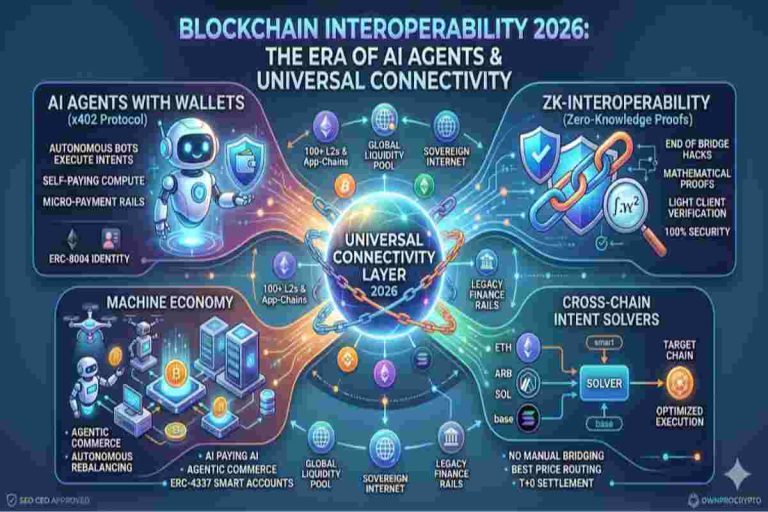
Web3 interoperability refers to the ability of independent blockchain systems to exchange:
without centralized intermediaries.
The goal is not simply transferring tokens across chains.
The goal is synchronized execution across decentralized networks.
Modern interoperability frameworks enable:
By 2026, interoperability is infrastructure — not a workaround.
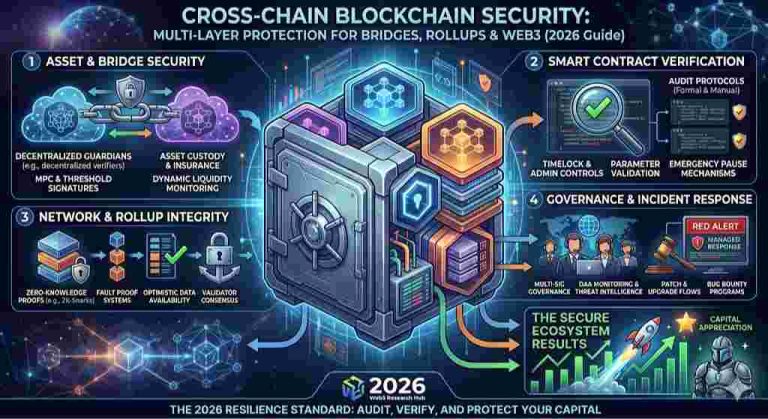
The first generation of interoperability relied heavily on lock-and-mint bridges.
Users locked tokens on one chain while wrapped representations were minted on another.
This model created dangerous security assumptions:
Between 2021 and 2025, bridge exploits accounted for billions in losses across the crypto ecosystem.
| Legacy Bridge Weakness | Result |
|---|---|
| Centralized validators | Single points of failure |
| Wrapped assets | Liquidity fragmentation |
| Delayed settlement | Failed execution |
| Manual bridging UX | User friction |
| Custodial risk | Security breaches |
The market response was architectural evolution.
Modern interoperability stacks now prioritize:
The bridge era is ending.
The connected execution era has begun.

One of the biggest UX breakthroughs in Web3 interoperability is chain abstraction.
Users no longer need to:
Modern interfaces abstract away blockchain complexity entirely.
Instead of asking users how to complete a transaction, interoperability systems focus on user intent.
Example of Intent-Based Execution
A user submits:
“Buy tokenized treasury bonds using USDC.”
The interoperability layer automatically:
The user interacts with outcomes rather than infrastructure.
This dramatically improves:
Intent-centric architecture is becoming the default operating model for omnichain systems.
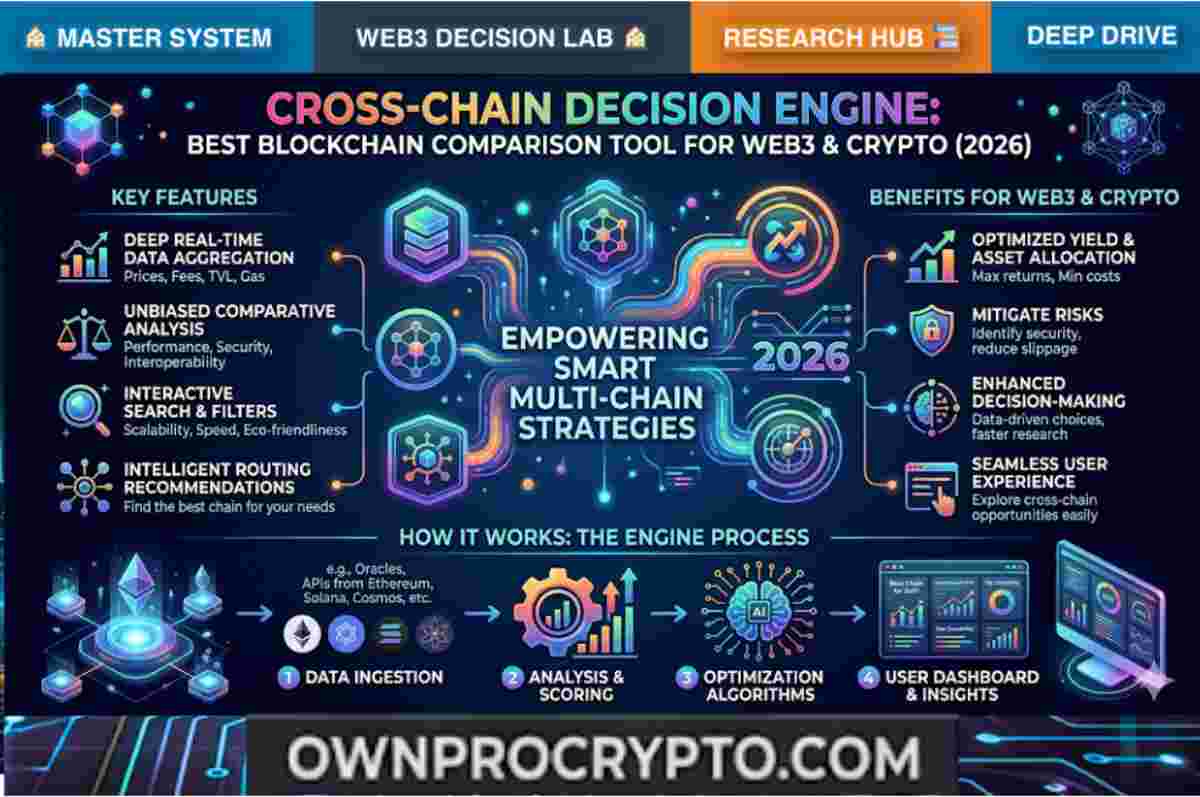
Modern interoperability stacks operate across multiple coordinated layers.
The messaging layer transmits instructions and state updates between chains.
Examples include:
The key challenge is secure message validation without centralized trust assumptions.
Verification ensures that messages received from another chain are legitimate.
Modern systems increasingly rely on:
This replaces trusted bridge operators with mathematical verification.
Liquidity systems coordinate capital across chains.
Instead of siloed liquidity pools, omnichain liquidity infrastructure allows:
This improves overall capital efficiency significantly.
Execution layers finalize actions across networks.
Examples include:
Execution coordination is what transforms interoperability from messaging into programmable infrastructure.
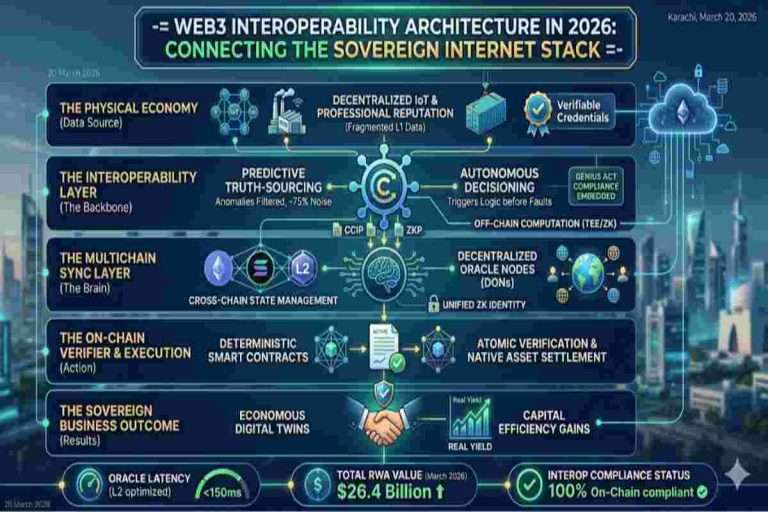
The connected stack is composed of three primary layers.
| Stack Layer | Function |
|---|---|
| Infrastructure Layer | Messaging, settlement, verification |
| Middleware Layer | Identity, reputation, compliance |
| Application Layer | DAOs, DeFi, payments, RWA systems |
Each layer contributes to coordinated Web3 execution.
The infrastructure layer handles:
This is the foundational trust layer of interoperability.
Middleware provides:
This allows users and institutions to operate seamlessly across ecosystems.
Applications become chain-agnostic by default.
Examples include:
The application layer is where interoperability creates real-world economic coordination.
The modular blockchain thesis became dominant by 2026.
Instead of one chain handling everything, modern systems separate:
Data Availability (DA) layers like Celestia allow chains to scale independently while inheriting shared security guarantees.
| Modular Feature | Benefit |
|---|---|
| Specialized execution | Faster scaling |
| Shared DA layers | Lower infrastructure cost |
| Independent settlement | Flexible architecture |
| Shared security assumptions | Reduced risk |
Chains specialize.
Interoperability connects them.
This modular approach is replacing monolithic blockchain architecture across the industry.
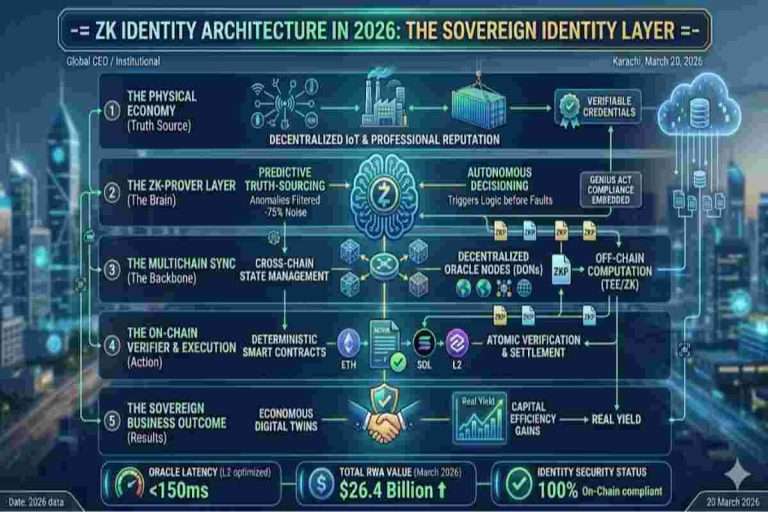
Zero-knowledge infrastructure fundamentally changed interoperability security.
Traditional bridges relied on trusted validators.
Modern hyperbridges rely on cryptographic verification.
Zero-knowledge light clients allow one blockchain to verify another chain’s state mathematically without centralized intermediaries.
Benefits include:
| Legacy Bridges | ZK Hyperbridges |
|---|---|
| Trusted validators | Cryptographic verification |
| Wrapped assets | Native assets |
| Multi-sig dependence | Trust-minimized proofs |
| High exploit risk | Reduced attack surface |
The interoperability stack is increasingly moving toward fully verifiable systems.
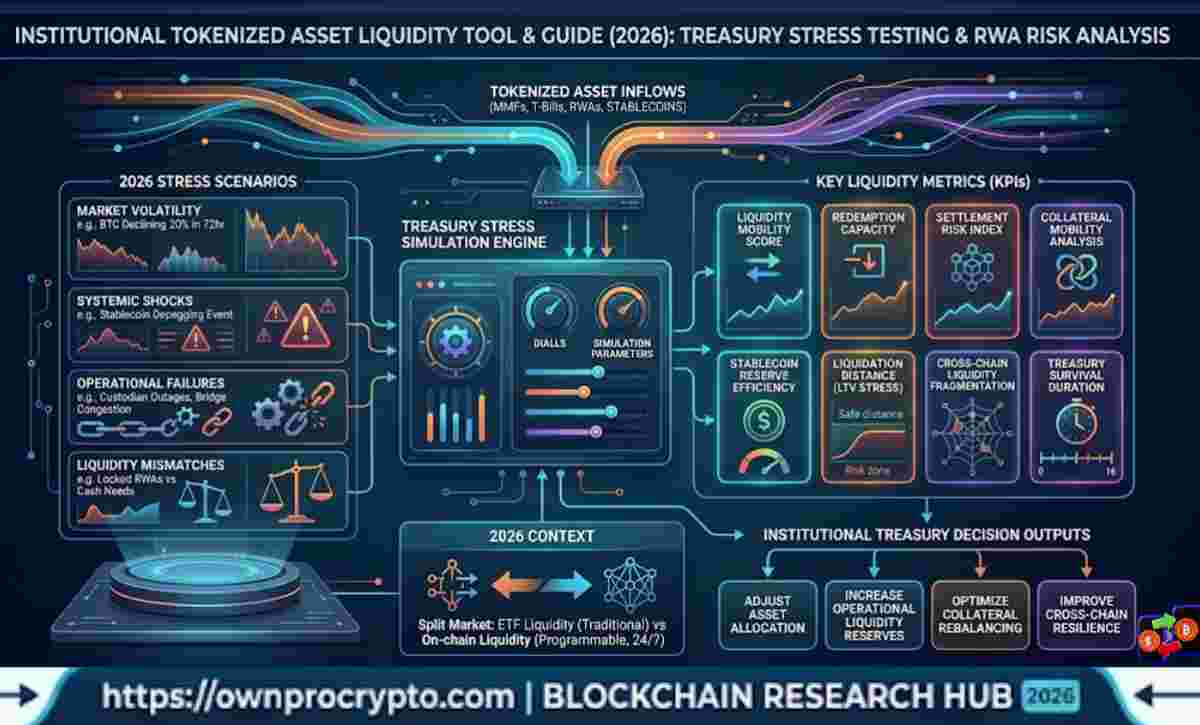
One of the biggest advantages of interoperability is unified liquidity coordination.
In early DeFi, liquidity was fragmented across isolated ecosystems.
By 2026, omnichain liquidity systems allow:
This dramatically improves capital efficiency.
A user can:
without manually managing bridges.
The interoperability layer handles routing automatically.

DAOs increasingly operate across multiple chains simultaneously.
Modern governance systems coordinate:
across interoperable ecosystems.
| Governance Improvement | Outcome |
|---|---|
| Unified voting systems | Higher participation |
| Cross-chain treasuries | Better liquidity management |
| Portable reputation | Stronger governance identity |
| Shared execution | Faster coordination |
Networked DAOs are replacing isolated governance structures.
Identity becomes significantly more important in interoperable systems.
Users need portable reputation and verifiable credentials that function across chains.
Modern interoperability frameworks support:
This enables trusted interaction without centralized platforms.
Identity follows the individual — not the application.
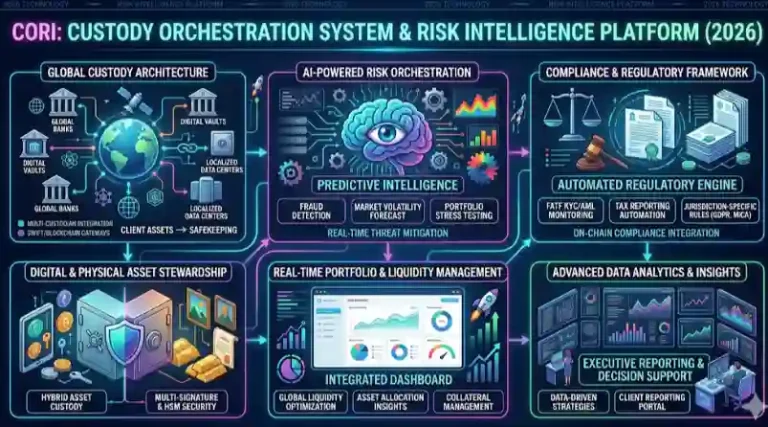
Despite major improvements, interoperability still introduces complex risk models.
| Risk Category | Description |
|---|---|
| Messaging failures | Incorrect state transmission |
| Governance attacks | Validator coordination exploits |
| Oracle manipulation | Bad external data |
| Relayer centralization | Hidden trust assumptions |
| Finality mismatch | Settlement inconsistencies |
Security in interoperability depends heavily on minimizing trusted intermediaries.
The strongest systems prioritize:
Interoperability is difficult because every connected chain expands the system’s attack surface.
Interoperability now powers major blockchain use cases across industries.
Users access liquidity across ecosystems without manual bridging.
Tokenized assets move seamlessly between institutional settlement networks.
Stablecoin payment systems settle globally across interoperable chains.
Shared blockchain networks coordinate logistics and verification systems.
Digital assets become portable across ecosystems and applications.
Medical credentials and records become verifiable across jurisdictions using privacy-preserving proofs.
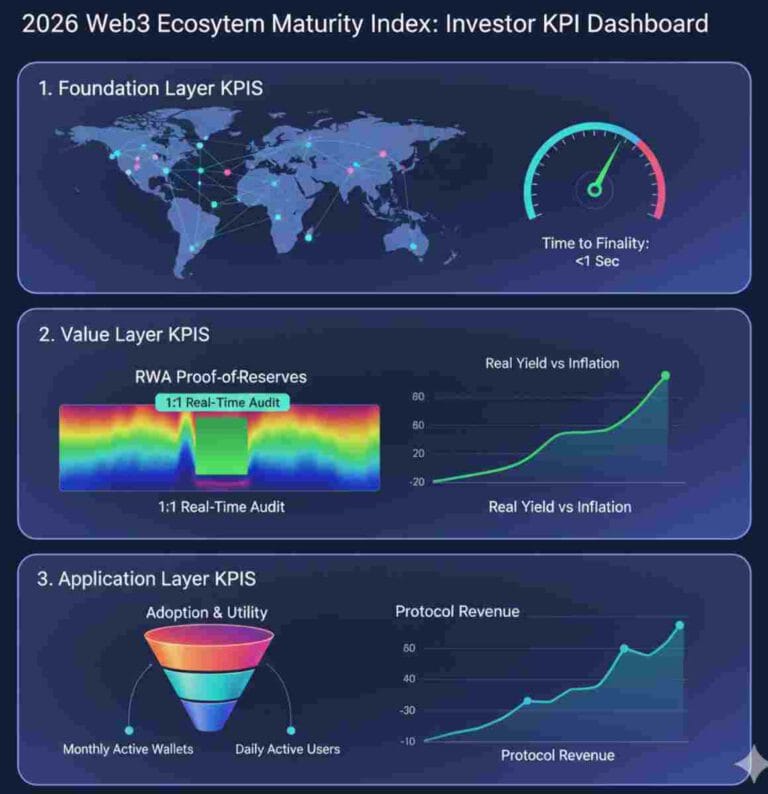
Institutions evaluate interoperability systems using measurable infrastructure metrics.
| KPI | Why It Matters |
|---|---|
| Verification latency | Faster settlement |
| Message success rate | Operational reliability |
| Relayer decentralization | Reduced systemic risk |
| Capital efficiency | Better liquidity utilization |
| Finality guarantees | Lower settlement uncertainty |
Institutional adoption depends heavily on these operational benchmarks.
Infrastructure quality matters more than marketing narratives.
The Omnichain Architect (The “Builder” Persona)
Modular Interoperability: How Data Availability (DA) Layers Solve the Scaling War.
The Cross-Chain Arbitrageur (The “Optimizer” Persona)
The Multi-Chain Liquidity Rescue
Cross-Chain Governance in Action
The next evolution of interoperability focuses on autonomous coordination.
AI systems increasingly manage:
across multiple ecosystems simultaneously.
The industry is moving beyond simple communication toward full composability.
Future applications will treat multiple chains as one programmable execution environment.
This creates:
The future is not multichain chaos.
It is coordinated modular infrastructure.
| Core Insight | Strategic Meaning |
|---|---|
| Interoperability is infrastructure | Not a feature |
| Chain abstraction improves UX | Complexity disappears |
| ZK systems reduce bridge risk | Trust shifts to cryptography |
| Shared liquidity improves efficiency | Capital moves freely |
| Modular architecture scales better | Chains specialize |
| Identity portability matters | Reputation becomes sovereign |
| Connected systems outperform silos | Coordination becomes scalable |
Web3 interoperability is no longer a secondary infrastructure layer.
It is the foundation of the connected digital economy.
The winning systems in 2026 are not the loudest chains or the fastest ecosystems. They are the architectures capable of coordinating capital, identity, governance, and execution across networks securely and efficiently.
The market is moving beyond isolated blockchain ecosystems toward modular, interoperable infrastructure where:
This is the transition from fragmented Web3 to the sovereign internet.
The future of blockchain is not isolated chains competing for dominance.
It is connected systems operating as unified digital infrastructure.
Interoperability is the blueprint that makes that future possible.
As we navigate the fiscal landscape of 2026, the mandate for institutional-grade stability has shifted from a “best practice” to a non-negotiable regulatory baseline. Central to this transition is the emphasis on high-quality liquid assets (HQLA) and rigorous risk management frameworks, as outlined in the U.S. Treasury TBAC Q4 2024 report.
Web3 interoperability is the ability for independent blockchain systems to exchange data, assets, and execution logic securely without centralized intermediaries.
Because isolated blockchain ecosystems create fragmented liquidity, poor UX, governance silos, and operational inefficiencies.
Modern systems increasingly use:
instead of custodial bridge models.
Chain abstraction hides blockchain complexity from users by automating routing, settlement, and execution across networks.
Intent-based systems execute desired outcomes rather than requiring users to manually perform technical blockchain operations.
Because interoperability improves:
Omnichain liquidity allows capital to move and operate across multiple chains as a unified liquidity layer.
Zero-knowledge proofs allow blockchains to verify external state transitions securely without relying on centralized validators.
Welcome to OwnProCrypto (Own & Pro Crypto) — a next-generation Bitcoin and blockchain education platform where the science of finance meets the power of AI-driven automation.
Our mission is simple: to equip you with the knowledge, frameworks, and tools needed to make smarter financial and business decisions in the Web3 economy.
Beyond analysis, OwnProCrypto focuses on transparency, verifiable data, and practical frameworks that investors and builders can actually use. Our goal is not hype — but clear thinking, disciplined analysis, and long-term value creation in the decentralized economy.
Our Background: Salim (Sam) is the founder and lead researcher behind OwnProCrypto, a Web3 intelligence platform focused on crypto security, digital ownership, stablecoin systems, interoperability, and institutional blockchain infrastructure.
Crypto Tools & Analysis:
Crypto Fundamental Analysis Tool | Protocol Evaluation System | DeFi Risk Analysis Tools | Crypto Portfolio Dashboard | Token Risk vs Reward Tool
Guides:
Crypto Fundamental Analysis | Blockchain Project Evaluation | Tokenomics Analysis | DeFi Protocol Analysis | Capital Efficiency
© 2026 OwnProCrypto — Built for smarter crypto decisions