
Table of Contents
Toggleproblem → shift → solution → framework → outcome The RWA Revaluation)
Bridging Institutional Liquidity with On-Chain Efficiency.
Real-World Asset (RWA) Tokenization is the definitive market shift of 2026, transforming stagnant physical assets into programmable, liquid capital. This guide outlines the transition from traditional fractionalization to high-velocity, on-chain asset management.
The Strategy at a Glance:
System Navigator: This guide is a core pillar of our Web3 Ecosystem Architecture. To understand how to move this capital securely, explore our Stablecoin Payments 2026 pillar or return to the Asset Security Fortress for custody frameworks.
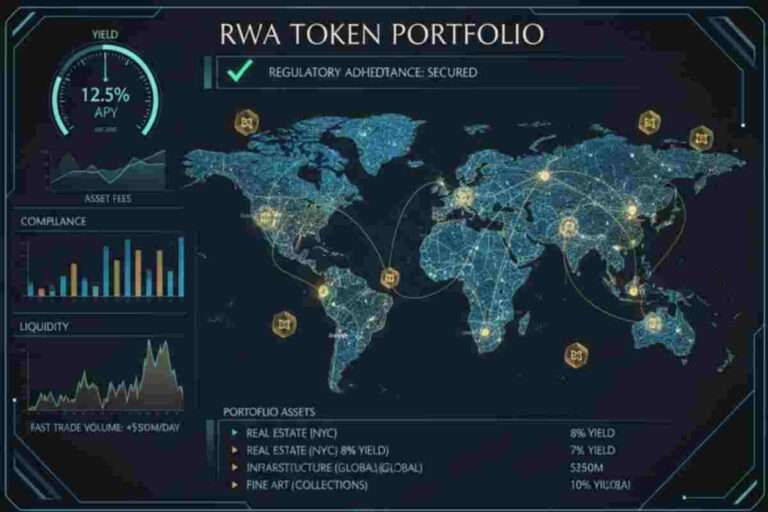
RWA Tokenization in 2026 has moved beyond experimentation and is now a core layer of institutional asset infrastructure. Traditional markets built on illiquid, paper-heavy systems are being restructured into programmable, on-chain financial instruments. Real estate, private credit, bonds, commodities, and infrastructure are increasingly represented as tokenized assets that settle in real time with embedded compliance and global accessibility.
This shift is not about creating new asset classes—it is about unlocking existing ones. Assets that were previously constrained by settlement delays, high entry barriers, and fragmented ownership models are now becoming fractional, liquid, and programmable. What once took weeks of processing can now execute in minutes with transparent reporting and automated settlement. In 2026, capital that cannot move on-chain will increasingly lag behind markets that already do.
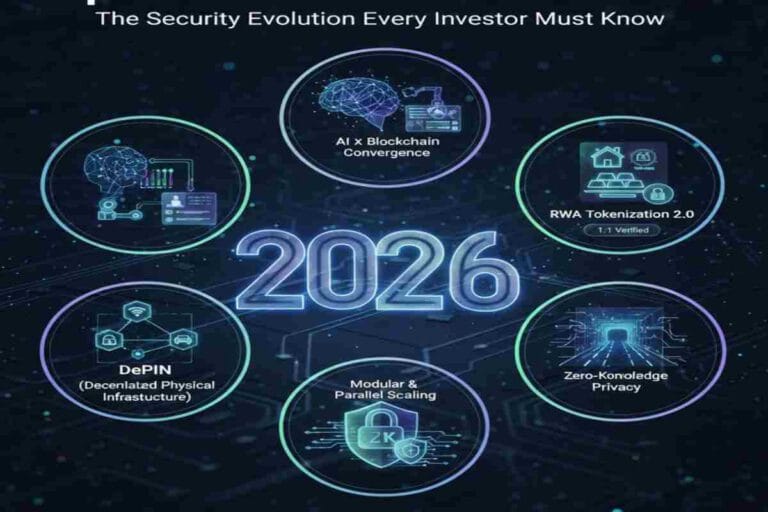
The traditional world of high-stakes investing has long been a “closed-door” system, plagued by illiquidity and manual oversight. The good news is that What Is RWA Tokenization? Definition, Benefits, and Real-World Impact provides the definitive blueprint for bridging this gap. By converting physical and financial assets, from real estate to US Treasuries, into digital tokens on a blockchain, we unlock a unique era of capital efficiency. This shift ensures that your holdings are no longer “static” but are programmable, liquid, and protected by a “Digital Fortress” of on-chain compliance, delivering real yield in a way the legacy system never could.
RWA tokenization refers to the digitization of real-world assets into blockchain-based tokens that represent ownership, income rights, or claims on underlying value
In 2026, tokenization is actively reshaping capital markets by enabling real yield, not speculative returns.
Real world assets include tangible and financial instruments such as property, debt, commodities, and private funds. Tokenization converts legal ownership or economic rights into digital tokens recorded on a blockchain. These tokens are backed by enforceable legal structures, ensuring that onchain representation aligns with offchain rights.
Real-world assets include tangible and financial instruments that exist outside the blockchain but generate measurable value.
Tokenization maps these assets to legal wrappers and on-chain representations, ensuring enforceability and transparency.
Tokenized asset portfolios provide capital efficiency, operational automation, and real time transparency. Institutions benefit from lower settlement risk, programmable cash flows, and improved auditability. Portfolio rebalancing becomes faster and more precise through onchain execution.
Tokenized portfolios outperform traditional portfolios by combining:
They allow investors to rebalance positions instantly, diversify granularly, and earn predictable income streams.
➤ Tokenization of real estate, gold, securities, and art
➤ Smart contract–driven compliance with integrated KYC/AML
➤ Fractional ownership and flexible investment models
➤ Secondary market trading with instant liquidity
➤ Secure custody and wallet integration
➤ Regulatory compliance and governance modules
➤ Multi-chain support (Ethereum, Polygon, Solana, and private blockchains) 🌎
| Feature | Why It Matters |
| Smart contract compliance | Automates KYC/AML and transfer rules |
| Fractional ownership | Lowers investment barriers |
| Secondary markets | Enables real liquidity |
| Institutional custody | Protects assets and keys |
| Multi-chain support | Expands access and composability |
Institutional Adoption Timing Drivers
In 2026, tokenized real-world assets (RWAs) have emerged as a critical bridge between traditional finance and on-chain liquidity. RWA tokenization leverages smart contracts to automate settlement, dividend distribution, and governance while increasing transparency and reducing counterparty risk. By bringing traditionally illiquid markets on-chain, tokenized assets can integrate with decentralized finance (DeFi) protocols for lending, borrowing, and yield generation. This creates interoperable financial primitives that operate 24/7 across global markets.
As regulatory frameworks mature and institutional adoption accelerates, tokenized RWAs are transforming capital formation, asset management, and liquidity provisioning. Within a sovereign digital economy, they represent the convergence of legacy financial infrastructure and decentralized blockchain networks, reshaping how value is issued, transferred, and stored in the modern financial system.
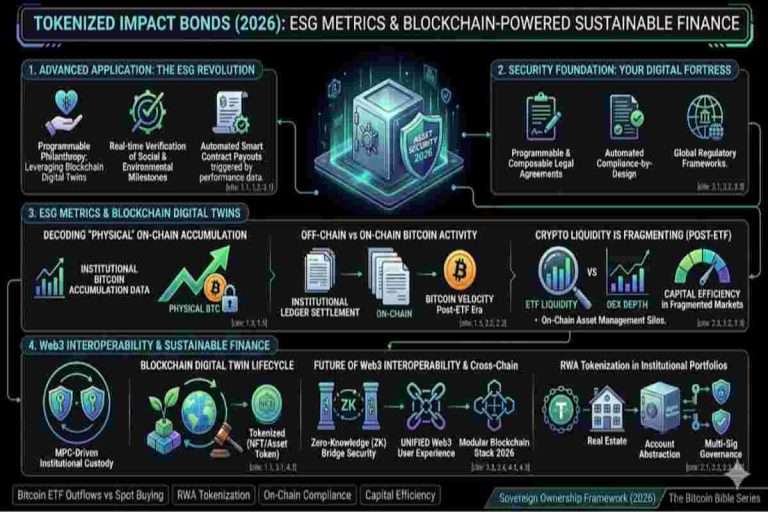
Tokenization spans multiple asset classes. Real estate benefits from fractional ownership and global liquidity. Bonds and private credit gain from automated coupon payments and faster settlement. Funds achieve operational efficiency through onchain transferability. Commodities gain transparency through verifiable supply and custody data.
The Web3 ecosystem categorizes RWAs into four dominant types:
Institutional RWA tokenization relies on standardized smart contract frameworks. Security token standards enable compliance logic such as transfer restrictions, whitelisting, and reporting. These standards support interoperability across custodians, trading venues, and portfolio management systems.
Standards like ERC-1400 and ERC-3643 ensure:
These standards make RWAs interoperable across wallets, DeFi, and institutions. ↓ Jump to 2026 RWA Revolution: Expert FAQs & Troubleshooting.
The RWA technology stack includes blockchain networks, smart contracts, compliance engines, custody solutions, and data oracles. These components integrate with traditional financial infrastructure to support issuance, trading, and lifecycle management.
| Layer | Function |
| Blockchain | Settlement & ownership |
| Smart contracts | Logic & compliance |
| Oracles | Valuation & data |
| Custody | Asset protection |
Blockchain based markets operate continuously, enabling around the clock trading and near instant settlement. Smart contracts automate corporate actions, distributions, and compliance checks, reducing reliance on intermediaries and manual reconciliation.
Blockchain enables:
This removes the friction of T+2 legacy systems. ↑ Back to FAQs Menu
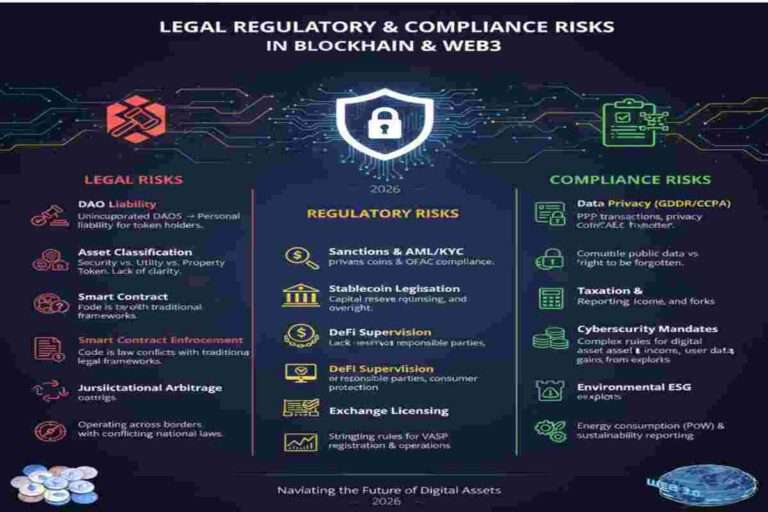
Core Compliance Layers
Regulatory alignment has become a foundational requirement for institutional RWA adoption. Modern tokenization frameworks embed securities law, investor protections, and jurisdiction-specific compliance directly into the asset lifecycle, ensuring that digital representations of assets maintain full legal enforceability and recognized ownership rights.
In 2026, compliance is embedded, not external.
Regulation as an Enabler
Regulation is no longer a constraint on innovation, it is a catalyst for institutional scale. Clear frameworks reduce uncertainty, unlock capital participation, and enable interoperable financial infrastructure across jurisdictions.
To stay ahead of the curve, the next evolution of RWA infrastructure integrates artificial intelligence directly into asset management and valuation.
AI-Powered Valuation:
Firms like Datavault AI are deploying autonomous AI agents to generate real-time valuations for traditionally illiquid assets, such as private art and niche real estate, enabling more accurate pricing, improved liquidity, and scalable tokenization.
Strategic Principle:
Responsible AI with data integrity becomes the standard—ensuring that automated systems operate with transparency, verifiability, and institutional trust.

Asset classification varies across regions, requiring careful structuring. Tokenized assets may fall under securities, collective investment schemes, or debt instruments depending on jurisdiction. Compliance tooling embedded in smart contracts helps manage cross border participation.
Tokenized assets must align with:
Legal classification determines transferability and investor eligibility
Special purpose vehicles and legal wrappers bridge onchain tokens with offchain assets. Custody models range from regulated third party custodians to institutional grade self custody solutions, each balancing control, security, and regulatory expectations.
Assets are typically held in SPVs or trusts, issuing on-chain tokens that map to enforceable rights.
This hybrid structure bridges blockchain with courts.
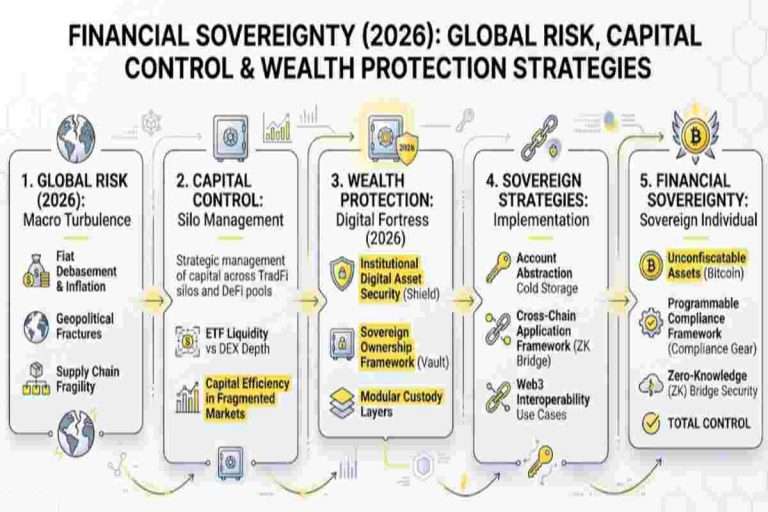
Institutional adoption of RWA tokenization is accelerating across asset managers, banks, and sovereign entities. Tokenized funds, bonds, and real estate vehicles are increasingly used to streamline issuance and distribution. This growth reflects rising confidence in blockchain based settlement, compliant custody solutions, and interoperable token standards designed for institutional scale.
Institutional demand is driven by:
Tokenized treasuries and private credit dominate capital inflows.
Institutional adoption of tokenized real-world assets (RWAs) has reached a critical inflection point, driven by global asset managers such as BlackRock and Franklin Templeton. What began as experimental blockchain pilots has evolved into fully launched tokenized funds, treasury products, and on-chain investment vehicles designed for institutional capital markets.
As regulatory frameworks mature and capital allocators seek operational efficiency, tokenized RWAs are becoming core components of treasury management, liquidity provisioning, and portfolio diversification strategies. The shift signals a structural transformation: blockchain is no longer viewed as a peripheral innovation within finance, but as emerging foundational infrastructure for global capital markets and the world’s most significant asset classes.
Tokenization enables controlled access for both institutional and qualified retail investors. Segmented participation supports regulatory compliance while expanding capital inflows.
Institutions dominate capital, retail dominates velocity.
Both are necessary for healthy markets.
Institutions choose between third party custody and self custody based on risk appetite and regulatory requirements. Hybrid models are increasingly common, combining control with compliance assurance.
nstitutions prefer custody.
Retail prefers self-custody.
Both must coexist.
The traditional financial system struggles with slow settlements, high fees, and limited accessibility. In 2026, blockchain-enabled tokenization has reached maturity, allowing real-world assets on blockchain to achieve institutional-grade liquidity and compliance. This is not a trend; it is the full migration of the world’s most valuable assets onto blockchain rails.
We have reached the “Trust Threshold.” Why 2026 Is the Inflection Point for Institutional Tokenization can be summarized in one word: Resilience. After years of testing, the infrastructure is now capable of handling trillions in volume with the security of a “Digital Fortress.” The institutions that ignored this shift in 2024 are now racing to catch up as they realize the old world is too slow to compete.
The failure of the legacy banking rails to provide real-time liquidity during the 2025 mid-year crunch.
Key RWA Tokenization Trends: Fractionalization, Automation, Compliance
The trifecta of Key RWA Tokenization Trends: Fractionalization, Automation, Compliance defines the modern high-yield portfolio. Fractionalization brings the liquidity, Automation brings the speed, and Compliance brings the institutional safety. Together, they create a unique ecosystem where real yield is accessible to everyone, from the retail saver to the sovereign wealth fund.
Automation is the engine, but Compliance is the fuel. Rooted in Case Study Failure: Many 2023 projects focused only on “Fractionalization” but ignored “Compliance.” They were shut down by regulators within months, proving that without all three Key RWA Tokenization Trends, you aren’t building a legacy—you’re just building a temporary experiment.
Key Lessons from the 2026 RWA Market
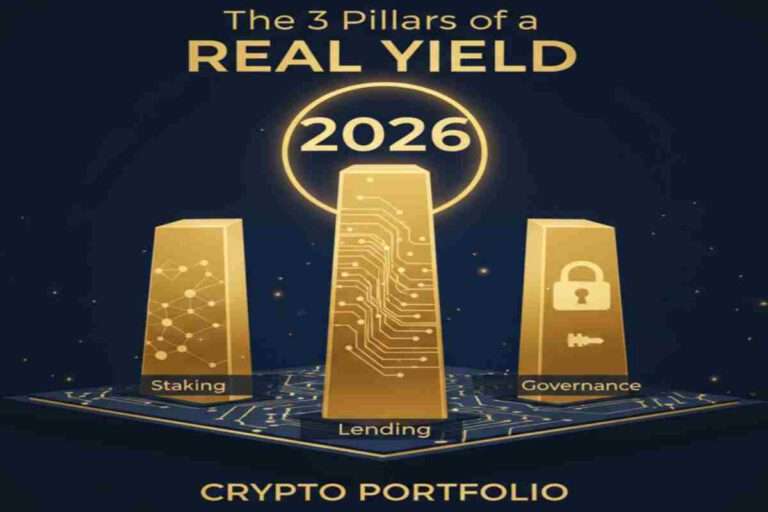
The migration of traditional debt instruments into tokenized bonds, funds, and tokenized treasuries is reshaping global fixed-income markets. By issuing government bonds, corporate debt, money market funds, and treasury-backed products as blockchain-based digital tokens, issuers enable faster settlement, enhanced transparency, and programmable financial infrastructure.
Tokenized fixed-income assets leverage smart contracts to automate coupon payments, dividend distributions, maturity redemptions, and compliance controls. Near-instant settlement reduces counterparty risk and eliminates much of the administrative friction associated with traditional brokers, custodians, and clearinghouses. Investors gain real-time visibility into holdings, on-chain proof of reserves, and improved liquidity compared to legacy systems.
As institutional capital flows into blockchain-based financial rails, tokenized bonds and funds are increasingly integrated into decentralized finance (DeFi) ecosystems, where they can serve as collateral, yield-bearing instruments, or treasury management tools. This convergence of traditional fixed-income securities and on-chain liquidity is accelerating the evolution of capital markets toward a more transparent, efficient, and globally accessible financial system.
Tokenized portfolios enable dynamic allocation strategies focused on real yield rather than speculative appreciation. Institutional investors can design diversified exposures across income generating assets with programmable cash flow distribution.
| Allocation | Asset Class | Purpose |
|---|---|---|
| 60% | Tokenized Treasuries | Stability |
| 30% | Real Estate & Credit | Income |
| 10% | Alternatives | Upside |
RWA products include tokenized money market funds, private credit vehicles, and fractional real estate. These structures align traditional investment strategies with blockchain based execution.
Tokenized products include:
Constructing and Allocating Tokenized Asset Portfolios
Portfolio construction involves balancing asset duration, yield stability, liquidity, and regulatory constraints. Tokenization enables granular exposure management and transparent performance tracking across asset classes.
Diversification across asset types and jurisdictions minimizes risk while maximizing yield.
Tokenized assets distribute income directly to investors through automated mechanisms. Rental income, interest payments, and dividends are settled onchain, reducing delays and administrative costs.
Tokenized assets distribute:
All automated via smart contracts.
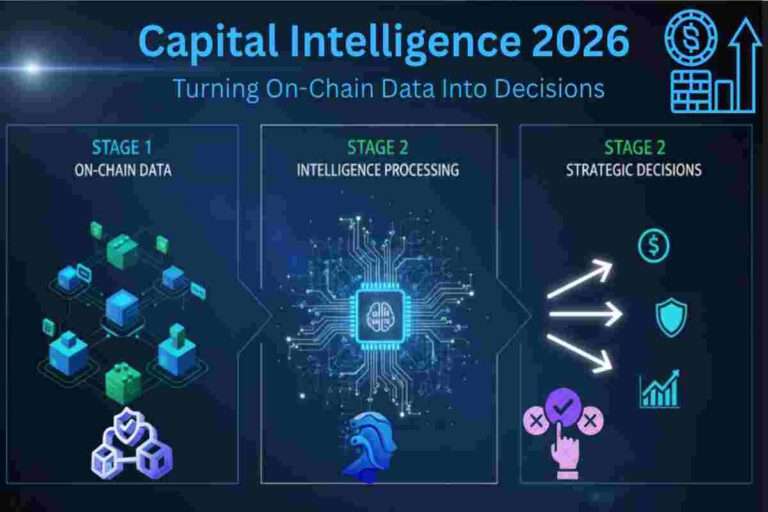
Blockchain-based asset management is redefining how portfolios are constructed, monitored, and rebalanced in a digital financial system. By leveraging smart contracts and decentralized ledger technology, asset managers can automate portfolio allocation, compliance enforcement, reporting, and settlement with unprecedented efficiency and transparency.
In this model, investment mandates, risk parameters, and jurisdictional requirements are encoded directly into programmable protocols. Every trade, rebalance, and capital allocation decision is executed according to predefined rules, reducing operational risk and minimizing manual oversight. This automation enhances capital efficiency while ensuring regulatory compliance across multiple markets.
Blockchain infrastructure also enables real-time portfolio visibility, on-chain proof of reserves, tokenized fund shares, and seamless integration with decentralized finance (DeFi) protocols. Institutional investors benefit from faster settlement, reduced counterparty exposure, and improved auditability, while retail participants gain greater access to diversified, professionally managed digital asset portfolios.
As tokenized assets, digital custody solutions, and regulatory clarity continue to evolve, blockchain-based asset management is emerging as a foundational layer of the next-generation financial ecosystem—combining automation, transparency, and global accessibility into a unified, programmable framework.
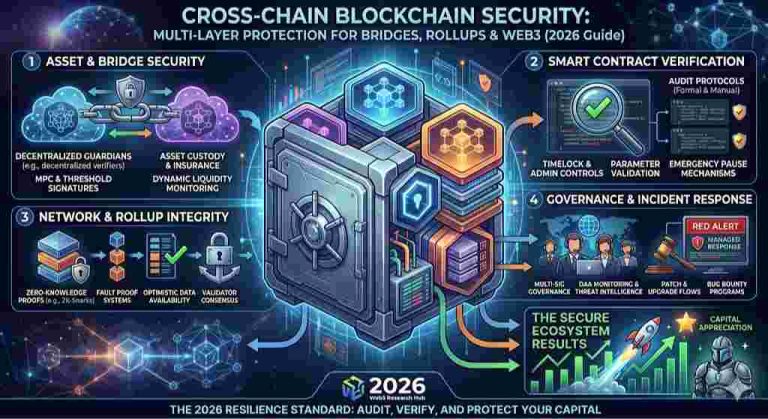
Interoperability frameworks allow RWAs to move across blockchain ecosystems without fragmenting liquidity. Cross chain standards enhance market depth and enable institutions to operate across multiple settlement layers.
Reliable pricing depends on:
If the oracle fails, trust collapses.
Cross-chain frameworks expand:
xRWA standards are emerging as the norm.
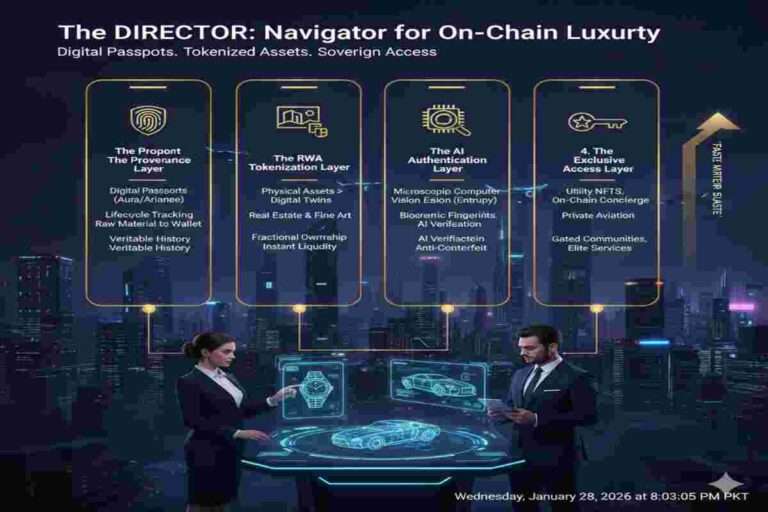
Smart contracts encode rules governing transfers, investor eligibility, and reporting. Compliance logic reduces operational risk while enabling scalable asset distribution across institutional and professional investor segments.
Smart contracts automate:
They reduce human error and operational risk.
Independent audits and infrastructure testing are essential. Secure key management, redundancy, and incident response planning form the foundation of institutional grade tokenization platforms.
Audits are non-negotiable in 2026.
Unaudited contracts are uninvestable.
Liquidity depends on active secondary markets and accurate pricing mechanisms. Transparent valuation models and market maker participation improve confidence and trading efficiency.
Liquidity > hype.
Secondary markets determine survivability. ↓ Jump to 2026 RWA Revolution: Expert FAQs & Troubleshooting.
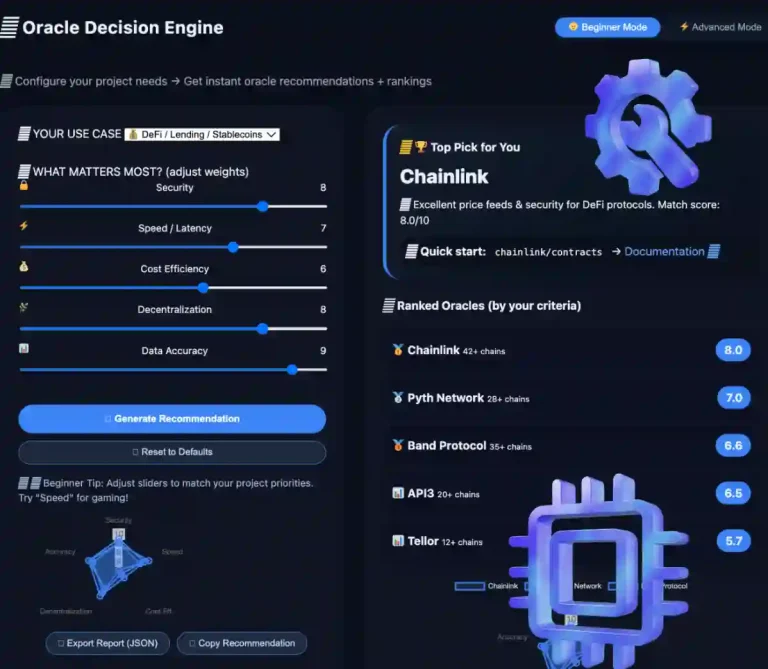
Reliable data feeds are critical for accurate valuation and portfolio management. Oracles provide verified pricing, performance metrics, and external data inputs, ensuring that tokenized assets reflect real world conditions.
Reliable pricing depends on:
If the oracle fails, trust collapses
Despite its advantages, RWA tokenization introduces smart contract, custody, and market risks. Institutions must adopt rigorous governance, audits, and operational controls to safeguard capital.
Risks include:
Mitigation relies on audits and compliance tooling.
Investor & Professional Note: In Web3, discipline is a feature, not a limitation. Verify Legal Wrappers, treat every on-chain signature as a legally binding execution. If you don’t understand the “Logic Layer” of what you are signing, you don’t truly own the outcome.
The Family Office Manager (The “Diversifier”)
The Emerging Market Entrepreneur (The “Unbanked Architect”)
By 2026, BlackRock’s BUIDL Fund has evolved beyond Ethereum into a multi-chain deployment, positioning itself as a foundational layer in emerging on-chain institutional yield rails and serving as a primary collateral asset across institutional DeFi markets.
Franklin Templeton (The 2026 Pivot): They have officially integrated their money market funds (like LUIXX) to meet the U.S. GENIUS Act (2025) reserve requirements for stablecoins.
Global asset managers have launched tokenized fund products that leverage blockchain for settlement efficiency and transparency while maintaining regulatory oversight.
Blockchain delivers:
In 2026, capital doesn’t wait. It executes. ↓ Jump to 2026 RWA Revolution: Expert FAQs & Troubleshooting.
Fractional real estate platforms illustrate how tokenization expands access to income producing property while automating rental distributions.
In 2026, Fractional Real Estate Tokenization Models have transformed “static” landmarks into high-velocity liquidity pools. By utilizing a “Digital Fortress” architecture, property owners can now offer micro-equity shares to a global audience, bypassing the slow, expensive gates of legacy real estate syndication. This approach maximizes capital efficiency for developers while providing retail investors with a unique path to real yield backed by physical brick-and-mortar assets.
By ensuring that every fractional share is traded on a secondary decentralized exchange (DEX). Rooted in Case Study Failure: In 2024, many “fractional” platforms were walled gardens; you could buy in, but you couldn’t sell out without a 30-day waiting period. In 2026, the Fractional Real Estate Tokenization Models we use allow for sub-second exits, preventing the capital-lockup that destroyed early-market portfolios.
Siemens & Digital Gilts: Highlight the HSBC Orion platform’s 2026 mandate to issue “Digital Gilts” (Sovereign Bonds) in the UK. This proves tokenization is now a state-level infrastructure.
Corporate blockchain bonds showcase how tokenized debt reduces issuance friction and enhances settlement speed for institutional issuers.
The milestone set by the Siemens Blockchain-Based Bond Issuance serves as the definitive blueprint for institutional debt in the decentralized age. By moving bond lifecycles—from issuance to coupon payments—onto the ledger, institutions eliminate the need for centralized clearinghouses and reduce settlement risk to zero. This shift is not just about speed; it is about grounding institutional finance in a sovereign, transparent, and immutable framework.
Because it integrates on-chain compliance directly into the bond’s logic, ensuring only verified participants can hold the debt. Rooted in Case Study Failure: Traditional bond issuances often suffer from “settlement lag,” where funds are tied up for days in administrative limbo. The Siemens Blockchain-Based Bond Issuance proved that moving to the ledger saves millions in operational overhead by automating the entire “Trust” layer.
The next phase of RWA tokenization will focus on scale, interoperability, and integration with traditional capital markets infrastructure.
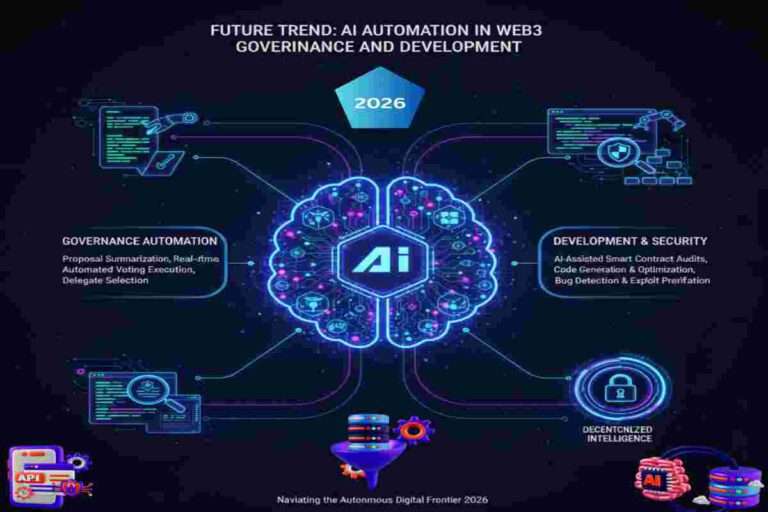
Artificial intelligence enhances portfolio optimization, risk monitoring, and compliance automation, creating more adaptive tokenized investment strategies.
The convergence of AI and Automation in Tokenized Asset Portfolios has birthed the “Self-Optimizing Treasury.” In 2026, AI agents monitor global real yield fluctuations in real-time, executing rebalancing strategies that ensure capital efficiency is always peaked. This automation removes the “Human Error” element, creating a resilient, 24/7 management layer that never sleeps and never misses a compliance update.
Rooted in Case Study Failure: A fund in 2025 was hit with a regulatory fine because a manual compliance officer missed a change in “Travel Rule” requirements for a specific jurisdiction. Portfolios utilizing AI and Automation in Tokenized Asset Portfolios updated their logic instantly, blocking non-compliant trades before they could even be signed
In advanced Web3 architectures, AI-automation functions as an execution layer rather than a decision authority. Human actors define strategy, governance rules, and risk parameters, while automated agents enforce those policies consistently across time, scale, and networks. In practice, AI-driven automation monitors on-chain activity, validates governance conditions, flags security anomalies, and executes pre-approved workflows such as transaction limits, treasury operations, or compliance checks. This design strengthens operational resilience, reduces human error, and ensures continuity without compromising self-custody or sovereign control. By separating decision-making from execution, Web3 systems achieve scalable automation while preserving decentralization, accountability, and long-term digital sovereignty.
This table helps readers mentally place AI correctly , not as magic, but as infrastructure.
| Layer | Human Role | AI-Automation Role | Sovereignty Impact |
|---|---|---|---|
| Strategy | Define goals, risk limits, governance rules | None | Fully human |
| Policy | Encode rules into smart contracts & workflows | Validate rule consistency | Human-controlled |
| Execution | Approve systems & escalation paths | Execute tasks automatically | Delegated, reversible |
| Monitoring | Decide what matters | Watch thresholds & anomalies | Prevents silent failure |
| Recovery | Authorize intervention | Trigger alerts & pauses | Human override preserved |
Cross chain RWA frameworks enable seamless movement of assets across networks, supporting global liquidity aggregation and settlement flexibility.
To achieve a truly “Connected Stack,” the industry has rallied around xRWA Cross-Chain Frameworks and Standards. These protocols ensure that a tokenized asset’s legal sovereignty and value remain intact as it moves from one network to another. Without these standards, the Web3 Ecosystem Explained would remain a series of isolated islands; with them, it becomes a unified global liquidity layer.
Because they allow for “Cross-Chain Collateralization.” Rooted in Case Study Failure: An investor in 2023 tried to use their tokenized gold from Chain A to get a loan on Chain B, but the “bridge” broke the legal link to the gold vault. xRWA Cross-Chain Frameworks and Standards ensure that the “Legal Proof” stays attached to the asset, no matter which chain it lives on.
Global coordination on digital asset regulation will further accelerate institutional confidence and adoption, positioning RWA tokenization as a permanent layer of financial markets.
The good news for global nomads and institutions alike is the emergence of Regulatory Harmonization and Global Standards for RWAs. In 2026, we have moved past the “Wild West” era and into a period where digital asset laws are synchronized across borders. This harmonization ensures that on-chain compliance is a “one-time setup” that grants you access to a borderless financial world.
On the contrary; it strengthens it. Rooted in Case Study Failure: Before 2026, a “Sovereign Investor” was often geo-blocked from the best RWA opportunities because of conflicting local laws. Regulatory Harmonization and Global Standards for RWAs provide a “Passportable Identity,” ensuring your right to own assets is protected everywhere, not just in your home jurisdiction.
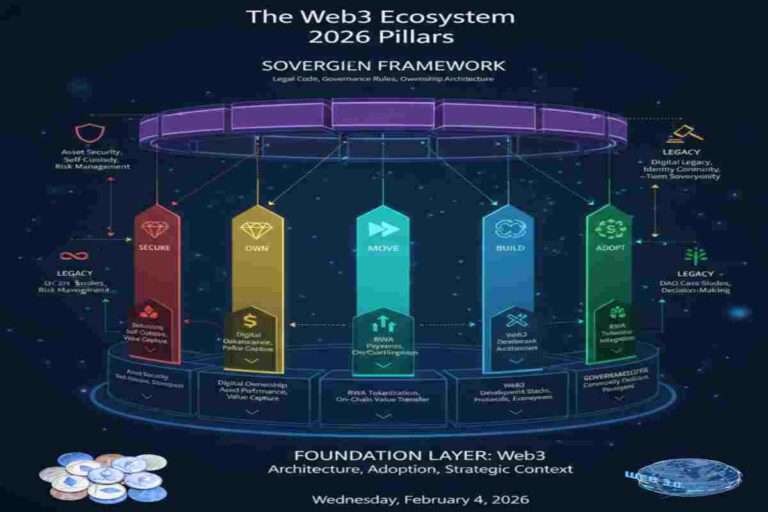
As part of the Web3 Ecosystem Architecture, this pillar focuses on Stablecoin Payments 2026, providing a structural perspective on how digital dollars, cross-border payments, and programmable settlement integrate with the broader Web3 ecosystem.This Article belongs to the Sovereign Finance layer. You may also explore:
Each article functions independently while forming a complete sovereign Web3 lifecycle model.
RWA tokenization in 2026 is no longer a niche experiment, it is a structural shift reshaping how investors access, manage, and grow real-world assets. By combining fractional ownership, on-chain compliance, and secure custody, investors can achieve predictable yield, global liquidity, and regulatory certainty, all from a single digital wallet. The market favors those who understand that success is about portfolio design, interoperability, and disciplined execution, not speculation on single assets.
The investors who succeed in this environment understand that RWA tokenization is not about speculation, but structure. Smart contracts enforce rules, on-chain compliance provides visibility, and tokenization unlocks liquidity once reserved for institutions. As finance fragments into programmable layers, those who master real-world assets on-chain will not just diversify, they will future-proof their portfolios.
The Markets in Crypto-Assets (MiCA) regulation, which went into full effect in 2024, has established the European Union as the first major jurisdiction with a comprehensive legal framework for digital assets. For institutional stability, MiCA mandates strict oversight for Asset-Referenced Tokens (ARTs) and E-Money Tokens, requiring issuers to maintain high-quality liquid assets (HQLA) and provide 1:1 redemption rights at par. According to the U.S. Treasury (TBAC Q4 2024 report), such regulatory guardrails are essential to prevent the “fire-sale” risks associated with unbacked private currencies, effectively forcing stablecoins to behave more like regulated money market funds or narrow banks to ensure global financial stability.👉EU MiCA Summary.
The RWA Execution Strategy: Tokenizing an asset is only the first step. To manage the liquidity from these portfolios, see our Stablecoin & Settlement Infrastructure guide. If you are a builder looking to create these platforms, refer to our Web3 Development & Protocol Architecture for the technical stack. Finally, ensure your tokenized wealth is protected by our Sovereign Risk Management Framework (DSARAE).
What is real-world asset tokenization in 2026?
Real-world asset (RWA) tokenization in 2026 refers to converting physical and financial assets such as real estate, bonds, commodities, and invoices into blockchain-based digital tokens that represent ownership or economic rights.
Why does RWA tokenization matter today?
It matters because it unlocks liquidity, fractional ownership, and global access to traditionally illiquid markets, enabling faster capital movement and broader investor participation.
How fast is the RWA market growing?
The RWA market is expanding rapidly as institutions and DeFi platforms adopt tokenized treasuries, funds, and real estate, driving multi-trillion-dollar long-term projections.
What are real-world assets?
Real-world assets are tangible or traditional financial instruments like property, bonds, commodities, and invoices that exist outside blockchain systems but can be tokenized on-chain.
What does tokenization mean for RWAs?
Tokenization means converting ownership rights of real-world assets into blockchain tokens, enabling digital transfer, fractional ownership, and programmable financial functions.
Which asset types can be tokenized?
Assets such as real estate, equities, bonds, commodities, private credit, and intellectual property can all be tokenized depending on regulatory structure.
What token standards support RWAs?
Standards like ERC-20, ERC-721, and ERC-1400 are commonly used to represent fungible, non-fungible, and security-compliant tokenized assets.
What benefits do tokenized portfolios offer?
They provide diversification, fractional access, improved liquidity, and automated settlement through smart contracts.
How does fractional ownership work with RWAs?
Fractional ownership divides high-value assets into smaller blockchain tokens, allowing multiple investors to co-own and trade portions of the asset.
What is 24/7 trading & programmable settlement?
It refers to blockchain-enabled markets that operate continuously with automated settlement via smart contracts without traditional banking delays.
What legal frameworks govern RWA tokens?
RWAs are governed by securities laws, digital asset regulations, SPV structures, and jurisdiction-specific compliance frameworks.
How are securities laws applied to RWAs?
Many RWA tokens are classified as securities, requiring compliance with investor protection, disclosure, and licensing regulations.
What are SPVs and legal wrappers for RWAs?
Special Purpose Vehicles (SPVs) are legal entities used to hold underlying assets while issuing compliant tokenized representations on-chain.
What technical stack is used for RWA issuance?
It includes blockchain networks, smart contracts, token standards, oracles, custody solutions, and compliance modules.
How do smart contracts enforce compliance?
They embed programmable rules that restrict transfers, enforce KYC/AML checks, and automate regulatory logic.
Why are oracles important for RWAs?
Oracles provide real-world data such as asset prices, valuations, and off-chain events to keep tokenized assets accurately synced.
What is cross-chain interoperability for RWAs?
It allows tokenized assets to move and function across multiple blockchain ecosystems without losing value or compliance state.
How do you design tokenized asset portfolios?
Portfolios are structured using diversified RWAs, stable yield instruments, and risk-adjusted allocation across sectors and geographies.
How do tokenized portfolios generate real yield?
They generate yield through rental income, bond interest, lending returns, and revenue-sharing from underlying real-world assets.
What security risks exist in tokens?
Risks include smart contract vulnerabilities, custody failures, regulatory uncertainty, and liquidity constraints.
Why are smart contract audits essential?
Audits ensure code security, detect vulnerabilities, and reduce risk of financial exploitation or protocol failure.
What liquidity risks affect RWA tokens?
Some RWAs may have limited secondary market demand, making it harder to exit positions quickly.
How do institutional investors enter RWA markets?
They use regulated platforms, tokenized funds, custodial solutions, and compliant SPV structures.
What RWA products are available today?
Products include tokenized bonds, real estate funds, money market funds, and private credit instruments.
What is the difference between custodial vs self-custody?
Custodial means a third party holds assets; self-custody means investors directly control private keys and ownership.
What are examples of successful RWA tokenization?
Examples include tokenized real estate platforms, government bonds on-chain, and institutional fund tokenization projects.
What did BlackRock & Franklin Templeton do?
They launched tokenized treasury and money market products, bridging traditional finance with blockchain infrastructure.
How does RealT fractionalize real estate?
RealT tokenizes rental properties into fractional tokens that distribute rental income to holders.
How did Siemens issue blockchain bonds?
Siemens issued digital bonds on blockchain networks to streamline issuance, settlement, and transparency.
What trends will shape RWA tokenization?
Key trends include institutional adoption, regulatory clarity, cross-chain RWAs, and AI-driven asset management.
How will AI reshape RWA portfolios?
AI will optimize allocation, automate rebalancing, and manage yield strategies across tokenized assets.
What are xRWA cross-chain frameworks?
They are systems that enable real-world assets to operate seamlessly across multiple blockchain ecosystems.
Will global regulators harmonize RWA standards?
Over time, partial harmonization is expected as institutions push for unified compliance and reporting standards.
Welcome to OwnProCrypto (Own & Pro Crypto) — a next-generation Bitcoin and blockchain education platform where the science of finance meets the power of AI-driven automation.
Our mission is simple: to equip you with the knowledge, frameworks, and tools needed to make smarter financial and business decisions in the Web3 economy.
Beyond analysis, OwnProCrypto focuses on transparency, verifiable data, and practical frameworks that investors and builders can actually use. Our goal is not hype — but clear thinking, disciplined analysis, and long-term value creation in the decentralized economy.
Our Background: Salim (Sam) is the founder and lead researcher behind OwnProCrypto, a Web3 intelligence platform focused on crypto security, digital ownership, stablecoin systems, interoperability, and institutional blockchain infrastructure.
Crypto Tools & Analysis:
Crypto Fundamental Analysis Tool | Protocol Evaluation System | DeFi Risk Analysis Tools | Crypto Portfolio Dashboard | Token Risk vs Reward Tool
Guides:
Crypto Fundamental Analysis | Blockchain Project Evaluation | Tokenomics Analysis | DeFi Protocol Analysis | Capital Efficiency
© 2026 OwnProCrypto — Built for smarter crypto decisions