
North Carolina Bitcoin Reserve initiatives are at the forefront of a historic shift as U.S. states aggressively debate how digital assets redefine public finance.In 2026, a growing number of U.S. states are debating how digital assets fit into public finance. One of the most significant examples is North Carolina’s proposed Strategic Bitcoin Reserve Bill (Senate Bill 327). The bill would authorize the Office of the State Treasurer to allocate up to 10% of public funds into Bitcoin, stored securely in multi-signature cold wallets—a move that, if enacted, would mark a foundational shift in how public finances are structured. Understanding this measure requires more than just news recitation; it offers insight into how public finance architecture is intersecting with digital assets, and why Bitcoin is increasingly viewed as a strategic reserve asset rather than a speculative investment.
This move by North Carolina mirrors the broader trend of institutional settlement we explore in our Web3 Governance Framework (2026). For the official legislative details, see the NC General Assembly SB 327.
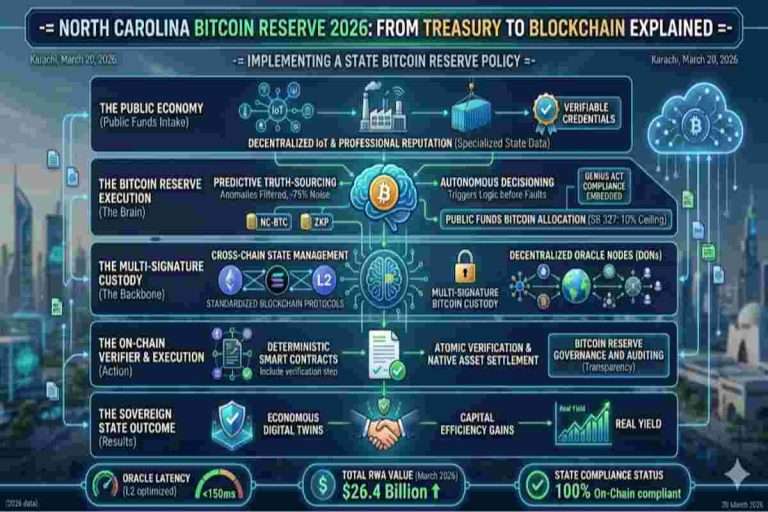
Table of Contents
ToggleNorth Carolina’s bill would:
This is not a mandate to spend public funds on Bitcoin, but rather a structured framework to treat Bitcoin as a non‑fiduciary reserve asset — similar in philosophy to how governments hold gold or foreign exchange reserves.

There are several reasons why policymakers are seriously considering Bitcoin as a reserve asset:
Bitcoin is uncorrelated with traditional assets like bonds or equities. As a result, allocating a portion of reserves to BTC can potentially reduce systemic risk and improve long‑term return profiles.
Bitcoin’s fixed supply makes it an attractive hedge against inflation — a feature that isn’t inherent in fiat reserves.
Government endorsement of Bitcoin as a reserve signal supports tech investment, taxpayer confidence, and legislative leadership in digital asset policy.
Public finance architecture historically relied on:
Including Bitcoin introduces a digitally native store of value into this reserve architecture.
| State | Proposal Status | Bitcoin Component | Storage & Security |
|---|---|---|---|
| North Carolina | Introduced (2026) | Up to 10% recommended | Cold storage + multisig |
| Texas | Enacted | Strategic Bitcoin Reserve authorized | Custodial standards required |
| Arizona | Enacted | Crypto reserve structure | Treasury oversight |
| Other States | Various stages | Crypto reserve proposals | Varies widely |
This shows that North Carolina is joining a growing trend among U.S. states exploring Bitcoin as a public asset — with Texas and Arizona among the first to formalize such structures.
This proposal does not exist in isolation — it fits into a broader architectural shift in how states manage value:
| Asset Class | Typical Use |
|---|---|
| Cash | Operations |
| Bonds | Stability & income |
| Gold/FX | Long-term reserves |
| Asset Class | Strategic Function |
|---|---|
| Bitcoin | Digital store of value |
| Tokenized Assets | Diversified economic participation |
| Stablecoins | Programmatic liquidity |
In this context, Bitcoin is not replacing traditional reserves but is being integrated as a complementary reserve asset — similar to how sovereign wealth funds diversify internationally.
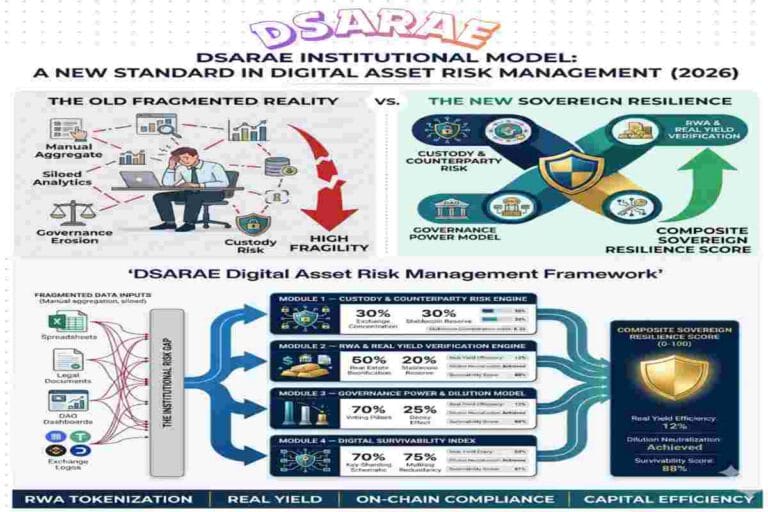
Even as states explore this strategy, there are legitimate concerns:
Bitcoin’s price can be volatile against fiat reserves, posing short‑term valuation risk.
State law must coexist with federal regulations; enforcement and compliance are evolving.
Allocating public funds to digital assets requires robust governance, auditing, and transparency.
Cold storage with multi‑signature authentication is considered best practice, but institutional‑level security must be robust (including insurance and disaster recovery).
| Risk Category | Concern | Mitigation |
|---|---|---|
| Market | Price volatility | Long-term horizon, risk limits |
| Legal | Regulatory uncertainty | Legal frameworks + audits |
| Operational | Custody vulnerabilities | Multi‑sig, cold wallets |
| Governance | Public accountability | Transparent reporting |
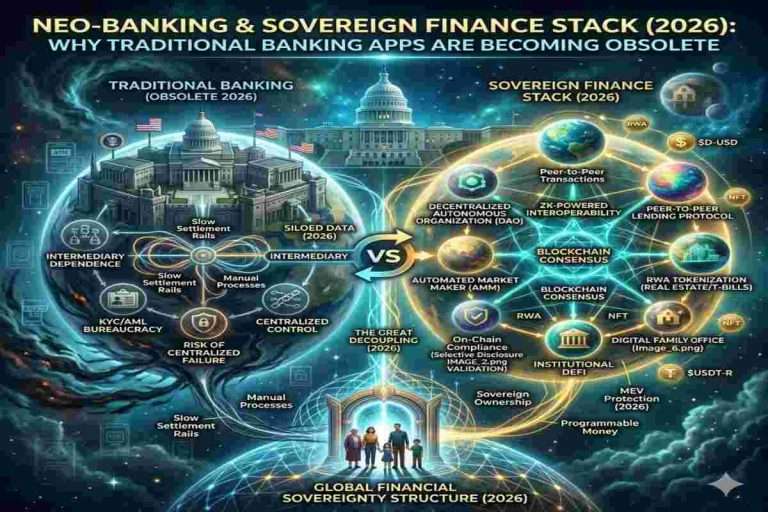
A state‑level Bitcoin reserve can have ripple effects:
This state proposal ties into broader themes in your Web3 ecosystem architecture:
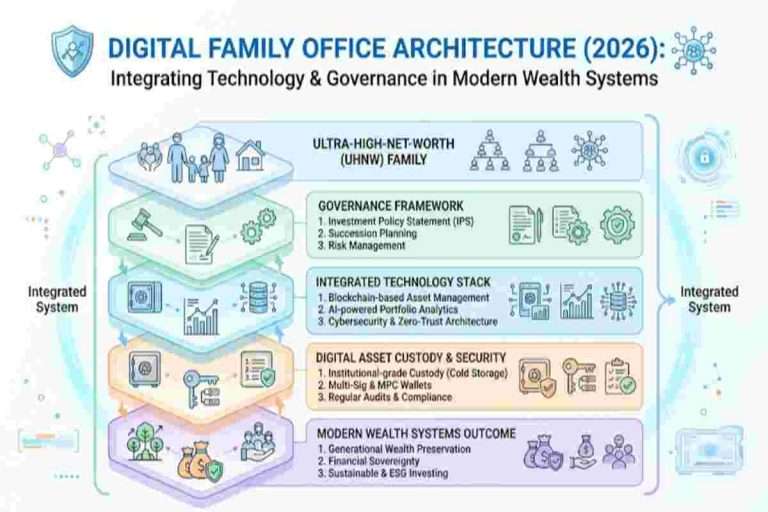
The North Carolina Bitcoin Reserve marks a historic shift in institutional treasury management. To align your personal or corporate strategy with this new era of state-backed digital assets, explore our 2026 strategic pillars:
For a deeper technical audit of the decentralized rails powering the North Carolina Bitcoin Reserve, explore the Web3 Architecture & Adoption (2026) master blueprint, which aligns with the latest federal interoperability standards found at healthit.gov/isa/2026-interoperability-standards-advisory.
North Carolina’s proposed North Carolina Bitcoin Reserve is more than news — it’s a framework shift in how public funds may be structured in the digital era. It moves treasury thinking from traditional asset allocations into digitally native value frameworks like Bitcoin.
Whether it becomes law or serves as a model, the discussion reflects how blockchain technology is influencing sovereign financial architecture, positioning Bitcoin as a viable component of long‑term reserve strategy and economic design.
The North Carolina Bitcoin Reserve refers to a legislative proposal (Senate Bill 327) that would authorize the state to allocate up to 10 % of certain public funds into Bitcoin (BTC) as part of a long‑term financial strategy, holding BTC under state treasury management rather than traditional assets.
The legislation is known as the North Carolina Bitcoin Reserve and Investment Act (Senate Bill 327), sponsored by state senators including Todd Johnson and Brad Overcash. It passed its first reading in the North Carolina Senate in March 2026.
The proposal would place custody and oversight of the state’s Bitcoin holdings under the Office of the State Treasurer, using cold storage wallets with multi‑signature authentication and audited monthly reporting to ensure security and transparency.
According to the bill, the reserve could be used in severe financial crises, approved investment strategies, funding critical infrastructure and economic development, and supporting Bitcoin‑related research and business incentives.
North Carolina’s proposal follows a broader trend of state‑level Bitcoin reserve exploration. For example, Texas enacted its own Texas Strategic Bitcoin Reserve, formally allowing state BTC holdings under law in 2025, while the U.S. federal government issued an executive order creating a Strategic Bitcoin Reserve and Digital Asset Stockpile in 2025.
👉 For more context on institutional reserve frameworks, see RWA Tokenization 2026: Guide to Real‑World Asset Portfolios → https://ownprocrypto.com/rwa-tokenization-guide-2026/
As of early 2026, the bill has cleared its first legislative reading but has not yet been fully enacted into law. It still requires further committee review and final legislative approval before becoming effective.
Some experts caution that most governments currently lack deep experience in managing digital assets at scale and that strategic reserve proposals must address custody risk and regulatory uncertainty before being widely adopted.
Market analysts note that even if the state were to commit BTC purchases, its 10 % public funds cap represents a relatively small flow compared to the Bitcoin market’s $50 B+ daily trading volume, meaning its price impact alone may be limited.
The bill proposes quarterly public reports of the reserve’s status, value, and performance to the General Assembly — a measure intended to enhance accountability and transparency.
The proposal is seen as part of a broader push to embed Bitcoin within public financial planning rather than remain an ancillary asset, signaling a willingness by some state treasuries to diversify beyond traditional asset classes.
Welcome to OwnProCrypto (Own & Pro Crypto) — a next-generation Bitcoin and blockchain education platform where the science of finance meets the power of AI-driven automation.
Our mission is simple: to equip you with the knowledge, frameworks, and tools needed to make smarter financial and business decisions in the Web3 economy.
Beyond analysis, OwnProCrypto focuses on transparency, verifiable data, and practical frameworks that investors and builders can actually use. Our goal is not hype — but clear thinking, disciplined analysis, and long-term value creation in the decentralized economy.
Our Background: Salim (Sam) is the founder and lead researcher behind OwnProCrypto, a Web3 intelligence platform focused on crypto security, digital ownership, stablecoin systems, interoperability, and institutional blockchain infrastructure.
Crypto Tools & Analysis:
Crypto Fundamental Analysis Tool | Protocol Evaluation System | DeFi Risk Analysis Tools | Crypto Portfolio Dashboard | Token Risk vs Reward Tool
Guides:
Crypto Fundamental Analysis | Blockchain Project Evaluation | Tokenomics Analysis | DeFi Protocol Analysis | Capital Efficiency
© 2026 OwnProCrypto — Built for smarter crypto decisions