
As Web3 expands across multiple blockchains, the need for reliable, real-time data becomes increasingly critical. Oracle networks now operate in complex, multichain environments where performance, latency, and accuracy directly impact application outcomes.
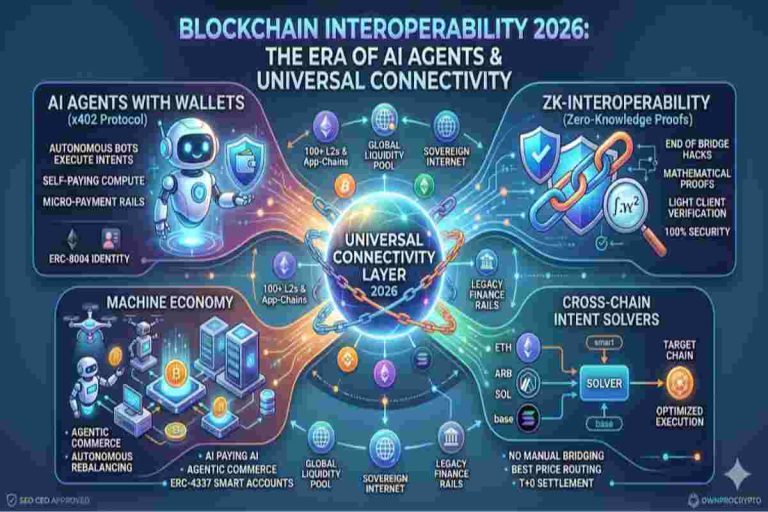
This dashboard provides a unified view of blockchain oracle performance, combining AI-driven insights with real-time data monitoring to help users evaluate how different networks operate across decentralized ecosystems. Real-time data performance is the heartbeat of the “Connected Stack” we detail in Web3 Interoperability 2026. Track live oracle latency and uptime at Dune Analytics.
In a multichain world, data often becomes siloed, leading to “Signal Distortion” and synchronization errors. The Oracle Explorer Dashboard solves this by providing a unified window into cross-chain execution. It eliminates the risk of using “stale” data by highlighting which networks offer the best latency for specific chains, ensuring that automated smart contracts always act on the most current global truth.
Key Benefits for the User
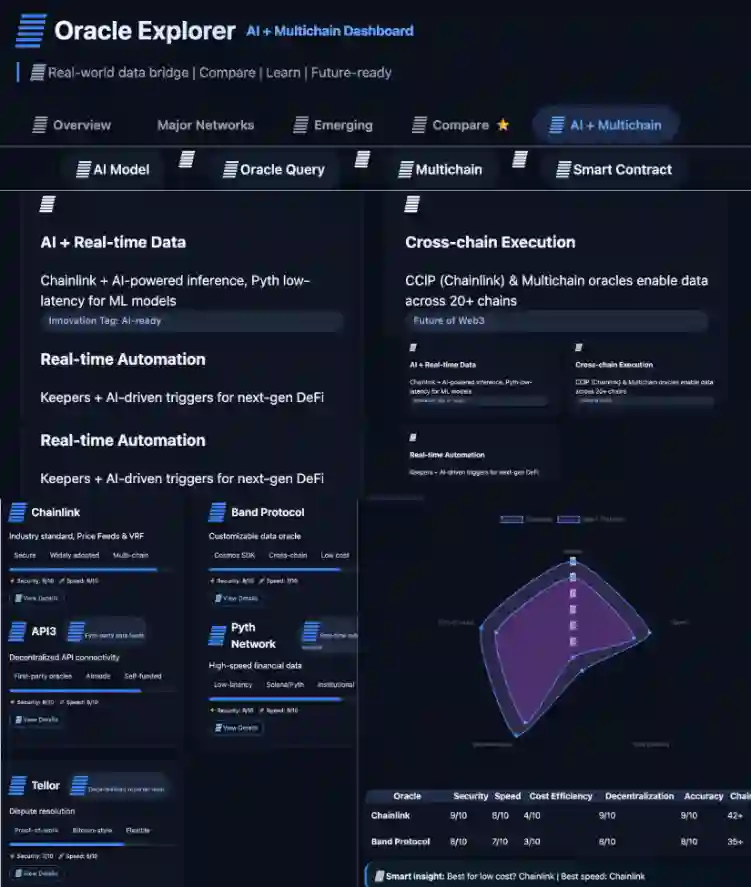
This dashboard is structured to provide a comprehensive view of oracle performance across AI and multichain environments:
This system belongs to the Web3 Governance layer of the Web3 Decision Lab.
You may also explore:
– Best Blockchain Oracles (Chainlink, Pyth, Band Comparison)
– Crypto Bridge Risk Tool (Cross-Chain Systems)
– Modular Blockchain Architecture 2026: Build Layer 2 & Rollup
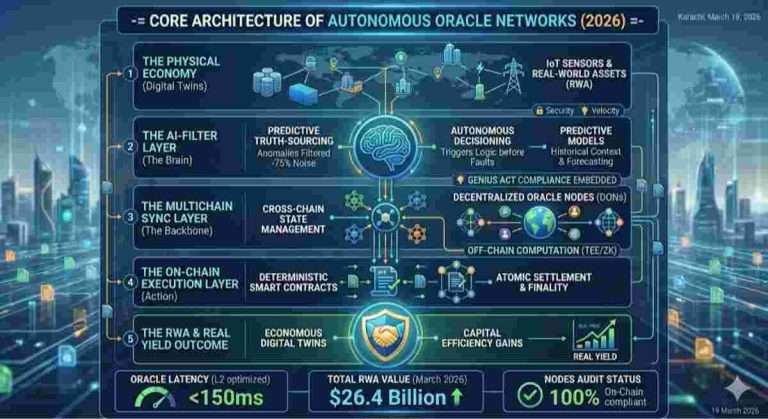
As blockchain ecosystems become increasingly interconnected, data reliability becomes a critical layer of infrastructure.
By combining AI insights with multichain monitoring, this dashboard enables users to move beyond static comparisons and understand how oracle networks perform in real-world conditions. This shift from observation to intelligence is key to building resilient and scalable Web3 systems.
If you’re looking to move from analysis to action, the Oracle Explorer Dashboard pairs directly with our Oracle Decision Engine—a tool designed to help you select the most suitable oracle based on your specific technical requirements. While this dashboard focuses on real-time performance and cross-chain insights, the decision engine translates those insights into practical infrastructure choices. For Deep Drive read our Post Blockchain Oracle Explained
To ensure your project maintains the highest standards of data integrity, consult the Chainlink Documentation for industry-leading decentralized oracle frameworks.
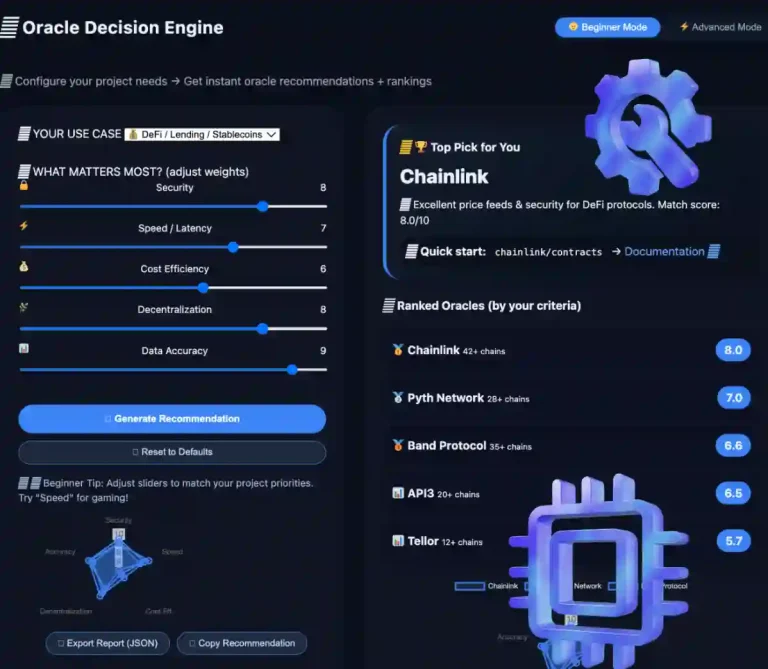
A blockchain oracle dashboard provides a visual interface to monitor and compare oracle performance, including metrics like speed, accuracy, cost, and decentralization.
Oracle performance is evaluated based on latency, data accuracy, security, cost efficiency, and the level of decentralization across the network.
Multichain data feeds allow oracle networks to deliver and synchronize data across multiple blockchains, ensuring consistency between different ecosystems.
AI is used to analyze data patterns, detect anomalies, and improve the accuracy and efficiency of blockchain-based systems, including oracle networks.
Real-time blockchain data refers to continuously updated information, such as asset prices or transaction states, delivered to smart contracts with minimal delay.
Each oracle network has different strengths. Some prioritize security and decentralization, while others focus on speed or cost efficiency depending on their design.
Welcome to OwnProCrypto (Own & Pro Crypto) — a next-generation Bitcoin and blockchain education platform where the science of finance meets the power of AI-driven automation.
Our mission is simple: to equip you with the knowledge, frameworks, and tools needed to make smarter financial and business decisions in the Web3 economy.
Beyond analysis, OwnProCrypto focuses on transparency, verifiable data, and practical frameworks that investors and builders can actually use. Our goal is not hype — but clear thinking, disciplined analysis, and long-term value creation in the decentralized economy.
Our Background: Salim (Sam) is the founder and lead researcher behind OwnProCrypto, a Web3 intelligence platform focused on crypto security, digital ownership, stablecoin systems, interoperability, and institutional blockchain infrastructure.
Crypto Tools & Analysis:
Crypto Fundamental Analysis Tool | Protocol Evaluation System | DeFi Risk Analysis Tools | Crypto Portfolio Dashboard | Token Risk vs Reward Tool
Guides:
Crypto Fundamental Analysis | Blockchain Project Evaluation | Tokenomics Analysis | DeFi Protocol Analysis | Capital Efficiency
© 2026 OwnProCrypto — Built for smarter crypto decisions