
In a world racing toward Web3, tokenized digital twins are only as smart as the data they receive. AI-powered multichain oracles are the invisible force powering every accurate simulation, automated contract, and predictive decision. They connect the physical and digital worlds, feeding verified IoT data into blockchain networks so assets, factories, and smart cities operate autonomously.
“Data is meaningless without trust. Oracles turn reality into actionable intelligence.”
Imagine a factory where machinery failure is predicted days in advance, or a supply chain that reroutes itself dynamically, or a city that self-regulates its energy grids and traffic flows. Behind all this is an AI-powered multichain oracle network, silently orchestrating a digital mirror of reality — the backbone of every tokenized twin.
Oracles act as the “nervous system” for the connected stack we explore in Web3 Interoperability 2026. Learn more about the role of decentralized data feeds at Chainlink’s 2026 Ecosystem Report.
Blockchains are powerful systems—but they cannot access real-world data on their own. This limitation is solved by oracles, which act as bridges between on-chain logic and off-chain information.
In 2026, blockchain oracles have evolved into intelligent, multichain data networks powered by AI. They no longer just deliver price feeds—they enable complex applications such as tokenized assets, automated financial systems, and real-time digital representations of physical assets.
AI-powered blockchain oracles are rapidly evolving from simple data relays into cross-chain data intelligence systems that underpin the next generation of digital infrastructure.
In 2026, the convergence of artificial intelligence, blockchain networks and real-world data is enabling a new class of systems: tokenized digital twins—dynamic, on-chain representations of physical assets, processes and environments. These systems do not operate on assumptions. They depend on accurate, verified and continuous data flows. Without reliable oracle infrastructure, digital twins remain theoretical. With it, they become operational.
Recent developments continue to validate the rapid emergence of tokenized Digital Twin infrastructure, led by oracle innovation and AI integration. Chainlink has expanded its low-latency Data Streams following its March developer surge, strengthening real-time synchronization for RWAs, while Pyth Network is scaling its always-on data feeds beyond oil into broader commodities and macro indices—critical for autonomous systems operating 24/7. Meanwhile, Jacobs Solutions Inc. in collaboration with NVIDIA is accelerating AI-powered Digital Twin deployments for large-scale infrastructure, increasing demand for continuous oracle connectivity between physical systems and blockchain logic.
On the policy front, outcomes from the DC Blockchain Summit suggest regulators are actively shaping frameworks under the proposed GENIUS Act to classify “Autonomous Economic Agents,” signaling that Digital Twins are evolving into recognized economic entities. Together, these signals confirm a clear trend: the convergence of AI and oracle networks is forming the backbone of real-time, self-operating Digital Twins.
Real-world signals confirming the Backbone of Tokenized Digital Twins.
Tokenized digital twins replicate real-world assets, but without reliable, multi-source data, these twins are merely theoretical. AI-powered oracles ensure:
A critical challenge is trust.
Decentralized AI verification ensures:
This transforms oracles into trust layers, not just data pipelines.
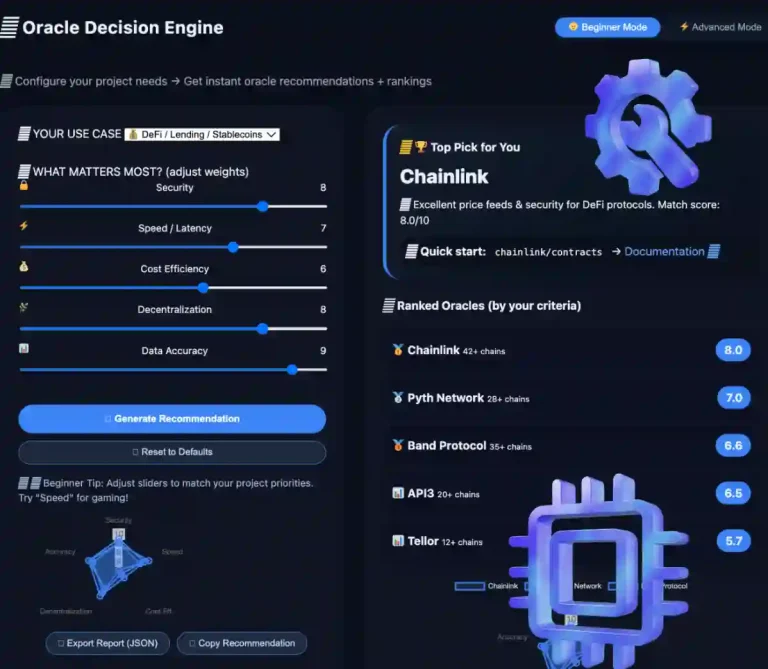
Selecting the right blockchain oracle is critical for any Web3 application. Whether in DeFi, gaming, or insurance, the reliability, speed, and security of external data feeds directly impact system performance and user trust.To simplify this process, the Oracle Decision Engine helps developers compare blockchain oracles using key technical parameters such as latency, decentralization, cost efficiency, and data accuracy. Instead of relying on assumptions or brand recognition, it provides a structured way to identify the most suitable oracle based on specific project requirements.
The tool functions as a recommendation system that maps your application needs to the best-fit oracle providers:
Choosing the wrong oracle can lead to inaccurate data feeds, smart contract vulnerabilities, or unnecessary operational costs. The Oracle Decision Engine removes this risk by aligning each protocol’s strengths—such as high security or low latency—with your application’s specific needs and constraints.
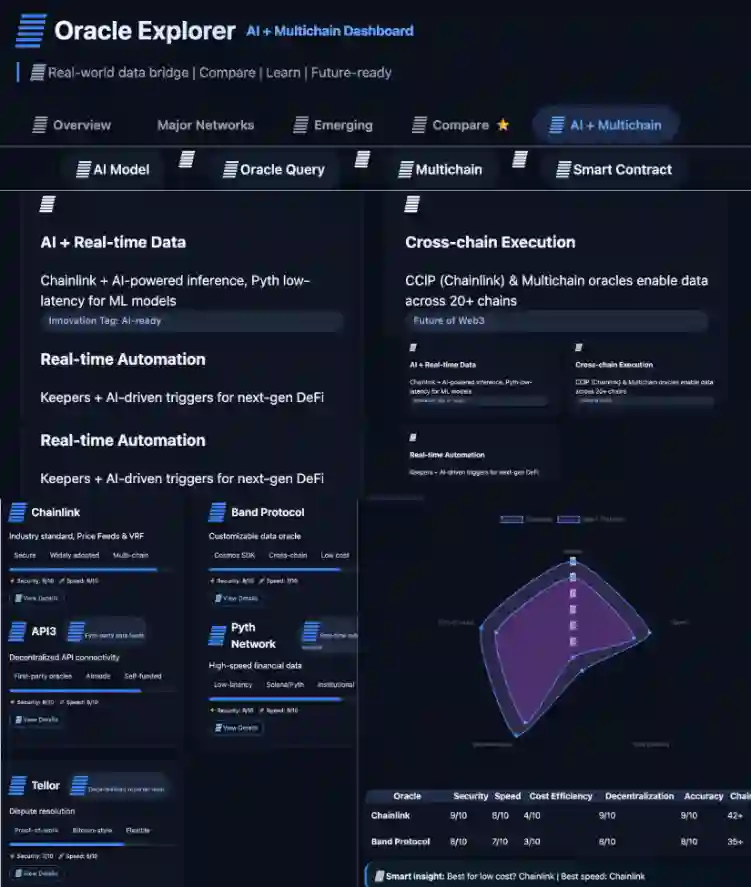
Once you’ve identified the right oracle, the next step is validating its real-world performance. The Oracle Explorer Dashboard complements this process by offering a blockchain oracle dashboard view of live performance across multichain environments.
It enables developers to monitor real-time blockchain data, compare oracle performance, and evaluate how networks like Chainlink, Pyth, and Band behave under actual market conditions—bridging the gap between selection and execution.
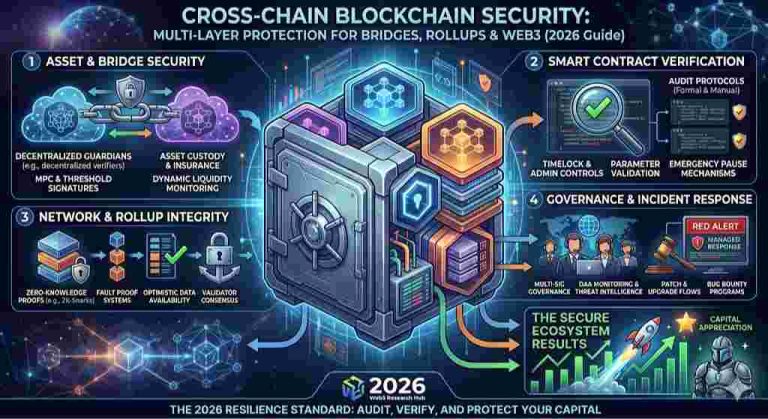
Digital twins do not exist on a single chain.
They operate across:
Cross-chain data intelligence enables:
This is where multichain oracles become essential.
| Feature | 2026 Benchmark | Real-World Impact |
|---|---|---|
| Data latency | <2 seconds | Near real-time simulation for industrial twins |
| Cross-chain throughput | 5,000+ TPS | Enables multichain asset management |
| Multi-source verification | 3–5 independent feeds | Reduces errors & fraud |
| AI predictive accuracy | 85–95% | Anticipates maintenance, logistics, energy flows |
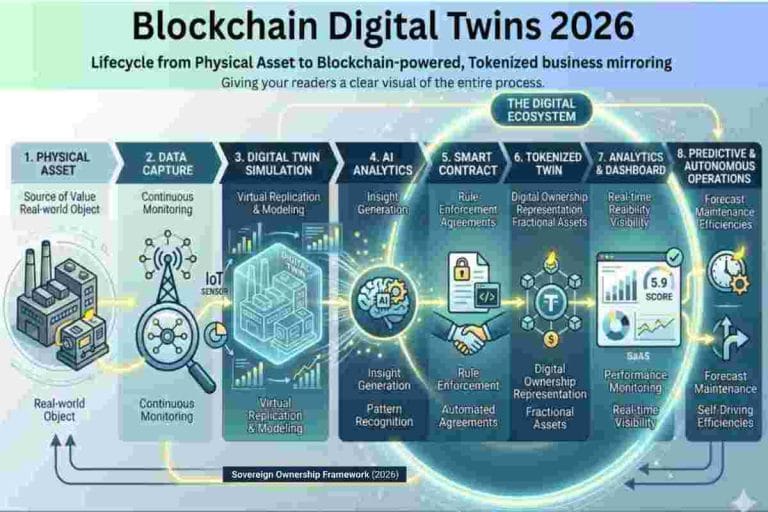
In today’s Web3 landscape, enterprises need more than broad blockchain coverage — they need actionable intelligence that mirrors real-world operations. Many mainstream crypto publications provide high-level summaries but often lack the depth required for industrial-scale applications, such as replicating physical assets, tracking operations on-chain, or modeling tokenized digital twins.
By leveraging AI-powered multichain oracles, institutions can validate real-time IoT data, implement predictive maintenance for industrial assets, and maintain verifiable, cross-chain operational records. This approach not only ensures precision and reliability in digital twin simulations but also allows organizations to optimize processes, reduce downtime, and make data-driven decisions with confidence.
Unlike generic coverage, this method bridges the gap between blockchain theory and operational reality, giving executives and engineers the tools to architect digital twin token models, track assets efficiently, and mirror real-world systems in a secure, automated, and transparent way.
| Feature | Standard Oracle (2024) | AI-Multichain Oracle (2026) |
| Data Processing | Raw Data Relaying | AI-Filtered Predictive Logic |
| Network Scope | Single-Chain Focused | Seamless Multichain Sync |
| Asset Type | Static Tokens (Prices) | Tokenized Digital Twins (Dynamic) |
| Latency | Reactive (Seconds/Minutes) | Proactive (Near-Instant/Edge) |
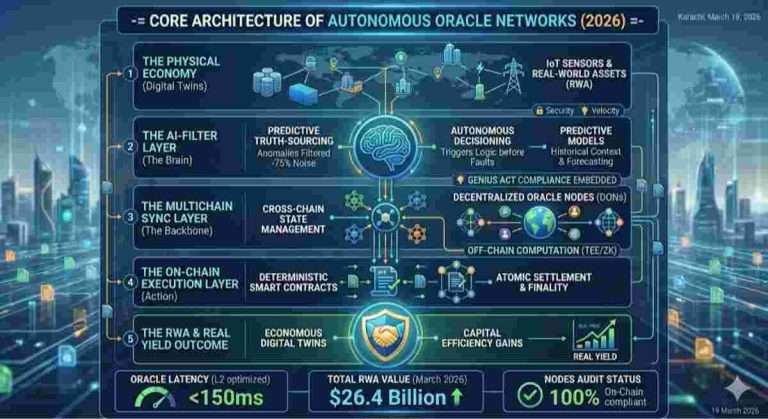
In 2026, we are seeing the rise of autonomous oracle networks.
These systems:
They function as decision infrastructure, not passive intermediaries.
AI Layer
Blockchain Layer
Multichain Layer
Tokenized digital twins rely on continuous input from real-world systems.
Lifecycle:
This creates a loop where:
data → intelligence → execution → feedback
Physical Asset → IoT Sensors → AI Oracle → Blockchain → Digital Twin → Smart Contract → Action → Analytics
This loop transforms static assets into autonomous economic entities.
How Digital Twins are achieving “Economic Autonomy” through AI-Oracle integration.
The 2026 Shift: Blockchain Oracle Explained and Now We have moved past static tokenization. Today, AI-Powered Oracles act as the bridge for Digital Twins, cross-referencing IoT sensor data with AI predictive models before committing state changes to the blockchain. Whether it’s an autonomous power grid or a tokenized shipping fleet, these oracles ensure that the “On-Chain Representative” acts in perfect sync with its physical counterpart.
Key Technological Pillars:
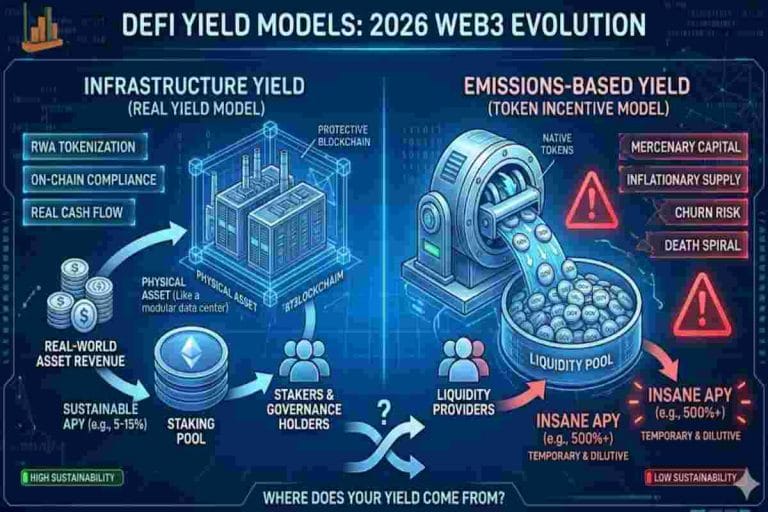
The narrative has changed.
Before:
DeFi speculation
Now:
Infrastructure for:
Oracles are enabling blockchain to move from financial abstraction to operational reality.
| Metric | Improvement |
|---|---|
| Downtime | ↓ 40% |
| Maintenance costs | ↓ 25% |
| Predictive accuracy | 90% |
| Feature | Benefit |
|---|---|
| Real-time condition tracking | Reduces spoilage & theft |
| Automated settlements | Faster supplier payments |
| Predictive routing | 20–30% efficiency gain |
In this success story, we examine how robust Blockchain Oracles Explained through decentralized architecture allowed a major derivatives platform to survive extreme market volatility.
Format: Narrative Overview
Synthetix, a leader in decentralized synthetic assets, requires constant, high-fidelity data feeds to price “Synths” (digital versions of gold, stocks, and currencies). Historically, relying on a single data source would have been a fatal flaw. By implementing a decentralized oracle network, they ensured that no single exchange glitch could manipulate their internal prices.
During the flash crashes of the early 2020s, while other platforms faced “oracle latency” where prices lagged behind the real market, Synthetix utilized a multi-node aggregation model. This specific application of Blockchain Oracles Explained the difference between a functional market and a total shutdown. Because the oracle cross-referenced data from dozens of independent nodes, it filtered out the “noise” of outlier prices, maintaining a fair market value for thousands of users simultaneously. This success proved that decentralized data is the bedrock of institutional-grade DeFi.
This failure highlights the “Oracle Manipulation” exploit, a critical risk often found in documentation about Blockchain Oracles Explained.
| Element | Analysis of the Oracle Breach |
| Problem | Low-liquidity tokens were used to artificially inflate collateral value through price manipulation. |
| Objectives | To maintain a secure, solvent lending platform with accurate market prices. |
| Analysis / Situation | The platform relied on a narrow oracle feed for a thinly traded token (MNGO). An attacker used high-volume wash trading to drive the price up by 1,000% in minutes. |
| Implementation | The oracle dutifully reported this artificial price “truth” to the smart contract, which then viewed the attacker as being incredibly wealthy. |
| Challenges | The lack of “Time-Weighted Average Price” (TWAP) or multi-source AI filtering meant the oracle couldn’t distinguish between a pump-and-dump and a real market move. |
| Results / Outcomes | The attacker “borrowed” (drained) $114 million in protocol liquidity against their fake collateral. The protocol became insolvent overnight. |
When we look at Blockchain Oracles Explained in a 2026 context, the takeaway is clear: automation is only as good as its input. A success depends on Data Availability Layer Blockchain stability and multi-source consensus. A failure almost always stems from “Oracle Blindness,” where a smart contract trusts a single, manipulated data point.
By integrating AI-Powered Oracles, modern systems can now detect Mango-style manipulation before the smart contract executes, effectively acting as a digital immune system for Web3 infrastructure.
Security is critical for enterprise adoption:
| Layer | Benefit |
|---|---|
| Multi-layer blockchain | Prevents tampering & exploits |
| Quantum-resistant protocols | Future-proof against emerging threats |
| Decentralized verification | Reduces single points of failure |
| End-to-end auditing | Ensures trust & compliance |
Security isn’t optional — it’s the foundation for autonomous digital twins.
Most people interact with blockchain at the surface level: tokens, prices, speculation.
But the real shift is happening underneath.
Imagine:
These systems are not hypothetical. They are being built.
The missing link has always been trusted data.
That gap is now being filled.
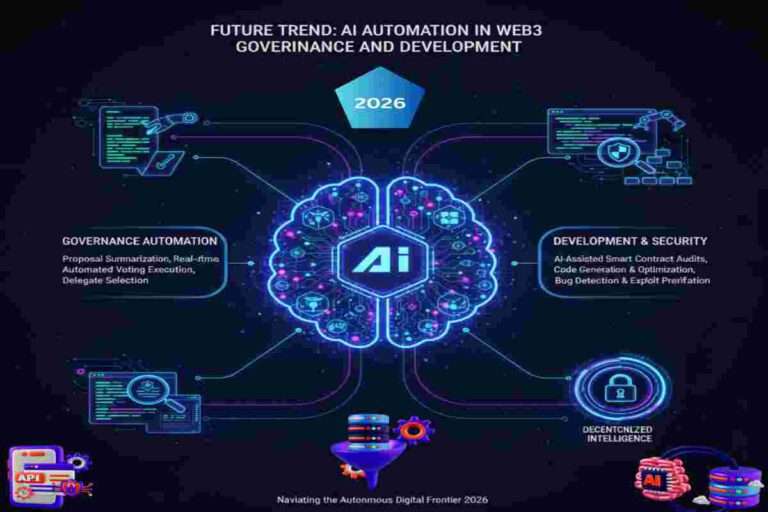
AI agents are beginning to:
But they require:
This is where oracles become critical.
We are moving toward systems where:
Digital twins + AI + oracles create:
self-operating economic units
Actionable Steps for Enterprises:
ROI Snapshot:
| Benefit | Expected Impact |
|---|---|
| Operational downtime | ↓ 30–50% |
| Predictive maintenance accuracy | ↑ 90% |
| Fractional ownership & tokenized assets | ↑ liquidity & transparency |
| Decision-making speed | ↑ 2–3x |
| Energy efficiency | ↑ 25% |
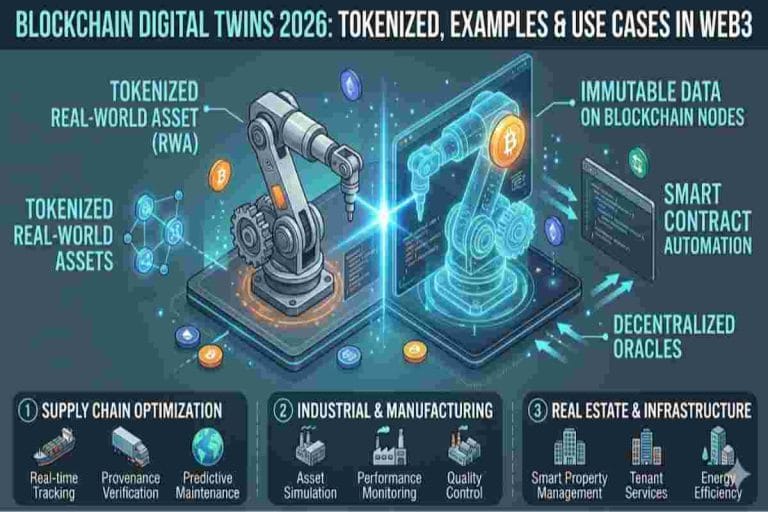
By 2030, AI-powered oracles will:
Oracles don’t just feed data; they empower the digital twin economy.
The rise of AI-Powered Multichain Oracles in 2026 marks the final departure from static, isolated data feeds to a dynamic, interconnected global economy. As the indispensable backbone of Tokenized Digital Twins, these autonomous networks provide the “Economic Nervous System” required to manage trillions in physical value with sub-second precision. By anchoring the Legacy Pillar with predictive intelligence and Multichain synchronization, oracles have transformed blockchain from a simple ledger into a living mirror of the physical world. For the SEO CEO, the mandate is clear: those who master this infrastructure will command the Capital Efficiency and Real Yield of the next decade, while those who ignore it will be left managing a desynced and depreciating reality.
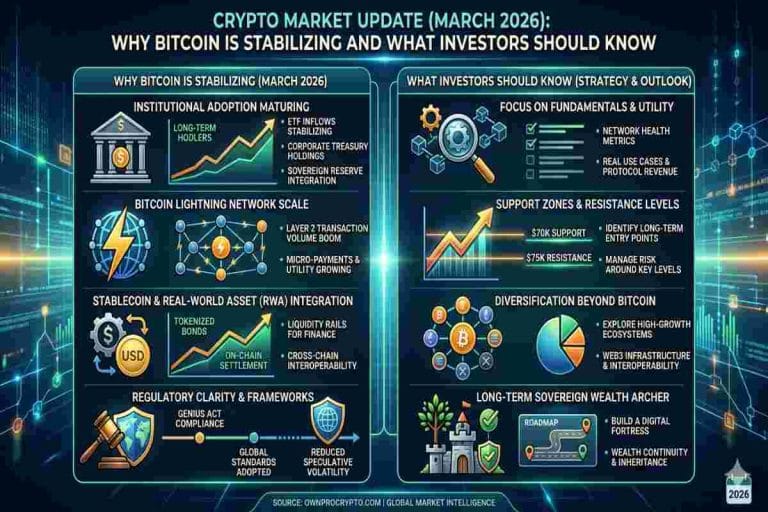
Shifting your mindset from a short-term speculator to a long-term owner is the most significant step you can take in your crypto journey. By understanding the common Bitcoin Beginner Mistakes that often derail newcomers, you position yourself to build a more resilient portfolio. Implementing robust Self-Custody Solutions ensures that you remain in total control of your assets, effectively neutralizing the most critical mistakes to avoid in bitcoin. Ultimately, success isn’t just about watching the price—it’s about the security and discipline of true ownership.
Finalizing the “Backbone” for Institutional Strategy.
| Layer | Component | Strategic Function |
| Data Intake | IoT & Sensor Fusion | Bridges the Physical Economy to the Chain. |
| Logic Layer | AI Predictive Filter | Eliminates “Sensor Noise” and anomaly risks. |
| Transport Layer | Multichain Sync | Maintains state across ETH, SOL, and L2s. |
| Execution Layer | Atomic Settlement | Drives On-Chain Compliance and Finality. |
AI-powered multichain oracles are more than a technical tool — they are the backbone of tokenized digital twins and the bridge between physical operations and blockchain automation. Enterprises that adopt these oracles gain:
This post demonstrates how AI-powered oracle networks enable actionable insights, verifiable industrial tracking, and precise digital twin token models, giving institutions the tools to turn complex data into strategic advantage.
“Enterprises that integrate oracle-powered digital twins today are building the predictive, automated, and resilient operations of tomorrow.”
Looking ahead, these technologies will continue to shape the future of industrial automation, smart infrastructure, and Web3 financial ecosystems. Organizations that embrace this approach gain a sustainable competitive edge, combining security, efficiency, and predictive intelligence to thrive in the 2026 digital economy and beyond.
What are blockchain oracles?
Blockchain oracles are specialized systems that act as bridges between blockchains and the outside world. They provide external data to smart contracts, allowing them to interact with real-world information such as price feeds, weather events, and web APIs.
Case Study Failure: Early DeFi protocols relied on centralized oracles that were easily manipulated, leading to multi-million dollar flash loan attacks and skewed liquidation prices.
Why are oracles important in blockchain?
Blockchains are isolated environments that cannot natively access off-chain data. Oracles are essential because they unlock real-world utility for DeFi, insurance, and supply chains by feeding them the verified data required to execute automated agreements.
Case Study Failure: Smart contracts without reliable oracles remain “blind,” limited only to data already on the chain, which prevents the development of complex real-world asset (RWA) ecosystems.
What are blockchain data feeds?
Data feeds are continuous streams of external information—such as live market prices or IoT sensor data—delivered to smart contracts through decentralized oracle networks to ensure high-frequency updates and accuracy.
Case Study Failure: Low-latency data feeds are critical; protocols using delayed price feeds have suffered from arbitrageurs who exploited the price gap between the oracle and the actual market.
How do AI-powered oracles work?
AI-powered oracles enhance traditional data feeds by using machine learning models to validate information, detect statistical anomalies, and improve accuracy by filtering out “noisy” or manipulated data before it reaches the blockchain.
Case Study Failure: Traditional oracles often struggle with “outlier” data points caused by exchange glitches; AI-driven filters can identify and ignore these anomalies to prevent false liquidations.
What are multichain oracles?
Multichain oracles operate across multiple blockchain networks simultaneously. They enable synchronized state updates, allowing data and asset values to be shared and used seamlessly between different ecosystems without fragmentation.
Case Study Failure: Without multichain synchronization, an asset’s price might be updated on Ethereum but not on a Layer 2, creating dangerous price discrepancies across a user’s multi-chain portfolio.
Are AI-powered blockchain oracles secure?
Security is achieved through decentralized node consensus, multi-source aggregation, and AI anomaly detection. By using cross-chain validation, these systems significantly reduce the risk of a single point of failure or data tampering.
Case Study Failure: Single-source oracles are a major vulnerability; modern AI architectures prevent “garbage in, garbage out” scenarios by cross-referencing hundreds of data points in milliseconds.
What are tokenized real-world assets?
Tokenized assets are digital representations of physical or traditional financial assets (like real estate or gold) on a blockchain. This process enables fractional ownership, 24/7 trading, and automated management via smart contracts.
Case Study Failure: Early tokenization projects failed due to a lack of real-time valuation; modern oracles solve this by constantly updating the on-chain token value based on off-chain market appraisals.
What are digital twins in blockchain?
Digital twins are virtual representations of physical objects (like industrial machinery) that stay synchronized with their real-world counterparts using IoT and oracle systems. This allows for real-time tracking of performance, maintenance, and ownership.
Case Study Failure: Static digital twins quickly become obsolete; without constant oracle updates from physical sensors, the digital representation loses its legal and operational utility.
How do AI-powered oracles support real-world asset mirroring?
Mirroring requires perfect synchronization between a physical asset and its digital twin. AI-powered oracles validate IoT inputs and performance metrics to ensure the on-chain representation accurately reflects real-time physical conditions and prevents reporting fraud.
Case Study Failure: Manual reporting of asset conditions is prone to human error or fraud; automated AI oracles remove the “human element,” ensuring the mirrored asset’s data is tamper-proof.
Which industries benefit most from AI-powered
High-impact sectors include industrial manufacturing, tokenized real estate, parametric insurance, and ESG reporting. These industries rely on “On-Chain Industrial Tracking” to verify assets across global supply chains and regulatory jurisdictions.
Case Study Failure: In parametric insurance, payouts were often delayed due to disputes over data sources; AI oracles automate the payout the moment a verified weather or flight data threshold is crossed.
What is the future of AI-powered blockchain oracles by 2030?
By 2030, oracles will evolve into “Intelligent Infrastructure Coordinators.” They will predict asset failures before they occur, automatically adjust legal compliance thresholds, and power fully autonomous digital twin ecosystems within the Web3 industrial framework.
Case Study Failure: Moving from reactive to predictive systems is the next frontier; 2030 oracles will prevent losses by identifying risks in the data stream before the smart contract even executes.
Welcome to OwnProCrypto (Own & Pro Crypto) — a next-generation Bitcoin and blockchain education platform where the science of finance meets the power of AI-driven automation.
Our mission is simple: to equip you with the knowledge, frameworks, and tools needed to make smarter financial and business decisions in the Web3 economy.
Beyond analysis, OwnProCrypto focuses on transparency, verifiable data, and practical frameworks that investors and builders can actually use. Our goal is not hype — but clear thinking, disciplined analysis, and long-term value creation in the decentralized economy.
Our Background: Salim (Sam) is the founder and lead researcher behind OwnProCrypto, a Web3 intelligence platform focused on crypto security, digital ownership, stablecoin systems, interoperability, and institutional blockchain infrastructure.
Crypto Tools & Analysis:
Crypto Fundamental Analysis Tool | Protocol Evaluation System | DeFi Risk Analysis Tools | Crypto Portfolio Dashboard | Token Risk vs Reward Tool
Guides:
Crypto Fundamental Analysis | Blockchain Project Evaluation | Tokenomics Analysis | DeFi Protocol Analysis | Capital Efficiency
© 2026 OwnProCrypto — Built for smarter crypto decisions