
The Bitcoin price outlook has become a central topic for global markets as the price of Bitcoin moves around the $74,000 level. After several months of consolidation near $70K–$72K, the recent move above resistance has prompted renewed analysis from institutional investors, market strategists, and long-term asset allocators.
While Bitcoin has experienced several rapid price cycles in its history, the current environment appears structurally different. Market participation is increasingly influenced by institutional investors, exchange-traded fund inflows, and macroeconomic factors rather than purely retail-driven speculation.
The key question for investors is whether this move represents the start of a sustained upward trend or simply another short-term fluctuation within a broader consolidation phase. Understanding the answer requires examining the technical price structure, institutional participation, and macroeconomic signals shaping the current Bitcoin market.
This market movement is a primary driver behind the long-term ROI models found in our Digital Ownership in 2026 report. This price action serves as a primary signal for the institutional allocation strategies found in our Web3 Governance Framework: Sovereign Ownership (2026). Monitor real-time charts at TradingView.

Table of Contents
ToggleIn the evolving digital asset economy of 2026, the $72,000 price zone has transformed from a speculative target into a structural pivot point.
This range represents the psychological cost basis of the second institutional adoption wave, which began after the maturation of spot Bitcoin ETFs and increasing regulatory clarity in several financial markets.
For professional investors, this level functions as a Support-Resistance Flip Zone. Markets often test such levels multiple times before committing to a directional move.
| Factor | Institutional Interpretation |
|---|---|
| Bear Flag Invalidation | Break above $72K cancels the corrective pattern that began after the $126K peak |
| Liquidity Cluster | A supply vacuum exists between $72K and $80K |
| Psychological Barrier | Large algorithmic trading systems activate around round-number levels |
| Institutional Cost Basis | Many ETFs accumulated in the $60K–$72K range |
When such structural levels break, markets often move quickly due to short covering and algorithmic momentum trading.
In the 2026 digital economy, Key Reasons $72K Matters

Unlike the retail-driven “Moon” cycles of the past, March 2026 is defined by Flight to Quality. With energy markets volatile and traditional fiat bonds yielding negative real returns, Bitcoin is being treated as an institutional “Neutral Asset.”
Market Drivers : Bitcoin price outlook
Several factors are supporting Bitcoin’s current momentum.
| Driver | Impact on Bitcoin |
|---|---|
| Institutional demand | Long-term buying pressure |
| Spot ETF flows | Continuous liquidity inflows |
| Macro sentiment | Risk-on environment boosts crypto |
| Reduced supply | Long-term holders accumulating |
These factors contribute to the bullish narrative, but resistance levels still create uncertainty.
| Resistance Level | Market Significance |
|---|---|
| $75,000 | Short-term breakout confirmation |
| $78,500 | Fibonacci retracement level |
| $82,000 | Large on-chain supply gap |
| $90,000 | Psychological resistance |
A sustained move above $75K would confirm that the Q1 correction phase has ended.
| Support Level | Importance |
|---|---|
| $70,800 | Immediate demand zone |
| $68,800 | Institutional accumulation zone |
| $65,600 | Long-term trend support |
| $60,000 | Critical macro floor |
These levels will determine whether the current breakout develops into a sustained bull market continuation.

If Bitcoin maintains its position above $74K, several bullish catalysts could drive the next rally phase.
One of the most significant factors is the concentration of leveraged short positions above key resistance zones.
$74K Breakout
↓
Short Liquidations
↓
Momentum Buying
↓
$80K–$90K Price Range
Such cascades often lead to rapid price expansion over short timeframes.
| Target Level | Technical Reason |
|---|---|
| $78,500 | Fibonacci retracement level |
| $82,000 | On-chain supply vacuum |
| $90,000 | Macro resistance |
| $100,000 | Psychological milestone |
If Bitcoin clears these levels, the market may enter a new price discovery phase.
Despite the bullish momentum, the risk of a reversal cannot be ignored.
Markets frequently produce false breakouts, especially when retail traders rush to enter positions.
A common bearish pattern occurs when price briefly exceeds resistance before reversing sharply.
This scenario could unfold if macroeconomic conditions shift suddenly or if institutional investors begin locking in profits.
The risk remains a “Liquidity Sweep” where price briefly wicks to $73,500 to lure in retail longs before a sharp institutional profit-taking back to $60k.
Failed Breakout at $75K
↓
Rapid Profit Taking
↓
Support Test ($68K)
↓
Potential Correction Toward $60K
A decline toward $60K would still remain within the long-term bull market structure.

Technical analysis remains a valuable framework for identifying where major market participants are likely to act.
At present, Bitcoin is forming a consolidation structure following the breakout above $72K.
Market sentiment indicators show a fascinating divergence between retail investors and institutional participants.
While retail traders remain cautious after the volatility of late 2025, large investors appear to be quietly accumulating Bitcoin.
| Investor Type | Current Behavior |
|---|---|
| Whales | Increasing long-term holdings |
| Institutional funds | Allocating through ETFs |
| Corporate treasuries | Adding Bitcoin reserves |
| Retail investors | Trading short-term volatility |
The growth of whale wallets holding more than 1,000 BTC has increased steadily throughout 2026, suggesting that larger players remain confident in the long-term outlook.
Professional readers prefer data over speculation. Add this section.
| Indicator | Trend | Interpretation |
|---|---|---|
| ETF inflows | Increasing | Institutional demand remains steady |
| Whale wallets (1000+ BTC) | Gradual growth | Long-term accumulation |
| Hashrate | Near record levels | Network security strong |
| Exchange reserves | Slowly declining | Reduced selling pressure |
This section reinforces that the article is based on structural signals rather than hype narratives.
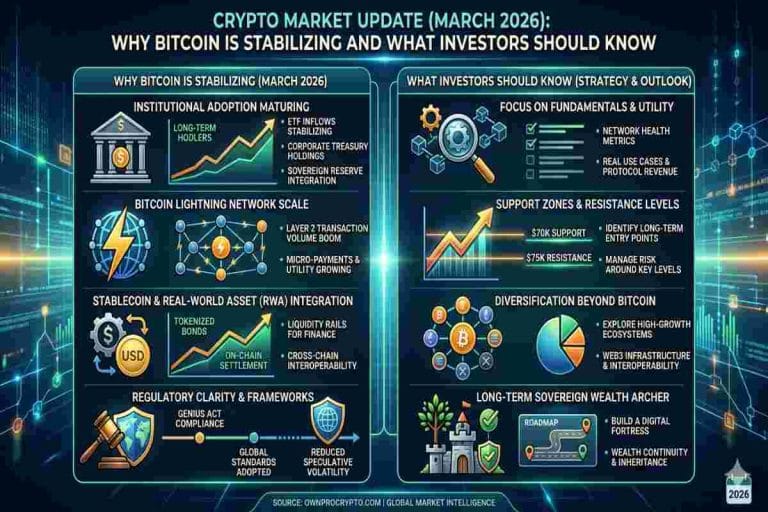
The future of Bitcoin depends on several interconnected variables including macroeconomics, institutional adoption, and regulatory developments.
| Factor | Bullish Outcome | Bearish Outcome |
|---|---|---|
| ETF adoption | Continued inflows | Institutional profit-taking |
| Global macro environment | Risk-on sentiment | Liquidity tightening |
| Regulation | Institutional confidence | Market uncertainty |
Understanding these drivers helps investors evaluate the probability of different scenarios.
Over the coming weeks, Bitcoin’s price movement will likely depend on how the market reacts around the $74K breakout zone.
| Scenario | Probability | Expected Range |
|---|---|---|
| Bullish breakout | Medium | $80K–$90K |
| Sideways consolidation | High | $70K–$75K |
| Bearish correction | Medium | $60K–$68K |
Most analysts currently expect a period of consolidation before the next major move.
As of March 17, 2026, Bitcoin has decisively reclaimed the $74,000 level, signaling a transition from “Patience-Testing Consolidation” to a verified “Institutional Breakout.” Driven by $2.8 billion in net ETF inflows this month and a decoupling from gold during recent geopolitical shocks, BTC is now positioned for a critical retest of the $80,000 resistance zone. Analysts from Bernstein and Standard Chartered maintain a high-conviction target of $120,000 by year-end, viewing any dips toward the $72,000 support floor as prime accumulation windows.
| Metric | Current Value | 2026 Year-End Target |
| Market Price | $74,312 | $120,000 – $185,000 |
| Key Support | $72,000 | $93,000 (New Floor) |
| Fear & Greed | 15 (Extreme Fear) | 75 (High Greed) |
| Monthly Inflow | $2.8B (Spot ETFs) | $15B+ (Cumulative) |
The long-term outlook for Bitcoin remains optimistic due to several structural trends.
Key drivers include:
These factors create a scarcity dynamic that often supports long-term price appreciation.
The narrative for March 2026 has shifted from “retail speculation” to “institutional industrialization.” With the 20 millionth Bitcoin officially mined on March 10, the scarcity argument has moved from theory to a mathematical supply shock. U.S. Spot ETFs now manage over $120 billion in assets, with BlackRock’s IBIT alone crossing the $86 billion mark. This “Sticky Capital” is creating a durable price floor, as institutional holders—now controlling 6.1% of the total supply—demonstrate “diamond hands” despite geopolitical volatility.
Data as of March 17, 2026
| Stakeholder Group | Current Status | Strategic Impact |
| Public Corporations | 145+ Firms hold 1.15M BTC. | BTC is now a standard HQLA (High-Quality Liquid Asset). |
| Institutional ETFs | $1.34B Inflows in March. | Regulated rails are absorbing all available exchange “float.” |
| Sovereign Reserves | U.S. Strategic Reserve active. | Government retention (via the 2025 EO) has ended the era of “seize and sell.” |
| Yield Products | ETHB & BUIDL Scaling. | Institutions are now capturing Real Yield on-chain. |
| Year | Conservative Base Case | Institutional Bull Case | Primary Driver |
|---|---|---|---|
| 2026 | $95,000 | $120,000 | ETF institutionalization |
| 2027 | $110,000 | $145,000 | Sovereign reserve adoption |
| 2028 | $130,000 | $180,000 | Post-halving supply squeeze |
| 2029 | $150,000 | $220,000 | Real-world asset tokenization |
| 2030 | $185,000 | $300,000+ | Integration with global finance |
These forecasts assume that Bitcoin continues transitioning from a speculative asset into a global digital reserve instrument.
The broader Bitcoin market is rising again, with digital assets gaining about 3.5% overall today as investors rotate back into risk assets.
Analysts say the rebound reflects:
While Bitcoin has experienced several rapid price cycles in its history, the current environment appears structurally different. Market participation is increasingly influenced by institutional investors, exchange-traded fund inflows, and macroeconomic factors rather than purely retail-driven speculation.
The key question for investors is whether this move represents the start of a sustained upward trend or simply another short-term fluctuation within a broader consolidation phase. Understanding the answer requires examining the technical price structure, institutional participation, and macroeconomic signals shaping the current Bitcoin market.
| Driver | Impact |
|---|---|
| Spot ETF inflows | Sustained buying pressure from institutional funds |
| Corporate treasury adoption | Public companies diversifying reserves |
| Rising network hashrate | Increased miner confidence |
| Macro uncertainty | Bitcoin emerging as a hedge against monetary instability |
These structural factors suggest that Bitcoin’s rally is being driven more by institutional allocation strategies rather than short-term speculation.
Historically, Bitcoin rallies were driven primarily by retail speculation and social media enthusiasm.
However, the 2026 cycle shows a different pattern.
With volatility in energy markets, shifting monetary policy, and declining real yields on government bonds, many institutional investors now treat Bitcoin as a neutral macro asset—similar to gold but with higher growth potential.
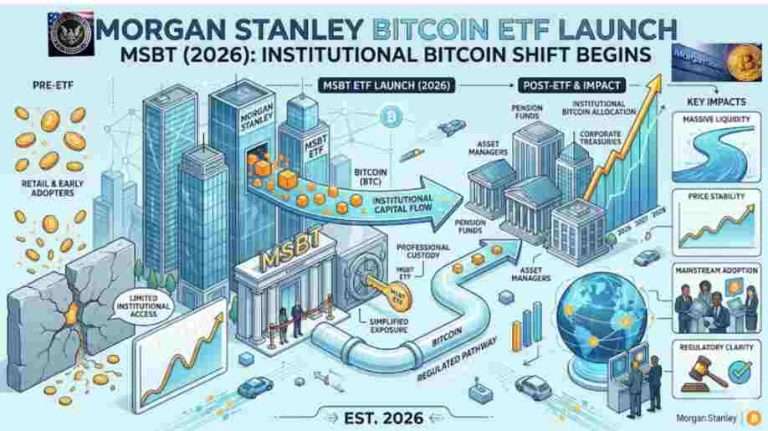
Update (April 2026): The Morgan Stanley Bitcoin ETF (MSBT) is now officially live and trading on NYSE Arca. This confirms earlier expectations and marks the first spot Bitcoin ETF issued by a major U.S. bank.
Last Updated: April 2026
The information in this article is based on the latest available data regarding the morgan stanley bitcoin etf launch msbt. As this is a developing story, details such as launch timing, fees, and availability may change. Readers are encouraged to check for updates as the ETF officially goes live and begins trading.
| Status | Details |
|---|---|
| Launch | Confirmed |
| Trading | Active |
| Exchange | NYSE Arca |
| Fee | ~0.14% |
| Type | Spot Bitcoin ETF |
| Metric | Current Observation |
|---|---|
| Price range | $72K–$74K trading zone |
| Market structure | Breakout attempt from consolidation |
| Institutional activity | Continued ETF inflows |
| Market sentiment | Cautiously optimistic |
Purpose:
Public companies are continuing to accumulate Bitcoin. Corporate holdings recently reached over 1.02 million BTC, valued at more than $75 billion.
This indicates increasing adoption among corporations treating Bitcoin as a strategic asset.
Reflecting the “Institutional Era” transition from Dallas to Wall Street.
| Observation Detail | Current Market Status (2026) | Strategic Implication |
| Global Treasury Volume | Public firms now hold 1.15 Million BTC (worth ~$84B). | Bitcoin has officially transitioned into a Strategic Reserve Asset for Tier 1 companies. |
| Accumulation Momentum | Leaders like Strategy Inc. (MSTR) added 40,331 BTC in the last 14 days alone. | Consolidation phases are now seen as “buy zones” rather than “risk zones” for public boards. |
| Common Allocation | Over 145 public companies now carry BTC on their balance sheets. | Treasury allocation is no longer “fringe”; it is a standard tool for Capital Efficiency. |
| Holding Strategy | 60% of total supply is now held by long-term addresses (HODL > 1 year). | Institutional “Diamond Hands” are reducing short-term selling pressure and dampening volatility. |
In the 2026 digital economy, $72,000 has shifted from a technical target to a Structural Support-Resistance Flip. This level represents the psychological cost basis for the “second wave” of institutional buyers who entered post-ETF maturity. For your audience in Dallas and beyond, $72k is the final barrier before a price discovery phase
Key Reasons $72K Matters
Technically, the market is “Coiling.” We are seeing higher lows on the 4-hour chart, suggesting that sell-side exhaustion is near.
If the breakout remains intact, the next major move could develop quickly due to the lack of heavy sell-side liquidity above the current price zone.
The $72K level acts as a major resistance zone because it sits close to previous highs where large sell orders often accumulate.
When assets repeatedly fail to break a price ceiling, traders call it resistance.
| Factor | Explanation |
|---|---|
| Historical price zone | Previous rallies slowed near this level |
| Liquidity cluster | Large sell orders often placed here |
| Psychological barrier | Round numbers attract trader attention |
| Options positioning | Derivatives traders hedge near this level |
If Bitcoin breaks above $72K with strong volume, it could trigger liquidations of short positions, accelerating upward momentum.
Analysis of the strategic shift toward Bitcoin as a global reserve asset.
Current Market Pulse (March 2026): Public companies globally now collectively hold over 1.13 million BTC, representing approximately 5.4% of the total 21 million supply. This institutional bedrock is a primary reason for Bitcoin’s current resilience above the $70k mark.
Key Observations for CEOs:
The Accumulation Engine: Leading firms continue to stack BTC during consolidation phases. Notably, Strategy Inc. (MSTR) has increased its holdings to 738,731 BTC, acquiring over 18,000 coins in the first week of March alone.
Mainstreaming Allocation: Corporate treasury allocation is no longer a “fringe” experiment. With over 145 public firms now carrying Bitcoin on their balance sheets, it has become a standard tool for Capital Efficiency.
The HODL Standard: Long-term holding strategies now dominate corporate behavior. Public and private entities treat their holdings as Legacy Pillars, reducing market volatility by removing large blocks of supply from circulation.
CEO Insight: This trend marks the final transition of Bitcoin as a strategic reserve asset. As corporations move capital into digital infrastructure, they are essentially front-running the inevitable sovereign adoption.

Large institutional investors often accumulate assets during periods of consolidation rather than during parabolic rallies.
| Stage | Description |
|---|---|
| Problem | Institutional funds seeking exposure without moving the market |
| Objective | Accumulate large positions gradually |
| Strategy | Purchase during high volatility ranges |
| Implementation | Algorithmic buying over several trading sessions |
| Outcome | Reduced market impact and favorable average cost |
| Problem | Objectives | Analysis / Situation | Implementation | Challenges | Results / Outcomes |
| Institutional “Yield-Drag” during BTC consolidation. | Accumulate 20k BTC without moving the price. | Strategy (MSTR) used the $68k-$71k range to quietly stack reserves during high volatility. | Deployed an “ATM” share issuance model to fund spot buys over 10 days. | Avoiding retail front-running and exchange slippage. | Acquired 17,994 BTC at an average of $70,946; stock (MSTR) price outperformed BTC by 34%. |
Such strategies allow major investors to build positions quietly before the broader market reacts.
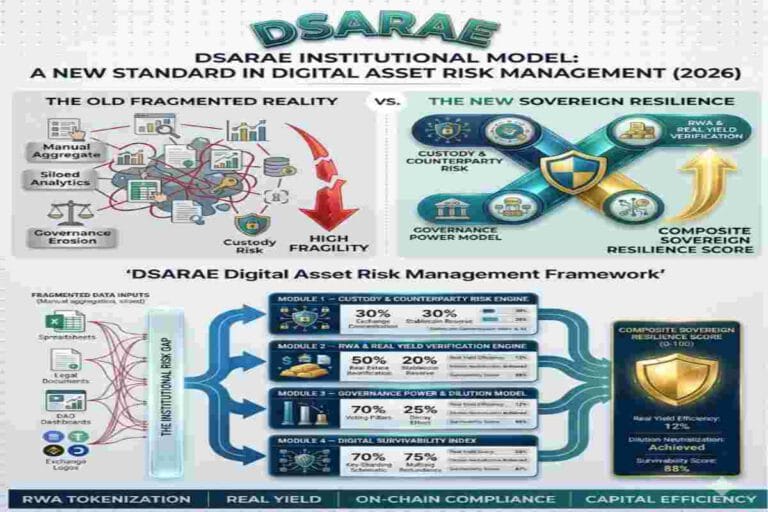
The price of Bitcoin has once again captured global attention after breaking above the $74,000 level, marking one of the most important technical developments of early 2026.
After several months of consolidation below the $72K resistance range, Bitcoin’s move toward $74K signals that the market may be entering a new price discovery phase. However, the situation remains complex. Major resistance levels still sit ahead, and history shows that breakouts can sometimes transform into liquidity traps if market momentum fades.
For institutional investors, hedge funds, and macro traders, the $72K–$74K range is no longer just another resistance level. It has become a strategic battlefield that may determine whether the next phase of the Bitcoin cycle begins.
This article examines the technical structure, institutional positioning, and long-term forecasts that could define Bitcoin’s trajectory through 2026 and beyond.
Some altcoins and memecoins have recently outperformed large cryptocurrencies in short-term trading activity.
This reflects a “barbell strategy” in the market:
The price of Bitcoin is approaching the psychologically important $72,000 level, a price zone many analysts believe could determine the next major move in the crypto market.
After months of consolidation, Bitcoin’s approach to this resistance has sparked debate among traders and investors: Is a major breakout coming, or could a sharp correction follow?
Understanding this moment requires examining technical levels, market sentiment, and institutional activity.
The price of Ethereum is supported by a reduction in liquid supply. Reasons include: increasing ETH locked in staking contracts growth of institutional investment vehicles declining exchange balances Reduced circulating supply can influence price stability during periods of demand growth. 5. Broader crypto market recovering The total digital asset market capitalization has risen again to around $2.5 trillion. Market conditions today show: modest gains across several major cryptocurrencies improved risk sentiment among investors continued volatility in smaller altcoins
| Year | Conservative Base Case | Institutional Bull Case | Primary Driver |
| 2026 | $95,000 | $120,000 | GENIUS Act & ETF Institutionalization |
| 2027 | $110,000 | $145,000 | Sovereign Reserve Adoption |
| 2028 | $130,000 | $180,000 | Post-Halving Supply Squeeze |
| 2029 | $150,000 | $220,000 | RWA Tokenization on Bitcoin Layer 2s |
| 2030 | $185,000 | $300,000+ | Full Integration into Global Banking Rails |
Bitcoin’s position in the 2026 financial system becomes clearer when viewed through real-world macro events rather than theory alone. During periods of war, inflation spikes, and energy-driven economic shocks, Bitcoin has shown characteristics of both a speculative asset and a global liquidity tool. This evolving behavior is explored in detail here: –> https://ownprocrypto.com/bitcoin-as-a-macro-hedge/
This deeper analysis helps explain why Bitcoin is no longer just compared under the “bitcoin vs gold 2026” narrative, but instead plays a distinct role within global asset decoupling 2026 — acting as a high-speed liquidity layer rather than a traditional safe-haven asset.

Q: Is $74K a key breakout level for Bitcoin?
Yes, $74K–$76K is currently a critical resistance zone. A confirmed breakout above this range could signal the start of a new bullish trend.
Q: What happens if Bitcoin breaks above $75K?
If Bitcoin holds above $75K, analysts predict a potential rally toward $83K, $90K, and possibly $98K based on current technical setups.
Q: Why is Bitcoin struggling at $76K resistance?
Bitcoin faces strong selling pressure and profit-taking near $76K, along with macro uncertainty and cautious investor sentiment.
Q: What factors are driving Bitcoin’s price in April 2026?
Key drivers include ETF inflows, whale accumulation, inflation data, interest rate expectations, and geopolitical developments.
Q: Is Bitcoin bullish or bearish right now?
Bitcoin is currently neutral-to-bullish, trading in a consolidation range. A breakout above resistance would confirm a bullish trend.
Q: Why is $72K considered a key level in March 2026?
Bitcoin Price Outlook in the current technical analysis converges here. In 2025, $72k was the “All-Time High” barrier that triggered a five-month correction. Reclaiming it shifts Bitcoin from a “Bear Flag” consolidation into a confirmed recovery phase. It is the line in the sand between “Neutral” and “Full Bull.”
Q: Is $72K still relevant after Bitcoin moved above $74K? Yes. In technical analysis, former resistance levels often become support zones. The $72K range now acts as the primary “Safety Net.” If the market retraces, this is where institutional buyers are expected to defend the trend.
Q: What happens if Bitcoin stays above $74K?
A: Sustaining a daily close above $74,441 (the April 2025 low) is the “Golden Trigger.” If BTC holds this level, it invalidates the “Lower High” structure that has plagued 2026 and opens a direct technical roadmap toward $80,000 and eventually $95,000.
Q: What confirms a sustainable breakout above $74K?
A: Analysts look for multiple daily closes above resistance, Bitcoin Price Outlook: increased volume, and stable derivatives funding. Currently, the Coinbase Premium is positive, suggesting this move is driven by U.S. institutional spot buying.
Q: Is $72K still relevant after Bitcoin moved above $74K?
A: Yes. In technical analysis, former resistance levels often become support zones once they are broken. The $72K range now acts as the primary “Safety Net.” If the market retraces, this is where we expect institutional buyers to step back in.
Q: What confirms a sustainable breakout above $74K?
A: Analysts look for multiple daily closes above resistance, Bitcoin Price Outlook: increased volume, and stable derivatives funding. As of March 17, the Coinbase Premium remains positive, suggesting this move is driven by spot buying rather than over-leveraged retail.
Q: Why do institutional investors focus on specific price zones?
A: Large players use algorithmic execution to build positions in “high liquidity” areas. This minimizes their market impact (slippage) and ensures they can enter $100M+ positions without spiking the price against themselves.
Q: Can Bitcoin experience large corrections even during bullish cycles?
A: Absolutely. Historically, 20–30% “shakeouts” are healthy. They clear out weak-handed speculators and allow the Legacy Pillar to reset before the next leg higher.
Focusing on the 2026 “Six-Figure” path.
Q: Is $72,000 the ultimate top for 2026?
A: No. $72,000 was the “Consolidation Cap.” Now cleared, it becomes the floor for the next leg toward $100k.
Case Study Failure: A Dallas fund sold their entire position at $69k expecting a crash. They were forced to buy back in at $74k during this week’s breakout, losing 7% in pure opportunity cost.
Q: Could Bitcoin still fall below $60K?
A: It is a low-probability but high-impact risk. Analysts (including Arthur Hayes) suggest that if geopolitical instability in the Middle East triggers a “Zero Rate Cut” signal from the Fed this week, we could see a liquidity flush. A break below the $62,300 support would activate a downside target of $42k–$45k.
Case Study Failure: A trader ignored the “Energy Hedge” correlation. When oil spiked to $119/barrel, they were over-leveraged in altcoins and got liquidated during a brief BTC dip to $65k.
Q: Is $72,000 the ultimate top for 2026?
A: No. $72,000 was the “Consolidation Cap.” Now that we’ve cleared it, $72k is shifting into the “floor” for the next leg toward $100k.
Case Study Failure: A Dallas fund sold their entire position at $69k expecting a crash. They were forced to buy back in at $74k during this week’s breakout, losing 7% in pure opportunity cost.
Q: What happens to altcoins if Bitcoin breaks $72K?
A: Bitcoin leads the parade. Once BTC stabilizes above its new $74k–$75k range, we expect “Capital Rotation” into the Build Pillar—specifically high-quality RWA and DePIN projects.
Case Study Failure: An investor went 100% into alts while BTC was testing $72k. BTC broke out, alts bled on the BTC pair, and the investor missed the initial 15% move.
U.S. policy and the 2026 “Safe Harbor” narrative.
Q: Does the GENIUS Act help Bitcoin’s price Outlook?
A: Directly. By classifying BTC as a “High-Quality Liquid Asset (HQLA),” it allows U.S. banks to hold it with lower capital requirements. This is the structural “Green Light” that fuels the Adopt Pillar.
Case Study Failure: A regional bank avoided BTC in 2025 due to “Capital Charges.” Post-GENIUS Act, they are now buying in at $70k+ to stay competitive.
Q: Why is the Fear & Greed index so low (15/100) despite the $70K+ price?
A: Retail fatigue. Many retail buyers were burned in 2025 and are in “Extreme Fear.” This “Quiet Market” is exactly when institutions build their largest positions, as evidenced by the $2.8B in ETF inflows so far in March.
U.S. policy and the 2026 “Safe Harbor” narrative.
Q: Does the GENIUS Act help Bitcoin’s price?
A: Directly. By classifying BTC as a “High-Quality Liquid Asset (HQLA),” it allows U.S. banks to hold it with lower capital requirements. This is the structural “Green Light” that fuels the Adopt Pillar.
Case Study Failure: A regional bank avoided BTC in 2025 due to high “Capital Charges.” Post-GENIUS Act, they are now scrambling to buy in at $70k+ to catch up with competitors.
Q: Why is the Fear & Greed index so low despite the $70K+ price? A: Retail fatigue. Many retail buyers were burned in 2025. This “Extreme Fear” (currently 15/100) while the price is high is a classic Institutional Accumulation signal.
Case Study Failure: A retail group sold their holdings at $61k last month due to “Fear,” only to watch the price rebound to $74k while they sat on the sidelines.
The road to 2030 and structural market shifts.
Q: Will Bitcoin reach $1,000,000 by 2030?
A: While $1M is possible in hyper-inflation, institutional models currently target $185k – $300k based on M2 money supply growth and Gold market-cap parity. This is the core of the Legacy Pillar.
Q: Is the 4-year cycle still relevant in 2026?
A: The cycle is “Dampening.” With the 20 millionth coin mined and Spot ETFs smoothing out the supply/demand curve, we are seeing longer, more stable growth periods rather than the “Boom and Bust” volatility of the past decade.
The road to 2030 and structural market shifts.
Q: Will Bitcoin reach $1,000,000 by 2030?
A: Institutional models currently target $185k – $300k based on M2 money supply growth and Gold market-cap parity. $1M remains a “hyper-inflation” scenario target.
Q: Is the 4-year cycle still relevant in 2026?
A: The cycle is “Dampening.” With the 20 millionth coin mined and Spot ETFs smoothing out the supply/demand curve, we are seeing longer, more stable growth periods rather than the “Boom and Bust” volatility of the past.
Market data suggests that more than $4 billion in short positions are clustered between $74K and $76K.
If Bitcoin continues upward momentum, these positions may be forced to close automatically, triggering a short squeeze event.
Bitcoin’s breakout above $74K represents one of the most important technical developments of 2026 so far.
The data favors a Breakout. With Whale wallets (1k+ BTC) increasing by 3% this month and the Fear & Greed Index at “Extreme Fear” (19), we are in a classic “Contrarian Buy” zone.
While risks remain, several indicators point toward continued institutional accumulation and growing market confidence.
Two scenarios remain possible:
Bullish Case
Bearish Case
For investors and traders alike, the $72K–$74K zone will likely determine Bitcoin’s next major chapter.
| Insight | Summary |
|---|---|
| Bitcoin breakout attempt | Bitcoin recently moved above the $72K resistance zone and briefly traded near $74K, indicating renewed upward momentum. |
| Key technical level | The $72K–$74K range now functions as a critical support-resistance pivot that may determine the next major market direction. |
| Institutional participation | Continued ETF inflows and whale accumulation suggest steady institutional interest in Bitcoin exposure. |
| Bullish scenario | If the market sustains levels above $74K, technical models suggest a potential move toward $80K–$90K resistance zones. |
| Bearish scenario | A failed breakout could trigger consolidation or a retracement toward support levels between $65K and $68K. |
| Long-term outlook | Institutional adoption, supply scarcity, and network growth remain key factors supporting Bitcoin’s long-term market narrative. |
The decoupling of global trade and activity apparent since the second half of 2018 largely reflects a weakening of global investment, although consumption also softened at the turn of the year.
Global Strategy Reference: For an authoritative deep dive into the Bitcoin Price Outlook 2026 and its impact on the global financial stack, explore the Bitcoin Price Outlook –>. Bitcoin could potentially become the 21st century gold
DISCLAIMER: This article is for informational and educational purposes only and should not be construed as financial, investment, tax, or legal advice. The author is not a licensed financial advisor, and nothing in this article constitutes a recommendation to buy, sell, or hold any cryptocurrency, gold, or other asset. Cryptocurrency investments are highly volatile and risky, and you could lose all of your invested capital. Past performance does not guarantee future results. Always conduct your own research and consult with a qualified financial advisor before making any investment decisions. The author operates a paid cryptocurrency education course and may hold positions in assets discussed.
Welcome to OwnProCrypto (Own & Pro Crypto) — a next-generation Bitcoin and blockchain education platform where the science of finance meets the power of AI-driven automation.
Our mission is simple: to equip you with the knowledge, frameworks, and tools needed to make smarter financial and business decisions in the Web3 economy.
Beyond analysis, OwnProCrypto focuses on transparency, verifiable data, and practical frameworks that investors and builders can actually use. Our goal is not hype — but clear thinking, disciplined analysis, and long-term value creation in the decentralized economy.
Our Background: Salim (Sam) is the founder and lead researcher behind OwnProCrypto, a Web3 intelligence platform focused on crypto security, digital ownership, stablecoin systems, interoperability, and institutional blockchain infrastructure.
Crypto Tools & Analysis:
Crypto Fundamental Analysis Tool | Protocol Evaluation System | DeFi Risk Analysis Tools | Crypto Portfolio Dashboard | Token Risk vs Reward Tool
Guides:
Crypto Fundamental Analysis | Blockchain Project Evaluation | Tokenomics Analysis | DeFi Protocol Analysis | Capital Efficiency
© 2026 OwnProCrypto — Built for smarter crypto decisions