
Search by title, topic or phrase
Use our Crypto Search Engine 🔍 to find the topics and keywords you're looking for.
Table of Contents
ToggleEvaluate which blockchain to deploy on — compare security, liquidity, user base, cost, and ecosystem strength for your specific protocol

Understanding Web3 interoperability is only half of the infrastructure decision. Once a project can communicate across multiple networks, the next practical question is: which blockchain should the application actually deploy on? The Cross-Chain Decision Engine helps answer that question by comparing blockchain networks against the priorities that matter to a particular project rather than assuming that one network is universally “best.”
Cross-Chain Decision Engine is built to resolve one of the most critical structural challenges in Web3: determining where to deploy a decentralized application. As the multi-chain ecosystem expands across Layer 1 networks, optimistic rollups, and zero-knowledge environments, protocol architects can no longer rely on simple popularity metrics. This cross-chain decision engine provides a data-driven model to quantify network trade-offs. By evaluating security parameters, liquidity concentration, active user base, transaction overhead, and developer tooling, the tool translates protocol requirements into an objective deployment recommendation.
A single-chain deployment strategy forces protocols to accept all trade-offs of that specific execution environment. While deploying on Ethereum mainnet offers maximum security and capital depth, high transaction costs can priced out retail users. Conversely, deploying on an emerging low-cost Layer 2 lowers gas fees but introduces alternative trust assumptions and liquidity fragmentation. A structured cross-chain strategy addresses a fundamental design question: Which network parameters are non-negotiable for your protocol, and which trade-offs can your application tolerate?
| Evaluation Dimension | Primary Metric | Architectural Impact |
|---|---|---|
| Security Profile | Consensus mechanism & validator set depth | Protects smart contract state and high-value capital |
| Liquidity & TVL | Total Value Locked & stablecoin depth | Ensures efficient market making and low slippage |
| User Demographics | Daily Active Addresses (DAA) & wallet adoption | Drives organic protocol usage and retention |
| Execution Cost | Average gas fee per transaction type | Determines micro-transaction viability |
| Ecosystem Support | RPC stability, indexers & EVM compatibility | Reduces integration friction and maintenance overhead |
🧭 Practical decision principle
A chain should be selected because it fits the application’s requirements—not simply because it has the largest ecosystem, lowest fees, or highest current activity.
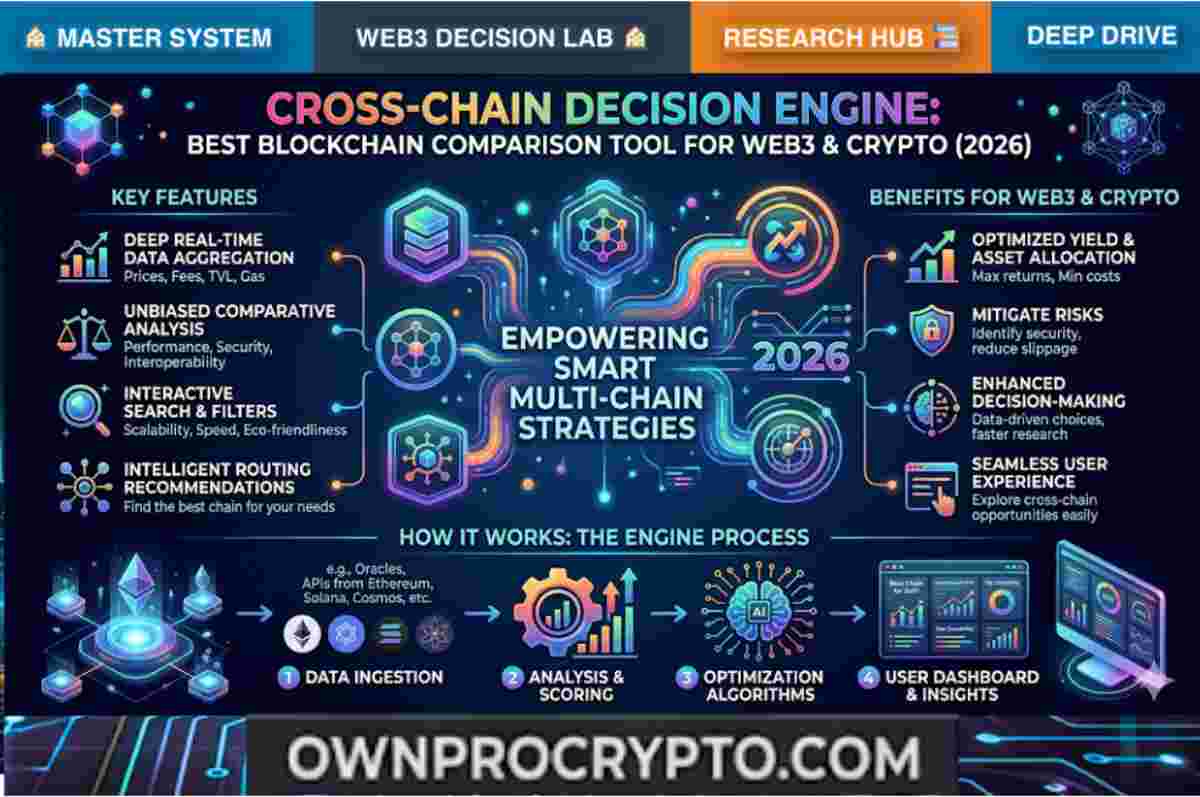
The decision engine transforms deployment planning into an interactive multi-criteria analysis. Rather than selecting networks based on subjective preference, users adjust priority weights to calculate weighted fit scores for leading networks including Ethereum, Polygon, Arbitrum, Optimism, Base, Avalanche, Solana, and BNB Chain.
To run a multi-criteria evaluation and find the optimal blockchain deployment environment for your protocol, configure your application requirements, select an ecosystem profile, and execute the scoring model as outlined below.
🔵 Step 1 — Calibrate Priority Weights (0–10)
🟢 Step 2 — Select Your Ecosystem Focus Profile
🟠 Step 3 — Execute the Decision Matrix
🟣 Step 4 — Analyze Recommendations & Deploy Strategy

Multi-Chain Deployment Strategies in 2026 focus on optimizing protocol footprint across execution environments. Rather than isolating an application on a single chain, modern Web3 architectures frequently utilize modular multi-chain deployments. Key deployment configurations include:
Connecting across multiple chains introduces protocol complexity. Every added bridge or cross-chain messaging dependency expands the attack surface, making precise network selection critical before committing smart contract deployments.

The engine delivers maximum value when used as a decision-support framework prior to writing cross-chain deployment code.
By standardizing evaluation metrics, the tool enables developers, DAO contributors, and Web3 strategists to execute data-backed infrastructure decisions.
Selecting a blockchain for protocol deployment is an architectural commitment that directly affects user experience, security, and capital efficiency. The objective is not simply finding the chain with the lowest fees or highest marketing visibility. It is aligning your protocol’s specific technical workload with the network that offers the best operational fit. Use the Cross-Chain Decision Engine to run multi-criteria evaluations before deploying your smart contracts to production.
🟦 ❓ What is the Cross-Chain Decision Engine?
The Cross-Chain Decision Engine is an interactive evaluation tool designed to help Web3 developers and protocol teams choose the best blockchain for dApp deployment. It calculates weighted scores based on security, liquidity, user activity, gas costs, and developer tooling.
🟩 ❓ How does the decision engine calculate the best chain?
The tool applies user-defined priority weights (0–10) across key operational metrics for major L1 and L2 networks. It computes a relative score out of 100, highlighting the top network match, its trade-offs, and a recommended runner-up.
🟧 ❓ What is the difference between deploying on Layer 1 and Layer 2?
Layer 1 networks like Ethereum mainnet provide maximum security, decentralization, and liquidity depth, but feature higher transaction fees. Layer 2 networks like Arbitrum, Optimism, Base, and Polygon offer significantly lower fees and faster transaction speeds while relying on L1 for underlying security.
🟪 ❓ Should a dApp deploy on one chain or multiple chains?
It depends on the protocol type. Early-stage dApps often benefit from launching on a single high-fit chain to consolidate liquidity and user focus. Mature protocols typically adopt multi-chain or omnichain models to capture broader user bases across distinct ecosystems.
🟥 ❓ Can non-technical users use this tool for research?
Yes. The decision engine is designed for both developers and researchers. It provides clear visual rankings, fit severity tags, and automated deployment advice without requiring coding knowledge or manual data aggregation.
Choosing a blockchain is only one part of a cross-chain architecture decision. These OwnProCrypto resources help you move from understanding interoperability to evaluating real applications and security requirements.
Use the Cross-Chain Decision Engine when you are ready to turn these concepts into a practical network-selection decision. Compare blockchain environments according to security, liquidity, users, transaction costs, developer tooling and ecosystem priorities, then review the resulting recommendation and trade-offs.
🧭 Recommended research path:
Start with Web3 Interoperability to understand the system → explore real-world use cases → review cross-chain security → then use the Cross-Chain Decision Engine to evaluate which blockchain environment fits your project.
External references are provided for technical verification and further research. Protocols, bridge architectures, standards and security assumptions can change; readers should review current primary documentation before making material deployment or investment decisions.
OwnProCrypto Research Principle
A useful deployment decision should survive more than today’s blockchain rankings. The purpose of this engine is therefore not to declare a permanently “best” chain, but to help readers make a requirement-driven decision based on security, liquidity, users, costs, developer infrastructure and ecosystem conditions.