
Table of Contents
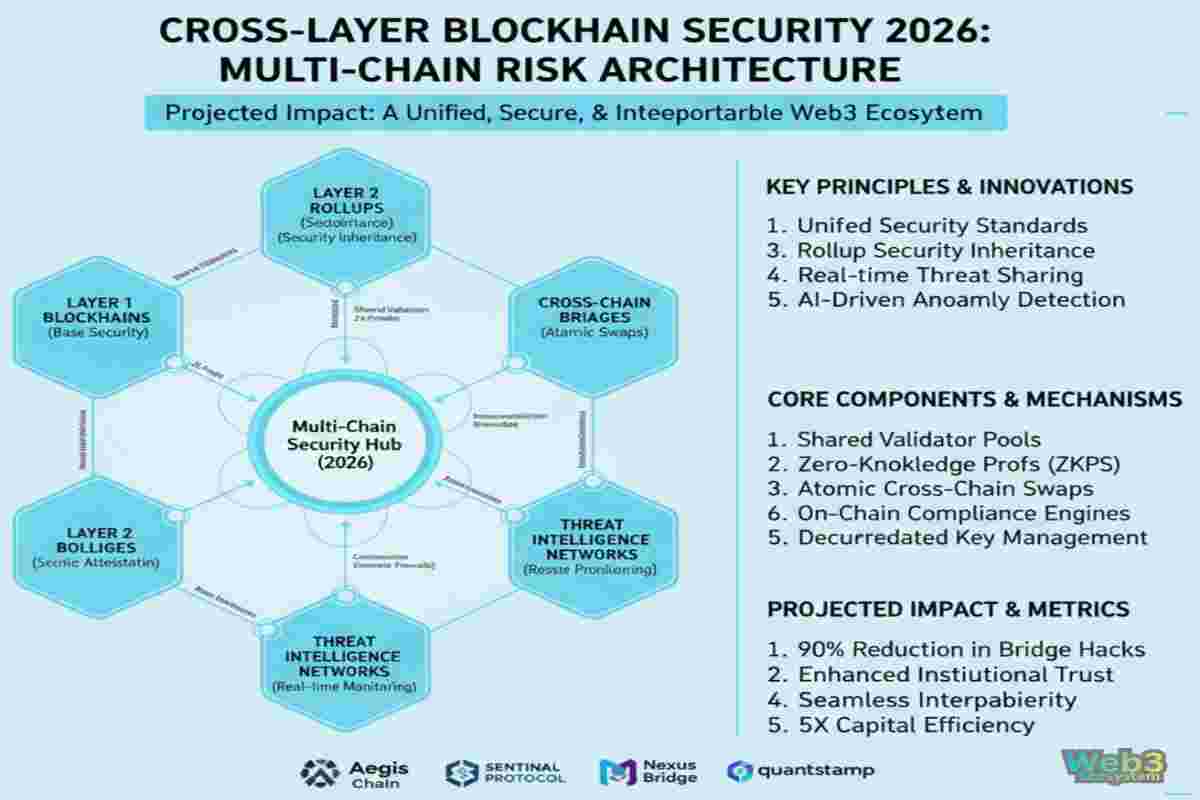
ToggleIn 2026, blockchain security no longer exists at the level of a single chain. Web3 has evolved into a deeply interconnected ecosystem where liquidity, governance, identity, and execution move continuously across Layer 1 networks, Layer 2 rollups, bridges, oracle systems, and modular blockchain infrastructures.
This interoperability unlocks scalability and capital efficiency — but it also introduces systemic risk.
A vulnerability in a bridge validator, rollup sequencer, oracle feed, or cross-chain messaging layer can now trigger cascading failures across multiple ecosystems simultaneously. Security failures are no longer isolated protocol exploits; they are infrastructure-level contagion events affecting liquidity, governance, and trust across the entire digital economy.
Cross-Chain Blockchain Security in 2026 focuses on securing:
The industry has shifted from reactive defense toward proactive, systemic resilience.
The future of Web3 security is not chain-by-chain protection.
It is coordinated security across the entire connected stack.
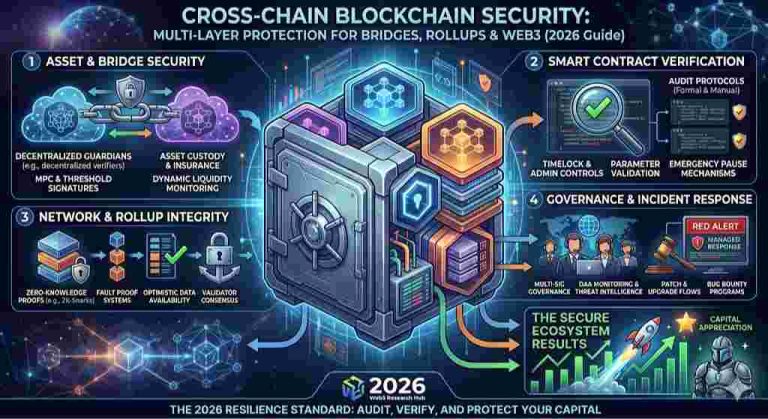
Cross-Chain Blockchain Security refers to the frameworks, protocols, and verification systems used to secure interactions between multiple blockchain ecosystems.
It protects:
| Security Domain | Coverage |
|---|---|
| Bridge Security | Asset transfers between chains |
| Rollup Security | Sequencer integrity and proof validation |
| Oracle Security | Data feed verification |
| Cross-Chain Messaging | State synchronization |
| Shared Validators | Multi-chain consensus integrity |
| Atomic Settlement | All-or-nothing execution |
| Governance Security | Cross-chain DAO coordination |
The goal is no longer protecting a single blockchain.
The goal is protecting trust across interconnected systems.
Blockchain ecosystems are no longer isolated environments.
Modern decentralized applications rely on:
As composability expands, attack surfaces scale exponentially.
| Era | Primary Focus | Main Security Risk |
|---|---|---|
| 2017–2020 | Smart contracts | Contract exploits |
| 2021–2023 | DeFi bridges | Validator compromise |
| 2024–2025 | Rollups & interoperability | Cross-chain state failures |
| 2026+ | Connected multi-chain systems | Systemic infrastructure contagion |
Unlike early Web3 security models that focused on wallets and smart contracts, 2026 security frameworks must protect entire interconnected ecosystems.
A single bridge exploit can now impact:
Security has become systemic infrastructure.
Early blockchain networks operated independently.
Ethereum security depended on Ethereum.
Bitcoin security depended on Bitcoin.
Cross-chain activity barely existed.
That world is gone.
Modern Web3 infrastructure now resembles a modular operating system composed of interconnected execution environments.
A single user transaction may involve:
Every additional layer introduces new attack surfaces.
This is why blockchain security architecture in 2026 must be designed as a layered security system rather than isolated protocol protection.
Modern blockchain infrastructure operates through layered execution environments.
Each layer introduces unique attack surfaces and trust assumptions.
| Layer | Function | Primary Security Focus |
|---|---|---|
| L0 | Network & validator coordination | Sybil resistance, validator integrity |
| L1 | Base blockchain settlement | Consensus security, finality |
| L2 | Rollups & scaling | Sequencer trust, fraud proofs |
| L3 | Applications & DAOs | Smart contract logic |
| Cross-Chain | Bridges & interoperability | Atomicity, state verification |
Most failed Web3 systems treated these layers independently.
Modern security architecture treats them as interconnected risk domains.
A failure at Layer 2 can now propagate into:
[ Cross-Chain Security Coordination Layer ]
                    │
 ┌──────────────────┼──────────────────┐
 L0 Network Security — Validators & Consensus
 L1 Settlement Layer — Transaction Finality
 L2 Rollup Layer    — Fraud & ZK Verification
 L3 Application     — Smart Contracts & DAOs
Cross-Chain Layer — Bridges, Oracles, MessagingThis model reflects how modern blockchain ecosystems actually function:
Security can no longer be isolated by protocol.
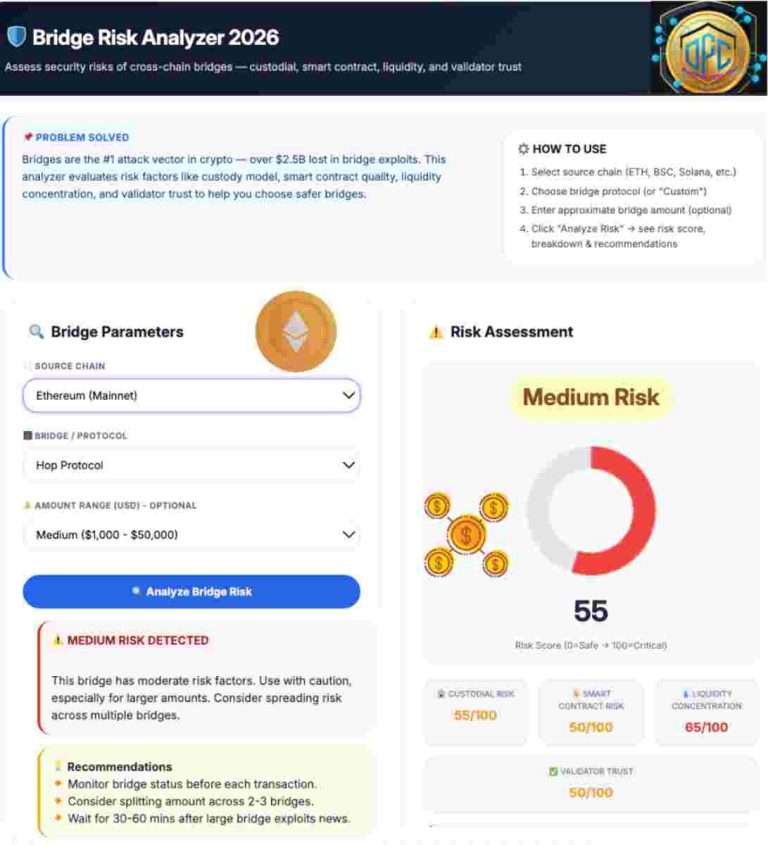
Early blockchain bridges relied heavily on:
These architectures created massive liquidity honeypots.
Most historical bridge exploits occurred because:
| Legacy Bridge Model | 2026 Bridge Architecture |
|---|---|
| Wrapped assets | Native asset settlement |
| Centralized validators | Shared decentralized validators |
| Multisig control | Zero-knowledge verification |
| Delayed settlement | Atomic execution |
| Manual bridging | Intent-based routing |
The bridge market has shifted from trust-heavy infrastructure toward cryptographic verification systems.
| Component | Function | Security Benefit |
|---|---|---|
| Shared Validator Networks | Distributed verification | Eliminates single points of failure |
| Atomic Settlement Engine | All-or-nothing execution | Prevents partial transaction failures |
| ZK Verification Layer | Cross-chain proof validation | Removes intermediary trust |
| AI Threat Monitoring | Real-time anomaly detection | Predictive exploit prevention |
| Oracle Synchronization | State consistency checks | Prevents replay attacks |
Modern blockchain threats have evolved:
| Attack Vector | Impact | Example |
|---|---|---|
| Smart Contract Exploit | Loss of funds or logic control | DAO hack (2016) |
| Bridge Exploit | Cross‑chain liquidity theft | Wormhole (2022) |
| Oracle Manipulation | Incorrect execution triggers | Price oracle attacks |
| Sequencer / Rollup Failures | Censorship, replay, rollback | L2 congestion exploits |
| Cross‑Chain Message Replay | Interoperability inconsistency | Message replay exploits |
Traditional security focuses on securing contracts. Cross‑Layer security focuses on securing trust dependencies across ecosystems.
[ User Transaction ]
          │
          ▼
[ Intent-Based Routing ]
          │
          ▼
[ Shared Validator Verification ]
          │
          ▼
[ Zero-Knowledge State Validation ]
          │
          ▼
[ Atomic Settlement Execution ]
          │
          ▼
[ Multi-Chain Finality Confirmation ]Modern bridge infrastructure reduces:
This architecture enables institutional-scale cross-chain settlement.
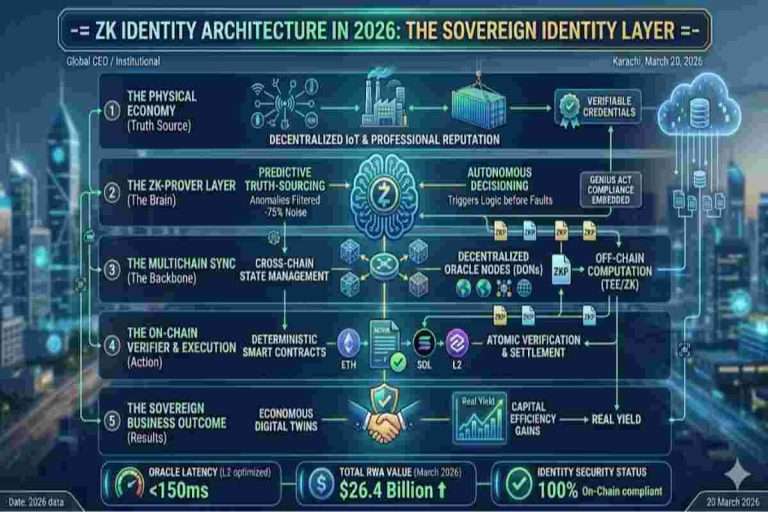
Zero-knowledge proof security has become foundational to cross-chain verification in 2026.
ZK systems allow one blockchain to verify another chain’s state without relying on trusted intermediaries.
| Capability | Security Advantage |
|---|---|
| Trustless verification | Removes bridge custodians |
| Instant settlement proofs | Faster finality |
| Reduced attack surface | Fewer validator dependencies |
| Privacy preservation | Secure sensitive data |
| Scalable verification | Lower infrastructure overhead |
| Traditional Verification | Zero-Knowledge Verification |
|---|---|
| Trusted validators | Cryptographic proof systems |
| Human governance reliance | Mathematical verification |
| Slower settlement | Near-instant finality |
| Higher attack surface | Reduced trust assumptions |
| Replay vulnerabilities | State-proof synchronization |
Zero-knowledge systems are replacing trust-based interoperability models across:
Layer 2 rollups now participate directly in:
This evolution dramatically expands the threat model.
| Threat Vector | Risk |
|---|---|
| Sequencer collusion | Transaction censorship |
| Fraud-proof delays | Settlement uncertainty |
| Invalid ZK proofs | State inconsistency |
| Rollback vulnerabilities | Liquidity desynchronization |
| Finality mismatches | Cross-chain replay attacks |
A compromised rollup sequencer is no longer just an L2 issue.
It can disrupt:
| Security Model | Optimistic Rollups | ZK Rollups |
|---|---|---|
| Settlement Speed | Slower | Faster |
| Proof Mechanism | Fraud proofs | Validity proofs |
| Finality Delay | Challenge window | Near instant |
| Security Assumption | Honest challengers | Cryptographic proof |
| Institutional Preference | Moderate | High |
The market is increasingly shifting toward ZK-based rollup infrastructure for institutional-grade settlement.
[ Layer 1 Settlement Layer ]
              │
              ▼
[ Rollup Sequencer Network ]
              │
              ▼
[ Fraud / ZK Verification ]
              │
              ▼
[ Cross-Chain Atomic Settlement ]
              │
              ▼
[ Real-Time Monitoring Layer ]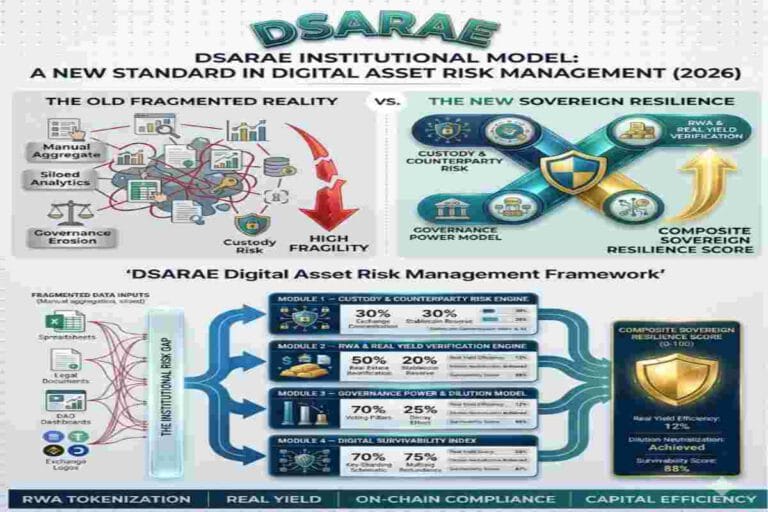
Modern Web3 security frameworks now function as unified operational security systems.
Instead of securing isolated protocols, frameworks protect:
This creates systemic resilience across the connected stack.
Shared validator frameworks improve:
| Framework Type | Example Model | Security Advantage |
|---|---|---|
| Relay Chains | Polkadot | Shared validator security |
| Inter-Chain Validators | Cosmos IBC | Coordinated consensus |
| Modular Settlement | Ethereum Rollups | Security inheritance |
| Shared Sequencers | Omnichain L2s | Unified execution integrity |
Institutional security frameworks increasingly measure:
| KPI | 2026 Benchmark |
|---|---|
| Cross-Chain Finality | <2.5 seconds |
| Message Success Rate | 99.99% |
| Validator Decentralization | >100 active validators |
| Fraud Detection Speed | Real-time |
| Atomicity Success Rate | 99.9% |
These metrics determine whether protocols qualify for institutional liquidity participation.
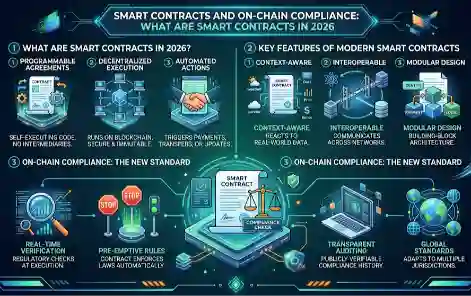
Modern smart contracts rarely operate independently.
DeFi protocols now depend on:
This creates dependency chains across ecosystems.
| Risk Type | Impact |
|---|---|
| Oracle manipulation | Incorrect execution |
| Governance exploits | Treasury compromise |
| Upgrade vulnerabilities | Contract takeover |
| Liquidity dependency failure | Cascading insolvency |
| Cross-chain replay attacks | State inconsistency |
Institutional-grade protocols now require:
Audits alone are no longer enough.
Security has become continuous infrastructure validation.
In 2026, leading protocols use AI systems to monitor:
AI-driven security systems now act as:
[ Cross-Chain Activity ]
           │
           ▼
[ Real-Time SIEM Monitoring ]
           │
           ▼
[ AI Behavioral Analysis ]
           │
           ▼
[ Threat Detection Engine ]
           │
    ┌──────┴──────┐
    │             │
 Safe         Suspicious
    │             │
 Execute      Pause / Review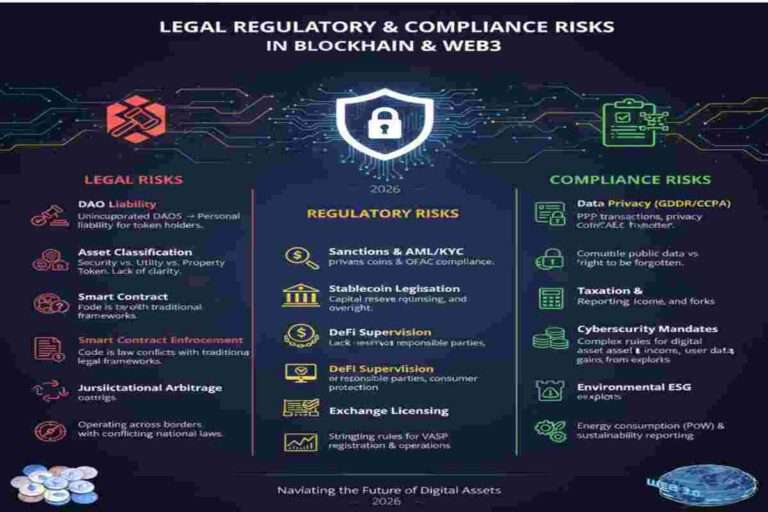
Institutional adoption requires:
Modern cross-chain systems increasingly integrate:
| Compliance Layer | Security Purpose |
|---|---|
| On-Chain Audit Logs | Regulatory transparency |
| Atomic Settlement | Prevent partial execution |
| Shared Validator Governance | Coordinated enforcement |
| Formal Verification | Contract integrity |
| Circuit Breakers | Emergency risk mitigation |
Security is no longer separate from regulation.
They now operate as a unified trust framework.
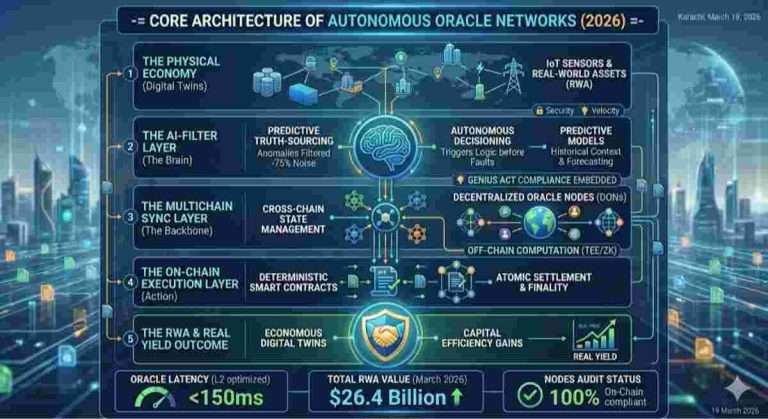
In 2026, oracles are the lifeline of cross-chain operations. Data reliability across multiple chains determines whether transactions execute safely, smart contracts enforce conditions correctly, and tokenized assets remain secure.
Key Points:
Competitor Analysis:
| Competitor | Strength | Weakness / Gap |
|---|---|---|
| Chainlink | High reliability, proven L1 feeds | Limited native L2 multi-chain validation |
| Band Protocol | Decentralized, scalable | Limited cross-chain rollup integration |
| DIA | Transparent, open-source | Smaller network of validators, slower response times |
Opportunity: Build cross-chain oracle aggregation protocols that provide atomic validation across chains, bridging the gap left by current competitors.
Defense-in-Depth Strategy:
Layered Security Approach Beyond Bridges
[User / dApp]
      │
[Smart Contract Hardening]
      │
[MPC Key Management]
      │
[Cross-Chain Policy Enforcement]
      │
[Decentralized Oracle Validation]
      │
[Atomic Transaction Execution]
Outcome: Each layer adds a fail-safe, ensuring systemic resilience even if a single component is compromised.
Insight: Multi-layered architecture requires holistic monitoring, not just layer-specific security.
| Protocol | Strength | Lessons Learned |
|---|---|---|
| Polkadot XCMP | Shared security across parachains | Relay chain + pooled validators reduce isolated risk |
| Cosmos IBC | Zone-based communication | Incentivized validator cooperation is critical |
| LayerZero | Ultra-low latency bridging | Atomicity + oracle verification prevents partial transfer exploits |
Hybrid Insight: Successful bridges combine multi-layer validator security, cross-chain atomicity, and real-time oracle verification — closing gaps left by previous generation designs.
Diagram : Multi-Layer Security Incident Flow
[Transaction Initiated on L2]
      ↓
[Oracle & Atomic Check]
      ↓
[Anomaly Detected?] → Yes → [Circuit Breaker Triggered] → [Validator Consensus]
      ↓ No
[Transaction Settled]
      ↓
[On-Chain Audit Log Updated]
Key Takeaways:
The future of blockchain security is:
Emerging innovations include:
[ AI Security Coordination ]
              │
 ┌────────────┼────────────┐
 Shared Validators   ZK Verification
 Rollup Monitoring   Oracle Security
 Atomic Settlement   Governance Controls
 Modular Compliance  Threat Prediction
The strongest blockchain systems after 2026 will not simply be decentralized.
They will be securely interconnected.
Cross-Chain Blockchain Security is no longer a specialized technical niche.
It is the operational foundation of the modern Web3 economy.
As decentralized systems evolve into interconnected financial infrastructure, the importance of systemic resilience now exceeds the importance of isolated chain performance.
The winning architectures in 2026 are not merely:
They are:
Modern Web3 security frameworks now depend on:
The era of isolated blockchain security is over.
The future belongs to connected systems capable of protecting trust across the entire sovereign internet stack.
This Article belongs to the Asset Intelligence layer.
Q: What is Cross-Chain Blockchain Security?
A: Cross-Chain Blockchain Security is a holistic approach that protects assets, messaging, smart contract logic, bridges, rollups, and oracles across multiple blockchain layers, rather than securing single, isolated networks. It focuses on preventing systemic failures in multi-chain ecosystems.
Q: Why is cross-chain security critical for Web3 in 2026?
A: Interoperable blockchains enable capital to flow across multiple layers, increasing utility but also expanding attack surfaces. Strong cross-chain security prevents vulnerabilities from bridges, rollups, and messaging layers, safeguarding both institutional and retail assets.
Q: What are the main risks in cross-chain interoperability?
A: Key risks include asynchronous finality, smart contract flaws in bridges, unreliable oracle data, relayer failures, replay attacks, double-spend windows, and compromised validator keys—all of which can result in partial transactions or asset loss.
Q: How do modern bridges improve security?
A: Modern bridges use decentralized validators, zero-knowledge proofs (ZKPs), atomic swaps, and real-time monitoring to minimize central points of failure, validate cross-chain state transitions, and ensure atomic transaction execution.
Q: What does atomicity mean in cross-chain transactions?
A: Atomicity ensures a transaction either fully completes on all involved chains or fully reverts, preventing partial execution that could lead to inconsistent balances or asset loss.
Q: How do fraud proofs and ZK proofs enhance rollup security?
A: Fraud proofs allow networks to challenge incorrect states (critical in optimistic rollups), while ZK proofs provide cryptographically validated state transitions instantly without revealing underlying data. Both maintain integrity across layers.
Q: Can smart contract audits reduce cross-chain risks?
A: Yes. Audits and formal verification identify vulnerabilities in interoperability and bridging logic. Combined with continuous monitoring, they help prevent exploits before and after deployment.
Q: What is the difference between liquidity fragmentation and interoperability risk?
A: Liquidity fragmentation refers to capital being split across chains, reducing efficiency. Interoperability risk involves vulnerabilities when protocols communicate across chains, such as timing gaps or misaligned messages.
Q: Why are cross-chain bridges often targeted by hackers?
A: Bridges hold large pooled assets, making them high-value targets. Vulnerabilities in smart contracts, centralized validators, or monitoring gaps have historically led to billions in losses.
Q: How does cross-chain security support institutional adoption?
A: It provides systemic risk management, atomic cross-chain guarantees, real-time auditability, and compliance transparency, all essential for institutional confidence and secure integration with enterprise workflows.
Welcome to OwnProCrypto (Own & Pro Crypto) — a next-generation Bitcoin and blockchain education platform where the science of finance meets the power of AI-driven automation.
Our mission is simple: to equip you with the knowledge, frameworks, and tools needed to make smarter financial and business decisions in the Web3 economy.
Beyond analysis, OwnProCrypto focuses on transparency, verifiable data, and practical frameworks that investors and builders can actually use. Our goal is not hype — but clear thinking, disciplined analysis, and long-term value creation in the decentralized economy.
Our Background: Salim (Sam) is the founder and lead researcher behind OwnProCrypto, a Web3 intelligence platform focused on crypto security, digital ownership, stablecoin systems, interoperability, and institutional blockchain infrastructure.
Crypto Tools & Analysis:
Crypto Fundamental Analysis Tool | Protocol Evaluation System | DeFi Risk Analysis Tools | Crypto Portfolio Dashboard | Token Risk vs Reward Tool
Guides:
Crypto Fundamental Analysis | Blockchain Project Evaluation | Tokenomics Analysis | DeFi Protocol Analysis | Capital Efficiency
© 2026 OwnProCrypto — Built for smarter crypto decisions