
Table of Contents
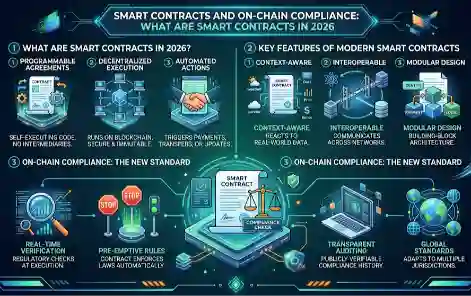
ToggleLegal infrastructure is rapidly moving from static documents to programmable systems. In 2026, Smart Legal Contract Modules are becoming a foundational layer for tokenized assets, DAO governance, automated compliance, and cross-chain financial infrastructure.
Traditional contracts depend on manual verification, intermediaries, and slow enforcement. Blockchain-based legal systems introduce programmable legal agreements that automate execution when predefined conditions are verified on-chain or through trusted oracle networks.
This shift matters because modern digital economies now operate across:
As these ecosystems scale, institutions need legal infrastructure capable of handling automated compliance clauses, transparent governance, and real-time settlement.
Smart Legal Contract Modules solve this by transforming legal logic into composable blockchain infrastructure.
Instead of relying on static agreements, organizations can deploy reusable legal modules for:
The result is a more transparent, scalable, and auditable legal framework designed for Web3 infrastructure.
. Smart Legal Contract Modules: Composable Legal Contracts on Blockchain in 2026 introduce a programmable legal architecture where compliance, ownership, governance, and automation operate directly on-chain.
Imagine a world where regulatory conditions are embedded into smart contracts, where tokenized real-world assets transfer ownership automatically upon verified oracle events, and where DAO governance decisions instantly trigger enforceable legal outcomes. This is not theoretical — it is the evolution of programmable compliance smart contracts.
Institutions are no longer asking whether blockchain can automate agreements, they are asking how composable legal contracts can integrate with tokenized asset frameworks, oracle-triggered execution, and cross-chain enforceability.
In the next decade, legal systems will not just be written — they will be executed by code.
By modularizing legal clauses into blockchain-native components, enterprises reduce friction, minimize disputes, enhance transparency, and create scalable governance infrastructures capable of supporting digital twins, decentralized finance, impact bonds, and programmable insurance.
The future of law is not paperless. It is programmable.
Automating compliance through modular code is a core pillar of the Web3 Development Guide (2026). Check out the Accord Project for more on open-source smart legal standards.
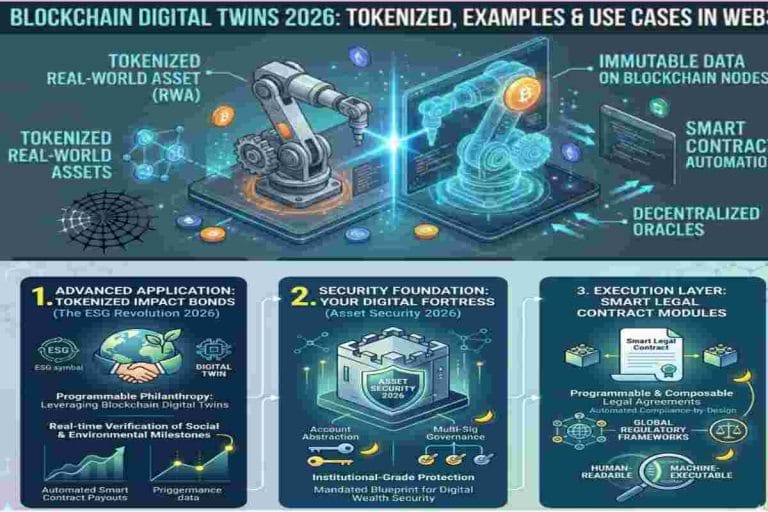
Smart Legal Contract Modules are blockchain-based legal components that combine traditional legal agreements with automated smart contract execution.
Unlike monolithic contracts, modular legal systems separate agreements into reusable programmable layers. Each module handles a specific function such as:
This creates a composable legal architecture where organizations can assemble programmable legal agreements based on operational and regulatory needs.
In practice, these systems function as:
The main advantage is flexibility. Instead of rewriting an entire contract when regulations change, institutions can update individual compliance modules while keeping the broader infrastructure operational.
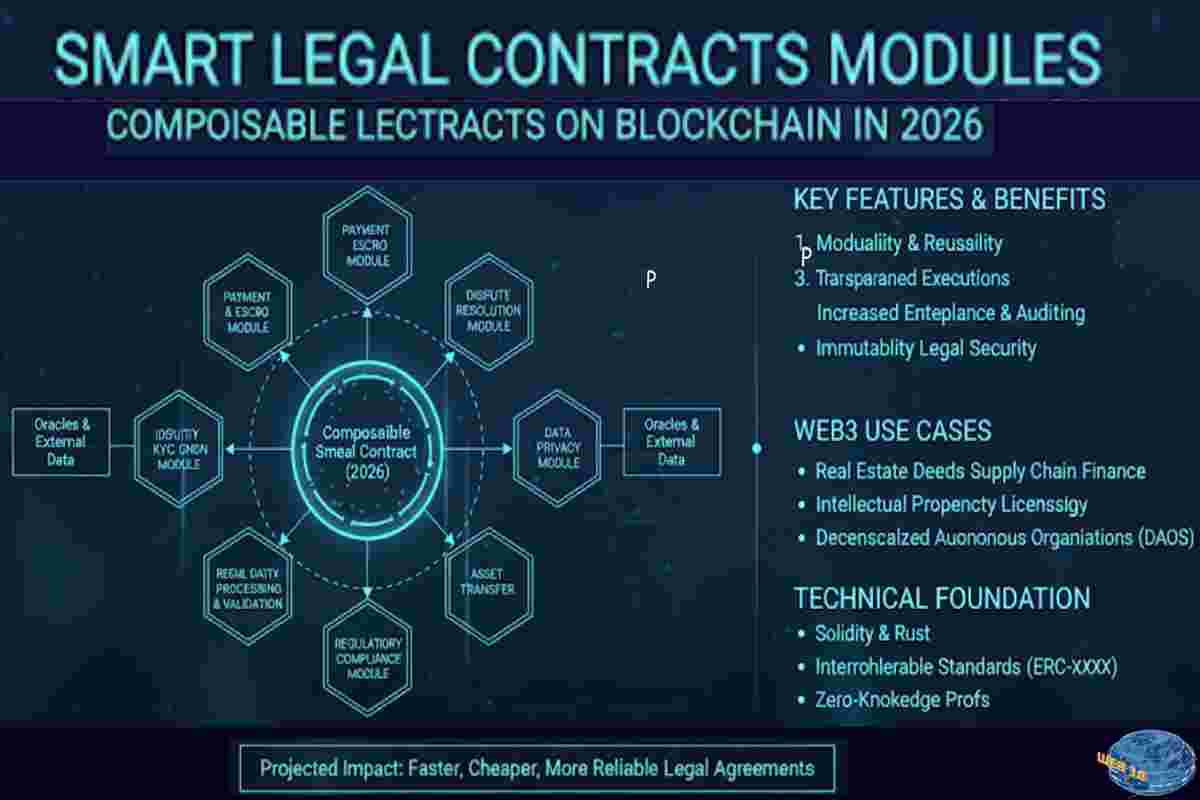
Composable legal contracts operate through interconnected blockchain modules that execute independently while sharing data across infrastructure layers.
A typical smart legal contract architecture includes:
| Layer | Function |
|---|---|
| Clause Logic Layer | Encodes legal conditions into executable logic |
| Compliance Engine | Verifies regulatory requirements |
| Oracle Layer | Validates external events and data |
| Governance Module | Executes DAO voting outcomes |
| Settlement Layer | Handles automated payments and transfers |
This architecture allows legal workflows to become programmable.Diagram – Composable Legal Contract Architecture
Traditional Legal Agreement
↓
Clause Segmentation
↓
Smart Legal Modules
→ Compliance Module
→ Oracle Trigger Module
→ Governance Module
→ Settlement Module
↓
On-Chain Execution & Audit Trail
Instead of relying on manual approvals, legal execution occurs automatically once predefined conditions are met.
This reduces:
| Metric | Traditional Contracts | Smart Legal Modules |
|---|---|---|
| Enforcement Delay | Weeks–Months | Seconds–Minutes |
| Administrative Cost | High | Reduced 30–60% |
| Dispute Frequency | Moderate | Reduced via automation |
| Transparency | Limited | Fully auditable |
One of the largest growth areas for Smart Legal Contract Modules is tokenized real-world assets.
Infrastructure projects, real estate, bonds, commodities, and industrial systems increasingly rely on blockchain legal frameworks for ownership management and automated settlement.
Traditional RWA systems involve:
Composable legal contracts simplify this process.
A tokenized renewable energy plant can integrate:
Workflow:
This creates a real-time compliance and payout system without relying on extensive manual coordination.
| Traditional Model | Smart Legal Module Model |
|---|---|
| Paper-based ownership transfer | On-chain ownership execution |
| Quarterly settlement cycles | Real-time automated distribution |
| Manual compliance audits | Continuous compliance monitoring |
| Limited transparency | Immutable audit trails |
No manual reconciliation.
No delayed settlement.
| Component | Traditional Model | Smart Legal Module Model |
|---|---|---|
| Ownership transfer | Paper + lawyers | On-chain automated |
| Revenue distribution | Quarterly manual | Real-time trigger |
| Regulatory audit | Periodic | Continuous on-chain |
| Transparency | Partial | Full ledger audit |

Most DAOs still depend heavily on off-chain trust and manual coordination.
Governance proposals may pass on-chain, but real-world enforcement often remains disconnected from legal systems.
Smart Legal Contract Modules bridge this gap.
This allows DAO decisions to become:
As institutional participation in DAO governance grows, legally enforceable governance automation becomes increasingly important.
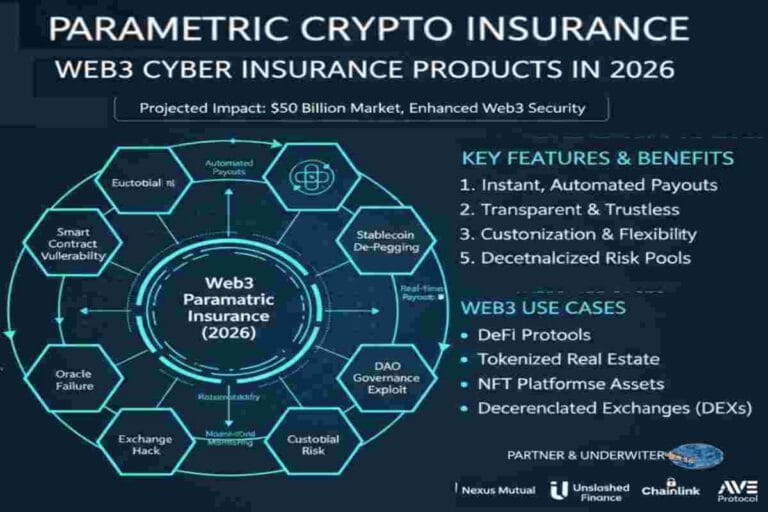
Parametric insurance is another major use case for programmable legal agreements.
Instead of processing claims manually, payouts execute automatically when predefined conditions are verified through oracle systems.
This approach reduces:
Smart Legal Contract Modules also support automated arbitration systems where dispute resolution workflows are embedded directly into legal infrastructure.

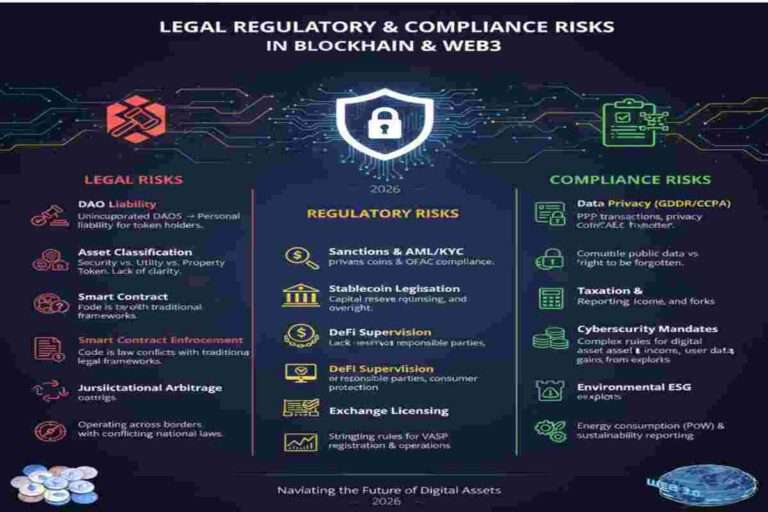
One of the biggest challenges in blockchain legal systems is regulatory fragmentation.
Different jurisdictions impose different requirements for:
Smart Legal Contract Modules address this through jurisdiction-aware compliance layers.
| Layer | Purpose |
|---|---|
| Jurisdiction Identifier | Defines governing region |
| Compliance Engine | Maps local regulations |
| Enforcement Module | Activates regional execution logic |
| Audit Registry | Stores compliance records |
This allows the same asset infrastructure to operate across multiple regions while maintaining localized compliance logic.
Legal Clause Library
↓
Modular Encoding
↓
Jurisdiction Mapping Layer
↓
Oracle Verification
↓
Compliance Engine
↓
On-Chain Enforcement
A tokenized real estate fund operating across:
Each jurisdiction module enforces:
Same asset.
Different regulatory logic.
One composable legal architecture.
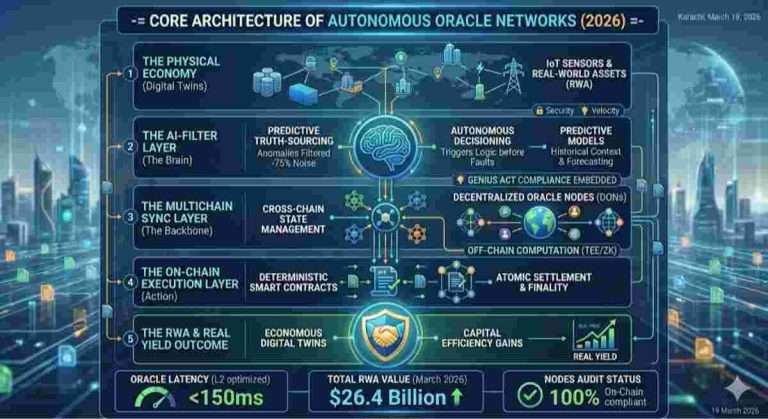
Smart legal systems rely heavily on trusted external data.
This is where blockchain oracles and digital twins become critical.
Composable legal contracts can integrate with:
A manufacturing plant detects abnormal equipment vibration through sensor infrastructure.
Workflow:
This creates autonomous operational compliance with minimal manual coordination.
Physical Asset
↓
Digital Twin Simulation
↓
Oracle Data Feed
↓
Smart Legal Compliance Module
↓
Automated Governance & Settlement
This creates:
Enterprise adoption is accelerating because smart legal infrastructure reduces operational complexity while improving transparency.
Many institutions are also moving toward Contract-as-a-Service (CaaS) models where legal modules operate as reusable infrastructure layers.
This allows enterprises to deploy:
without rebuilding legal architecture from scratch.
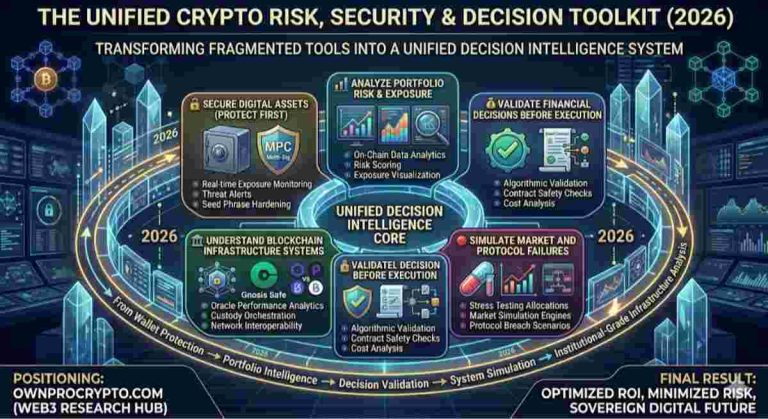
As enterprises adopt Smart Legal Contract Modules: Composable Legal Contracts on Blockchain in 2026, a new infrastructure model emerges — Contract-as-a-Service (CaaS).
Instead of drafting isolated smart contracts per transaction, institutions deploy a modular legal infrastructure stack that operates as a reusable service layer. This architecture enables programmable compliance smart contracts, tokenized real-world asset legal frameworks, and DAO governance contract automation to function within a standardized environment.
| Layer | Function | Strategic Benefit |
|---|---|---|
| Clause Library Layer | Pre-audited legal clause modules | Reduces drafting friction |
| Compliance Engine | Regulatory mapping & enforcement | Minimizes legal risk |
| Oracle Trigger Interface | Validates off-chain events | Enables automated execution |
| Governance Connector | DAO voting integration | Transparent decision flow |
| Cross-Chain Settlement Layer | Multi-network enforceability | Scalable global deployment |
In this model, legal agreements are no longer static documents — they are programmable service components that can be integrated into:
This transforms legal infrastructure into a reusable, composable product layer — similar to how cloud computing transformed server architecture.
Law becomes an API-driven service, not a manual process.
The evolution of Smart Legal Contract Modules introduces a powerful SaaS monetization model within Web3 legal systems.
As enterprises move toward cross-chain enforceable legal agreements and automated compliance frameworks, opportunities emerge in delivering modular legal infrastructure as subscription-based services.
| Model | Revenue Structure | Target Clients |
|---|---|---|
| Contract Module Subscription | Monthly access to clause libraries | DAOs & Web3 startups |
| Compliance-as-a-Service | Tiered regulatory mapping services | Enterprise tokenization platforms |
| Oracle-Integrated Legal APIs | Usage-based execution fees | Infrastructure & RWA platforms |
| Governance Automation Suite | DAO governance management SaaS | Investment & infrastructure DAOs |
Organizations offering composable legal contracts on blockchain can monetize:
This creates a recurring revenue ecosystem around programmable compliance smart contracts, rather than one-time contract deployment.
In 2026 and beyond, the competitive advantage will not belong to those who simply deploy smart contracts — but to those who productize legal logic as scalable, service-based infrastructure.
As programmable legal agreements become more common, organizations face a strategic choice:
Build internally or adopt external compliance infrastructure.
Best suited for:
Best suited for:
For most organizations, external legal infrastructure significantly reduces:
| Decision Factor | Build In-House | Buy CaaS / SaaS |
|---|---|---|
| Regulatory Complexity | High internal burden | Managed via service layer |
| Development Cost | Significant upfront | Subscription-based |
| Time to Deployment | 12–24 months | 3–6 months |
| Legal Risk Exposure | Internal responsibility | Shared / mitigated |
| Scalability | Limited by internal team | Modular & expandable |
Despite the advantages, smart legal systems introduce new operational risks.
| Risk | Description |
|---|---|
| Oracle Failure | Incorrect external data triggers execution |
| Governance Exploits | DAO voting manipulation |
| Smart Contract Bugs | Vulnerabilities in legal logic |
| Jurisdiction Conflicts | Regulatory inconsistencies across regions |
The biggest long-term challenge is not automation itself, but ensuring reliable external data and regulatory adaptability.
The market for composable legal contracts on blockchain is expanding rapidly as institutions adopt tokenized infrastructure and automated compliance systems.
By 2030, programmable legal agreements are expected to become foundational infrastructure for:
The shift is no longer experimental. Legal automation is becoming an operational requirement for digital economies.
| Segment | 2026 Estimate | 2030 Projection | Growth Driver |
|---|---|---|---|
| RWA Legal Automation | $1.8B | $9–12B | Tokenized infrastructure & bonds |
| DAO Governance Infrastructure | $900M | $5B | Institutional DAO adoption |
| Compliance-as-a-Service | $2.5B | $14B | Regulatory automation demand |
| Oracle-Integrated Legal Systems | $750M | $6B | IoT & digital twin expansion |
Note: Projections based on convergence of blockchain legal tech, RWA tokenization growth, and enterprise automation trends.
By 2030, composable legal contracts on blockchain will not represent a niche Web3 service — they will form the legal backbone of tokenized economic systems.
Several major developments accelerated institutional adoption in 2026.
Institutional insurance providers began settling blockchain-based legal agreements through stablecoin infrastructure, proving that programmable legal execution can operate within regulated financial environments.
The proposed Permitted Payment Stablecoin Issuer (PPSI) framework introduced clearer regulatory guidance for blockchain payment infrastructure and programmable settlement systems.
Tokenized real-world assets surpassed major adoption milestones as institutional allocation toward tokenized infrastructure accelerated across financial markets.
These developments strengthened confidence in:
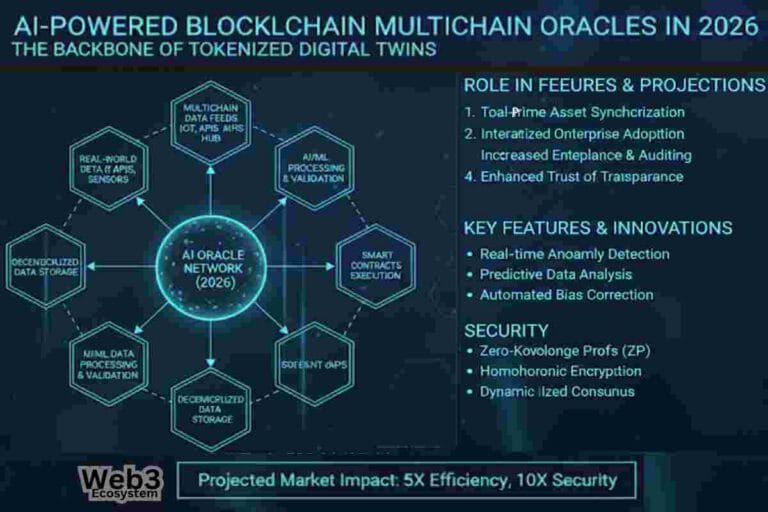
The competitive moat in Smart Legal Contract Modules: Composable Legal Contracts on Blockchain in 2026 will not be contract deployment — it will be infrastructure control.
The strongest providers will own:
Moat = ecosystem depth + compliance intelligence + integration dominance.

By 2030, Smart Legal Contract Modules will:
We move from:
Legal enforcement after breach –> Automated compliance before breach.”
Institutions adopting composable legal contracts on blockchain gain:
By 2030, composable legal contracts on blockchain will converge with AI-driven legal reasoning engines.
Future stack evolution:
AI Clause Optimization
↓
Real-Time Regulatory Monitoring
↓
Automated Compliance Adjustment
↓
Self-Updating Smart Legal Modules
Legal agreements will:
The legal layer becomes semi-autonomous — not just executable, but adaptive.
This update integrates the massive institutional shifts of March 2026 into your existing Smart Legal Contract (SLC) framework. The core takeaway for your update is that SLCs have moved from “experimental code” to “federally recognized settlement rails.”
The most significant update for your “Real Example” and “Parametric Insurance” sections occurred on March 9, 2026. Aon plc (NYSE: AON), a $73B global broker, successfully executed the first institutional insurance premium settlement using stablecoin rails.
On March 2, 2026, the Office of the Comptroller of the Currency (OCC) released a 120-page proposal to implement the GENIUS Act of 2025.
For your “Tokenized Real-World Assets (RWA)” section, new data from March 8, 2026, shows that the on-chain value of RWAs has jumped fourfold in the last 12 months, surpassing $26.4 billion.
| Feature | 2025 Standard | 2026 Update (March 19) |
| Enforcement | DAO Consensus | Federal PPSI Oversight |
| Dispute Resolution | On-chain Arbitrator | “Natural Language + Code” Audit (Aon Model) |
| Asset Class | Crypto-Native | Tokenized Industrial RWAs ($26B Market) |
| Regulatory Layer | Unclear / “Grey Market” | OCC / GENIUS Act Compliance |
Smart Legal Contract Modules represent a major shift in how digital economies manage ownership, governance, compliance, and settlement.
Instead of relying on static agreements and manual enforcement, organizations can now deploy programmable legal agreements that operate directly on blockchain infrastructure.
As tokenized real-world assets, DeFi legal frameworks, DAO governance systems, and automated compliance clauses continue to scale, composable legal contracts will become a foundational layer of Web3 infrastructure.
The transition is no longer about replacing paperwork.
It is about building legal systems capable of operating at internet scale.
To maintain Sovereign Continuity in 2026, legal infrastructure must align with federal standards for digital assets. The OCC (Office of the Comptroller of the Currency) remains the lead architect for the PPSI framework that powers these legal modules. For those conducting deep-dive due diligence on the GENIUS Act and the latest federal rulemaking for “Permitted Activities” involving smart contracts, you can access the official government bulletins and supervision standards directly via the federal portal at http://occ.treas.gov/topics/supervision-and-examination/digital-assets. This level of transparency is the “Gold Standard” for institutional MOVE and OWN operations.
The deployment of Smart Legal Contract Modules is a core component of our Web3 Governance Framework: Sovereign Ownership (2026). While these modules provide the programmable logic for your assets, they must be integrated into a broader strategy to be effective. To see how these contracts facilitate the frictionless transfer of value, explore our MOVE Pillar guide on [Stablecoins Are Now Insurable Money]. If you are looking to secure the governance layer of these contracts against external threats, our SECURE Pillar deep dive on [Smart Contract Audit Protocols] provides the “Defense-in-Depth” strategy needed for high-stakes institutional deployment.
To maintain Sovereign Continuity in 2026, legal infrastructure must align with federal standards for digital assets. The OCC (Office of the Comptroller of the Currency) remains the lead architect for the PPSI framework that powers these legal modules. For those conducting deep-dive due diligence on the GENIUS Act and the latest federal rulemaking for “Permitted Activities” involving smart contracts, you can access the official government bulletins and supervision standards directly via the federal portal at http://occ.treas.gov/topics/supervision-and-examination/digital-assets. This level of transparency is the “Gold Standard” for institutional MOVE and OWN operations.
The deployment of Smart Legal Contract Modules is a core component of our Web3 Governance Framework: Sovereign Ownership (2026). While these modules provide the programmable logic for your assets, they must be integrated into a broader strategy to be effective. To see how these contracts facilitate the frictionless transfer of value, explore our MOVE Pillar guide on [Stablecoins Are Now Insurable Money]. If you are looking to secure the governance layer of these contracts against external threats, our SECURE Pillar deep dive on [Smart Contract Audit Protocols] provides the “Defense-in-Depth” strategy needed for high-stakes institutional deployment.
Smart Legal Contract Modules: Explained (2026)
Smart Legal Contract Modules are programmable legal agreements deployed on blockchain infrastructure that automate compliance, governance, settlement, and enforcement through modular smart contract systems.
Legal enforceability depends on jurisdiction and regulatory integration. Jurisdiction-aware compliance modules improve enforceability by embedding legal conditions directly into blockchain execution layers.
Oracles validate external data such as market conditions, ESG metrics, IoT readings, and compliance events that trigger automated smart contract execution.
DAO governance systems can integrate with legal execution modules that automate settlement, treasury actions, and governance enforcement once voting thresholds are verified.
High-impact sectors include:
The main risks include oracle manipulation, governance exploits, smart contract vulnerabilities, and changing regulatory conditions.
Future systems will likely integrate AI-driven compliance monitoring, adaptive governance infrastructure, and autonomous legal execution layers.
Welcome to OwnProCrypto (Own & Pro Crypto) — a next-generation Bitcoin and blockchain education platform where the science of finance meets the power of AI-driven automation.
Our mission is simple: to equip you with the knowledge, frameworks, and tools needed to make smarter financial and business decisions in the Web3 economy.
Beyond analysis, OwnProCrypto focuses on transparency, verifiable data, and practical frameworks that investors and builders can actually use. Our goal is not hype — but clear thinking, disciplined analysis, and long-term value creation in the decentralized economy.
Our Background: Salim (Sam) is the founder and lead researcher behind OwnProCrypto, a Web3 intelligence platform focused on crypto security, digital ownership, stablecoin systems, interoperability, and institutional blockchain infrastructure.
Crypto Tools & Analysis:
Crypto Fundamental Analysis Tool | Protocol Evaluation System | DeFi Risk Analysis Tools | Crypto Portfolio Dashboard | Token Risk vs Reward Tool
Guides:
Crypto Fundamental Analysis | Blockchain Project Evaluation | Tokenomics Analysis | DeFi Protocol Analysis | Capital Efficiency
© 2026 OwnProCrypto — Built for smarter crypto decisions