infographic of site logo for contact us

OwnProCrypto.com

Use our Crypto Search Engine 🔍 to find the topics and keywords you're looking for.

Decision Architecture

Crypto Decision Operating System: Pre-Trade Analysis, Risk & Trade Evaluation

The Decision Layer

A Crypto Decision Operating System brings the major stages of crypto trade evaluation into one structured process. Instead of treating market research, signal analysis, risk management, trade filtering, and execution as separate activities, the framework connects them into a repeatable decision workflow. The goal is to help traders evaluate opportunities more systematically, understand the risks before capital is committed, and make clearer decisions about whether a trade should be approved, adjusted, delayed, or rejected.

Core Principle

The system is designed to improve the quality and consistency of decisions, not to predict the market with certainty. By creating a defined path from information gathering to final trade evaluation, it creates a practical separation between seeing an opportunity and committing capital.

Decision Intelligence

Introduction to a Crypto Trading Decision Intelligence System

Why Decision Intelligence Matters

Crypto trading decisions can become difficult when multiple variables have to be evaluated at the same time. Entry price, stop loss, take profit, position size, risk-to-reward, signal quality, liquidity, volatility, and broader market conditions can all influence whether a setup deserves consideration. A decision intelligence system brings these inputs into a more structured pre-trade analysis so the trader can evaluate the opportunity before committing capital.

System Definition

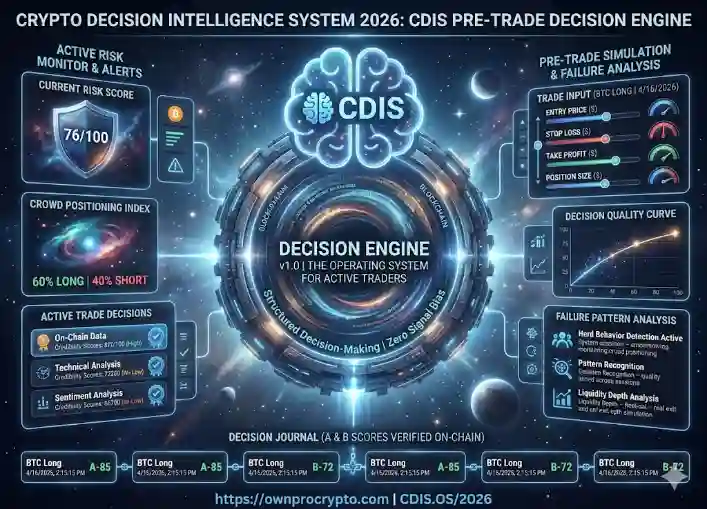
The Crypto Decision Intelligence System (CDIS) is a structured decision-analysis framework for evaluating potential crypto trades. It is designed to organize relevant trade inputs, identify basic failure conditions, calculate risk, assess trade quality, and preserve previous decisions for later review. Rather than treating a trading opportunity as an immediate instruction to enter, CDIS creates a structured layer between market information and execution.

Core Functions
Evaluate Examine the important conditions surrounding a proposed trade.
Detect Identify obvious failure conditions before capital is exposed.
Quantify Calculate risk, reward, position exposure, and other measurable factors.
Score Organize trade-quality factors into a clearer decision framework.
Record Preserve previous decisions so the process can be reviewed and improved.

The central idea is decision quality, not prediction certainty. CDIS does not need to know exactly what the next candle will do. Its purpose is to help determine whether the available evidence, risk parameters, and trading conditions are strong enough to justify proceeding with the setup.

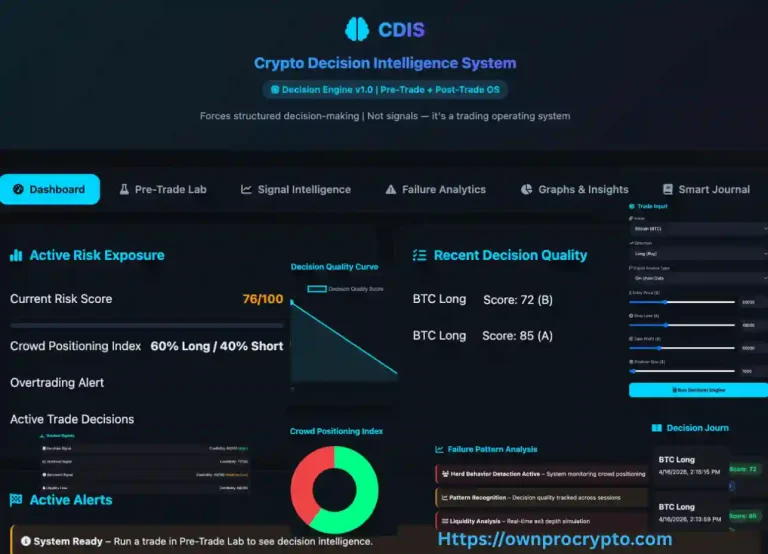
Infographic image of Best Crypto Decision Tools Guide Intelligence System 2026: CDIS Pre-Trade Decision Engine
Access the Intelligence Suite Now
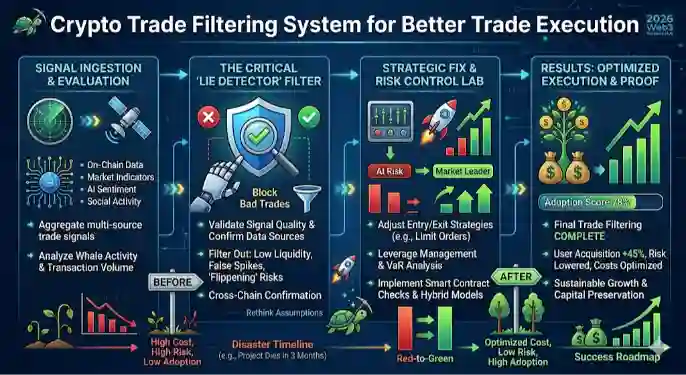
Infographic of Crypto Trade Filtering System for BetterTrade Execution in 2026
Access the Intelligence Suite Now

What Is a Crypto Decision Operating System?

A Crypto Decision Operating System is a framework that helps a trader evaluate a proposed trade before execution. Instead of looking at a chart and immediately deciding whether to buy or sell, the trader records important variables and evaluates them against predefined rules.

A typical analysis can include the cryptocurrency being traded, long or short direction, entry price, stop-loss level, take-profit level, position size, risk percentage, expected reward, risk-to-reward ratio, signal source, and potential failure conditions.

The purpose is not to predict the future with certainty. Markets remain uncertain. The purpose is to improve the quality and consistency of the decision-making process.
Why Pre-Trade Analysis Matters in Crypto Trading

Crypto markets operate continuously and can move rapidly. That environment can encourage traders to make decisions because of fear of missing out, sudden price movements, social-media narratives, or short-term volatility.

Pre-trade analysis creates a pause between seeing an opportunity and executing it. That pause allows the trader to ask whether the setup has acceptable risk, whether the potential reward justifies the risk, whether the stop loss is logically positioned, and whether the position is too large for the account.

Risk management is particularly important because a profitable-looking setup can still produce an unacceptable loss if the position size or stop-loss distance is poorly controlled. The U.S. Commodity Futures Trading Commission’s virtual-currency resources also highlight the substantial risks associated with digital assets.

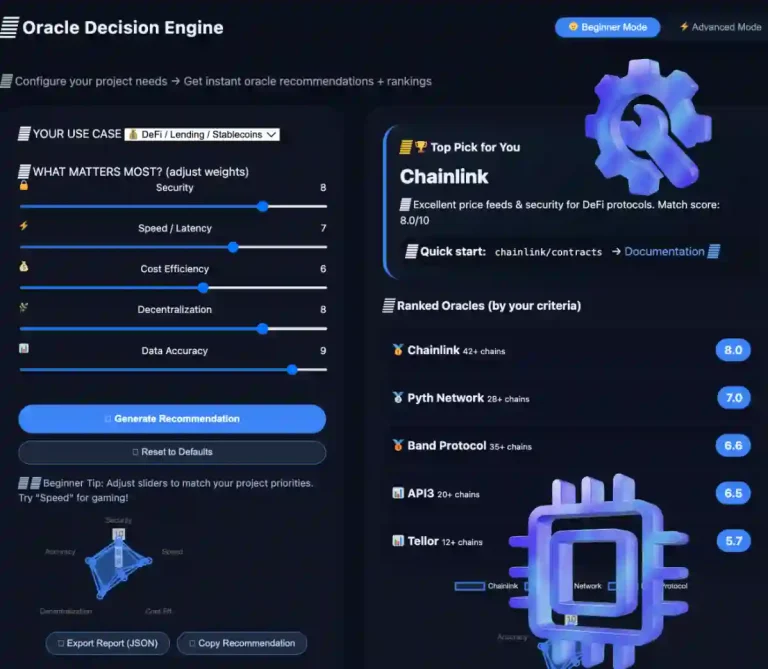
Infographic of Best Blockchain Oracles (2026) Compare Chainlink, Pyth, Band & More
Access the Intelligence Suite Now

How This Crypto Decision Operating System Works

The tool starts with basic trade inputs. You select an asset such as BTC, ETH, SOL, or ARB, choose Long or Short, select a signal source, and enter the entry price, stop loss, take profit, and position size. The decision engine then checks whether the setup is structurally valid. For valid trades, it calculates risk percentage, dollar position risk, risk-to-reward ratio, simulated signal credibility, simulated crowd positioning, and potential failure flags. It then applies predefined filters and produces a decision score, grade, and execution permission. Previous evaluations can be stored in the browser and displayed through the dashboard, graphs, failure analytics, and decision journal.
Important: Signal credibility and crowd-positioning values in this version are simulated demonstration data. They are not live market feeds and should not be interpreted as real-time market intelligence.

The Shift Toward Institutional Crypto Trading Frameworks

Institutional traders do not rely on signals the way retail traders do.

They operate through:

  • structured evaluation models
  • risk-controlled execution
  • predefined decision pathways

Institutional vs Retail Approach

AspectRetail TradingInstitutional Trading
SignalsFollowed directlyEvaluated and scored
RiskReactivePredefined
ExecutionFlexibleRule-based
ConsistencyVariableSystem-driven

This shift is what CDIS is built to replicate in a practical way.

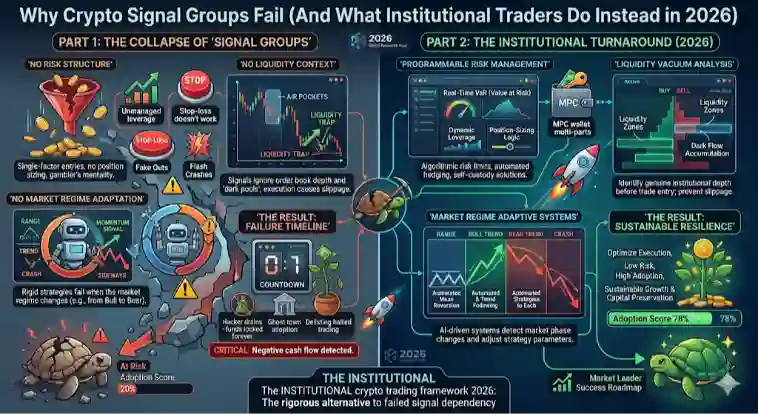
Infographic of Why Crypto Signal Groups Fail (And What Institutional Traders Do Instead in 2026)
Why Crypto Signal Groups Fail?

Why Most Crypto Trading Strategies Quietly Fail

Most strategies do not fail because they are wrong.
They fail because they are incomplete.

Common structural gaps

Problem AreaWhat Actually Happens
Signal dependencyTraders follow signals without validation
No filteringEvery setup looks tradable
Emotional executionDecisions change under pressure
No feedback loopMistakes repeat without detection

The issue is not strategy quality. It is the absence of a decision structure.

Infographic image of Crypto Decision Operating System Guide 2026: Decision Intelligence Layer System
Access the Intelligence Suite Now

How to Use the Crypto Decision Operating System Step by Step

Step 1: Open the Pre-Trade Lab Start in the Pre-Trade Lab rather than immediately interpreting the dashboard. This is where the proposed trade is entered into the decision engine.

Step 2: Select the cryptocurrency Choose the asset being considered, such as Bitcoin, Ethereum, Solana, or Arbitrum.

Step 3: Select Long or Short Direction matters because the correct relationship between entry, stop loss, and take profit is different for long and short positions.

Step 4: Select the signal source Choose whether the setup is based on on-chain data, technical analysis, sentiment/social information, or liquidity flow.

Step 5: Enter entry, stop loss and take profit Enter the proposed entry price, protective stop loss, and target price. The system checks the directional structure before continuing with the trade evaluation.

Step 6: Enter position size Enter the dollar value of the proposed position. The system uses this value to estimate the dollar amount exposed to the calculated stop-loss risk.

Step 7: Run the Decision Engine Click Run Decision Engine. The tool generates the decision score, grade, permission, risk percentage, position risk, R:R ratio, filters, and failure flags.

Step 8: Review the result before execution Do not treat the score as an automatic trading instruction. Use it as a structured checkpoint and review the reasons behind the result.

Step 9: Review history and journal data Previously evaluated decisions can be reviewed through Recent Decisions, Graphs, Failure Analytics, and the Decision Journal.

Understanding Crypto Trade Risk Analysis

One of the most useful parts of a structured trading system is separating the idea of a trade from the amount of money being placed at risk.


Risk From Entry to Stop Loss

For a long position, the price risk is calculated as entry minus stop loss. For a short position, it is stop loss minus entry. The tool converts that difference into a percentage of the entry price.


Position Risk

The tool estimates dollar risk using the position size multiplied by the percentage distance between entry and stop loss. This helps demonstrate why a wider stop or larger position can materially increase exposure.


Risk-to-Reward Ratio

Risk-to-reward compares the amount potentially gained if the target is reached with the amount potentially lost if the stop is reached. A 1:2 R:R means the potential reward is twice the calculated risk.

MetricWhat It ShowsWhy It Matters
Risk %Distance from entry to stop as a percentageShows how wide the planned stop is relative to entry
Position RiskEstimated dollar exposure to the stopConnects trade structure with position size
R:RPotential reward compared with riskHelps evaluate whether the target justifies the risk
Decision ScoreRule-based quality scoreProvides a standardized decision checkpoint
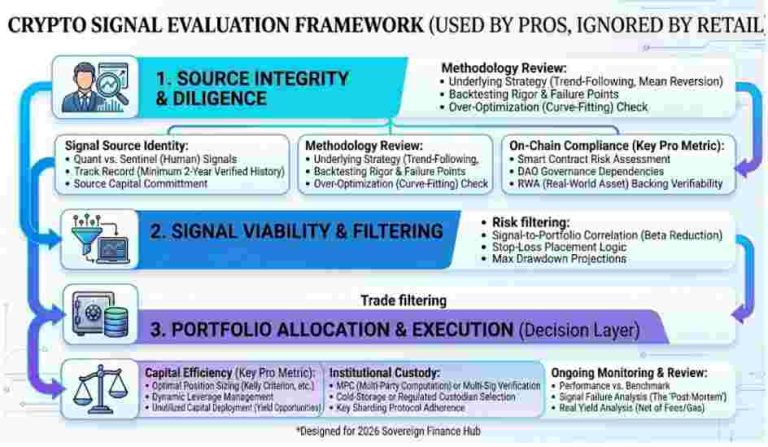
Infographic image of Crypto Signal Evaluation Framework (Used by Pros, Ignored by Retail) in 2026
Crypto Signal Evaluation Framework

Signal Credibility and Failure Detection

A trading setup can have an attractive chart while the underlying signal is weak. A structured system therefore benefits from separating the trade’s technical structure from the source of the signal.

This version assigns predefined simulated credibility scores to several signal categories. On-chain data, technical analysis, sentiment/social signals, and liquidity flow each receive different demonstration values.

The tool also includes simulated crowd-positioning analysis. For example, it can flag a long setup when simulated long positioning becomes unusually crowded. This is a demonstration of how a future live-data system could incorporate crowding or positioning information into trade evaluation.

Traders who want deeper derivatives-market information can supplement their workflow with appropriate exchange and market-data sources rather than relying on simulated values.

How the Crypto Decision Score Is Calculated

The decision score in this tool is rule-based rather than a machine-learning prediction. The initial score comes from the selected signal source and is then adjusted according to risk-to-reward quality, stop-loss width, position risk, failure flags, and filter status.

Higher R:R can improve the score, while an extremely tight stop, excessive position risk, or detected failure condition can reduce it. Hard rejection conditions can also override an otherwise attractive score.


Understanding the Grades

  • A: High-confidence setup under the programmed rules and approved for execution by the tool.
  • B: Moderate setup where the tool recommends scaling down.
  • C: Lower-confidence setup where waiting is preferred.
  • D: Rejected or structurally insufficient setup.

These grades are outputs of the programmed decision rules. They are not guarantees of future performance and should not be confused with an objective probability of winning a trade.

Benefits of Using a Crypto Decision Operating System

More structured decisionsImportant trade variables are reviewed through a consistent process instead of being considered randomly.

Better risk visibilityRisk percentage and estimated dollar risk make the potential exposure easier to understand before execution.

Direction-aware calculationsLong and short setups are evaluated using their correct entry, stop-loss and target relationships.

Failure-condition awarenessThe system can surface programmed warning conditions that might otherwise be overlooked.

Decision journalingPrevious evaluations can be stored and reviewed to identify recurring decision patterns.

Reduced emotional frictionA checklist-style process creates an opportunity to pause before acting on a sudden market move.

The largest benefit is not necessarily the numerical score. It is the creation of a repeatable process where the trader can compare decisions over time and identify whether poor outcomes are associated with poor trade structure, excessive risk, weak signals, or inconsistent execution.

Infographic of Crypto Intelligence Suite – AI Crypto ROI Calculator for DeFi, Trading & Staking (2026)
Crypto Intelligence Suite

How This Tool Compares With Other Crypto Trading Tools

There are many excellent crypto charting, market-data, portfolio-tracking, and trading platforms, but they often solve different problems. TradingView is widely used for charts and technical analysis, while CoinGlass provides derivatives and market-positioning information. Portfolio and tax-focused platforms address yet another part of the workflow.

Crypto Decision Operating System is positioned differently: its primary purpose is to turn a proposed trade into a structured decision rather than attempting to replace a full charting platform or exchange. Its strongest use case is the checkpoint between “I see a setup” and “I am ready to execute.”

For serious analysis, the best approach can be complementary: use a dedicated charting or market-data platform for market information, then use a decision framework to evaluate whether the proposed trade satisfies your predefined risk and execution rules.

Practical Tips for Better Crypto Trade Analysis

  1. Define the stop before focusing on the target.
    A stop should be connected to the trade thesis rather than selected only because it produces an attractive R:R.
  2. Keep position size separate from conviction.
    Feeling highly confident does not automatically justify increasing position size.
  3. Check R:R after establishing a logical stop.
    Do not move a stop unrealistically just to manufacture a better-looking ratio.
  4. Look for reasons to reject the trade.
    A strong process actively searches for invalidation conditions rather than only collecting reasons to enter.
  5. Record decisions before outcomes are known.
    This makes the journal more useful because you can compare the original reasoning with what happened later.
  6. Review repeated behavior.
    If many losing decisions share excessive risk, poor R:R, crowded conditions, or impulsive entries, that pattern may be more valuable than any single trade result.
  7. Never confuse a score with certainty.
    A high-quality setup can still lose. A low-quality setup can still win.

Common Mistakes When Evaluating Crypto Trades

One common mistake is concentrating almost entirely on whether price will rise or fall. Direction is only one part of the decision. A trade can correctly predict direction and still lose more money than intended because of poor position sizing or an unsuitable stop.

Another mistake is changing the risk parameters after seeing the calculated result. If a setup produces an unattractive R:R, moving the target farther away without a market-based reason does not automatically improve the underlying trade.

Traders should also be cautious about treating social sentiment as confirmation by itself. Fast-moving narratives can change quickly, and simulated sentiment or crowd data should never be mistaken for verified live information.

Using a Trading Journal to Improve Decision Quality

A trading journal becomes more useful when it records the decision before the outcome is known. The CDIS journal records evaluated setups and allows the trader to review score, grade, permission, R:R, risk, and other decision information.

Over time, this can create a decision-quality dataset. The goal is not simply to count winning and losing trades. A better review asks whether the original decision followed the trader’s rules and whether the trade was appropriately sized for the level of uncertainty.

This approach is consistent with the broader principle of maintaining disciplined trading records rather than relying solely on memory.

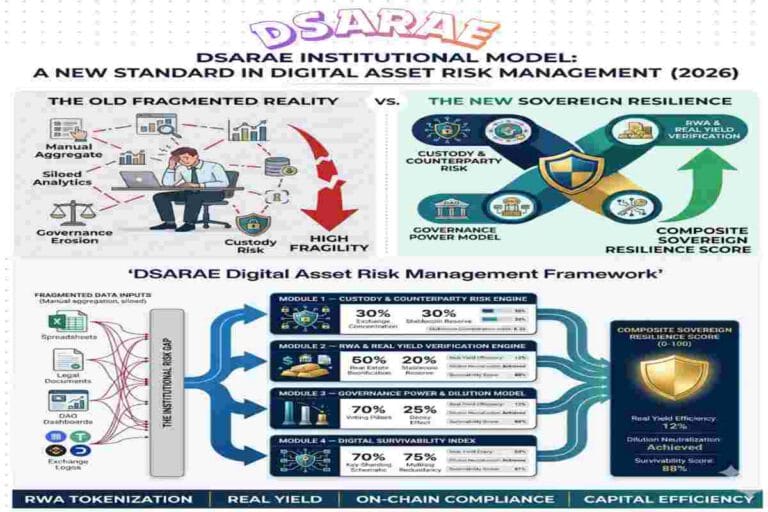
Infographic of Digital Asset Risk Management Framework shows The DSARAE Institutional Model for Sovereign Resilience (2026)
The DSARAE Institutional Model for Sovereign Resilience (2026)

Why Risk-to-Reward Alone Is Not Enough

A high R:R ratio can look attractive, but it does not automatically make a trade good. A target that is extremely far away may have a low probability of being reached, while a very tight stop can increase the chance of being stopped out by ordinary market noise.

R:R should therefore be considered together with the location of the stop, market structure, volatility, liquidity, position size, and the strength of the underlying trading thesis.

The CDIS framework reflects this idea by combining R:R with other rule-based factors rather than using the ratio as the sole decision criterion.

The Future of Crypto Decision Operating System

Future versions of Crypto Decision Operating System could move beyond static or simulated inputs and incorporate verified live market data. Potential integrations could include real-time price feeds, order-book liquidity, funding rates, open interest, liquidation data, on-chain metrics, volatility measurements, market-regime detection, and user-specific risk limits.

Another important development could be personalized decision models. Instead of applying the same thresholds to every trader, a future system could evaluate a user’s historical journal and identify which setups, market conditions, timeframes, and risk levels have historically produced the best decision quality for that particular strategy.

Machine learning could also help identify relationships that are difficult to detect manually. However, automation should improve analysis rather than create a false impression of certainty. A sophisticated system still needs reliable data, transparent assumptions, appropriate risk controls, and human oversight.

The long-term direction is therefore likely to be toward tools that combine market intelligence, risk management, behavioral analysis, execution discipline, and historical decision data into a single workflow.

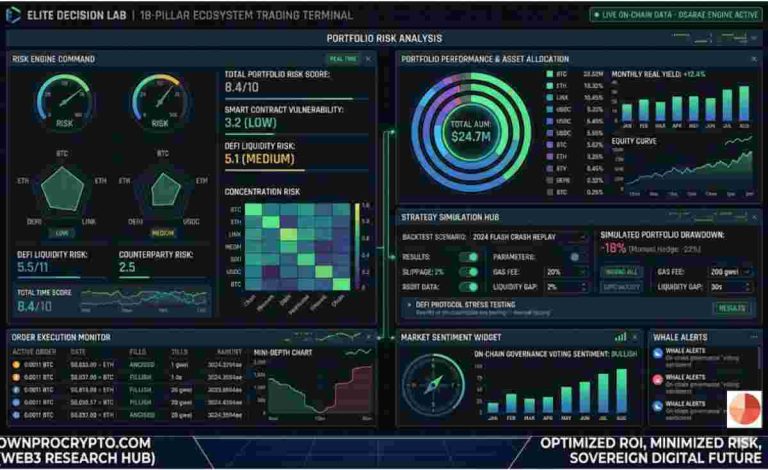
Infographic of Digital Asset Intelligence, Elite Digital Lab
Digital Asset Intelligence, Elite Digital Lab

Evaluate the setup before you execute it.

Enter the asset, direction, signal source, entry, stop loss, take profit, and position size. The decision engine then evaluates the setup using its programmed risk, R:R, signal, failure, and scoring rules.

Review the methodology above before using the tool and treat every output as decision support rather than a guaranteed trading signal.

Final Thoughts

Crypto trading does not become predictable simply because a trader has more indicators or a higher-scoring setup. The more practical objective is to make the decision process more consistent. A structured crypto decision intelligence system can help by forcing the trader to define the trade, quantify the risk, examine the reward, identify potential failure conditions, and record the decision.

The Crypto Decision Operating Systemis particularly useful as a pre-trade checkpoint. It does not replace market research, chart analysis, exchange information, or personal risk management. Instead, it provides a structured layer between market analysis and execution.

Used consistently, that layer can make it easier to distinguish a carefully planned trade from an impulsive one—and that distinction is often more valuable than trying to predict every short-term crypto price movement.

Frequently Asked Questions

Crypto Decision Operating System Basics

What is a Crypto Decision Operating System?

It is a structured framework for evaluating a potential cryptocurrency trade using factors such as entry, stop loss, take profit, position size, risk-to-reward, signal quality, and predefined decision rules.


What is the purpose of crypto trade decision analysis?

Its purpose is to create a consistent checkpoint before execution so that traders can review risk, reward, trade structure, and potential failure conditions instead of relying entirely on impulse.

Is Crypto Decision Operating System the same as a trading signal?

No. A Decision system evaluates a proposed trade. A trading signal generally attempts to identify a potential market opportunity. The two can be used together but serve different purposes.

Can a decision tool predict whether Bitcoin will go up or down?

No. A rule-based decision tool can evaluate the quality of an input setup, but it cannot guarantee the future direction of Bitcoin or any other cryptocurrency.

How to Use the Tool

How do I use the Crypto Decision Operating System?

Open the Pre-Trade Lab, select the asset and direction, choose the signal source, enter entry, stop loss, take profit and position size, then click Run Decision Engine.

What information do I need before running a trade analysis?

You need a proposed asset, trade direction, signal source, entry price, stop-loss price, take-profit price, and position size.

What happens after I click Run Decision Engine?

The system validates the setup, calculates risk and reward metrics, applies programmed filters, generates a decision score and grade, and displays the resulting execution permission and warnings.

Can I evaluate both long and short trades?

Yes. The calculation logic is direction-aware and checks the correct relationship between entry, stop loss, and take profit for both long and short setups.

Risk and Position Sizing

How is crypto trade risk calculated?

The tool calculates the distance between entry and stop loss, converts that distance into a percentage of the entry price, and uses position size to estimate the dollar amount exposed to that stop.

What is position risk in crypto trading?

Position risk is the estimated amount of money that could be lost if the position reaches the planned stop loss, based on the position size and stop-loss distance.

Why is position size important?

Position size determines how much capital is exposed to the planned price movement. A reasonable setup can become an unnecessarily large risk when position size is excessive.

What does a tight stop loss mean?

A tight stop loss is positioned relatively close to the entry price. While it limits planned price risk, it can also be vulnerable to normal market volatility if it is not placed at a logical invalidation level.

What does a wide stop loss mean?

A wide stop loss places the invalidation point farther from entry. It may tolerate more price movement but can increase the percentage and dollar risk of the position if the size is not adjusted.

Risk-to-Reward and Trade Quality

What is R:R in crypto trading?

R:R means risk-to-reward ratio. It compares the amount potentially gained at the target with the amount potentially lost at the stop.

Is a 1:2 risk-to-reward ratio good?

A 1:2 ratio means the potential reward is twice the calculated risk, but the ratio alone does not determine whether a trade is good. The probability of reaching the target and the logic behind the stop also matter.

Why does the tool use an R:R filter?

The R:R filter is designed to identify setups where the potential reward may not justify the calculated risk under the tool’s predefined rules.

Can I increase R:R by moving the take-profit farther away?

You can change the target, but doing so only improves the mathematical ratio. It does not necessarily improve the probability that the target will actually be reached.

Decision Score and Grades

What is the Crypto Decision Score?

It is a 0–100 rule-based score that combines the selected signal score with adjustments for R:R, stop-loss width, position risk, failure flags, and filter status.

What does an A grade mean?

An A grade means the setup reached the tool’s high-confidence threshold and passed its required approval conditions.

What does a B grade mean?

A B grade represents a moderate setup under the programmed rules and is associated with conditional execution and reduced position sizing.

What does a C grade mean?

A C grade represents a lower-confidence setup where the tool recommends waiting rather than treating the trade as a high-quality opportunity.

What does a D grade mean?

A D grade indicates that the setup has been rejected or does not meet the required quality conditions under the programmed rules.

Does a high decision score mean the trade will win?

No. The score measures the setup against programmed criteria. It is not a probability of profit and cannot guarantee a winning trade.

Signal Intelligence and Market Data

What signal sources are supported?

The current tool includes on-chain data, technical analysis, sentiment or social signals, and liquidity flow as selectable signal categories.

Are the signal credibility scores real-time?

No. The current signal credibility values are simulated demonstration values and are clearly labeled as simulated within the tool.

Is the crowd positioning data real?

No. Crowd positioning is simulated in this version. It demonstrates how positioning information could be incorporated into a future live-data decision engine.

Where can I find real crypto market data?

Market-data platforms such as CoinMarketCap, CoinGecko, exchange APIs, and specialized derivatives-data providers can provide real market information, depending on the metric required.

Failure Analytics and Warnings

What are failure flags?

Failure flags are warning conditions generated by the tool when a programmed risk or crowding condition is detected.

What is a crowded long?

In this tool, a crowded long is a simulated condition where the long-positioning percentage exceeds the programmed threshold for a long setup.

Can failure analytics predict a market reversal?

No. Failure analytics identify predefined warning conditions. They do not establish that a reversal will occur.

Trading Journal and History

Does the tool save previous trade decisions?

Yes. Evaluated decisions can be stored in the browser’s local storage and displayed through the dashboard and Decision Journal.

How many decisions does the tool keep?

The current implementation keeps up to 30 decision records in its local history.

Can I clear my decision history?

Yes. The Decision Journal includes a Clear History option that removes the stored decision history from the browser.

Why should I keep a crypto trading journal?

A journal allows you to compare your original decisions with later outcomes and identify recurring patterns in risk, execution, setup quality, and trading behavior.

Crypto Trading Tools and Alternatives

Is this tool a replacement for TradingView?

No. TradingView is primarily a charting and market-analysis platform, while this tool is focused on structured trade decision evaluation.

Is this tool a crypto exchange?

No. It does not execute cryptocurrency transactions or replace an exchange account.

Can I use this tool with other crypto analysis platforms?

Yes. It can be used as a decision checkpoint after you perform chart, market, on-chain, sentiment, or liquidity research elsewhere.

Safety, Accuracy and Financial Advice

Is the Crypto Decision Operating System financial advice?

No. It is a decision-analysis and educational tool. Its output should not be treated as personalized financial advice or a guarantee of trading performance.

Can the tool guarantee profitable trades?

No. No rule-based calculator can guarantee future market outcomes. Cryptocurrency prices can move unexpectedly and trading involves substantial risk.

Should I execute every trade marked Approved?

No. An Approved result means the setup passed the tool’s programmed conditions. You should still independently review market conditions, liquidity, volatility, strategy rules, and your personal risk limits.

Why should simulated data not be treated as live market intelligence?

Simulated values are generated for demonstration rather than retrieved from a live market-data feed. They therefore cannot reliably describe current market positioning or sentiment.

Future Development

Could this tool use live crypto market data in the future?

Yes. A future implementation could connect verified market-data APIs to replace simulated signal, positioning, volatility, liquidity, and other market inputs.

Could AI be added to crypto decision intelligence?

AI could potentially help identify historical patterns, classify market regimes, summarize signals, and personalize decision analysis, provided the underlying data and methodology are reliable.

Will automated trading eliminate trading risk?

No. Automation can make execution and analysis more systematic, but it cannot eliminate market risk, data errors, liquidity risk, model errors, or unexpected events.

Crypto Decision Framework

This article is part of our Crypto Decision Framework, a connected set of resources designed to help traders move from market information and signal evaluation to trade filtering, risk assessment, and structured execution. Each pillar addresses a different layer of the decision process while working together as one practical framework.

Framework Pillars
The overall decision architecture connecting research, evaluation, risk, filtering, and execution.
Crypto Trade Filtering System Screens proposed trades and identifies weak, incomplete, or unsuitable setups before execution.
Crypto Decision Tools Provides practical tools for evaluating risk, market conditions, trade parameters, and decision quality.
Crypto Trading Intelligence System Organizes market signals, trading information, risk factors, and contextual intelligence for better analysis.
Crypto Decision Tool Applies the framework through structured pre-trade analysis and repeatable decision checks.
Why These Pillars Connect

Together, these pillars create a connected decision model. Intelligence helps interpret the market, decision tools organize the relevant inputs, trade filtering tests whether a setup deserves execution, and the operating system connects those stages into a repeatable process. The objective is to move beyond reactive trading and toward a more disciplined, evidence-based approach to capital deployment.

Continue the framework: For a deeper look at the broader intelligence and risk architecture, explore Crypto Trading Intelligence & Risk Systems 2026 . For an independent regulatory perspective on financial promotions and investment-related communications, review the Financial Conduct Authority (FCA) guidance and warnings.
Looking for another topic? Search the OwnProCrypto research archive.
Comments
💬 comments 0
← Crypto Signal Evaluation Framework 2026: How to Analyze Trading Signals Like Institutional Traders
Whalebyte Crypto History & Airdrop Scanner: Complete Research Guide →
🛠 Explore Tools ▼
📚 Explore Crypto Research Select a research category