
Search by title, topic or phrase
Use our Crypto Search Engine 🔍 to find the topics and keywords you're looking for.
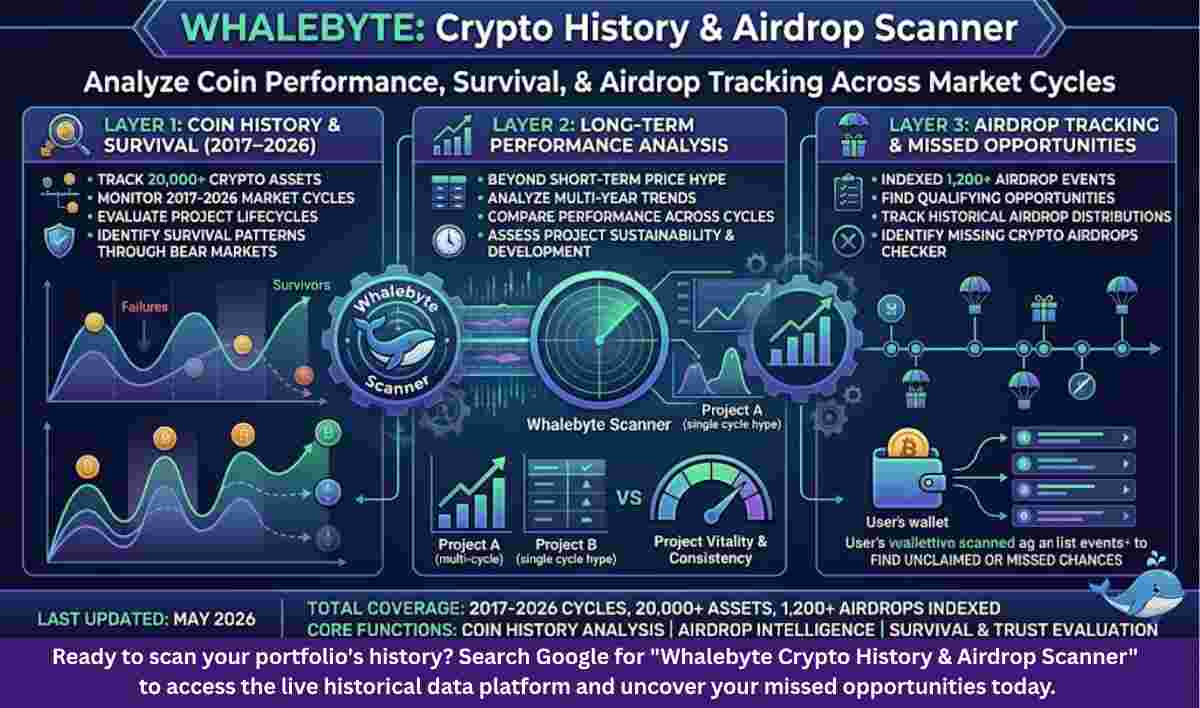
Whalebyte Crypto History & Airdrop Scanner is a crypto research system designed to help users study cryptocurrency history, project status, coin performance context, and airdrop opportunities from one research workspace. Instead of looking only at today’s token price, users can examine launch information, blockchain, historical all-time high, current price, project status, exchange listings, and available airdrop information.
The purpose of this guide is not simply to explain how to click through a tool. It provides a broader research framework for understanding crypto history, crypto airdrops, historical airdrop opportunities, missed campaigns, and the practical process of verifying information before taking action.
Whalebyte should be treated as a research and discovery layer rather than a guarantee of investment performance, airdrop eligibility, or future token value. Airdrop information can change quickly, and important eligibility, claim, deadline, and contract details should always be verified through official project sources.
Table of Contents
ToggleA current token price is only one point in a project’s lifecycle. It does not tell you when the asset launched, which blockchain it belongs to, how far its price once moved, whether the project is currently active, or what other information may be available about its development and market presence.
Historical context is particularly useful because cryptocurrency markets are highly cyclical. A token that appears strong during one market period may later experience large drawdowns, lose liquidity, become inactive, migrate to another ecosystem, or disappear entirely. Conversely, projects that remain active through multiple market environments may provide a different research profile from newly launched assets.
This does not mean historical performance predicts the future. It does not. Historical information is valuable because it gives researchers more context before making decisions.

Whalebyte combines two related research functions: a cryptocurrency history research interface and an airdrop information scanner.
The crypto history scanner side allows users to search and filter available coin records. Depending on the available dataset, records can include the coin name, symbol, blockchain, launch date, all-time high, current price, category, project status, founder or company information, and exchange listings.
The crypto airdrop scanner side organizes available airdrop records by project, blockchain, estimated value, eligibility information, and status.
This combination is useful because airdrop research and cryptocurrency research often overlap. A user may discover an airdrop first and then want to understand the underlying project. Conversely, someone researching a project’s history may want to know whether it has been associated with an airdrop campaign.
Crypto history research should begin with basic identification and then move toward historical context. The objective is not to create a single prediction from historical data. Instead, the objective is to build a clearer picture of an asset’s lifecycle.
Start with the coin name and symbol. Confirm that you are researching the correct asset because similarly named tokens can exist across different networks.
Blockchain information helps establish the ecosystem in which the asset operates. This can be particularly important when researching tokens that exist in multiple environments or have migrated between networks.
Launch date provides a basic lifecycle reference. A newly launched token and a token that has existed for several years should not be interpreted through exactly the same historical lens.
An all-time high is not a prediction of future value. It is historical evidence of what the market previously priced the asset at. Comparing ATH information with current price can help researchers understand the magnitude of historical drawdowns and how far an asset is from its previous peak.
Status information can provide an important first-level signal when researching older assets. An active project deserves a different research workflow from an inactive, discontinued, dead, or otherwise flagged project.
Historical scanner data should be treated as a starting point. For important decisions, cross-check project information against official documentation, blockchain explorers, exchange records, project repositories, and reputable market-data providers.
A crypto airdrop is generally a token distribution used to reward users, encourage participation, distribute governance, or promote adoption. Modern airdrops can involve eligibility rules, points systems, testnets, protocol usage, liquidity provision, community participation, or other requirements. CoinGecko’s current educational material notes that many modern campaigns use points and activity-based eligibility rather than simply distributing tokens to anyone who signs up.
Because campaigns can have different structures, a good airdrop research process separates discovery from verification.
Use Whalebyte and other research resources to discover projects, campaigns, chains, estimated values, eligibility information, and campaign status.
After discovering an opportunity, visit the project’s official website and official communication channels. Confirm the campaign dates, eligibility rules, wallet requirements, claim process, contract address, and whether the campaign is actually official.
Only after verification should you decide whether the opportunity is worth researching further. Never assume that an estimated reward represents guaranteed income.
Airdrop information changes rapidly. A useful process is to combine a dedicated scanner with current official announcements.
Large market platforms also maintain dedicated airdrop sections. For example, CoinMarketCap provides a page covering current, upcoming, and previous airdrops, while its API documentation exposes airdrop records using statuses such as ended, ongoing, and upcoming.
CoinGecko also publishes current airdrop research and notes that potential future airdrops are speculative unless the project officially confirms them. This is an important distinction when researching the phrase upcoming crypto airdrops: a potential campaign is not the same thing as a confirmed distribution.
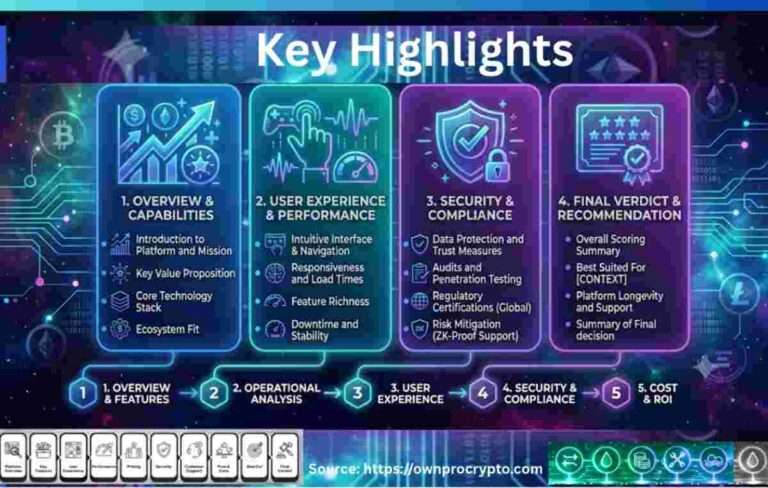
A missed airdrop does not necessarily mean the research is useless. Historical airdrop information can reveal which ecosystems have previously rewarded users, how projects structured campaigns, and what kinds of participation were associated with distributions.
When researching missed crypto airdrops, first determine whether the campaign is completed, whether claims remain open, whether there was a snapshot, and whether a secondary distribution or later campaign exists.
Never assume that an old campaign remains claimable. The only reliable way to determine current eligibility is to check the project’s current official instructions.
Historical data becomes useful when it changes the questions you ask. Instead of asking only “What is this token worth today?”, researchers can ask a broader set of questions.
Compare launch date, historical price information, current price, and project status to understand where an asset sits within its lifecycle.
ATH information can help reveal how dramatically market expectations changed. A large difference between historical highs and current prices does not automatically mean an asset is undervalued; it simply provides historical context.
When multiple projects operate in the same category or blockchain ecosystem, consistent historical fields make it easier to create a structured comparison rather than relying entirely on current hype.
A history scanner should be treated as a screening layer. Interesting results can then be investigated through project documentation, blockchain explorers, development repositories, exchange data, tokenomics, governance information, and security research.
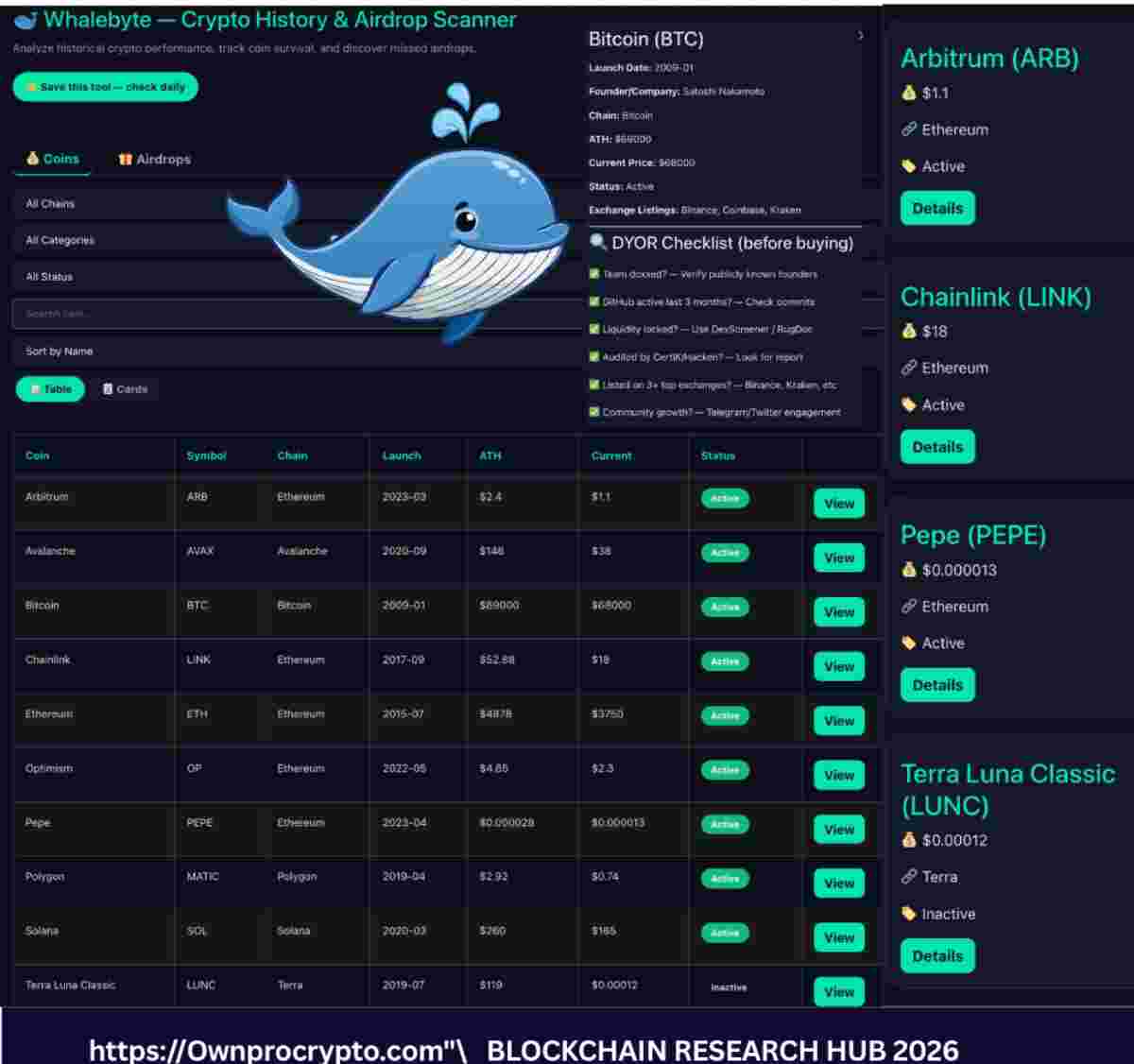
Access the interactive scanner and choose whether you want to research Coins or Airdrops.
In the Coins section, use the available filters to narrow the dataset. You can filter by blockchain, category, and project status, or search directly for a coin.
Use the available sorting controls to organize results by name or historical all-time high. Sorting is useful when screening a large list of assets.
Select the available details option for an individual coin. Review its launch date, founder or company information, blockchain, ATH, current price, status, and exchange listings where available.
Open the Airdrops section to review available campaign records.
Review the project, blockchain, estimated value, eligibility information, and status shown by the dataset.
Do not stop at the scanner. Use the project’s official website and official announcements to verify the campaign before connecting a wallet, signing a transaction, or providing information.
If a project is worth further research, record its official website, blockchain, campaign status, deadline, and relevant documentation. This creates a repeatable research process instead of relying on memory or social-media hype.
A strong research process should separate discovery, historical analysis, verification, security review, and final decision-making.
1. Discover → Find projects and airdrop opportunities.
2. Identify → Confirm the correct token, chain, and project.
3. Analyze history → Review launch information, ATH, current price, and status.
4. Research the opportunity → Review airdrop status, estimated value, and eligibility information.
5. Verify → Confirm details through official sources.
6. Security check → Inspect URLs, wallet requests, contracts, and permissions.
7. Decide → Determine whether further research or participation is appropriate.
8. Monitor → Recheck important information because crypto campaigns and project data can change.

Whalebyte should not be viewed as a replacement for every crypto data platform. Different services solve different research problems.
CoinMarketCap’s Airdrops provides a dedicated market-facing airdrop section with current, upcoming, and previous campaign information. It is useful when the primary objective is broad airdrop discovery across a large established market-data ecosystem.
CoinGecko’s airdrop research combines airdrop education with current and potential campaign coverage. Its research is particularly useful for understanding airdrop mechanics, historical distributions, and current market narratives.
Whalebyte has a different positioning: it combines a coin-history research interface with a dedicated airdrop dataset inside the same tool. That makes it particularly useful when a researcher wants to move from airdrop discovery → project identification → crypto history research without treating those as completely separate research tasks.
The best workflow is therefore not necessarily to choose one platform. Use each source for the information it is strongest at and cross-check important claims before making decisions.
Verification is one of the most important steps in crypto research because airdrop campaigns, token information, websites, and social accounts can change quickly.
Start from the project’s known official website rather than clicking an unfamiliar promotional link.
Look for an official announcement confirming the campaign, eligibility rules, timeline, and claim process.
If tokens are involved, compare the contract address against official project documentation. Never assume that a token with the correct name or ticker is authentic.
Read wallet prompts carefully. An airdrop should never require you to blindly approve an unknown transaction simply because a website claims you are eligible.
Be especially cautious with claims that require sending cryptocurrency to receive a reward. CoinMarketCap’s educational guidance also highlights phishing and dusting risks associated with airdrop activity.

| Feature | Description |
|---|---|
| Coin History Filter | Search by time range |
| Airdrop Scanner | Track past and current airdrops |
| Trust Score | Risk evaluation system |
| Growth Charts | Multi-year performance tracking |
| Survival Index | Market cycle survival ranking |
| Historical Comparison | Side-by-side coin analysis |
No scanner should be treated as a complete representation of the entire cryptocurrency market. Datasets can have coverage limitations, information can become outdated, and project status can change after a record is published.
Airdrop information has an additional problem: campaigns can change their rules, deadlines, eligibility criteria, reward structures, or claim procedures. A campaign listed as active in one source should therefore be verified against the project’s current official information.
Historical price information also has limitations. An all-time high is a historical observation, not a valuation target. Likewise, a project being marked active does not mean that it is financially healthy, secure, or suitable for investment.
What is Whalebyte Crypto History & Airdrop Scanner?
Whalebyte Crypto History & Airdrop Scanner is a crypto research tool that combines coin-history information with airdrop information. Users can research available coin records and review airdrop projects, blockchain networks, estimated values, eligibility information, and status.
What is a crypto history scanner?
A crypto history scanner helps users research historical information about cryptocurrency projects, including launch information, blockchain, historical highs, current prices, and project status.
What is a crypto airdrop scanner?
A crypto airdrop scanner organizes information about cryptocurrency airdrop campaigns so users can research projects, chains, estimated rewards, eligibility information, and campaign status.
What is a crypto airdrop tracker?
A crypto airdrop tracker helps users monitor and research airdrop campaigns, including active and historical opportunities where data is available.
How do I find upcoming crypto airdrops?
Research airdrop directories, project announcements, ecosystem resources, and dedicated trackers. Potential campaigns should always be distinguished from officially confirmed distributions.
How can I find missed crypto airdrops?
Review historical airdrop records and compare them with projects and ecosystems you previously used. A historical campaign may no longer be claimable, so check the official project for current claim status.
What benefit does crypto history provide?
Crypto history provides context around launch dates, historical highs, current prices, blockchain networks, project status, and other available project information. It can help researchers ask better questions before conducting deeper due diligence.
Does historical performance predict future crypto prices?
No. Historical performance is evidence of what happened in the past, not a guarantee of future performance.
Can I rely on an airdrop scanner alone?
No. A scanner is a discovery and research layer. Always verify important campaign information through official project sources before connecting a wallet or signing a transaction.
Are upcoming crypto airdrops guaranteed?
No. A potential or rumored airdrop is not the same as a confirmed token distribution. Project plans can change, and some anticipated campaigns may never occur.
Should I use more than one crypto research platform?
Yes. Different platforms have different datasets, coverage, research methodologies, and update schedules. Cross-checking important information can reduce the chance of relying on incomplete or outdated information.
What category does Whalebyte belong to?
Whalebyte belongs primarily to Analytics & Research because its main purpose is organizing and analyzing cryptocurrency history and airdrop information for research.
The most useful way to approach crypto airdrops and historical asset research is to avoid treating any single data point as a complete answer. Airdrop discovery tells you what may be available. Historical analysis tells you what happened previously. Official verification tells you whether the information is current. Security review helps determine whether interacting with a campaign is appropriate.
Whalebyte brings the first two layers together: crypto history research and airdrop discovery. Users can then move into deeper project, market, and security research using appropriate external sources and specialized tools.
The result is a more disciplined research process: discover → identify → analyze history → research the airdrop → verify → assess security → decide → monitor.
Ready to research? Use the Whalebyte Crypto History & Airdrop Scanner to begin exploring cryptocurrency history and available airdrop information.
Whalebyte is most useful when it is used as one layer of a broader research workflow. For security questions, use a dedicated security tool rather than turning historical data into a risk score.
For example, you can continue from historical research into the Crypto Security Checklist when you need to review wallet and self-custody practices.
For broader crypto research and multi-tool analysis, explore the Crypto Research Workspace as a separate research layer.
For security-specific research, the Crypto Security Hub provides a broader framework covering wallet security, threat intelligence, custody, and risk research.
These tools should complement Whalebyte rather than replace its core purpose. Whalebyte answers historical and airdrop research questions; security tools answer security questions.
For independent verification and deeper market research, readers can also consult established crypto data and educational resources. CoinMarketCap’s Airdrops directory provides current, upcoming, and previous campaign information, while CoinGecko’s crypto airdrop research provides educational and market context around current and potential campaigns.
For basic airdrop safety education, CoinMarketCap’s crypto airdrop guide explains common airdrop mechanisms and discusses phishing, dusting, and other risks that users should understand before participating.
| Feature | Description |
|---|---|
| Coin History Filter | Search by time range |
| Airdrop Scanner | Track past and current airdrops |
| Trust Score | Risk evaluation system |
| Growth Charts | Multi-year performance tracking |
| Survival Index | Market cycle survival ranking |
| Historical Comparison | Side-by-side coin analysis |
Share it with someone who may find it useful.
Research Discussion
Share your perspective, question, or additional insight.
Mindset changed what a great article