
Search by title, topic or phrase
Use our Crypto Search Engine 🔍 to find the topics and keywords you're looking for.
Searching for the best crypto strategy Guide & Tools to manage your long-term growth? Shift from reactive trading to institutional-grade allocation using our 2026 strategy frameworks designed for capital preservation and sovereign wealth.

Stop tracking prices; start analyzing your portfolio’s DNA.
This guide explains how professional investors approach crypto portfolio allocation, capital preservation, and multi-chain risk management using institutional-grade frameworks instead of reactive market behavior.
Table of Contents
ToggleLong-term crypto success is rarely about perfectly timing trades. It is usually the result of consistent decision-making, portfolio discipline, and controlled exposure to risk.
A modern crypto investment strategy should focus on:
The strongest crypto portfolios are built around sustainability, not hype cycles.
Many investors now rely on structured crypto investment decision tools and portfolio intelligence systems to evaluate:
This shift helps reduce emotional decision-making during unstable market cycles.
Without a defined strategy, most investors become reactive.
They buy during market excitement, panic during corrections, and constantly rotate between narratives without a clear framework.
A structured crypto strategy creates:
Professional investors focus less on predicting every market move and more on surviving long enough to benefit from long-term market expansion.
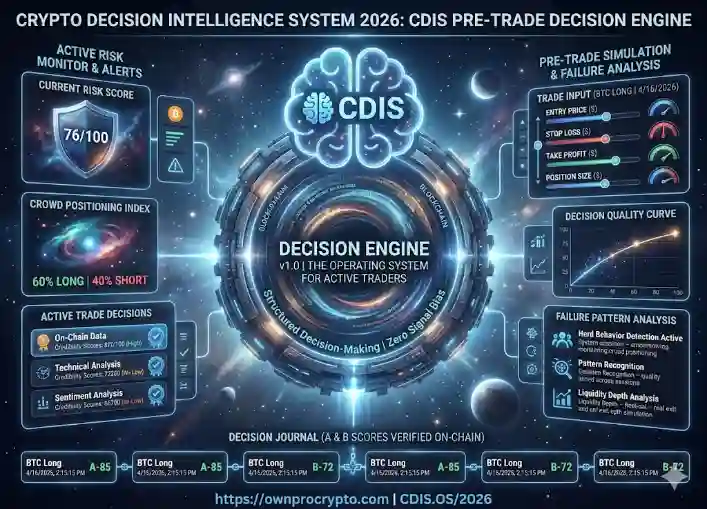

Modern crypto strategy frameworks go far beyond basic price charts.
In 2026, advanced investors combine:
These systems help investors evaluate whether a position aligns with broader portfolio goals before capital is deployed.
Instead of chasing short-term signals, strategic investors analyze:
The goal is not constant trading.
The goal is intelligent positioning.
| Problem | Strategic Approach | Long-Term Outcome |
|---|---|---|
| Emotional trading | Rule-based allocation framework | Reduced impulsive decisions |
| High volatility exposure | Risk-balanced portfolio model | Improved capital stability |
| Poor diversification | Structured asset allocation | Better long-term resilience |
| Weak security practices | Wallet security systems | Reduced asset exposure risk |
Over long market cycles, disciplined strategy frameworks typically outperform emotionally reactive trading behavior.

The most successful investors treat crypto as part of a broader financial strategy rather than a short-term gambling environment.
This includes:
Strong crypto strategies are built around sustainability, not constant activity.
Long-term wealth usually comes from consistency, patience, and intelligent risk management rather than aggressive speculation.
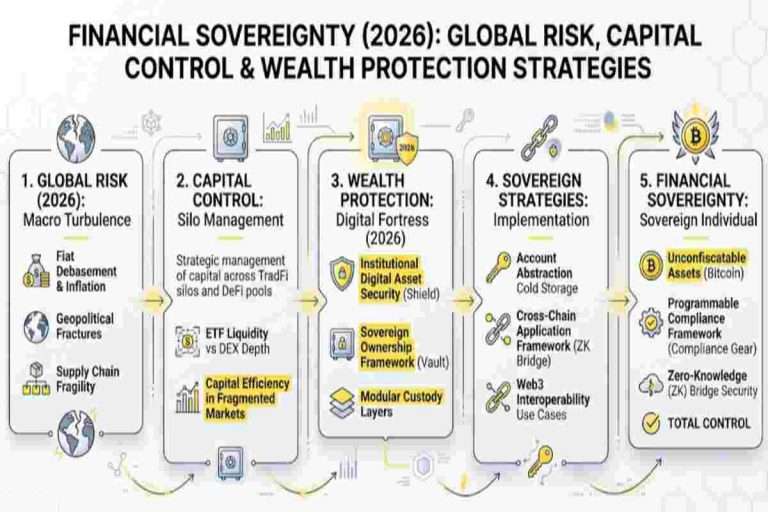
Modern crypto investing increasingly overlaps with broader financial planning principles.
Many investors now combine:
Understanding macroeconomic conditions and market cycles helps investors make more informed decisions during both expansion and contraction phases.
External financial planning resources such as Investopedia can also help beginners understand foundational investing concepts before applying them to digital assets.
The best crypto strategy in 2026 is not built around hype, prediction, or emotional trading.
It is built around:
Investors who focus on structure instead of constant market noise are often better positioned to survive volatility and benefit from long-term crypto adoption.
Building a strong crypto strategy requires more than market awareness—it demands structured financial planning, disciplined asset allocation, and consistent risk management. The best crypto security tools combine these elements into a unified system, helping investors move from reactive behavior to strategic execution.
Investment strategy and financial planning insights (Investopedia) provide foundational knowledge for long-term crypto and digital asset strategies.
The best crypto strategy tools include crypto investment strategy tools, allocation systems, and crypto tax planning tools that support long-term growth.
A crypto portfolio allocation strategy defines how assets are distributed to balance risk and returns across investments.
Crypto tax planning tools estimate liabilities and help optimize transactions to reduce tax impact.
Digital asset wealth management focuses on long-term growth, capital preservation, and strategic investment planning.