
Table of Contents
Toggle
The concept of Digital Ownership 2026 represents a fundamental shift toward digital ownership in Web3, where control over assets, identity, and value is no longer platform-dependent. Understanding Web3 ownership vs Web2 highlights this transition—in Web2, users rent access, while in Web3, ownership is enforced by code, making it verifiable, transferable, and independent of intermediaries. At the same time, clarity around self custody crypto meaning becomes essential, as true ownership is rooted in holding and managing your own assets securely.
As blockchain infrastructure matures, digital ownership now extends beyond simple token holding into real yield generation, interoperable assets, and governance participation. The result is a system where individuals don’t just hold assets—they control rights, cash flow, and decision-making power.
This hub is your complete framework for understanding how crypto asset ROI 2026, and ownership structures converge to define the next phase of Web3: a sovereign, productive, and fully composable digital economy.
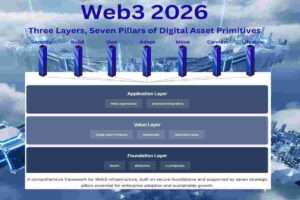
True ownership begins with control—not access. In 2026, holding private keys is only the starting point. Real ownership includes rights, transferability, and economic participation.
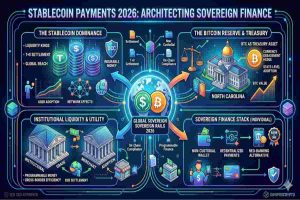
Ownership in 2026 is no longer passive—it is productive. Assets generate yield, interact across protocols, and contribute to overall portfolio performance.
Lorem ipsum dolor sit amet, consectetur adipiscing elit. Ut elit tellus, luctus nec ullamcorper mattis, pulvinar dapibus leo.

Ownership without security and usability is fragile. In 2026, assets must be secure, portable, and functional across ecosystems.
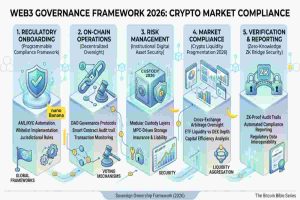
Digital ownership evolves into full sovereignty when identity, governance, and control are unified into a single system.
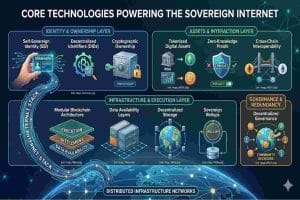
The biggest shift in Web3 is not technology—it is who controls value.
In 2026, the highest-performing portfolios are not the most speculative—they are the most structured, secure, and ownership-driven.
To fully leverage Digital Ownership 2026, you must combine:
Together, these form the foundation of a sovereign digital ownership system
Official Frameworks & Verified Sources
European crypto regulatory standards under MiCA. EU Markets in Crypto-Assets (MiCA) Regulation
What is digital ownership 2026?
Digital ownership in 2026 refers to controlling digital assets, identity, and value directly on blockchain networks without relying on centralized platforms. Ownership is verified on-chain and enforced through cryptographic systems.
Deep dive: https://ownprocrypto.com/digital-ownership/
How is Web3 ownership different from Web2?
Web2 provides access controlled by platforms, while Web3 enables true ownership where users control assets, identity, and permissions without intermediaries.
What does true digital ownership include?
True ownership includes:
Why is self-custody important for digital ownership?
Self-custody ensures users control their private keys, eliminating reliance on exchanges and protecting assets from freezes or failures.
Learn security setup: https://ownprocrypto.com/asset-security-2026/
What is crypto asset ROI in 2026?
Crypto asset ROI measures total performance, including price appreciation, yield generation, and capital efficiency across DeFi and tokenized assets.
Analyze ROI: https://ownprocrypto.com/crypto-profit-analysis-tool/
What is real yield in crypto?
Real yield refers to income generated from actual economic activity, such as protocol fees, lending, or tokenized assets.
Full guide: https://ownprocrypto.com/real-yield-vs-token-incentives/
How do you maximize crypto ROI in Web3?
Maximizing ROI involves:
Are all crypto assets productive in 2026?
No. Many assets remain speculative. High-performance portfolios focus on assets that generate real yield and have strong utility.
How do smart contracts enable digital ownership?
Smart contracts automate ownership rules, transfers, and income distribution, ensuring assets operate without intermediaries.
Technical breakdown: https://ownprocrypto.com/blockchain-primitives/
What is asset composability in Web3?
Asset composability allows digital assets to interact across multiple protocols, increasing their utility and enabling advanced financial strategies.
Why is interoperability important for ownership?
Interoperability ensures assets can move across chains and platforms, increasing usability and long-term value.
Explore: https://ownprocrypto.com/blockchain-interoperability-2026/
What is self-sovereign identity (SSI)?
SSI allows users to control their identity data without centralized authorities using blockchain-based verification.
Learn more: https://ownprocrypto.com/zk-identity-architecture/
How does governance relate to ownership?
Ownership in Web3 includes governance rights, allowing users to vote and influence protocol decisions.
Framework: https://ownprocrypto.com/web3-governance-framework-2026/
What are DAOs in digital ownership?
DAOs enable collective ownership where token holders participate in governance and value distribution.
What are the risks of digital ownership?
Key risks include:
Risk framework: https://ownprocrypto.com/digital-asset-risk-management-framework/
Is digital ownership secure in 2026?
Yes, if implemented using self-custody, multi-signature wallets, and secure infrastructure.
Security blueprint: https://ownprocrypto.com/asset-security-2026/
What is the future of digital ownership beyond 2026?
Digital ownership will evolve into AI-driven systems where autonomous agents manage assets, identity, and transactions.
Future systems: https://ownprocrypto.com/ai-agents-in-web3/
Welcome to OwnProCrypto (Own & Pro Crypto) — a next-generation Bitcoin and blockchain education platform where the science of finance meets the power of AI-driven automation.
Our mission is simple: to equip you with the knowledge, frameworks, and tools needed to make smarter financial and business decisions in the Web3 economy.
Beyond analysis, OwnProCrypto focuses on transparency, verifiable data, and practical frameworks that investors and builders can actually use. Our goal is not hype — but clear thinking, disciplined analysis, and long-term value creation in the decentralized economy.
Our Background: Salim (Sam) is the founder and lead researcher behind OwnProCrypto, a Web3 intelligence platform focused on crypto security, digital ownership, stablecoin systems, interoperability, and institutional blockchain infrastructure.
Crypto Tools & Analysis:
Crypto Fundamental Analysis Tool | Protocol Evaluation System | DeFi Risk Analysis Tools | Crypto Portfolio Dashboard | Token Risk vs Reward Tool
Guides:
Crypto Fundamental Analysis | Blockchain Project Evaluation | Tokenomics Analysis | DeFi Protocol Analysis | Capital Efficiency
© 2026 OwnProCrypto — Built for smarter crypto decisions