
Detailed infographic of Crypto in Pakistan Guide showing diverse people welcoming beginners to Bitcoin and digital assets against the Pakistani flag.
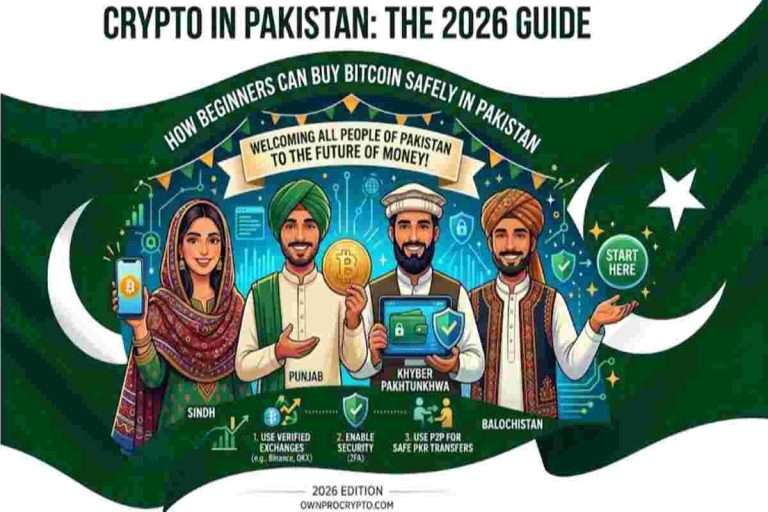
Table of Contents
Toggle“Dollar-cost averaging into top assets reduces execution slippage and MEV sandwich risk.”
Crypto in Pakistan is often misunderstood, but in a small village near Sargodha in Punjab, a 70-year-old farmer made a decision that surprised everyone. In 2020, he sold a small piece of his land and bought something many villagers had never heard about Bitcoin. People laughed at him. Some said he was wasting his money on “internet coins.” But he stayed quiet and simply waited.
Five years later, the value of that Bitcoin grew many times. Today, that same investment could buy almost 20 times more land than what he originally sold. The land stayed the same, but the digital coin kept growing while he was doing nothing.
Now think about another reality of the modern world.
In times of crisis or war, people often have to leave their homes quickly. History shows many examples where families escaped their countries but could not take their land, property, or even gold with them. In some situations, banks freeze accounts and cash becomes difficult to access.
But digital assets are different. A person can carry their digital wallet anywhere in the world with just a password or recovery phrase and this is one of the reasons why Crypto in Pakistan is becoming a topic of huge interest today. Students, freelancers, shopkeepers, and even housewives are now curious about how digital currency works and how it may help secure their financial future.
Your family’s future is in your hands. The question is simple: Are you ready to understand the future of money, or will you ignore it like many people once ignored the internet?
In this beginner-friendly guide, you will learn in very simple language how cryptocurrency works in Pakistan, how people buy Bitcoin safely, and how you can start step-by-step even if you are completely new to technology. Pakistan’s shift toward the Virtual Assets Bill 2026 aligns with the sovereignty principles in our Legacy & Sovereignty (2026) guide. Stay updated on PVARA regulations via Eurasia Review.
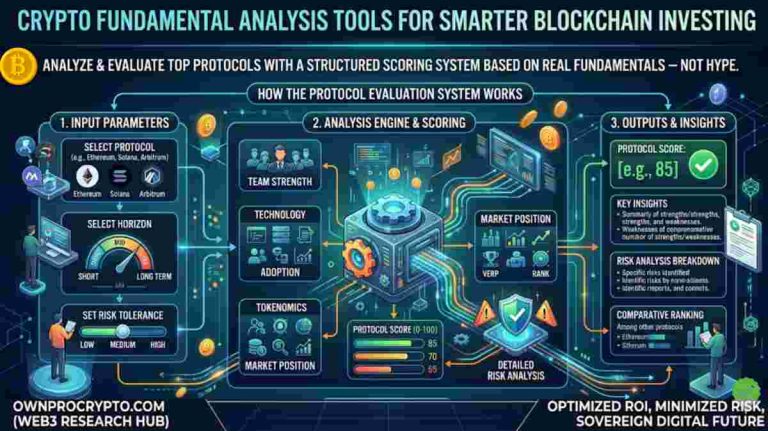
Many beginners in Pakistan are now asking simple but important questions. Is crypto legal in Pakistan? What is the best crypto exchange in Pakistan for beginners? And most importantly, how to buy Bitcoin in Pakistan safely without losing money. Some people also want to know how to convert PKR to USDT in Pakistan using secure platforms, while others are concerned about crypto tax rules in Pakistan before they start investing. In this guide, we will answer all these questions step-by-step in very simple language.
Cryptocurrency is not banned, but it is regulated under a developing legal framework.
The market oversight is expected to involve the Pakistan Virtual Assets Regulatory Authority.
Important points:
This means Pakistanis can buy, hold, and trade crypto, but must comply with financial regulations and tax laws.

These exchanges offer strong liquidity and global credibility.
Best overall platform for Pakistani traders.
Key features:
Most Pakistani users purchase USDT first, then convert it into other cryptocurrencies.
A popular exchange with advanced trading features.
Highlights:
Another international exchange used by some Pakistani traders.
Benefits:
Peer-to-Peer trading is a system where users trade directly with each other.
Example process:
This system protects both buyer and seller.

Follow these steps.
Register on an exchange like Binance.
Complete identity verification using your CNIC.
Activate security features such as:
Deep Dive: For a full technical breakdown on securing your private keys and avoiding phishing scams, read my Sovereign Security & Custody Pillar.
Most Pakistanis use Peer-to-Peer trading to convert PKR into Tether.
After receiving USDT, you can trade it for:
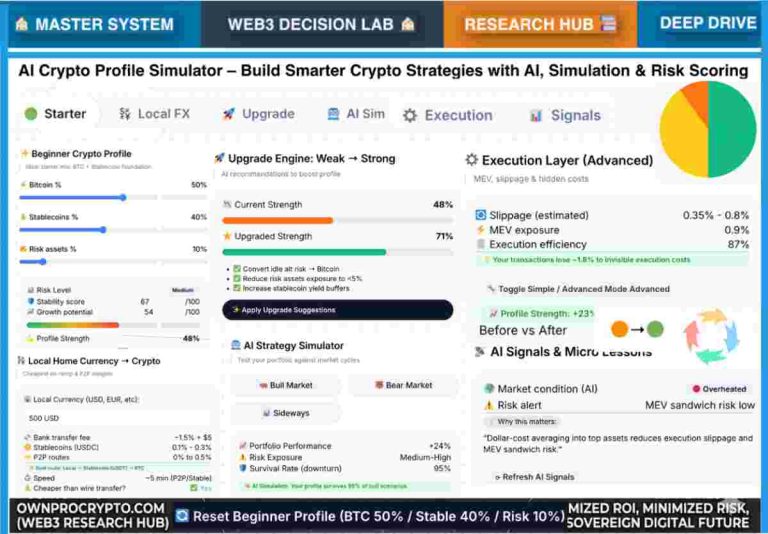
The heart of the system is the crypto portfolio simulation tool dashboard, where all user decisions are visualized and tested.
Unlike traditional portfolio trackers, this dashboard does not only display current holdings. It actively simulates behavior.
Key components include:
A real-time pie chart shows how assets are distributed across Bitcoin, stablecoins, and risk assets. Color-coded indicators make interpretation intuitive.
Each portfolio is assigned a crypto risk profile scoring value between 10% and 100%. This score reflects:
Two opposing forces are constantly balanced:
Users can see how changes impact both metrics instantly.
This creates a feedback loop where learning happens through interaction rather than theory.

Storing crypto on an exchange is convenient but not always the safest option.
Using a self-custody wallet gives you full control.
Popular beginner wallets:
Advantages:
Hardware wallets store crypto offline.
Best options:
These devices are ideal for storing large amounts of cryptocurrency.
Deep Dive: Choosing between hot and cold storage? See the 2026 Hardware Wallet Comparison Guide on the main site.

Crypto taxation policies are evolving.
The tax authority responsible is the
Federal Board of Revenue.
Possible tax categories include:
Users should declare crypto assets when filing annual taxes.
By 2026, approximately 28.9 million Pakistanis are expected to hold or use cryptocurrency, including Bitcoin, Ethereum, and Tether. This growth is supported by mobile trading apps and P2P platforms such as Binance.
Pakistanis collectively hold an estimated $25 billion in digital assets, largely in Bitcoin, Ethereum, and Tether. These assets are increasingly stored in self-custody wallets like Trust Wallet, MetaMask, or hardware wallets such as Ledger and Trezor.
With around 100 million adults unbanked, digital assets provide an alternative method to participate in financial systems. Government entities like the Federal Board of Revenue and the Pakistan Virtual Assets Regulatory Authority oversee trading, taxation, and compliance to ensure transparency.
Pakistan has allocated roughly 2,000 MW of electricity for regulated crypto mining and AI data centers. Licensed operators using this energy must comply with PVARA regulations and report operations to government authorities.
In 2025, cryptocurrencies facilitated $10.5 billion in cross-border transfers. Users typically convert PKR to crypto via Binance P2P, then use Bitcoin, Ethereum, or Tether for international remittances, with funds safely stored in self-custody wallets.
Deep Dive: For a full technical breakdown on securing your private keys and avoiding phishing scams, read my Sovereign Security & Custody Pillar.
Pakistan is exploring a new approach to digital finance by experimenting with a Trump-backed stablecoin called USD1 for cross-border payments and remittances worth billions. While this initiative could improve access to international transactions, it comes with significant challenges: low financial literacy, a large unbanked population, limited crypto regulations, and a substantial shadow economy. Experts caution that without proper safeguards, such large-scale experiments could amplify financial risks.
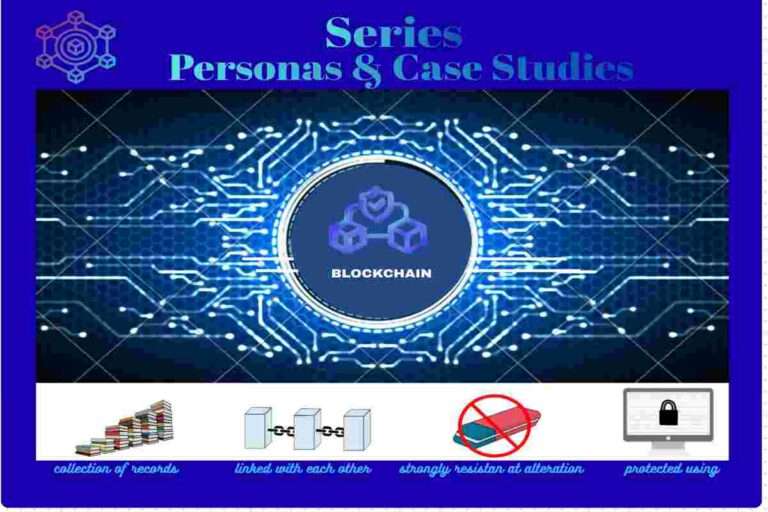
In 2026, several key personas are driving cryptocurrency adoption in Pakistan, especially in rural areas, each using digital assets like Bitcoin, Ethereum, Tether, and platforms like Binance to solve specific financial challenges.
Small shopkeepers in villages use USDT to maintain the value of their earnings. With banks far away and local cash unreliable, they convert PKR to USDT via Binance P2P, storing it safely in Trust Wallet until needed.
Farmers or small exporters selling crops abroad sometimes receive payment in Bitcoin or Ethereum to bypass delays in traditional banking. They use MetaMask or Ledger to store crypto securely before converting to PKR for local expenses.
Many families in rural Pakistan rely on relatives working overseas. Sending funds via traditional channels can be slow and costly. Using USDT through Binance P2P allows money to arrive in minutes directly to self-custody wallets like Trust Wallet or MetaMask, avoiding bank fees.
Housewives or small savers in villages sometimes invest small amounts in Bitcoin or Tether to preserve savings. Even with as little as 15,000 PKR, they can gradually build assets in secure wallets like Ledger or Trezor.

How much money do you need to start crypto in Pakistan?
You can start investing in crypto in Pakistan with a small amount of money. Most exchanges allow users to buy fractions of cryptocurrency, so you do not need to purchase a full coin like Bitcoin.
Many beginners start with around 15,000 PKR and gradually increase their investment as they learn more about the market.
How can beginners start with crypto in Pakistan?
Beginners can start by creating an account on a trusted crypto exchange such as Binance.
The basic steps include:
This process allows Pakistani users to safely buy digital assets using PKR.
What is the easiest cryptocurrency for beginners in Pakistan?
For beginners, stablecoins like Tether are usually the easiest option because their value is linked to the US dollar.
Many traders in Pakistan first buy USDT and later exchange it for cryptocurrencies such as:
Can housewives and beginners invest in crypto in Pakistan?
Yes. Anyone with a smartphone and internet access can learn about crypto in Pakistan.
Students, freelancers, shopkeepers, and even housewives are now exploring cryptocurrency as a way to understand digital finance and new investment opportunities.
How do Pakistanis convert PKR to crypto?
Most Pakistani traders convert PKR to crypto using peer-to-peer (P2P) trading on exchanges like Binance.
In this system:
Can you withdraw crypto to a Pakistani bank account?
Direct withdrawals from crypto exchanges to local banks are usually limited.
Most traders first convert their cryptocurrency into PKR using P2P marketplaces, where buyers send money directly to the seller’s bank account.
Can I start buying Bitcoin with as little as 5,000 PKR?
Yes, most exchanges allow small fractional purchases of Bitcoin (Sats) through P2P markets.
Do I need a high-end Computer crypto in Pakistan?
No, 90% of adoption in Pakistan is mobile-first. A basic smartphone is all you need for Binance or OKX.
Can freelancers receive payments in crypto in Pakistan?
Yes. Many freelancers prefer receiving payments in cryptocurrency because it is often faster and cheaper than traditional international transfers.
Bank transfers may charge 5–10% fees, while crypto transactions often cost less than 1% and settle much faster.
Is buying Bitcoin safe in Pakistan?
Buying Bitcoin in Pakistan can be safe if you use reputable exchanges and trade with verified P2P merchants.
Always enable:
These steps greatly improve account security.
Can banks freeze accounts for crypto transactions in Pakistan?
Some banks may flag transactions related to cryptocurrency because financial institutions follow regulatory guidance.
To reduce risks, many users trade through P2P platforms and only deal with verified merchants.
Do Pakistanis need to pay tax on cryptocurrency?
Cryptocurrency taxation policies are still evolving.
The tax authority, Federal Board of Revenue, may require individuals to declare profits from crypto trading when filing annual income tax returns.
Is crypto halal or haram in Pakistan?
This is a widely discussed topic in Muslim countries.
Some scholars consider holding cryptocurrencies like Bitcoin or Ethereum permissible when used for legitimate and transparent transactions. However, highly speculative activities such as gambling-style trading or excessive leverage are often discouraged.
Is crypto a good long-term investment in Pakistan?
Many investors view cryptocurrency as a digital asset similar to gold.
While assets like Bitcoin have shown strong long-term growth, crypto markets are volatile. Beginners should invest carefully and think long-term rather than expecting quick profits.
How many people use cryptocurrency in Pakistan?
Pakistan has one of the fastest-growing crypto communities in the world.
Industry estimates suggest 18–27 million Pakistanis may own or use cryptocurrency, showing strong interest in digital finance.
What are the biggest risks of crypto in Pakistan?
Some important risks include:
Beginners should always research carefully before investing.
Can you mine Bitcoin in Pakistan?
Yes, cryptocurrency mining is technically possible in Pakistan, but large-scale operations require proper infrastructure and electricity resources.
There have been discussions about using surplus energy for mining operations and blockchain technology development.
Is my money safe if the exchange gets blocked?
Exchanges like Binance are global, but the safest practice is moving your assets to a non-custodial wallet you control.
Case Study Failure: The Thatta-Sindh remittance family left their funds on an exchange during a network outage; the failure was not having a private software wallet for emergencies.
Cryptocurrency in Pakistan is no longer just a topic for tech experts or city investors. Even in villages, farmers, shopkeepers, housewives, and students are finding ways to use Bitcoin, Ethereum, and Tether safely. The key lessons to remember are:
The most important thing is to start carefully, keep your money safe, and learn as you go. Even if you have never used a computer or smartphone before, following these simple steps can help you take control of your financial future with confidence.
Official Regulatory Context: For the latest official circulars and frameworks regarding digital assets and electronic money institutions, refer to the State Bank of Pakistan (SBP) Official Website.
Welcome to OwnProCrypto (Own & Pro Crypto) — a next-generation Bitcoin and blockchain education platform where the science of finance meets the power of AI-driven automation.
Our mission is simple: to equip you with the knowledge, frameworks, and tools needed to make smarter financial and business decisions in the Web3 economy.
Beyond analysis, OwnProCrypto focuses on transparency, verifiable data, and practical frameworks that investors and builders can actually use. Our goal is not hype — but clear thinking, disciplined analysis, and long-term value creation in the decentralized economy.
Our Background: Salim (Sam) is the founder and lead researcher behind OwnProCrypto, a Web3 intelligence platform focused on crypto security, digital ownership, stablecoin systems, interoperability, and institutional blockchain infrastructure.
Crypto Tools & Analysis:
Crypto Fundamental Analysis Tool | Protocol Evaluation System | DeFi Risk Analysis Tools | Crypto Portfolio Dashboard | Token Risk vs Reward Tool
Guides:
Crypto Fundamental Analysis | Blockchain Project Evaluation | Tokenomics Analysis | DeFi Protocol Analysis | Capital Efficiency
© 2026 OwnProCrypto — Built for smarter crypto decisions