
Table of Contents
ToggleThe transition from traditional corporate structures to a decentralized work economy represents one of the most significant strategic shifts enterprises face in 2026. While blockchain promises efficiency, transparency, and automation, many organizations still struggle during implementation. In practice, enterprise adoption often fails not because the technology is immature, but because businesses repeat the same strategic errors outlined in this guide—from deploying blockchain without a valid business use case to choosing the wrong blockchain architecture for their operational needs.
Governance failures also play a major role. Many companies begin development before establishing decision frameworks, only realizing too late that ignoring governance until it’s too late can paralyze upgrades, treasury management, and stakeholder alignment. Similarly, poorly structured incentives can undermine entire ecosystems when organizations launch projects with poor tokenomics and incentive design, creating unsustainable participation models that collapse once initial rewards disappear.
Security and regulatory issues compound these challenges. Enterprises frequently underestimate smart contract and security risks, treating audits and monitoring as optional rather than foundational. Others delay regulatory planning, effectively treating compliance as an afterthought, which can lead to expensive redesigns or halted deployments when legal requirements catch up with production systems. Even when technology functions correctly, projects can still fail when leadership launches initiatives with no clear ROI or success metrics, making it impossible to measure whether blockchain delivers real operational value.
The good news is that these failures are predictable—and therefore avoidable. Organizations that understand the real cost of blockchain mistakes can adopt a more disciplined approach built around a structured enterprise blockchain implementation framework, combining governance, security, compliance, and modular architecture from the start. This guide breaks down the most common enterprise blockchain mistakes, explains their real-world consequences, and provides practical solutions aligned with how blockchain systems are designed, governed, and scaled today.
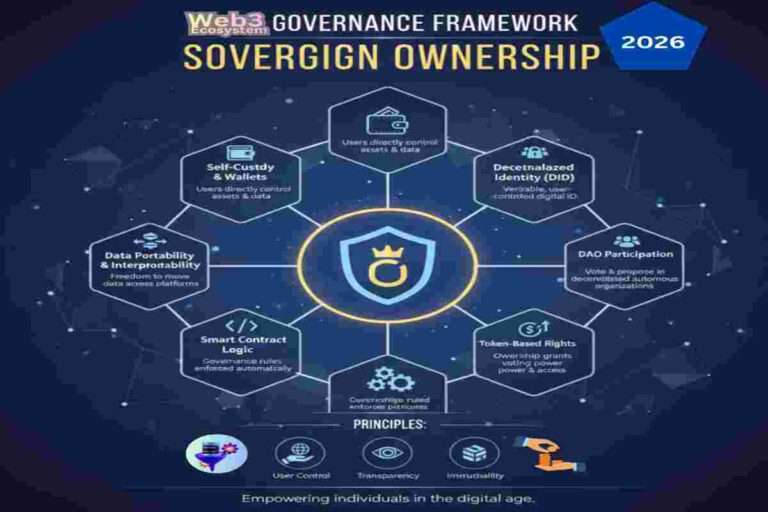
Avoiding these common pitfalls is the first step toward implementing the robust systems we outline in our Web3 Governance Framework: Sovereign Ownership (2026). For more on enterprise adoption hurdles, see the latest Gartner Blockchain Report.
| Blockchain Mistake | Business Impact | 2026 Institutional Fix |
|---|---|---|
| No Valid Business Use Case | Expensive pilot projects with no real value; “solution looking for a problem.” | Use the DSARAE Framework to validate necessity before launching a blockchain initiative. |
| Wrong Blockchain Architecture | Poor scalability, high latency, and infrastructure bottlenecks. | Implement Modular Blockchain Layers (L0–L3) tailored to specific enterprise tasks. |
| Ignoring Governance Early | “Governance Lock” prevents protocol upgrades and strategic pivots. | Deploy on-chain governance systems with multi-sig control and timelock safeguards. |
| Poor Tokenomics Design | Token inflation and mercenary capital flight. | Adopt Real Yield models backed by actual protocol revenue. |
| Underestimating Security | Smart contract exploits and loss of institutional trust. | Enforce recursive security audits and modern account abstraction (AA). |
| Compliance as an Afterthought | Regulatory bottlenecks or potential legal shutdowns. | Integrate on-chain compliance-by-design with RWA verification layers. |
| No Clear ROI Metrics | Stakeholder skepticism and “blockchain fatigue.” | Track measurable KPIs through enterprise blockchain dashboards. |
Avoiding the top blockchain mistakes businesses make is the primary differentiator between institutional success and costly abandonment in 2026. Most enterprise blockchain mistakes do not stem from the underlying code but from a fundamental mismatch between technology and business objectives. These blockchain adoption mistakes typically occur when organizations prioritize hype over utility, leading to a lack of “Network Effect” or failed interoperability. Furthermore, critical blockchain implementation mistakes—such as ignoring on-chain governance or failing to automate compliance—often create “Digital Islands” that cannot scale. Understanding why enterprise blockchain projects fail is essential for any C-suite executive looking to achieve Capital Efficiency and long-term Digital Survivability in a decentralized economy.
Most organizations approach blockchain from the wrong direction:
Blockchain amplifies bad decisions. When poor assumptions are embedded into immutable systems, fixing them later becomes expensive—or impossible.
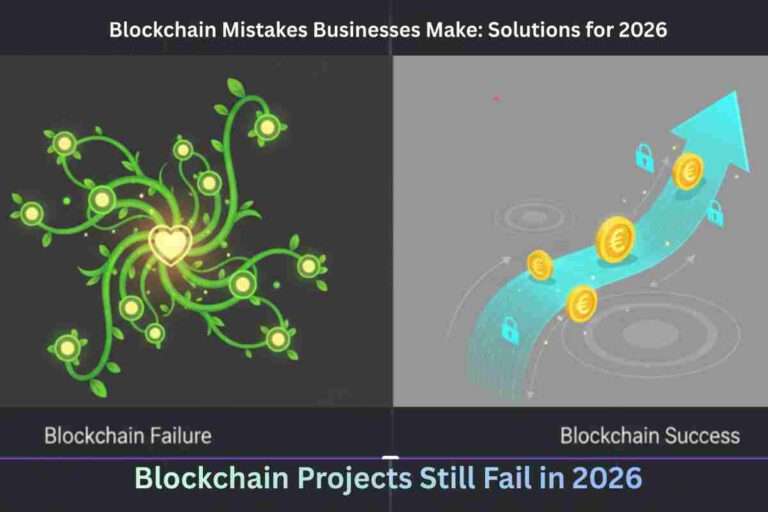
The Problem #1 :
Many teams adopt blockchain because it is popular, not because it solves a real coordination or trust problem.
Warning signs include:
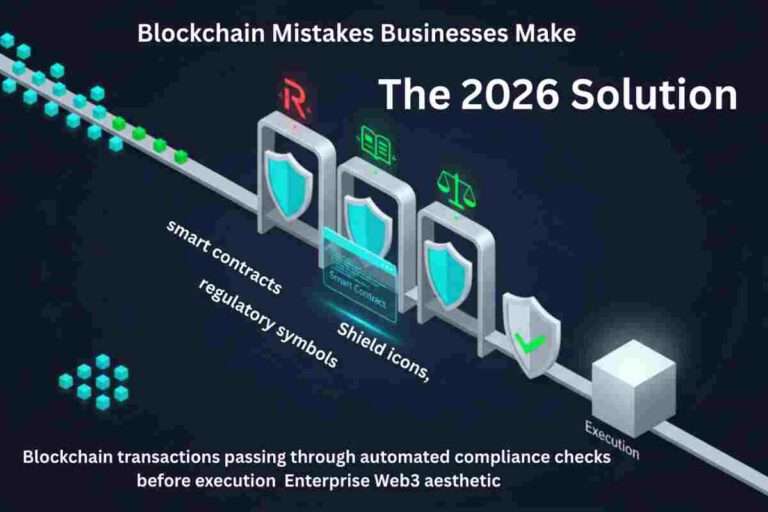
The 2026 Solution
Before choosing blockchain, validate whether your business truly needs:
If these elements are not essential, blockchain adds cost without adding value.
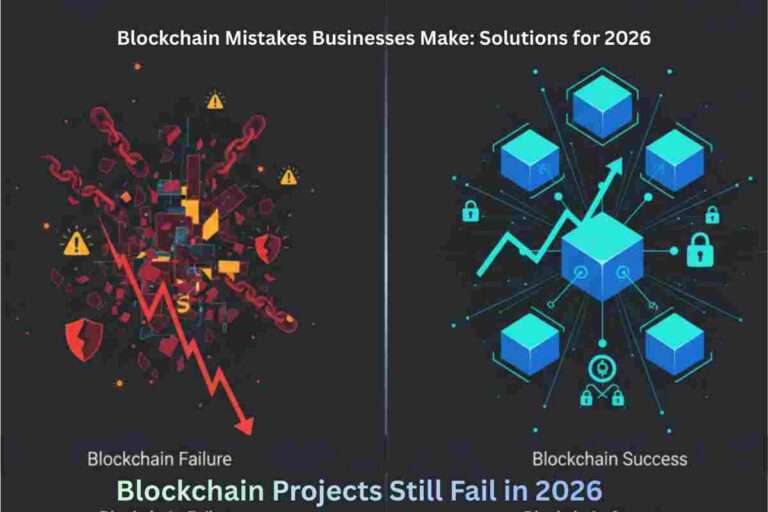
The Problem #2 :
Early architectural decisions often lock businesses into chains that fail to meet long-term operational, cost, or compliance requirements.
Common errors include:
The 2026 Solution
Architecture must match business constraints, not narratives.
Blockchain Architecture Comparison
| Factor | Public Blockchain | Private Blockchain | Hybrid Model |
|---|---|---|---|
| Transparency | High | Low | Selective |
| Scalability | Moderate | High | High |
| Compliance | Complex | Easier | Flexible |
| Cost Predictability | Low | High | Medium |
| Best Use Case | Open ecosystems | Internal enterprise | Regulated innovation |
Hybrid and modular architectures dominate enterprise blockchain implementations in 2026.
The Problem #3 :
Many blockchain projects launch without clearly defining who decides what.
This leads to:
Governance must be designed before launch, not after conflict.
The 2026 Solution
Modern blockchain governance frameworks include:

The Problem #4 :
Weak token economics can destroy otherwise solid blockchain products.
Common symptoms include:
The 2026 Solution
Effective tokenomics align incentives across all stakeholders:
If incentives do not reinforce desired behavior, the system will fail regardless of technology.
The Problem #5 :
Smart contracts are immutable—bugs are permanent.
Frequent oversights include:
The 2026 Solution
Security is not optional infrastructure.
Enterprise-grade blockchain security includes:
The Problem #6 :
Regulatory risk shuts down more blockchain projects than technology ever will.
Commonly ignored areas include:
The 2026 Solution
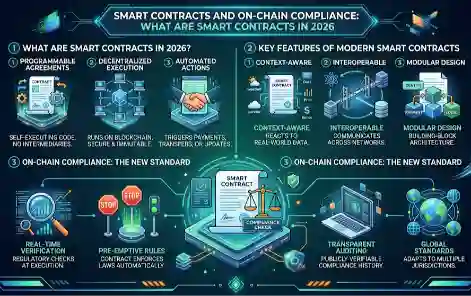
Compliance must be embedded into blockchain architecture, not added later.
Successful 2026 systems:
With frameworks such as MiCA and U.S. digital asset legislation now active, compliance-by-design is mandatory.

The Problem #7 :
If success is not measurable, failure is inevitable.
Many teams cannot clearly answer:
The 2026 Solution
Define blockchain KPIs tied directly to business outcomes.
Blockchain KPI Framework
| Metric | What It Measures |
|---|---|
| Adoption Rate | Real user value |
| Cost Reduction | Operational efficiency |
| Transaction Throughput | Scalability |
| Governance Participation | System health |
| Treasury Runway | Financial sustainability |
Business Impact Overview: Blockchain Mistakes Businesses Make
| Loss Category | Business Impact |
|---|---|
| Capital | Burned development budget |
| Time | Delayed market entry |
| Trust | Investor and user confidence loss |
| Reputation | Long-term brand damage |
| Opportunity | Missed innovation cycles |
When Blockchain Mistakes Businesses Make, Blockchain failures are rarely visible—but they are always expensive.
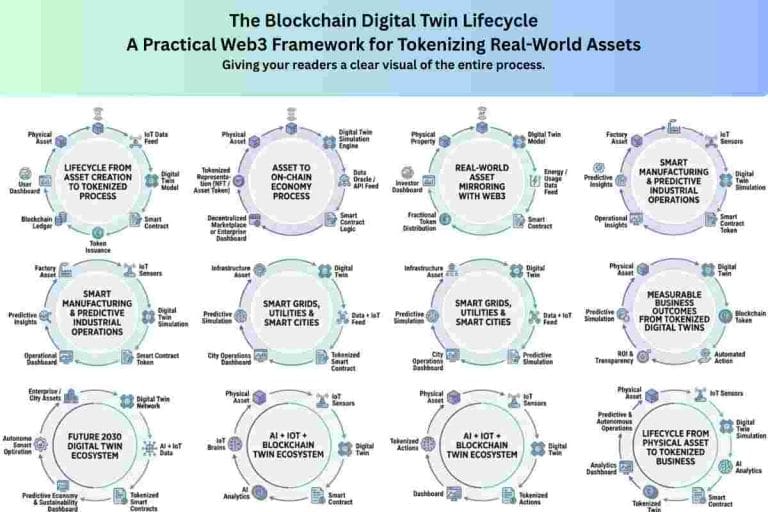
From an expert perspective, the most successful blockchain implementations in 2026 share one trait: they are designed as business systems first and decentralized systems second. Enterprises that win treat blockchain as a regulated financial rail—integrated with governance, compliance, security, and measurable ROI from day one—rather than as a standalone technology experiment. The strongest results come from modular architectures, incentive-aligned tokenomics, and compliance-by-design frameworks that scale with regulation instead of breaking under it. In short, blockchain success in 2026 is not about choosing the “right chain,” but about making disciplined architectural, governance, and financial decisions that compound over time.
Blockchain rewards discipline, clarity, and execution.
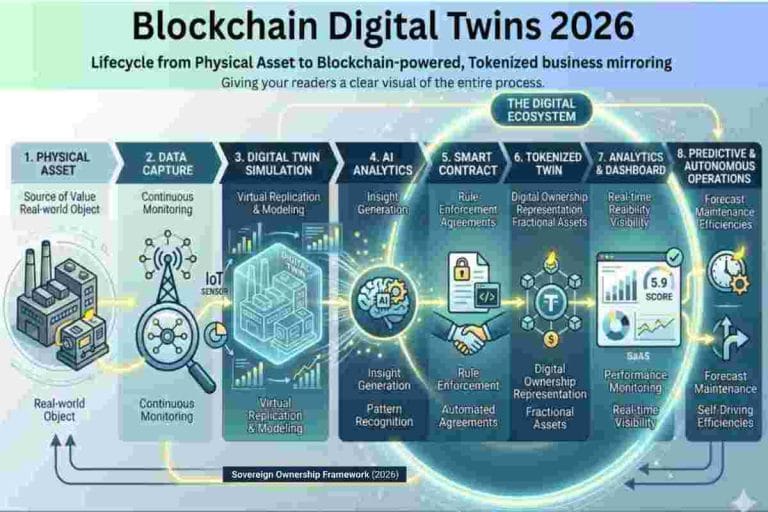
Navigating this landscape requires a strategic shift from monolithic designs to Modular Blockchains and Hybrid Models that prioritize both data privacy and institutional interoperability. Organizations must now balance the transparency of decentralized ledgers with the strict requirements of On-Chain Compliance and Capital Efficiency. By focusing on solving specific trust gaps—such as multi-party coordination in supply chains or high-speed settlement in financial services—enterprises can move from proof-of-concept to a production-ready environment that ensures long-term Digital Survivability.
Many of the top blockchain mistakes businesses make stem from remaining in perpetual pilot mode. In 2026, leading enterprises move quickly to full production by leveraging institutional liquidity, compliant DeFi structures, and tokenized real-world assets. This shift transforms blockchain from an experiment into a revenue-generating financial rail.
Modern enterprise blockchain systems typically follow a modular architecture model that separates infrastructure layers for flexibility, scalability, and governance.
Below is a simplified architecture structure used in many enterprise Web3 deployments.
This layered approach enables enterprises to:
As blockchain adoption grows in enterprise environments, modular architectures are becoming the standard approach for scalable Web3 infrastructure.
Legacy corporate governance models are often too slow for decentralized systems. Attempts to manually control validators and permissions frequently result in governance paralysis. Successful organizations adopt DAO-lite frameworks, where smart contracts automate routine decisions while executives focus on strategy, capital allocation, and tax optimization.
A critical mistake is treating compliance as an afterthought. With global regulatory frameworks now enforced, enterprises must implement compliance-by-design using tools such as zero-knowledge proofs (ZKPs) to verify identity and eligibility without exposing sensitive data. This approach enables secure Web3 identity while meeting regulatory obligations.
Before launching a blockchain initiative, enterprises should validate their strategy using a structured implementation checklist. This framework helps organizations avoid common adoption failures and ensure that blockchain technology aligns with real business objectives.
✔ Define a clear business problem that blockchain solves
✔ Identify measurable ROI or operational efficiency gains
✔ Evaluate whether a centralized database would work better
✔ Select the correct blockchain architecture (public, private, hybrid)
✔ Design modular blockchain layers (L0–L3) for scalability
✔ Integrate blockchain with existing enterprise systems and APIs
✔ Establish on-chain governance policies
✔ Define stakeholder roles for protocol upgrades and voting
✔ Implement multi-signature wallets and timelocks
✔ Conduct smart contract security audits
✔ Apply continuous monitoring and threat detection tools
✔ Prepare incident response plans for smart contract vulnerabilities
✔ Integrate compliance frameworks from the start
✔ Evaluate jurisdictional regulations and digital asset laws
✔ Design on-chain identity and KYC mechanisms
✔ Track transaction throughput and latency
✔ Measure operational efficiency improvements
✔ Monitor financial ROI and adoption metrics

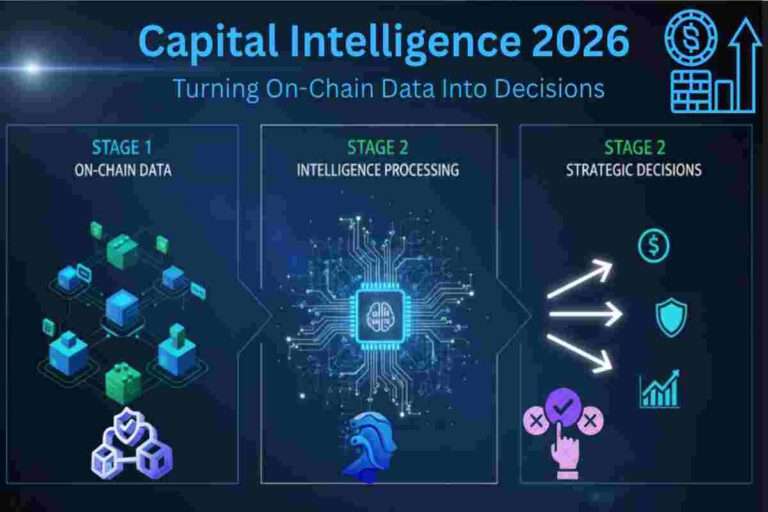
As blockchain adoption moves beyond experimentation, businesses will need clear performance indicators to evaluate real value creation. By 2026, a practical blockchain KPI dashboard should go beyond token prices and focus on business fundamentals such as transaction efficiency, protocol usage, governance participation, security incidents, and cost savings achieved through decentralization. For DeFi and Web3 products, metrics like active wallet growth, liquidity stability, smart contract reliability, and user retention will become critical indicators of sustainability. Organizations that define and monitor these KPIs early will be better positioned to justify investments, manage risks, and align blockchain initiatives with long-term business objectives.
In 2026, enterprise blockchain failure is rarely about the technology itself; it is about the Strategy & Adoption gap. Companies often fall into the trap of “Legacy Thinking” while using “Future Tech.” These case studies highlight the three most common pitfalls: Governance Rigidity, Siloed Architecture, and Compliance Lag, and provide the solutions required for 2026 success.
Answer by Experts
The following FAQs of Blockchain Mistakes Businesses Make are not theoretical or auto-generated—they come directly from questions repeatedly asked by readers, commenters, and private messages across our Web3 community. These are the same concerns surfaced in Google’s “People Also Ask” results and reflect the real security anxieties facing users in 2026. Each answer is written from first-hand research, on-chain analysis, and years of institutional blockchain experience, then published here to provide clear, trusted guidance. This section exists to eliminate confusion, reduce costly mistakes, and ensure every reader can make informed, confident decisions about protecting their digital assets.
Q: Is blockchain still relevant for businesses in 2026?
Yes. In 2026, blockchain has moved beyond experimentation and is now used as core financial and operational infrastructure, particularly for regulated finance, supply chains, identity, and real-world asset tokenization. Businesses that use blockchain strategically—not speculatively—continue to gain efficiency, transparency, and automation benefits.
Q: How do businesses know if they actually need blockchain?
A business likely needs blockchain if it requires trust minimization, shared state across multiple parties, programmable ownership, censorship resistance, or automated settlement. If none of these are essential, a traditional database may be more cost-effective.
Q: How do companies measure ROI from blockchain investments?
ROI is measured using business-aligned KPIs, such as cost reduction, transaction throughput, adoption rates, governance participation, and treasury sustainability. Blockchain initiatives without measurable outcomes almost always fail.
Q: What blockchain architecture is best for enterprises in 2026?
Most enterprises succeed with hybrid or modular blockchain architectures. These models balance scalability, compliance, cost predictability, and transparency by combining private infrastructure with public or permissioned settlement layers.
Q: What are the biggest security risks in enterprise blockchain systems?
Major risks include unaudited smart contracts, centralized admin keys, lack of upgrade safety, and no incident response plan. Since smart contracts are immutable, security failures can permanently lock or drain funds.
Q: How important is governance in blockchain projects?
Governance is critical. Poorly designed governance leads to upgrade paralysis, founder overreach, and stakeholder distrust. In 2026, successful blockchain systems implement on-chain governance, DAO-lite frameworks, and clearly defined decision rights before launch.
Q: How should businesses handle regulatory compliance on-chain?
Compliance should be embedded into blockchain architecture, not added later. In 2026, enterprises use automated compliance checks, permissioned access layers, and zero-knowledge proofs (ZKPs) to meet regulatory requirements while protecting sensitive data.
Q: What is the biggest mistake companies make when adopting blockchain?
The biggest mistake is adopting blockchain without a clear business use case. Many failures occur because organizations choose blockchain for hype rather than to solve trust, coordination, or settlement problems that cannot be efficiently handled by traditional systems. Access our Ai-Integrated System here
Q: Can blockchain still fail even with the right technology?
Yes. Blockchain failures are rarely technical. They result from strategic misalignment, weak governance, unclear incentives, and lack of execution discipline. In 2026, blockchain success is primarily a strategy and management challenge—not a technology problem.
Q: Why do token-based projects fail even with good technology?
Token-based projects often fail due to poor tokenomics and misaligned incentives. Tokens without real utility, sustainable demand, or alignment between users, developers, validators, and investors undermine long-term network health.
In 2026, blockchain success is defined less by technology choices and more by strategic discipline. Blockchain Mistakes Businesses Make that can be avoid by focus on clear use cases, modular architecture, embedded governance, security-first design, and compliance-by-design from the start. When paired with measurable ROI and long-term incentive alignment, blockchain becomes a scalable financial and operational foundation rather than a costly experiment. Organizations that approach blockchain with this level of clarity and execution do not merely adopt new technology—they build resilient systems positioned to compete and grow in a regulated digital economy.
In 2026, blockchain is no longer new—but strategic mistakes remain common. Businesses that succeed treat blockchain as financial and organizational infrastructure, not a marketing experiment.
Avoiding Blockchain Mistakes Businesses Make does not require chasing trends. It requires clear thinking, sound governance, embedded compliance, and measurable outcomes. Organizations that get this right don’t just avoid failure—they build systems that scale.
For institutions exploring the regulatory and technical foundations of digital infrastructure, trusted research from public institutions such as the U.S. National Institute of Standards and Technology can provide valuable guidance on digital twin frameworks and industrial IoT systems: Gauntlet Networks: Economic Risk Modeling
Welcome to OwnProCrypto (Own & Pro Crypto) — a next-generation Bitcoin and blockchain education platform where the science of finance meets the power of AI-driven automation.
Our mission is simple: to equip you with the knowledge, frameworks, and tools needed to make smarter financial and business decisions in the Web3 economy.
Beyond analysis, OwnProCrypto focuses on transparency, verifiable data, and practical frameworks that investors and builders can actually use. Our goal is not hype — but clear thinking, disciplined analysis, and long-term value creation in the decentralized economy.
Our Background: Salim (Sam) is the founder and lead researcher behind OwnProCrypto, a Web3 intelligence platform focused on crypto security, digital ownership, stablecoin systems, interoperability, and institutional blockchain infrastructure.
Crypto Tools & Analysis:
Crypto Fundamental Analysis Tool | Protocol Evaluation System | DeFi Risk Analysis Tools | Crypto Portfolio Dashboard | Token Risk vs Reward Tool
Guides:
Crypto Fundamental Analysis | Blockchain Project Evaluation | Tokenomics Analysis | DeFi Protocol Analysis | Capital Efficiency
© 2026 OwnProCrypto — Built for smarter crypto decisions