
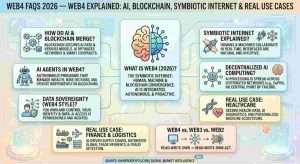
Welcome to your ultimate guide to Web4 FAQs in 2026. If you’ve been wondering what Web4 is, how it differs from Web3, or how AI and blockchain will shape the next generation of the internet, you’re in the right place. This FAQ-style post answers the most important questions, covers trends, technologies, real-world applications, and even the debates around Web4.
Table of Contents
Toggle
Web4 is the next evolution of the internet, often described as the “symbiotic web” — where AI agents, connected devices, and decentralized technologies work together seamlessly to enhance human and machine collaboration. Unlike Web3, which emphasizes decentralization and blockchain for user control, Web4 integrates AI, IoT, AR/VR, and blockchain to create a more intelligent, interactive, and automated web.
A Web 4.0 Agent is an Active Participant (it does). It uses “Reason + Act” (ReAct) loops to iterate on a problem until it is solved.
Auto-GPT” experiments failed because they got stuck in infinite loops. The 2026 Web 4.0 Architecture uses “Semantic Snapshots” and serial task processing to ensure agents actually finish what they start.
On the contrary. Because Web 4.0 is built on Web3 Sovereignty, you set the “SOUL.md” (Internal Principles). You define the ethical boundaries and risk limits; the agent simply performs the manual labor within those guardrails.
For a deeper dive into AI integration in Web3 and Web4, check out our post on AI Agents in Web3 (2026): Architecture, Interoperability & Autonomous Crypto Systems.
Learn more about the Web3 vs Web2 transition in this 2026 guide.
Web4 is both conceptual and emerging in practice. Multiple companies and research labs are building Web4-like ecosystems, especially in AI-driven automation, tokenization of real-world assets, and smart city applications.
Explore real-world blockchain and tokenization frameworks in our post on The Blockchain Digital Twin Lifecycle.
A symbiotic web describes an internet where humans, AI, and machines collaborate efficiently. AI agents can act on your behalf, IoT devices communicate autonomously, and blockchain ensures secure transactions — all integrated into one cohesive system.
For more on Web4 trends and symbiotic technologies, see Web4 Trends 2026: 5 Key Trends, 7 Technologies & Real-World Use Cases.
Not entirely. Web4 builds on Web3 principles but adds intelligence, automation, and device integration. Think of Web3 as a foundation and Web4 as the smart, self-managing layer on top.
Check out Top Real-World Web3 Interoperability Use Cases in 2026 to see how interoperability is evolving toward Web4.
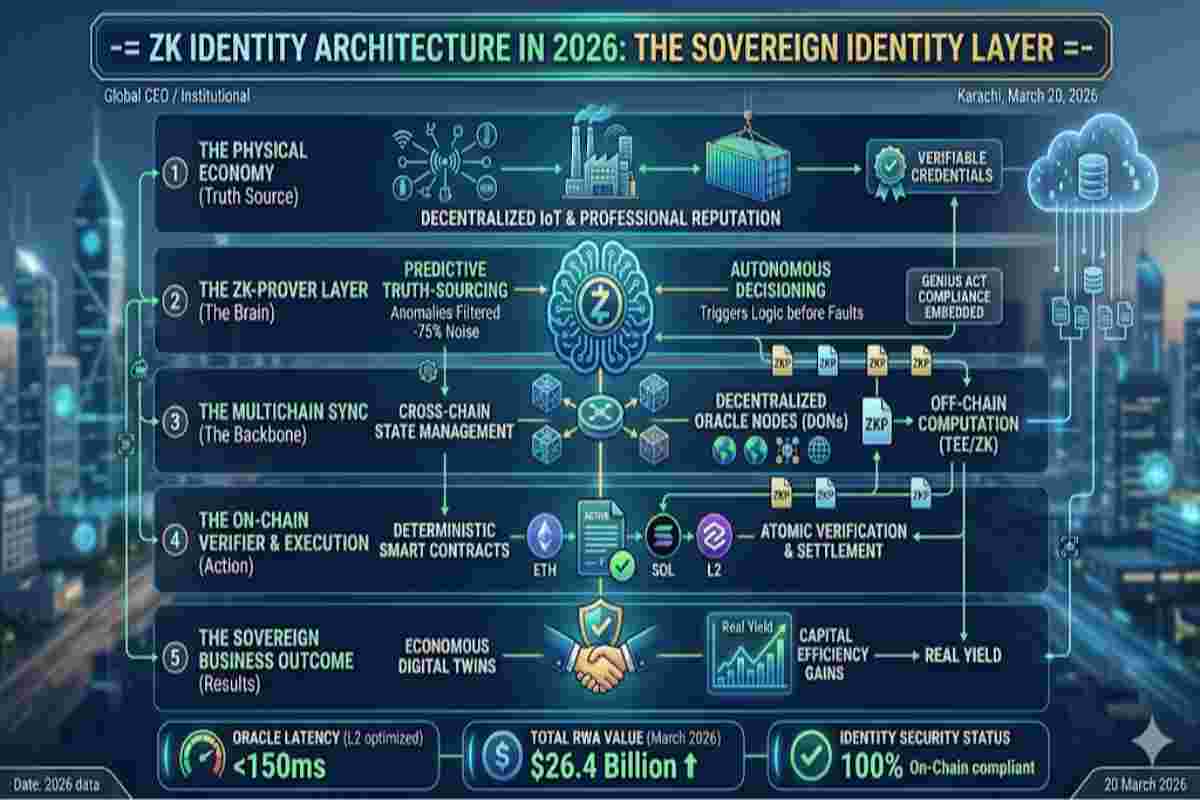
Web4 could transform industries, enhance digital identity systems, automate processes with AI agents, and create more immersive experiences via AR/VR.
Learn about ZK Identity Architecture for next-gen digital identity in this 2026 guide.
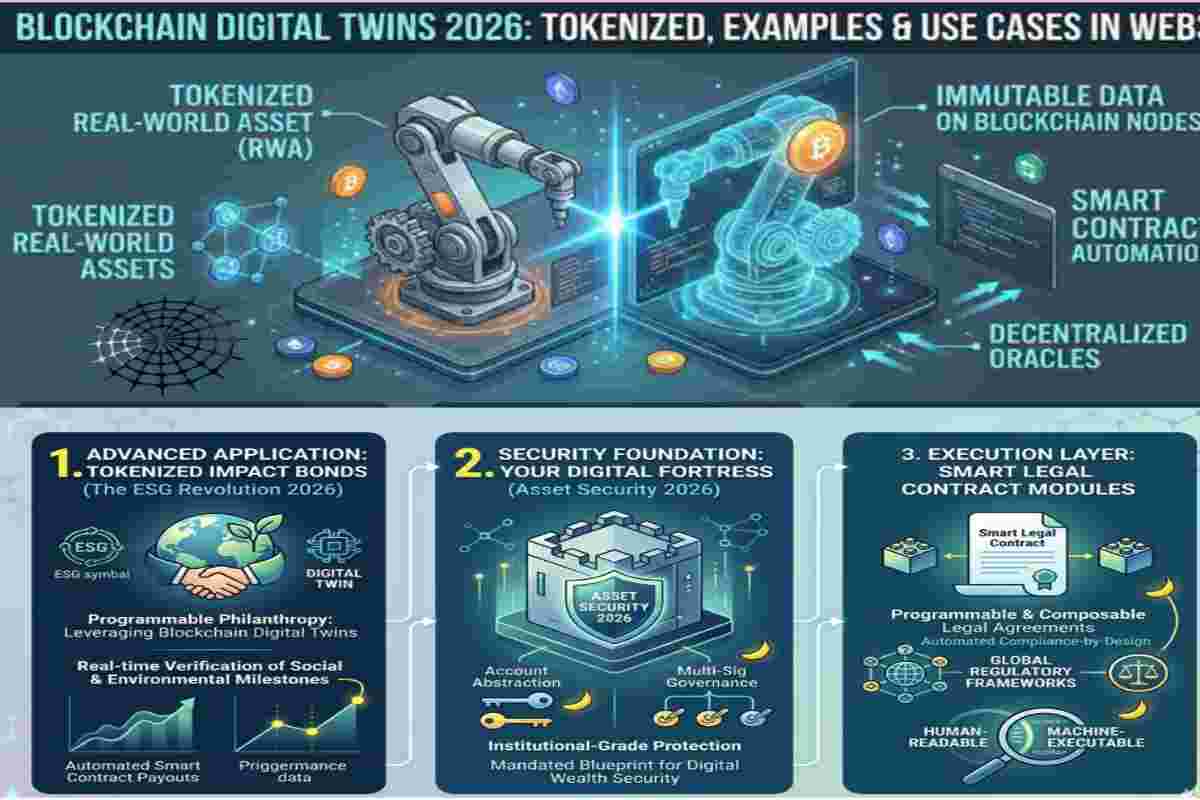
Blockchain provides trust, transparency, and decentralized governance in Web4. While AI drives decision-making, blockchain ensures that actions are auditable and secure.
Explore blockchain fundamentals in Blockchain Primitives Explained (2026).
Web4 requires both:
Dive into AI-powered blockchain oracles in this post.
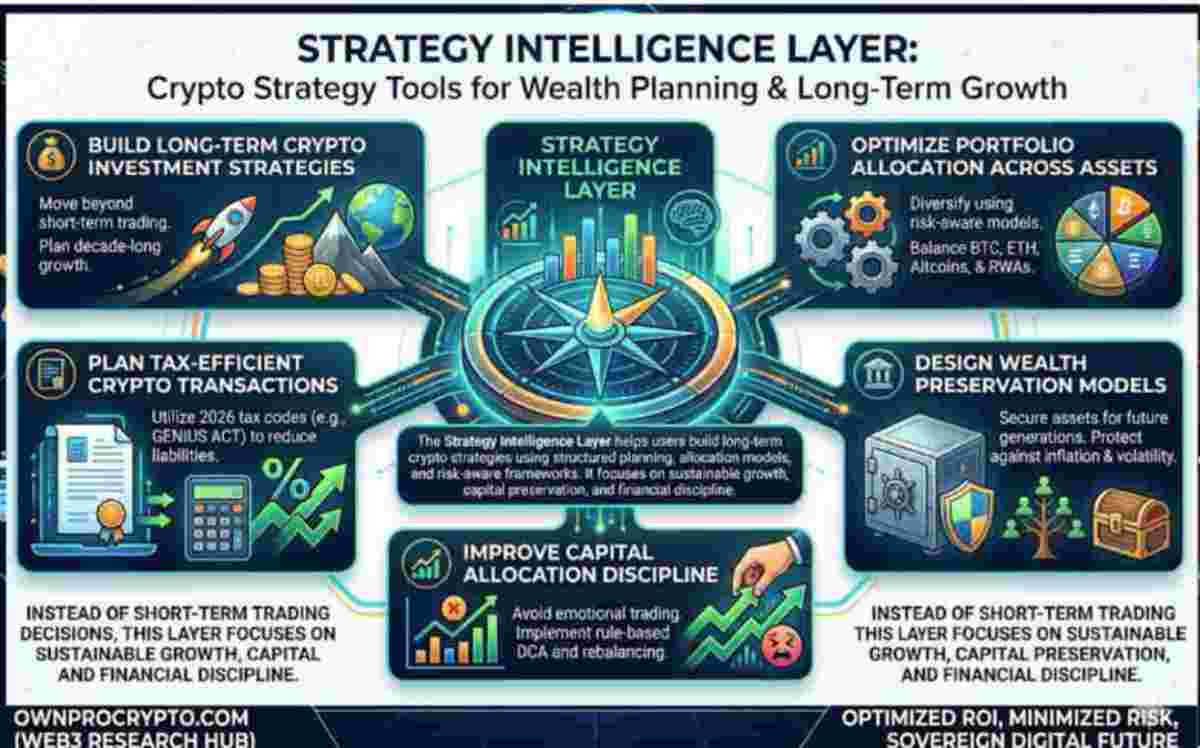
Crypto remains important as a medium of value, incentive mechanism, and tokenized asset representation, especially in AI marketplaces and multichain ecosystems.
See our breakdown of Stablecoins vs Bitcoin for 2026 cross-border payments for practical examples.
Technically, yes — AI-driven platforms can function in a centralized manner — but true Web4 benefits come from decentralized infrastructure that ensures trust, ownership, and interoperability.
Learn how RWA Tokenization uses decentralization in this guide.

For a full trend analysis, see Web4 Trends 2026: Web4 Blockchain AI & Autonomous Web4 vs Web3 Shift.
The integration of AI and blockchain enables automated trading, smart contracts, and decentralized AI services, creating a new digital economy.
Study AI + crypto systems in depth in Artificial Intelligence Crypto in 2025.
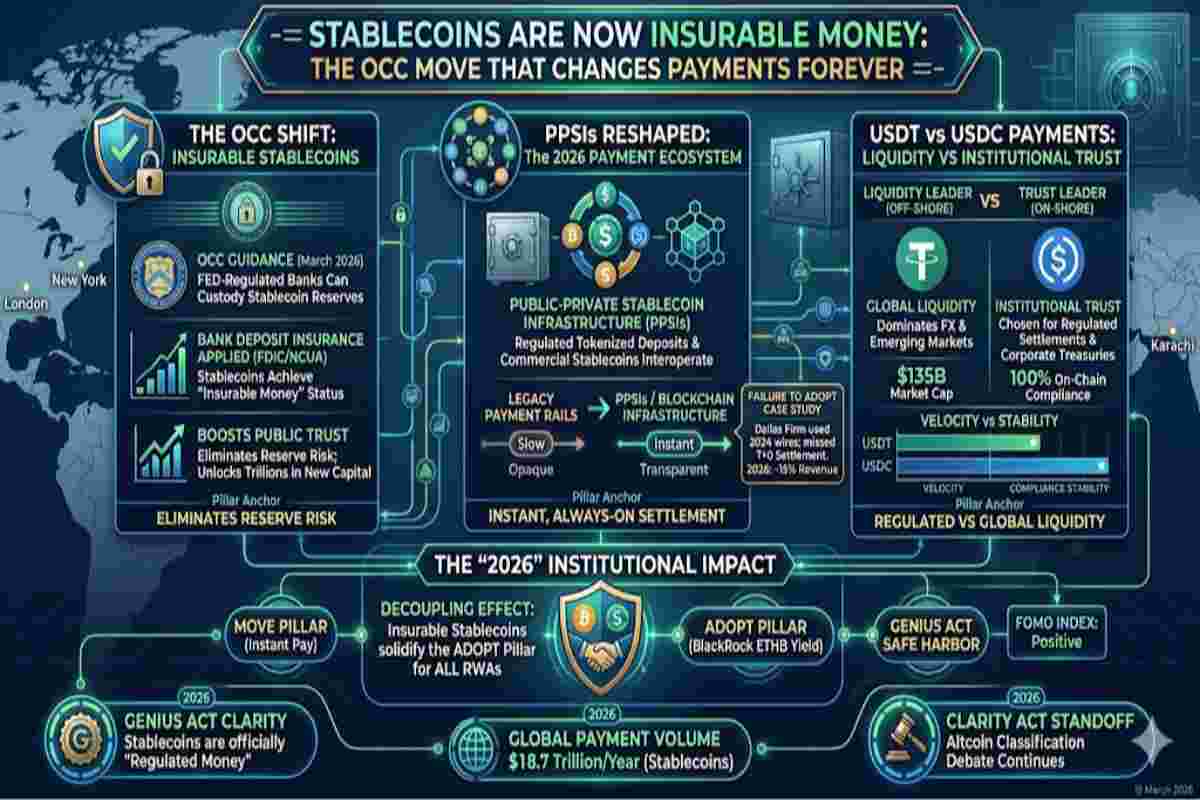
For financial applications of crypto, see Stablecoins Are Now Insurable Money: What the OCC Move Means.
Web4 is multi-layered: AI + blockchain + IoT + AR/VR + Edge computing + Quantum computing.
For practical applications of blockchain and digital twins, see Blockchain Digital Twins 2026.
Web5 is early but actively emerging.
We already see components in:
These systems are evolving from infrastructures like AI Agents in Web3 (https://ownprocrypto.com/ai-agents-in-web3/) and tokenized ecosystems such as RWA Tokenization (https://ownprocrypto.com/rwa-tokenization/).
The emotional web refers to an internet that can:
Unlike Web2 (data-driven) or Web4 (logic-driven), Web5 is emotion-driven.
AI + IoT + blockchain streamline traffic, utilities, energy, and municipal services, creating more efficient urban environments.
Check Top Real-World Web3 Interoperability Use Cases for cross-chain applications in practice.
Some critics say Web4 is overhyped, as standardization is not yet defined. But ongoing AI, blockchain, and IoT innovations indicate that parts of Web4 are already emerging.
Web4 addresses limitations of Web3, such as lack of AI integration, limited automation, and fragmented user experience.
Crypto is evolving, becoming a utility layer for AI agents, decentralized identity, and tokenized real-world assets.
For insights on building dApps and smart contracts, see Web3 Development Guide (2026).

Web 4.0 is often called the “Symbiotic Web” because the interaction between humans and machines becomes seamless. In this era, the internet is no longer a collection of sites you visit; it is a distributed engine of Intelligent Automation.
Unlike a standard chatbot (Web 2.0/3.0) that gives you a recipe when you ask, a Web 4.0 Autonomous Agent will:

Businesses and individuals should invest in AI literacy, blockchain tools, and IoT adoption to stay ahead.
The transition from our current 2026 Web4 Autonomous Shift to Web 5.0 will be a journey from Execution to Empathy.
| Phase | Core Driver | Technical Evolution |
| Web4 (Current 2026) | Autonomous Intelligence | Focuses on AI Agents performing financial tasks (MEV protection, RWA tokenization) and cross-chain interoperability. |
| The Transition | Biometric Integration | Sensors (wearables, cameras) become standard “nodes” in the blockchain, feeding anonymized sentiment data into the stack. |
| Web5 (Post-2026) | Emotional Intelligence | The web becomes a “Self-Aware” platform where decentralized applications (dApps) adapt their logic based on the user’s psychological state. |
Learn about future-proof crypto strategies in Digital Ownership in 2026: Crypto Asset Performance & ROI.
| Pillar | Strategic Insight & Execution |
| Problem | Institutional “Slippage” during 2025 Market Re-balancing. |
| Objectives | Capture 5% alpha on a $50M portfolio during a liquidity crunch. |
| Analysis / Situation | Identified a Crypto Liquidity Vacuum following a major CEX outage where order books were thin. Analysis focused on What is Web4?—specifically its ability to handle autonomous, high-speed data across fragmented layers. |
| Implementation | Deployed a Web4 Decentralized Probability Engine to buy the “Air Pockets” at a 4% discount to fair value. The stack utilized Web4 cross-chain interoperability to pull liquidity from secondary L2s instantly. |
| Challenges | High gas fees on Ethereum L1 during the spike in network activity required a move toward Web4 vs Web3 efficiency models. |
| Results / Outcomes | Achieved a 6.2% net gain in 48 hours; confirmed the Crypto Asymmetry Trading Model works in low-depth markets. |
| Web4 FAQ Context | Q: How does Web4 solve liquidity slippage? A: By utilizing AI-driven agents that can scan and execute across multiple chains simultaneously, neutralizing the latency issues found in traditional Web3. |
| Pillar | Strategic Insight & Execution |
| Problem | Protocol-level insolvency due to Blockchain Signal Distortion. |
| Objectives | Hedge a stablecoin-yielding position against a de-pegging event. |
| Analysis / Situation | A DeFi Volatility Harvesting Protocol failed to recognize a “Dark Flow” exit by a major VC firm because it lacked Web4 decentralized AI monitoring. |
| Implementation | Attempted to use Decentralized Risk Compression through a single-chain hedge, ignoring the Web4 vs Web3 requirement for cross-chain awareness. |
| Challenges | Signal Distortion hid the “Whale” exit until the liquidity was already gone. The system failed to answer Why is Web4 important?—it missed the cross-layer intelligence needed to see the exit. |
| Results / Outcomes | Total Loss: $1.2M lost in 12 minutes. Rooted in Failure: Over-reliance on single-chain data and failure to monitor cross-chain dark pools. |
| Web4 FAQ Context | Q: What are the risks of ignoring Web4 interoperability? A: Protocols remain “blind” to external market shocks; without Web4’s integrated intelligence, local hedges cannot protect against global, multi-chain liquidity exits. |
The transition from Web3 to Web4 is not just a naming convention; it is a shift toward an “Intelligent Internet of Value.” As seen in the success of the Liquid Alpha strategy, those who adopt Web4 cross-chain interoperability can capture opportunities that are invisible to legacy systems. Conversely, the “Entropy Failure” serves as a stark warning: in a world of complex, interconnected digital assets, relying on siloed data is a recipe for insolvency. By understanding What is Web4? and implementing it as a core architectural pillar, sovereign investors can move from reactive speculators to proactive, protected operators.
To better understand the technical shift toward a symbiotic internet, you can explore the evolving standards for decentralized identity and data sovereignty at World Wide Web Consortium (W3C).
Shifting your mindset from a short-term speculator to a long-term owner is the most significant step you can take in your crypto journey. By understanding the common Bitcoin Beginner Mistakes that often derail newcomers, you position yourself to build a more resilient portfolio. Implementing robust Self-Custody Solutions ensures that you remain in total control of your assets, effectively neutralizing the most critical mistakes to avoid in bitcoin. Ultimately, success isn’t just about watching the price—it’s about the security and discipline of true ownership.
Welcome to OwnProCrypto (Own & Pro Crypto) — a next-generation Bitcoin and blockchain education platform where the science of finance meets the power of AI-driven automation.
Our mission is simple: to equip you with the knowledge, frameworks, and tools needed to make smarter financial and business decisions in the Web3 economy.
Beyond analysis, OwnProCrypto focuses on transparency, verifiable data, and practical frameworks that investors and builders can actually use. Our goal is not hype — but clear thinking, disciplined analysis, and long-term value creation in the decentralized economy.
Our Background: Salim (Sam) is the founder and lead researcher behind OwnProCrypto, a Web3 intelligence platform focused on crypto security, digital ownership, stablecoin systems, interoperability, and institutional blockchain infrastructure.
Crypto Tools & Analysis:
Crypto Fundamental Analysis Tool | Protocol Evaluation System | DeFi Risk Analysis Tools | Crypto Portfolio Dashboard | Token Risk vs Reward Tool
Guides:
Crypto Fundamental Analysis | Blockchain Project Evaluation | Tokenomics Analysis | DeFi Protocol Analysis | Capital Efficiency
© 2026 OwnProCrypto — Built for smarter crypto decisions