

A Family Office is a private organization established to manage the wealth, investments, and financial affairs of high-net-worth individuals or families.
Unlike traditional wealth management services, family offices operate as dedicated systems, handling everything from investment strategy to governance, tax planning, and legacy management.
In 2026, the concept of a family office is evolving — moving from traditional financial oversight toward integrated, technology-driven wealth systems.
Understanding these structures is essential for navigating the complex wealth systems detailed in our Legacy & Sovereignty: Securing Your Digital Life Beyond You (2026). You can review global wealth trends at Knight Frank’s Wealth Report.
Recent trends show:
This signals a transition from:
service-based wealth → system-based wealth
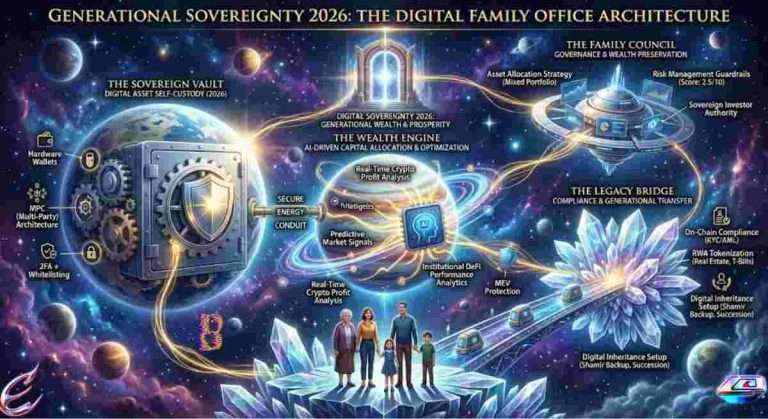
A family office is a private wealth management entity that serves a single family or multiple families.
A family office is a centralized system designed to manage wealth, investments, and long-term financial goals.
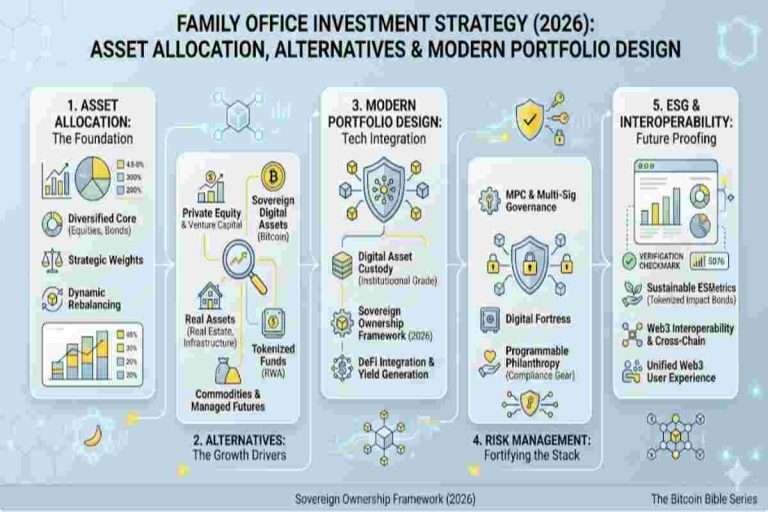
Family offices operate by combining financial management, governance, and strategic planning into one structure.
| Step | Function |
|---|---|
| Capital Allocation | Decide investments |
| Execution | Deploy capital |
| Monitoring | Track performance |
| Governance | Manage decisions |
In the high-velocity economic landscape of 2026, the Digital Family Office tool functions as a “Single Source of Truth,” consolidating financial management, governance, and strategic planning into a unified operating model. By integrating Autonomous Execution Engines with traditional oversight, these platforms transform fragmented data—from real estate to RWA Tokenization—into a resilient, sovereign structure. The tool manages the complete lifecycle of wealth, ensuring that Capital Allocation Modeling is always balanced against real-time Risk Score Guardrails and institutional On-Chain Compliance mandates.
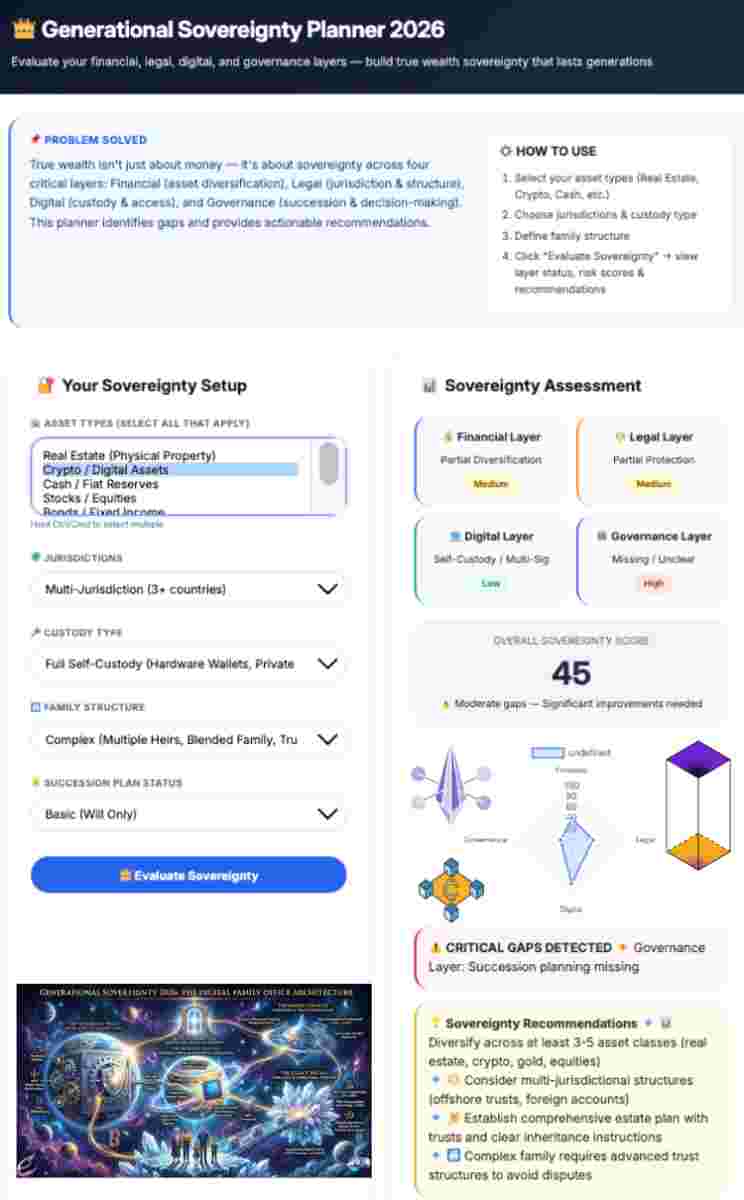
| Step | Function | Operational Output |
| 1. Capital Allocation | Investment Management | Decisions are modeled based on Real Yield opportunities and liquidity needs. |
| 2. Execution | Tax, Legal & Deployment | Capital is deployed across chains or legacy rails with automated On-Chain Compliance. |
| 3. Monitoring | Reporting & Analytics | Real-time performance tracking and risk assessment (Guardrails: 2.5/10) are updated instantly. |
| 4. Governance | Estate & Succession | Decisions are recorded on-ledger to manage Generational Transfer and legacy planning. |
| Feature | SFO | MFO |
|---|---|---|
| Control | High | Moderate |
| Cost | High | Shared |
| Customization | Full | Limited |
A family office is typically structured across multiple layers:
| Layer | Role |
|---|---|
| Investment Team | Manages assets |
| Legal & Tax | Compliance |
| Operations | Reporting & systems |
| Governance | Decision-making |
Modern family offices are evolving into:
integrated systems, not just advisory teams
Family offices play a critical role in:
These challenges are driving the shift toward digital transformation
Family offices are moving toward:
| Traditional | Digital |
|---|---|
| Manual | Automated |
| Fragmented | Integrated |
| Reactive | Data-driven |
Internal link opportunity:
“Digital Family Office Architecture”
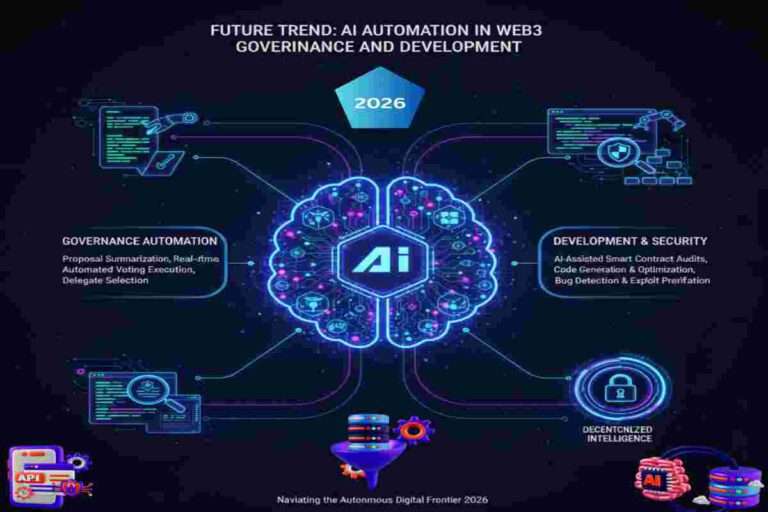
The next generation of family offices will focus on:
Wealth management is shifting toward:
system design, not just investment advice
What is a family office?
A family office is a private organization that manages the wealth, investments, and financial affairs of a high-net-worth family.
most people still don’t see this part →
Family Office (2026)
How do family offices work?
They centralize investment management, tax planning, risk control, and long-term wealth strategy under one structure.
this is where it starts getting interesting →
Family Office Investment Strategy
Who needs a family office?
Typically ultra-high-net-worth individuals and families with complex financial structures and global assets.
not everyone’s ready for this yet →
Generational Wealth (2026)
What are the types of family offices?
The two main types are single-family offices (serving one family) and multi-family offices (serving multiple clients).
small detail, big shift →
Digital Family Office Architecture
What services do family offices provide?
They offer investment management, estate planning, tax optimization, governance, and risk management services.
this part →
Family Office Succession & Governance
How is a family office different from a bank?
A family office works exclusively for a single family’s interests, while banks serve a broad client base with standardized services.
the obvious narrative is wrong →
Neo-Banking & Sovereign Finance
Are family offices only for billionaires?
While traditionally used by billionaires, modern multi-family offices and digital platforms are making them more accessible.
this doesn’t match the headlines →
Global Asset Decoupling 2026
What is the structure of a family office?
It typically includes investment, legal, operational, and governance layers working together for wealth preservation.
look closer →
Web3 Governance Framework
How are family offices changing in 2026?
They are becoming more digital, automated, and integrated with blockchain, AI, and global financial systems.
weird signal forming here →
Web4 Trends 2026
What is the future of family offices?
Family offices are evolving into technology-driven wealth ecosystems with cross-border asset integration and digital sovereignty.
before this flips →
Generational Sovereignty 2026
A Family Office is no longer just a service — it is becoming a structured system for managing wealth across generations.
Understanding how family offices work provides the foundation for exploring more advanced topics like digital architecture, governance, and asset integration.
Modern wealth preservation requires a proactive stance on transparency. Integrating the OECD’s transparency protocols into your family governance ensures that your digital assets remain compliant as they transition to the next generation.
Welcome to OwnProCrypto (Own & Pro Crypto) — a next-generation Bitcoin and blockchain education platform where the science of finance meets the power of AI-driven automation.
Our mission is simple: to equip you with the knowledge, frameworks, and tools needed to make smarter financial and business decisions in the Web3 economy.
Beyond analysis, OwnProCrypto focuses on transparency, verifiable data, and practical frameworks that investors and builders can actually use. Our goal is not hype — but clear thinking, disciplined analysis, and long-term value creation in the decentralized economy.
Our Background: Salim (Sam) is the founder and lead researcher behind OwnProCrypto, a Web3 intelligence platform focused on crypto security, digital ownership, stablecoin systems, interoperability, and institutional blockchain infrastructure.
Crypto Tools & Analysis:
Crypto Fundamental Analysis Tool | Protocol Evaluation System | DeFi Risk Analysis Tools | Crypto Portfolio Dashboard | Token Risk vs Reward Tool
Guides:
Crypto Fundamental Analysis | Blockchain Project Evaluation | Tokenomics Analysis | DeFi Protocol Analysis | Capital Efficiency
© 2026 OwnProCrypto — Built for smarter crypto decisions