
Search by title, topic or phrase
Use our Crypto Search Engine 🔍 to find the topics and keywords you're looking for.
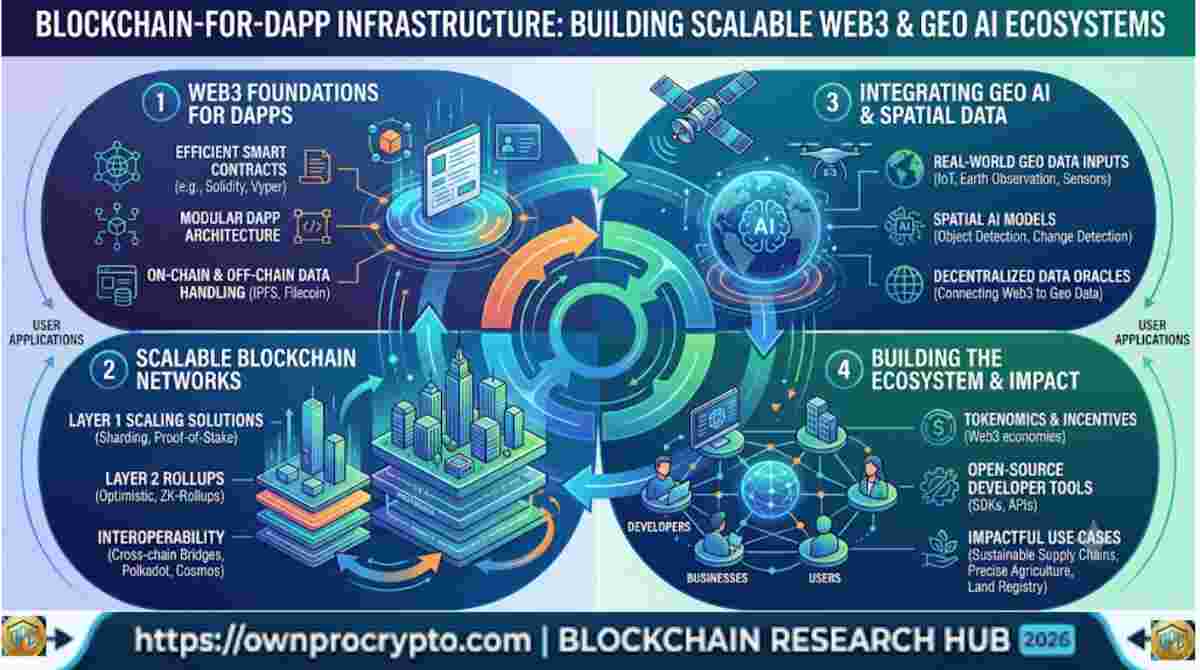
Table of Contents
ToggleThe rapid growth of decentralized applications has transformed how digital platforms are built, scaled, and secured. Modern blockchain-for-DApp infrastructure now powers everything from decentralized finance and AI-driven automation to Geo AI mapping systems and smart city ecosystems.
As Web3 adoption accelerates, businesses and developers increasingly require scalable blockchain infrastructure capable of handling decentralized storage, smart contracts, cross-chain interoperability, and real-time geospatial intelligence.
Unlike traditional cloud-based applications, blockchain-for-DApp ecosystems operate on decentralized networks where transactions, data processing, and governance occur without centralized control. This architecture improves transparency, security, automation, and resilience for next-generation digital systems.
Today, blockchain infrastructure supports industries such as:
The convergence of blockchain, AI, and geospatial intelligence is creating a new foundation for scalable decentralized ecosystems.
Problem : Traditional AI and geospatial systems rely on centralized databases vulnerable to manipulation and data silos.
Problem Solved: Traditional AI and geospatial systems rely on centralized databases vulnerable to manipulation and data silos.
Blockchain for DApp infrastructure refers to the complete technology stack used to develop, deploy, secure, and scale decentralized applications.
This infrastructure includes:
Unlike centralized applications hosted on private servers, decentralized applications distribute operations across blockchain nodes, improving fault tolerance and eliminating single points of failure.
Modern blockchain infrastructure allows DApps to operate transparently while supporting token economies, autonomous governance, and trustless digital interactions.
Problem : Many businesses and developers do not understand the core components required to build scalable decentralized applications.
Problem Solved: Defines blockchain-for-DApp infrastructure and explains the foundational technologies powering modern Web3 systems.
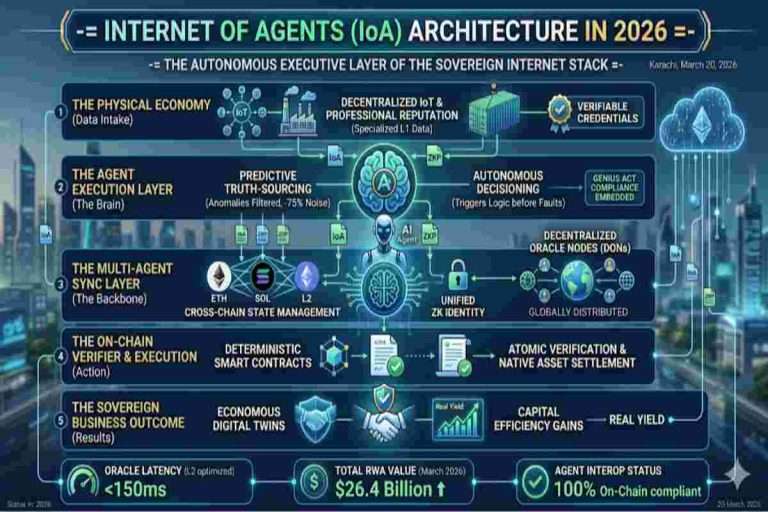
Modern Web3 applications rely on multiple infrastructure layers working together to ensure scalability, security, and interoperability.
| Infrastructure Layer | Purpose | Example Technologies |
|---|---|---|
| Layer-1 Blockchain | Base transaction settlement | Ethereum, Solana |
| Layer-2 Scaling | Faster and cheaper transactions | Arbitrum, Optimism |
| Smart Contract Layer | Application logic automation | Solidity, Vyper |
| Decentralized Storage | Distributed file management | IPFS, Arweave |
| Indexing Protocols | Blockchain data querying | The Graph |
| Oracle Networks | Real-world data feeds | Chainlink |
| Wallet Infrastructure | User authentication | MetaMask |
| RPC Node Infrastructure | Blockchain communication | Infura, Alchemy |
| Governance Systems | Decentralized voting | DAO frameworks |
This layered architecture enables scalable decentralized ecosystems capable of supporting millions of users and complex AI-powered workflows.
Problem : Developers struggle to understand how blockchain layers, storage, nodes, and smart contracts connect operationally.
Problem Solved: Breaks down the complete infrastructure stack required for scalable decentralized application deployment.
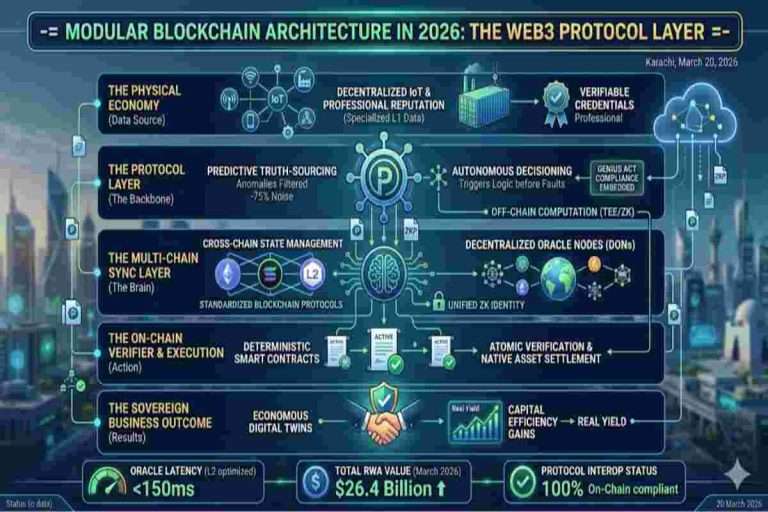
Traditional web applications rely heavily on centralized databases and cloud providers. However, decentralized systems require trustless infrastructure capable of maintaining data integrity and autonomous operations.
Blockchain for DApp infrastructure enables:
As enterprises increasingly adopt Web3 technologies, scalable blockchain infrastructure has become critical for handling growing transaction volumes, AI integrations, and decentralized data networks.
Problem : Traditional infrastructure often fails to handle decentralized scalability, transparency, and cross-chain operations.
Problem Solved: Explains why scalable Web3 architecture is essential for high-performance decentralized ecosystems.
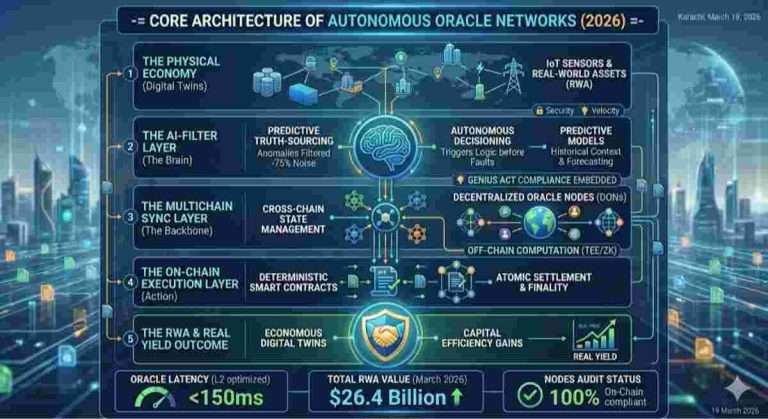
One of the biggest challenges in blockchain scalability is transaction throughput.
Layer-1 blockchains provide foundational security and consensus, while Layer-2 solutions improve speed and reduce transaction costs.
| Blockchain Network | Best For | Approximate TPS | Main Limitation |
|---|---|---|---|
| Ethereum | Security and ecosystem maturity | ~15 TPS | High gas fees |
| Solana | High-speed decentralized apps | 65,000+ TPS | Centralization concerns |
| Polygon | Scalable Web3 applications | High throughput | Ethereum dependency |
| Arbitrum | Ethereum Layer-2 scaling | Fast transactions | Ecosystem maturity |
| Optimism | Cost-efficient DApps | Lower fees | Competitive ecosystem |
Layer-2 ecosystems are rapidly becoming essential for scalable blockchain-for-DApp deployment because they significantly reduce congestion and operational costs.
Problem : Many blockchain applications suffer from slow transaction speeds and high gas fees.
Problem Solved: Compares Layer-1 and Layer-2 networks to show how scalability challenges are solved in modern blockchain ecosystems.performance decentralized ecosystems.
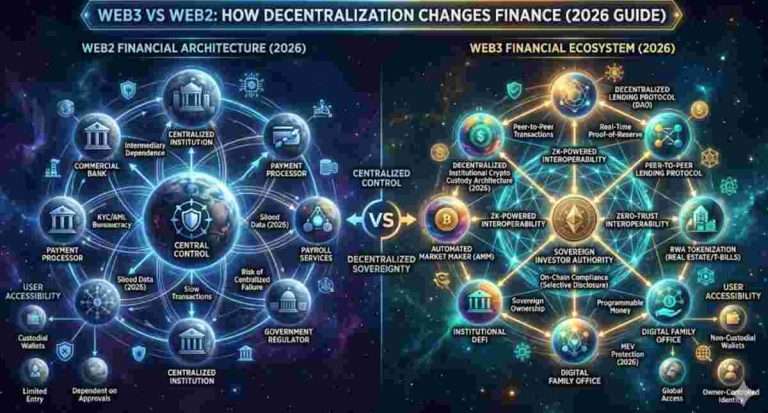
Modern DApps cannot rely solely on centralized cloud providers because decentralized ecosystems require censorship resistance and distributed data availability.
Decentralized storage solutions solve this problem.
Key decentralized storage technologies include:
| Storage Protocol | Primary Use Case |
|---|---|
| IPFS | Distributed file hosting |
| Arweave | Permanent decentralized storage |
| Filecoin | Incentivized storage marketplace |
| Storj | Enterprise decentralized storage |
These systems improve:
Decentralized storage is especially important for Geo AI applications handling satellite imagery, sensor telemetry, and large-scale geospatial datasets.
Problem : Centralized cloud storage creates security risks, censorship issues, and single points of failure.
Problem Solved: Shows how decentralized storage systems improve resilience, security, and distributed data availability. challenges are solved in modern blockchain ecosystems.performance decentralized ecosystems.
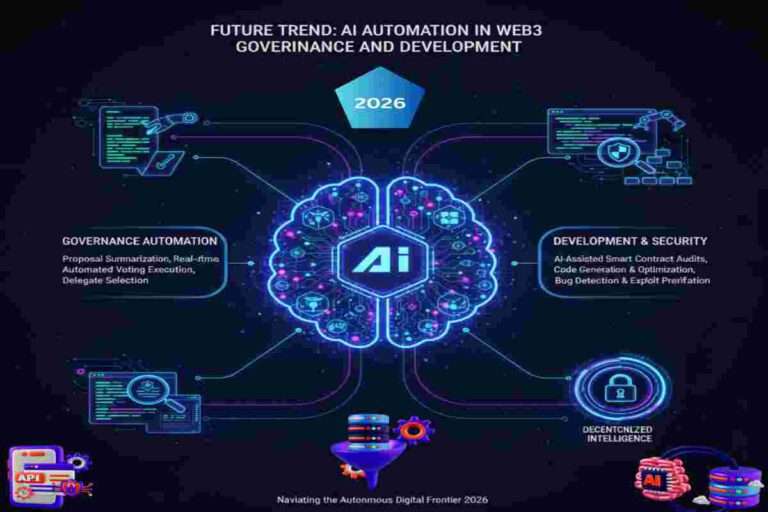
Geo AI combines artificial intelligence with geospatial analytics to process mapping data, satellite imagery, and location intelligence systems.
When integrated with blockchain infrastructure, Geo AI platforms gain significant advantages.
Blockchain prevents manipulation of geospatial datasets after validation. This improves trust in urban planning, environmental monitoring, logistics, and disaster management systems.
Geo AI platforms often rely on data from multiple distributed sources. Blockchain consensus mechanisms help verify sensor authenticity and reduce fraudulent data submissions.
Blockchain allows contributors to monetize mapping data, drone imagery, and environmental intelligence through tokenized ecosystems.
Modern smart cities increasingly use blockchain-for-DApp systems for:
The combination of AI automation and decentralized verification creates highly secure and transparent geospatial intelligence networks.
Problem : Geospatial intelligence systems often face data verification and integrity challenges.
Problem Solved: Explains how blockchain improves trust, validation, and transparency in Geo AI platforms.
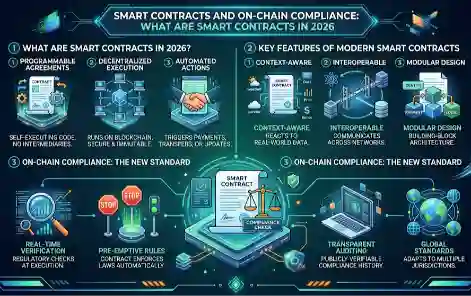
Smart contracts are programmable agreements that automatically execute predefined conditions without intermediaries.
These contracts power:
Modern smart contract infrastructure supports:
Scalable smart contract ecosystems are essential for enterprise-grade Web3 applications.
Problem : Manual workflows and intermediaries increase operational complexity and transaction costs.
Problem Solved: Demonstrates how smart contracts automate decentralized operations efficiently and securely.
As blockchain ecosystems grow, querying on-chain data becomes increasingly difficult.
Indexing protocols solve this challenge by organizing blockchain information into searchable structures.
Popular indexing solutions include:
These systems allow developers to build high-performance DApps capable of retrieving blockchain data efficiently.
Without indexing infrastructure, decentralized applications would experience major latency and scalability limitations.
Problem : Querying raw blockchain data is slow, inefficient, and difficult to scale.
Problem Solved: Explains how indexing protocols organize blockchain data for faster decentralized application performance.
Modern blockchain infrastructure supports a wide range of decentralized applications.
Blockchain infrastructure powers lending, staking, liquidity pools, and decentralized exchanges.
Decentralized geospatial intelligence systems improve transparency in logistics, environmental monitoring, and infrastructure planning.
Blockchain enables real-time product verification and logistics transparency.
Web3 gaming ecosystems use smart contracts for asset ownership and decentralized economies.
Decentralized identity systems reduce fraud while improving privacy and user control.
Problem : Businesses often struggle to understand practical applications of blockchain infrastructure.
Problem Solved: Provides real-world examples showing how decentralized systems are transforming industries.
Despite rapid growth, blockchain infrastructure still faces several technical challenges.
| Challenge | Impact |
|---|---|
| Network Congestion | Slower transaction processing |
| High Gas Fees | Increased operational costs |
| Storage Scalability | Large infrastructure demands |
| Smart Contract Vulnerabilities | Security risks |
| Cross-Chain Complexity | Integration difficulties |
| Data Latency | Delayed blockchain synchronization |
Developers must carefully design infrastructure architectures to optimize performance, security, and scalability.
Problem : Blockchain systems still face scalability, interoperability, and security limitations.
Problem Solved: Identifies the biggest infrastructure challenges developers must solve for sustainable Web3 growth.
Several emerging technologies are reshaping decentralized infrastructure.
AI systems increasingly optimize smart contract execution, fraud detection, and decentralized analytics.
Zero-knowledge rollups significantly improve blockchain throughput and transaction efficiency.
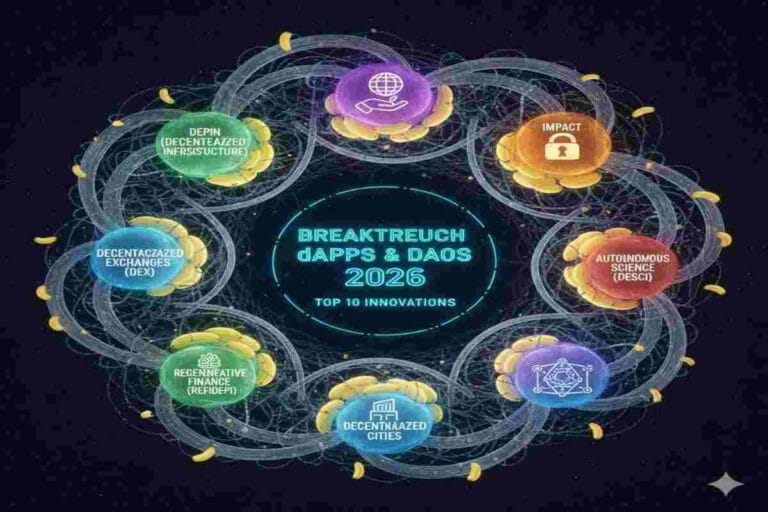
DePIN ecosystems use blockchain incentives to build decentralized hardware and connectivity networks.
Geo AI ecosystems are creating blockchain-powered marketplaces for location intelligence and satellite analytics.
Future Web3 ecosystems may operate using fully autonomous AI-governed blockchain infrastructures.
Problem : Many organizations are uncertain about the future direction of decentralized infrastructure technologies.
Problem Solved: Highlights emerging innovations shaping the next generation of AI-powered blockchain ecosystems.
Businesses developing decentralized applications should focus on:
Proper infrastructure planning significantly improves long-term scalability and operational stability.
Problem : Many organizations are uncertain about the future direction of decentralized infrastructure technologies.
Problem Solved: Highlights emerging innovations shaping the next generation of AI-powered blockchain ecosystems.
Blockchain-for-DApp infrastructure refers to the decentralized networks, smart contracts, storage systems, nodes, and protocols used to build and operate decentralized applications.
Ethereum, Solana, Polygon, Arbitrum, and Optimism are among the most widely used blockchain ecosystems for scalable decentralized applications.
Layer-2 solutions improve transaction speed and reduce blockchain gas fees while maintaining security through Layer-1 settlement.
Blockchain improves geospatial data integrity, decentralized verification, secure data sharing, and tokenized mapping ecosystems.
Decentralized storage distributes data across multiple nodes instead of centralized servers, improving security and censorship resistance.
Indexing systems organize blockchain data into searchable structures, allowing DApps to retrieve information efficiently.
BBlockchain for DApp infrastructure is becoming the foundation of modern Web3 ecosystems.
As decentralized applications evolve, businesses increasingly require scalable blockchain networks capable of supporting AI automation, geospatial intelligence, decentralized governance, and autonomous digital economies.
From smart contracts and decentralized storage to Layer-2 scalability and Geo AI integration, blockchain infrastructure now extends far beyond cryptocurrency.
Organizations investing in advanced blockchain-for-DApp ecosystems today are positioning themselves at the forefront of the next generation of decentralized internet infrastructure.
Read more about blockchain infrastructure and decentralized applications from the U.S. government technology framework at National Institute of Standards and Technology (NIST) Blockchain Overview
Problem : Businesses may still hesitate to adopt decentralized infrastructure due to uncertainty about long-term value.
Problem Solved: Reinforces the strategic importance of blockchain-for-DApp infrastructure for future digital transformation.