
Search by title, topic or phrase
Use our Crypto Search Engine 🔍 to find the topics and keywords you're looking for.

Table of Contents
ToggleAutonomous DeFi represents the next stage in the evolution of decentralized finance. Instead of relying solely on users to manage lending, trading, staking, or portfolio allocation, modern DeFi increasingly combines smart contracts, automation, and intelligent infrastructure to execute financial operations with minimal manual intervention.
For decades, financial systems have relied on people to make decisions. Banks approve loans, brokers execute trades, and financial institutions coordinate the movement of capital through centralized processes. DeFi introduces a different model by using blockchain networks and programmable smart contracts to automate these services with greater transparency and efficiency.
As the ecosystem matures, DeFi has expanded far beyond cryptocurrency trading. It now includes lending, decentralized exchanges, liquid staking, real-world assets (RWAs), oracle networks, insurance, treasury management, and cross-chain infrastructure that work together as a connected financial ecosystem.
Understanding these categories is essential because each performs a specialized role while contributing to a larger system of programmable finance. Autonomous DeFi = AI + agents + smart contracts + automation + decision-making + execution. The artcile explaining how they work, why they matter, and how they collectively shape the future of Autonomous DeFi.
Rather than asking users to constantly compare protocols, monitor yields, rebalance portfolios, or evaluate risk manually, Autonomous DeFi combines artificial intelligence, blockchain infrastructure, smart contracts, and real-time market data to help optimize financial decisions automatically.
The result is a financial system that becomes increasingly intelligent, adaptive, and responsive while maintaining the transparency and programmability that define decentralized finance.
Instead of replacing DeFi, autonomous systems extend its capabilities by adding an intelligence layer above existing financial infrastructure.
Autonomous DeFi is the integration of artificial intelligence, automation, smart contracts, and decentralized finance to create financial systems capable of monitoring, analyzing, and executing strategies with minimal human intervention.
Unlike traditional automation, which follows fixed instructions, autonomous financial systems can continuously evaluate changing market conditions and adjust predefined strategies according to user-defined objectives and constraints.
At a high level, Autonomous DeFi combines five complementary components.
| Component | Primary Role |
|---|---|
| Blockchain Networks | Secure settlement and immutable transaction records |
| Smart Contracts | Automated execution of financial rules |
| AI Agents | Analyze information and recommend or initiate actions |
| Oracle Networks | Supply verified external market and pricing data |
| Wallet Infrastructure | Securely authorize and manage user assets |
Together these components transform DeFi from a collection of independent applications into a connected financial operating system capable of continuous optimization.
                    USER OBJECTIVES
       (Risk • Yield • Liquidity • Allocation)
                        │
                        ▼
                  AI AGENT LAYER
        Analysis • Planning • Optimization
                        ▼
              SMART CONTRACT LAYER
      Lending • DEX • Staking • Treasury
                        ▼
               BLOCKCHAIN NETWORKS
        Settlement • Ownership • Security
                        ▼
                 ON-CHAIN RESULTS
      Portfolio Updates • Rewards • Reports
Unlike traditional financial software, each layer performs a specialized role while remaining transparent and verifiable on-chain.
The first generation of DeFi focused on replacing centralized intermediaries with smart contracts.
The next generation focuses on improving decision quality, capital efficiency, and operational intelligence.
Several technological trends are accelerating this transition.
Modern DeFi users often interact with multiple lending markets, decentralized exchanges, staking platforms, and liquidity pools.
Monitoring these opportunities manually becomes increasingly difficult as the ecosystem expands.
Autonomous systems can continuously evaluate predefined metrics such as:
Instead of requiring constant supervision, intelligent systems help users maintain strategies aligned with their investment objectives.
Traditional investing often depends on periodic reviews.
Blockchain networks generate new data every second.
Autonomous monitoring systems can continuously evaluate factors including:
Continuous analysis enables faster responses to changing market conditions while supporting more disciplined risk management.
As institutional participation expands, organizations require infrastructure capable of managing thousands of transactions while maintaining governance, reporting, and compliance standards.
Autonomous financial systems can assist with:
| Institutional Function | Autonomous Capability |
|---|---|
| Treasury management | Automated allocation policies |
| Portfolio monitoring | Continuous analytics |
| Risk management | Real-time alerts |
| Compliance reporting | Standardized reporting workflows |
| Liquidity management | Dynamic capital allocation |
Automation reduces operational complexity without removing human oversight.
Early DeFi required users to understand:
Future systems increasingly abstract these technical details behind simpler interfaces.
Instead of manually navigating multiple protocols, users define objectives such as:
Maintain a medium-risk ETH strategy.
or
Optimize stablecoin yield while preserving liquidity.
The underlying infrastructure determines how to execute those objectives across supported protocols.
This shift moves DeFi closer to mainstream financial usability while preserving user control over assets.
| Feature | Traditional DeFi | Autonomous DeFi |
|---|---|---|
| Portfolio monitoring | Manual | Continuous AI-assisted monitoring |
| Yield optimization | User research | Automated strategy evaluation |
| Risk assessment | Periodic | Real-time analysis |
| Protocol selection | Manual comparison | Intelligent recommendations |
| Treasury operations | Human managed | Policy-driven automation |
| Decision support | User experience | AI-assisted intelligence |
| Execution | Smart contracts | Smart contracts with intelligent orchestration |
Autonomous systems do not replace blockchain infrastructure.
They improve how users interact with it.
| Generation | Primary Innovation | Focus |
|---|---|---|
| DeFi 1.0 | Lending and decentralized exchanges | Basic financial primitives |
| DeFi 2.0 | Capital efficiency and real yield | Sustainable liquidity |
| DeFi 3.0 | Institutional infrastructure | Compliance and tokenized assets |
| Autonomous DeFi | AI-assisted financial automation | Intelligent capital management |
This progression reflects a broader trend across financial technology: moving from transaction automation toward decision support and operational intelligence.
Modern autonomous financial platforms generally share several characteristics.
| Characteristic | Benefit |
|---|---|
| Programmable execution | Consistent rule-based operations |
| Continuous monitoring | Faster awareness of changing conditions |
| Transparent settlement | On-chain verification of activity |
| Policy-based automation | Strategies aligned with user-defined objectives |
| Intelligent analytics | Better-informed decision support |
| Modular architecture | Integration across multiple DeFi protocols |
Rather than replacing human decision-makers, these systems are best viewed as tools that enhance analysis, streamline repetitive processes, and improve operational efficiency.
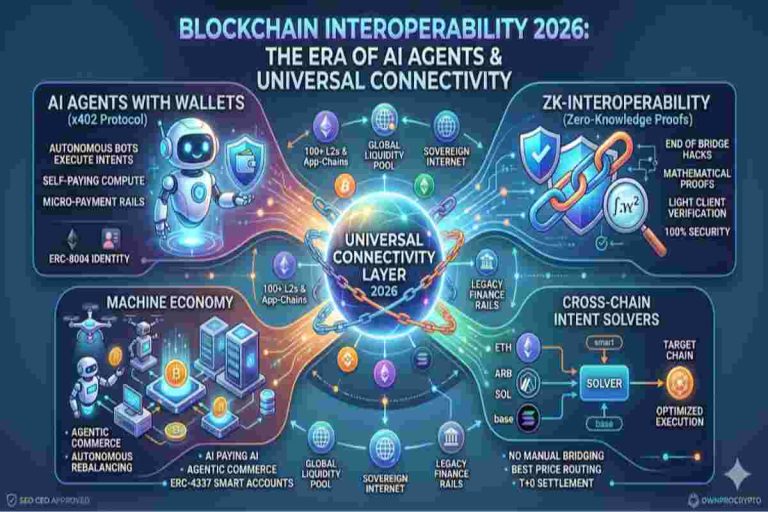
Smart contracts transformed finance by making transactions programmable.
However, smart contracts have one important limitation:
They execute predefined rules but do not independently analyze changing market conditions or adapt strategies.
For example, a lending protocol can automatically issue a collateralized loan when predefined requirements are met, but it cannot determine whether market volatility has increased, whether another protocol offers better capital efficiency, or whether governance changes introduce new risks.
This is where AI agents extend decentralized finance.
AI agents continuously analyze structured and unstructured information, evaluate predefined objectives, and recommend—or, where explicitly authorized, initiate—actions through smart contracts. Rather than replacing blockchain infrastructure, they provide an intelligence layer that supports more informed and efficient financial operations.
Think of the relationship like this:
Together they create a financial system capable of operating with greater efficiency while keeping execution transparent and verifiable.
Autonomous DeFi combines three complementary technologies.
| Layer | Primary Function | Technology |
|---|---|---|
| Intelligence Layer | Analyze data, evaluate strategies, support decisions | AI Agents |
| Execution Layer | Execute predefined financial rules | Smart Contracts |
| Settlement Layer | Secure ownership and final settlement | Blockchain Networks |
Each layer performs a distinct responsibility.
AI analyzes.
Smart contracts execute.
Blockchain settles.
Separating these responsibilities improves both security and operational clarity.
                   USER OBJECTIVES
        Risk • Yield • Liquidity • Compliance
                     ▼
            INTELLIGENCE LAYER
      AI Agents • Analytics • Planning
                     ▼
             EXECUTION LAYER
    Smart Contracts • DeFi Protocols
                     ▼
             SETTLEMENT LAYER
 Blockchain • Consensus • Ownership Records
Unlike traditional financial software, each layer remains independently verifiable.
These technologies work together but solve different problems.
| Capability | Smart Contracts | AI Agents |
|---|---|---|
| Execute transactions | ✅ | Via smart contracts |
| Store blockchain state | ✅ | ❌ |
| Analyze market conditions | ❌ | ✅ |
| Evaluate multiple strategies | ❌ | ✅ |
| Monitor changing risks | Limited | ✅ |
| Learn from historical information | ❌ | Model dependent |
| Automate predefined workflows | ✅ | ✅ |
| Optimize decision support | ❌ | ✅ |
One common misconception is that AI replaces smart contracts.
It does not.
Smart contracts remain the trusted execution environment.
AI enhances planning and analysis before execution occurs.
An autonomous financial workflow generally follows several stages.
| Step | AI Responsibility | Blockchain Responsibility |
|---|---|---|
| Collect market data | Analyze prices, liquidity, risk | Oracle updates |
| Compare protocols | Evaluate opportunities | Read on-chain state |
| Generate recommendation | Optimize according to user objectives | — |
| Execute approved strategy | Trigger authorized workflow | Smart contract execution |
| Monitor outcomes | Evaluate portfolio performance | Record settlement |
This separation preserves blockchain security while improving operational intelligence.
             Market & On-Chain Data
                      ▼
               AI Agent Analysis
        Risk • Yield • Liquidity
                      ▼
           Strategy Recommendation
          User Approval / Policy Rules
                      ▼
          Smart Contract Execution
                      ▼
        Updated Portfolio & Reporting
Human oversight remains central. AI assists with analysis, while execution follows user-defined permissions and protocol rules.

The value of autonomous systems becomes clearer when examining real financial workflows.
Rather than manually reviewing multiple lending markets or staking platforms every week, an AI agent can continuously compare:
The user defines acceptable risk levels, while the system identifies opportunities that meet those parameters.
Traditional yield farming often requires frequent manual adjustments.
Autonomous systems can monitor:
| Variable | Example |
|---|---|
| APY changes | Lending rates decline |
| Liquidity shifts | Pool depth decreases |
| Gas costs | Transaction costs increase |
| Reward sustainability | Token incentives expire |
| Market volatility | Risk thresholds exceeded |
Instead of reacting manually, users receive recommendations—or automated actions within predefined limits.
Large organizations frequently manage diversified digital asset portfolios.
AI-supported treasury systems can assist with:
This reduces operational overhead while improving visibility across multiple protocols.
DAO governance continues to expand in complexity.
AI systems can summarize:
Rather than replacing governance, these tools improve participant understanding before voting decisions.
AI is particularly effective where financial complexity exceeds human monitoring capacity.
| Financial Activity | Manual Process | AI-Assisted Process |
|---|---|---|
| Portfolio review | Periodic | Continuous |
| Yield comparison | Manual research | Automated evaluation |
| Risk monitoring | Event driven | Real-time analysis |
| Treasury management | Spreadsheet based | Dynamic dashboards |
| Governance research | Manual reading | AI-assisted summaries |
| Reporting | Manual compilation | Automated generation |
The goal is not eliminating human participation.
It is reducing repetitive analysis so people can focus on strategic decisions.
Not every participant uses Autonomous DeFi in the same way.
| User Type | Primary Objective | AI Contribution |
|---|---|---|
| Individual investor | Portfolio growth | Strategy recommendations |
| Professional trader | Execution efficiency | Market analysis |
| DAO treasury | Capital allocation | Policy automation |
| Enterprise | Operational efficiency | Reporting & monitoring |
| Institutional investor | Risk management | Portfolio analytics |
This flexibility explains why Autonomous DeFi is attracting interest across both retail and institutional markets.
Like every emerging technology, Autonomous DeFi offers opportunities alongside practical constraints.
| Benefits | Current Limitations |
|---|---|
| Faster analysis | AI models can be incorrect or incomplete |
| Continuous monitoring | Requires high-quality data sources |
| Better portfolio visibility | Regulatory expectations continue to evolve |
| Operational efficiency | Human oversight remains essential |
| Scalable treasury management | Model outputs require verification |
The most resilient implementations treat AI as a decision-support system rather than an autonomous authority.
Managing digital assets has become significantly more complex than simply buying and holding cryptocurrency.
Modern portfolios often include:
Each position introduces different risk, liquidity, and return characteristics.
Autonomous portfolio management helps organize this complexity by continuously monitoring predefined objectives rather than relying on periodic manual reviews.
| Portfolio Objective | Autonomous Function | Primary Metric |
|---|---|---|
| Capital preservation | Monitor exposure | Portfolio risk |
| Income generation | Optimize sustainable yield | Net APY |
| Liquidity management | Maintain available capital | Withdrawal capacity |
| Diversification | Reduce concentration risk | Asset allocation |
| Treasury efficiency | Rebalance holdings | Capital utilization |
The objective is not to maximize returns at any cost, but to maintain strategies aligned with user-defined goals and acceptable risk levels.
One of the biggest barriers to decentralized finance has been operational complexity.
Traditional DeFi workflows often require users to:
Intent-based systems reverse this process.
Instead of choosing protocols manually, users define financial objectives.
Choose Network
      ↓
Choose Protocol
      ↓
Move Assets
      ↓
Execute Strategy
      ↓
Monitor PositionsFinancial Goal
↓
AI Agent
↓
Strategy Selection
↓
Smart Contract Execution
↓
Continuous MonitoringThe user focuses on outcomes.
The infrastructure manages execution.
This abstraction represents one of the most significant usability improvements expected in the next generation of decentralized finance.
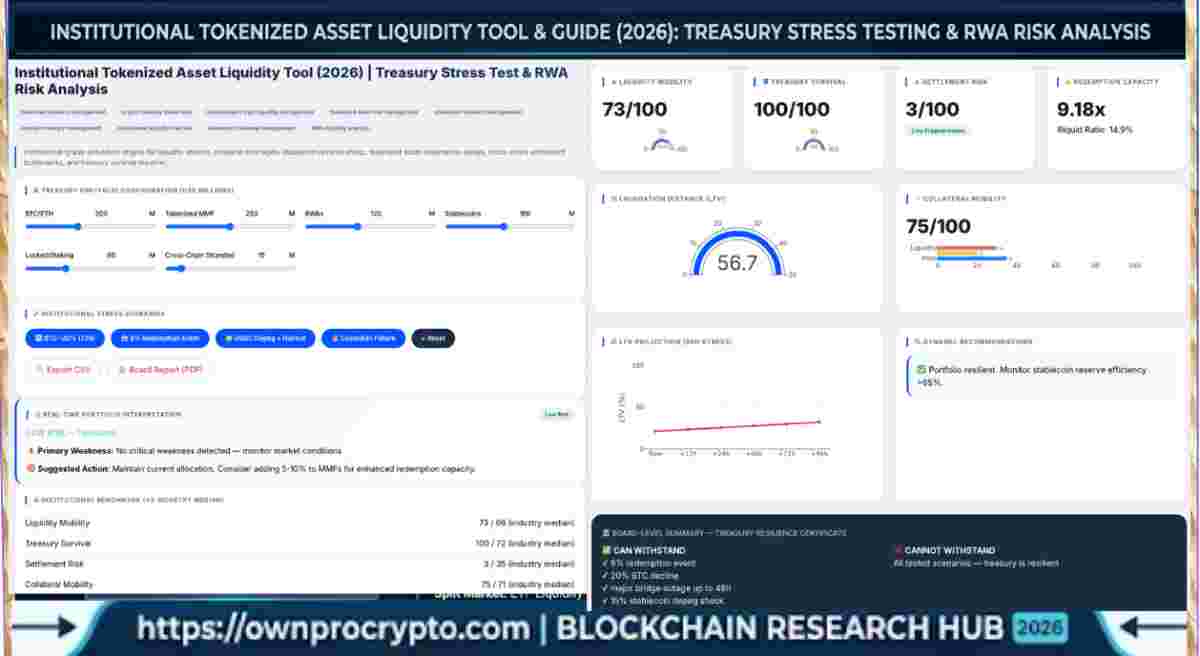
As decentralized organizations and institutional investors expand their on-chain operations, treasury management becomes increasingly sophisticated.
Autonomous treasury systems can assist with routine financial operations while maintaining transparent governance.
| Treasury Activity | AI-Assisted Capability |
|---|---|
| Asset allocation | Policy-based optimization |
| Stablecoin reserves | Liquidity monitoring |
| Yield strategies | Opportunity evaluation |
| Risk controls | Continuous exposure analysis |
| Cash management | Automated reporting |
| Governance support | Proposal analysis |
Human governance remains responsible for defining policies.
Automation assists with implementation and monitoring.
Three technologies are converging to reshape digital finance.
Together they form the foundation of an increasingly automated financial ecosystem.
                   Artificial Intelligence
               Analysis • Prediction • Planning
                         ▼
Real-World Assets ─── DeFi Infrastructure ─── Blockchain
      Tokenization      Smart Contracts        Settlement
                         ▼
              Autonomous Financial Systems
Each technology complements the others.
AI improves decision quality.
Blockchain provides verifiable ownership.
DeFi automates execution.
RWAs introduce productive real-world assets into programmable financial markets.
Institutional adoption is expected to progress through multiple stages rather than a single transition.
| Phase | Primary Focus | Typical Capabilities |
|---|---|---|
| Phase 1 | Digital asset infrastructure | Custody, wallets, compliance |
| Phase 2 | Tokenized finance | Stablecoins, RWAs, settlement |
| Phase 3 | Treasury automation | Portfolio management, reporting |
| Phase 4 | Autonomous finance | AI-assisted optimization |
| Phase 5 | Intelligent financial networks | Continuous policy-driven operations |
This progression reflects increasing operational maturity rather than replacing existing financial systems overnight.
Despite rapid innovation, Autonomous DeFi is still an emerging area.
Organizations should evaluate both opportunities and operational constraints.
| Risk Category | Description | Mitigation |
|---|---|---|
| AI model limitations | Recommendations may be incomplete or inaccurate | Human review and validation |
| Smart contract vulnerabilities | Code flaws can affect protocol security | Audited protocols and ongoing monitoring |
| Oracle dependency | External data quality affects outcomes | Multiple trusted oracle providers |
| Liquidity risk | Market conditions may reduce exit capacity | Diversification and liquidity analysis |
| Governance changes | Protocol upgrades may alter behavior | Continuous governance monitoring |
| Regulatory evolution | Compliance requirements continue to develop | Adaptive governance frameworks |
The strongest implementations combine automation with transparent governance and disciplined oversight.
Financial infrastructure is evolving through several distinct stages.
| Generation | Defining Innovation |
|---|---|
| Traditional Finance | Centralized institutions |
| Digital Finance | Online banking and electronic payments |
| Decentralized Finance | Programmable financial protocols |
| Autonomous Finance | AI-assisted financial operations |
| Intelligent Financial Networks | Continuous optimization across interconnected systems |
Rather than replacing human decision-makers, Autonomous DeFi expands the tools available for managing increasingly complex financial environments.
Decentralized finance began by making money programmable.
The next stage is making financial operations more adaptive, data-informed, and policy-driven.
Autonomous DeFi does not replace human judgment, governance, or responsibility. Instead, it combines blockchain transparency, programmable smart contracts, AI-assisted analysis, and tokenized assets to reduce operational complexity and improve decision support.
As institutions, developers, and investors increasingly integrate artificial intelligence into decentralized financial systems, the competitive advantage will not come from automation alone.
It will come from building systems that are secure, transparent, explainable, and resilient.
The future of finance is not simply automated.
| Theme | Summary |
|---|---|
| Autonomous DeFi | Combines AI, smart contracts, and blockchain infrastructure |
| AI Agents | Improve financial analysis and operational efficiency |
| Smart Contracts | Execute transparent, programmable financial rules |
| RWAs | Connect traditional assets with decentralized markets |
| Treasury Automation | Enhances organizational capital management |
| Intent-Based Finance | Simplifies user interaction with complex infrastructure |
| Institutional Adoption | Focuses on governance, transparency, and scalability |
| Security | Human oversight remains essential despite automation |
What is Autonomous DeFi?
Autonomous DeFi combines artificial intelligence, smart contracts, blockchain infrastructure, and automation to support financial analysis and execute predefined strategies with minimal manual intervention.
Is Autonomous DeFi different from traditional DeFi?
Yes. Traditional DeFi automates financial transactions, while Autonomous DeFi adds intelligent analysis and decision support above existing protocols.
Can AI replace smart contracts?
No. Smart contracts remain responsible for secure execution. AI supports analysis, planning, and optimization before execution occurs.
What role do AI agents play in DeFi?
AI agents analyze market conditions, compare opportunities, monitor portfolio risk, and assist users with strategy recommendations.
Is Autonomous DeFi fully automated?
Most implementations combine automation with user-defined permissions and human oversight rather than completely autonomous decision-making.
How does Autonomous DeFi improve portfolio management?
It continuously monitors risk, liquidity, diversification, and yield opportunities while helping users maintain strategies aligned with predefined objectives.
What are the biggest risks?
Common risks include smart contract vulnerabilities, oracle failures, liquidity constraints, governance changes, evolving regulations, and AI model limitations.
How do tokenized real-world assets fit into Autonomous DeFi?
RWAs introduce traditional assets such as government securities, real estate, and private credit into programmable financial systems where AI can help optimize allocation and monitoring.
Can institutions use Autonomous DeFi?
Yes. Institutional use cases include treasury management, automated reporting, portfolio monitoring, compliance workflows, and digital asset operations.
Does Autonomous DeFi eliminate financial intermediaries?
Not entirely. It reduces reliance on manual operational processes while introducing programmable infrastructure and policy-based automation.
Is Autonomous DeFi suitable for beginners?
New users should first understand blockchain fundamentals, wallet security, smart contracts, and DeFi risk management before using advanced automation.
What is intent-based finance?
Intent-based finance allows users to specify financial goals, while underlying infrastructure determines how those objectives are executed across supported protocols.
How important are oracles?
Oracle networks provide trusted external data such as market prices, enabling lending, derivatives, insurance, and other financial applications to function correctly.
Will Autonomous DeFi replace traditional finance?
It is more likely to complement existing financial systems by improving operational efficiency, transparency, and programmable financial services.
What is the future of Autonomous DeFi?
Future development is expected to focus on intelligent treasury management, AI-assisted governance, tokenized assets, intent-based user experiences, and increasingly integrated financial ecosystems.
Build a deeper understanding of the technologies shaping autonomous financial infrastructure through these connected guides:
AI Agents in Web3: Architecture & Autonomous Blockchain Systems (2026)
Artificial Intelligence Crypto: AI Agents, MEV & Automated Trading
Web3 AI Systems Hub (2026): AI Agents, 17+ Automation Templates & Blockchain Workflows
Top 10 DeFi Categories 2026: The Financial Operating System of the Modern Economy
DeFi Risk Analysis Guide: Complete Framework for Evaluating Protocol Security & Sustainable Yield
DeFi Protocol Analysis Guide: How to Find Sustainable Yield (2026)
Institutional Crypto Infrastructure: Governance & Legacy Integration
How Institutional Crypto Governance Works: Framework, Layers & Compliance
RWA Tokenization Hub (2026): Real-World Assets & the Future of Capital Markets
Institutional RWA Portfolio Strategy
Crypto Security Hub (2026): Complete Guide to Digital Asset Protection
The development of Autonomous DeFi depends on reliable approaches to managing the risks created by AI agents and automated decision-making systems. The National Institute of Standards and Technology (NIST) provides the AI Risk Management Framework (AI RMF), a voluntary framework designed to help organizations manage AI risks and promote trustworthy, secure, and responsible AI systems. Developers and organizations building autonomous financial systems can use this guidance as a reference when designing, evaluating, and governing AI-driven applications.
Official Resource: https://www.nist.gov/itl/ai-risk-management-framework
Building secure Autonomous DeFi systems requires more than connecting AI agents to smart contracts. Organizations should also consider how AI systems are governed, monitored, evaluated, and managed throughout their lifecycle. The NIST AI Risk Management Framework provides practical guidance organized around four core functions — Govern, Map, Measure, and Manage — that can help teams establish a structured approach to AI risk management as autonomous financial systems become more sophisticated.
Official Resource: https://www.nist.gov/itl/ai-risk-management-framework/nist-ai-rmf-playbook