
Search by title, topic or phrase
Use our Crypto Search Engine 🔍 to find the topics and keywords you're looking for.
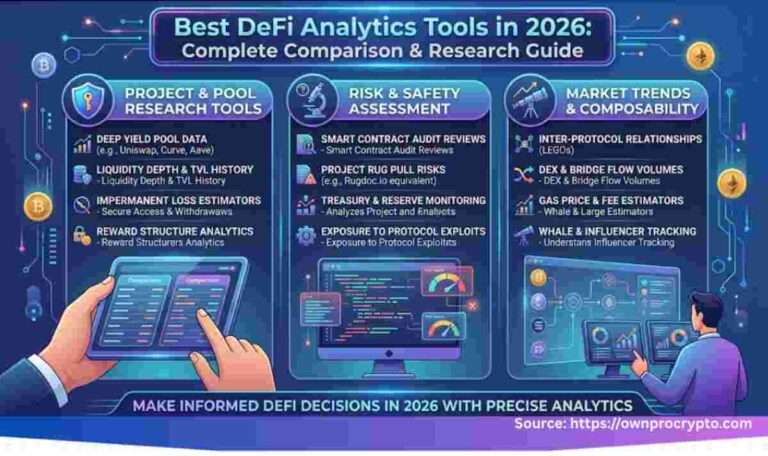
Table of Contents
ToggleDecentralized finance has evolved from a small experimental ecosystem into a global financial infrastructure layer with thousands of protocols, multiple blockchain networks, and billions of dollars in user activity.
However, the biggest challenge in DeFi is no longer finding information.
The challenge is understanding:
This is where DeFi analytics tools become essential.
The best DeFi analytics platforms transform complex blockchain activity into understandable research insights by analyzing:
For investors, researchers, and institutions, DeFi analytics is not simply about viewing dashboards.
It is about answering a much more important question:
“Does this protocol create sustainable value, or is the current growth only temporary?”
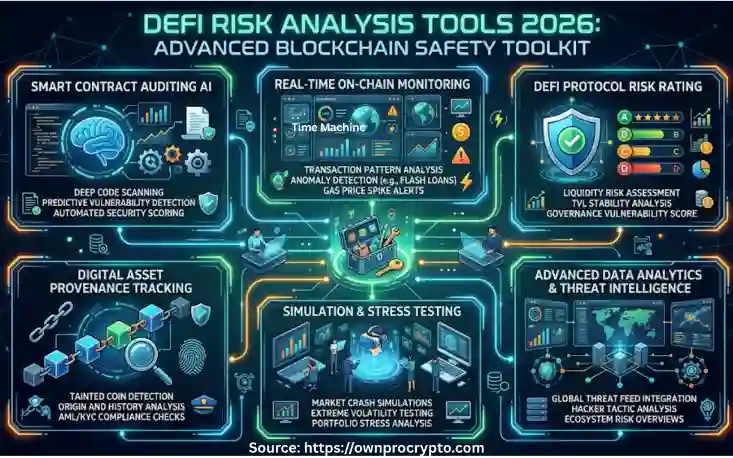
Best DeFi analytics tools are platforms that collect, organize, and interpret blockchain data to help users evaluate decentralized finance protocols, markets, and investment opportunities.
Blockchains are transparent by design.
Every transaction, smart contract interaction, liquidity movement, and wallet activity is publicly recorded.
However, raw blockchain data is difficult to analyze.
A blockchain explorer may show thousands of transactions, but it does not automatically explain:
DeFi analytics platforms solve this problem by converting raw blockchain activity into structured intelligence.
The process usually follows four layers:
Blockchain Activity
        ↓
Data Collection & Indexing
        ↓
Analytics Processing
        ↓
Research Insights & Decisions
The result is a clearer understanding of:
Instead of asking:
“How many transactions happened?”
Investors can ask:
“Are these transactions creating meaningful economic value?”
DeFi investment decisions require more than watching token prices.
A token may increase in price while:
Likewise, a protocol with strong fundamentals may not always receive immediate market attention.
Analytics tools help investors move beyond speculation by analyzing measurable indicators.
A healthy DeFi protocol is usually supported by multiple growth signals:
User Growth
Important indicators:
Economic Activity
Measured through:
Liquidity Strength
Analyzed through:
For a complete framework on evaluating protocol health, readers can explore:
DeFi Risk Analysis 2026: The Complete Framework for Evaluating Protocol Security, Yield & Smart Contract Risk
https://ownprocrypto.com/defi-risk-analysis/
Many beginners associate DeFi analytics only with Total Value Locked (TVL).
TVL is an important metric, but it is only one part of the evaluation process.
A complete DeFi analysis framework includes:
| Metric | What It Reveals |
|---|---|
| TVL | Capital deposited into protocols |
| Revenue | Economic sustainability |
| Fees | User-generated activity |
| Active Users | Adoption strength |
| Volume | Market participation |
| Liquidity | Trading efficiency |
| Developers | Ecosystem growth |
A protocol with high TVL but weak revenue may have different fundamentals from a protocol generating strong fees with lower capital requirements.
Professional investors rarely evaluate a DeFi project using one metric.
A stronger workflow combines:
Market Analysis
Questions:
Financial Analysis
Questions:
Technical Analysis
Questions:
A complete protocol evaluation system requires combining analytics, tokenomics, and risk assessment.
Related resource:
Crypto Protocol Evaluation System: Crypto Due Diligence, DeFi Protocol Analysis, Tokenomics Analysis & Crypto Risk Assessment Tool
https://ownprocrypto.com/crypto-protocol-evaluation-system/
Many users confuse blockchain explorers with analytics platforms.
They serve different purposes.
| Tool Type | Purpose |
|---|---|
| Blockchain Explorer | View individual transactions |
| DeFi Analytics Platform | Understand market trends |
| Blockchain Analytics Tool | Investigate wallets and networks |
| Research Platform | Evaluate investments |
A blockchain explorer answers:
“What happened?”
A DeFi analytics platform answers:
“What does it mean?”
Different users require different levels of analysis.
Investors use analytics tools to:
Researchers use platforms for:
Builders analyze:
Institutions require deeper intelligence:
For broader institutional frameworks:
Capital Efficiency in Crypto 2026: Real Yield, DeFi Risk & Institutional Allocation Framework
https://ownprocrypto.com/capital-efficiency-in-crypto/
Not every analytics platform solves the same problem.
This comparison evaluates platforms based on:
Data Coverage
Questions:
Analytics Depth
Important capabilities:
User Experience
A good platform should serve:
Research Flexibility
Advanced users need:
Reliability and Transparency
Quality analytics require:
Different platforms emphasize different approaches. For example, DefiLlama is widely used for ecosystem tracking and TVL-focused analysis, while Dune is designed around custom blockchain queries and dashboards.
One of the biggest mistakes investors make is searching for a single “best” platform.
In reality, each tool has a different specialty:
Best known for:
Best known for:
Best known for:
Best known for:
Artemis focuses on standardized on-chain metrics and investor-oriented blockchain analysis.
The next generation of DeFi analytics will move beyond simple dashboards.
Future platforms will combine:
The goal is not only to understand what happened.
The goal is to identify:
before they become obvious.
The strongest investors combine multiple tools and frameworks:
Market Discovery
        ↓
Protocol Analytics
        ↓
Financial Evaluation
        ↓
Risk Assessment
        ↓
Investment Decision
Supporting resources:
Smart Contract Risk Calculator: DeFi Risk Scanner for Protocol Security Analysis
https://ownprocrypto.com/smart-contract-risk-calculator/
DeFi Protocol Analysis Guide: How to Find Sustainable Yield (2026)
https://ownprocrypto.com/defi-protocol-analysis/

The DeFi analytics ecosystem has expanded significantly, with different platforms specializing in different types of blockchain intelligence.
Some tools focus on ecosystem visibility.
Others focus on financial analysis, custom research, or institutional data.
Choosing the right platform depends on the type of questions you need to answer.
For example:
A DeFi investor may ask:
“Which protocols are growing the fastest?”
A financial analyst may ask:
“Which protocols generate sustainable revenue?”
A researcher may ask:
“How are users interacting with this smart contract?”
An institution may ask:
“What blockchain ecosystems show long-term adoption potential?”
Different tools solve different problems.
| Platform | Primary Focus | Best For | Main Strength |
|---|---|---|---|
| DefiLlama | DeFi ecosystem analytics | Investors & researchers | TVL and protocol tracking |
| Dune | Custom blockchain analytics | Analysts & advanced users | Query-based dashboards |
| Token Terminal | Financial intelligence | Investors & funds | Revenue and fundamentals |
| Artemis | Institutional blockchain intelligence | Professional research teams | Ecosystem analytics |
The biggest difference between DefiLlama and Dune is their approach to blockchain data.
DefiLlama provides ready-to-use dashboards.
Dune allows users to build their own analysis.
DefiLlama has become one of the most recognized DeFi analytics platforms because it provides a simple way to understand the overall ecosystem.
Users can monitor:
Its biggest advantage is accessibility.
A user does not need technical blockchain knowledge to understand:
Key advantages:
Simple Research Workflow
Users can quickly compare:
Broad DeFi Coverage
Useful for tracking:
Free Accessibility
DefiLlama is popular because much of its core data is publicly available.
However, TVL-focused analytics has limitations.
High TVL does not always mean:
Investors should combine TVL analysis with:
Related framework:
Real Yield vs Token Incentives: Sustainable DeFi Tokenomics Explained (2026)
https://ownprocrypto.com/real-yield-vs-token-incentives/
Dune takes a different approach.
Instead of providing only predefined dashboards, Dune allows users to query blockchain data and create customized analytics.
It is closer to a blockchain research laboratory.
Dune enables users to analyze:
Researchers can create dashboards based on their own questions.
Dune is powerful because it allows deeper investigation.
Examples:
A researcher can analyze:
The flexibility comes with complexity.
Challenges include:
A beginner looking for simple rankings may find Dune overwhelming.
While DefiLlama focuses heavily on ecosystem activity, Token Terminal approaches DeFi from a financial perspective.
It helps users analyze protocols like businesses.
Important measurements include:
Token Terminal helps answer questions such as:
This makes it useful for investors who want fundamental analysis rather than only activity metrics.
Potential limitations:
It is not designed to replace:
Artemis focuses on deeper ecosystem analysis and professional blockchain research.
It is designed for users who need broader market intelligence.
Includes analysis of:
Professional investors often need answers beyond individual protocols.
They analyze:
Because it is designed for professional research workflows:
There is no universal winner.
The best choice depends on your objective.
| Goal | Recommended Tool |
|---|---|
| Track DeFi ecosystem growth | DefiLlama |
| Build custom blockchain research | Dune |
| Analyze protocol fundamentals | Token Terminal |
| Study blockchain ecosystems | Artemis |
Advanced research rarely depends on one platform.
A complete workflow may look like:
Discover Protocols
        ↓
DefiLlama
        ↓
Analyze Blockchain Activity
        ↓
Dune
        ↓
Evaluate Financial Performance
        ↓
Token Terminal
        ↓
Assess Ecosystem Strength
        ↓
Artemis
Each tool answers a different question.
Together they create a stronger DeFi intelligence framework.
For many serious researchers:
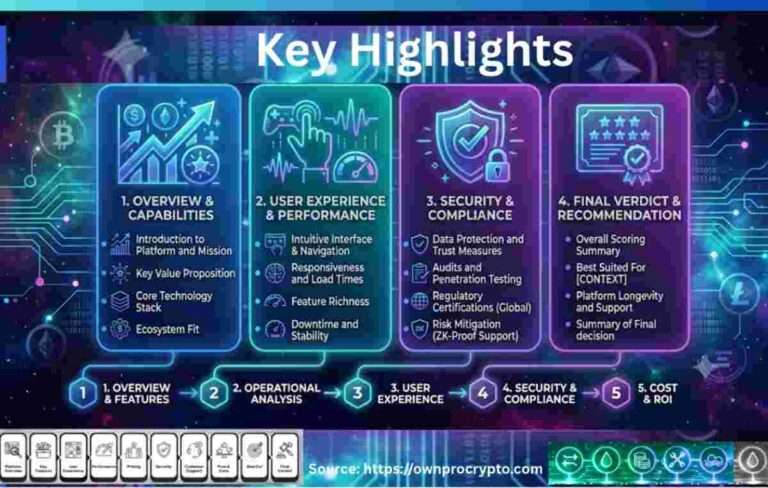
Choosing the best DeFi analytics tool is only the first step.
The real value comes from understanding which metrics matter and how to interpret them.
A dashboard can display hundreds of numbers, but experienced investors focus on the signals that reveal:
A successful DeFi analysis framework does not depend on one metric.
It combines multiple indicators to understand the complete health of a protocol.
Total Value Locked (TVL) represents the amount of capital deposited into a DeFi protocol.
It is one of the most commonly tracked metrics across DeFi analytics platforms.
TVL helps answer:
Platforms like DefiLlama are widely used for monitoring TVL across thousands of protocols.
A growing TVL can indicate:
For example:
A lending protocol with increasing deposits may indicate stronger market demand.
A decentralized exchange with growing liquidity may provide better trading conditions.
TVL is important, but it should never be analyzed alone.
A high TVL does not automatically mean:
Some protocols attract liquidity through:
A complete evaluation requires additional metrics.
Revenue is one of the most important metrics for understanding whether a DeFi protocol creates sustainable value.
Unlike TVL, which measures deposited capital, revenue shows whether users generate economic activity.
Important questions:
A major difference between strong and weak DeFi protocols is the source of growth.
Healthy growth often comes from:
Less sustainable growth may depend on:
For deeper analysis:
Real Yield vs Token Incentives: Sustainable DeFi Tokenomics Explained (2026)
https://ownprocrypto.com/real-yield-vs-token-incentives/
A protocol is only valuable if people actually use it.
User activity helps measure:
Important user metrics include:
A protocol with increasing users may indicate:
However, users should also analyze user quality.
High transaction numbers do not always mean meaningful adoption.
Investors should compare:
A healthy protocol usually shows multiple positive signals together.
Trading volume is especially important for:
Volume helps measure:
Not all volume represents healthy activity.
Investors should ask:
Artificial volume can create misleading growth signals.
Liquidity determines how effectively users can interact with a protocol.
Important liquidity factors include:
For users:
Better liquidity means:
For investors:
Liquidity provides insight into:
A DeFi protocol can have strong usage but weak token economics.
Investors should analyze:
Important questions:
Developer activity is often overlooked but provides important signals.
Indicators include:
A growing developer ecosystem can indicate long-term potential.
Financial metrics alone are not enough.
A protocol can have:
and still contain serious risks.
Security evaluation should include:
For deeper security evaluation:
Smart Contract Risk Calculator: DeFi Risk Scanner for Protocol Security Analysis
https://ownprocrypto.com/smart-contract-risk-calculator/
Professional investors usually combine multiple categories.
A simple framework:
| Category | Key Questions |
|---|---|
| Adoption | Are users growing? |
| Financial Health | Is revenue sustainable? |
| Liquidity | Is capital healthy? |
| Tokenomics | Does value reach holders? |
| Security | Are risks controlled? |
| Competition | Can the protocol maintain position? |
No single platform provides the complete picture.
For example:
Combining multiple sources creates stronger research conclusions.
The future of DeFi research is not about collecting more numbers.
It is about understanding relationships between metrics.
Example:
A protocol with:
✓ Rising users
✓ Growing revenue
✓ Stable liquidity
✓ Strong security
creates a very different picture from a protocol with:
✓ High TVL
✗ Falling users
✗ Weak revenue
✗ Heavy incentives
Analytics tools provide the data.
Investors must understand the story behind the data.
A practical workflow:
Discover Protocol
        ↓
Analyze Market Position
        ↓
Review Metrics
        ↓
Evaluate Revenue
        ↓
Check Security
        ↓
Assess Long-Term Potential
For a complete protocol evaluation approach:
DeFi Protocol Analysis Guide: How to Find Sustainable Yield (2026)
https://ownprocrypto.com/defi-protocol-analysis/

DefiLlama has become one of the most widely used DeFi analytics platforms for tracking decentralized finance markets.
Its popularity comes from one simple advantage:
It makes complex DeFi ecosystem data easy to understand.
Instead of requiring users to analyze raw blockchain information, DefiLlama organizes thousands of protocols into accessible dashboards covering:
For many investors beginning their DeFi research journey, DefiLlama is often the first analytics platform they use.
While many DeFi analytics platforms provide ready-made dashboards, Dune takes a different approach.
Dune is designed for users who want to explore blockchain data, create custom queries, and build personalized research dashboards.
Instead of only asking:
“How much TVL does this protocol have?”
Dune allows researchers to investigate deeper questions:
This makes Dune one of the most powerful platforms for advanced DeFi research and on-chain analysis.
While many DeFi analytics platforms focus on activity, liquidity, and blockchain usage, Token Terminal approaches decentralized finance from a financial perspective.
Its primary goal is simple:
Measure crypto protocols using financial metrics similar to traditional companies.
Instead of only asking:
“How much capital is locked in this protocol?”
Token Terminal helps answer:
“Does this protocol generate sustainable economic value?”
This makes it valuable for investors who want to move beyond market hype and evaluate:
As the crypto industry matures, investors are looking beyond individual protocols.
The important questions are becoming broader:
This is where Artemis provides a different type of analysis.
While many DeFi analytics platforms focus on individual protocols, Artemis focuses on understanding blockchain ecosystems through measurable adoption and network activity.
It helps researchers evaluate:
For institutional investors and professional researchers, this broader perspective can provide valuable context before allocating capital.
The DeFi ecosystem contains different types of participants, and each group requires different types of information.
A beginner may simply want to understand:
An investor may need:
A researcher may require:
An institution may require:
Because of these differences, there is no universal “best” DeFi analytics platform.
The right tool depends on the research objective.
The DeFi analytics market has expanded significantly, with each platform specializing in a different layer of blockchain intelligence.
Choosing the right tool depends on what type of research you need.
A beginner looking for ecosystem trends does not need the same platform as an institutional analyst evaluating blockchain adoption.
The four major platforms compared in this guide represent four different research philosophies:
| Platform | Research Philosophy |
|---|---|
| DefiLlama | Understand where DeFi activity is happening |
| Dune | Investigate what is happening on-chain |
| Token Terminal | Measure economic value and financial performance |
| Artemis | Understand ecosystem growth and adoption |
| Feature | DefiLlama | Dune | Token Terminal | Artemis |
|---|---|---|---|---|
| Main Purpose | DeFi ecosystem tracking | Custom blockchain analytics | Crypto financial intelligence | Blockchain ecosystem analysis |
| Best For | Investors & beginners | Researchers & analysts | Fundamental investors | Institutions |
| Primary Data | TVL, protocols, chains | Transactions, wallets, contracts | Revenue, fees, valuation | Adoption, ecosystem growth |
| Learning Curve | Low | High | Medium | Medium |
| Custom Analysis | Limited | Excellent | Limited | Moderate |
| Protocol Comparison | Strong | Custom-built | Strong | Ecosystem-focused |
| Financial Metrics | Basic | Custom possible | Excellent | Moderate |
| Wallet Analysis | Limited | Strong | Limited | Moderate |
| Multi-Chain Research | Strong | Strong | Strong | Strong |
Pricing models vary because these platforms serve different audiences.
For serious DeFi research, the strongest approach is not choosing one winner.
It is combining specialized tools.
A complete stack:
Market Overview
        ↓
DefiLlama

On-Chain Investigation
        ↓
Dune

Financial Analysis
        ↓
Token Terminal

Ecosystem Intelligence
        ↓
Artemis

Security & Risk Evaluation
        ↓
Research Framework
This creates a complete view of:
Each platform wins a different category:
| Category | Winner |
|---|---|
| Best Overall Starting Point | DefiLlama |
| Best Advanced Research | Dune |
| Best Financial Analysis | Token Terminal |
| Best Institutional Intelligence | Artemis |
The “best” DeFi analytics tool is not the one with the most features.
It is the one that provides the right information for the decision you need to make.
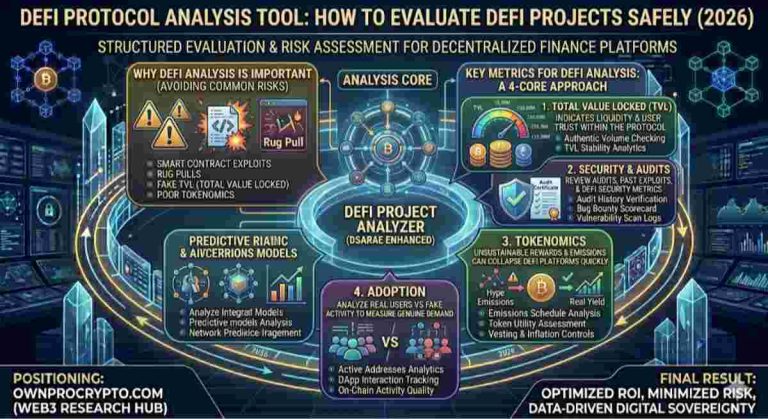
DeFi analytics tools become significantly more powerful when used together.
A common mistake among new investors is relying on a single metric or dashboard.
For example:
Professional researchers combine multiple information layers before making decisions.
A complete DeFi research workflow evaluates:
The goal is not collecting more data.
The goal is transforming data into better decisions.
The first stage is identifying where activity is happening.
At this stage, investors are not making final decisions.
They are creating a research shortlist.
Important questions:
DefiLlama is useful during the discovery phase because it provides a broad overview of:
Example workflow:
A researcher notices a lending category growing rapidly.
They can investigate:
After discovering a protocol, the next step is understanding actual usage.
A protocol can appear successful because of:
Researchers need to determine whether real users are interacting with the platform.
Dune helps answer deeper questions:
Example:
A protocol shows increasing TVL.
Dune analysis can help determine:
Is this growth coming from:
✓ More users?
✓ More transactions?
✓ Genuine adoption?
Or only:
✗ Temporary capital incentives?
Growth without economics is difficult to sustain.
A professional analysis examines:
Token Terminal helps investors analyze protocols using financial concepts.
Important questions:
A protocol with strong fundamentals usually demonstrates some connection between:
Individual protocols do not exist independently.
They depend on:
Artemis provides broader ecosystem intelligence.
Researchers can examine:
Example:
Two protocols may have similar metrics.
However:
Protocol A operates in a growing ecosystem.
Protocol B operates in a declining ecosystem.
The long-term outlook may be very different.
Analytics show opportunity.
Security analysis identifies risk.
A complete DeFi workflow should examine:
A protocol can have excellent numbers and still contain serious vulnerabilities.
Supporting resources:
Smart Contract Risk Calculator: DeFi Risk Scanner for Protocol Security Analysis
https://ownprocrypto.com/smart-contract-risk-calculator/
Crypto Security Standards: Wallet & Asset Protection Guide (2026)
https://ownprocrypto.com/crypto-security-standards/
A strong protocol does not only attract users.
It must create sustainable value.
Important tokenomics questions:
One of the most important DeFi research questions:
“Is this growth generated by real demand or temporary rewards?”
Healthy ecosystems usually develop through:
Less sustainable models often depend heavily on:
Professional investors often organize research into categories.
Example framework:
| Category | Questions |
|---|---|
| Market | Is the sector growing? |
| Adoption | Are users increasing? |
| Financials | Does the protocol generate value? |
| Tokenomics | Is value captured? |
| Security | Are risks controlled? |
| Competition | Can it maintain position? |
This prevents emotional decision-making.H3 — Why Data Alone Is Not Enough in DeFi Research
Analytics platforms provide information.
They do not automatically provide conclusions.
The same metric can mean different things depending on context.
Example:
Increasing TVL:
Positive interpretation:
✓ More users trust the protocol
Possible negative interpretation:
✗ Temporary incentives attracted capital
Increasing revenue:
Positive interpretation:
✓ Sustainable demand
Possible negative interpretation:
✗ Short-term market activity
Professional analysis requires understanding the story behind the numbers.
Institutional research usually follows a more structured process.
They evaluate:
Market Opportunity
Protocol Fundamentals
Risk Management
Portfolio Fit
The next evolution of DeFi analytics will move beyond dashboards.
Future systems will combine:
Instead of manually reviewing hundreds of metrics, researchers will increasingly use intelligent systems to identify:
Related resource:
Autonomous DeFi 2026: AI Agents & The Future of Automated Finance
https://ownprocrypto.com/autonomous-defi/
The strongest approach combines:
| Research Layer | Tool Type |
|---|---|
| Market Discovery | DefiLlama |
| Blockchain Activity | Dune |
| Financial Analysis | Token Terminal |
| Ecosystem Intelligence | Artemis |
| Security Analysis | Risk Tools |
| Due Diligence | Evaluation Frameworks |
The future of DeFi investing will belong to those who can combine multiple intelligence sources into a complete decision framework.

A popular tool may not match your research needs.
No single analytics platform provides the complete picture.
Growth metrics do not guarantee safety.
Analytics provide information.
Good decisions require:
The next generation of analytics will become more intelligent.
Future platforms will likely combine:
The future question will change from:
“What happened?”
to:
“What is likely to happen next?”
Analytics will become increasingly proactive rather than simply historical.
The DeFi ecosystem has evolved from a simple collection of decentralized applications into a complex financial infrastructure layer.
As the industry grows, investors and researchers need more than price charts and basic market data.
Understanding DeFi requires multiple perspectives:
This is why DeFi analytics tools have become essential.
The strongest choices are:
| Goal | Best Choice |
|---|---|
| Start DeFi research | DefiLlama |
| Analyze blockchain activity | Dune |
| Evaluate protocol economics | Token Terminal |
| Study ecosystem growth | Artemis |
| Professional research | Combined Stack |
The best DeFi analytics strategy is not choosing one platform.
It is building a complete intelligence system.
The future of DeFi research belongs to users who can combine:
into one complete decision framework.
However, the biggest lesson from this comparison is:
There is no single perfect DeFi analytics platform.
Each tool specializes in a different intelligence layer.
What Is the Best DeFi Analytics Tool in 2026?
The best DeFi analytics tool depends on your specific research objectives:
In practice, professional researchers typically combine multiple platforms rather than relying on a single one.
Is DefiLlama the Best DeFi Analytics Platform?
DefiLlama is widely considered one of the best platforms for discovering market trends and monitoring ecosystem activity.
Its strongest features include:
Is Dune Better Than DefiLlama?
Neither platform is universally better because they address different research needs:
A professional crypto workflow regularly integrates both tools.
What Tools Do Professional Crypto Investors Use?
Professional investors structure their research layer-by-layer:
How Do I Research a DeFi Project Before Investing?
A thorough DeFi research framework involves five core steps:
What Is the Difference Between DeFi Analytics and Crypto Portfolio Tracking?
They serve completely different financial functions:
Are DeFi Analytics Tools Free?
Yes, many top-tier DeFi analytics tools offer extensive free functionality:
Can DeFi Analytics Tools Predict Crypto Prices?
No analytics platform can reliably predict future asset prices. DeFi analytics tools are designed to evaluate historical and real-time market activity, user behavior, protocol earnings, and ecosystem trends. They provide data to inform risk management, but they cannot remove market volatility or guarantee returns.
Are DeFi Analytics Tools Safe to Use?
Yes, data and analytics platforms are read-only tools that do not require wallet approvals to view data. However, remember that analytics tools display information; they do not guarantee protocol safety or financial returns. Always pair analytics research with independent security audits and personal risk assessments.
What are DeFi analytics tools?
DeFi analytics tools are specialized data platforms that track, index, and visualize decentralized finance metrics. They monitor Total Value Locked (TVL), decentralized exchange (DEX) volume, borrowing rates, yield opportunities, and protocol revenue across public blockchain networks.
Why are DeFi analytics tools essential for investors?
They provide transparent visibility into protocol health, liquidity depth, collateral ratios, and smart contract activity. This allows investors to evaluate sustainable yields and assess underlying systemic risks without relying on promotional claims or pure price action.
What is Total Value Locked (TVL)?
Total Value Locked measures the total aggregate dollar value of capital deposited in a decentralized finance protocol’s smart contracts. It serves as a core benchmark for measuring user trust, liquidity depth, and overall adoption.
How do DeFi analytics tools track protocol revenue?
They index smart contract interactions to calculate total fees generated by trading, borrowing, and liquidation events. The tools then track how those earnings are distributed across liquidity providers, token holders, and protocol treasuries.
Which platform is best for overall DeFi ecosystem tracking? DefiLlama is widely recognized as the premier platform for overall DeFi data. It provides free, aggregate coverage of total value locked, protocol rankings, stablecoin market caps, yield opportunities, and cross-chain bridge volumes.
What metrics does Token Terminal provide for DeFi protocols?
Token Terminal provides fundamental financial metrics modeled after traditional corporate financial statements. Key metrics include price-to-earnings (P/E) ratios, cumulative fee revenues, protocol net earnings, and fully diluted valuations (FDV).
How do analytics tools track decentralized exchange volume?
They index real-time swap events, liquidity pool changes, and trade routing paths across Automated Market Maker (AMM) contracts to compute daily trading volume, fee generation, and capital velocity.
What are yield tracking tools used for?
Yield tracking tools scan DeFi protocols to aggregate, compare, and rank annual percentage yields (APY/APR) across lending markets, liquidity pools, and automated staking strategies.
How does DefiLlama differ from Token Terminal?
DefiLlama focuses primarily on tracking Total Value Locked, multi-chain activity, stablecoin flows, and yield aggregations for free. Token Terminal specializes in institutional financial modeling, accounting statements, revenue metrics, and valuation multiples.
What is the best tool for analyzing decentralized exchange liquidity?
Platforms such as DefiLlama, Dune, and CoinGecko offer comprehensive data on liquidity pool depth, token trading pairs, slippage parameters, and trading volume across decentralized exchanges.
Can Dune Analytics be used for custom DeFi research?
Yes. Dune allows researchers and analysts to write custom SQL queries to extract granular on-chain data and build custom visual dashboards for tracking specific smart contracts, liquidations, and user behaviors.
What is the best free platform for tracking DeFi stablecoins?
DefiLlama provides real-time, free tracking of stablecoin market capitalization, circulating supply distributions across chains, net mint/burn flows, and peg stability across all major networks.
How do analytics tools evaluate lending protocol risks?
They monitor collateralization ratios, total active borrows, pool utilization rates, and bad debt accumulations to assess market health and flag liquidation risks across decentralized lending platforms.
What is impermanent loss in DeFi analytics?
Impermanent loss tracking measures the value divergence experienced by a liquidity provider when the price ratio of their deposited token pair changes compared to simply holding the assets in a wallet.
Which tools track decentralized finance yields and strategies?
Platforms like DefiLlama Yields, specialized yield aggregators, and custom Dune dashboards allow users to discover, filter, and analyze risk-adjusted yield opportunities across various chains.
How do analytics platforms monitor liquidation events?
Analytics platforms track borrowing positions and collateral health factors in real time, alerting users and visualizing historic cascade liquidations during sharp market downturns.
How do institutional investors use DeFi analytics?
Institutional investors utilize enterprise analytics to conduct quantitative due diligence, track protocol risk parameters, evaluate smart contract security scores, and verify underlying revenue sources before deploying capital.
Do DeFi analytics tools offer APIs for developers?
Yes. Major platforms like DefiLlama, Token Terminal, and The Graph offer robust API endpoints and indexers that enable developers to feed real-time on-chain data into trading bots, applications, or custom dashboards.
Why is historical data important in DeFi analytics?
Historical data enables researchers to backtest yield strategies, evaluate how protocols performed during extreme market stress events, and assess long-term token emission sustainability.
DeFi analytics works best as part of a connected research process. Analytics platforms help measure what is happening across protocols, chains, users, liquidity, and financial activity, while the surrounding research resources explain how to interpret those signals, evaluate risk, assess token economics, and determine whether a protocol deserves deeper due diligence.
These resources answer different questions about the same DeFi research problem. Analytics tools show measurable activity and help identify where something is happening. Protocol analysis interprets whether that activity represents meaningful adoption or sustainable growth. Risk analysis examines what could cause capital loss or operational failure, while tokenomics and capital-efficiency analysis explain how incentives, value capture, and deployed capital affect the underlying economics. The result is a layered research process rather than a dependence on any single dashboard or metric.