
Search by title, topic or phrase
Use our Crypto Search Engine 🔍 to find the topics and keywords you're looking for.

Table of Contents
ToggleBlockchain infrastructure was originally designed around decentralization, permissionless participation, and automated execution. However, when blockchain technology enters institutional environments, the requirements become much broader.
Banks, asset managers, enterprises, payment providers, and regulated financial organizations need more than transaction processing. They require structured systems for accountability, risk management, compliance, security, and operational control.
This additional framework is known as the institutional Crypto Governance and oversight layer.
A blockchain network can confirm transactions, but institutions still need answers to critical questions:
Institutional governance creates the bridge between decentralized technology and traditional organizational requirements.
Blockchain Infrastructure
          ↓
Smart Contract Execution
          ↓
Institutional Governance Layer
          ↓
Compliance, Risk & Operational Oversight
💡 Quick Tip:
Blockchain provides technical trust through cryptography and consensus. Institutional governance adds organizational trust through policies, controls, and accountability.
The early crypto ecosystem focused heavily on removing centralized intermediaries. While this approach enabled innovation, institutional adoption requires a balance between decentralization and controlled operations.
Large organizations operate under strict requirements involving:
A financial institution cannot rely only on blockchain consensus. It also needs governance mechanisms that define how the system should operate.
| Area | Traditional Infrastructure | Institutional Blockchain Infrastructure |
|---|---|---|
| Authority | Central organization | Distributed governance participants |
| Record Keeping | Private databases | Shared blockchain records |
| Rule Enforcement | Manual procedures | Smart contracts and policies |
| Auditing | Periodic reviews | Continuous verification |
| Access Control | Internal permissions | Identity and wallet controls |
| System Changes | Management approval | Governance approval process |
Institutional Crypto Governance does not remove decentralization. Instead, it creates a structured environment where decentralized technology can operate safely within regulated markets.
💡 Quick Tip:
The most successful enterprise blockchain systems usually combine blockchain transparency with traditional governance controls.
Institutional oversight refers to the collection of processes, systems, and participants responsible for monitoring blockchain operations.
Unlike traditional systems where one organization controls infrastructure, blockchain environments often involve multiple parties:
Because responsibility is distributed, governance layers become essential.
A complete institutional oversight framework usually contains four major components:
             Institutional Oversight

                    |
 -----------------------------------------
 |              |             |           |
Policy        Risk       Compliance   Security
Governance   Control     Management   Control

                    ↓

Blockchain InfrastructureThe policy governance layer defines the rules that control how the ecosystem operates.
It establishes:
For example, a digital asset platform may define:
The policy layer acts as the rulebook of the ecosystem.
Policy Creation
       ↓
Governance Approval
       ↓
System Rules Defined
       ↓
Blockchain Execution| Policy Type | Purpose |
|---|---|
| Access Policy | Determines who can use the system |
| Asset Policy | Defines supported digital assets |
| Transaction Policy | Controls transaction limits |
| Upgrade Policy | Manages protocol changes |
| Emergency Policy | Defines response actions |
💡 Quick Tip:
Clear governance policies prevent confusion when multiple organizations interact through shared blockchain infrastructure.
Crypto infrastructure introduces new categories of operational and financial risk.
The risk management layer continuously evaluates:
Institutional systems often combine automated monitoring with human oversight.
Blockchain Activity
        ↓
Risk Monitoring System
        ↓
Risk Assessment
        ↓
Approval / Restriction Action| Risk Category | Example | Control Mechanism |
|---|---|---|
| Technical Risk | Smart contract failure | Security audits |
| Financial Risk | Asset volatility | Exposure limits |
| Operational Risk | Service interruption | Recovery plans |
| Security Risk | Unauthorized access | Permission controls |
| Compliance Risk | Regulatory violation | Monitoring systems |
Risk management ensures blockchain systems remain reliable even during unexpected events.
💡 Quick Tip:
Institutional platforms usually monitor blockchain activity in real time because transaction data cannot be treated like traditional delayed reporting systems.
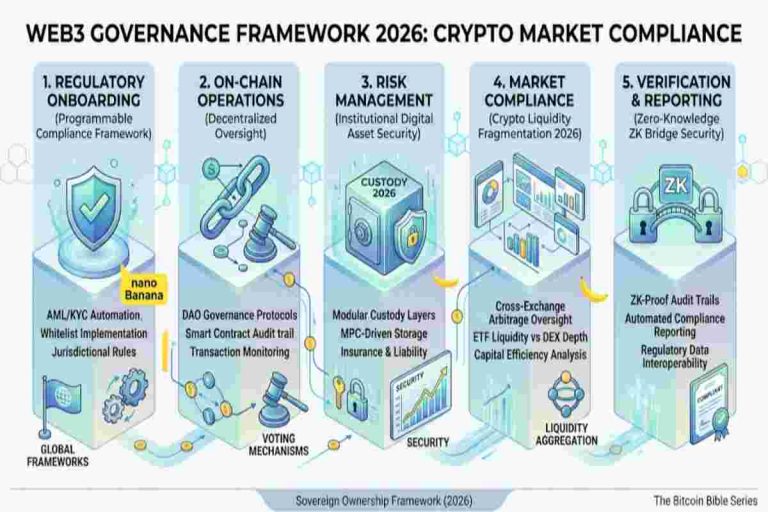
Compliance is one of the biggest differences between public blockchain applications and institutional blockchain deployments.
Organizations must satisfy requirements related to:
The compliance layer connects blockchain activity with legal frameworks.
User Action
      ↓
Identity Verification
      ↓
Compliance Screening
      ↓
Approved Transaction
      ↓
Blockchain Execution| Function | Purpose |
|---|---|
| Identity Verification | Confirm participant identity |
| Transaction Monitoring | Detect suspicious activity |
| Reporting | Provide regulatory visibility |
| Audit Records | Maintain historical evidence |
| Access Control | Restrict unauthorized actions |
Modern blockchain compliance increasingly uses automation to reduce manual processing.
💡 Quick Tip:
Embedding compliance directly into transaction workflows allows institutions to maintain speed without sacrificing regulatory controls.
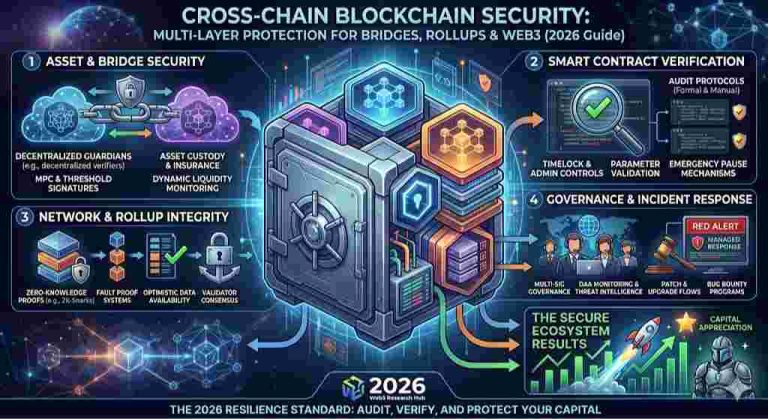
The security and control layer manages access, permissions, and protection of digital assets.
Institutional environments require stronger controls than individual wallets.
Common security mechanisms include:
Example:
Transaction Request
        ↓
Identity Check
        ↓
Permission Verification
        ↓
Multiple Approvals
        ↓
Blockchain Execution
A treasury transaction may require approval from multiple departments:
Treasury Team
       +
Risk Department
       +
Security Officer
       ↓
Transaction Approved
This reduces the possibility of unauthorized actions.
💡 Quick Tip:
Institutional crypto security focuses less on a single strong password and more on layered approval systems.
Institutional blockchain ecosystems are rarely managed by a single organization. Unlike traditional systems where one company may control infrastructure, blockchain environments often involve multiple participants sharing responsibility.
A strong governance model defines who makes decisions, who manages risks, who maintains technology, and who ensures compliance.
This separation becomes especially important when blockchain networks support high-value activities such as:
A typical institutional governance structure looks like this:
                 Governance Framework

                         |
 ------------------------------------------------
 |              |              |                |
Financial     Regulatory    Technology      Security
Institutions  Bodies        Providers       Teams

                         ↓

              Blockchain Infrastructure
Each participant contributes a specific responsibility within the ecosystem.
| Participant | Main Responsibility |
|---|---|
| Financial Institutions | Asset management and operational decisions |
| Regulators | Compliance standards and oversight |
| Blockchain Operators | Network operations and maintenance |
| Custodians | Digital asset protection |
| Security Teams | Threat monitoring and response |
| Auditors | Verification and transparency |
| Technology Providers | Infrastructure development |
The goal of institutional Crypto governance is not to recreate traditional centralized control. Instead, it creates accountability across a distributed technology environment.
💡 Quick Tip:
When multiple organizations share blockchain infrastructure, clearly defined responsibilities prevent operational conflicts and improve trust between participants.
Institutional blockchain systems often create formal governance groups to manage important decisions.
These groups act as decision-making bodies that oversee policies, risks, technical changes, and operational requirements.
Common governance bodies include:
A structured governance model may look like:
             Executive Governance Board
                       ↓
 ------------------------------------------------
 |                    |                         |
Risk Committee   Compliance Team      Technical Committee
                       ↓
              Operational Teams
Each group has a different role.
The governance committee manages strategic decisions and long-term direction.
Responsibilities include:
Example decisions:
The risk committee focuses on protecting the ecosystem from financial and operational threats.
Responsibilities include:
Example:
Risk Event Detected
        ↓
Risk Committee Review
        ↓
Control Decision
        ↓
Action ImplementedThe compliance committee ensures blockchain operations align with regulatory requirements.
Responsibilities include:
The committee connects technical infrastructure with legal obligations.
The technical committee manages infrastructure decisions.
Responsibilities include:
A technical decision may require approval before implementation:
Technical Proposal
        ↓
Security Review
        ↓
Governance Approval
        ↓
System Upgrade
💡 Quick Tip:
Separating technical authority from governance authority reduces the risk of one team making unchecked infrastructure changes.
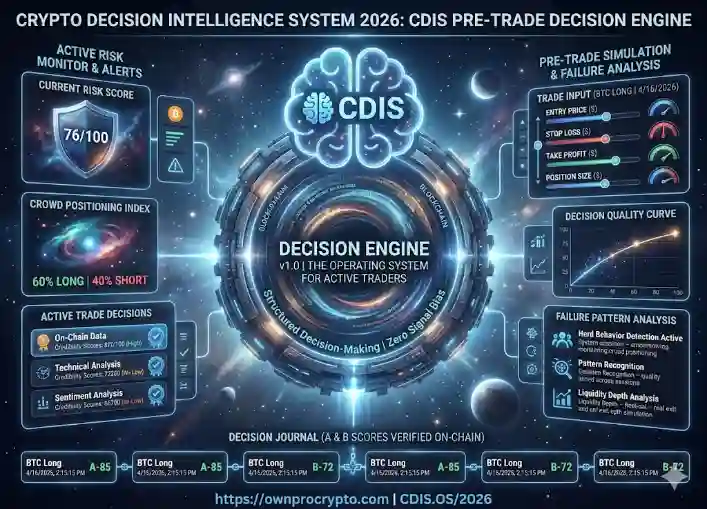
Different blockchain ecosystems use different governance models depending on their level of decentralization and institutional requirements.
The three common approaches are:
In this model, one organization controls major decisions.
Institution
     ↓
Policy Decisions
     ↓
Blockchain Operations
Advantages:
| Benefit | Description |
|---|---|
| Faster decisions | Fewer approval layers |
| Clear ownership | Single responsible organization |
| Easier compliance | Simple accountability structure |
Limitations:
This model is common when a financial institution operates a private blockchain environment.
Consortium governance distributes control among multiple organizations.
Example:
Institution A
     ↓
Institution B
     ↓
Governance Council
     ↓
Institution C
     ↓
Blockchain Network
Advantages:
Common use cases:
Consortium governance is often preferred by institutions because it balances collaboration with accountability.
Distributed governance allows multiple participants to influence decisions.
Participant A
Participant B
Participant C
        ↓
Governance Mechanism
        ↓
Blockchain Update
Advantages:
Challenges:
💡 Quick Tip:
Many institutional blockchain systems use hybrid governance models, combining consortium control with decentralized verification.

Traditional organizations rely heavily on manual approval processes. Blockchain introduces programmable governance, where certain rules can be automatically enforced through smart contracts.
Instead of relying only on human decisions, institutions can convert policies into executable logic.
Traditional process:
Policy Created
      ↓
Human Review
      ↓
Manual Enforcement
Blockchain-enabled process:
Digital Policy Created
      ↓
Smart Contract Logic
      ↓
Automatic Verification
      ↓
Blockchain Action
Examples of automated governance:
The digital policy enforcement layer converts institutional rules into automated conditions.
Example:
A financial institution may define:
“Only verified participants can transfer approved digital assets above a specific transaction limit.”
The blockchain system can enforce this automatically.
Transaction Request
        ↓
Identity Verification
        ↓
Policy Validation
        ↓
Approval
        ↓
Blockchain Execution| Policy Type | Automated Action |
|---|---|
| Identity Policy | Allow verified users only |
| Asset Policy | Restrict unsupported assets |
| Risk Policy | Block unusual activity |
| Approval Policy | Require multiple signatures |
| Compliance Policy | Generate reporting records |
Automated governance reduces operational delays while maintaining institutional controls.
💡 Quick Tip:
The best institutional systems automate predictable decisions while keeping human review for complex financial or regulatory situations.
Institutional blockchain systems require continuous monitoring to maintain trust.
Monitoring systems analyze:
A monitoring architecture may look like:
Blockchain Activity
        ↓
Monitoring System
        ↓
Risk Analytics
        ↓
Governance Dashboard
        ↓
Institutional Decision
Transparency allows organizations to answer important questions:
This becomes especially important when multiple institutions operate within the same ecosystem.
💡 Quick Tip:
Shared visibility reduces disputes between organizations because all participants can verify system activity through trusted records.
Institutional blockchain governance creates a bridge between decentralized technology and organizational requirements. However, implementing this framework introduces several challenges.
Unlike traditional technology systems, blockchain environments often involve multiple stakeholders, shared infrastructure, and automated execution logic. Institutions must create governance models that provide transparency while maintaining operational control.
The main governance challenges include:
Multiple Stakeholders
        ↓
Different Responsibilities
        ↓
Governance Framework
        ↓
Coordinated Decision Making
💡 Quick Tip:
A strong governance framework should define not only how the system operates during normal conditions but also how it responds during failures, upgrades, and security incidents.
One of the biggest challenges in institutional blockchain adoption is finding the right balance between decentralized infrastructure and organizational control.
Blockchain technology provides:
However, institutions require:
The challenge is creating a model that provides both.
Too Much Centralization
        ↓
Fast Decisions
Limited Participation


Balanced Governance
        ↓
Transparency + Control


Too Much Decentralization
        ↓
Complex Decisions
Slower Coordination| Governance Model | Benefits | Challenges |
|---|---|---|
| Centralized Governance | Faster decisions, clear ownership | Less decentralization |
| Consortium Governance | Shared control, institutional trust | Coordination complexity |
| Distributed Governance | Transparency and participation | Slower decision-making |
Most institutional blockchain systems prefer hybrid governance because it provides shared control without sacrificing operational efficiency.
💡 Quick Tip:
The goal of institutional governance is not maximum decentralization. The goal is creating reliable infrastructure with the right level of transparency and control.
Regulation remains one of the most important considerations for institutional blockchain adoption.
Organizations operating blockchain infrastructure must consider:
A global blockchain network may interact with users, institutions, and regulators across multiple regions.
Blockchain Network
        ↓
Multiple Countries
        ↓
Different Regulations
        ↓
Adaptive Compliance Framework| Challenge | Institutional Impact |
|---|---|
| Changing regulations | Requires flexible policies |
| Cross-border operations | Creates legal complexity |
| Data privacy requirements | Limits information sharing |
| Asset classification | Affects operational models |
| Reporting standards | Requires accurate records |
Modern governance systems must be flexible enough to adapt as regulatory environments evolve.
💡 Quick Tip:
Building compliance rules into infrastructure from the beginning reduces costly changes later.
Traditional technology systems usually have clear ownership.
For example:
Organization
      ↓
Database
      ↓
Operations Team
Blockchain ecosystems are more distributed:
Multiple Organizations
        ↓
Blockchain Network
        ↓
Smart Contracts
        ↓
Digital Assets
This creates important governance questions:
A governance framework must define ownership clearly.
| Area | Responsible Group |
|---|---|
| Network Operations | Infrastructure Operators |
| Policy Decisions | Governance Committee |
| Security Monitoring | Security Teams |
| Compliance Management | Legal and Compliance Teams |
| Asset Protection | Custody Providers |
Distributed technology does not remove responsibility. It changes how responsibility is assigned.
💡 Quick Tip:
Decentralized systems still require clear accountability structures to support institutional confidence.
Blockchain infrastructure continues to evolve through upgrades and improvements.
Changes may involve:
For institutions, upgrades require careful planning because changes may affect financial operations.
A typical upgrade process:
Upgrade Proposal
        ↓
Technical Review
        ↓
Security Assessment
        ↓
Governance Approval
        ↓
Implementation
        ↓
Performance Monitoring| Requirement | Purpose |
|---|---|
| Impact Assessment | Understand possible effects |
| Security Review | Identify vulnerabilities |
| Testing Process | Validate changes |
| Approval Workflow | Confirm authorization |
| Recovery Plan | Handle unexpected issues |
Unlike consumer applications, institutional blockchain upgrades often require formal approval procedures.
💡 Quick Tip:
Every major blockchain upgrade should include testing, documentation, approval records, and a recovery strategy.
Institutions must prepare for unexpected events.
Potential incidents include:
Emergency governance defines how quickly decisions can be made during critical situations.
Incident Detection
        ↓
Emergency Review
        ↓
Governance Decision
        ↓
Protective Action
        ↓
System RecoveryPossible responses include:
| Action | Purpose |
|---|---|
| Transaction Restrictions | Limit potential damage |
| System Pause | Prevent further issues |
| Security Upgrade | Fix vulnerabilities |
| Recovery Process | Restore operations |
| Investigation | Identify root cause |
Emergency controls must be carefully designed. Excessive control can reduce the benefits of blockchain transparency.
💡 Quick Tip:
Emergency procedures should be created before incidents happen. A prepared response is faster and more reliable than creating rules during a crisis.
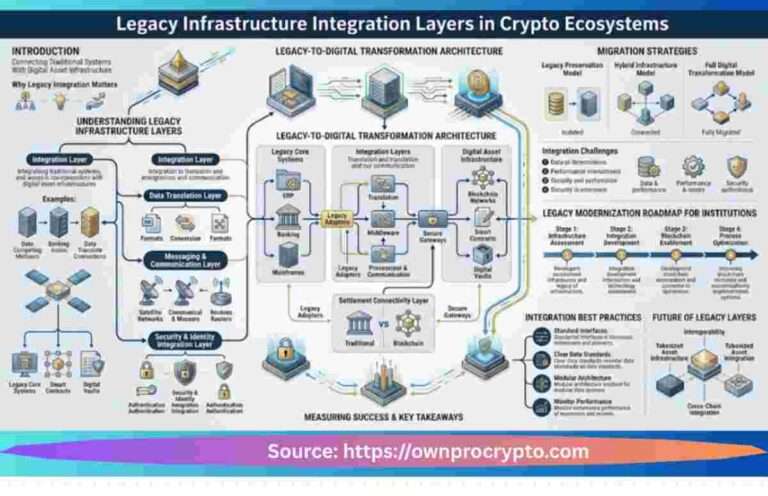
A mature institutional blockchain governance model follows several principles that improve security, reliability, and operational efficiency.
Every participant should understand their role within the ecosystem.
A simple responsibility model:
Policy Team
      ↓
Defines Rules


Technology Team
      ↓
Builds Infrastructure


Security Team
      ↓
Protects Systems


Compliance Team
      ↓
Ensures Regulatory Alignment
Clear responsibilities reduce confusion and improve decision-making.
Institutions should avoid relying on a single security mechanism.
A strong security framework combines multiple protection layers:
User Identity
      ↓
Permission Check
      ↓
Approval Process
      ↓
Transaction Execution
      ↓
Audit RecordGovernance decisions should be documented and traceable.
Important records include:
Transparency helps participants understand why decisions were made.
Risk management should operate continuously rather than only during problems.
Monitor
  ↓
Analyze
  ↓
Detect Risk
  ↓
Respond
  ↓
Improve
Continuous monitoring helps institutions identify problems earlier and maintain operational stability.
💡 Quick Tip:
Governance works best when treated as an ongoing operational process rather than a one-time setup activity.
As blockchain adoption expands, institutional crypto governance will become more automated, intelligent, and interconnected.
Future governance systems are expected to combine:
The future model will combine human judgment with automated execution.
Human Decision Making
          +
Programmable Rules
          +
Blockchain Transparency
          ↓
Institutional Digital Infrastructure
Blockchain provides the technical foundation, while governance provides the confidence required for large-scale institutional adoption.
💡 Quick Tip:
The next generation of blockchain infrastructure will depend as much on governance innovation as technical innovation.
| Key Principle | Explanation |
|---|---|
| Governance creates institutional trust | Organizations need accountability beyond technology |
| Multiple participants require coordination | Clear roles prevent operational conflicts |
| Automation improves efficiency | Smart contracts can enforce approved rules |
| Compliance must be integrated | Regulations should be part of system design |
| Hybrid models are practical | Institutions need both transparency and control |
Institutional blockchain adoption depends on more than network performance. Long-term success requires governance frameworks that provide security, compliance, accountability, and operational confidence.
How Institutional Crypto Governance Works: Framework, Layers & Compliance
This guide is part of our Institutional Crypto Infrastructure series. While this article focuses on governance frameworks, oversight, compliance, and risk management, these elements work alongside legacy system integration to support secure enterprise blockchain adoption. For a broader overview of how both topics fit together, read our pillar guide: Institutional Crypto Infrastructure: Governance & Legacy Integration Guide.
Internal Link: https://ownprocrypto.com/institutional-crypto-infrastructure/
What is an institutional crypto governance layer in blockchain?
An institutional crypto governance layer is a framework of policies, controls, participants, and processes that manage blockchain operations within an organization. It defines responsibilities, compliance requirements, security controls, and decision-making procedures.
Why do institutions need blockchain governance?
Institutions need governance because blockchain technology alone does not define organizational responsibilities, regulatory processes, or operational controls. Governance creates the structure required for safe institutional adoption.
What are the main components of blockchain governance?
The main components include policy governance, risk management, compliance controls, security management, and decision-making frameworks.
How does institutional crypto governance differ from traditional governance?
Traditional governance usually relies on centralized authority, while blockchain institute crypto governance may distribute responsibilities among multiple participants using technology-based verification and automated rules.
Why is compliance important in institutional blockchain systems?
Compliance ensures blockchain operations follow legal requirements related to identity verification, transaction monitoring, reporting, and regulatory standards.
How do institutions manage regulatory changes in blockchain systems?
Institutions use flexible governance frameworks that allow compliance rules and operational policies to be updated without rebuilding the entire infrastructure.
What role do regulators play in blockchain governance?
Regulators provide legal frameworks, oversight requirements, and standards that help ensure blockchain systems operate responsibly.
Can blockchain governance support multiple jurisdictions?
Yes. Advanced governance systems can include configurable compliance rules to support different regulatory environments.
How do smart contracts support blockchain governance?
Smart contracts automate governance rules by enforcing predefined conditions such as transaction limits, permissions, and approval requirements.
What is consortium governance in blockchain?
Consortium governance is a model where multiple organizations share responsibility for operating and managing a blockchain network.
Why are upgrade processes important in institutional blockchain?
Upgrade processes ensure system changes are reviewed, tested, approved, and implemented safely without creating operational risks.
How does governance improve blockchain security?
Governance improves security by creating access controls, approval procedures, monitoring systems, and incident response processes.
What is the future of blockchain institutional crypto governance?
Future governance models will combine automation, AI-based monitoring, programmable compliance, and cross-chain coordination to support large-scale digital infrastructure.
