
Search by title, topic or phrase
Use our Crypto Search Engine 🔍 to find the topics and keywords you're looking for.
Table of Contents
Toggle
Artificial intelligence has become incredibly capable, but one important question remains unanswered in many AI systems:
Can you prove the AI produced the result you received?
Traditional AI models generate predictions, recommendations, or decisions based on complex statistical patterns. While these systems can achieve impressive accuracy, they rarely provide independent evidence showing which model produced the output, what data was used, whether the model was altered, or whether the execution followed approved policies.
Verifiable AI addresses this challenge by adding a cryptographic verification layer around AI systems. Instead of asking users to trust an AI model, it enables organizations to verify every important AI operation using mathematical proofs, audit trails, digital identities, and tamper-resistant records.
As AI becomes responsible for financial transactions, healthcare recommendations, enterprise automation, and autonomous software agents, the ability to verify every decision is becoming just as important as the intelligence itself.
Key Insight: Verifiable AI does not replace existing AI models. It strengthens them by attaching evidence that proves an output was generated by an authentic model following an approved execution process.
Verifiable AI is an architectural framework that combines artificial intelligence, cryptography, digital identity, governance controls, and immutable record keeping to create AI systems whose actions can be independently verified.
Unlike conventional AI systems that simply return an answer, Verifiable AI produces an answer together with supporting evidence. This evidence may include cryptographic signatures, execution logs, model identity, audit records, and verification receipts that allow organizations to confirm the authenticity and integrity of every AI-generated result.
This approach shifts AI from a trust-based system to an evidence-based system, making it easier for businesses, regulators, and developers to understand how an AI decision was produced and whether it can be trusted.
The biggest difference between traditional AI and Verifiable AI is not intelligence—it’s verifiability.
Traditional AI systems expect users to trust that the model executed correctly. Verifiable AI provides measurable proof that the model was authentic, the execution followed approved rules, and the output has not been modified.
| Feature | Traditional AI | Verifiable AI |
|---|---|---|
| Output | AI-generated response | AI response with verifiable evidence |
| Trust Model | Trust the provider | Verify the evidence |
| Model Identity | Usually hidden | Cryptographically authenticated |
| Audit Trail | Limited or internal | Tamper-resistant and traceable |
| Output Integrity | Difficult to validate | Independently verifiable |
| Governance | External monitoring | Built into the system |
For years, AI adoption has largely depended on one assumption:
“Trust the AI system.”
As AI begins handling high-value financial transactions, autonomous business operations, healthcare recommendations, legal analysis, and government services, trust alone is no longer sufficient.
Verifiable AI introduces a new operating model:
“Don’t just trust the AI—verify it.”
Every important action can be supported with evidence showing:
This shift improves confidence not only for end users but also for compliance teams, auditors, regulators, and enterprise decision-makers.
Verifiable AI combines several technologies that traditionally operated independently.
Instead of relying on only one security mechanism, it creates a layered trust framework where each component validates a different part of the AI lifecycle.
| Technology | Primary Role |
|---|---|
| Artificial Intelligence | Generates predictions, recommendations, and decisions |
| Cryptographic Proofs | Verify that outputs are authentic and unaltered |
| AI Audit Trails | Record every significant AI action |
| Digital Identity | Authenticate AI models and autonomous agents |
| Blockchain | Store immutable verification records |
| Smart Contracts | Enforce governance and operational rules |
| Zero-Knowledge Proofs (zkML) | Verify computations while protecting sensitive information |
Although Verifiable AI is still an emerging discipline, its adoption is expanding across industries where trust, accountability, and regulatory compliance are critical.
Examples include:
As organizations continue integrating AI into critical operations, the demand for verifiable, auditable, and secure AI systems is expected to grow significantly.
Verifiable AI introduces a new trust model for artificial intelligence by combining AI with cryptographic verification, audit trails, digital identity, and governance controls. Instead of relying solely on trust, organizations gain evidence that AI systems operated as expected—making Verifiable AI an important foundation for secure, transparent, and enterprise-ready AI.
Expert Insight: The future of artificial intelligence is unlikely to be defined only by models that generate better answers. It will increasingly be defined by systems that can prove those answers were produced correctly, securely, and according to established governance policies.
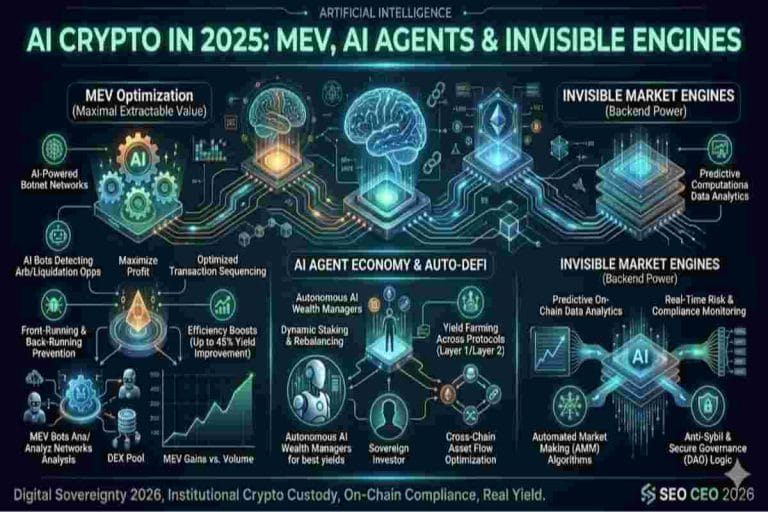
Artificial intelligence is rapidly evolving from a productivity tool into an autonomous decision-making system. In 2026, AI is no longer limited to generating text or answering questions—it is approving financial transactions, assisting healthcare professionals, writing software, managing enterprise workflows, and interacting with other AI agents without constant human supervision.
As AI becomes responsible for high-value decisions, organizations need more than accurate outputs. They need verifiable evidence that every AI action was performed by an authentic model, followed approved policies, and can be independently audited.
This shift is driving demand for Verifiable AI, where trust is supported by cryptographic proof rather than assumptions.
Key Insight: The more responsibility AI receives, the more important it becomes to verify every decision. In enterprise environments, accountability is just as valuable as intelligence.
Several technology trends are converging to make Verifiable AI a business necessity rather than a research concept.
Organizations are increasingly deploying:
Without verification, businesses have limited visibility into how these systems operate, making compliance, auditing, and risk management significantly more difficult.
Earlier generations of AI were primarily used to assist humans by generating recommendations or summarizing information. Today, AI systems are increasingly making operational decisions that directly affect customers, employees, financial assets, and business processes.
This evolution changes the organization’s biggest question from:
“Is the AI accurate?”
to
“Can we prove the AI acted correctly?”
That distinction is what separates traditional AI from Verifiable AI.
As AI adoption grows, organizations are moving from opaque systems toward architectures that provide measurable evidence for every important action.
| Performance Metric | Traditional AI Systems | Verifiable AI Frameworks |
|---|---|---|
| Primary Artifact | AI-generated outputs | Outputs paired with cryptographic evidence |
| System Transparency | Limited visibility | Complete, auditable history |
| Model Verification | Manual inspection | Automated cryptographic validation |
| Execution Tracking | Internal application logs | Immutable, tamper-resistant records |
| Trust Model | Provider reputation | Mathematical proof and verification |
| Compliance Support | Manual reporting | Continuous evidence generation |
| Audit Readiness | Time-consuming | Near real-time verification |
For enterprises, AI is becoming part of critical infrastructure rather than an experimental technology.
Financial institutions, healthcare providers, government agencies, and multinational organizations must demonstrate that AI systems operate securely, fairly, and according to regulatory requirements.
Verifiable AI helps organizations achieve this by providing:
Rather than relying on trust alone, enterprises gain evidence that can be reviewed by auditors, regulators, customers, and internal security teams.
Organizations that deploy AI without verification may face several operational and compliance challenges.
| Business Challenge | Potential Impact |
|---|---|
| Unknown model version | Difficult to reproduce or validate outputs |
| Limited audit history | Increased compliance and legal risk |
| Model tampering | Unauthorized changes may go undetected |
| Identity spoofing | AI agents may impersonate trusted systems |
| Poor governance | Lack of accountability for automated decisions |
| Data integrity concerns | Reduced confidence in AI-generated results |
These risks become increasingly significant as AI systems gain greater autonomy and access to sensitive business operations.
The demand for Verifiable AI is strongest in industries where transparency, accountability, and regulatory oversight are essential.
| Industry | Why Verification Matters |
|---|---|
| Finance | Verify transactions, trading decisions, and fraud detection |
| Healthcare | Demonstrate trustworthy diagnostic recommendations while protecting patient privacy |
| Government | Improve transparency in automated public services |
| Enterprise | Audit AI-powered workflows and internal decision-making |
| Web3 | Authenticate AI agents interacting with smart contracts and digital assets |
For many years, organizations evaluated AI primarily on performance metrics such as accuracy, precision, and response quality. While these measurements remain important, they do not answer critical questions about authenticity, governance, or accountability.
Modern AI systems increasingly require organizations to verify:
Verifiable AI provides the evidence needed to answer these questions, helping organizations move from confidence based on trust to confidence based on proof.
As AI systems become more autonomous, organizations need stronger guarantees about how decisions are made and executed. Verifiable AI addresses this challenge by combining cryptographic verification, audit trails, digital identity, and governance controls to create AI systems that are transparent, accountable, and enterprise-ready. In 2026, the focus is shifting from simply building smarter AI to building AI that can be independently verified and trusted.
Expert Insight: The next generation of AI platforms will compete not only on model performance but also on their ability to provide transparent, verifiable, and auditable evidence for every critical decision. In regulated industries, verifiability is becoming a competitive advantage rather than simply a security feature.

Verifiable AI is not a single technology or software product. It is a multi-layered framework that combines artificial intelligence with cryptographic security, digital identity, governance policies, and immutable record keeping.
Rather than changing how an AI model thinks, the framework surrounds the model with verification mechanisms that prove who performed an action, how it was executed, and whether the result can be trusted.
Each layer has a specific responsibility. Together, they create an AI system that is transparent, auditable, secure, and easier to govern across enterprise environments.
Key Insight: Think of the Verifiable AI Framework as adding a “trust layer” around artificial intelligence. The AI still performs the work, but every important action is backed by evidence that can be independently verified.
A complete Verifiable AI framework typically combines seven core technologies working together throughout the AI lifecycle.
+----------------------------------------------------------------------------------+
|                         Verifiable AI Framework                                  |
+----------------------------------------------------------------------------------+
|  Artificial Intelligence   → Generates predictions, decisions, and actions       |
|----------------------------------------------------------------------------------|
|  Cryptographic Proofs      → Verify outputs have not been altered                |
|----------------------------------------------------------------------------------|
|  Digital Identity          → Authenticate AI models and autonomous agents        |
|----------------------------------------------------------------------------------|
|  AI Audit Trails           → Record every significant AI event                   |
|----------------------------------------------------------------------------------|
|  Blockchain Infrastructure → Store tamper-resistant verification records         |
|----------------------------------------------------------------------------------|
|  Smart Contracts           → Enforce governance policies automatically           |
|----------------------------------------------------------------------------------|
|  Zero-Knowledge Proofs     → Verify computations while protecting private data   |
+----------------------------------------------------------------------------------+Each component contributes to a different stage of the verification process.
| Framework Layer | Primary Function | Why It Matters |
|---|---|---|
| Artificial Intelligence | Generates predictions, recommendations, and decisions | Performs the core intelligence |
| Cryptographic Proofs | Validate output authenticity | Prevents unauthorized modification |
| Digital Identity | Authenticates AI models and agents | Confirms who performed an action |
| AI Audit Trails | Records execution history | Enables auditing and investigations |
| Blockchain Infrastructure | Stores immutable evidence | Protects records from tampering |
| Smart Contracts | Apply governance rules automatically | Ensures policy compliance |
| Zero-Knowledge Proofs (zkML) | Verify computations without revealing sensitive data | Supports privacy-preserving verification |
Although implementations differ between organizations, most Verifiable AI systems follow a similar operational model.
This layered approach ensures that every critical AI action can be reviewed, validated, and independently verified long after it occurs.
The framework creates a continuous chain of trust from input to final verification.
| Stage | Verification Activity | Expected Outcome |
|---|---|---|
| Data Input | Validate source and integrity | Trusted input data |
| Model Authentication | Verify approved model identity | Authentic AI execution |
| Processing | Record execution evidence | Transparent processing history |
| Output Generation | Create cryptographic proof | Verifiable AI response |
| Audit Logging | Store execution records | Complete audit trail |
| Governance Review | Apply organizational policies | Accountable AI operations |
Traditional AI security often focuses on protecting infrastructure, networks, or user accounts. While these controls remain essential, they do not explain how an AI decision was produced or whether the model behaved as expected.
A layered Verifiable AI framework addresses multiple trust challenges simultaneously.
| Challenge | Framework Solution |
|---|---|
| Unknown AI model | Digital identity verifies the model |
| Output manipulation | Cryptographic proofs detect changes |
| Missing accountability | Audit trails record every action |
| Regulatory requirements | Governance policies provide compliance evidence |
| Sensitive data exposure | Zero-Knowledge Proofs preserve privacy |
| Record tampering | Blockchain protects verification history |
Organizations adopting a structured verification framework gain advantages that extend beyond security.
| Objective | Supporting Layer |
|---|---|
| Trustworthy AI Outputs | Cryptographic Proofs |
| Secure AI Identity | Digital Identity (DIDs) |
| Transparent Operations | AI Audit Trails |
| Immutable Evidence | Blockchain Infrastructure |
| Automated Governance | Smart Contracts |
| Privacy-Preserving Verification | Zero-Knowledge Proofs |
| Enterprise Compliance | Governance Framework |
The Verifiable AI Framework combines artificial intelligence with cryptographic proofs, digital identity, audit trails, blockchain infrastructure, governance controls, and Zero-Knowledge Proofs to create AI systems that are transparent, secure, and independently verifiable. Instead of relying on trust alone, organizations gain measurable evidence that every important AI action was performed by an authentic model following approved policies.
Expert Insight: The most valuable part of a Verifiable AI framework is not the blockchain, cryptography, or audit logs individually. Its real strength comes from combining these technologies into a unified verification system where every AI action can be traced, authenticated, and independently validated.

A Verifiable AI system follows a structured verification pipeline that records, validates, and secures every significant stage of an AI operation. Instead of generating an answer and discarding the execution details, the system creates a chain of evidence that can be independently verified long after the response is produced.
Every stage—from receiving input data to delivering the final output—includes mechanisms that confirm authenticity, integrity, and compliance. This continuous verification process allows organizations to trust AI decisions because they can prove how those decisions were generated.
Key Insight: Traditional AI focuses on producing accurate answers. Verifiable AI focuses on producing accurate answers and verifiable evidence that the entire process was authentic and tamper-free.
Most Verifiable AI platforms follow a similar workflow regardless of the underlying AI model or enterprise application.
User Request
      ↓
Input Verification
     ↓
Model Authentication
     ↓
AI Processing & Reasoning
     ↓
Output Validation
     ↓
Audit Trail Generation
     ↓
Immutable Verification Record
Each stage contributes to building a complete and trustworthy verification record.
The verification process begins before the AI model generates a response.
Incoming data is validated to confirm that it originates from an approved source and has not been altered during transmission. Depending on the implementation, systems may verify cryptographic signatures, timestamps, metadata, or trusted data providers before allowing the request to proceed.
Typical verification checks include:
Without trusted input data, even the most advanced AI model cannot produce trustworthy results.
Once the input has been validated, the platform verifies the identity of the AI model that will process the request.
Model authentication confirms that:
This prevents unauthorized model replacement or supply-chain attacks where malicious models are substituted for trusted ones.
Example: If an enterprise approves Version 4.2 of an AI model, model authentication ensures that Version 4.2—not an altered copy—is actually executing the request.
After authentication, the AI processes the request while generating verification evidence throughout the execution lifecycle.
Rather than recording every mathematical operation performed by the neural network, Verifiable AI captures trusted execution evidence such as:
Some advanced implementations also use Zero-Knowledge Proofs (zkML) to prove that computations were executed correctly without exposing proprietary model weights or sensitive user data.
| Verification Element | Purpose |
|---|---|
| Execution Timestamp | Records when processing occurred |
| Model Identifier | Confirms which model generated the output |
| Cryptographic Attestation | Verifies execution authenticity |
| Policy Validation | Ensures governance rules were followed |
| zkML Proofs | Validate computation while preserving privacy |
Once the AI generates its response, the system validates the output before it is delivered to the user or downstream application.
Instead of returning only the prediction, Verifiable AI attaches supporting evidence that allows others to independently verify the authenticity of the result.
Output validation may include:
This transforms AI responses into verifiable digital artifacts rather than standalone predictions.
The final stage creates a permanent verification record.
Execution evidence is committed to an immutable audit system, which may include blockchain infrastructure, distributed ledgers, or enterprise-grade append-only storage.
The stored record allows organizations to answer important questions months or even years after an AI decision was made.
Examples include:
This permanent record strengthens accountability, simplifies compliance reporting, and supports future investigations.
The following table summarizes how each stage contributes to a fully verifiable AI workflow.
| Pipeline Stage | Primary Verification Method | Operational Focus |
|---|---|---|
| Input Data | Data validation & digital signatures | Ensures authentic and trusted data |
| AI Model | Identity verification | Confirms approved model execution |
| AI Processing | Cryptographic logging & attestations | Records execution history |
| Output | Evidence validation | Produces verifiable AI responses |
| Governance | Audit record commitment | Maintains immutable verification evidence |
One common misconception is that Verifiable AI only validates the final answer.
In reality, modern verification frameworks examine multiple parts of the AI lifecycle.
| Component | Why It Is Verified |
|---|---|
| Input Data | Prevents tampered or unauthorized data |
| AI Model | Confirms approved model identity |
| Model Version | Ensures reproducible execution |
| Processing Events | Creates transparent execution history |
| Output | Verifies authenticity and integrity |
| Governance Policies | Confirms compliance requirements |
| Audit Records | Provides long-term accountability |
An end-to-end verification process provides significant advantages over traditional AI systems that only generate outputs.
Organizations benefit from:
By verifying every stage instead of only the final response, organizations create AI systems that are not only intelligent but also transparent, accountable, and resilient.
Verifiable AI works by validating every stage of the AI lifecycle—from input verification and model authentication to execution tracking, output validation, and permanent audit logging. This end-to-end verification pipeline ensures that AI-generated decisions are supported by cryptographic evidence, authenticated identities, and immutable records, allowing organizations to independently verify the integrity of every critical AI operation.
Expert Insight: The strength of Verifiable AI lies in continuous verification. Every stage of the AI lifecycle contributes evidence, creating a complete chain of trust that is significantly more reliable than validating only the final output.
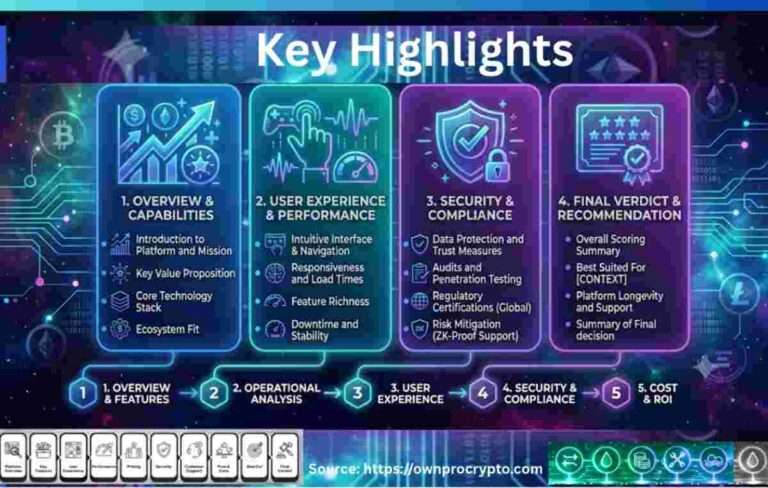
Verifiable AI is built on several interconnected technologies that work together to establish trust, transparency, and accountability throughout the AI lifecycle. While each component serves a different purpose, they collectively ensure that every AI-generated decision can be authenticated, audited, and independently verified.
Instead of relying on a single security mechanism, Verifiable AI combines cryptographic verification, digital identity, immutable audit records, governance controls, and secure execution environments into one unified framework.
Key Insight: Think of Verifiable AI as a digital chain of trust. Each component verifies one part of the AI lifecycle, creating a complete evidence trail from data input to final decision.
| Component | Primary Purpose | Why It Matters |
|---|---|---|
| AI Audit Trails | Record AI activities | Creates complete execution history |
| AI Model Provenance | Track model lifecycle | Confirms model authenticity |
| AI Identity | Authenticate AI systems | Prevents impersonation and spoofing |
| AI Agent Wallets | Secure autonomous transactions | Enables controlled machine-to-machine commerce |
| Blockchain Infrastructure | Store immutable records | Prevents audit log tampering |
| AI Governance Framework | Apply organizational policies | Improves compliance and accountability |
| Zero-Knowledge Proofs (zkML) | Verify computations privately | Protects sensitive data while proving correctness |
An AI Audit Trail is a chronological record of every significant action performed by an AI system. Rather than simply storing system logs, audit trails capture execution events, model versions, user interactions, policy decisions, and verification evidence that can later be reviewed by security teams, auditors, or regulators.
Unlike traditional application logs, AI audit trails are designed to demonstrate what happened, when it happened, why it happened, and which AI model performed the action.
User Request
     ↓
AI Processing
     ↓
Execution Event Logged
     ↓
Cryptographic Hash Created
     ↓
Immutable Audit RecordExpert Note: AI audit trails are becoming increasingly important in regulated industries because they provide evidence rather than assumptions during compliance reviews and forensic investigations.
AI Model Provenance tracks the complete history of an AI model throughout its lifecycle—from training and testing to deployment, updates, and retirement.
Without provenance tracking, organizations may struggle to determine whether an AI model has been modified, replaced, or deployed without proper authorization.
Maintaining provenance helps organizations verify that the correct model produced each decision while improving reproducibility and governance.
| Lifecycle Stage | Information Recorded |
|---|---|
| Model Development | Developer, architecture, training methodology |
| Training | Training datasets and configuration |
| Validation | Performance testing and approval |
| Deployment | Production environment and release date |
| Updates | Version history and modifications |
| Retirement | End-of-life documentation |
Key Insight: Provenance establishes the “chain of custody” for AI models, making every version traceable throughout its lifecycle.
As AI systems increasingly interact with APIs, databases, cloud services, and other autonomous agents, they require trusted digital identities just like human users.
AI Identity provides each AI model or agent with cryptographically verifiable credentials—often using Decentralized Identifiers (DIDs) or digital certificates—that prove who they are before they access sensitive resources.
Identity verification reduces the risk of impersonation, unauthorized access, and malicious AI agents operating inside enterprise environments.
AI Agent
     ↓
Digital Identity (DID)
     ↓
Identity Verification
     ↓
Access Decision
     ↓
Authorized AI OperationAs autonomous AI agents begin purchasing cloud services, paying transaction fees, interacting with blockchain networks, and executing smart contracts, they require secure mechanisms for managing digital assets.
AI Agent Wallets provide controlled environments where AI systems can hold, receive, and transfer digital assets while operating within predefined security and governance rules.
Rather than giving AI unrestricted financial authority, enterprise wallet systems define spending limits, approval workflows, transaction policies, and emergency controls.
| Component | Purpose |
|---|---|
| Digital Wallet | Stores digital assets securely |
| Cryptographic Keys | Authorize transactions |
| Policy Engine | Applies governance rules |
| Spending Controls | Limits transaction amounts |
| Multi-Signature Approval | Supports high-value transactions |
| Audit Logs | Records all financial activity |
Although each component serves a unique function, their real value comes from working together as a unified trust framework.
| Component | Primary Responsibility |
|---|---|
| AI Audit Trails | Record every AI action |
| Model Provenance | Verify model history |
| AI Identity | Authenticate AI systems |
| AI Agent Wallets | Secure autonomous transactions |
| Blockchain | Preserve immutable records |
| Governance | Enforce organizational policies |
| zkML | Verify computations while protecting privacy |
Together, these technologies create a complete chain of evidence that allows organizations to verify who performed an action, which model executed it, how it was verified, and whether it complied with established governance policies.
The core components of Verifiable AI provide the foundation for trustworthy, auditable, and secure artificial intelligence. AI Audit Trails record every significant event, AI Model Provenance tracks model history, AI Identity authenticates autonomous systems, and AI Agent Wallets enable secure machine-to-machine transactions. Combined with blockchain infrastructure, governance frameworks, and Zero-Knowledge Proofs, these technologies transform AI from a trust-based system into one supported by verifiable evidence.
Expert Insight: AI Agent Wallets are expected to become a foundational component of autonomous machine-to-machine commerce, enabling AI systems to transact securely without giving them unrestricted financial control.
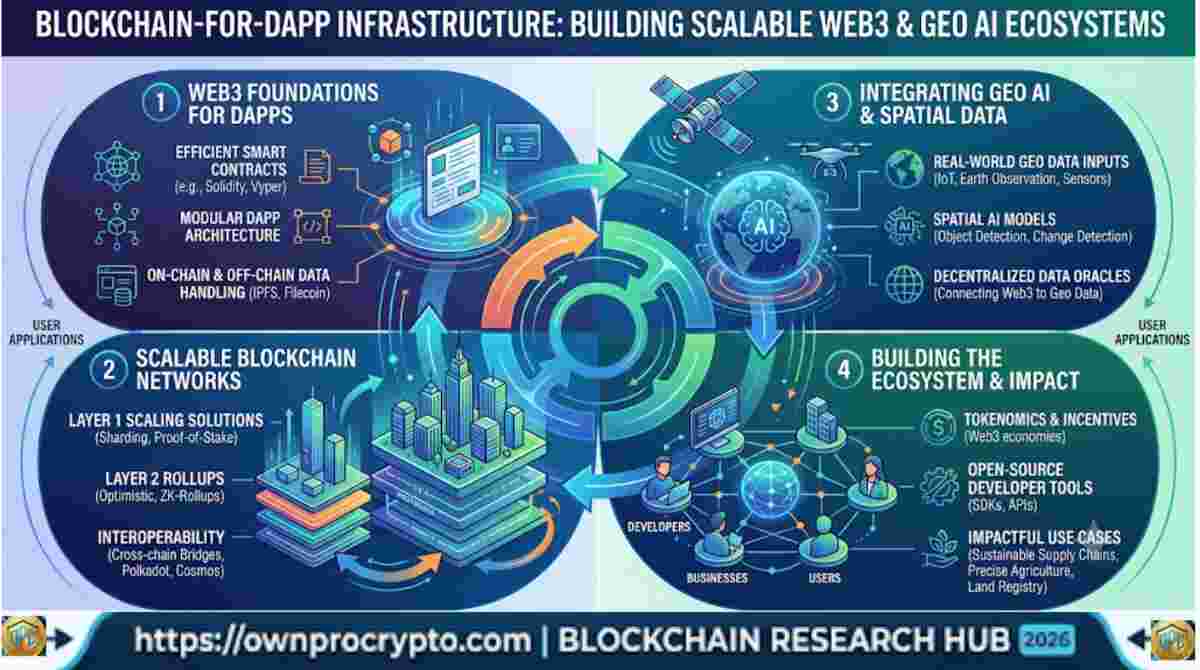
Blockchain is not responsible for making artificial intelligence smarter. Instead, it provides the trust infrastructure that allows AI systems to prove what happened, when it happened, and whether important records have been altered.
In a Verifiable AI architecture, blockchain acts as an immutable record layer. Rather than storing large AI models or datasets directly on-chain, it stores cryptographic hashes, execution receipts, audit logs, provenance metadata, and verification records that can be independently validated at any time.
This approach allows organizations to preserve transparency without exposing proprietary AI models or confidential business data.
Key Insight: Blockchain does not replace AI—it strengthens trust by providing an independent, tamper-resistant verification layer for AI operations.
Modern AI systems generate thousands—or even millions—of automated decisions every day. Keeping those records inside a centralized database creates a single point of failure, making them vulnerable to accidental modification, insider threats, or unauthorized deletion.
Blockchain infrastructure addresses this challenge by creating immutable records that are extremely difficult to alter once written.
Instead of trusting one organization to maintain accurate logs, multiple participants can independently verify that records remain unchanged.
| Feature | Traditional Database | Blockchain Infrastructure |
|---|---|---|
| Data Modification | Administrators can edit records | Records become tamper-resistant after confirmation |
| Audit Integrity | Depends on internal controls | Cryptographically verifiable |
| Trust Model | Centralized authority | Distributed verification |
| Evidence Validation | Internal review | Independent verification |
| Transparency | Limited visibility | Shared verification without exposing private data |
One of the biggest misconceptions is that entire AI models are stored on-chain.
In reality, modern Verifiable AI systems typically keep AI models, datasets, and inference engines off-chain, while storing lightweight verification evidence on-chain.
| Stored On-Chain | Purpose |
|---|---|
| Model Hashes | Verify model authenticity |
| Execution Receipts | Confirm AI operations occurred |
| Audit Record References | Preserve verification history |
| Provenance Metadata | Track model ownership and versions |
| Identity Credentials | Authenticate AI agents and services |
| Governance Events | Record policy decisions and approvals |
| Stored Off-Chain | Reason |
|---|---|
| Foundation Models | Too large for blockchain storage |
| Training Datasets | Privacy and scalability |
| User Data | Regulatory compliance |
| AI Inference Engines | Performance requirements |
| Enterprise Documents | Confidential business information |
Expert Note: Blockchain stores proof, not the AI itself. This keeps systems scalable while preserving independent verification.
One of blockchain’s greatest strengths is immutability.
Once a verification record is committed to the blockchain, altering or deleting that record becomes extremely difficult without consensus from the network. This creates reliable evidence that organizations can use during compliance audits, security investigations, or regulatory reviews.
Immutable logging improves confidence by ensuring that execution histories remain consistent over time.
Traditional applications often rely on centralized identity servers to determine who can access sensitive resources.
Verifiable AI extends this concept by combining blockchain, digital identity, and smart contracts to manage permissions across distributed environments.
Instead of manually assigning permissions, organizations can define governance policies that automatically determine:
AI Agent
     ↓
Digital Identity Verification
     ↓
Smart Contract Policy Check
     ↓
Permission Granted or Denied
     ↓
Execution Logged on Blockchain
This creates a transparent and auditable authorization process while reducing dependence on centralized identity systems.
Another major advantage of blockchain infrastructure is that verification does not rely on a single vendor or organization.
Independent auditors, regulators, business partners, or customers can validate cryptographic evidence without needing direct access to the underlying AI system.
This improves trust while reducing concerns about vendor lock-in.
| Verification Model | Centralized Systems | Decentralized Verification |
|---|---|---|
| Evidence Source | Single organization | Multiple independent verifiers |
| Trust Requirement | Trust the provider | Verify the cryptographic evidence |
| Audit Process | Internal review | Independent validation |
| Transparency | Limited | Higher transparency |
| Risk | Single point of failure | Distributed trust model |
Blockchain brings several advantages when integrated with Verifiable AI architectures.
| Benefit | Business Value |
|---|---|
| Immutable Records | Protects audit evidence from tampering |
| Independent Verification | Reduces reliance on centralized trust |
| Transparent Governance | Improves accountability |
| Secure Identity Management | Strengthens AI authentication |
| Long-Term Audit History | Supports compliance and investigations |
| Shared Trust | Enables collaboration across organizations |
These benefits are particularly valuable in industries where AI decisions have legal, financial, or regulatory consequences.
Blockchain-supported verification is already being explored across multiple industries where trust and accountability are essential.
| Industry | Example Use Case |
|---|---|
| Finance | Recording AI-generated fraud detection decisions |
| Healthcare | Preserving audit evidence for diagnostic systems |
| Government | Verifying automated public service decisions |
| Enterprise | Tracking AI-assisted compliance workflows |
| Supply Chain | Authenticating AI-generated logistics decisions |
| Web3 | Verifying autonomous AI agent activity |
Blockchain infrastructure provides the trust layer that supports Verifiable AI by storing immutable audit records, cryptographic proofs, model provenance, identity credentials, and governance events. Instead of placing AI models on-chain, organizations use blockchain to preserve lightweight verification evidence that can be independently validated. This approach improves transparency, strengthens compliance, and enables secure collaboration across enterprise and decentralized AI ecosystems.
Expert Insight: Blockchain is not the intelligence behind Verifiable AI—it is the independent evidence layer. Its primary role is to preserve trust, authenticity, and accountability by making AI verification records tamper-resistant and independently auditable.
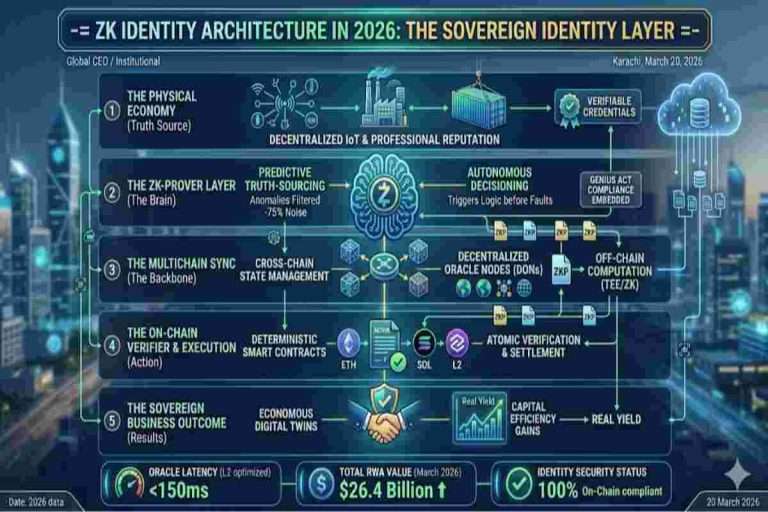
As AI systems become more powerful, organizations face a growing challenge: How can an AI model prove it generated the correct result without exposing sensitive data or proprietary algorithms?
This is where Zero-Knowledge Proofs (ZKPs) and Zero-Knowledge Machine Learning (zkML) become valuable.
zkML combines artificial intelligence with cryptographic verification, allowing an AI system to mathematically prove that a prediction or computation was performed correctly—without revealing the underlying training data, model weights, or confidential user information.
Instead of asking users to trust the AI provider, zkML allows them to verify that the computation followed the expected process while preserving privacy.
Key Insight: Zero-Knowledge Proofs change AI verification from “show me your data” to “prove you computed the answer correctly without revealing the data.”
A Zero-Knowledge Proof (ZKP) is a cryptographic method that allows one party (the prover) to demonstrate that a statement is true without revealing the underlying information used to prove it.
Originally developed for cryptography, ZKPs are now being applied across blockchain, digital identity, privacy-preserving authentication, and increasingly, artificial intelligence.
In Verifiable AI, Zero-Knowledge Proofs provide mathematical evidence that an AI model executed correctly while keeping sensitive information confidential.
For example, an AI system can prove that it followed an approved model and generated a valid prediction without exposing:
Zero-Knowledge Machine Learning (zkML) extends Zero-Knowledge Proof technology into AI systems.
Rather than publishing an AI model or allowing external parties to rerun computations, zkML generates a cryptographic proof that confirms the AI execution was valid.
This enables organizations to verify AI-generated outputs while maintaining confidentiality.
Private Input Data
     ↓
Approved AI Model
     ↓
AI Prediction
     ↓
Zero-Knowledge Proof Generated
     ↓
Independent Verification
The verifier confirms that the computation was performed correctly—without ever seeing the sensitive data or the model itself.
Although implementations vary, most zkML systems follow a similar sequence.
This process allows organizations to validate AI operations while protecting intellectual property and confidential data.
The biggest advantage of zkML is that it separates verification from data exposure.
| Operational Aspect | Traditional AI Execution | AI with Zero-Knowledge Proofs (zkML) |
|---|---|---|
| Data Exposure | Sensitive data may need to be shared | Data remains private |
| Model Security | Risk of exposing proprietary model weights | Model weights remain confidential |
| Verification Method | Requires trust or independent reruns | Mathematical proof validates execution |
| Privacy | Limited protection | Strong privacy preservation |
| Compliance | More complex for regulated industries | Better aligned with privacy-focused regulations |
| Trust Model | Trust the AI provider | Verify the cryptographic proof |
As AI systems begin handling financial transactions, healthcare recommendations, legal analysis, and autonomous business operations, organizations must balance transparency with privacy.
zkML makes this possible by allowing AI systems to prove correctness without revealing confidential information.
This supports:
Without Zero-Knowledge Proofs, organizations often have to choose between transparency and confidentiality. zkML helps achieve both.
Although zkML is still an emerging field, practical applications are expanding rapidly.
| Industry | Example zkML Application |
|---|---|
| Finance | Verify AI-powered credit scoring without exposing customer financial data |
| Healthcare | Validate diagnostic AI while protecting patient records |
| Government | Audit automated decision systems without revealing classified information |
| Enterprise | Verify internal AI workflows while protecting proprietary business data |
| Web3 | Authenticate AI agents interacting with decentralized applications |
Organizations adopting zkML can improve both trust and privacy across AI systems.
| Benefit | Business Impact |
|---|---|
| Privacy Preservation | Protects confidential data during verification |
| Independent Verification | Builds trust without exposing sensitive information |
| Model Protection | Keeps proprietary AI models confidential |
| Regulatory Compliance | Supports privacy-focused governance frameworks |
| Secure Collaboration | Enables trusted verification across organizations |
| Stronger Trust | Improves confidence in AI-generated outputs |
Despite its advantages, Zero-Knowledge Machine Learning remains an evolving technology.
Current challenges include:
| Challenge | Description |
|---|---|
| Computational Overhead | Generating proofs can require significant computing resources |
| Large Model Complexity | Foundation models are more difficult to verify efficiently |
| Development Complexity | Specialized cryptographic expertise is often required |
| Standardization | Industry standards are still evolving |
| Infrastructure Costs | High-performance verification systems may increase deployment costs |
As cryptographic research advances, many of these limitations are expected to improve, making zkML more practical for enterprise-scale AI systems.
Zero-Knowledge Machine Learning is expected to play a central role in the next generation of trustworthy AI systems.
Future developments may include:
As AI adoption accelerates, zkML is likely to become one of the foundational technologies that enables organizations to verify AI systems without sacrificing privacy.
Zero-Knowledge Machine Learning (zkML) combines artificial intelligence with Zero-Knowledge Proofs to enable privacy-preserving verification of AI computations. Instead of exposing sensitive datasets or proprietary model weights, zkML generates cryptographic proofs that demonstrate an AI system executed correctly. This makes zkML a key building block for Verifiable AI, supporting secure, auditable, and trustworthy AI across finance, healthcare, government, enterprise, and Web3 applications.
Imagine a student takes an exam. Instead of showing every answer on the paper, the student presents a mathematically impossible-to-forge certificate proving they achieved the correct score. The examiner knows the result is genuine without seeing the entire paper. zkML works in a similar way—it proves an AI computation was performed correctly without revealing the underlying data or model.
Expert Insight: Zero-Knowledge Proofs are not designed to make AI smarter—they make AI more trustworthy. By proving that computations were executed correctly without exposing sensitive information, zkML bridges the gap between transparency and privacy, making Verifiable AI practical for regulated industries and enterprise-scale deployments.
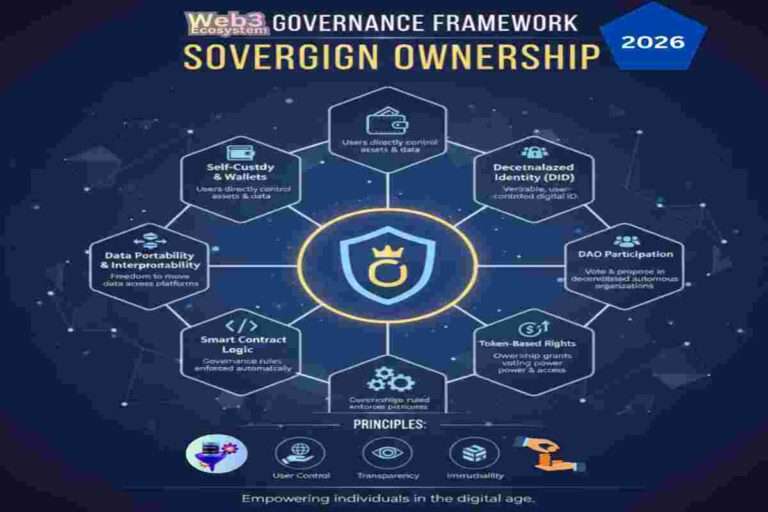
As artificial intelligence moves from experimental tools into mission-critical business systems, organizations need more than accurate models—they need systems that can demonstrate control, accountability, and compliance.
An AI Governance Framework provides the policies, technical controls, verification mechanisms, and operational processes required to ensure AI systems behave according to defined rules.
Traditional AI governance often depends on documentation, internal reviews, and periodic audits. While these methods remain important, they may not provide sufficient evidence for autonomous AI systems operating continuously across financial, healthcare, enterprise, and government environments.
Verifiable AI introduces a stronger governance approach by combining cryptographic evidence, immutable audit records, AI identity verification, and automated compliance monitoring.
Key Insight: Traditional AI governance asks, “Did the organization follow the rules?” Verifiable AI governance proves, “Can the organization mathematically demonstrate that the rules were followed?”
An AI Governance Framework is a structured system that defines how artificial intelligence is developed, deployed, monitored, and controlled throughout its lifecycle.
It establishes:
A complete AI governance framework connects technical verification with organizational responsibility.
The major difference is the transition from policy-based trust to evidence-based verification.
| Governance Area | Traditional AI Governance | Verifiable AI Governance |
|---|---|---|
| Decision Tracking | Manual documentation | Cryptographic execution records |
| Model Monitoring | Periodic reviews | Continuous verification |
| Compliance Evidence | Reports and screenshots | Immutable audit records |
| AI Identity | API credentials | Cryptographic identities |
| Policy Enforcement | Human oversight | Smart contracts and automated rules |
| Audit Process | Historical investigation | Real-time verification |
A strong governance framework combines several technical and organizational layers.
+------------------------------------------------+
|              AI Governance Layer               |
| Policies • Regulations • Risk Controls         |
+------------------------------------------------+
                     │
                     ▼
+------------------------------------------------+
|          Verification & Compliance Layer       |
| Audit Logs • Proofs • Monitoring • Attestation |
+------------------------------------------------+
                     │
                     ▼
+------------------------------------------------+
|              AI Execution Layer                |
| Models • Agents • Automated Decisions          |
+------------------------------------------------+
                     │
                     ▼
+------------------------------------------------+
|             Security Infrastructure            |
| Identity • Blockchain • Cryptography           |
+------------------------------------------------+One of the most important components of Verifiable AI governance is the ability to create trustworthy records of AI activity.
Traditional logs can be modified by administrators or compromised during security incidents.
Cryptographic audit logs improve reliability by creating records that include:
| Event | Verification Evidence |
|---|---|
| AI Model Deployment | Model hash and approval record |
| AI Decision Generated | Output signature |
| Data Access | Permission verification |
| Agent Transaction | Wallet authorization proof |
| Policy Check | Governance validation record |
AI risk management identifies, evaluates, and controls potential failures associated with artificial intelligence systems.
As AI becomes more autonomous, organizations must manage risks beyond traditional software failures.
Important risk categories include:
| Risk Category | Example Risk | Verifiable AI Solution |
|---|---|---|
| Model Risk | Incorrect predictions | Model provenance tracking |
| Security Risk | AI manipulation | Identity verification |
| Data Risk | Unauthorized data usage | Data validation proofs |
| Compliance Risk | Regulatory violations | Automated audit evidence |
| Agent Risk | Unauthorized autonomous actions | Wallet controls and policies |
The rise of autonomous AI agents creates a new governance challenge.
Unlike traditional software, AI agents can:
Because of this, organizations need specific AI Agent Governance Frameworks.
| Control Mechanism | Purpose |
|---|---|
| AI Identity | Confirms agent authenticity |
| Permission Boundaries | Limits available actions |
| Transaction Rules | Controls financial activity |
| Human Approval Gates | Adds oversight for sensitive actions |
| Audit Trails | Records every autonomous decision |
Regulators worldwide are increasingly focusing on AI transparency, accountability, and risk management.
Verifiable AI helps organizations prepare by providing measurable evidence rather than relying only on internal policies.
Potential compliance benefits include:
Large organizations typically require governance systems that address security, compliance, and operational scalability.
| Enterprise Requirement | Verifiable AI Capability |
|---|---|
| Regulatory Compliance | Cryptographic audit evidence |
| Data Protection | Privacy-preserving verification |
| Operational Security | AI identity controls |
| Accountability | Immutable execution history |
| Risk Management | Continuous monitoring |
| Transparency | Verifiable AI outputs |
A mature governance framework provides measurable advantages.
| Benefit | Impact |
|---|---|
| Increased Trust | Customers and regulators gain confidence |
| Lower Audit Costs | Automated evidence collection reduces manual work |
| Better Security | Unauthorized AI actions become easier to detect |
| Faster Compliance | Organizations respond quickly to regulatory requirements |
| Improved Accountability | Every AI action has traceable ownership |
As autonomous AI adoption increases, governance is expected to evolve from documentation-based systems into continuously verified environments.
Future AI governance frameworks may include:
An AI Governance Framework provides the structure required to manage trustworthy artificial intelligence. Verifiable AI strengthens governance by adding cryptographic audit logs, AI identity verification, model provenance tracking, and automated compliance evidence. This transforms AI governance from a trust-based process into an evidence-based system where organizations can verify that AI operations remain secure, transparent, and accountable.
Expert Insight: The future of AI governance will not depend only on creating better policies—it will depend on creating AI systems capable of proving that they followed those policies.
A Verifiable AI system requires more than a powerful AI model. It requires a complete architecture that connects artificial intelligence with identity, cryptography, verification systems, governance controls, and immutable records.
The purpose of AI Verification Architecture is to create a structured environment where every important AI operation can be authenticated, monitored, and independently verified.
Traditional AI architectures focus primarily on:
Verifiable AI architectures add additional trust layers:
This creates a complete AI trust infrastructure where organizations can verify not only what the AI produced, but also:
Key Insight: AI verification architecture transforms artificial intelligence from a prediction engine into a transparent, accountable, and auditable system.
A modern Verifiable AI architecture typically consists of multiple interconnected layers.
Each layer performs a specific responsibility while contributing to the overall trust framework.
| Architecture Layer | Primary Function | Main Technologies |
|---|---|---|
| Application Layer | User interaction and business workflows | Enterprise apps, APIs, Web3 applications |
| AI Agent Layer | AI reasoning and autonomous actions | LLMs, AI agents, automation systems |
| Verification Layer | Validates AI execution | zkML, attestations, verification engines |
| Cryptographic Layer | Secures identity and evidence | Hashing, digital signatures, encryption |
| Blockchain Record Layer | Stores immutable proof records | Distributed ledgers, smart contracts |
The application layer is where users and businesses interact with AI systems.
This includes:
At this layer, users submit requests and receive AI-generated outputs.
However, unlike traditional AI applications, Verifiable AI applications attach verification evidence alongside the result.
Traditional AI:
User Request → AI Model → AnswerVerifiable AI:
User Request → AI Model → Answer + Verification EvidenceThe AI Agent Layer contains the autonomous intelligence responsible for processing information and performing tasks.
Modern AI agents can:
Because AI agents increasingly operate independently, this layer requires strong identity and permission controls.
| Component | Purpose |
|---|---|
| Foundation Model | Provides intelligence capability |
| Agent Logic | Defines tasks and workflows |
| Memory System | Stores relevant context |
| Tool Access | Enables external interactions |
| AI Identity | Authenticates the agent |
| Agent Wallet | Enables controlled transactions |
The verification layer is the heart of Verifiable AI architecture.
Its purpose is to confirm that AI operations occurred correctly and according to defined rules.
This layer evaluates:
| Technology | Role |
|---|---|
| Zero-Knowledge Proofs (zkML) | Prove AI computation correctness |
| Execution Attestation | Confirms trusted execution |
| Output Verification | Validates AI-generated results |
| Audit Systems | Records AI activities |
| Policy Engines | Checks governance requirements |
The cryptographic layer provides the security foundation of the architecture.
It ensures that AI identities, records, and outputs cannot be easily manipulated.
Core cryptographic functions include:
Digital signatures confirm that a specific AI system or authorized user created an action.
Example:
AI Agent
     ↓
Creates Decision
     ↓
Signs Evidence Digitally
     ↓
Verifier Confirms Authenticity
Hash functions create unique digital fingerprints for:
If any information changes, the hash changes, immediately revealing possible tampering.
Encryption protects sensitive information including:
The blockchain record layer provides long-term storage for verification evidence.
It does not store the complete AI model or private business information.
Instead, it stores:
| Record Type | Purpose |
|---|---|
| Model Hash | Confirms model authenticity |
| Agent Identity | Verifies AI ownership |
| Execution Receipt | Records AI activity |
| Governance Event | Proves policy compliance |
| Transaction Record | Tracks autonomous actions |
The complete architecture works as a continuous verification cycle.
User Request
     ↓
Application Layer
      ↓
AI Agent Processing
     ↓
Model Identity Verification
     ↓
Execution Monitoring
     ↓
Cryptographic Proof Generation
     ↓
Blockchain Evidence Storage
     ↓
Verified AI Output| Feature | Traditional AI Architecture | Verifiable AI Architecture |
|---|---|---|
| Output | AI prediction | AI prediction + proof |
| Model Identity | Usually hidden | Cryptographically verified |
| Execution History | Limited logs | Complete evidence trail |
| Data Verification | Optional | Integrated validation |
| Security Model | Trust provider | Verify independently |
| Governance | External policies | Embedded controls |
Large organizations require verification architectures that support security, compliance, and scalability.
Enterprise implementations typically include:
| Enterprise Requirement | Architecture Solution |
|---|---|
| Regulatory Audits | Immutable AI records |
| Data Privacy | Zero-Knowledge Proofs |
| AI Security | Cryptographic identity |
| Multi-Agent Systems | Permission management |
| Financial Automation | Secure AI wallets |
| Operational Control | Governance frameworks |
As AI systems become more autonomous, organizations cannot rely only on accuracy metrics.
They need confidence that:
AI Verification Architecture provides this foundation by connecting intelligence with proof.
The next generation of AI systems will likely combine:
Together, these technologies create a future where AI systems are not only capable of making decisions but can also demonstrate why those decisions should be trusted.
AI Verification Architecture connects AI intelligence with cryptographic security, digital identity, blockchain records, and governance frameworks. By adding verification layers around AI models and agents, organizations can authenticate decisions, track execution history, protect sensitive information, and create trustworthy AI systems suitable for enterprise adoption.
Expert Insight: The next generation of enterprise AI will not be judged only by intelligence. It will be judged by accountability, transparency, and the ability to prove that every action was authorized and trustworthy.
Enterprise adoption of artificial intelligence is accelerating across finance, healthcare, government, manufacturing, and digital platforms. However, as AI systems move from experimental tools into mission-critical operations, organizations face a fundamental challenge:
How can businesses trust AI systems that make important decisions without human review?
Traditional AI systems are often evaluated through accuracy, speed, and performance metrics. While these measurements remain important, enterprises require additional guarantees around:
Enterprise Verifiable AI addresses these requirements by adding a verification layer around AI systems.
Instead of simply generating decisions, enterprise AI systems can provide evidence showing:
Key Insight: Enterprise AI adoption will depend not only on what AI can do, but on whether organizations can prove that AI operates safely, transparently, and according to business rules.
Large organizations operate under strict regulatory, security, and operational requirements.
A traditional AI system may provide an answer, but enterprise stakeholders often need additional information:
Verifiable AI transforms AI outputs into accountable digital records.
| Enterprise Challenge | Traditional AI Limitation | Verifiable AI Solution |
|---|---|---|
| Black-box decisions | Limited visibility into AI behavior | Cryptographic evidence and audit trails |
| Compliance requirements | Manual reporting processes | Automated verification records |
| Model security | Difficult to detect unauthorized changes | Model provenance tracking |
| AI agent risks | Limited identity controls | Cryptographic AI identities |
| Data privacy | Difficult external verification | Zero-Knowledge Proofs |
| Autonomous transactions | Limited financial controls | Secure AI agent wallets |
Enterprise implementations combine multiple technologies into one trusted AI environment.
+------------------------------------------------+
|              Business Applications             |
| ERP • CRM • Financial Systems • Healthcare     |
+------------------------------------------------+
                    ↓
+------------------------------------------------+
|              AI Agent Operations               |
| Decision Making • Automation • Workflows       |
+------------------------------------------------+
                    ↓
+------------------------------------------------+
|          Verification & Governance Layer       |
| Audit Trails • Policies • Compliance Checks    |
+------------------------------------------------+
                    ↓
+------------------------------------------------+
|            Security Infrastructure             |
| Identity • Cryptography • zkML • Blockchain    |
+------------------------------------------------+Different industries require different trust capabilities.
| Enterprise Requirement | Verifiable AI Capability | Business Impact |
|---|---|---|
| Regulatory Compliance | Cryptographic audit records | Simplifies reporting and audits |
| Data Privacy | Zero-Knowledge Proofs | Protects sensitive information |
| AI Security | Digital identity verification | Prevents unauthorized AI activity |
| Operational Transparency | Execution history tracking | Improves accountability |
| Autonomous Operations | Agent governance controls | Enables safer AI automation |
| Customer Trust | Verifiable outputs | Builds confidence in AI decisions |
Compliance is one of the strongest drivers behind Verifiable AI adoption.
Industries such as finance, healthcare, and government cannot rely only on internal documentation. They require measurable evidence demonstrating that AI systems operate within approved boundaries.
Verifiable AI supports compliance by providing:
| Compliance Area | Verification Method |
|---|---|
| Model Governance | Model provenance records |
| Data Governance | Data validation evidence |
| Access Control | AI identity verification |
| Decision Accountability | Execution records |
| Privacy Protection | zkML verification |
| Regulatory Reporting | Automated audit documentation |
Verifiable AI is particularly valuable in industries where AI decisions have financial, legal, or operational consequences.
Financial institutions are among the earliest adopters of AI verification because they operate in highly regulated environments.
| Financial Need | Verifiable AI Solution |
|---|---|
| Regulatory audits | Immutable decision records |
| Fraud prevention | Verified AI transaction monitoring |
| Risk management | Explainable and provable decisions |
| Automated trading | Agent identity and execution proofs |
Healthcare AI systems must balance innovation with strict privacy requirements.
Verifiable AI helps healthcare organizations verify AI decisions while protecting patient information.
| Healthcare Need | Verifiable AI Solution |
|---|---|
| Patient privacy | Zero-Knowledge Proofs |
| Clinical accountability | AI decision records |
| Model reliability | Model provenance |
| Regulatory compliance | Audit evidence |
Government agencies require high levels of transparency when deploying AI systems that affect citizens.
Applications include:
| Requirement | Verifiable AI Capability |
|---|---|
| Public accountability | Transparent AI records |
| Policy compliance | Governance enforcement |
| Security | Identity verification |
| Audit readiness | Immutable evidence |
Large corporations can use Verifiable AI to improve internal automation while maintaining control.
Applications include:
Web3 environments are naturally aligned with Verifiable AI because both rely on cryptographic verification.
Applications include:
Enterprise adoption creates measurable advantages.
| Benefit | Enterprise Value |
|---|---|
| Increased Trust | More confidence in AI decisions |
| Reduced Risk | Better control over autonomous systems |
| Faster Audits | Automated evidence collection |
| Improved Security | Stronger identity and access controls |
| Better Compliance | Easier regulatory reporting |
| Safe Automation | Controlled AI-driven operations |
Although Verifiable AI offers significant benefits, enterprises must address several implementation challenges.
| Challenge | Consideration |
|---|---|
| Integration Complexity | Requires connection with existing AI infrastructure |
| Performance Requirements | Verification processes must scale efficiently |
| Cost Management | Advanced cryptographic systems require resources |
| Standardization | Industry frameworks are still developing |
| Employee Adoption | Teams need new AI governance skills |
Over the next decade, enterprises are expected to move from experimental AI adoption toward verified autonomous operations.
Future enterprise systems may include:
As AI becomes more autonomous, verification will become a standard requirement rather than an optional feature.
Enterprise Verifiable AI provides organizations with the trust infrastructure required for large-scale AI adoption. By combining AI governance, cryptographic verification, model provenance, digital identity, and immutable audit records, enterprises can deploy AI systems with stronger security, compliance, and accountability. Industries including finance, healthcare, government, enterprise operations, and Web3 are expected to benefit significantly as verified AI becomes a foundation for responsible automation.
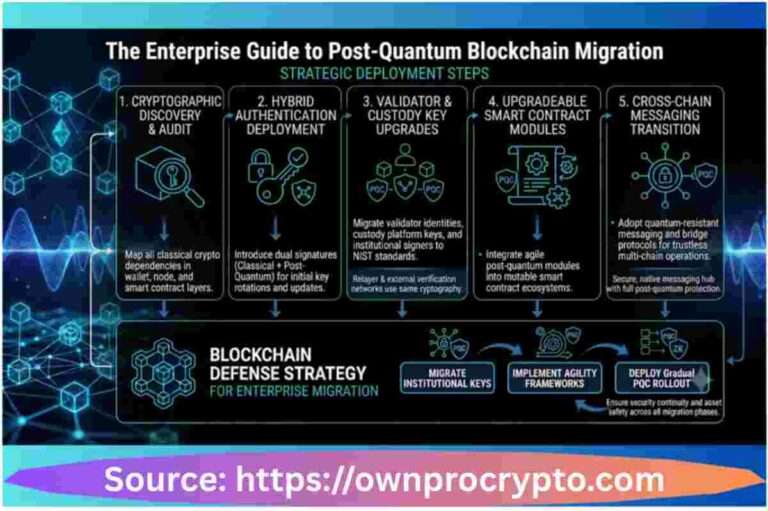
Verifiable AI is moving beyond research environments and becoming a practical framework for industries where artificial intelligence decisions require transparency, security, and accountability.
Organizations are adopting Verifiable AI because traditional AI systems often provide predictions without sufficient evidence about how those decisions were generated.
In high-impact industries, an AI decision is not complete unless organizations can verify:
Verifiable AI introduces a trust layer that allows organizations to deploy AI systems while maintaining regulatory compliance, operational control, and customer confidence.
Key Insight: The most valuable AI systems of the future will not only automate decisions—they will provide verifiable evidence that those decisions are trustworthy.
Different industries use Verifiable AI for different reasons, but the underlying requirement remains the same: trusted autonomous decision-making.
| Industry | Primary AI Application | Verification Requirement |
|---|---|---|
| Finance | Fraud detection, trading, risk analysis | Compliance and decision verification |
| Healthcare | Diagnostics and patient support | Privacy and accuracy validation |
| Government | Public services and automation | Transparency and accountability |
| Enterprise | Operations and workflow automation | Auditability and security |
| Web3 & DeFi | Autonomous agents and smart contracts | Cryptographic verification |
Financial services are expected to become one of the largest adoption areas for Verifiable AI because financial decisions require strong compliance, accuracy, and accountability.
Banks, investment firms, and fintech companies increasingly use AI for:
However, financial institutions cannot rely on AI systems that operate as unexplained black boxes.
Verifiable AI enables financial organizations to prove that AI decisions were generated by approved models under approved conditions.
Fraud detection systems analyze millions of transactions to identify suspicious activity.
Traditional AI can identify patterns, but organizations may struggle to prove:
Verifiable AI adds:
| Requirement | Verifiable AI Solution |
|---|---|
| Transaction monitoring | AI execution records |
| Decision explanation | Verification evidence |
| Regulatory review | Immutable audit trails |
| Model security | Model provenance tracking |
AI-driven trading systems can analyze market conditions and execute decisions at extremely high speeds.
Verifiable AI helps ensure:
| Component | Purpose |
|---|---|
| AI Model Identity | Confirms approved trading model |
| Execution Logs | Records automated decisions |
| Governance Rules | Enforces trading limits |
| Cryptographic Proofs | Verifies execution integrity |
Healthcare AI offers significant opportunities, but medical decisions require exceptional levels of trust and privacy.
AI systems are increasingly used for:
Because healthcare involves sensitive patient information, organizations need AI systems that are both transparent and privacy-preserving.
AI-assisted diagnosis can help healthcare professionals identify conditions faster.
However, healthcare providers must verify:
Verifiable AI provides:
| Healthcare Challenge | Verification Solution |
|---|---|
| Patient privacy | Zero-Knowledge Proofs |
| Model reliability | AI model provenance |
| Clinical accountability | Decision audit trails |
| Regulatory requirements | Automated compliance evidence |
Healthcare is one of the strongest use cases for zkML because organizations often need to verify AI performance without exposing patient records.
Example:
A hospital could prove that an AI diagnostic model correctly analyzed medical information without revealing the patient’s private health data.
Benefits include:
Governments are exploring AI for public services, administration, security, and citizen support.
However, government AI systems require a high level of transparency because automated decisions may directly impact citizens.
Applications include:
Verifiable AI helps government organizations demonstrate that automated systems operate fairly and according to established rules.
| Government Requirement | Verifiable AI Capability |
|---|---|
| Public accountability | Transparent audit records |
| Policy enforcement | Governance rules |
| System security | AI identity verification |
| Decision tracking | Immutable logs |
Large organizations are using AI to automate internal processes, improve efficiency, and support decision-making.
Common applications include:
Enterprise automation creates a new challenge: organizations must ensure autonomous systems operate within approved boundaries.
Verifiable AI enables:
| Business Function | AI Application | Verification Layer |
|---|---|---|
| Finance | Automated accounting | Audit verification |
| Operations | Workflow automation | Execution records |
| Customer Service | AI assistants | Identity verification |
| Supply Chain | Predictive systems | Data provenance |
Web3 ecosystems are naturally aligned with Verifiable AI because both rely heavily on cryptographic trust.
AI agents operating in decentralized environments may eventually:
Without verification, autonomous AI agents could create significant security risks.
Verifiable AI provides important safeguards for autonomous blockchain-based systems.
| Security Requirement | Solution |
|---|---|
| Agent authentication | Decentralized identity |
| Transaction control | AI agent wallets |
| Decision verification | Cryptographic proofs |
| Activity tracking | Blockchain audit records |
Future AI systems may interact economically without direct human involvement.
Examples:
Verifiable AI enables these systems by providing:
The following table highlights how different industries benefit from Verifiable AI.
| Industry | Main Benefit | Core Technology |
|---|---|---|
| Finance | Compliance and risk control | Audit trails + identity |
| Healthcare | Privacy-preserving AI | zkML |
| Government | Transparent automation | Governance frameworks |
| Enterprise | Secure workflows | Verification architecture |
| Web3 | Autonomous agent security | Blockchain + AI identity |
As AI systems become more autonomous, verification will become a standard requirement across industries.
Future developments may include:
The transition will be similar to cybersecurity evolution: organizations once treated security as optional, but eventually it became a fundamental requirement.
AI verification is likely to follow the same path.
Enterprise applications of Verifiable AI span finance, healthcare, government, enterprise operations, and Web3 ecosystems. By combining AI governance, cryptographic verification, identity systems, blockchain records, and privacy-preserving technologies, organizations can deploy AI systems with greater transparency, security, and accountability.
Expert Insight: The future of enterprise AI will not be defined only by intelligence or automation. It will be defined by whether businesses, regulators, and users can verify that AI systems operate safely and responsibly.

Artificial intelligence has evolved from simple prediction systems into powerful decision-making engines capable of managing complex business processes.
Traditional AI systems have delivered significant value across industries, but they operate primarily on a trust-based model:
The system produces an answer, and users trust the result.
Verifiable AI introduces a new approach:
The system produces an answer together with evidence proving how that answer was generated.
This represents a major shift from:
“Trust the AI output”
to:
“Verify the AI output.”
As organizations deploy AI agents for financial operations, healthcare decisions, enterprise automation, and autonomous workflows, verification is becoming a critical requirement.
The fundamental difference is not intelligence capability.
Both systems can use advanced machine learning models, neural networks, and large language models.
The difference is the trust layer surrounding the AI system.
| Category | Traditional AI | Verifiable AI |
|---|---|---|
| Primary Function | Generates predictions and outputs | Generates outputs with verification evidence |
| Trust Model | Users trust the provider | Users verify the system independently |
| Transparency | Limited visibility | Complete execution evidence |
| Model Verification | Usually manual | Cryptographic verification |
| Output | Answer only | Answer + proof |
| Identity | Basic authentication | Cryptographic AI identity |
| Auditability | Limited logs | Immutable audit records |
| Governance | External policies | Embedded verification rules |
Traditional AI systems generally follow a simple workflow:
User Input
     ↓
AI Model Processing
     ↓
Generated Output
     ↓
User Accepts Result
The user receives the answer but usually cannot independently verify:
This creates a trust gap, especially in high-risk environments.
Verifiable AI adds additional verification layers around the AI process.
User Input
     ↓
Data Verification
     ↓
Model Authentication
     ↓
AI Execution Tracking
     ↓
Cryptographic Proof Generation
     ↓
Verified Output + Evidence
The final result includes information proving:
Transparency is one of the biggest differences between traditional AI and Verifiable AI.
| Transparency Factor | Traditional AI | Verifiable AI |
|---|---|---|
| Model history | Limited visibility | Complete provenance tracking |
| Data origin | Often unclear | Verified data lineage |
| Decision process | Difficult to audit | Recorded execution history |
| Output validation | Human review | Cryptographic verification |
| System changes | Hard to detect | Detectable through proofs |
As AI systems become more autonomous, security requirements are increasing.
| Security Area | Traditional AI | Verifiable AI |
|---|---|---|
| Model Protection | Access control | Model identity + provenance |
| Agent Authentication | API credentials | Cryptographic identity |
| Decision Security | Internal logs | Verified execution records |
| Data Protection | Standard encryption | Privacy-preserving verification |
| Unauthorized Actions | Detection after event | Prevention through permissions |
Enterprise organizations increasingly require proof of AI activity.
| Audit Requirement | Traditional AI | Verifiable AI |
|---|---|---|
| Track AI decisions | Partial logs | Complete evidence trail |
| Verify model version | Manual checks | Cryptographic confirmation |
| Review past actions | Limited history | Immutable records |
| Regulatory reporting | Manual preparation | Automated verification |
Enterprise adoption requires more than AI accuracy.
Organizations need systems that provide:
| Enterprise Requirement | Traditional AI | Verifiable AI |
|---|---|---|
| Regulatory compliance | Challenging | Built-in verification |
| AI governance | Policy-based | Evidence-based |
| Autonomous agents | Limited control | Identity and permissions |
| Financial automation | Higher risk | Controlled execution |
| Customer trust | Depends on reputation | Supported by proof |
The difference becomes more important when AI systems start acting independently.
Traditional AI agents may:
However, organizations may not know:
Verifiable AI agents introduce:
An AI agent manages business payments.
AI Agent
    ↓
Creates Payment Decision
    ↓
Executes Transaction
    ↓
Creates Internal Log
Possible problems:
AI Agent Identity Verified
          ↓
Payment Rules Checked
          ↓
Transaction Approved
          ↓
Cryptographic Proof Generated
          ↓
Immutable Record Stored
Benefits:
The transition is driven by increasing AI adoption and increasing risk.
Businesses need AI systems that can prove:
| Business Concern | Verifiable AI Response |
|---|---|
| “Can we trust this AI?” | Verification evidence |
| “Who made this decision?” | AI identity records |
| “Was the model authentic?” | Model provenance |
| “Can regulators audit it?” | Immutable audit trails |
| “Can AI act safely?” | Governance controls |
| Feature | Traditional AI | Verifiable AI |
|---|---|---|
| Intelligence | Advanced | Advanced |
| Output | Prediction | Prediction + proof |
| Trust Method | Reputation | Verification |
| Security | Access control | Cryptographic security |
| Identity | User-based | AI-based identity |
| Governance | External monitoring | Embedded controls |
| Privacy | Limited verification | Zero-Knowledge proofs |
| Future Readiness | Limited autonomy support | Designed for autonomous systems |
Traditional AI made artificial intelligence useful.
Verifiable AI makes artificial intelligence trustworthy.
As AI systems become more autonomous and begin controlling sensitive workflows, organizations will require more than accurate predictions. They will require proof that AI systems are authentic, secure, compliant, and operating exactly as intended.
The future AI landscape will move from:
“AI that can answer”
toward:
“AI that can answer and prove why its answer should be trusted.”
Artificial intelligence is moving toward a new era where systems are not only expected to generate intelligent results but also provide evidence, accountability, and security behind every action.
Traditional AI focused on capability.
Explainable AI focused on understanding.
Verifiable AI focuses on proving trust.
As autonomous AI agents become more common across finance, healthcare, government, enterprise, and Web3, verification infrastructure will become a fundamental requirement.
Explainable AI (XAI) and Verifiable AI are closely related concepts, but they solve different problems.
Explainable AI focuses on helping humans understand why a model reached a decision.
Verifiable AI focuses on proving that the correct model executed correctly and produced an authentic result.
| Category | Explainable AI (XAI) | Verifiable AI |
|---|---|---|
| Primary Goal | Explain AI decisions | Verify AI authenticity |
| Main Question | Why did AI make this decision? | Can we prove AI made this decision correctly? |
| Focus Area | Interpretability | Trust and verification |
| Technology | SHAP, LIME, feature analysis | Cryptography, zkML, blockchain |
| Output | Human-readable explanation | Mathematical proof |
| Security Level | Improves understanding | Improves accountability |
| Best Use Case | Model analysis | Autonomous AI systems |
Explainable AI and Verifiable AI are complementary technologies.
A future enterprise AI system may use both:
| Layer | Technology | Purpose |
|---|---|---|
| Intelligence Layer | AI Model | Generates decisions |
| Explanation Layer | XAI | Explains reasoning |
| Verification Layer | Verifiable AI | Proves authenticity |
| Governance Layer | Smart Contracts | Enforces policies |
Together, they create AI systems that are understandable, secure, and trustworthy.
AI Alignment focuses on ensuring artificial intelligence systems follow human goals, ethical principles, and safety requirements.
Verifiable AI focuses on proving whether those safety requirements were actually followed during execution.
| Category | AI Alignment | Verifiable AI |
|---|---|---|
| Main Objective | Ensure AI behaves safely | Prove AI behavior |
| Focus | Intent and values | Evidence and verification |
| Approach | Training methods and policies | Cryptographic verification |
| Technology | RLHF, constitutional AI | zkML, identity, blockchain |
| Main Question | What should AI do? | Did AI do what it was supposed to do? |
AI Alignment defines the rules.
Verifiable AI proves those rules were respected.
For example:
AI Alignment:
“An AI payment agent should never send unauthorized funds.”
Verifiable AI:
“This payment agent had verified identity, followed approved rules, and generated proof before executing the transaction.”
Verifiable AI introduces a new trust infrastructure for artificial intelligence systems.
| Benefit | Business Impact |
|---|---|
| AI Transparency | Reduces black-box decision problems |
| Auditability | Creates permanent execution records |
| Security | Prevents unauthorized AI actions |
| Compliance | Simplifies regulatory reporting |
| Privacy | Enables verification without exposing sensitive data |
| Accountability | Identifies responsible AI agents |
| Trust | Improves user confidence |
| Industry | Benefit |
|---|---|
| Finance | Verified automated trading and payment decisions |
| Healthcare | Privacy-preserving AI diagnosis systems |
| Government | Transparent AI-based public services |
| Insurance | Auditable automated claims processing |
| Enterprise | Secure AI workflow automation |
| Web3 | Trusted autonomous AI agents |
Although Verifiable AI provides significant advantages, organizations must overcome several technical challenges.
| Challenge | Explanation |
|---|---|
| Computing Cost | Cryptographic verification can require additional resources |
| Implementation Complexity | Requires AI, security, and blockchain expertise |
| Industry Standards | Verification frameworks are still developing |
| Scalability | Large AI models require efficient proof systems |
| Privacy Balance | Organizations must balance transparency and confidentiality |
The ecosystem is improving through:
Enterprise adoption requires integrating verification into existing AI workflows.
| Implementation Stage | Enterprise Action |
|---|---|
| Stage 1 | Identify high-risk AI workflows |
| Stage 2 | Add AI identity verification |
| Stage 3 | Implement audit logging |
| Stage 4 | Add model provenance tracking |
| Stage 5 | Deploy cryptographic verification |
| Stage 6 | Connect governance systems |
A typical enterprise implementation includes:
Enterprise Applications
          ↓
AI Agents & Models
          ↓
Verification Layer
          ↓
Cryptographic Proof System
          ↓
Blockchain Audit Record
          ↓
Governance & Compliance LayerThe Verifiable AI ecosystem combines multiple technologies.
| Technology | Role |
|---|---|
| AI Models | Generate intelligent decisions |
| Cryptographic Hashing | Creates verification fingerprints |
| Digital Identity | Authenticates AI agents |
| Blockchain | Stores immutable records |
| Smart Contracts | Automates governance |
| Zero-Knowledge Proofs | Enables private verification |
| Category | Purpose |
|---|---|
| AI Provenance Platforms | Track model history |
| AI Identity Systems | Authenticate autonomous agents |
| zkML Frameworks | Verify AI computation |
| Blockchain Networks | Store execution evidence |
| Governance Platforms | Manage AI policies |
As AI systems become more autonomous, verification will move from an optional security feature to a core infrastructure requirement.
| Year | Development | Expected Impact |
|---|---|---|
| 2026 | Enterprise adoption begins | AI verification enters regulated industries |
| 2027 | AI identity standards mature | Autonomous agents gain trusted identities |
| 2028 | AI agent economy expands | Machines conduct verified transactions |
| 2029 | Advanced zkML adoption | Private AI verification becomes mainstream |
| 2030 | Fully verified AI ecosystems | AI operates with built-in trust infrastructure |
The next generation of AI will not only be judged by intelligence.
It will be judged by:
Verifiable AI creates the foundation for a future where autonomous systems can operate safely across critical industries.
The evolution is:
Traditional AI → Explainable AI → Verifiable AI
From systems that generate answers,
to systems that explain answers,
to systems that can mathematically prove trust.
Verifiable AI represents the next trust layer for artificial intelligence.
By combining:
organizations can build AI systems that are transparent, secure, compliant, and ready for autonomous operation.
The future of AI will not only belong to models that are powerful.
Verifiable AI is an emerging technology category combining artificial intelligence, cryptography, digital identity, blockchain infrastructure, and governance systems.
As organizations move toward autonomous AI agents and AI-driven decision-making, businesses increasingly need answers around AI transparency, security, compliance, and trust.
The following frequently asked questions cover the most common searches related to Verifiable AI architecture, AI verification systems, model provenance, AI identity, blockchain AI security, and enterprise adoption.
What Is Verifiable AI?
Verifiable AI is an advanced AI framework that attaches proof, evidence, and verification records alongside artificial intelligence outputs.
Traditional AI systems generate answers based on statistical prediction models, but users often cannot independently confirm:
Verifiable AI solves this problem by combining:
Instead of simply trusting an AI output, users and organizations can verify the complete execution history behind that output.
Simple comparison:
| Traditional AI | Verifiable AI |
|---|---|
| Produces an answer | Produces an answer + proof |
| Requires trust | Enables verification |
| Limited transparency | Complete audit history |
| Hidden execution process | Cryptographically verified execution |
Why Is Verifiable AI Important in 2026?
Verifiable AI is becoming increasingly important because artificial intelligence is moving from simple assistants toward autonomous systems capable of making decisions and executing actions.
By 2026, AI agents are expected to:
This creates new risks:
Verifiable AI provides organizations with evidence showing that AI systems operated correctly and according to approved policies.
How Does Verifiable AI Work?
Verifiable AI works by adding a verification layer around existing AI systems.
The process combines:
Verifiable AI Workflow
| Stage | Verification Method | Purpose |
|---|---|---|
| Input Data | Digital signatures | Confirms authentic data sources |
| Model Execution | Model identity verification | Ensures approved AI model usage |
| Processing | Cryptographic tracking | Records AI operations |
| Output | Verification proofs | Confirms result authenticity |
| Storage | Blockchain records | Preserves evidence permanently |
What Problems Does Verifiable AI Solve?
Verifiable AI addresses several major challenges facing modern artificial intelligence:
| AI Challenge | Verifiable AI Solution |
|---|---|
| Black-box decisions | Transparent execution evidence |
| AI hallucination risks | Verified outputs |
| Unauthorized models | Model provenance tracking |
| Rogue AI agents | Cryptographic identity |
| Compliance difficulties | Automated audit records |
| Privacy concerns | Zero-Knowledge verification |
What Is an AI Audit Trail?
An AI audit trail is a secure digital record that tracks important events throughout an artificial intelligence system’s lifecycle.
It can record:
AI Audit Trail Example
| Recorded Event | Purpose |
|---|---|
| Input information | Shows what data was processed |
| Model version | Confirms which AI system operated |
| Decision process | Tracks execution history |
| Output record | Maintains accountability |
| Verification proof | Enables independent checking |
Why Are Immutable AI Audit Trails Important?
Immutable AI audit trails are important because regulated industries need reliable evidence that AI systems followed approved procedures.
Industries such as:
require records that cannot easily be changed after an AI decision occurs.
Benefits include:
What Is AI Model Provenance?
AI model provenance tracks the complete history of an artificial intelligence model.
It records:
Model provenance helps organizations verify that they are using legitimate and approved AI systems.
What Is the Difference Between AI Model Provenance and AI Audit Trails?
Although related, they solve different problems.
| Feature | AI Model Provenance | AI Audit Trail |
|---|---|---|
| Focus | Model history | System activity |
| Tracks | Creation and updates | Actions and decisions |
| Main Question | “Where did this model come from?” | “What did this AI do?” |
| Purpose | Model authenticity | Operational accountability |
What Is AI Identity?
AI identity gives autonomous AI agents a verified digital identity.
Instead of operating as anonymous software processes, AI agents can have:
AI identity allows organizations to answer:
Why Do AI Agents Need Identity?
As autonomous AI agents become more common, identity becomes essential.
Without identity controls, organizations cannot reliably determine:
AI identity creates accountability between autonomous systems.
Why Do Autonomous AI Agents Need Wallets?
AI agent wallets allow autonomous software systems to securely manage digital assets and execute approved transactions.
Possible uses include:
Security controls include:
| Security Feature | Purpose |
|---|---|
| Spending limits | Prevent unauthorized payments |
| Smart contract rules | Control transactions |
| Multi-signature approval | Increase security |
| Activity monitoring | Track wallet behavior |
How Does Blockchain Support Verifiable AI?
Blockchain provides an immutable verification layer for AI systems.
Instead of storing complete AI models on-chain, blockchain networks store:
Blockchain Role in Verifiable AI
| Blockchain Function | AI Benefit |
|---|---|
| Immutable storage | Prevents record manipulation |
| Smart contracts | Automates governance rules |
| Decentralized identity | Verifies AI agents |
| Public verification | Enables independent audits |
What Role Do Zero-Knowledge Proofs (zkML) Play in Verifiable AI?
Zero-Knowledge Machine Learning (zkML) allows AI systems to prove that a computation was performed correctly without revealing private information.
This enables organizations to verify:
while protecting:
What Is zkML in Simple Terms?
zkML works like a mathematical verification certificate.
Instead of showing the entire AI process, a system can prove:
“The correct AI model processed the correct information and produced a valid result.”
without exposing confidential details.
How Is Verifiable AI Different From Explainable AI (XAI)?
Explainable AI and Verifiable AI solve different problems.
| Category | Explainable AI | Verifiable AI |
|---|---|---|
| Main Goal | Explain decisions | Prove authenticity |
| Focus | Human understanding | Mathematical verification |
| Method | Interpretability tools | Cryptographic proofs |
| Example | Why did AI choose this answer? | Can we prove this AI generated this answer? |
Explainable AI answers:
“Why did the model make this decision?”
Verifiable AI answers:
“Can we prove this exact model made this decision correctly?”
How Does Verifiable AI Relate to AI Alignment?
AI Alignment focuses on ensuring AI goals match human intentions.
Verifiable AI provides the technical infrastructure to prove whether AI systems actually followed those intended boundaries.
| AI Alignment | Verifiable AI |
|---|---|
| Defines desired behavior | Verifies actual behavior |
| Focuses on safety goals | Focuses on proof and evidence |
| Establishes principles | Confirms execution |
Which Industries Benefit Most From Verifiable AI?
Industries with strict security, privacy, and compliance requirements benefit most.
| Industry | Main Benefit |
|---|---|
| Finance | Verified transactions and compliance |
| Healthcare | Privacy-preserving AI decisions |
| Government | Transparent public systems |
| Insurance | Auditable automated decisions |
| Enterprise | Secure AI automation |
| Web3 | Trusted autonomous agents |
Is Verifiable AI the Future of Artificial Intelligence?
Verifiable AI is expected to become an important foundation for future AI systems as organizations demand greater transparency and control.
Future AI environments may include:
As AI becomes more powerful, verification will become essential for responsible adoption.
├── 1. Learn & Foundations 
│ ├──  Crypto Security Guide
│ ├──  Crypto Security Checklist
│ ├──  Crypto Security Standards
│ └──  Crypto Security Tools
│
├── 2. Asset Protection
│ ├──  Crypto Self Custody Security
│ ├──  Crypto Asset Security 2026
│ └──  Asset Security 2026
│
├── 3. Wallet Security
│ ├──  Wallet Time Machine
│ ├──  Crypto Wallet Approvals
│ └──  Crypto Portfolio Tracker
│
├── 4. Institutional Security
│ ├──  MPC vs Multi Sig Wallets
│ ├──  Institutional Crypto Custody 2026
│ ├──  Why Institutions Are Replacing Multi-Sig with MPC
│ └──  Multi-Cloud MPC Architecture
│
├── 5. Cross-Chain Security
│ ├──  Crypto Bridge Risk Explained
│ ├──  Cross-Chain Blockchain Security
│ └── Zero-Trust Interoperability
│
└── 6. Threat Intelligence & Risk Operations
├──  Crypto Scam Checker
├──  Asset Risk Assessment System
└──  Sovereign Asset Dashboard
Verifiable AI Hub ⭐⭐⭐⭐⭐
              │
              ├────────► AI Trust Framework
              │
              ├────────► AI Audit Trails
              │
              ├────────► AI Model Provenance
              │
              ├────────► AI Identity & Authentication
              │
              ├────────► AI Agent Security
              │
              ├────────► Blockchain for AI
              │
              ├────────► Zero-Knowledge Proofs for AI
              │
              └────────► Enterprise Verifiable AI
OWASP Smart Contract Top 10 (2026 Edition) helps identify critical vulnerabilities in Web3 systems, including logic errors, oracle manipulation, and contract-level exploits.