
How do I stay safe?
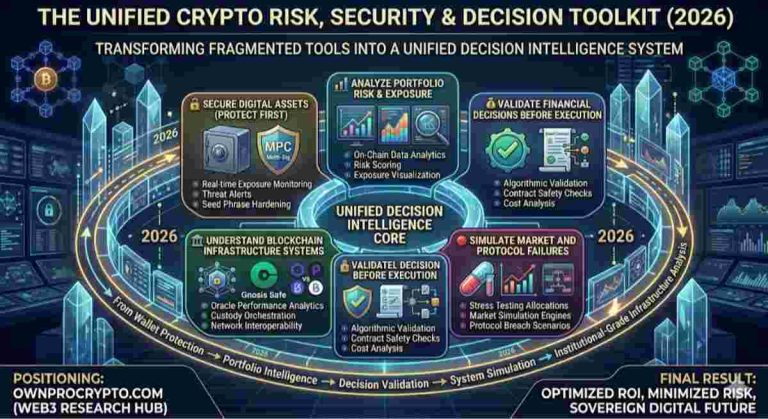
Table of Contents
ToggleMost crypto losses do not happen because of market volatility. They happen because users interact with the wrong wallet, approve a malicious smart contract, bridge assets through an unsafe protocol, or fall victim to phishing attacks.
The challenge is that modern crypto risks are spread across multiple layers of the ecosystem. Wallet security, token approvals, smart contracts, bridges, and DeFi protocols all introduce different forms of exposure.
This guide explores the most important crypto security tools available in 2026 and explains how they work together as a complete security intelligence system. Instead of reacting after a problem occurs, these tools help identify risks before capital is deployed.
Crypto security tools combines wallet protection, scam detection, and DeFi risk analysis into a unified security framework for Web3 users.
| Risk Category | Security Tool | Purpose |
|---|---|---|
| Wallet Security | Crypto Security Checklist | Assess self-custody readiness |
| Wallet Permissions | Wallet Approval Scanner | Detect risky token approvals |
| Scam Detection | Crypto Scam Checker | Identify suspicious projects |
| Smart Contracts | DeFi Risk Analyzer | Evaluate protocol risk |
| Cross-Chain Risk | Bridge Risk Tool | Assess bridge vulnerabilities |
| Portfolio Security | Asset Risk Assessment |
Monitor exposure levels |
Wallet Activity
↓
Approval Monitoring
↓
Scam Detection
↓
DeFi Risk Analysis
↓
Bridge Risk Review
↓
Transaction Decision
This layered approach helps users identify potential threats before funds are committed.
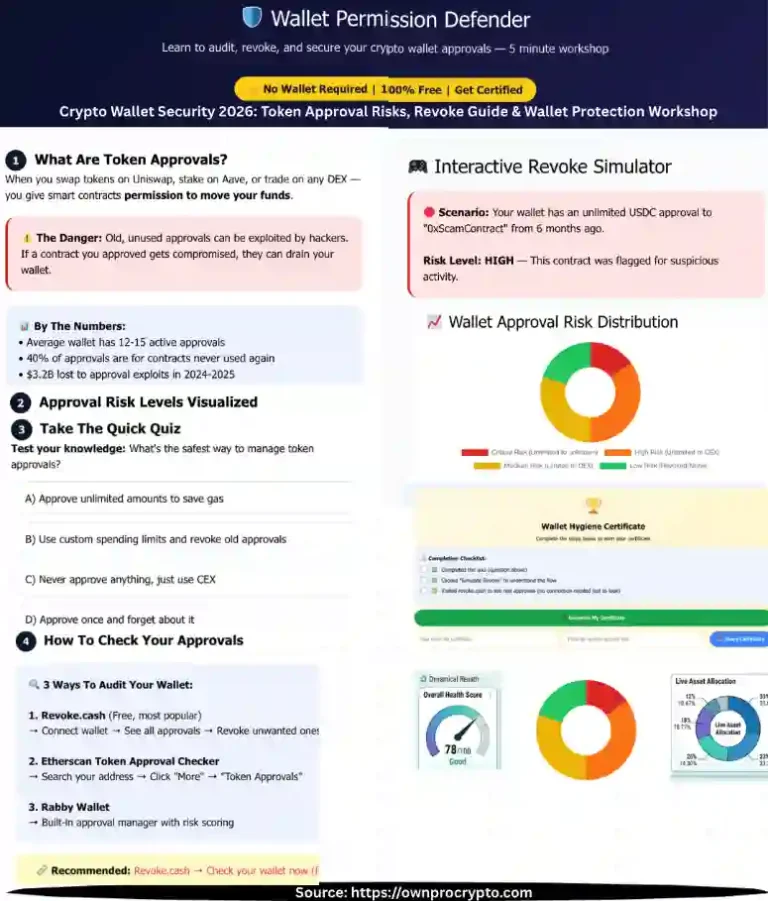
Wallet security forms the foundation of digital asset protection.
Even the most advanced DeFi strategy can fail if wallet security is weak.
A wallet security audit helps users evaluate:
Regular audits help identify weaknesses before they become vulnerabilities.
Many users forget that connected applications often retain permissions long after use.
Approval monitoring tools help identify:
Regular permission reviews reduce attack surfaces across wallets.
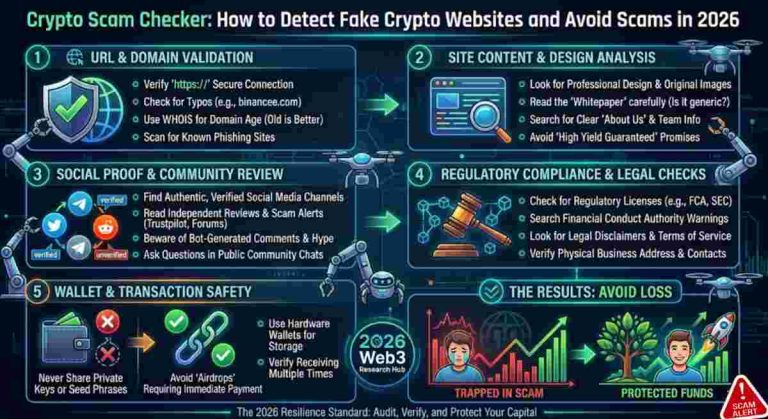
Crypto scams continue to evolve in sophistication.
Modern scam detection tools help users identify warning signs before interacting with projects.
| Warning Sign | Risk Level |
| Anonymous team with no history | High |
| Guaranteed returns | High |
| Aggressive referral programs | Medium |
| Unverified smart contracts | High |
| Missing documentation | Medium |
| Fake social engagement | Medium |
A scam detection system can evaluate:
The goal is not to predict success but to identify obvious risk factors before investment.
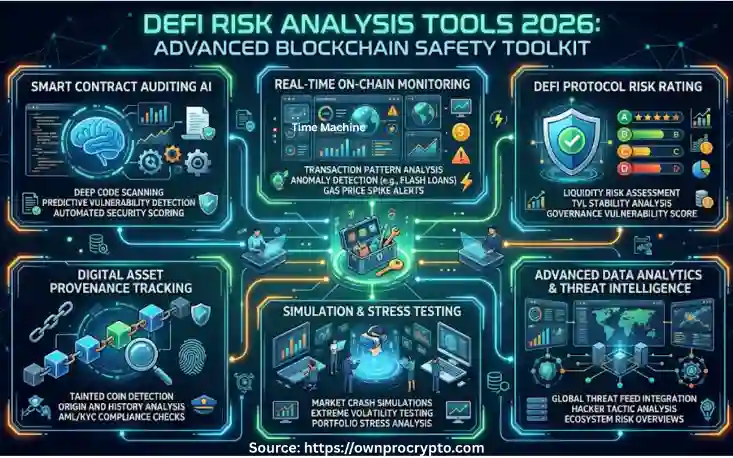
Decentralized finance introduces additional technical risks beyond traditional investing.
Before interacting with any protocol, users should evaluate its security profile.
Questions to consider:
Users should evaluate:
Some protocols allow governance participants to modify critical parameters.
Governance reviews should examine:

Bridges remain one of the most targeted sectors within crypto.
They introduce complexity because assets move between independent blockchain networks.
| Security Factor | Why It Matters |
| Validator Model | Determines transaction verification |
| Custody Structure | Defines asset control |
| Audit History | Identifies previous security reviews |
| Incident History | Reveals historical vulnerabilities |
| Network Decentralization | Reduces concentration risk |
Before using any bridge, users should understand how assets are secured throughout the transfer process.
Security is not limited to individual wallets.
Portfolio-level security evaluates overall exposure.
Large losses often occur because risks become concentrated in a single ecosystem, protocol, or custody provider.
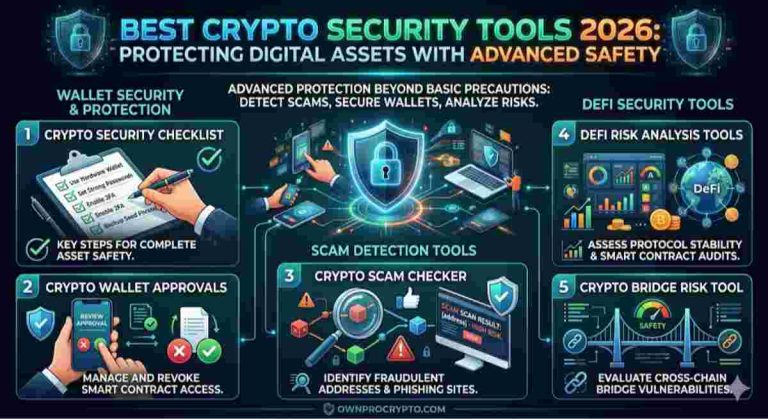
The Security Intelligence Layer combines multiple protection systems into a unified framework.
Protects private keys and account access.
Reviews token approvals and connected applications.
Identifies fraudulent projects and suspicious activity.
Evaluates DeFi platforms and smart contracts.
Measures aggregate exposure across holdings.
Together, these layers provide a comprehensive view of digital asset security.
The average crypto user now interacts with:
Every interaction creates additional risk.
Modern crypto security tools help users answer critical questions before executing a transaction:
✔ Is this smart contract trustworthy?
✔ Have I granted excessive wallet permissions?
✔ Is this bridge secure?
✔ Does this project show scam indicators?
✔ Is my portfolio overexposed to a single risk?
The goal is not simply protecting assets after a loss occurs. The goal is preventing losses from happening in the first place.
Professional blockchain security teams increasingly reference the OWASP Smart Contract Top 10 framework when evaluating decentralized applications.
| Security Category | Example Threat |
| Access Control Failures | Unauthorized contract functions |
| Oracle Manipulation | Price feed attacks |
| Logic Errors | Smart contract flaws |
| Flash Loan Exploits | Temporary liquidity attacks |
| Governance Attacks | Malicious proposal execution |
| Upgrade Risks | Centralized control vulnerabilities |
Understanding these categories helps investors evaluate the security maturity of blockchain projects.
| Tool Type | Purpose | Best For |
| Security Checklist | Self-audit | Beginners |
| Approval Scanner | Wallet permissions | Active DeFi users |
| Scam Checker | Project evaluation | New investments |
| DeFi Risk Analyzer | Protocol analysis | Yield farming |
| Bridge Risk Tool | Cross-chain transfers | Multi-chain users |
| Portfolio Risk Assessment | Exposure monitoring | Long-term investors |
OWASP Smart Contract Top 10 (2026 Edition) helps identify critical vulnerabilities in Web3 systems, including logic errors, oracle manipulation, and contract-level exploits.
Unlike traditional tools, this system combines crypto wallet security tools, DeFi security analysis tools, and scam detection into one structured intelligence layer.
Every tool works as part of a unified security framework designed to prevent loss before execution.
Security Intelligence Layer ensures every transaction and wallet interaction is validated against risk signals before capital is deployed.
This creates a foundation of safety across all Web3 decision-making layers.
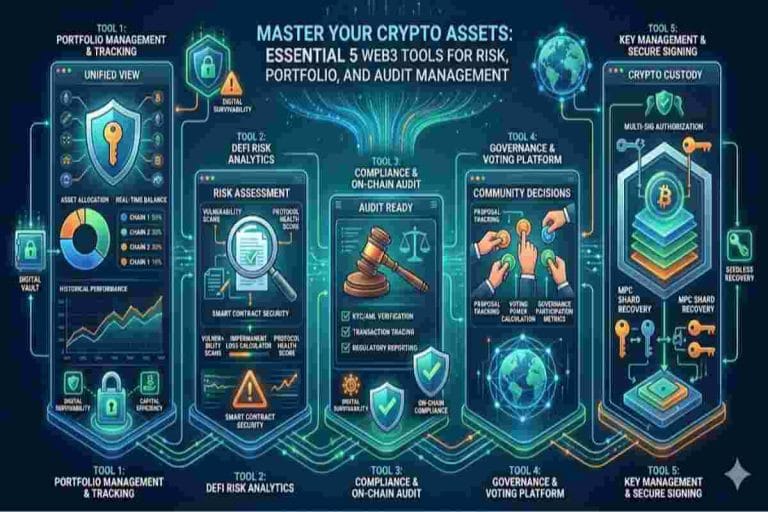
To maximize protection:
Security is strongest when multiple tools work together rather than relying on a single solution.
No individual tool can eliminate every threat.
The strongest approach combines wallet protection, scam detection, smart contract analysis, bridge risk evaluation, and portfolio monitoring into a unified security process.
As digital assets become increasingly integrated into personal and institutional portfolios, proactive security intelligence becomes essential.
By using the right crypto security tools and following a structured risk-management approach, investors can significantly reduce exposure to avoidable mistakes, scams, and technical vulnerabilities while building a more resilient digital asset strategy in 2026.
Learn about fraud prevention, custody risks, and digital asset safety 👉 https://www.ftc.gov |
How Can I Tell If I’m Being Targeted by a Crypto Investment Scam?
Promises of guaranteed profits, pressure to act quickly, and claims of little or no risk are common warning signs. Genuine investments always involve uncertainty.
What Makes a Cryptocurrency Project a Pump-and-Dump Scheme?
Pump-and-dump schemes rely on artificial hype to increase a token’s price before insiders sell their holdings, often leaving other investors with significant losses.
What Red Flags Should Worry Me in a Crypto Offer?
Unrealistic returns, anonymous teams, vague project details, and aggressive sales tactics are common indicators of potential fraud.
What Is the Difference Between a Pyramid Scheme and a Legitimate Crypto Project?
A pyramid scheme generates income primarily through recruiting participants, while legitimate projects provide value through products, services, or technological innovation.
Why Are Crypto Giveaway Promotions Usually Scams?
Scammers often promise free cryptocurrency in exchange for an upfront payment. Legitimate giveaways do not require users to send funds first.
Why Are Crypto Trading Bot Scams So Common?
Many fraudulent services advertise automated systems that guarantee profits. No trading strategy can eliminate market risk or ensure consistent returns.
Why Do Scammers Frequently Target Cryptocurrency Users?
Crypto transactions are often irreversible and can be transferred globally within minutes, making them attractive targets for fraudsters.
How Can I Protect My Crypto Wallet from Hackers?
Strong passwords, two-factor authentication, software updates, and secure storage of recovery information can significantly reduce security risks.
What Should I Do If My Crypto Account Is Hacked?
Immediately change passwords, enable additional security measures, notify the platform, and transfer remaining assets to a secure wallet if possible.
How Can I Avoid Fake Wallet Applications?
Download wallets only from official websites or trusted app stores and verify the developer before installation.
Should I Ever Share My Seed Phrase?
No. A seed phrase provides complete access to a wallet and should never be shared with anyone under any circumstances.
How Much Personal Information Should I Share When Buying Cryptocurrency?
Only provide information required by reputable and regulated platforms. Avoid sharing sensitive information with unverified individuals or services.
How Can I Identify a Crypto Phishing Email?
Suspicious links, urgent language, unexpected attachments, and requests for account credentials are common indicators of phishing attempts.
What Is a Crypto Dusting Attack?
A dusting attack involves sending very small amounts of cryptocurrency to multiple wallets to analyze transaction activity and potentially compromise user privacy.
What Is the Safest Way to Store Cryptocurrency?
Long-term holdings are generally safer in hardware wallets or other forms of offline storage than on online exchanges.
How Can I Avoid Fake Cryptocurrency Exchanges?
Research the platform carefully, review its reputation, verify its web address, and confirm any regulatory information before depositing funds.
How Can I Check Whether a Crypto Exchange Is Regulated?
Review licensing information, regulatory registrations, compliance disclosures, and publicly available records from relevant authorities.
Are Withdrawal Delays Always a Sign of a Scam?
Not necessarily. Technical issues, maintenance, or compliance reviews can cause delays. However, repeated excuses and unexpected fees should raise concerns.
How Can I Tell If Crypto Customer Support Is Genuine?
Legitimate support teams will never request passwords, private keys, or seed phrases. Verify support contacts through official websites.
How Can I Verify Someone Claiming to Represent a Crypto Company?
Contact the organization directly using official communication channels rather than relying solely on unsolicited messages.
How Can I Research a Crypto Company’s Background?
Examine company registration records, leadership information, project history, independent reviews, and community reputation.
What Is a Rug Pull in DeFi?
A rug pull occurs when project developers suddenly withdraw liquidity or abandon a project, leaving investors with worthless assets.
How Can I Spot a Fake Staking Opportunity?
Be cautious of platforms advertising unusually high yields without explaining how those returns are generated or sustained.
How Can I Determine Whether a Crypto Airdrop Is Legitimate?
Verify announcements through official project channels and avoid any airdrop requesting private keys or advance payments.
How Can I Evaluate Whether a Blockchain Project Is Legitimate?
Review the project’s team, roadmap, token utility, security audits, transparency, and overall community engagement.
What Questions Should I Ask Before Investing in Cryptocurrency?
Investors should understand the project’s purpose, business model, risks, token economics, and long-term sustainability before committing funds.
How Can I Verify a Smart Contract Before Using It?
Review audit reports, examine contract permissions, check transaction history, and use trusted blockchain analysis tools whenever possible.
Does Decentralization Eliminate Risk?
No. While decentralization reduces reliance on central authorities, technical vulnerabilities, market risks, and fraud can still occur.
What Role Does Crypto Insurance Play in Risk Management?
Crypto insurance may provide limited protection against specific risks such as theft or platform failures, depending on policy terms and coverage.
What Is a Deepfake Job Interview?
A deepfake interview uses artificial intelligence to impersonate recruiters or company representatives through manipulated audio or video.
How Do Scammers Use Fake Documents in Crypto Fraud?
Fraudsters often create counterfeit licenses, certificates, contracts, and identification documents to establish false credibility.
Why Are Discord and Telegram Popular Platforms for Crypto Scams?
Large crypto communities on these platforms make it easier for scammers to impersonate administrators, distribute phishing links, and promote fraudulent schemes.
Should I Trust Crypto Influencers and Coaches?
Always evaluate their qualifications, transparency, and potential conflicts of interest before relying on investment advice.
Why Are Romance Scams Common in Cryptocurrency?
Scammers build emotional relationships with victims before encouraging them to invest in fraudulent crypto opportunities.
Can Lost Funds Be Recovered After a Crypto Scam?
Recovery is often difficult because blockchain transactions are generally irreversible. However, victims should report incidents and preserve all available evidence.
How Should a Crypto Scam Be Reported?
Victims should document communications, wallet addresses, transaction records, and screenshots before contacting relevant authorities.
How Can Someone Investigate a Crypto Scam?
A thorough investigation involves collecting evidence, tracing transactions, identifying involved wallet addresses, and preserving all related records.
Are Cold Calls About Crypto Investments Trustworthy?
Unsolicited investment calls should be treated with caution. High-pressure sales tactics are frequently associated with fraudulent schemes.
Are Crypto Mixing Services Legal?
The legality of mixing services varies by jurisdiction. While they may be used for privacy purposes, they can also attract regulatory scrutiny due to potential misuse.
Welcome to OwnProCrypto (Own & Pro Crypto) — a next-generation Bitcoin and blockchain education platform where the science of finance meets the power of AI-driven automation.
Our mission is simple: to equip you with the knowledge, frameworks, and tools needed to make smarter financial and business decisions in the Web3 economy.
Beyond analysis, OwnProCrypto focuses on transparency, verifiable data, and practical frameworks that investors and builders can actually use. Our goal is not hype — but clear thinking, disciplined analysis, and long-term value creation in the decentralized economy.
Our Background: Salim (Sam) is the founder and lead researcher behind OwnProCrypto, a Web3 intelligence platform focused on crypto security, digital ownership, stablecoin systems, interoperability, and institutional blockchain infrastructure.
Crypto Tools & Analysis:
Crypto Fundamental Analysis Tool | Protocol Evaluation System | DeFi Risk Analysis Tools | Crypto Portfolio Dashboard | Token Risk vs Reward Tool
Guides:
Crypto Fundamental Analysis | Blockchain Project Evaluation | Tokenomics Analysis | DeFi Protocol Analysis | Capital Efficiency
© 2026 OwnProCrypto — Built for smarter crypto decisions