
Table of Contents
Toggle
Crypto Threat Intelligence is a structured analysis of:
Crypto security is no longer just about storing assets safely—it’s about understanding how attackers think.
Crypto ecosystems are becoming:
This increases attack surfaces.
Threat intelligence ensures users don’t just use crypto safely—but understand why systems fail in the first place.
In 2026, most losses do not happen because of weak technology alone, but because users and protocols fail to detect attack patterns early.
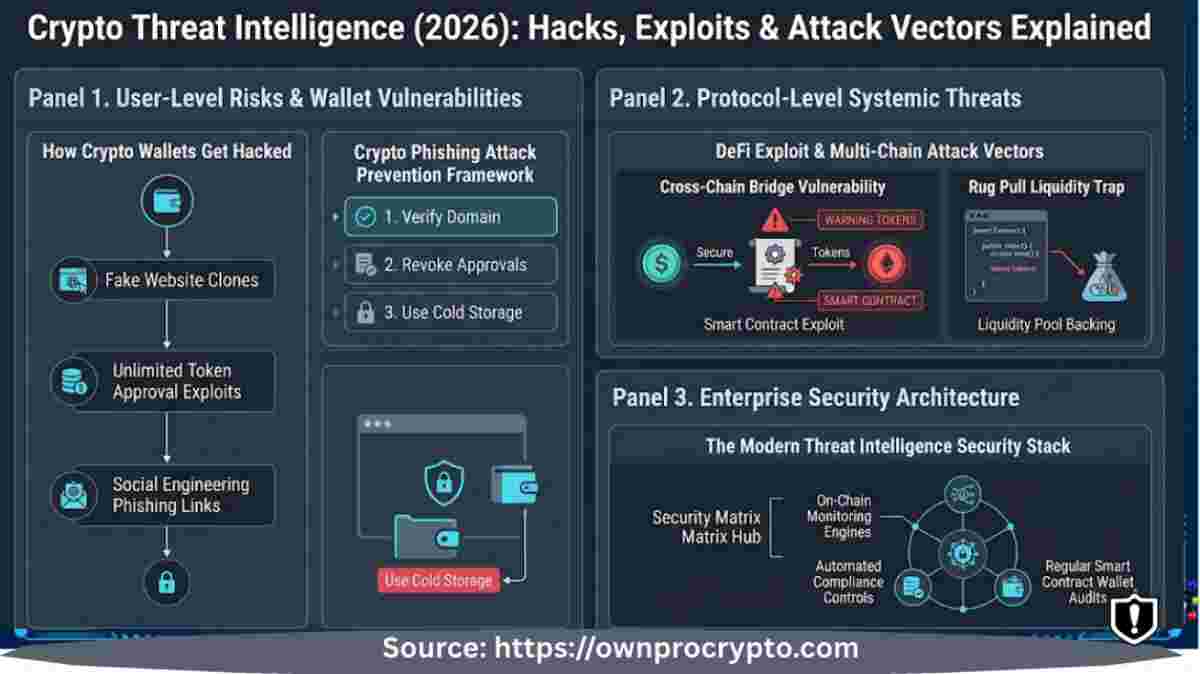
This guide to Crypto Threat Intelligence (2026) breaks down real-world attack vectors including hacking methods, wallet compromises, DeFi exploits, and phishing systems so you can recognize risks before they become losses.
| Attack Type | Description | Common Target |
|---|---|---|
| Phishing Attacks | Fake websites or wallet prompts steal credentials | Wallet users |
| Smart Contract Exploits | Bugs in code are exploited for funds | DeFi protocols |
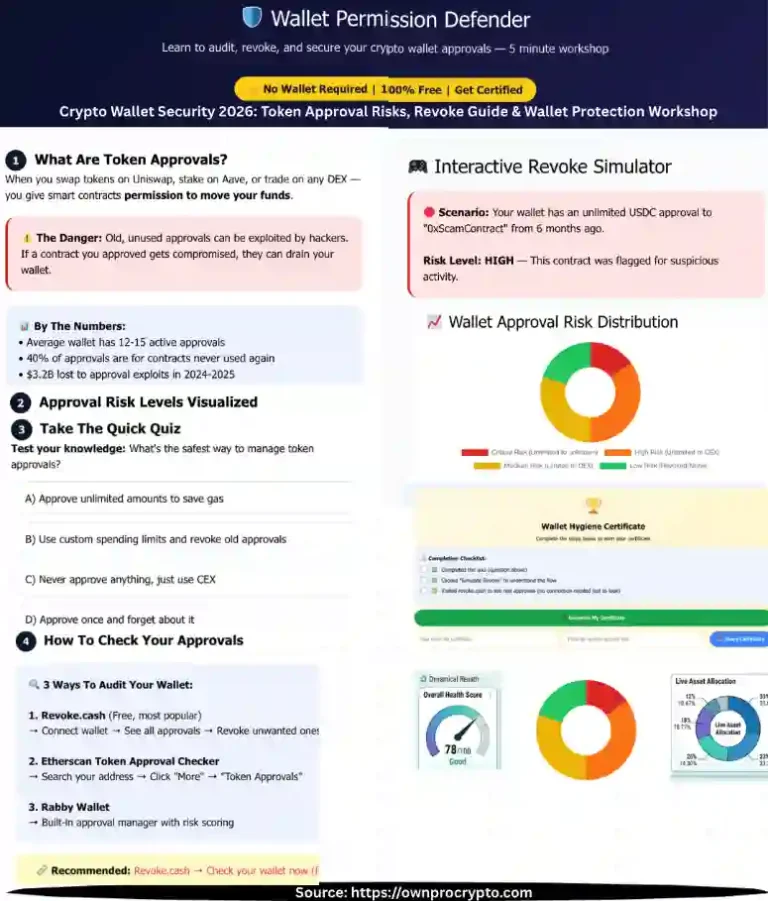
| Wallet Approval Abuse | Unlimited token approvals drained silently | Retail users |
| Bridge Exploits | Cross-chain infrastructure hacked | Multichain assets |
| Social Engineering | Users tricked via trust manipulation | Beginners & influencers |
| Fake Airdrops | Malicious contracts disguised as rewards | Active traders |
Reconnaissance (Target selection)
↓
Phishing / Social Engineering
↓
Wallet Connection / Approval
↓
Smart Contract Execution
↓
Asset Transfer or Drain
↓
On-chain Mixing / Laundering
Most users believe hacks are “instant.”
In reality, most attacks follow a multi-step chain reaction:
This is why real security is not just storage—it is interaction control.
Attackers create identical versions of real platforms.
Example behavior:
Users unknowingly grant:
This is one of the most common silent drain methods.
Developers:
Result: price collapses instantly.
Cross-chain bridges are targeted because:
Instead of hacking code, attackers hack people:
| Attack Type | Difficulty | Frequency | Impact |
|---|---|---|---|
| Phishing | Low | Very High | High |
| Wallet Approval Abuse | Medium | High | Very High |
| Smart Contract Exploit | High | Medium | Very High |
| Bridge Exploit | Very High | Low | Extreme |
| Social Engineering | Low | Very High | High |
| Layer | Focus |
|---|---|
| Security Tools | Detect risk before interaction |
| Security Checklist | Audit personal setup |
| Security Standards | Define best practices |
| Threat Intelligence | Understand attacker behavior |
👉 This is the missing “thinking layer” in crypto security.
Security is not one action—it is a system.
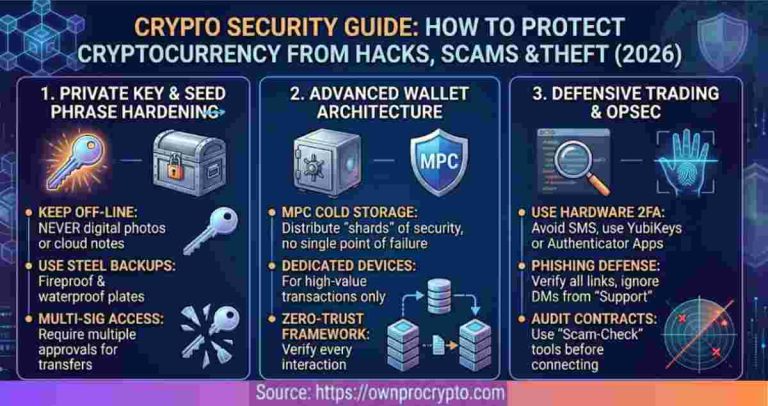
Never connect wallets without checking legitimacy.
Avoid unlimited spending permissions.
Keep hot wallets minimal.
Most attacks start with engagement.
Review approvals and active connections.
Threat Detection
↓
Behavior Analysis
↓
Risk Classification
↓
Interaction Decision
↓
Execution / Rejection
Understanding blockchain security breach examples helps identify how major systems fail in real conditions.
Most breaches follow repeatable patterns:
| Breach Type | What Happens | Impact |
|---|---|---|
| Bridge Exploit | Cross-chain validation failure | Multi-million liquidity loss |
| Smart Contract Bug | Logic error in code | Funds drained from protocol |
| Oracle Attack | Price feed manipulation | Artificial liquidation |
| Key Compromise | Wallet access exposed | Total asset loss |
Modern crypto hacking methods explained 2026 are no longer simple brute-force attacks.
They are structured financial and psychological systems.
These methods often combine multiple layers rather than relying on a single vulnerability.
Most users assume hacking is technical—but in reality, most cases come from user-side exposure.
If your private key touches the internet → it is exposed to risk.
Phishing remains the #1 entry point for theft in crypto ecosystems.
A proper crypto phishing attack prevention strategy includes:
Fake Website → Wallet Connection → Signature Request → Asset Drain
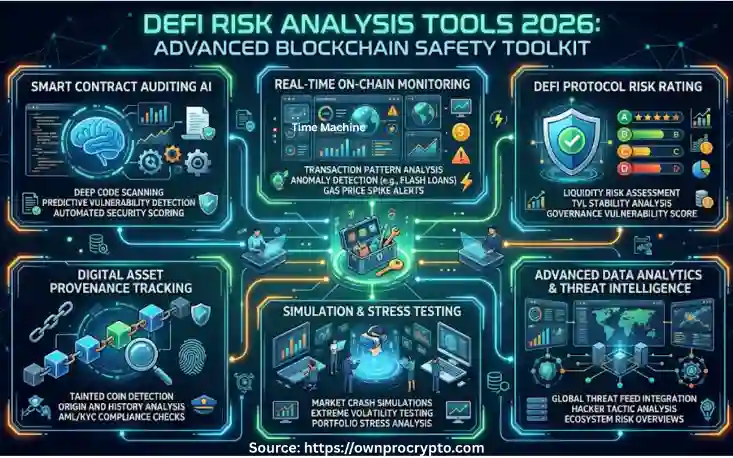
A DeFi exploit patterns guide helps identify how protocols fail under financial pressure.
Most DeFi exploits come from:
DeFi risk is not random—it is mathematically predictable when incentives are misaligned.
Crypto threat intelligence is about anticipation, not reaction.
Instead of waiting for hacks, security systems now monitor:
User Layer → Wallet Layer → Protocol Layer → Infrastructure Layer → Cross-Chain Layer
Each layer has its own attack surface:
CRYPTO SECURITY HUB
├── 1. Learn & Foundations
│ ├── Crypto Security Guide
│ ├── Crypto Security Checklist
│ ├── Crypto Security Standards
│ ├── Crypto Security Tools
│ └── Crypto Threat Intelligence
│
├── 2. Asset Protection
│ ├── Crypto Self Custody Security Toolkit
│ ├── Crypto Asset Security 2026
│ └── Asset Security 2026
│
├── 3. Wallet Security
│ ├── Wallet Time Machine
│ ├── Crypto Wallet Approvals
│ └── Crypto Portfolio Tracker
│
├── 4. Institutional Security
│ ├── MPC vs Multi Sig Wallets
│ ├── Institutional Crypto Custody 2026
│ ├── Why Institutions Are Replacing Multi-Sig with MPC
│ └── Multi-Cloud MPC Architecture
│
├── 5. Cross-Chain Security
│ ├── Crypto Bridge Risk Explained
│ ├── Cross-Chain Blockchain Security
│ └── Zero-Trust Interoperability
│
└── 6. Risk & Scam Intelligence
├── Crypto Scam Checker
├── Asset Risk Assessment System
└── Sovereign Asset Dashboard
In 2026, crypto security is no longer about reacting after losses—it is about understanding attack intelligence before transactions happen.
Its no longer just about wallets or tools.
The users who win are not the ones who avoid risk entirely, but the ones who recognize risk patterns early.
It is a combination of:
Once you understand how attacks happen, most scams become predictable—and preventable.
OWASP Smart Contract Top 10 (2026 Edition) helps identify critical vulnerabilities in Web3 systems, including logic errors, oracle manipulation, and contract-level exploits.
Crypto Security Tools (Risk Detection Layer)
Crypto Security Guide (Beginner)
Crypto Security Checklist (Audit Tool)
Crypto Security Standards (Institutional Framework)
Welcome to OwnProCrypto (Own & Pro Crypto) — a next-generation Bitcoin and blockchain education platform where the science of finance meets the power of AI-driven automation.
Our mission is simple: to equip you with the knowledge, frameworks, and tools needed to make smarter financial and business decisions in the Web3 economy.
Beyond analysis, OwnProCrypto focuses on transparency, verifiable data, and practical frameworks that investors and builders can actually use. Our goal is not hype — but clear thinking, disciplined analysis, and long-term value creation in the decentralized economy.
Our Background: Salim (Sam) is the founder and lead researcher behind OwnProCrypto, a Web3 intelligence platform focused on crypto security, digital ownership, stablecoin systems, interoperability, and institutional blockchain infrastructure.
Crypto Tools & Analysis:
Crypto Fundamental Analysis Tool | Protocol Evaluation System | DeFi Risk Analysis Tools | Crypto Portfolio Dashboard | Token Risk vs Reward Tool
Guides:
Crypto Fundamental Analysis | Blockchain Project Evaluation | Tokenomics Analysis | DeFi Protocol Analysis | Capital Efficiency
© 2026 OwnProCrypto — Built for smarter crypto decisions