infographic of site logo for contact us

OwnProCrypto.com

Use our Crypto Search Engine 🔍 to find the topics and keywords you're looking for.

Best Crypto Security Tools

Best Crypto Security Tools (2026): Wallet Protection, Scam Detection & Risk Monitoring

How do you choose the right crypto security tools to protect your assets, evaluate risks, and make more informed security decisions?

Table of Contents

Find the Right Crypto Security Tools for Your Needs

Choosing the right crypto security tools starts with understanding what you need to protect. Whether you’re securing a self-custody wallet, checking a transaction before signing, detecting potential scams, monitoring blockchain activity, or evaluating institutional custody solutions, this guide helps you compare leading tools, understand their key features, and identify the options that best fit your security needs.

Explore trusted providers, compare security approaches, and discover practical tools for building a more informed, layered crypto security strategy.

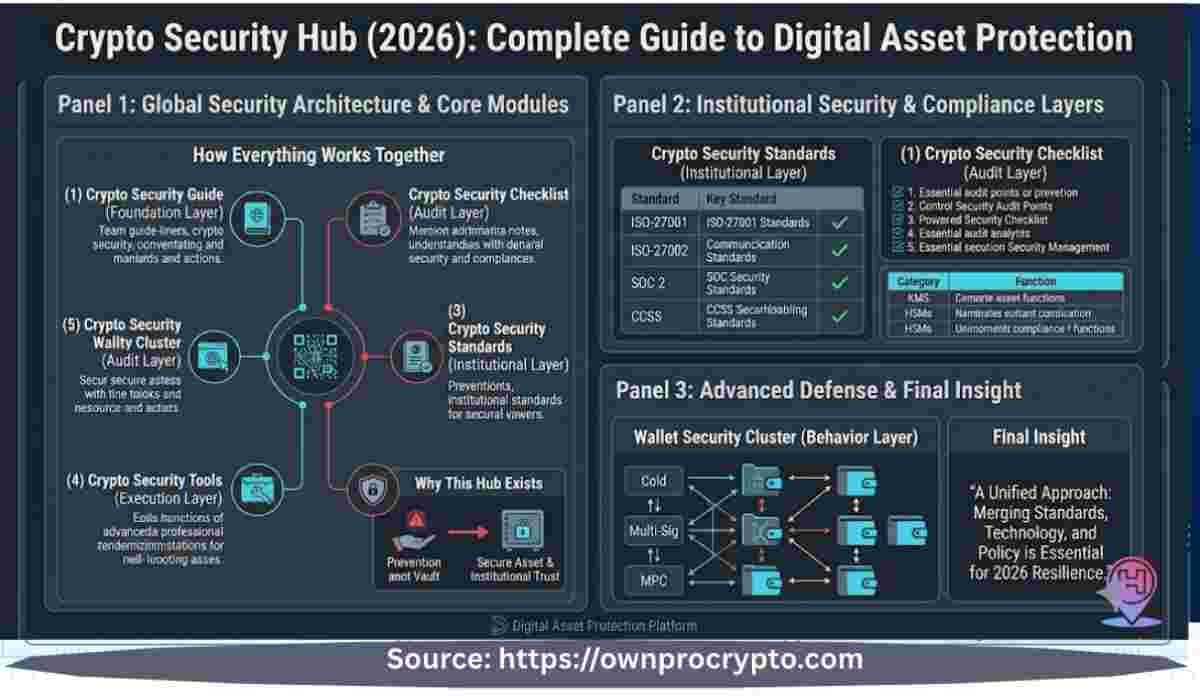
Infographic image explained Crypto Security Hub (2026)
Crypto Security Hub (2026)

Why Crypto Security Tools Matter More Than Ever in 2026

The cryptocurrency ecosystem continues to evolve, creating new opportunities for investors, traders, businesses, and financial institutions. But as digital assets become more widely adopted, the risks surrounding them are evolving too. Protecting wallets, private keys, smart contracts, and blockchain transactions is no longer an optional precaution. It is a fundamental part of responsible digital asset ownership.

Today’s crypto attacks often target people and processes rather than attempting to break encryption directly. Phishing websites, malicious smart contracts, compromised browser extensions, fake wallet applications, fraudulent decentralized applications (dApps), and social engineering campaigns can all expose users to significant financial risk. Even experienced investors can unknowingly authorize a harmful transaction or grant excessive wallet permissions, potentially resulting in irreversible asset loss.

The lesson is simple: owning crypto requires more than storing it securely. You also need to understand what you’re signing, what you’re authorizing, and where your assets are exposed.

That’s why modern crypto security relies on multiple layers of protection rather than a single wallet or security application. Hardware wallets and self-custody tools help protect private keys. Transaction simulators help users inspect the potential effects of transactions before signing. Scam detection platforms identify suspicious websites and interactions, while blockchain analytics, portfolio monitoring, and institutional custody solutions address other security and risk management needs.

Together, these technologies and practices form a crypto security stack: a coordinated set of tools, controls, and monitoring processes designed to reduce risk throughout the lifecycle of digital asset ownership.

The right combination depends on your situation. An individual protecting a Bitcoin wallet may prioritize secure key storage and phishing prevention. A DeFi user may need transaction simulation and wallet approval management. A business or financial institution may require blockchain risk monitoring, multi-party transaction authorization, and institutional-grade custody solutions.

This guide compares leading crypto security tools available in 2026, explains what each category does, and explores how to choose solutions based on your actual security requirements—not just marketing claims. Rather than treating every product as a standalone answer, we’ll examine how different tools complement one another to build a more practical, layered defense against evolving crypto threats.

What You’ll Learn in This Guide

  • How to choose wallet protection tools for different needs and experience levels.
  • How blockchain security and analytics platforms help identify suspicious activity and assess risk.
  • Which types of tools can help detect phishing, wallet drainers, and potentially malicious smart contract interactions.
  • How transaction simulators and wallet approval managers can help you make safer decisions before signing.
  • How to build a practical crypto security checklist for everyday wallet use.
  • Which security solutions are relevant to individual investors, DeFi users, businesses, institutions, and Web3 developers.

Whether you’re securing your first crypto wallet, managing a diversified DeFi portfolio, or protecting institutional digital assets, understanding the available security tools will help you evaluate risks and make more informed decisions.

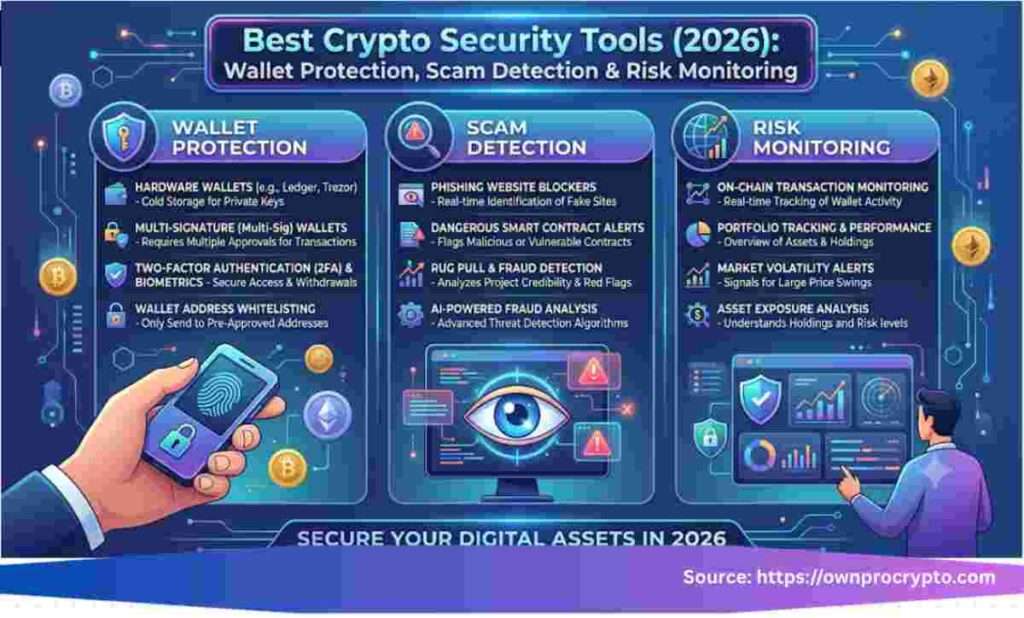
Infographic of Best Crypto Security Tools (2026)
Best Crypto Security Tools

What Are the Best Crypto Security Tools in 2026?

If you’re looking for a quick recommendation before diving into the detailed comparisons, the best crypto security tools depend on your specific security needs. From protecting your wallet and detecting scams to monitoring blockchain transactions and securing institutional assets, the following table highlights the leading tool categories, their providers, and what they are best used for.

Security NeedRecommended Tool CategoryPublisher / Official ProviderBest For
Wallet protectionHardware wallets and MPC walletsLedger, Trezor, Zengo, FireblocksSecure private key management and self-custody protection
Scam detectionAnti-phishing and scam detection toolsScam Sniffer, Pocket UniverseDetecting phishing attacks, suspicious websites, and wallet drainers
Blockchain monitoringBlockchain analytics and intelligence platformsChainalysis, TRM Labs, Arkham IntelligenceRisk analysis, transaction tracking, and suspicious activity monitoring
Portfolio monitoringCrypto portfolio dashboards and wallet trackersDeBank, ZerionAsset visibility, portfolio tracking, and wallet activity monitoring
Smart contract securitySmart contract auditing and security toolsCertiK, HackenIdentifying smart contract vulnerabilities and reducing DeFi risks
Institutional custodyEnterprise digital asset custody platformsFireblocks, BitGo, CopperInstitutional asset custody, treasury management, and transaction security
Transaction safety and permissionsTransaction simulators and wallet approval management toolsPocket Universe, Revoke.cashChecking transactions before signing and reviewing or revoking risky token approvals

Throughout this guide, we’ll explain where each category excels, who should use it, and how these tools work together as part of a layered crypto security strategy. Whether you want to protect your wallet, check a transaction before signing, investigate a potential scam, or compare institutional custody solutions, this guide will help you identify the right tools for your needs.

Note: Tool availability, pricing, and features vary by provider. Some platforms offer free tools or subscriptions, while enterprise-grade services may require a demo or custom pricing. Visit each provider’s official website to review its current offerings.

The Complete Crypto Security Stack: A Layered Approach to Digital Asset Protection

One of the biggest misconceptions in crypto security is that a single product can protect every wallet, transaction, account, and digital asset.

In reality, effective digital asset protection requires multiple layers of security. From securing your online accounts and private keys to checking transactions, detecting scams, and monitoring portfolio activity, each layer addresses different risks.

Together, these safeguards form a crypto security stack: a practical combination of tools, security controls, and monitoring practices designed to reduce exposure to common threats throughout the digital asset lifecycle.

How the Crypto Security Stack Works

The following diagram illustrates seven complementary layers that can help individuals, DeFi users, businesses, and institutions strengthen their security practices.

Seven Layers of Crypto Security
Layer 1
Identity & Access Security
Account protection, strong authentication, and access controls
↓
Layer 2
Password Managers & Hardware Security Keys
Protect login credentials and strengthen account authentication
↓
Layer 3
Wallet & Private Key Protection
Hardware wallets, secure self-custody, and MPC wallet solutions
↓
Layer 4
Transaction Simulation & Wallet Approval Checks
Inspect transaction effects and review smart contract permissions before signing
↓
Layer 5
Scam Detection & Blockchain Security
Identify suspicious links, malicious interactions, and on-chain risk indicators
↓
Layer 6
Portfolio Monitoring & Risk Alerts
Track assets, review wallet activity, and monitor potential risks
↓
Layer 7
Institutional Custody & Treasury Security
Organizational access policies, transaction authorization, and digital asset custody

Illustrative security framework. The layers are complementary controls, not a mandatory sequence; the appropriate combination depends on your assets, activities, and risk exposure.

Why Multiple Security Layers Matter

Each layer addresses a different potential attack vector. Strong account authentication can reduce unauthorized access, wallet protection helps safeguard private keys, and transaction simulation can help reveal suspicious transaction effects before approval. Scam detection and blockchain monitoring provide additional visibility, while portfolio monitoring and institutional controls support ongoing risk management.

These tools are most effective when combined with sound security habits, regular reviews, and careful transaction verification. No individual tool—or combination of tools—can eliminate every risk, but a layered approach can help reduce avoidable vulnerabilities and improve your ability to identify threats.

Who Should Read This Guide?

This guide is designed for anyone who owns, manages, or builds with digital assets, including:

  • Individual crypto investors seeking stronger wallet protection and safer asset management.
  • DeFi users interacting with smart contracts, decentralized applications, and token approvals.
  • NFT collectors managing digital collectibles and interacting with NFT marketplaces.
  • Crypto traders who need transaction checks, scam detection, and wallet monitoring.
  • Businesses accepting cryptocurrency payments or managing digital asset holdings.
  • Institutional investors and treasury teams evaluating custody, access controls, and transaction authorization systems.
  • Web3 developers building applications that require smart contract security and safer user interactions.

The key takeaway: Whether you hold a small amount of cryptocurrency or manage substantial digital assets, your security strategy should reflect your actual risks. Start with essential protections, add tools that address your specific activities, and review your security practices regularly.

Expert Insight: The biggest security mistake in crypto isn’t choosing the wrong tool—it’s assuming one tool is enough. Strong digital asset protection comes from combining secure wallets, transaction verification, scam detection, continuous monitoring, and disciplined operational practices into a single, layered security strategy.

Security Stack Framework

Choosing the Right Security Stack

The best crypto security tools depend on who is using them, what assets they manage, and what risks they face. Building the right stack for your specific situation outperforms choosing expensive tools blindly.

Simplicity & Prevention

1. Beginners

New crypto users should prioritize simplicity and protection against common operational mistakes through consistent security routines.

  • Secure wallet setup & strong 2FA authentication
  • Encrypted password manager & offline seed backup
  • Wallet protection & scam detection software
Cold Storage & Isolation

2. Long-Term Investors

Long-term holders should focus less on convenience and more on minimizing unnecessary transaction exposure and protecting keys.

  • 1. Dedicated Hardware Wallet & Key Isolation
  • 2. Secure Multi-Location Offline Backup Plan
  • 3. Periodic Wallet Monitoring & Reviews
Calldata & Verification

3. DeFi Users

DeFi users face larger attack surfaces due to continuous smart contract interactions, bridges, and token approvals requiring deep transaction analysis.

  • Transaction Simulation Tools & Contract Analyzers
  • Approval & Allowance Revocation Managers
  • Cross-Chain Security Scanners
Governance & Custody

4. Businesses & Institutions

Institutional security transforms protection into an operational risk management system involving multi-user governance and compliance monitoring.

  • Enterprise Wallets (Multi-Sig / MPC Thresholds)
  • Configurable Role-Based Access Controls (RBAC)
  • Blockchain Intelligence & Compliance Auditing

How to Choose the Best Crypto Security Tools

Evaluate your environment using these four core questions to identify your largest operational vulnerabilities:

Question 1: What Assets Are You Protecting?

Asset class and holding duration dictate tooling selection. Bitcoin cold storage requires a hardware wallet, active DeFi funds need simulators, and corporate treasuries require enterprise MPC custody.

Question 2: How Often Do You Interact With DApps?

Low activity favors physical key isolation and offline recovery, whereas high activity demands real-time calldata decoders, approval monitoring, and automated scam checkers.

Question 3: Personal or Institutional Security?

Personal users focus on simplicity and local phishing protection, while organizations require multi-party approval workflows, governance policies, and reporting compliance.

Question 4: Does the Tool Reduce Actual Risk?

Avoid over-complicating setups with unneeded tools. A tool is effective only if it solves a specific threat vector without introducing new operational bottlenecks.

Final Verdict: Building the Complete Security Stack

The best crypto security tools are not a single application—they are a combination of technologies, practices, and security layers working together. Whether you are protecting personal assets or managing a business treasury, remember one core principle:

“Security is not a product. Security is a process.”

Technology continues to improve, but attackers continue evolving as well. The strongest defense combines better tools, better awareness, and disciplined operational habits to reduce risk while maintaining total control over your digital ownership.

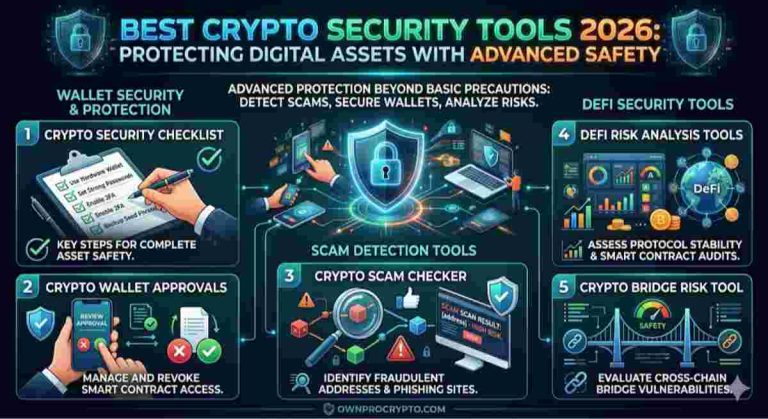
Infographic of Best Crypto Security Tools for Security Intelligence Layer
Best Crypto Security Tools

OwnProCrypto Security Matrix

Crypto Security Tools & Use

Each security tool addresses a distinct operational risk vector. Review the technical scopes, intent classifications, and functional boundaries below to access the correct utility.

Type: Operational Checklist

Crypto Security Checklist Tool

Primary User Intent: Track completed safety tasks for wallet setup, device maintenance, and key recovery.

An actionable task tracking tool. Unlike the Toolkit, this tool does not generate numerical scores; it verifies completed steps against security baselines.

Open Checklist →

Type: Calldata Decoder

Crypto Transaction Simulator

Primary User Intent: Inspect raw calldata and catch malicious function calls prior to signing transactions.

A pre-signing review aid that heuristically decodes payload parameters and warns of risks. Performs static parsing without executing code or querying state.

Simulate Calldata →

Type: Allowance Education

Crypto Wallet Approvals

Primary User Intent: Learn how smart contract approvals work and safely revoke token allowances.

An educational module explaining allowance mechanisms and revocation workflows. Connects no wallets directly, ensuring zero signature risk.

Learn Allowance Safety →

Type: Fraud Verification

Crypto Scam Checker Tool

Primary User Intent: Identify fraudulent crypto domains, unrealistic return claims, and generate evidence reports.

Includes a 5-minute safety checklist, red-flag website auditor, and an evidence pack generator to document suspected fraud before interacting.

Run Scam Check →

Type: Institutional Controls

Enterprise Custody Platform

Primary User Intent: Simulate institutional wallet workflows, role-based access controls (RBAC), and policy execution.

Demonstrates corporate treasury controls, multi-wallet aggregation, delayed execution queues, and tamper-evident cryptographic audit logs.

Simulate Enterprise UI →

Type: Architecture Comparison

MPC vs. Multi-Sig Custody Matrix

Primary User Intent: Compare Multi-Party Computation against Multi-Signature models for institutional treasury design.

Features an interactive attack simulator, custody cost estimator, and institutional questionnaire to select optimal signing architectures.

Compare Architectures →

Type: Resilience Stress Test

Asset Risk Analysis (DSARAE)

Primary User Intent: Evaluate portfolio exposure to exchange freezes, custody concentration, and jurisdictional risks.

A counterparty stress-assessment framework analyzing structural survivability and recovery readiness across centralized & decentralized venues.

Evaluate Risk Score →

Type: PQC Migration Audit

Quantum-Safe Blockchain Toolkit

Primary User Intent: Audit blockchain infrastructure against emerging quantum computing decryption threats (NIST PQC standards).

Includes 10 post-quantum cryptographic (PQC) planning modules referencing FIPS 203, 204, and 205 to guide validator and bridge upgrades.

Audit PQC Readiness →

Infographic of Platform Comparison (2026)
Best Crypto Security Tools in 2026: Complete Category Comparison

Best Crypto Security Tools in 2026: Complete Category Comparison

Digital asset protection has evolved into a complete ecosystem where different tools solve distinct security challenges.

The best crypto security tools in 2026 are not defined by a single product or company. A hardware wallet protects private keys; a wallet monitoring tool detects suspicious activity; a blockchain security platform analyzes risk; a transaction simulator helps prevent malicious approvals; and an institutional custody platform manages enterprise-level asset security.

The strongest crypto security strategy combines multiple layers instead of depending on one solution. This section compares the major categories of crypto security tools and explains what each type protects, who needs it, and how it fits into a modern digital asset security framework.


Crypto Security Tools Comparison Overview

Hardware Wallets
Purpose: Secure private key storage
Best For: Long-term holders
Focus: Offline asset protection

MPC Wallets
Purpose: Distributed key management
Best For: Individuals and institutions
Focus: Key security & control

Wallet Protection Tools
Purpose: Prevent wallet compromise
Best For: All crypto users
Focus: Approvals & permissions

Scam Detection Tools
Purpose: Identify malicious activity
Best For: Web3 users
Focus: Phishing & drainers

Blockchain Security Tools
Purpose: Analyze blockchain risks
Best For: Businesses & institutions
Focus: Transaction intelligence

Smart Contract Security Tools
Purpose: Evaluate code & protocols
Best For: DeFi users & developers
Focus: Contract vulnerability risk

Portfolio Security Tools
Purpose: Monitor assets & activity
Best For: Investors
Focus: Risk visibility

Crypto Security Software
Purpose: Overall threat prevention
Best For: All users
Focus: Multi-layer protection

Institutional Custody Tools
Purpose: Enterprise asset management
Best For: Organizations
Focus: Governance & compliance
Infographic of Platform Price Comparison Guide 2026
Platform Price Comparison Guide
Provider Directory & Pricing

Crypto Security Tools Pricing & Official Provider Links

Crypto security tools range from free options to paid subscriptions and enterprise plans. Explore official provider links and understand why multi-layered security strategies matter.

SECURITY STRATEGY Why Single Tools Are Incomplete: Hardware wallets protect private keys but cannot block malicious smart contracts. Combine complementary security layers to mitigate distinct vectors of risk.
User Type Framework

Best Crypto Security Tools by User Type

Different users require different security stacks depending on their operational risks, transaction volume, and access controls.

TAILORED STACKS Operational Alignment: Choose security tools that match your specific operational profile, transaction frequency, and governance requirements rather than relying on generic recommendations.

Expert Insight: The future of crypto security is moving toward systems that identify dangerous actions before users approve them.

Knowledge Base

Frequently Asked Questions About Crypto Security Tools

Explore detailed answers concerning wallet protection, scam detection, blockchain monitoring, institutional controls, and future security stacks.

Wallet Protection & Wallet Security

What are wallet protection tools?

Wallet protection tools help secure cryptocurrency wallets by monitoring activity and preventing dangerous interactions. They protect against malicious approvals, unauthorized permissions, suspicious transactions, wallet drainer attacks, and fake decentralized applications through wallet monitoring, transaction simulation, approval management, and real-time security alerts.

How can I protect my crypto wallet from hackers?

A secure wallet strategy includes using hardware wallet protection, carefully checking transaction details before signing, removing unnecessary token approvals, avoiding unknown websites, and continuously monitoring wallet activity. Security tools add a robust extra layer by detecting risky actions before users approve transactions.

What is a crypto wallet scanner?

A crypto wallet scanner analyzes wallet activity and identifies possible security risks, such as dangerous approvals, suspicious interactions, high-risk addresses, and exposure to known scam contracts, helping users understand their security status before executing on-chain actions.

What is a wallet approval checker?

A wallet approval checker reviews token permissions granted to blockchain applications. It helps users identify unlimited token approvals, unknown contract permissions, unused wallet connections, and hidden risks, serving as an essential component of crypto wallet hygiene.

Scam Detection & Fraud Prevention

How do crypto security tools detect scams?

Crypto security tools detect scams by analyzing blockchain behavior, wallet reputation, transaction patterns, and contract activity. They flag scam tokens, fake projects, suspicious wallet addresses, malicious contracts, and emerging fraud patterns.

What is wallet drainer protection?

Wallet drainer protection helps prevent malicious websites and smart contracts from stealing digital assets through transaction simulation, contract risk analysis, immediate permission warnings, and suspicious approval detection.

How can I protect my crypto wallet from phishing attacks?

Phishing protection involves preventing users from interacting with fake websites, malicious links, and fraudulent apps. Best practices include verifying websites before connecting wallets, avoiding unknown links, checking transaction permissions, and using active wallet security alerts.

Can crypto security tools detect malicious transactions before approval?

Yes. Many advanced security tools analyze transactions before users sign them, identifying unexpected asset transfers, dangerous contract calls, suspicious permissions, and high-risk destinations to ensure safer transaction decisions.

Blockchain Security & Monitoring

What are blockchain security tools used for?

Blockchain security tools monitor ledger activity to identify risks and threats. They are utilized for continuous transaction monitoring, fraud detection, address screening, risk scoring, and deep blockchain investigations.

What is crypto transaction monitoring?

Crypto transaction monitoring tracks blockchain movements to identify suspicious activity, commonly supporting fraud prevention, regulatory compliance, risk management, and formal investigation workflows.

What are blockchain analytics tools?

Blockchain analytics tools parse ledger data to provide deep insights into wallet relationships, transaction histories, fund flows, and risk indicators, widely used by exchanges, financial institutions, and security teams.

What is crypto risk monitoring?

Crypto risk monitoring continuously evaluates blockchain activity to detect emerging threats, highlighting high-risk addresses, suspicious transactions, scam activity, and critical security events.

Smart Contract & DeFi Security

What are smart contract security tools?

Smart contract security tools analyze blockchain code for vulnerabilities and risks, helping identify unsafe code behavior, contract vulnerabilities, malicious functions, and potential exploit risks before deployment or interaction.

What is a smart contract scanner?

A smart contract scanner reviews blockchain contracts and evaluates their security profile, detecting suspicious code patterns, token risks, dangerous contract permissions, and underlying vulnerabilities.

What are DeFi security tools?

DeFi security tools protect users interacting with decentralized finance applications by actively monitoring smart contracts, liquidity pools, token activity, and protocol-level risks.

Institutional Crypto Security

What crypto security tools do institutions use?

Institutions rely on advanced security solutions including blockchain analytics platforms, transaction monitoring systems, MPC custody infrastructure, compliance monitoring tools, and enterprise wallet security platforms.

What are crypto compliance tools?

Crypto compliance tools help organizations monitor blockchain activity for regulatory and security mandates, supporting AML monitoring, wallet screening, transaction analysis, and ongoing risk assessments.

Why do companies use blockchain analytics platforms?

Companies use blockchain analytics platforms to investigate complex transactions, detect fraud, monitor financial exposure, and efficiently manage compliance risks.

Security Strategy & Future Trends

Can crypto security tools prevent all hacks?

No security solution can eliminate every crypto risk. However, security tools drastically reduce exposure by helping users detect threats earlier, avoid risky interactions, monitor suspicious behavior, and improve decision-making.

Are hardware wallets enough for crypto security?

Hardware wallets provide excellent private key protection, but they do not prevent every attack. Users remain vulnerable to phishing, fake websites, malicious approvals, and social engineering, making a layered security approach essential.

What is the future of crypto security in 2026 and beyond?

Crypto security is rapidly advancing toward AI-powered threat detection, automated risk monitoring, real-time blockchain intelligence, predictive security systems, and advanced institutional protection focused on stopping threats proactively.

What should a complete crypto security checklist include?

A comprehensive crypto security checklist should cover secure wallet management, recovery phrase protection, transaction verification, regular permission reviews, active scam detection, ongoing risk monitoring, and periodic security audits.

OwnProCrypto Tool Directory

Explore All 41 Crypto Tools

Discover practical crypto security tools, investment calculators, blockchain analysis systems, portfolio resources, and institutional-grade digital asset research tools.

05

Institutional Custody & Wealth

Explore digital asset custody models, institutional controls, and long-term wealth planning.

06

Crypto Research & Web3 Development

Research crypto projects, understand whitepapers, and evaluate Web3 startup decisions.

07

Crypto Tax & Digital Payments

Explore crypto tax estimates, stablecoin payment systems, and Lightning economics.

Explore More Find the right starting point for your crypto security, blockchain research, investment analysis, or digital asset management needs. Visit OwnProCrypto →

Navigation Hub

Continue Exploring the Crypto Security

Dive deeper into specialized modules, asset protection frameworks, institutional custody models, and threat intelligence directories.

OWASP STANDARD

OWASP Smart Contract Top 10 Framework: Helps identify critical vulnerabilities in Web3 systems, including logic errors, oracle manipulation, and contract-level exploits.
Looking for another topic? Search the OwnProCrypto research archive.
Comments
💬 What’s Your Take? Leave a Comment Below 0
← Best Crypto Scam Detection Tools (2026): Verify Wallets, Tokens & Websites
Crypto Scam Recovery (2026): How to Recover Stolen Crypto & Trace Funds →
🛠 Explore Tools ▼
📚 Explore Crypto Research Select a research category