
Search by title, topic or phrase
Use our Crypto Search Engine 🔍 to find the topics and keywords you're looking for.
Unify wallets · Automate allocation · Monitor risk · Earn yield
{
  "total_balance": 1000000,
  "risk_level": "medium",
  "liquidity_need": 0.4,
  "volatility": "medium",
  "allocation": {
    "liquidity": 400000,
    "yield": 300000,
    "reserve": 300000
  },
  "estimated_apy": "6.5%",
  "risk_score": "low"
}
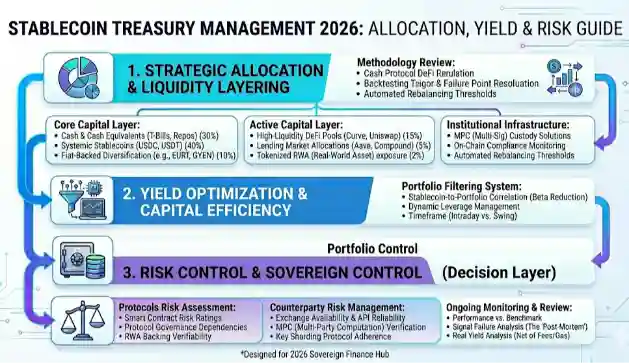
Table of Contents
ToggleThe Stablecoin Treasury Management System is an educational treasury planning tool designed to help businesses, fintech teams, and digital asset operators visualize how stablecoin reserves can be allocated across liquidity, yield opportunities, and risk-management reserves.
Instead of viewing stablecoins as simple payment assets, treasury teams increasingly treat them as part of a broader cash management strategy. This requires balancing three competing objectives:
The tool simulates this process by allowing users to adjust liquidity requirements, risk tolerance, and market conditions. Based on those inputs, the treasury engine generates a sample allocation model and estimates how different treasury decisions may affect portfolio structure.
That is treasury management software.
Total Treasury
│
▼
Liquidity Allocation
│
▼
Yield Allocation
│
▼
Reserve Allocation
│
▼
Risk Engine
│
▼
Treasury Rebalance
Most digital treasury frameworks separate assets into three categories:
| Treasury Bucket | Purpose |
|---|---|
| Liquidity | Operational spending and short-term obligations |
| Yield | Capital allocated to approved yield-generating strategies |
| Reserve | Capital preserved for risk management and emergency needs |
The goal is not to maximize returns at all costs. Instead, treasury management focuses on balancing capital efficiency with risk controls.
A treasury team with high liquidity requirements may hold a larger percentage of assets in readily accessible stablecoins, while a longer-term treasury strategy may allocate a portion of capital toward yield-generating opportunities.
Most companies are not equipped to manage stablecoin capital effectively.
| Challenge | Impact |
|---|---|
| Fragmented wallets | No unified visibility |
| Idle funds | Lost yield opportunities |
| Manual processes | High risk of errors |
| No risk monitoring | Exposure to depeg or protocol failure |
Spreadsheets and manual tracking simply don’t scale in a 24/7 blockchain environment.
| Problem | How Stablecoin Treasury Management OS Fixes It |
|---|---|
| Fragmented wallets | Unified dashboard showing all balances |
| Idle stablecoins | Automatic yield allocation to DeFi protocols |
| Manual operations | One-click rebalancing based on risk rules |
| Depeg risk | Real-time risk engine with alerts |
| No visibility | Live charts + allocation trends |
The tool forces you to think like a treasury professional: How much liquidity do I need? What’s my risk tolerance? How do market conditions affect allocation?
At the core of treasury management is allocation strategy.
| Allocation Type | Purpose |
|---|---|
| Liquidity | Immediate payments and operations |
| Yield | Earn returns via DeFi protocols |
| Reserve | Capital protection and stability |
| Risk Level | Liquidity | Yield | Reserve |
|---|---|---|---|
| Low Risk | 50% | 20% | 30% |
| Medium Risk | 40% | 30% | 30% |
| High Risk | 30% | 50% | 20% |
👉 The right strategy depends on business needs and market conditions.

Stablecoins are not just for holding—they can generate income.
| Strategy | Risk | Return |
|---|---|---|
| Lending | Low–Medium | Stable |
| Liquidity pools | Medium | Higher |
| Advanced DeFi | High | Variable |
Yield is attractive—but always comes with trade-offs.
Let’s simulate a real-world scenario:
| Category | Amount |
|---|---|
| Liquidity | $400,000 |
| Yield | $300,000 |
| Reserve | $300,000 |
| Metric | Value |
|---|---|
| Estimated APY | ~6.5% |
| Risk Score | Medium |
| Allocation Stability | Balanced |
In your UI, this should be:
Stablecoin treasury operations involve more than selecting a single asset. Treasury managers must also consider:
The risk engine inside this demo illustrates how treasury allocations may change under different market conditions, helping users understand the trade-offs between growth, liquidity, and capital preservation.
This Stablecoin Treasury Management System may be useful for:
Because this is a simulated environment, no real assets are used and no transactions are executed.
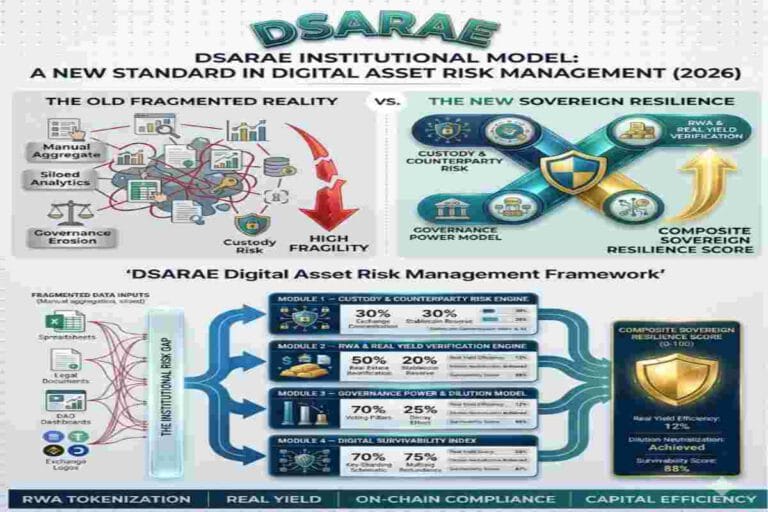
Treasury is becoming programmable infrastructure.
This is the foundation of modern financial architecture
To maintain topical clarity and avoid content overlap, this article should connect to a limited set of supporting authority hubs:
Each resource should address a distinct subject area while supporting a broader digital asset knowledge framework.
Stablecoin treasury management unlocks powerful capabilities—but also introduces new risks.
Without structure, capital sits idle or becomes exposed.
With the right system:
Your Stablecoin Treasury OS bridges that gap.
Practice strategies. Understand allocation. Then deploy with confidence.
U.S. Treasury Digital Asset Report — Official insights into stablecoins, regulation, and the future of digital money. U.S. Treasury Digital Asset Report
What is stablecoin treasury management?
Stablecoin treasury management is the process of managing digital dollar assets by allocating funds across liquidity, yield-generating strategies, and reserves while controlling risk.
How is a stablecoin treasury different from traditional treasury?
Unlike traditional treasury systems, stablecoin treasury operates on blockchain networks, enabling real-time settlement, programmable allocation, and global access without banking intermediaries.
Do companies really use stablecoins for treasury?
Yes. Many startups and global companies are adopting stablecoins for treasury due to faster settlement, lower costs, and access to yield opportunities.
What is the best stablecoin allocation strategy?
A common approach is splitting funds into liquidity (for payments), yield (for returns), and reserves (for safety). The exact ratio depends on risk tolerance and business needs.
How much of a treasury should be allocated to yield?
Typically 20%–50% depending on risk level. Higher allocation increases returns but also exposes funds to protocol risks.
What is liquidity vs reserve in treasury management?
Liquidity is capital available for immediate use, while reserves are funds held for safety and protection against market volatility.
How do stablecoins generate yield?
Stablecoins generate yield through lending protocols, liquidity pools, and other DeFi strategies that pay interest on deposited assets.
What is a typical stablecoin yield in 2026?
Yields typically range from 3% to 8% annually depending on market conditions and risk exposure.
What are the risks in stablecoin treasury management?
Key risks include stablecoin depegging, smart contract vulnerabilities, liquidity shortages, and market volatility.
How can treasury risk be managed effectively?
By diversifying allocations, monitoring market conditions, and using automated risk engines to rebalance funds.
What is crypto treasury management?
Crypto treasury management is the process of managing digital assets—such as stablecoins and cryptocurrencies—by allocating funds across liquidity, yield strategies, and reserves while ensuring security and operational efficiency. It involves real-time monitoring, automated allocation, and the use of treasury software to optimize returns and maintain financial stability.
How does crypto treasury risk management work?
Crypto treasury risk management focuses on identifying and reducing risks such as stablecoin depegging, smart contract vulnerabilities, liquidity shortages, and market volatility. This is typically done through diversification, setting allocation limits, continuous monitoring, and automated rebalancing systems that adjust treasury positions based on market conditions.