
Search by title, topic or phrase
Use our Crypto Search Engine 🔍 to find the topics and keywords you're looking for.
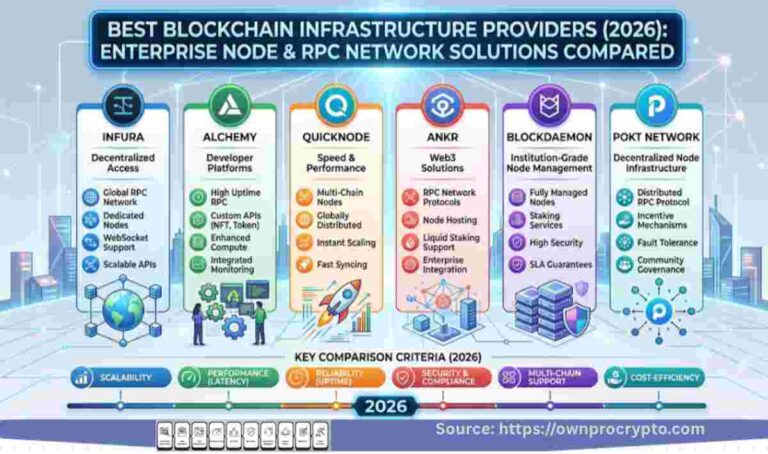
Table of Contents
ToggleSelecting the best blockchain infrastructure providers is no longer just a technical decision—it directly impacts application performance, uptime, security, scalability, and developer productivity. Whether you’re building a DeFi protocol, crypto exchange, wallet, tokenization platform, gaming ecosystem, or enterprise blockchain application, your infrastructure provider becomes the foundation that powers every transaction, API request, and smart contract interaction.
Modern blockchain teams need far more than basic node hosting. Today’s leading providers deliver enterprise-grade RPC networks, dedicated and shared nodes, blockchain indexing, archive data, load balancing, global edge routing, observability, high-availability clusters, and developer APIs that support dozens of blockchain networks. Choosing the wrong provider can lead to latency issues, service interruptions, higher operating costs, and scalability bottlenecks as your platform grows.
This guide compares the best blockchain infrastructure providers in 2026 using a transparent evaluation methodology focused on performance, reliability, security, multi-chain support, enterprise features, pricing, and developer experience. You’ll also learn how blockchain infrastructure works, understand the technologies behind modern RPC networks, compare leading providers side by side, and discover which solution is best for startups, enterprises, Web3 developers, and institutional blockchain projects.
⚠️ Warning: Choosing the wrong blockchain infrastructure provider can lead to high latency, unexpected downtime, scalability bottlenecks, increased operational costs, and poor user experience. Evaluate providers based on performance, reliability, security, and long-term scalability not just pricing.
| Category | Key Insight |
|---|---|
| Global blockchain market | Enterprise blockchain adoption continues to grow across finance, supply chain, gaming, healthcare, and digital identity. |
| Primary users | Web3 developers, enterprises, crypto exchanges, custodians, DeFi protocols, wallets, and tokenization platforms. |
| Core services | RPC endpoints, node hosting, archive nodes, indexing, APIs, WebSockets, monitoring, and analytics. |
| Deployment options | Shared nodes, dedicated nodes, private clusters, hybrid infrastructure, and multi-cloud environments. |
| Key buying factors | Performance, uptime, security, scalability, pricing, supported chains, APIs, and enterprise support. |
| Best suited for | Production dApps, institutional blockchain projects, enterprise applications, and high-volume Web3 services. |
Different organizations have different infrastructure requirements. Rather than looking for a single “best” provider, start by identifying the platform that best matches your technical architecture, operational scale, and business objectives.
| User Type | Primary Requirement | Infrastructure Priority |
|---|---|---|
| Startups | Fast deployment with predictable costs | Shared RPC nodes and managed APIs |
| Web3 Developers | Reliable development environment | Multi-chain RPCs, SDKs, WebSockets, and documentation |
| DeFi Protocols | Low latency and high throughput | Dedicated nodes, archive data, global routing, and failover |
| Crypto Exchanges | High availability and security | Enterprise clusters, monitoring, and redundancy |
| Enterprises | Governance and compliance | SLAs, private infrastructure, access controls, and support |
| Tokenization Platforms | Consistent transaction processing | Multi-chain infrastructure, indexing, and enterprise APIs |
| Custody Providers | Security and resilience | Dedicated infrastructure, disaster recovery, and monitoring |
Blockchain infrastructure is the collection of technologies, services, and operational systems that allow applications to interact reliably with blockchain networks. Instead of running and maintaining their own blockchain nodes, organizations often rely on infrastructure providers that manage node synchronization, network connectivity, APIs, monitoring, scaling, and security.
These providers act as the backbone of the Web3 ecosystem, enabling developers and enterprises to read blockchain data, submit transactions, monitor smart contracts, index on-chain information, and build decentralized applications without managing complex infrastructure internally.
Reliable blockchain infrastructure directly affects application performance, user experience, and business continuity. Every wallet transaction, smart contract interaction, NFT mint, token transfer, or decentralized finance operation depends on fast and consistent communication with blockchain networks.
A well-designed infrastructure platform helps organizations:
Organizations frequently encounter similar operational challenges as blockchain applications grow:
Recognizing these challenges early helps teams select infrastructure that supports long-term scalability rather than reacting to operational issues later.
Many teams initially assume that operating their own blockchain nodes provides greater control. While self-managed infrastructure can work for specialized use cases, it also introduces ongoing operational responsibilities, including maintenance, upgrades, monitoring, security, and disaster recovery.
Managed blockchain infrastructure providers abstract much of this complexity by delivering production-ready node networks, enterprise APIs, and operational tooling. For most organizations, this allows engineering teams to focus on building products instead of maintaining infrastructure.
| Feature | Self-Hosted Nodes | Managed Infrastructure Provider |
|---|---|---|
| Initial Setup | High | Low |
| Ongoing Maintenance | High | Minimal |
| Scalability | Manual | Automated |
| Monitoring | Self-managed | Built-in dashboards and alerts |
| Security Updates | Internal responsibility | Provider-managed |
| High Availability | Complex to implement | Typically included |
| Multi-chain Support | Limited | Broad ecosystem coverage |
| Enterprise Support | Internal team | Dedicated vendor support |
Choosing the best blockchain infrastructure providers isn’t simply about finding the fastest RPC endpoint. The right platform should align with your scalability goals, security requirements, supported blockchains, operational maturity, and long-term architecture. The next section explains how we’ll evaluate each provider using transparent enterprise criteria so you can make an informed decision.
⚠️ Common Mistake: Many teams choose a blockchain infrastructure provider based only on price or the number of supported blockchains. In practice, factors like uptime SLAs, RPC latency, archive node availability, rate limits, security architecture, multi-region redundancy, and developer tooling have a much greater impact on long-term performance and operational costs. Evaluate providers against your workload—not just their marketing pages.

📋 Buyer’s Checklist: Before comparing blockchain infrastructure providers, define your technical requirements first. Choosing a platform based solely on pricing or brand recognition often leads to higher costs later. Evaluate providers based on blockchain support, RPC performance, uptime SLAs, dedicated node availability, security architecture, scalability, APIs, monitoring capabilities, and long-term enterprise support.
Choosing among the best blockchain infrastructure providers requires more than comparing feature lists. Every provider is designed for different workloads, development teams, and production environments. While some platforms focus on developer experience and rapid deployment, others prioritize enterprise-grade security, global RPC performance, dedicated infrastructure, or high-availability blockchain services.
The comparison below evaluates leading providers using consistent enterprise criteria, making it easier to identify the right solution for startups, Web3 developers, growing blockchain projects, and large-scale organizations.
Rather than ranking providers by popularity, this guide uses an enterprise-focused evaluation framework based on the capabilities that matter most in production environments. Each provider is assessed across performance, reliability, security, scalability, developer experience, and operational readiness to provide a balanced comparison.
| Evaluation Factor | Why It Matters |
|---|---|
| RPC Performance | Low latency and consistent response times improve application performance. |
| Supported Blockchains | Multi-chain support simplifies development across different ecosystems. |
| Node Infrastructure | Dedicated, shared, archive, and validator nodes serve different workloads. |
| Scalability | Ability to handle traffic growth without service disruption. |
| Enterprise Security | Access controls, encryption, DDoS protection, and secure infrastructure. |
| Developer Experience | SDKs, APIs, documentation, dashboards, and debugging tools. |
| Monitoring & Observability | Real-time metrics, logs, alerts, and performance insights. |
| Uptime & SLAs | Reliable service backed by enterprise availability commitments. |
| Pricing & Cost Efficiency | Transparent pricing that aligns with operational needs. |
| Enterprise Support | Technical assistance, onboarding, and dedicated customer support. |
| Provider | Best For | Strength | Enterprise Ready |
|---|---|---|---|
| Alchemy | Web3 developers | Developer tools and APIs | ✅ |
| QuickNode | High-performance applications | Fast RPC network and broad chain support | ✅ |
| Chainstack | Enterprise deployments | Dedicated infrastructure and hybrid deployments | ✅ |
| Infura | Ethereum ecosystem | Mature RPC infrastructure and reliability | ✅ |
| Ankr | Cost-conscious teams | Affordable multi-chain infrastructure | ✅ |
Selecting the right infrastructure depends on technical priorities rather than finding a universally “best” provider. The table below compares the capabilities most enterprise buyers evaluate during vendor selection.
| Feature | Alchemy | QuickNode | Chainstack | Infura | Ankr |
|---|---|---|---|---|---|
| Multi-chain Support | ✔ | ✔ | ✔ | ✔ | ✔ |
| Shared RPC Nodes | ✔ | ✔ | ✔ | ✔ | ✔ |
| Dedicated Nodes | ✔ | ✔ | ✔ | Limited | ✔ |
| Archive Nodes | ✔ | ✔ | ✔ | ✔ | ✔ |
| WebSocket APIs | ✔ | ✔ | ✔ | ✔ | ✔ |
| Enterprise SLA | ✔ | ✔ | ✔ | ✔ | ✔ |
| Monitoring Tools | ✔ | ✔ | ✔ | Limited | ✔ |
| Global Infrastructure | ✔ | ✔ | ✔ | ✔ | ✔ |
At first glance, many providers appear to offer similar services, including RPC endpoints, managed nodes, APIs, and multi-chain support. However, differences become significant as applications scale. Factors such as latency, uptime guarantees, geographic coverage, rate limits, observability, and operational tooling can directly affect application performance and user experience.
A structured comparison helps organizations identify the provider that best aligns with their architecture, growth plans, and operational requirements instead of selecting a platform based only on pricing or familiarity.

Each provider is reviewed using the same evaluation framework to ensure consistency and make comparisons easier.
Understanding which provider to choose is only part of the decision. To evaluate these platforms effectively, it’s equally important to understand the technologies they are built on. In the next section, we’ll explore RPC networks, blockchain nodes, archive nodes, indexing services, load balancing, failover mechanisms, and other core infrastructure components that power modern Web3 applications.
💡 Pro Tip: Don’t compare providers by the number of supported blockchains alone. Enterprise buyers should prioritize uptime SLAs, dedicated nodes, RPC performance, geographic coverage, security controls, and API reliability.
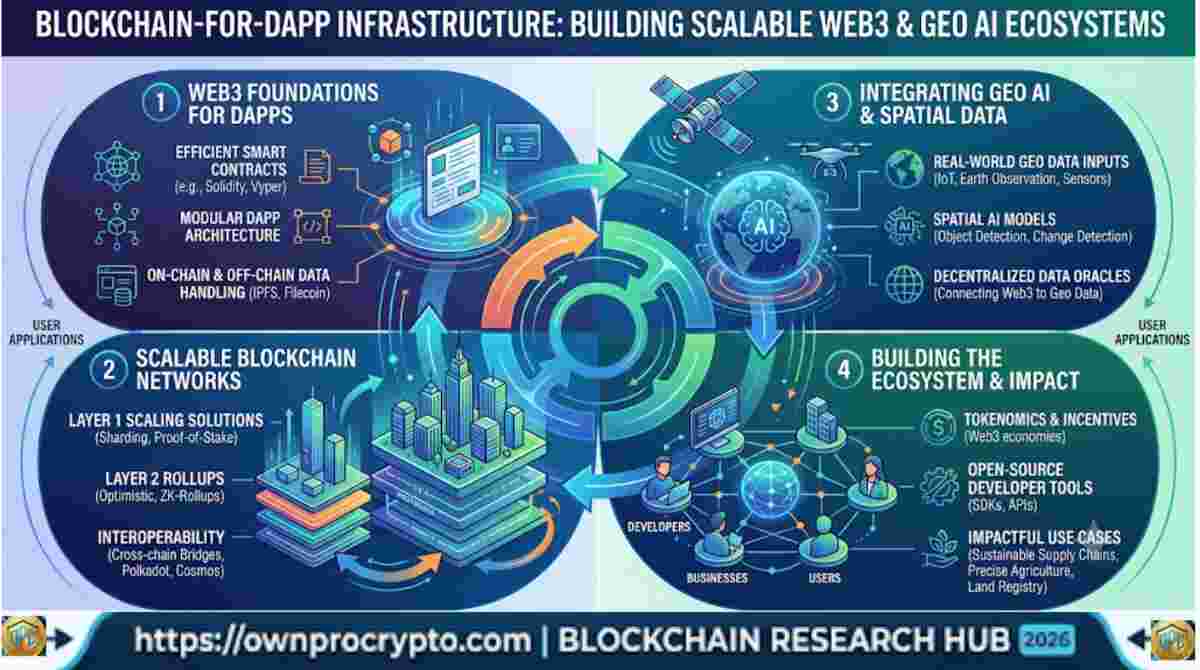
Blockchain infrastructure is much more than hosting a blockchain node. Modern infrastructure providers operate globally distributed networks that deliver blockchain data, broadcast transactions, synchronize nodes, index on-chain information, balance traffic across regions, and maintain high availability for mission-critical applications. Understanding these technologies makes it easier to compare providers based on architecture rather than marketing claims.
Blockchain infrastructure refers to the hardware, software, networking, APIs, and operational services that enable applications to communicate with blockchain networks. Instead of maintaining their own nodes, organizations often rely on managed infrastructure providers that deliver reliable access to blockchain data and transaction processing.
A modern infrastructure stack typically includes node hosting, RPC endpoints, indexing services, monitoring, security controls, developer APIs, and enterprise management tools.
RPC (Remote Procedure Call) nodes act as communication gateways between applications and blockchain networks. Every wallet balance lookup, NFT mint, token transfer, or smart contract interaction begins with an RPC request.
Without reliable RPC infrastructure, decentralized applications cannot retrieve blockchain data or submit transactions efficiently.
An RPC endpoint is the API address through which an application communicates with a blockchain node.
Examples include:
RPC performance influences:
Poor RPC performance often results in slow dashboards, failed transactions, and degraded application reliability.
Not all blockchain nodes provide the same functionality.
| Node Type | Purpose | Best For |
|---|---|---|
| Full Node | Stores current blockchain state and validates new blocks. | Most production dApps and wallets. |
| Archive Node | Maintains complete historical blockchain data. | Analytics, compliance, explorers, tokenization, and institutional applications. |
Archive nodes become essential when applications require:
Infrastructure providers generally offer two deployment models.
| Shared Nodes | Dedicated Nodes |
|---|---|
| Lower cost | Higher performance |
| Shared resources | Isolated infrastructure |
| Suitable for development | Designed for production |
| Variable performance | Consistent latency |
| Limited customization | Greater operational control |
Searching raw blockchain data is inefficient. Indexing organizes blockchain information into structured datasets that applications can query quickly.
Without indexing services, developers would need to scan blockchain data manually, significantly increasing response times and infrastructure complexity.
Blockchain providers usually support both communication methods.
| HTTP RPC | WebSocket RPC |
|---|---|
| Request-response model | Persistent connection |
| Easy to scale | Real-time updates |
| Suitable for APIs | Ideal for live blockchain events |
| Lower resource usage | Continuous event streaming |
Enterprise blockchain infrastructure distributes traffic across multiple nodes and geographic regions to improve reliability.
Load balancing ensures no single node becomes overwhelmed, while failover mechanisms automatically redirect traffic if a node or region becomes unavailable.
Running blockchain infrastructure without visibility into system performance increases operational risk.
Enterprise providers include observability tools that help engineering teams monitor node health, API performance, transaction throughput, and infrastructure availability.
A resilient blockchain application typically combines several infrastructure components rather than relying on a single service.
Users
   ▼
Application / Smart Contracts
   ▼
Global Load Balancer
   ▼
RPC Gateway
   │
   ├── Dedicated Nodes
   ├── Archive Nodes
   ├── Indexing Layer
   ├── Monitoring & Alerts
   └── Backup / Failover Infrastructure
   │
   ▼
Blockchain Networks
(Ethereum • Solana • Polygon • Arbitrum • Base • Avalanche)Different applications require different infrastructure stacks.
| Use Case | Recommended Infrastructure |
|---|---|
| MVP or Startup | Shared RPC Nodes |
| Production dApp | Dedicated RPC + Monitoring |
| Enterprise Platform | Dedicated Nodes + Global Load Balancing + Failover |
| Exchange | Dedicated Clusters + Archive Nodes + Real-Time Monitoring |
| Tokenization Platform | Archive Nodes + Indexing + Multi-Chain Support |
| Custody Platform | Dedicated Infrastructure + High Availability + Security Controls |
The best blockchain infrastructure providers don’t simply offer node hosting—they deliver a complete operational platform that combines performance, resilience, observability, and developer productivity. By understanding the technologies behind RPC networks, indexing, load balancing, and node architectures, you’ll be better equipped to evaluate providers based on real technical capabilities rather than feature lists alone.
🎓 Learn Before You Compare: Understanding concepts like RPC nodes, archive nodes, indexing, load balancing, and failover will make it much easier to evaluate blockchain infrastructure providers objectively.
Enterprise blockchain applications require infrastructure that can support high transaction volumes, multiple blockchain networks, strict security requirements, and continuous availability. Whether building a financial application, tokenization platform, exchange, wallet, or enterprise Web3 solution, infrastructure decisions directly affect performance, customer experience, and operational risk.
The best blockchain infrastructure providers are not simply API vendors. They operate as strategic technology partners that provide reliability, scalability, security, and the operational foundation required for production-grade blockchain applications.
Modern applications rarely operate on a single blockchain. Businesses increasingly require access to multiple ecosystems including Ethereum, Layer 2 networks, alternative Layer 1 chains, and emerging blockchain environments.
Multi-chain infrastructure enables organizations to:
Enterprise buyers should evaluate:
| Capability | Why It Matters |
|---|---|
| Number of supported chains | Determines ecosystem flexibility. |
| New chain availability | Helps future expansion. |
| Chain-specific APIs | Improves development efficiency. |
| Consistent API experience | Simplifies engineering operations. |
| Testnet support | Enables safer development workflows. |
RPC performance directly impacts every interaction between applications and blockchains.
A slow RPC endpoint can create:
| Metric | Importance |
|---|---|
| Response latency | Determines application speed. |
| Request success rate | Measures reliability. |
| Throughput capacity | Shows scalability. |
| Regional performance | Impacts global users. |
| Error handling | Reduces failed interactions. |
Shared infrastructure may be sufficient for development, but high-volume applications often require dedicated resources.
Dedicated nodes provide:
| Organization | Need Level |
|---|---|
| Personal projects | Low |
| Startups | Medium |
| DeFi protocols | High |
| Exchanges | Very High |
| Institutional platforms | Critical |
Enterprise applications cannot afford infrastructure downtime.
Even a short interruption can impact:
Look for:
Raw blockchain data is complex and difficult to query efficiently.
Professional infrastructure providers offer indexing layers that transform blockchain data into usable information.
Important capabilities include:
Blockchain infrastructure must protect both data availability and transaction reliability.
| Security Layer | Purpose |
|---|---|
| Encryption | Protects communication and data. |
| Access controls | Prevents unauthorized usage. |
| API authentication | Secures application connections. |
| DDoS protection | Prevents service disruption. |
| Network isolation | Improves infrastructure security. |
Developer experience often determines how quickly teams can build and maintain applications.
Leading platforms provide:
Enterprise teams need visibility into infrastructure performance.
Organizations should monitor:
Technical support becomes increasingly important as blockchain infrastructure becomes mission-critical.
Evaluate:
The cheapest infrastructure option is not always the most cost-effective.
Enterprise buyers should evaluate:
Institutional blockchain applications require stronger operational controls.
Important considerations:
Infrastructure decisions should support future growth.
Look for:
| Capability | Startup | Growing Company | Enterprise |
|---|---|---|---|
| Multi-chain support | Important | Critical | Mandatory |
| Dedicated nodes | Optional | Recommended | Required |
| High availability | Important | Critical | Mandatory |
| Monitoring | Basic | Advanced | Enterprise |
| Security controls | Standard | Strong | Institutional |
| Support | Community | Professional | Dedicated |
| Scalability | Medium | High | Mission-critical |
Enterprise blockchain infrastructure is becoming a strategic technology layer rather than a simple hosting service. Organizations that evaluate providers using performance, security, scalability, and operational criteria are far more likely to build reliable Web3 products that can support long-term growth.
💡 Expert Insight: The best blockchain infrastructure providers are not necessarily the ones with the largest number of supported chains. Enterprise buyers should prioritize reliability, operational maturity, security architecture, and the ability to scale as blockchain workloads become more complex.

Blockchain infrastructure security focuses on protecting the systems that connect applications with blockchain networks. While blockchain protocols provide transaction-level security, infrastructure providers are responsible for maintaining reliable access, secure communication, operational controls, and service availability.
For enterprise applications, security is not only about preventing attacks—it is also about ensuring continuous operation, predictable performance, and controlled access to critical blockchain services.
RPC endpoints and blockchain APIs should include:
Enterprise-grade providers reduce operational risk through:
Relying on a single infrastructure provider may create operational challenges.
Organizations should consider:
Reliable providers should offer visibility into:
| Risk | Impact | Mitigation |
|---|---|---|
| RPC downtime | Failed transactions | Redundant endpoints |
| High latency | Poor user experience | Global infrastructure |
| API abuse | Increased costs | Rate limiting |
| Provider outage | Service interruption | Multi-provider strategy |
| Configuration errors | Security exposure | Access controls |
Security and risk management are essential factors when selecting blockchain infrastructure providers, but they should be evaluated as part of a broader enterprise framework that includes performance, scalability, reliability, and operational maturity.
For deeper analysis, organizations should explore dedicated resources covering blockchain security architecture, compliance frameworks, and institutional risk management.
💡 Expert Insight: Infrastructure security is not a single feature—it is a combination of architecture, operational processes, monitoring, redundancy, and governance. Enterprise teams should evaluate providers as long-term technology partners rather than simple API vendors.
📋 Buyer’s Checklist: Before selecting a blockchain infrastructure provider, define your application requirements first. Consider supported blockchains, expected transaction volume, latency requirements, security needs, compliance obligations, developer requirements, and long-term scalability. The best provider is not always the cheapest or the largest—it is the one that fits your operational model.
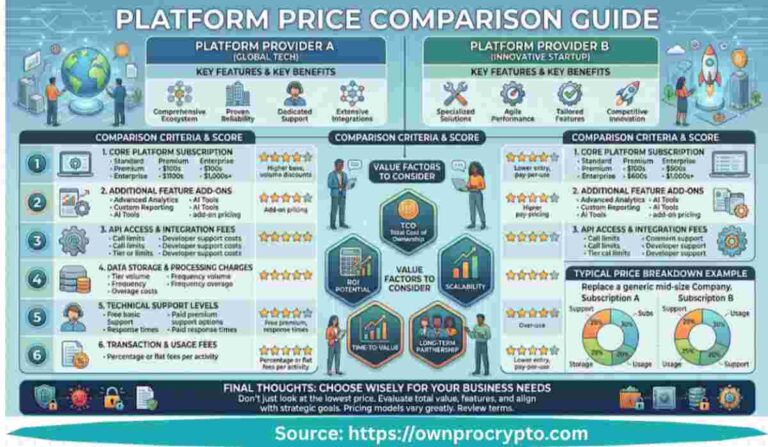
Choosing the right blockchain infrastructure provider requires balancing technical performance, business requirements, and future growth plans. A startup building its first Web3 application may need simple RPC access and developer-friendly tools, while an enterprise financial platform may require dedicated nodes, strict security controls, enterprise support, and guaranteed uptime.
A structured evaluation process helps organizations avoid common mistakes such as selecting providers based only on price, blockchain coverage, or brand recognition.
Before comparing providers, organizations should identify what their application actually requires.
| Question | Why It Matters |
|---|---|
| Which blockchains do you need? | Determines provider compatibility. |
| How many users will you support? | Defines scalability requirements. |
| What transaction volume do you expect? | Determines infrastructure capacity. |
| Do you need archive data? | Impacts storage requirements. |
| Do you require dedicated nodes? | Determines performance and isolation needs. |
| Do you need enterprise support? | Impacts service model and pricing. |
One of the first decisions organizations face is whether to use shared infrastructure or dedicated blockchain nodes.
| Factor | Shared Infrastructure | Dedicated Infrastructure |
|---|---|---|
| Cost | Lower | Higher |
| Setup Speed | Faster | Requires configuration |
| Performance | Variable | Predictable |
| Customization | Limited | Extensive |
| Best For | Startups and development | Enterprise production systems |
Shared infrastructure is suitable for:
Dedicated infrastructure is recommended for:
Performance directly affects application reliability and user experience.
| Metric | What to Evaluate |
|---|---|
| RPC latency | Response speed across regions. |
| Uptime | Service reliability guarantees. |
| Throughput | Ability to handle high request volumes. |
| Error rate | Frequency of failed requests. |
| Geographic coverage | Performance for global users. |
Multi-chain capability has become increasingly important as blockchain ecosystems continue expanding.
Look for:
Developer experience directly affects development speed and operational efficiency.
| Feature | Importance |
|---|---|
| Documentation | Faster onboarding |
| SDK availability | Easier integration |
| API dashboards | Better monitoring |
| Testing tools | Safer development |
| Debugging tools | Faster troubleshooting |
| Community support | Developer assistance |
Enterprise buyers should look beyond technical features.
Important considerations include:
Blockchain infrastructure pricing varies significantly depending on usage and requirements.
| Pricing Model | Best For |
|---|---|
| Pay-as-you-go | Startups and variable usage |
| Subscription plans | Growing applications |
| Dedicated infrastructure pricing | Enterprise workloads |
| Custom contracts | Large institutions |
Organizations often debate whether to operate nodes internally or use managed providers.
| Approach | Advantages | Challenges |
|---|---|---|
| Self-hosted Nodes | Full control | High operational complexity |
| Managed Infrastructure | Faster deployment | Vendor dependency |
| Hybrid Model | Balance of control and convenience | Requires architecture planning |
| Requirement | Recommended Approach |
|---|---|
| Fast MVP launch | Managed RPC provider |
| Growing Web3 application | Multi-chain infrastructure provider |
| High-volume platform | Dedicated nodes |
| Enterprise application | Dedicated infrastructure + SLA |
| Financial institution | Private/hybrid infrastructure |
| Tokenization platform | Archive nodes + indexing + APIs |
🚨 Critical Mistake
Many teams choose infrastructure providers based only on initial pricing. A low-cost provider can become expensive when applications experience downtime, scaling problems, limited support, or migration challenges.
Low-cost infrastructure may not provide:
Infrastructure decisions should consider:
A single-provider architecture can create unnecessary operational risk.
Enterprise applications often use:
Before finalizing a provider, verify:
| Checklist Item | Completed |
|---|---|
| Required blockchains supported | ☐ |
| Performance tested | ☐ |
| Security reviewed | ☐ |
| Pricing understood | ☐ |
| SLA evaluated | ☐ |
| API limits reviewed | ☐ |
| Backup strategy planned | ☐ |
| Support requirements confirmed | ☐ |
Choosing blockchain infrastructure is a strategic architecture decision, not simply a vendor comparison. Organizations that evaluate performance, security, scalability, developer experience, and operational requirements will be better positioned to build reliable Web3 applications.
💡 Expert Insight: The right blockchain infrastructure provider should be selected as a long-term technology partner. Infrastructure decisions made during early development often determine future scalability, operational costs, and the ability to support enterprise adoption.
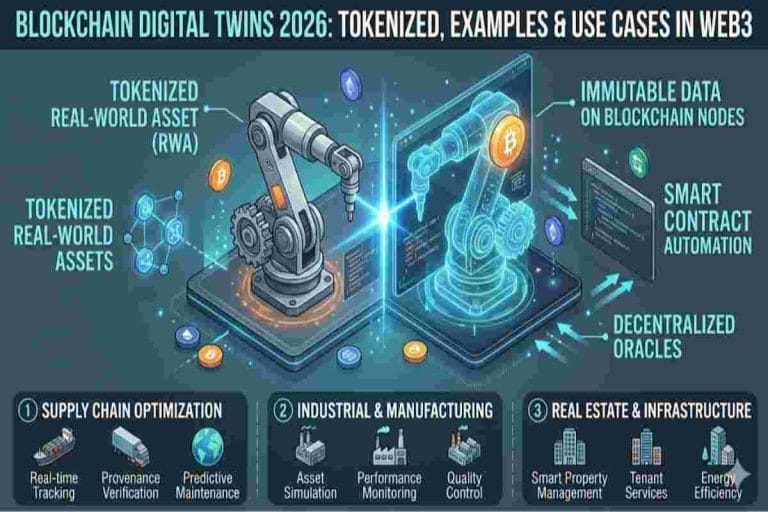
💡 Expert Insight: Blockchain infrastructure is becoming a foundational technology layer across multiple industries. However, each use case requires different infrastructure priorities. A DeFi protocol may prioritize transaction speed, while a financial institution may prioritize reliability, security, compliance, and enterprise support.
Blockchain infrastructure providers support a wide range of applications by providing reliable access to blockchain networks, APIs, node infrastructure, and data services. The right infrastructure model depends on the application’s transaction volume, security requirements, blockchain ecosystem, and operational needs.
Decentralized finance platforms require fast, reliable blockchain connectivity because users interact with smart contracts continuously.
Exchanges require highly available infrastructure to process deposits, withdrawals, balances, and transaction monitoring.
Wallet providers depend on infrastructure to display balances, transaction history, and network activity.
Tokenization platforms require reliable infrastructure to manage digital securities, asset records, and blockchain transactions.
(Internal link opportunity: Best Tokenization Platforms)
Blockchain gaming applications require scalable infrastructure to support large numbers of users and frequent transactions.
Large organizations often require blockchain infrastructure as part of broader digital transformation strategies.
Banks and financial companies require infrastructure that supports institutional-grade blockchain operations.
📋 Quick Selection Guide
| Use Case | Recommended Infrastructure |
|---|---|
| DeFi | High-performance RPC + real-time data |
| Exchange | Dedicated nodes + redundancy |
| Wallet | Multi-chain APIs + indexing |
| Tokenization | Archive nodes + enterprise APIs |
| Gaming | Scalable RPC infrastructure |
| Enterprise | Dedicated infrastructure + SLAs |
| Financial Institution | Secure enterprise deployment |
Blockchain infrastructure providers serve as the foundation layer behind modern Web3 applications. Whether supporting decentralized finance, tokenized assets, enterprise platforms, or digital asset services, selecting infrastructure based on specific business requirements ensures better performance, reliability, and long-term scalability.
💡 Expert Insight: Blockchain infrastructure is becoming a foundational technology layer across multiple industries. However, each use case requires different infrastructure priorities. A DeFi protocol may prioritize transaction speed, while a financial institution may prioritize reliability, security, compliance, and enterprise support.
Blockchain infrastructure has become a critical technology layer for modern Web3 applications. From decentralized finance platforms and crypto exchanges to tokenization systems and enterprise blockchain solutions, reliable infrastructure determines application performance, availability, and user experience.
After comparing leading providers across RPC performance, node infrastructure, multi-chain support, developer tools, enterprise capabilities, security, and scalability, the right choice depends on the specific needs of each organization.
To ensure your architecture meets global institutional standards for digital ledger security and interoperability, refer to the technical guidelines provided by the National Institute of Standards and Technology (NIST).
Different organizations require different infrastructure strategies.
| User Type | Recommended Infrastructure Approach | Key Requirements |
|---|---|---|
| Developers | Managed RPC platform | Easy APIs, documentation, testing tools |
| Startups | Flexible multi-chain infrastructure | Cost efficiency, scalability, fast deployment |
| DeFi Platforms | High-performance RPC infrastructure | Low latency, reliability, real-time data |
| Exchanges | Dedicated infrastructure | High availability, monitoring, redundancy |
| Tokenization Platforms | Enterprise blockchain infrastructure | Archive data, APIs, multi-chain support |
| Enterprises | Dedicated or hybrid infrastructure | Security, governance, SLAs |
| Financial Institutions | Institutional-grade infrastructure | Compliance, reliability, operational controls |
Startups should prioritize:
A managed infrastructure provider allows teams to focus on product development rather than node operations.
Scaling applications require:
At this stage, organizations often move from shared infrastructure toward dedicated resources.
Large organizations should evaluate:
Infrastructure becomes part of the organization’s critical technology architecture.
| Evaluation Area | Question to Ask |
|---|---|
| Performance | Can the infrastructure handle current and future demand? |
| Reliability | Are uptime and failover capabilities sufficient? |
| Security | Are access controls and protection systems strong? |
| Scalability | Can infrastructure grow with the application? |
| Developer Experience | Can teams build and maintain efficiently? |
| Multi-Chain Support | Does it support required ecosystems? |
| Enterprise Readiness | Does it provide required governance and support? |
| Cost Efficiency | Does pricing match business requirements? |
The next generation of blockchain infrastructure will move beyond simple node access and RPC services.
Future platforms will increasingly include:
As blockchain adoption expands into finance, tokenization, gaming, and enterprise applications, infrastructure providers will become essential technology partners rather than simple service vendors.
🚀 Final Recommendation
Organizations should choose blockchain infrastructure providers using a long-term architecture mindset. The lowest-cost option may not deliver the reliability required for production systems, while the largest provider may not always match specific business needs. The best solution is the platform that delivers the right combination of performance, security, scalability, developer experience, and enterprise support.
Continue learning through related research areas:
Blockchain infrastructure providers form the foundation of the modern digital asset ecosystem. As organizations move toward tokenized assets, decentralized applications, and institutional blockchain adoption, selecting reliable infrastructure becomes a strategic business decision.
A strong infrastructure partner enables faster innovation, improved reliability, stronger security, and sustainable growth across the Web3 ecosystem.
🔍 Expert Insight: The best blockchain infrastructure provider is not determined by brand popularity alone. Enterprise teams should select providers based on their application requirements, blockchain ecosystem needs, performance expectations, security standards, scalability plans, and operational goals.
Enterprise Blockchain Platforms • Private Blockchain Platforms • Hybrid Blockchain Solutions • Permissioned Distributed Ledger Technology (DLT)
Compare the best enterprise blockchain platforms for digital asset management, tokenization, supply chain, financial services, and institutional Web3 adoption. Explore private, hybrid, and permissioned blockchain solutions that help enterprises improve security, interoperability, governance, compliance, and digital transformation.
Read More: Hyperledger Foundation (Open-source enterprise blockchain frameworks including Fabric, Besu, and Indy.)
Enterprise Ethereum Alliance (EEA) (Industry standards and enterprise adoption of Ethereum-based blockchain solutions.)
🎓 Learn Before You Choose
Blockchain infrastructure can appear complex because it combines networking, cloud architecture, blockchain technology, and developer services. These answers address the most common questions developers, startups, and enterprises ask before selecting an infrastructure provider.
What Are Blockchain Infrastructure Providers?
Blockchain infrastructure providers are companies that offer managed services allowing applications to connect with blockchain networks without operating and maintaining their own nodes.
These providers typically offer:
They help organizations build blockchain applications faster while reducing infrastructure complexity.
Why Do Companies Use Blockchain Infrastructure Providers?
Companies use infrastructure providers because operating blockchain nodes internally requires significant technical resources.
Managed providers help organizations achieve:
What Is an RPC Provider in Blockchain?
An RPC provider allows applications to communicate with blockchain networks through APIs.
RPC services enable applications to:
Reliable RPC infrastructure is essential for applications requiring fast and consistent blockchain connectivity.
What Is the Difference Between a Blockchain Node and an RPC Provider?
A blockchain node connects directly to a blockchain network and stores blockchain data.
An RPC provider operates infrastructure around nodes and provides easy application access through APIs.
| Blockchain Node | RPC Provider |
|---|---|
| Runs blockchain software | Provides managed access |
| Requires maintenance | Managed by provider |
| Stores blockchain data | Offers APIs and services |
| Technical responsibility | Simplifies development |
Are Blockchain Infrastructure Providers Secure?
Professional providers implement security measures such as:
However, organizations should evaluate each provider’s security practices before deployment.
What Is the Best Blockchain Infrastructure Provider?
There is no single provider that is best for every organization.
The right choice depends on:
Startups, developers, exchanges, and financial institutions may require different infrastructure solutions.
Which Blockchain Infrastructure Provider Is Best for Enterprises?
Enterprise organizations usually prioritize:
Providers offering dedicated infrastructure and operational support are generally better suited for institutional workloads.
Should Companies Run Their Own Blockchain Nodes?
Running private nodes can provide maximum control, but it requires:
Many organizations choose managed providers because they reduce operational complexity.
What Are Dedicated Blockchain Nodes?
Dedicated blockchain nodes are isolated infrastructure resources assigned to a specific customer.
Benefits include:
They are commonly used by exchanges, financial platforms, and enterprise applications.
How Much Does Blockchain Infrastructure Cost?
Blockchain infrastructure pricing depends on:
Common pricing models include:
What Is the Difference Between Shared and Dedicated RPC Nodes?
Shared RPC nodes distribute resources among multiple customers, making them suitable for smaller applications.
Dedicated RPC nodes provide isolated resources and are better suited for high-volume production environments.
Do Blockchain Infrastructure Providers Support Multiple Blockchains?
Most leading providers support multiple blockchain networks, including:
Multi-chain support helps organizations build applications across different blockchain environments.
What Infrastructure Does a Web3 Application Need?
A production Web3 application commonly requires:
The exact architecture depends on the application’s complexity and scale.
How Should Enterprises Evaluate Blockchain Infrastructure Providers?
A strong evaluation framework should include:
| Category | Questions to Ask |
|---|---|
| Performance | What are latency and uptime levels? |
| Security | How is infrastructure protected? |
| Scalability | Can it handle future growth? |
| Support | Is enterprise assistance available? |
| Pricing | Are costs predictable? |
| Technology | Does it support required chains? |
Can Blockchain Infrastructure Support Tokenization Projects?
Yes. Tokenization platforms often require infrastructure capable of supporting:
(Internal link opportunity: Best Tokenization Platforms)
What Is the Future of Blockchain Infrastructure?
Blockchain infrastructure is evolving toward: