
Table of Contents
ToggleBlockchain, crypto, Bitcoin, Ethereum, and Web3 are words we hear constantly—but for most people, they feel like a mix of confusing technical jargon and hype-driven investment noise. One moment it sounds revolutionary, the next it sounds risky or incomprehensible. Most resources either obsess over price speculation or dive straight into deep technical detail, leaving beginners overwhelmed and unsure where to start. This Guide Blockchain & Web3 Explained, exists to fix that.
My aim here is simple and practical:
This perspective is shaped by nine years of institutional research experience in Dallas and an MBA from the University of Karachi. Across finance, technology, and systems design, one conclusion consistently stands out: the Web3 ecosystem in 2026 is no longer speculative infrastructure—it is a maturing, blockchain-based web environment designed to secure assets, identity, and data within a trustless web architecture.
Unlike traditional Big Tech platforms, this permissionless web ecosystem operates independently of centralized control. Ownership is not implied by terms of service—it is hard-coded into the protocol itself. Within this decentralized internet framework, users participate in a Web3 network landscape where control, access, and value flow are enforced by transparent rules rather than corporate discretion.
This is not about speculation.
It is about architecting digital sovereignty.
Blockchain & Web3 Explained in Just 5 Minutes
Before diving deeper into the strategies and protocols in this playbook, this short video of Blockchain & Web3 Explained in Just 10 Minutes will give you a crystal-clear foundation. In just five minutes, you’ll learn how Blockchain actually works—and why governments, banks, and global enterprises are rapidly integrating it into their infrastructure. Blockchain technology is an innovative distributed ledger technology that is changing how we store and share information. It is a decentralised computing system that lets users store data safely and do business without trusting each other. Many different fields, from finance to health care, are starting to use this technology. At its heart, blockchain technology creates a shared digital ledger of transactions that can’t be changed. Each transaction is recorded as a block, which is linked to the block before it in a chain. The blockchain gets its name from this chain of blocks, which makes it a very secure technology. When it comes to security, blockchain technology is very safe because it uses advanced cryptography to protect data and make sure that only authorized users can access and change it. This makes it perfect for applications that need the highest level of security, like those in finance, health care, and government.
Most people are introduced to crypto through charts, influencers, or headlines. That framing skips the “why” and jumps straight to outcomes. Without understanding the underlying systems—blockchain, consensus algorithms, and digital ownership—crypto looks either like magic or a scam.
In the early days of crypto, “Sovereignty” was just a buzzword for owning your private keys. The good news for 2026 is that The Web3 Roadmap has evolved into a multi-dimensional discipline that integrates law, code, and capital. As institutional capital “goes vertical” and regulations like the GENIUS Act and MiCA Enforcement reach full effect, simply holding Bitcoin is no longer enough to be truly sovereign. To build a lasting “Fortress,” the professional investor must master the Five Dimensions of Digital Sovereignty 2026: Identity, Data, Assets, Compliance, and Legacy.
This guide is written for curious people, investors who want clarity without hype, students who want fundamentals before buzzwords, and professionals who want to understand how Web3 actually works beneath the surface.
Here, my aim to:
Explain the origins and philosophy behind crypto and Web3.
Provide practical steps to understand blockchain, smart contracts, and token creation.
Offer a framework to interact with Web3 confidently without relying on hype or speculation.
Think of this as a human-to-human explanation—a guide that doesn’t assume you have years of coding or finance experience but respects your curiosity and desire to understand what’s really going on behind the buzzwords.
At its core, blockchain is a shared record book that anyone can verify but no single person controls. Instead of a bank maintaining balances on a private server, blockchain spreads the same ledger across thousands of computers worldwide.
Blockchain removes the need to trust a central authority. You don’t need to trust a bank, a company, or a government database—only the rules of the network and the math enforcing them.
No single entity owns the network. Control is distributed across independent participants.
Transactions are publicly verifiable. Anyone can audit the ledger.
Once data is recorded, it cannot be changed without network-wide agreement.
Participants don’t need to trust each other. The system enforces rules automatically.
Unlike traditional databases controlled by one company or institution, blockchain ensures that everyone sees the same truth, and no single actor can unilaterally manipulate it.
Timestamped transactions: Every action is logged with an exact time, making records traceable.
Encryption and validation: Transactions are encrypted and validated by consensus rather than by a central authority.
Immutable history: Once recorded, data cannot be altered without agreement from the network.
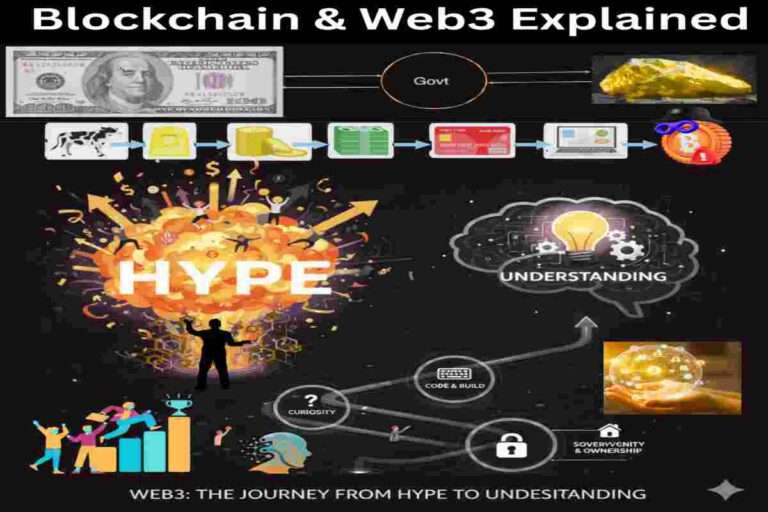
To truly understand crypto, you can’t start with price charts or token names. You have to start with trust. The real origin of crypto traces back to the 2008 global financial crisis. Big banks in New York and elsewhere were over-inflating financial instruments, making massive profits while the risks remained hidden.
When those bets failed, banks owed money they simply didn’t have. Logically, they should have gone bankrupt. But here’s the twist: the government stepped in to bail them out using taxpayer money. This raised a fundamental question: Why do a few institutions get rescued while ordinary people bear the consequences? Why does a central authority have the power to control currency and print money at will?
This philosophical dilemma sparked the creation of Bitcoin—a system where money is governed by math rather than centralized decisions, a system that ordinary people could trust without relying on banks or governments.
Direct exchange of goods, like trading rice for shoes. Effective for small-scale communities but inefficient for large societies.
Gold became the standard because it’s scarce and durable. However, it’s heavy and difficult to transport or verify.
Once gold was abandoned as a peg, governments could print money freely. This allowed trillions of dollars to enter circulation in a single year, as seen in 2020, highlighting the need for a currency governed by predictable, transparent rules rather than central authority whims.
Bitcoin’s value proposition rests on replicating gold’s scarcity in a digital, mathematically-enforced format that anyone can verify.

Bitcoin, often called “digital gold,” emerged as a direct response to 2008. It’s a blockchain where thousands of machines worldwide maintain a ledger.
Transactions are verified through Proof of Work (PoW), a consensus algorithm where miners solve complex puzzles.
If anyone tries to “print” extra Bitcoin or manipulate the ledger, the network rejects it. This ensures a currency that cannot be devalued or inflated arbitrarily, independent of government control.
Bitcoin’s structure ensures that no central authority can inflate the currency, creating a new type of trustless money.
Between 2014 and 2016, Ethereum emerged as the next evolution. Unlike Bitcoin, Ethereum not only tracks digital currency but allows code to run on its blockchain—this is the concept of smart contracts.
In Web2, when you book a ride on Uber, a centralized server processes the request. You must trust that server to execute correctly. Ethereum replaces this with transparent, verifiable code: anyone can deploy a program, and its execution is publicly auditable.
This opens up possibilities like:
Trustless finance: Swap tokens or take loans without a bank.
Verifiable state: Anyone can deploy and verify code on the blockchain, creating a new standard of transparency.
Proof of Work (Bitcoin): Secure but slow.
Proof of Stake (Ethereum): Faster, energy-efficient, validators risk their stake if dishonest.
Ethereum enables decentralized applications (dApps), tokenization, and programmable digital ownership without intermediaries.
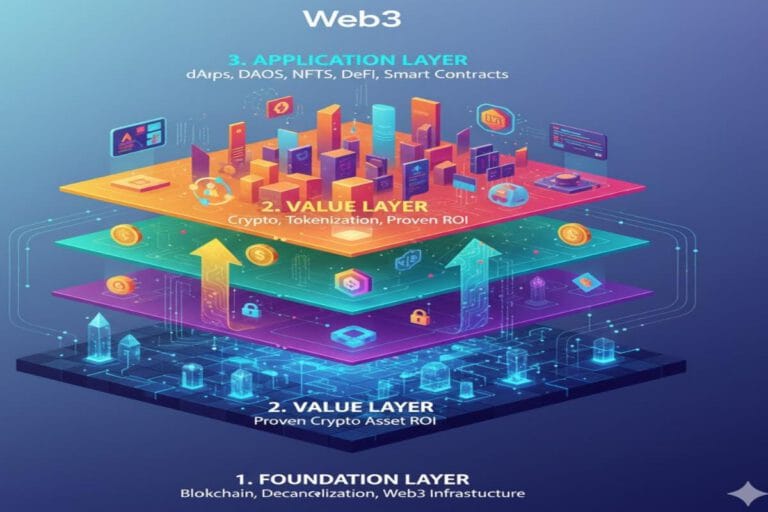
Layer 1 blockchains are base networks where transactions are finalized and consensus occurs.
PoH (Solana): Uses a digital clock to timestamp transactions before consensus, enabling parallel processing and speeds over 65,000 TPS.
Layer 1 blockchains like Solana, Aptos, and Sui address Ethereum’s speed limitations, allowing real-world, high-throughput transactions.
Ethereum’s advantage: programmability via smart contracts. Its challenge: until recently, slow transactions due to PoW.
Emerging chains like Polkadot and Cosmos let users create their own blockchains with custom consensus algorithms, offering flexibility beyond existing L1s.
Web3 cannot scale to everyday use—payments, games, social apps—without fast, low-cost Layer 1 infrastructure.
Before coding, you need wallets: digital tools that store private keys.
Public Key: Your blockchain address; safe to share.
Private Key: Your signature; never share it. Losing this means losing access to all assets.
Seed Phrase: A 12- or 24-word master key for wallet recovery. Store securely offline.
In Web3, you are your own bank. Ownership is mathematical, not institutional.
Web3 shifts control from centralized servers to users.
Blockchain underpins the decentralized internet:
Provides trustless, verifiable data storage.
Enables financial and social applications without intermediaries.
Supports multi-chain ecosystems where assets and code interact seamlessly.
Data Ownership: You control your identity, game items, social media handles, and professional credentials.
Transparency & Security: Blockchain ensures immutability and verifiability.
Programmable Assets: Tokens, smart contracts, and decentralized apps (dApps) give users sovereignty over assets and interactions.
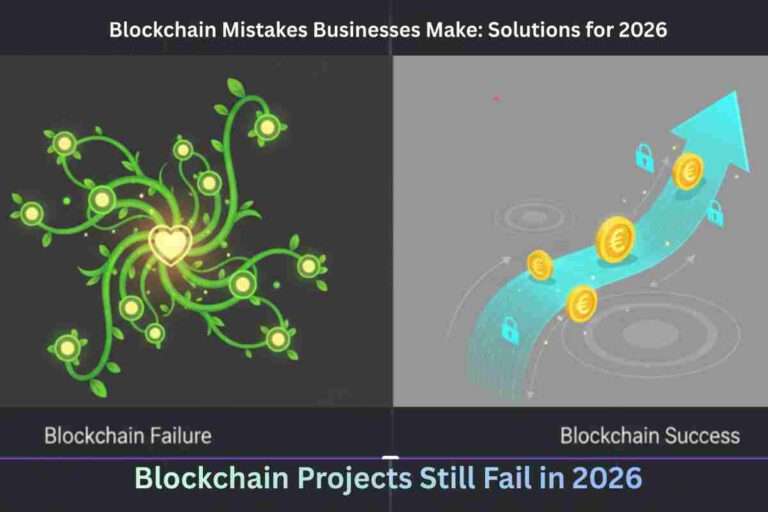
Speculation is noisy. The underlying systems evolve independently of price cycles.
Self-custody requires responsibility. Phishing and poor key management remain major risks.
UX complexity and education remain barriers to mass adoption.
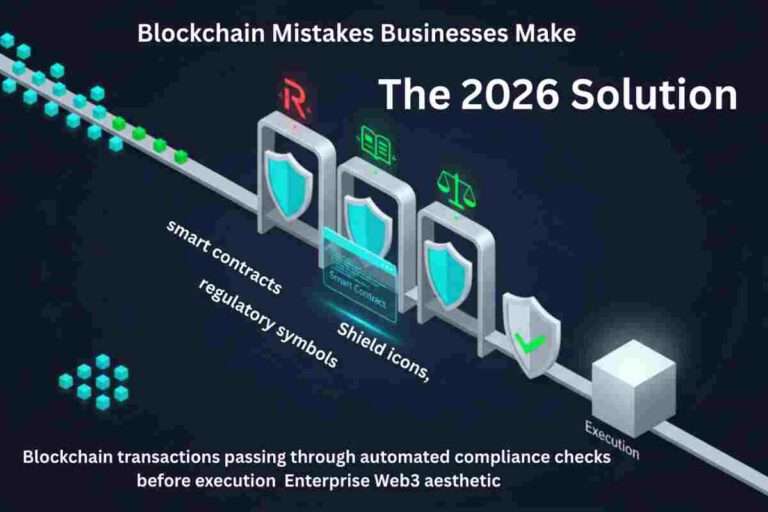
Web3 technology itself is legal; usage depends on compliance and application.
Users are responsible for reporting activity under existing tax laws.
Regulation targets interfaces and intermediaries, not the underlying math.

As we navigate the 2026 landscape, Web3 legality has shifted from “gray areas” to sophisticated, multi-tiered legal frameworks. Leading the charge is the United Arab Emirates (UAE), specifically Dubai through VARA and Abu Dhabi via ADGM, offering the world’s most advanced dedicated virtual asset regulations and zero personal income tax. Switzerland remains the institutional “Gold Standard” with its Federal DLT Act, which treats digital assets with the same legal maturity as traditional securities in its famous “Crypto Valley.” In Asia, Singapore and Hong Kong have solidified their positions as regulated gateways; Singapore through the Monetary Authority of Singapore (MAS) and its strict but clear Payment Services Act, and Hong Kong via its mandatory licensing for Virtual Asset Service Providers (VASPs). Meanwhile, El Salvador continues its unique path as the sovereign pioneer, where Bitcoin remains legal tender with zero capital gains tax for investors. For those targeting the massive European market, the European Union’s MiCA (Markets in Crypto-Assets) regulation now provides a “passportable” license across 27 countries, with Germany and Portugal emerging as top destinations for long-term holders due to their favorable tax exemptions on assets held for over a year.
United Arab Emirates (Dubai/Abu Dhabi):
Switzerland (Zug/Zurich):
Singapore:
El Salvador:
European Union (Germany/Portugal/Estonia):
Instead of writing new contracts for every token, Solana uses pre-built, audited programs.
Users create Mint Accounts managed by SPL, separating executable code from data accounts for efficiency and speed.
Once fundamentals are clear, hands-on experimentation accelerates understanding.
Install Backpack, set network to Devnet, open your terminal or PowerShell.
Point CLI to testing ground and generate your bank key.
Use solana airdrop to get testnet SOL to learn mechanics without real money.
Use spl-token create-token and spl-token mint to create and mint your own token.
Use the --fund-recipient flag to pay transaction rent automatically.
Payments, tokenized assets, and infrastructure are seeing real traction.
Engineering, security, protocol research, and compliance are growing paths.
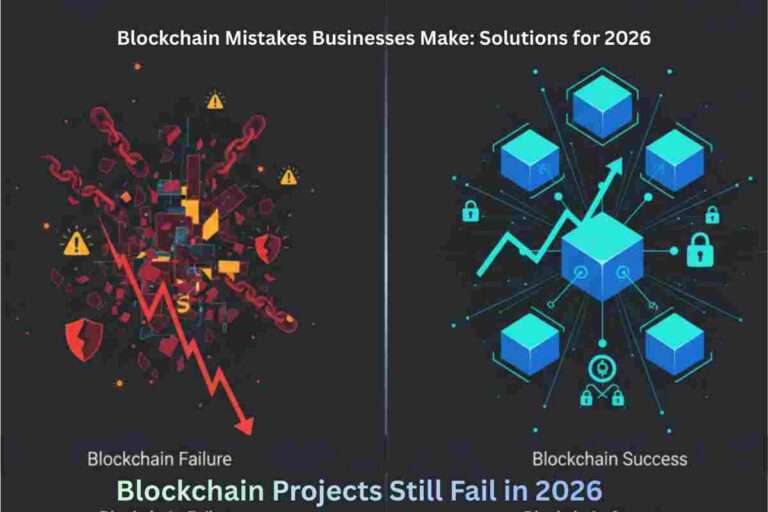
Projects without real utility or sustainable models won’t last.
Trader:Ahmed, 28, bought Bitcoin in 2017, but learned Ethereum smart contracts allowed him to lend crypto and earn passive yield.
Fatima, 42, manages a small hedge fund. Using RWA tokenization, she invests in tokenized real estate for instant rental payouts.
Bilal, 23, follows this guide to mint his own Solana token, learning the mechanics of blockchain without financial risk.
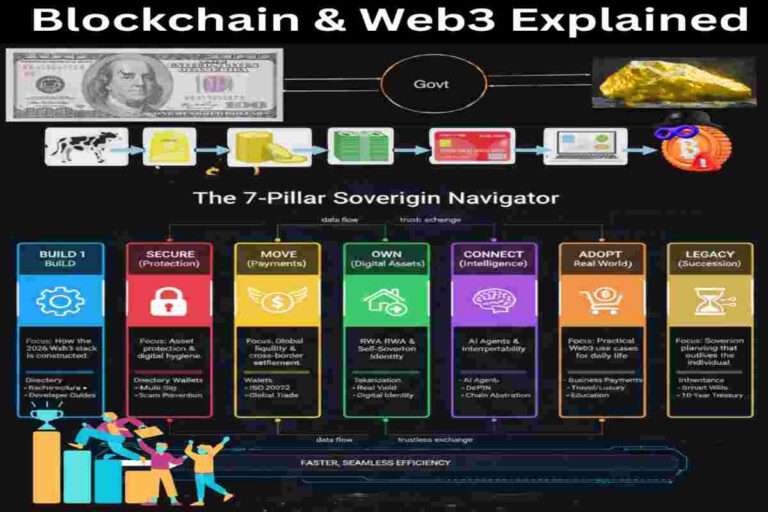
To truly grasp the power of the 7-Pillar Navigator, we must examine real-world scenarios where these principles were put to the ultimate test. Below are two defining moments from the 2025-2026 era that separate the “Digital Refugees” from the “Sovereign Builders.”
An Infrastructure Survival Story
The 2026 Liquidity Revolution
Real Questions from Community, Answer by Experts
The following FAQs of Web3 Ecosystem 2026 are not theoretical or auto-generated—they come directly from questions repeatedly asked by readers, commenters, and private messages across our Web3 community. These are the same concerns surfaced in Google’s “People Also Ask” results and reflect the real security anxieties facing users in 2026. Each answer is written from first-hand research, on-chain analysis, and years of institutional blockchain experience, then published here to provide clear, trusted guidance. This section exists to eliminate confusion, reduce costly mistakes, and ensure every reader can make informed, confident decisions about protecting their digital assets.
Blockchain is a decentralized ledger that stores data securely across multiple computers.
Bitcoin is digital gold; Ethereum enables smart contracts; Web3 is the decentralized internet framework.
They are self-executing programs that automatically enforce rules on the blockchain.
Wallets store public/private keys; seed phrases are master keys to recover wallets.
Use hardware wallets, social recovery, and ZK-Proofs for privacy and ownership.
It converts tangible assets like real estate into blockchain tokens, enabling fractional ownership.
Token minting creates new cryptocurrency units, enabling custom currencies and applications.
PoW requires computational work to validate transactions, PoS uses staked tokens for consensus.
Through Proof of History and parallel processing of transactions.
No. Tokens are immutable on the blockchain if you hold private keys.
By following these steps, you’ve done more than 99% of people in crypto. You didn’t just buy a coin; you understood the infrastructure of Digital Sovereignty. You learned how to bypass the centralized failures of 2008 by using math and code.
Web3 is not just a technical innovation; it is a response to centralized financial failures and a vision of digital sovereignty. Bitcoin and Ethereum pioneered decentralized money and programmable finance, while new blockchains and multi-chain ecosystems expand speed, efficiency, and usability.
By understanding wallets, private keys, and blockchain architectures, you can begin interacting with Web3 safely and meaningfully, whether deploying a smart contract, creating a token, or exploring decentralized finance. The journey from crisis to code demonstrates that trust, transparency, and control can be mathematically encoded, giving individuals power in a digital world.
Learn systems, not tokens.
Think long-term.
Curiosity over speculation.
Pillar 1: BUILD (Infrastructure)
Focus: How the 2026 Web3 stack is constructed.
Directory: Roadmap → Architecture → Developer Guides.
Pillar 2: SECURE (Protection)
Focus: Protecting assets with “Fortress” digital hygiene.
Directory: Wallets → Multi-Sig → Scam Prevention.
Pillar 3: MOVE (Payments)
Focus: How value travels across the Sovereign Bridge.
Directory: Stablecoins → ISO 20022 → Global Trade.
Pillar 4: OWN (Digital Assets)
Focus: The transition to RWA and Self-Sovereign Identity.
Directory: Tokenization → Real Yield → Digital Identity.
Pillar 5: CONNECT (Intelligence)
Focus: The fusion of AI Agents and Interoperability.
Directory: AI Agents → DePIN → Chain Abstraction.
Pillar 6: ADOPT (Real World)
Focus: Practical Web3 use cases for daily life.
Directory: Business Payments → Travel/Luxury → Education.
Pillar 7: LEGACY (Succession)
Focus: Sovereign planning that outlives the individual.
Directory: Inheritance → Smart Wills → 10-Year Treasury.
To ensure your Web3 Infrastructure and Sovereign Ownership Framework align with global compliance standards, we recommend referencing the official primary sources. This document provides the legal “navigator” for digital property rights in 2026.
🔗 Official Regulatory Reference: EU Markets in Crypto-Assets (MiCA) Regulation
Welcome to OwnProCrypto (Own & Pro Crypto) — a next-generation Bitcoin and blockchain education platform where the science of finance meets the power of AI-driven automation.
Our mission is simple: to equip you with the knowledge, frameworks, and tools needed to make smarter financial and business decisions in the Web3 economy.
Beyond analysis, OwnProCrypto focuses on transparency, verifiable data, and practical frameworks that investors and builders can actually use. Our goal is not hype — but clear thinking, disciplined analysis, and long-term value creation in the decentralized economy.
Our Background: Salim (Sam) is the founder and lead researcher behind OwnProCrypto, a Web3 intelligence platform focused on crypto security, digital ownership, stablecoin systems, interoperability, and institutional blockchain infrastructure.
Crypto Tools & Analysis:
Crypto Fundamental Analysis Tool | Protocol Evaluation System | DeFi Risk Analysis Tools | Crypto Portfolio Dashboard | Token Risk vs Reward Tool
Guides:
Crypto Fundamental Analysis | Blockchain Project Evaluation | Tokenomics Analysis | DeFi Protocol Analysis | Capital Efficiency
© 2026 OwnProCrypto — Built for smarter crypto decisions