
Table of Contents
ToggleThe transition to Crypto in Sports 2026 addresses the critical pain point of superficial fan engagement by offering the unique solution of Digital Ownership and verifiable utility. In 2026, the era of “meaningless NFTs” has ended, replaced by Real-World Asset (RWA) Tokenization that grants fans actual governance and liquid rewards. This shift ensures your time is well spent by exploring how the world’s biggest leagues are moving beyond the hype to build a Sovereign Internet for sports fans rooted in On-Chain Compliance.
We see the logos of CoinDCX, Crypto.com, or Binance on your favorite IPL cricket team or Premier League football club. But does that mean you can buy a match ticket with Bitcoin or Ethereum? In 2026, it’s critical to separate marketing adoption from real crypto utility. Fans, leagues, and brands often confuse sponsorship visibility with actual blockchain integration. This article tackles the key pain point of “crypto hype in sports” and explains how fans interact with blockchain via fan tokens, NFT ticketing, and decentralized rewards.
In 2026, fans are no longer impressed by exchange logos on jerseys or token launches with no utility. The real question is simple:
Is crypto actually being used in sports—or is it still mostly hype?
This article breaks down Crypto in Sports 2026 by separating marketing adoption from real blockchain utility, with a clear look at football, IPL, and PSL.

The early 2020s were defined by:
By 2026, the market has matured. Meaningless NFTs have faded, replaced by digital ownership, verified access, and limited on-chain governance.
But real adoption remains selective—not universal.
Seeing crypto brands on jerseys creates the illusion of adoption.
Examples include:
Key Reality:
Sponsorship ≠ crypto usage.
Most fans still:
| Feature | Reality |
|---|---|
| Jerseys & Stadium Ads | Brand visibility only |
| Sponsorship Deals | Fiat-based contracts |
| Fan Exposure | Passive, not interactive |
| On-Chain Use | None |
Marketing adoption benefits brands, not fans.
| Feature | Reality |
|---|---|
| Fan Tokens | Limited governance |
| NFT Tickets | Authenticity & resale |
| Loyalty Tokens | Reward-based |
| On-Chain Interaction | Real but narrow |
Utility adoption benefits engagement, not payments.
Fans earn tokens for:
These tokens unlock:
They are not fiat replacements.
Clubs allow fans to vote on:
This creates emotional ownership—not financial power.
| Category | Football | IPL | PSL |
|---|---|---|---|
| Sponsorship Presence | Very High | High | Moderate |
| Fan Tokens | Widely Used | Limited | Minimal |
| NFT Ticketing | Emerging | Experimental | Rare |
| Crypto Payments | Rare | Almost None | None |
| Regulatory Freedom | Medium | Low | Very Low |
Insight: Football leads in experimentation, while cricket leagues remain conservative due to regulation and mass-market audiences.
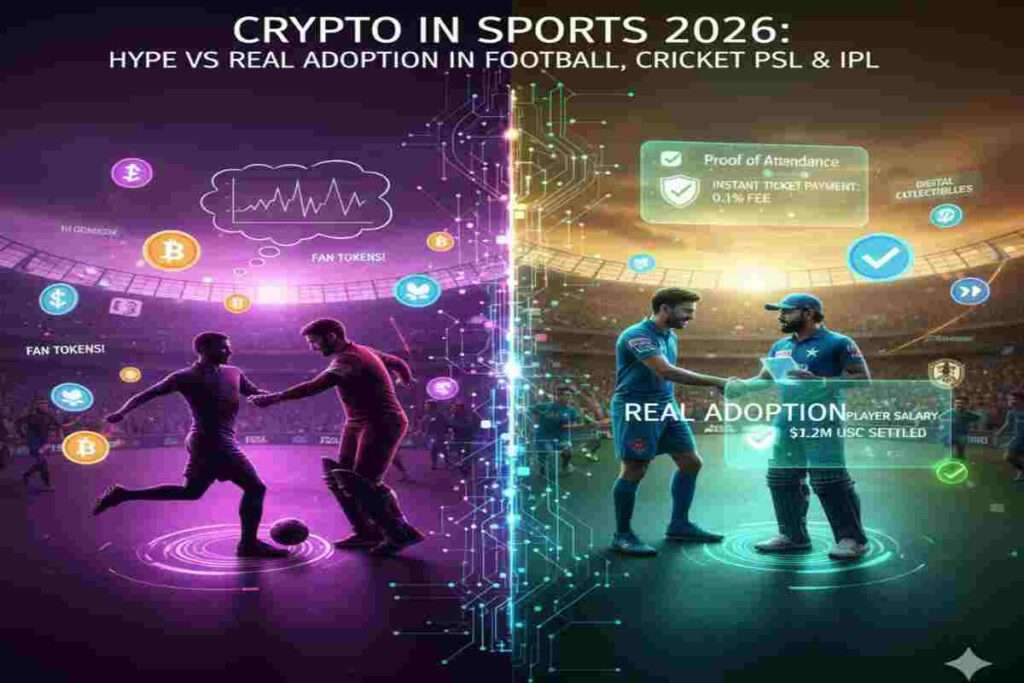
Despite the hype, crypto is not widely used for:
Volatility, regulation, and UX friction remain barriers.
True crypto adoption in sports will involve:
This requires infrastructure, not marketing.
In 2026 and beyond, true crypto adoption in sports will require:
Clubs and leagues that move beyond sponsorship hype and embrace functional crypto experiences will lead the way in fan engagement and revenue innovation.

: A 2026 Web3 industry leader specializing in high-velocity trade and digital sovereignty, dedicated to helping users transition from legacy systems to Capital Efficiency and on-chain ownership.
The following FAQs of Crypto in Sports 2026 are not theoretical or auto-generated—they come directly from questions repeatedly asked by readers, commenters, and private messages across our Web3 community. These are the same concerns surfaced in Google’s “People Also Ask” results and reflect the real security anxieties facing users in 2026. Each answer is written from first-hand research, on-chain analysis, and years of institutional blockchain experience, then published here to provide clear, trusted guidance. This section exists to eliminate confusion, reduce costly mistakes, and ensure every reader can make informed, confident decisions about protecting their digital assets.
No. They are for Fan Engagement, not for building wealth. Their value is highly volatile and tied to the team’s performance. Rooted in Case Study Failure: Investors who bought “Fan Tokens” during a championship win saw the price crash 80% the next week once the hype ended.
Usually, no. Most team stores still prefer fiat. However, you can often use a “Crypto Card” (Visa/Mastercard) to bridge the gap. Rooted in Case Study Failure: Fans who sent “direct” crypto to a team’s social media account for a jersey were almost always scammed by fake profiles.
Not directly for the ticket itself, but most venues use stablecoins (USDC/PYUSD) for transactions to avoid the volatility of Bitcoin. Rooted in Case Study Failure: Early pilots in 2023 failed because the price of the ticket changed between the fan standing in line and reaching the counter due to BTC volatility.
Football—by experimentation, not payments.
Many top-tier athletes now receive “Bonus Clauses” in stablecoins for instant liquidity, though base salaries often remain in local fiat for tax simplicity. Rooted in Case Study Failure: An athlete in 2024 lost half their “crypto salary” in a week due to a market crash because they were paid in a volatile altcoin instead of a stablecoin.
NFT tickets are programmed with “Smart Resale” logic that caps the maximum resale price and automatically sends a percentage of the profit back to the team. Rooted in Case Study Failure: Traditional digital tickets were still easily “screenshotted” or sold on unverified platforms for 10x the face value in 2024.
No, the 2026 market has matured. Most successful tokens are now tied to Real Yield and actual stadium utility, making them “Utility Assets” rather than speculative bets. Rooted in Case Study Failure: Early 2022 projects failed because they offered “exclusive content” that was easily copied, providing no real long-term value to holders.
They are engagement tools, not monetary systems.
Yes, 2026 systems use On-Chain Compliance and encryption layers so that your identity is hidden while your “right to enter” the stadium is verified. Rooted in Case Study Failure: A 2025 data breach at a centralized sports app exposed millions of fans’ personal home addresses and payment details.
Yes—with exceptions.
Crypto in Sports 2026 is:
This article is for educational purposes and does not constitute financial or investment advice.
The industry is moving from speculation → utility, but mass adoption will come only when crypto solves real operational problems—not branding ones.
LearnWeb3 is a beginner-friendly platform offering structured, hands-on Web3 learning resources trusted by the developer community.👉 https://learnweb3.io
Welcome to OwnProCrypto (Own & Pro Crypto) — a next-generation Bitcoin and blockchain education platform where the science of finance meets the power of AI-driven automation.
Our mission is simple: to equip you with the knowledge, frameworks, and tools needed to make smarter financial and business decisions in the Web3 economy.
Beyond analysis, OwnProCrypto focuses on transparency, verifiable data, and practical frameworks that investors and builders can actually use. Our goal is not hype — but clear thinking, disciplined analysis, and long-term value creation in the decentralized economy.
Our Background: Salim (Sam) is the founder and lead researcher behind OwnProCrypto, a Web3 intelligence platform focused on crypto security, digital ownership, stablecoin systems, interoperability, and institutional blockchain infrastructure.
Crypto Tools & Analysis:
Crypto Fundamental Analysis Tool | Protocol Evaluation System | DeFi Risk Analysis Tools | Crypto Portfolio Dashboard | Token Risk vs Reward Tool
Guides:
Crypto Fundamental Analysis | Blockchain Project Evaluation | Tokenomics Analysis | DeFi Protocol Analysis | Capital Efficiency
© 2026 OwnProCrypto — Built for smarter crypto decisions