
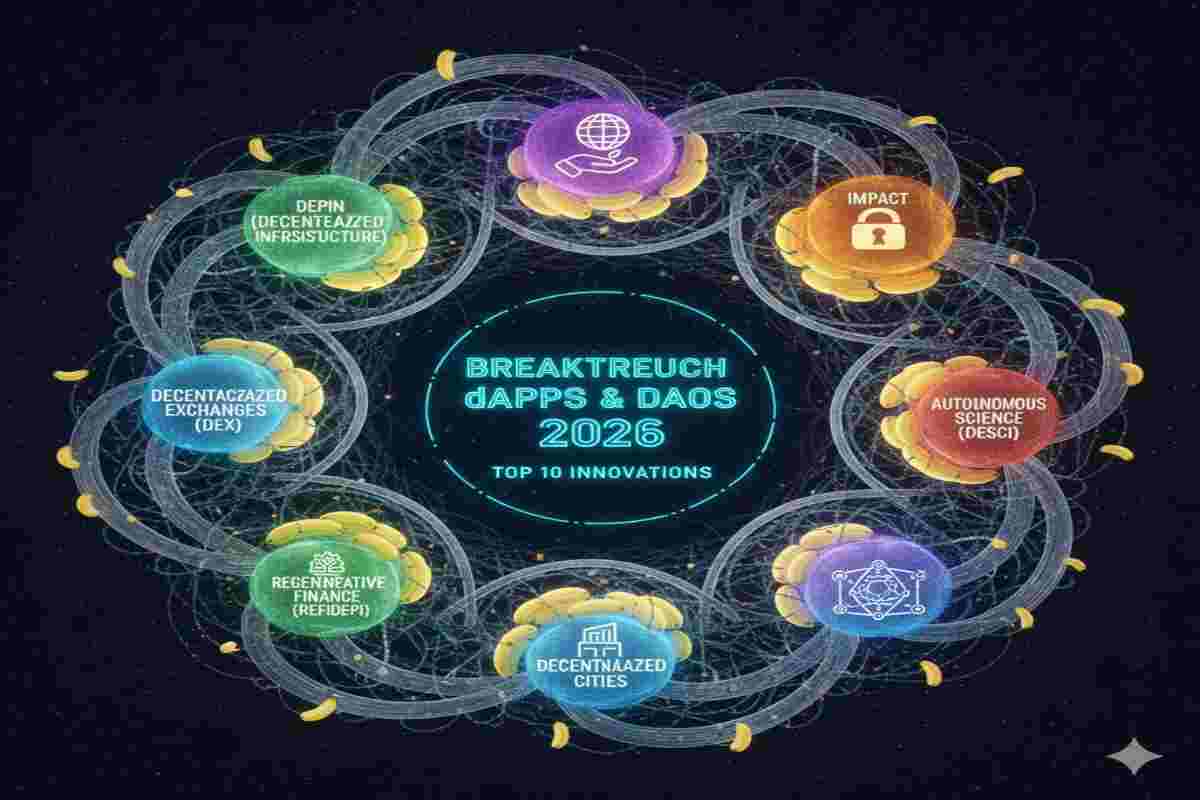
By 2026, decentralized systems have matured. The challenge is no longer innovation—it’s building governance that’s transparent, scalable, and resilient for real-world adoption.
Voting mechanisms that confuse users, slow decision-making, and governance tokens with little utility are relics of the early Web3 era.
The solution? Next-generation dApps and DAOs leveraging automation, AI-assisted proposals, and smart consensus frameworks—creating faster, fairer, community-driven ecosystems.
Image placeholder: dApps and DAOs in action, showing automation + AI governance.
This guide is your roadmap to understanding the breakthroughs reshaping decentralized governance, offering practical strategies for confident participation.
| Rank | Category | Primary Function | Governance Impact | Why It Matters |
|---|---|---|---|---|
| 1 | DAO Governance Frameworks | Decision-making | High | Transparent control |
| 2 | Treasury Management dApps | Capital allocation | High | Sustainable DAOs |
| 3 | On-Chain Voting Systems | Collective action | High | Trustless governance |
| 4 | DAO Tooling & Ops Platforms | Execution | Medium–High | Operational maturity |
| 5 | Reputation & Identity Systems | Contributor trust | Medium | Sybil resistance |
| 6 | dApp Marketplaces | Access & distribution | Medium | Ecosystem growth |
| 7 | Legal DAO Wrappers | Compliance | Medium | Institutional entry |
| 8 | Incentive & Contribution dApps | Alignment | Medium | Fair participation |
| 9 | Cross-DAO Coordination Tools | Interoperability | Medium | Network effects |
| 10 | AI-Assisted Governance Tools | Automation | Emerging | Scalable decision-making |
These categories are ranked based on governance impact, adoption maturity, execution reliability, and resistance to manipulation—not popularity or token price performance.
As decentralized systems mature in 2026, the biggest challenge isn’t innovation—it’s building governance models that are transparent, scalable, and resilient enough for real-world adoption. Many users still struggle with unclear voting mechanisms, slow decision-making, and governance tokens that lack real utility. The solution lies in next-generation dApps and DAOs that leverage automation, AI-assisted proposals, and smarter consensus frameworks to create faster, fairer, community-driven ecosystems. This guide breaks down the breakthroughs reshaping decentralized governance, offering sharp insights, practical ideas, and proven tips to help you understand—and participate in—the new era of efficient, trustworthy digital decision-making.
The era of “Click-to-Vote” noise is over. We are entering the age of Breakthrough dApps & DAOs, where decentralized applications (dApps) run like high-speed apps on your phone, and DAOs (Decentralized Autonomous Organizations) operate like digital cities with automated laws. For your 60-year-old friend, this is about the internet finally becoming a place where the “Community” has more power than the “Company.”
“If the Foundation Layer is the ‘plumbing,’ the Value Layer is the community-owned building where everyone has a key to the boardroom.”
In 2026, the way we interact with digital services is shifting from “Centralized Control” to Community-Led Governance. We are moving from a world of “Opaque Corporate Decisions” to a reality of Transparent On-Chain Logic. While traditional organizations have been plagued by bureaucracy and secret agendas, the “good news” is that dApps & DAOs have bridged this gap. By automating governance and profit-sharing, we unlock Direct Participation for everyone.
This guide is your blueprint for the Breakthrough dApps & DAOs 2026. We move beyond experimental voting, using AI-enhanced “Smart Governance” to track real organizational performance. Whether it’s automated treasury management or cross-chain dApps, you are about to discover the new gold standard for decentralized collaboration.
dApps and DAOs form the operational and governance backbone of the Web3 ecosystem, shifting power from centralized platforms to community-owned, transparent, and trustless digital systems. dApps enable users to interact directly with blockchain networks through censorship-resistant, programmable applications, while DAOs expand this autonomy through on-chain voting, treasury management, and incentive-aligned decision-making. As decentralized infrastructure matures in 2026, these models will drive new forms of digital coordination, unlock tokenized economies, and redefine how products are built and governed. For investors, developers, and participants across Web3, understanding how dApps and DAOs function—and how to evaluate their utility, community strength, and security—is becoming essential for navigating the next wave of decentralized innovation.
To help you execute each protocol with precision, this playbook includes the web3 Fortress ROI System—a complete suite of ready-to-use templates, security matrices, and authority-building dashboards. These tools eliminate guesswork, reduce attack surfaces, and give you the operational clarity needed to grow a Web3 presence with confidence. The full Fortress Business System—normally priced at $299—is provided here at zero cost so you can plan, protect, and scale with a defense-first strategy backed by measurable ROI.
In the Web3 ecosystem, understanding what are dApps and DAOs is crucial for investors, developers, and enthusiasts alike. These macro forces will determine where long-term ROI, sustainable adoption, and real-world utility emerge.
A dApp is software that runs on a blockchain via smart contract governance, unlike traditional Web2 apps where backend data is centralized.
Key characteristics:
| Feature | Web2 Application | dApp (Web3 Application) |
|---|---|---|
| Data Storage | Centralized servers | Blockchain nodes |
| Control | Platform owner | Smart contracts + community |
| Access | Restricted | Permissionless |
| Governance | Top-down | DAO + token voting |
| Revenue Model | Ads / subscription | Tokenomics / staking / NFTs |
Alice builds a peer-to-peer NFT marketplace as a dApp:
Result: Transparent, scalable, and community-driven platform.
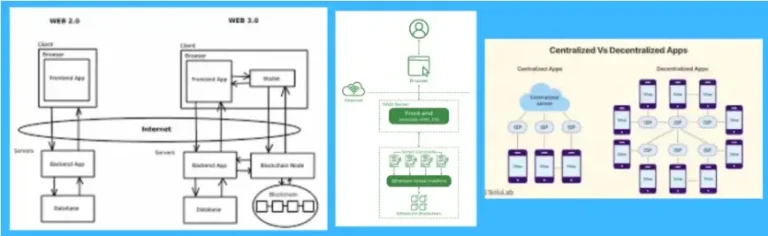
dApp as name shows its an application
A dApp is a product — an application built on a blockchain.
A DAO is a governance structure — a community that makes decisions collectively using smart contracts.
A dApp can be governed by a DAO, but a DAO doesn’t have to run a dApp.
Example:
They often work together, but they are not the same.
| Feature | dApp | DAO |
|---|---|---|
| What it is | Application | Organization |
| Purpose | Provide service | Make decisions |
| Users | App users | Token/NFT holders |
| Governance | Team or DAO | Community votes |
| Runs on | Smart contracts | Smart contracts + community |
| Example | Uniswap app | Uniswap DAO |
A DAO is a decentralized organizational structure governed by smart contracts and token holders. Members propose changes, vote on treasury allocations, and influence protocol upgrades.
DAO Voting System Mechanism:
This ensures transparent decision-making and reduces human error.
| DAO Type | Purpose | Example |
|---|---|---|
| Protocol DAO | Manage DeFi rules | MakerDAO |
| Community DAO | Funding & grants | MolochDAO |
| Product DAO | Development decisions | Gitcoin DAO |
| Collector DAO | Shared asset ownership | FlamingoDAO |
MakerDAO manages the Dai stablecoin.
This is a textbook example of how DAO governance works and why community control matters.
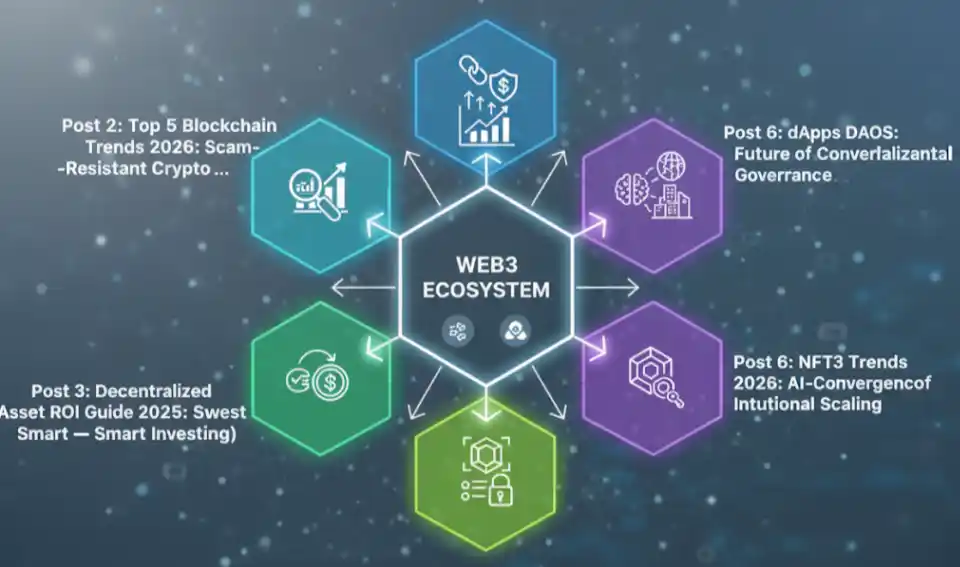
Outcome: Fans, artists, and developers share real governance power.
| Challenge | Description | Mitigation |
|---|---|---|
| Voter Apathy | Low participation | Delegation & incentives |
| Whale Control | High token concentration | Quadratic voting / caps |
| Legal Ambiguity | No formal recognition | Jurisdiction-based DAOs, multi-sig protection |
| Smart Contract Bugs | Exploit risk | Audits, formal verification |
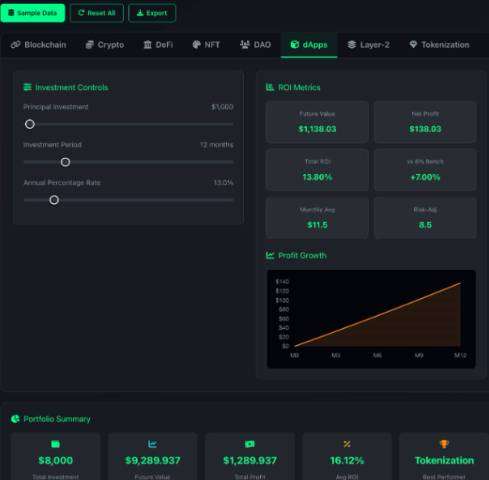
A dApps and DAOs ROI calculator measures both the financial rewards and the governance value users gain from participating in decentralized platforms. Because value in dApps and DAOs comes from more than price movement—such as staking yields, token rewards, voting power, treasury distributions, and protocol activity—the calculator aggregates multiple on-chain and off-chain metrics to produce a clear, accurate ROI estimate.
The calculator relies on a blend of user-provided values and automatic blockchain data:
The calculator integrates financial and governance data using a multi-layer model:
Together, these models generate a unified Participation ROI Score along with projected returns.
Once the calculations run, the tool provides a comprehensive breakdown:
Traditional ROI tools ignore governance value and community impact—but in Web3, these factors drive long-term sustainability. This calculator provides a full-spectrum view of how participation in a dApp or DAO translates into measurable value, helping users identify high-utility projects with durable reward structures rather than hype-driven short-term plays.
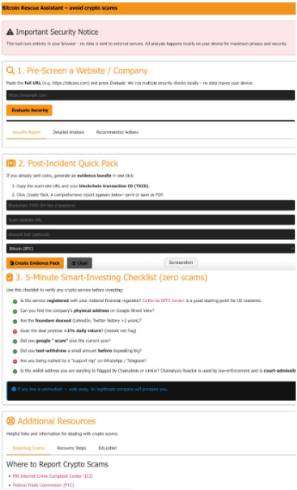
🛡️ Protect Your Investment: Before following today’s ROI strategy, run your links through our [Crypto Rescue Assistant]. This local “Bitcoin-Scam Firewall” allows you to pre-screen URLs for red flags and generate evidence packs if you’ve been targeted.
Quick Checklist:
Before using any dApp, check whether it has consistent usage, real transactions, and an active community. Empty dashboards and inactive contracts are early warning signs.
Always confirm you are interacting with the correct contract address. Review wallet permissions regularly and revoke access you no longer need to reduce risk.
Well-established ecosystems tend to be safer because they have undergone years of testing. New dApps can be innovative, but they also carry higher risk.
When trying a new dApp, use a small amount first. This helps you understand how the system works without exposing yourself to unnecessary loss.
The most reliable dApps solve real problems such as payments, lending, or identity. Avoid those promising unrealistic returns.
Each DAO has its own voting rules and power structure. Read how proposals are created, voted on, and executed before participating.
DAOs that only reward token holding without contribution often fail. Healthy DAOs reward participation, skills, and long-term involvement.
Concentrated voting power can lead to hostile takeovers. Check whether voting tokens are widely distributed or controlled by a few wallets.
Strong DAOs value contributors more than speculators. Start by contributing time, ideas, or skills instead of buying governance tokens immediately.
Successful DAOs operate like transparent companies, not social clubs. Clear roles, accountability, and shared goals matter.
As DAOs and dApps mature in 2026, many users still misunderstand how these systems actually function, leading to costly strategic and governance mistakes. A major error is assuming that all DAOs are inherently decentralized, even though many still rely on centralized leadership, limited voter participation, or opaque treasury controls. Others misjudge dApp sustainability by focusing only on token price instead of examining governance activity, developer contributions, or protocol revenue. Newcomers also often treat dApps like traditional apps, overlooking the complexities of smart-contract risks, upgradeability limitations, and cross-chain dependencies. Additionally, many participants ignore governance responsibilities altogether, believing DAO tokens automatically generate value without active involvement. To avoid these pitfalls, users should analyze governance models, audit transparency, evaluate protocol fundamentals, and recognize that true decentralization requires both strong community participation and robust technical architecture.
dApps and DAOs transform users into owners, enabling transparent, programmable, community-driven platforms.
By combining smart contract governance, DAO token voting, and on-chain decision-making, they are the future of decentralized governance in Web3.
Web3 ecosystem builders, investors, and developers must understand these structures to leverage the full potential of trustless systems, community ownership, and scalable governance.
I dApps and DAOs stand as the foundational pillars of Web3 governance, redefining how digital platforms operate, evolve, and distribute value. By combining permissionless access, transparent coordination, and community-driven decision-making, they offer a resilient alternative to the centralized systems that have dominated the internet for decades. As these models continue to mature, we can expect more sophisticated governance frameworks, interoperable on-chain services, and sustainable token economies that empower users rather than platforms. For anyone building or investing in the decentralized future, understanding and engaging with dApps and DAOs is no longer optional—it is the key to participating in the next era of open, user-owned digital infrastructure.
The Web3 ecosystem is entering a new phase where dApps and DAOs redefine how digital systems operate. Instead of corporations controlling platforms, community-owned platforms now use decentralized governance, enabling users to become owners, voters, and decision-makers. This shift marks the evolution from centralized Web2 control to Web3 governance, where rules are transparent and enforced through code.
The Emotional Edge: From Passive Users to Web3 Citizens
Visit THE pillar page or integrates all child posts Here:
Q1: What are dApps and DAOs in Web3? dApps are blockchain-based apps with trustless execution, while DAOs are community-governed organizations using smart contracts for decision-making.
Q2: How does DAO governance work? DAO token holders propose and vote on protocol changes. Smart contracts then automatically enforce the results without needing a middleman.
Q3: What are the benefits of decentralized applications? The core benefits include censorship resistance, transparent operations, full user ownership, and seamless interoperability across all Web3 platforms.
Q4: How do smart contracts power dApps? Smart contracts execute logic automatically on-chain, which eliminates human error and ensures scam-proof execution of every transaction.
Q5: What are the challenges of DAO governance models? The primary hurdles are voter apathy, whale control (large holders), smart contract vulnerabilities, and the need for global legal recognition.
Q6: What is a DAO in plain English? It is like a ‘Digital Club’ where the club rules are written in unchangeable code, and everyone can see the bank account. Systemic Insight: This solves the problem seen in the 2023 ‘Hidden Fee’ scandal, where a traditional investment club lost money because the leader was secretly taking 10% for himself.
Q7: Can a user lose money just by voting? No. Usually, voting just uses your ‘Governance Token’ like a ballot. You don’t ‘spend’ it; you just show it to prove you have a voice. Systemic Insight: This addresses the 2021 ‘Gas Fee Crisis,’ where it cost $100 just to cast a single vote. 2026 Layer-2 technology makes voting virtually free.
Q8: Is a dApp just a website? It looks like a website, but the ‘brain’ (the data and rules) is spread across thousands of computers, so it can never be shut down. Systemic Insight: This prevents events like the 2024 ‘App Store Ban,’ where a popular payment app was deleted by a big tech company. dApps cannot be deleted by anyone.
Welcome to OwnProCrypto (Own & Pro Crypto) — a next-generation Bitcoin and blockchain education platform where the science of finance meets the power of AI-driven automation.
Our mission is simple: to equip you with the knowledge, frameworks, and tools needed to make smarter financial and business decisions in the Web3 economy.
Beyond analysis, OwnProCrypto focuses on transparency, verifiable data, and practical frameworks that investors and builders can actually use. Our goal is not hype — but clear thinking, disciplined analysis, and long-term value creation in the decentralized economy.
Our Background: Salim (Sam) is the founder and lead researcher behind OwnProCrypto, a Web3 intelligence platform focused on crypto security, digital ownership, stablecoin systems, interoperability, and institutional blockchain infrastructure.
Crypto Tools & Analysis:
Crypto Fundamental Analysis Tool | Protocol Evaluation System | DeFi Risk Analysis Tools | Crypto Portfolio Dashboard | Token Risk vs Reward Tool
Guides:
Crypto Fundamental Analysis | Blockchain Project Evaluation | Tokenomics Analysis | DeFi Protocol Analysis | Capital Efficiency
© 2026 OwnProCrypto — Built for smarter crypto decisions