

The safest way to protect crypto assets is simple: never share your private keys or seed phrases with anyone including family members. That security model is what makes Bitcoin, Ethereum, and self-custody wallets so powerful. But it also creates a serious problem most investors ignore: what happens to your assets if you never wake up tomorrow?
Unlike traditional banks, blockchain assets cannot be reset through customer support. Crypto platforms cannot reset passwords, recover wallets, or transfer ownership. If no one can access your keys, your digital assets may become permanently inaccessible. This is why crypto inheritance planning and secure recovery systems are becoming increasingly important for investors, institutions, family offices, and long-term holders.
A Crypto Dead Man’s Switch offers an alternative solution. Billions in crypto are permanently inaccessible because seed phrases died with their owners. For institutions, family offices, RIAs, and custodians, this is not only a client issue. It creates fiduciary, operational, and legal liability.
Instead of exposing wallet credentials directly to family members during your lifetime, a dead man’s switch creates a controlled recovery process that activates only under predefined conditions. This helps maintain strong wallet security while still allowing trusted beneficiaries to recover assets if something happens to you.
In this guide, you’ll learn how to securely manage crypto inheritance, protect seed phrases, reduce recovery risks, and build a reliable digital asset succession plan for 2026 without compromising self-custody security.
Problem: Institutions still treat crypto succession planning as optional operational paperwork.
Solution: Build formal inheritance and beneficiary recovery procedures directly into custody and governance frameworks.
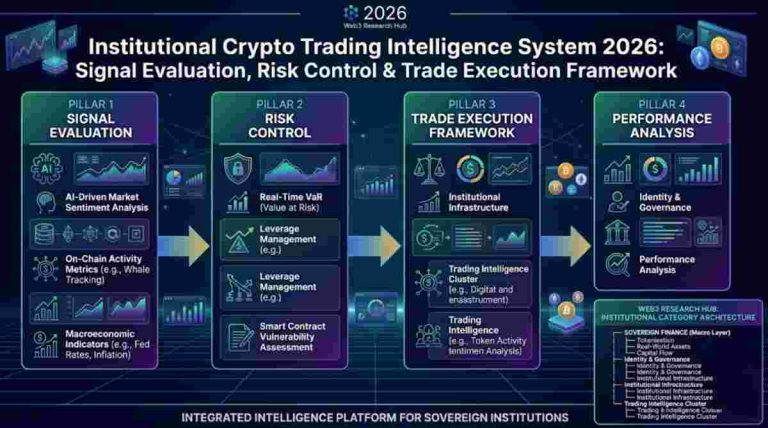
Blockchain analytics estimates millions of BTC remain permanently inaccessible because owners died or lost private keys. For institutions, the consequences extend beyond asset loss. Advisors, trustees, and custodians may face lawsuits if beneficiary access procedures are unclear or undocumented.
The SEC custody environment and state trust laws increasingly require firms to demonstrate operational continuity for digital assets. Unlike traditional brokerage accounts, self-custody wallets cannot rely on centralized recovery systems. If seed phrases disappear, assets effectively disappear with them.
Institutional clients now expect formal succession planning before allocating meaningful capital to crypto custody platforms.
Problem: Many institutions still rely on single-person wallet knowledge or undocumented key storage.
Solution: Implement multi-party governance, documented recovery policies, and annual inheritance audits.
The deceased crypto wallet recovery legal process remains inconsistent across jurisdictions. Exchanges such as Coinbase and Kraken generally require death certificates, probate documentation, executor verification, and court orders before releasing digital assets.
Self-custody creates far greater complexity. If a private key or seed phrase is unavailable, courts cannot force blockchain access. Probate rights do not automatically create technical wallet access. In many cases, heirs legally own the assets but remain permanently locked out.
Institutions managing client assets must prepare for:
If no estate plan exists, state intestacy laws determine beneficiaries. However, those laws do not solve private key recovery.
Another major issue is tax reporting confusion. Inherited crypto transfers themselves generally do not trigger taxable events, and no immediate 1099-DA is issued simply because ownership transfers after death. 1099-DA Guide
Problem: Legal ownership does not guarantee blockchain access to digital assets.
Solution: Pair legal estate documents with operational key recovery architecture before death occurs.
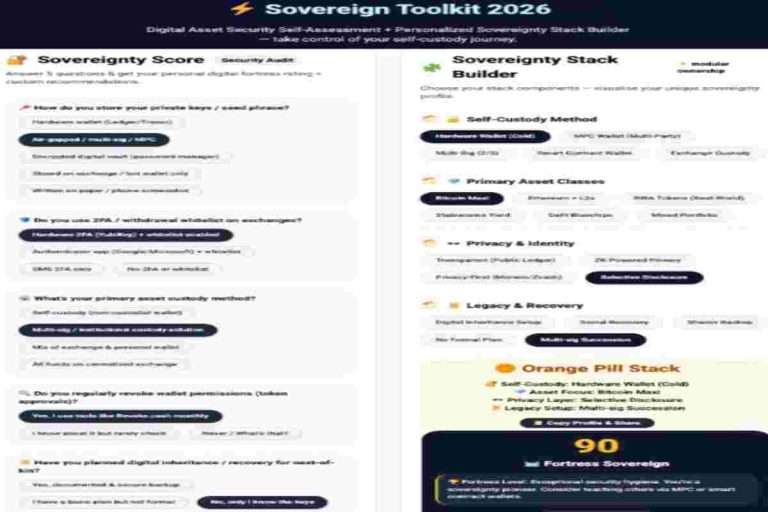
In 2026, the most effective inheritance frameworks combine legal entities with institutional custody controls. The strongest structures include:
These digital asset trusts institutional custody structures reduce probate delays while improving operational continuity.
Revocable trusts remain popular for family offices because trustees can access assets immediately under trust terms without waiting for probate court approval. LLC structures help institutions centralize governance across multiple wallets, exchanges, and staking operations.
Blind inheritance strategies fail frequently because heirs may not understand wallet infrastructure, validator positions, or cold storage recovery procedures.
Estate plans should also be updated after:
Problem: Traditional wills alone cannot securely transfer complex digital asset infrastructure.
Solution: Combine trusts, LLCs, and institutional custody controls into one coordinated estate framework.
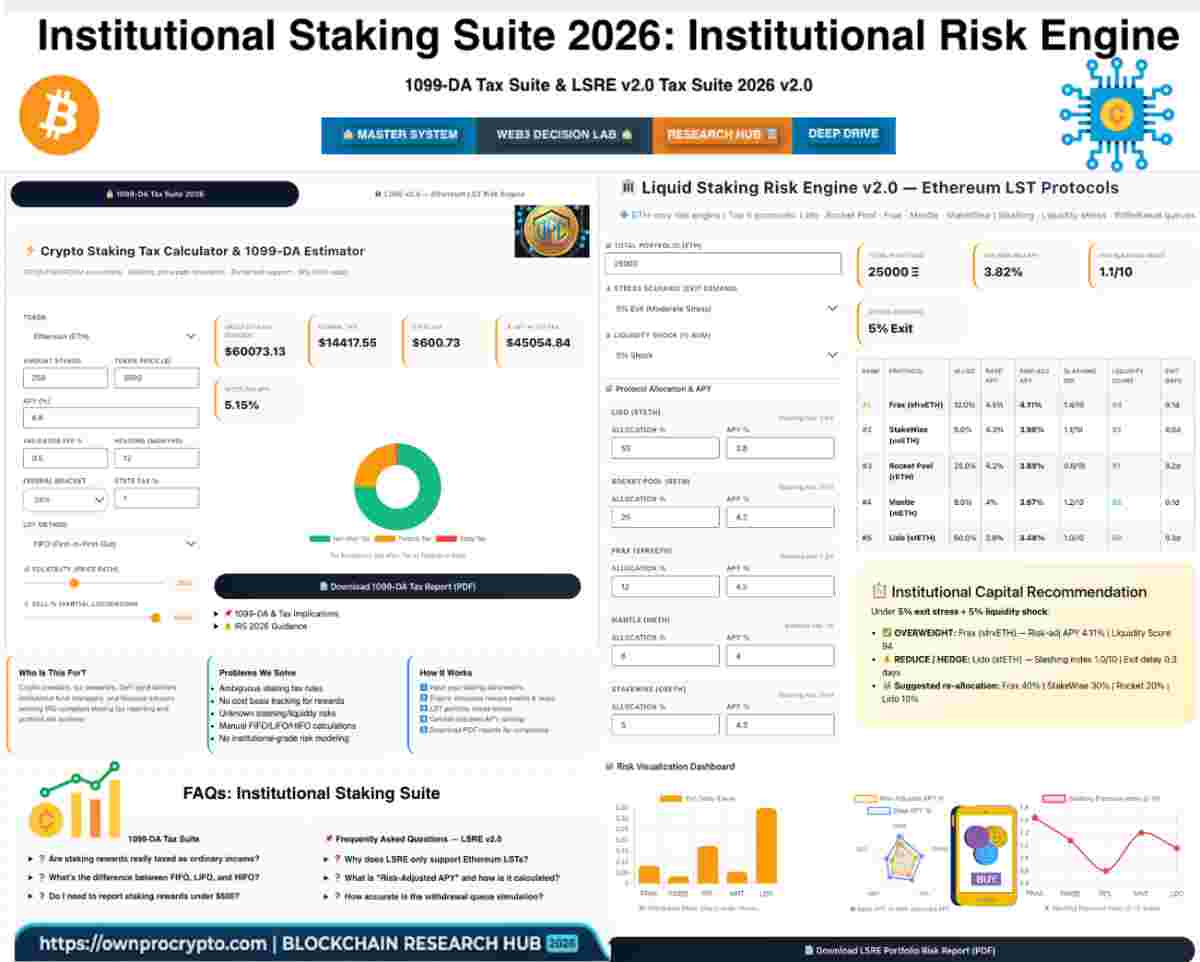
The rollout of 1099-DA inherited crypto reporting creates new compliance requirements for executors, CPAs, and institutional administrators.
Inherited crypto generally receives a step-up basis to fair market value at the date of death. When beneficiaries later sell the assets, capital gains apply only to appreciation occurring after inheritance.
Many executors make a critical mistake by reporting full proceeds as taxable gains instead of using stepped-up cost basis calculations.
Institutions should immediately document:
Common pricing references include:
Estate tax obligations still follow traditional IRS Form 706 requirements, but digital assets introduce additional valuation complexity because token prices vary across exchanges and timestamps.
Problem: Executors often miscalculate taxable gains on inherited crypto assets.
Solution: Capture date-of-death FMV records immediately and maintain institutional valuation documentation.
Institutional investors are rapidly entering Ethereum staking markets in search of sustainable on-chain yield and long-term portfolio diversification. As adoption grows, understanding Institutional Crypto Liquid Staking Risks becomes increasingly important for hedge funds, DAOs, crypto treasuries, and asset managers allocating capital into staking ecosystems. From validator concentration to smart contract vulnerabilities, institutions must evaluate how liquid staking providers manage operational security, liquidity access, and network decentralization.
The debate around liquid staking vs restaking has intensified as protocols compete to offer higher yields and improved capital efficiency. Traditional liquid staking platforms allow institutions to stake ETH while retaining liquidity through derivative assets such as stETH and rETH, whereas restaking extends validator security to additional decentralized services for extra rewards. While restaking can increase yield opportunities, it also introduces layered security dependencies that may amplify systemic exposure during validator failures or market stress events.
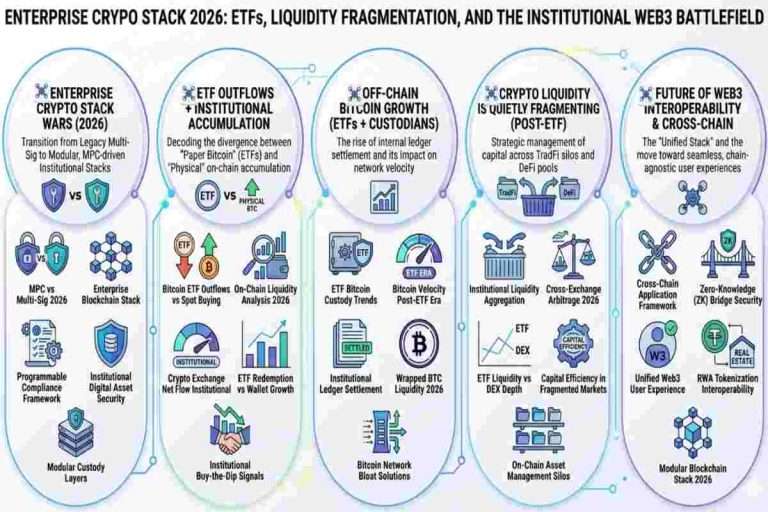
Modern institutional crypto custody SOC 2 standards increasingly require documented beneficiary access procedures and succession governance controls.
Institutional custodians now deploy:
Family offices commonly adopt 3-of-5 or 4-of-7 trustee signing structures to eliminate single points of failure.
Travel risks also matter. International movement of hardware wallets can create seizure, confiscation, or disclosure exposure at borders. Institutions therefore separate custody authority across multiple legal and geographic entities.
SOC 2 Type II reviews increasingly examine:
Custody succession planning is becoming a core due diligence requirement for institutional allocators.
Problem: Single-key custody models create catastrophic inheritance failure risk.
Solution: Deploy MPC and distributed trustee governance with audited recovery procedures.
Institutional crypto inheritance frameworks should include:
Large institutions increasingly treat crypto succession planning as operational risk management rather than estate administration. More about IRS Requires
Problem: Most institutions lack standardized digital asset succession procedures.
Solution: Build repeatable governance, custody, and recovery checklists into compliance operations.
Welcome to OwnProCrypto (Own & Pro Crypto) — a next-generation Bitcoin and blockchain education platform where the science of finance meets the power of AI-driven automation.
Our mission is simple: to equip you with the knowledge, frameworks, and tools needed to make smarter financial and business decisions in the Web3 economy.
Beyond analysis, OwnProCrypto focuses on transparency, verifiable data, and practical frameworks that investors and builders can actually use. Our goal is not hype — but clear thinking, disciplined analysis, and long-term value creation in the decentralized economy.
Our Background
Crypto Tools & Analysis:
Crypto Fundamental Analysis Tools | Protocol Evaluation System | DeFi Risk Analysis Tools | Crypto Portfolio Dashboard | Token Risk vs Reward Tool
Guides:
Crypto Fundamental Analysis | Blockchain Project Evaluation | Tokenomics Analysis | DeFi Protocol Analysis
© 2026 OwnProCrypto — Built for smarter crypto decisions