

Crypto trends 2026 are increasingly shaped by bear market innovation, institutional adoption, and scalable blockchain infrastructure.
The current Crypto Trends 2026 represent a fundamental shift: the decoupling of price action from protocol progress. Bear Market Crypto Innovation has historically been the forge for the industry’s most resilient tools, and today, that innovation is manifesting as institutional-grade infrastructure. To move from observing trends to capitalizing on them, you must understand how Institutional Adoption in Crypto 2026 is anchored by the transition from “retail speculation” to “industrial utility.”
Every crypto investor has had that moment where they thought they understood the market… until reality punched them in the face. Mine came in the college library on day one of exam season. I sat down with a fresh newspaper — eager to conquer global markets, finance, and business sections — only to be overwhelmed by dense jargon, unfamiliar charts, and flashing tickers. Hours later, I walked out with sore eyes and a notebook full of confusion.
But here’s the truth: learning never comes from comfort zones — and neither does innovation. The same rule applies to crypto. The most impactful technologies and projects rarely emerge during market euphoria. They’re built in the quiet, challenging, uncertain phases when only committed builders remain — and that’s where major opportunity lives.
Bear markets are not passive periods of waiting; they are active incubators where the future of digital finance is forged. This infographic illustrates the multi-stage cycle that transforms market downturns into technological breakthroughs, culminating in a new era of opportunity.
Crypto Trends 2026” captures readers wanting forecasts, predictions, and strategy content. While exact volume isn’t publicly available, articles on 2026 themes are actively published and shared, indicating interest at minimum informational and niche demand layers.
Struggle teaches growth. The same principle applies to crypto. The strongest projects rarely emerge during hype-fueled bull runs—they’re built when the market is quiet, capital is scarce, and only the most committed teams remain.
Today’s bear market innovations are the foundation of the architecture we build in our Web3 Development Guide (2026). Explore further market trend analysis from CoinDesk Research.
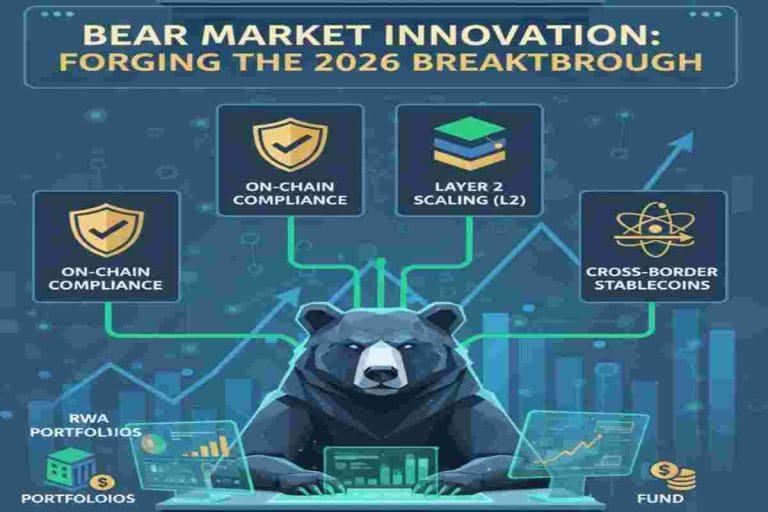
Table of Contents
ToggleCrypto is no longer just about quick pumps and memes. In 2026, the narrative has shifted dramatically:
✔ Real‑World Asset (RWA) tokenization is gaining institutional adoption and regulatory support.
✔ AI and blockchain are converging, creating machine‑driven DeFi and autonomous ecosystems.
✔ Privacy technologies and zero‑knowledge solutions are entering mainstream focus.
✔ Institutional M&A and consolidated infrastructure are reshaping market structure.
Far from idle hype, real innovation is concentrated where utility meets demand — and that’s exactly what this article highlights.
| Trend | Why It Matters | Example Projects / Sectors |
|---|---|---|
| Real‑World Asset Tokenization (RWA) | Converts real assets into tradable digital tokens, unlocking liquidity and fractional ownership. | Tokenized stocks, bonds, real estate |
| AI + Blockchain Synergy | AI automates smart contract execution, liquidity balancing, and even autonomous DeFi strategies. | AI‑linked tokens & autonomous finance |
| Privacy & Zero‑Knowledge Proofs | Protects sensitive data while preserving blockchain transparency. | zk‑rollups, privacy layers |
| Specialized Chains & DePIN | Focused ecosystems with unique utility (e.g., networks, gaming, compute). | DePIN, dedicated gaming blockchains |
| Institutional Integration | M&A, tokenized funds, and regulatory clarity fuel mainstream adoption. | Bank tokenized funds, exchange acquisitions |
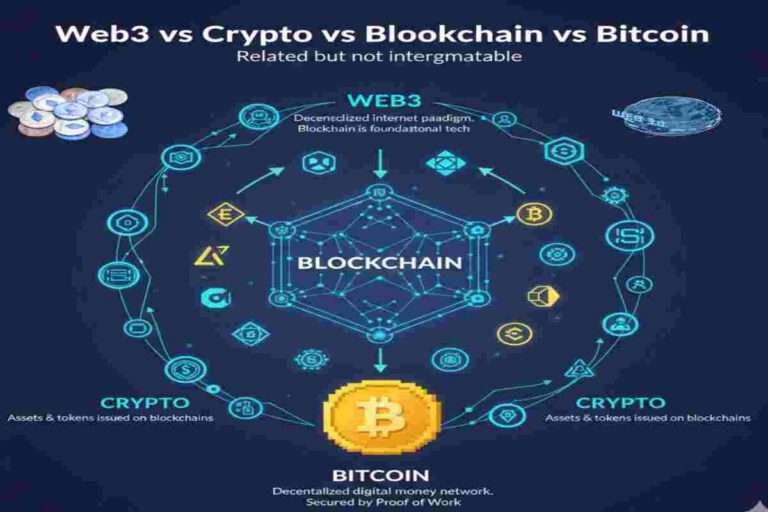
Most investors judge markets by price action — but prices are a lagging indicator of true progress. The real work happens when prices are low and capital is scarce.
Here’s why bear markets matter:
Weak Hands Fade, Builders Stay
When easy money vanishes, hype‑chasing projects collapse — leaving room for legitimate teams with real products.
Focus Shifts to Fundamentals
Instead of marketing budgets and viral memes, projects optimize tech, utility, and adoption — exactly what Google ranks higher.
Meaningful Infrastructure Takes Root
From Layer‑2 scaling solutions to blockchain interoperability — today’s tech was mostly built in quieter markets, not peak speculation.
| Project/Innovation | Market Condition | What It Did |
|---|---|---|
| Ethereum (2015) | Bitcoin down ~80% | Laid foundation for smart contracts & DeFi. |
| Uniswap (2018) | After 2017 bubble | Created decentralized exchange model still dominant today. |
| Solana (Post‑FTX) | Market crash + industry upheaval | Rebuilt ecosystem with high throughput and developer growth. |
These aren’t isolated stories — they’re patterns. Innovation flourishes when pressure forces creativity.
Artificial intelligence is increasingly intersecting with blockchain technology to create new categories of decentralized applications. AI agents, decentralized computing networks, and automated trading systems are becoming important components of the emerging crypto ecosystem.
These technologies combine machine learning with transparent blockchain infrastructure, enabling new models for automation, coordination, and digital ownership. As these capabilities evolve, AI-powered applications may become one of the most influential forces shaping 2026 Crypto Trends and Predictions.
Decentralized Physical Infrastructure Networks (DePIN) represent an emerging category within the crypto ecosystem. These networks coordinate real-world infrastructure such as computing, storage, wireless connectivity, and energy systems through blockchain incentives.
By allowing participants to contribute physical resources to a shared network, DePIN projects create decentralized alternatives to traditional infrastructure providers. As adoption grows, decentralized infrastructure could become one of the more disruptive elements within Crypto Trends 2026, supporting a wide range of Web3 applications.
Privacy isn’t anti‑regulation — it’s utility‑driven. New tech like zk‑rollups and advanced zero‑knowledge proofs protect sensitive financial data while maintaining blockchain verification.
Think of these technologies as the confidential mode of crypto — crucial for institutional adoption and compliance.
Not all chains must be “general purpose.” Specialized blockchains designed for gaming, real‑world services, IoT, and compute are gaining traction.
DePIN (Decentralized Physical Infrastructure Networks) is a particularly exciting frontier — distributing real infrastructure ownership (like wireless networks or compute power) to token holders.

Real-world asset tokenization allows physical and financial assets such as real estate, commodities, and bonds to be represented on blockchain networks. This process enables fractional ownership, faster settlement, and broader global access to investment opportunities.
As institutional players continue experimenting with tokenized markets, this sector could significantly expand the scope of decentralized finance. Within the context of Institutional Adoption in Crypto 2026, tokenized assets may act as a bridge connecting traditional financial systems with blockchain-based infrastructure.
Tokenization is moving beyond concept — financial regulators and banks are now participating without special capital requirements.
This trend reduces friction, enables 24/7 global markets, and gives traditional assets programmable properties. Expect:
💡 Why it matters: Institutions play big money — and in markets, institutional flows create long‑term liquidity.
One of the most powerful forces behind Institutional Adoption in Crypto 2026 is the tokenization of traditional financial assets. Tokenized securities, bonds, and real estate allow institutions to bring trillions of dollars in value onto blockchain infrastructure. Instead of relying on legacy settlement systems, tokenized assets enable near-instant settlement, improved transparency, and global liquidity.
Major financial institutions are increasingly exploring tokenization to streamline capital markets and expand access to previously illiquid assets. As this trend accelerates, Real-World Asset (RWA) tokenization could become one of the most transformative pillars within Crypto Trends 2026, bridging traditional finance and decentralized infrastructure.
Institutional participation is rapidly evolving from experimentation to structured market involvement. Large banks, hedge funds, and asset managers are now building infrastructure for custody, trading, and tokenized finance products. This growing participation is a key driver of Institutional Adoption in Crypto 2026, as regulated entities begin integrating blockchain into their financial operations.
Several trends illustrate this shift. Institutions are launching tokenized funds, experimenting with blockchain settlement systems, and investing in digital asset infrastructure providers. These developments suggest that institutional capital will likely play a central role in shaping 2026 Crypto Trends and Predictions, especially as regulatory clarity improves in major financial markets.
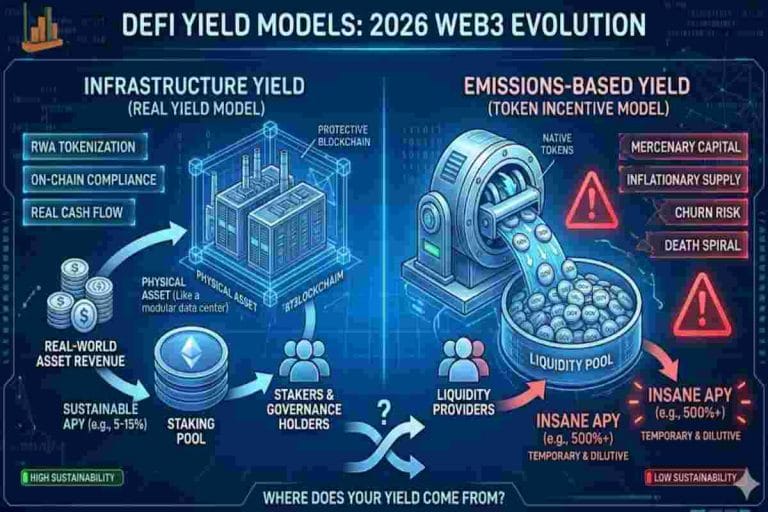
AI doesn’t just predict markets — it’s now becoming the engine that powers them.
Examples of use cases in play:
This is the next phase: machine‑enabled decentralized economies.
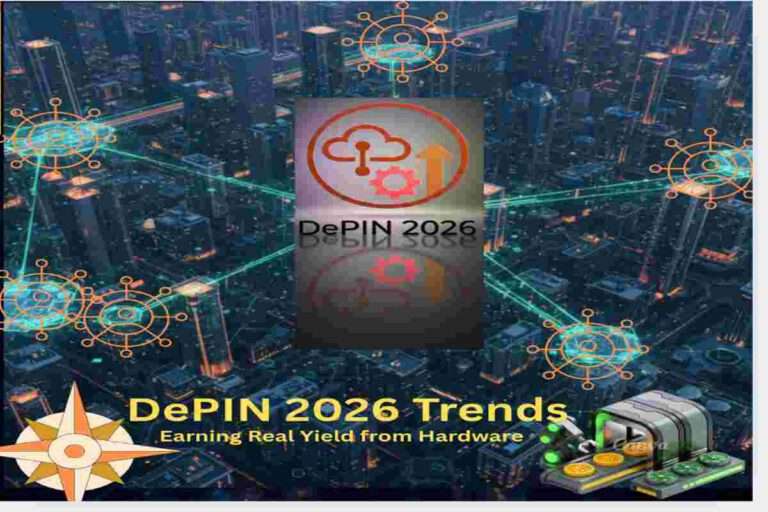
Modular blockchain architecture represents a significant evolution in how blockchain networks scale and specialize. Instead of relying on a single monolithic chain to handle execution, consensus, and data availability, modular systems separate these functions into specialized layers.
This design dramatically improves efficiency and flexibility, enabling developers to optimize each component independently. As a result, modular networks can support higher throughput, lower fees, and faster innovation cycles. Within the broader landscape of Crypto Trends 2026, modular architecture is becoming a foundational element for next-generation decentralized applications and scalable infrastructure.
Scalability remains one of the most critical challenges for blockchain networks. As adoption grows, transaction throughput and cost efficiency must improve to support millions of users. Layer 2 Scaling Solutions 2026 are emerging as the primary answer to this challenge.
Layer 2 networks process transactions off the main blockchain while still benefiting from its security. By reducing congestion on the base layer, these solutions dramatically increase transaction capacity while lowering costs. As decentralized applications expand into finance, gaming, and real-world asset markets, Layer 2 scaling infrastructure will likely play a defining role in the next phase of crypto growth.
Rollups have become one of the most widely adopted forms of Layer 2 scaling. They bundle large numbers of transactions into a single proof that can be verified on the main blockchain. This approach dramatically increases transaction throughput while preserving the security of the base layer.
Both optimistic and zero-knowledge rollups are evolving rapidly, creating a competitive ecosystem of execution environments optimized for different use cases. As adoption increases, rollups may form the backbone of scalable blockchain infrastructure and remain a key driver within Layer 2 Scaling Solutions 2026.
In modular blockchain design, data availability layers ensure that transaction data remains accessible and verifiable across the network. By separating this function from execution and consensus, modular systems can dramatically improve scalability without sacrificing decentralization.
Dedicated data availability networks allow blockchains to process far more transactions while maintaining transparency and security. As the modular ecosystem expands, these technologies could become a critical building block within Crypto Trends 2026, supporting the infrastructure needed for large-scale decentralized applications.

In 2026, Layer 2 Scaling Solutions have evolved from mere throughput experiments into high-performance revenue engines. “Real Yield Readiness” refers to a protocol’s structural capacity to generate organic cash flow—derived from actual transaction fees and service utility—rather than relying on temporary token emissions to subsidize growth. For the institutional strategist, this represents the definitive shift from Mercenary Capital to Sustainable Sovereign Assets.
As modular architectures reduce overhead, the surplus value is increasingly redirected toward token holders who provide functional utility to the network. This transition is not merely a trend but a mandatory requirement for Institutional Adoption in Crypto 2026. To effectively assess a protocol’s readiness, one must look past total value locked (TVL) and instead audit the “Earnings-to-Emission” ratio. This ensures that your portfolio is anchored in protocols that act as productive digital businesses rather than speculative instruments.
Identifying emerging innovation in the crypto ecosystem often begins with observing key technological signals. Breakthrough projects frequently focus on solving infrastructure bottlenecks such as scalability, interoperability, and data availability.
Investors and developers tracking Crypto Trends 2026 often pay close attention to advancements in areas like modular blockchains, zero-knowledge cryptography, and decentralized infrastructure networks. These technologies frequently indicate where the next wave of ecosystem growth may emerge.
Market cycles in the crypto industry are often driven by narratives that capture investor attention and technological progress simultaneously. These narratives shape capital flows, developer activity, and public interest across the ecosystem.
As the industry moves toward the next cycle, several themes are emerging that could define Crypto Trends 2026. From AI-powered decentralized systems to tokenized real-world assets, these narratives highlight the areas where innovation and capital are converging.
Beyond technology, ecosystem growth often provides early clues about which projects are gaining momentum. Metrics such as developer activity, network usage, and community participation can reveal whether a protocol is gaining traction.
Within the broader landscape of 2026 Crypto Trends and Predictions, strong ecosystems often outperform isolated innovations. Projects that attract developers, users, and liquidity simultaneously tend to create self-reinforcing growth cycles that drive long-term adoption.
As the crypto industry evolves, certain sectors tend to attract the majority of developer activity, venture capital, and institutional interest. These areas often become the driving forces behind the next market expansion. Understanding which sectors are gaining momentum can help investors and builders anticipate the direction of Crypto Trends 2026.
Several categories already show strong signals of growth. From tokenized real-world assets to decentralized infrastructure networks, these sectors combine technological innovation with expanding real-world use cases. If current momentum continues, they could become the primary engines of the next crypto bull cycle.
Artificial intelligence is rapidly becoming one of the most influential forces in the crypto ecosystem. Decentralized AI networks allow participants to contribute computing power, data, and models in exchange for token incentives. As AI systems grow more complex, decentralized infrastructure could provide a scalable alternative to centralized cloud providers.
These developments position AI infrastructure as one of the most closely watched sectors in 2026 Crypto Trends and Predictions, especially as AI agents begin interacting directly with blockchain protocols and decentralized applications.
Tokenized real-world assets continue to attract institutional attention due to their ability to improve liquidity and settlement efficiency. By representing traditional financial instruments on blockchain networks, tokenization allows assets such as bonds, real estate, and commodities to move seamlessly across global markets.
Within Institutional Adoption in Crypto 2026, RWA platforms may play a crucial role by connecting traditional finance with decentralized infrastructure, unlocking entirely new categories of on-chain financial products.
Decentralized infrastructure networks coordinate real-world services such as storage, computing, and wireless connectivity through blockchain incentives. Instead of relying on centralized companies to provide these services, DePIN systems distribute infrastructure across thousands of independent contributors.
This model has the potential to reshape digital infrastructure while creating entirely new crypto-powered economies. As adoption expands, decentralized infrastructure could emerge as one of the most transformative elements within Crypto Trends 2026.
Tracking capital flows can reveal which parts of the crypto ecosystem are attracting the most confidence from institutional investors and venture funds. These investors often allocate resources toward infrastructure projects, developer platforms, and protocols with long-term strategic potential.
In the context of Crypto Trends 2026, investment patterns suggest growing interest in foundational technologies rather than purely speculative tokens. Capital is increasingly flowing toward scalable infrastructure, tokenized financial systems, and platforms that support real-world applications.
Investors are placing significant emphasis on infrastructure layers that improve scalability and network efficiency. Projects developing Layer 2 Scaling Solutions 2026 are attracting attention because they enable blockchain ecosystems to support large-scale adoption.
As decentralized applications expand into finance, gaming, and digital identity systems, scalable infrastructure will become a critical foundation for the broader Web3 economy.
Another area receiving strong investment interest is tokenization platforms that bring traditional financial assets onto blockchain networks. These systems allow institutions to issue tokenized bonds, funds, and other financial instruments directly on-chain.
This trend aligns closely with Institutional Adoption in Crypto 2026, as financial institutions seek more efficient ways to manage liquidity, settlement, and asset distribution.
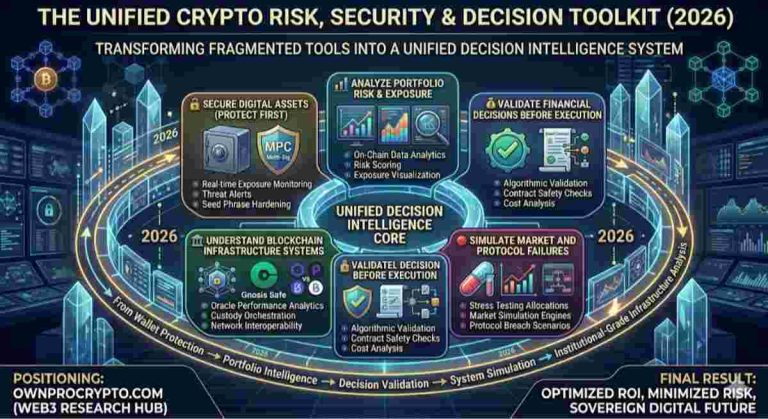
While technological innovation continues to push the crypto industry forward, several risks could influence how the ecosystem evolves over the coming years. Market cycles, regulatory decisions, and infrastructure challenges all play a role in determining how quickly adoption expands.
Understanding these potential risks provides a more balanced perspective on Crypto Trends 2026, helping investors and builders navigate both opportunities and uncertainties within the market.
Government regulation remains one of the most significant variables affecting the crypto industry. Different jurisdictions continue to develop frameworks for digital assets, stablecoins, and decentralized finance platforms.
Although regulatory clarity could encourage institutional participation, inconsistent policies across countries may slow adoption in some regions.
Crypto markets historically move through cycles of rapid expansion followed by sharp corrections. These cycles influence investor behavior, funding availability, and project development timelines.
Even as Bear Market Crypto Innovation continues to produce new technologies, market volatility can still impact short-term adoption and capital flows across the ecosystem.
Despite major advances in blockchain technology, scalability remains a critical challenge. Networks must continue improving transaction throughput and efficiency in order to support global adoption.
This is why solutions such as Layer 2 Scaling Solutions 2026 and modular blockchain architectures remain central to the long-term evolution of the industry.
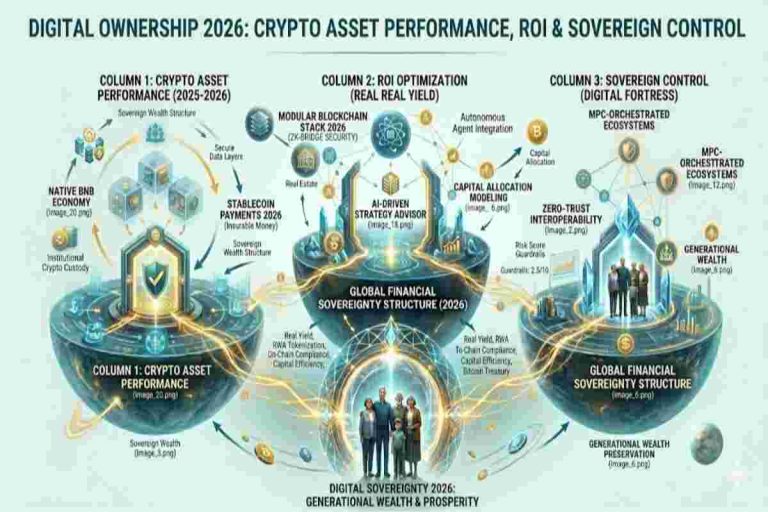
The current Crypto Trends 2026 represent a fundamental shift: the decoupling of price action from protocol progress. Bear Market Crypto Innovation has historically been the forge for the industry’s most resilient tools, and today, that innovation is manifesting as institutional-grade infrastructure. To move from observing trends to capitalizing on them, you must understand how Institutional Adoption in Crypto 2026 is anchored by the transition from “retail speculation” to “industrial utility.”
For a comprehensive blueprint on how these breakthroughs integrate into a diversified sovereign strategy, explore our overarching pillar: Web3 Ecosystem Hub: The 8 Pillars of Institutional Blockchain. This guide provides the definitive structural roadmap for navigating 2026 Crypto Trends and Predictions within a secure environment.
The defining technical breakthrough of this cycle is the maturity of Layer 2 Scaling Solutions 2026. By moving execution off-chain while maintaining Ethereum’s security, these protocols have finally solved the “trilemma” for enterprise-level throughput.
Instead of enduring high gas fees and network congestion, smart contracts now trigger micro-transactions with sub-second finality. This architecture creates a high-trust environment for stakeholders seeking Zero-Latency Settlement and the ability to manage millions of concurrent users without infrastructure degradation.
Breakthrough innovation is worthless without institutional-grade protection. Before allocating capital into the “Next Big Thing,” it is critical to ensure your underlying infrastructure is impenetrable against the Top Blockchain Mistakes.
Our comprehensive manual, Asset Security 2026: Setting Up Your Digital Fortress, provides the mandatory blueprint for Account Abstraction and Multi-sig Governance. You cannot effectively capitalize on Institutional Adoption in Crypto 2026 without first securing the gateway to your digital wealth.
The longevity of a 2026 breakthrough depends on its ability to exist within the law. To bridge the gap between “Code is Law” and the requirements of the Compliance-First CFO, we utilize Smart Legal Contract Modules.
These composable building blocks allow for programmable legal agreements that are simultaneously human-readable and machine-executable. By integrating these modules, builders can automate “Compliance-by-Design,” ensuring every new innovation remains harmonized with On-Chain Compliance and global regulatory frameworks.
Quiet markets aren’t empty — they’re breeding grounds. Innovations that emerge in downturns become the foundation of future expansion. Far from being “boring,” this phase is where real growth happens — for technology, ecosystems, and those who learn while others sell.
Thinking about positioning your portfolio or content strategy for 2026? Study trends, follow builders, and focus on utility. Because when the market turns… real innovation wins.
Bear market innovation has been disciplined by the requirements set forth in the Official MiCA Regulation, shifting the industry focus from speculative hype toward On-Chain Compliance and investor protection.
Welcome to OwnProCrypto (Own & Pro Crypto) — a next-generation Bitcoin and blockchain education platform where the science of finance meets the power of AI-driven automation.
Our mission is simple: to equip you with the knowledge, frameworks, and tools needed to make smarter financial and business decisions in the Web3 economy.
Beyond analysis, OwnProCrypto focuses on transparency, verifiable data, and practical frameworks that investors and builders can actually use. Our goal is not hype — but clear thinking, disciplined analysis, and long-term value creation in the decentralized economy.
Our Background: Salim (Sam) is the founder and lead researcher behind OwnProCrypto, a Web3 intelligence platform focused on crypto security, digital ownership, stablecoin systems, interoperability, and institutional blockchain infrastructure.
Crypto Tools & Analysis:
Crypto Fundamental Analysis Tool | Protocol Evaluation System | DeFi Risk Analysis Tools | Crypto Portfolio Dashboard | Token Risk vs Reward Tool
Guides:
Crypto Fundamental Analysis | Blockchain Project Evaluation | Tokenomics Analysis | DeFi Protocol Analysis | Capital Efficiency
© 2026 OwnProCrypto — Built for smarter crypto decisions