
Search by title, topic or phrase
Use our Crypto Search Engine 🔍 to find the topics and keywords you're looking for.
"In crypto, fundamentals get you in the door. Security keeps you alive."

Table of Contents
ToggleCrypto protocol Evaluation System is the process of evaluating the long-term strength, sustainability, and risk profile of a blockchain network, decentralized application, or digital asset ecosystem. While market prices often fluctuate based on sentiment, protocol analysis focuses on the underlying factors that drive adoption, resilience, and long-term value creation.
Investors, researchers, builders, treasury managers, and institutions increasingly use structured evaluation frameworks to compare protocols beyond short-term price movements. A comprehensive assessment typically combines fundamental analysis, tokenomics evaluation, governance review, adoption metrics, and economic security modeling.
Crypto markets require more than surface-level research. Traditional analysis often focuses only on fundamentals, while ignoring structural weaknesses that lead to protocol failure.
This system combines crypto due diligence, DeFi protocol analysis, tokenomics analysis, and crypto risk assessment into one unified evaluation model.
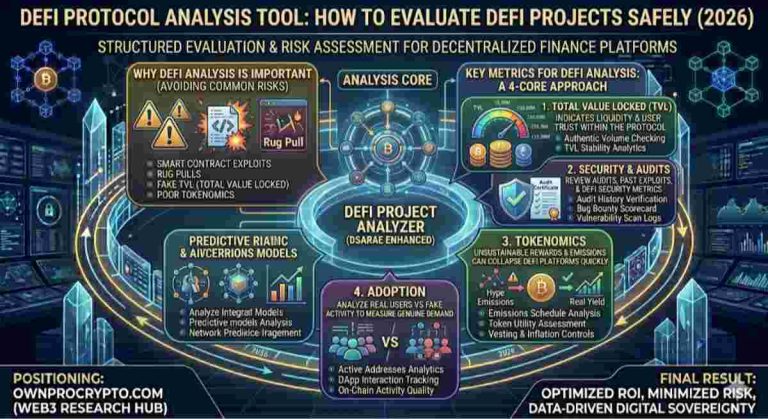
What this tool solves:
Crypto investors and analysts traditionally evaluate projects in silos—fundamentals separate from security. This creates blind spots. A protocol might score high on team and technology but collapse under a flash loan attack. Conversely, strong security can’t compensate for broken tokenomics.
The unified mission:
Provide a dual-lens evaluation that answers:
It answers two critical questions:
“Is this protocol good?” + “Can this protocol survive?” = Complete due diligence
Evaluate fundamentals AND simulate economic attacks in one dashboard. No more switching between tools. No more guesswork.
| Benefit | How It Helps |
|---|---|
| Single Dashboard | No context switching. View fundamental pillars + attack surface simultaneously. |
| Deterministic Scoring | Consistent, reproducible results. No black-box AI hallucinations. |
| Actionable Insights | Get specific recommendations: “Reduce team allocation below 12%” or “Implement TWAP oracles”. |
| Risk Quantification | See numeric scores for flash loan, liquidity, governance, emissions, and team concentration risks. |
| Pre-Deployment Testing | Simulate economic attacks before investing or launching. |
| Educational Value | Learn why a protocol is risky through detailed breakdowns. |
| Production-Ready | Clean UI with Chart.js radar, responsive design, and real-time slider interactions. |
Most investors rely on fragmented analysis methods. This creates blind spots in decision-making.
| Analysis Type | Focus | Missing Risk |
|---|---|---|
| Fundamental Review | Team, tech, adoption | Exploit resistance |
| Tokenomics Analysis | Supply, inflation | Governance attacks |
| Market Analysis | Price, liquidity | Flash loan exposure |
| Security Review | Smart contracts | Economic manipulation |
A protocol may pass crypto due diligence but still fail under real-world stress scenarios.
This system merges two analytical layers:
Evaluates structural quality using five weighted pillars:
| Pillar | Weight | Meaning |
|---|---|---|
| Team | 20% | Execution capability & credibility |
| Technology | 25% | Architecture & scalability |
| Adoption | 20% | Users, TVL, ecosystem growth |
| Tokenomics | 20% | Supply design & incentive structure |
| Market Position | 15% | Competitive strength |
Evaluates attack resistance across five vectors:
| Risk Vector | Description |
|---|---|
| Flash Loan Risk | Oracle manipulation & price distortion |
| Liquidity Risk | Slippage & market extraction |
| Governance Risk | Vote buying & takeover attacks |
| Emission Risk | Inflation-driven sell pressure |
| Team Concentration | Insider control risk |
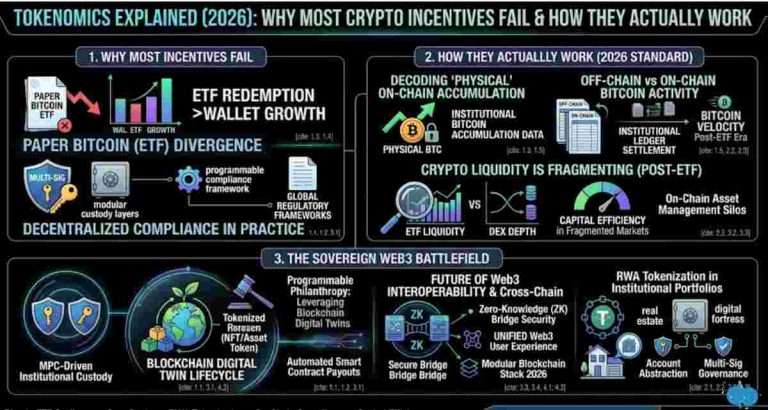
Tokenomics directly impacts long-term protocol survival.
| Metric | Impact |
|---|---|
| Supply Distribution | Centralization risk |
| Inflation Rate | Selling pressure |
| Utility Design | Demand strength |
| Vesting Structure | Insider risk control |
| Liquidity Depth | Market stability |
Token Risk = (Inflation Pressure + Concentration Risk) - Utility StrengthHigher imbalance increases systemic failure probability.
| Component | Weight |
|---|---|
| Liquidity Stress | 22% |
| Team Concentration | 20% |
| Emissions Risk | 20% |
| Flash Loan Exposure | 14% |
| Governance Risk | 14% |
| Supply Dilution Risk | 10% |
| Score Range | Classification |
|---|---|
| 0–30 | Low Risk |
| 31–50 | Moderate Risk |
| 51–72 | Elevated Risk |
| 73–99 | Critical Risk |

| Metric | Score |
|---|---|
| Team | 91 |
| Technology | 93 |
| Adoption | 95 |
| Tokenomics | 83 |
| Market | 91 |
| Risk Type | Level |
|---|---|
| Flash Loan Risk | Medium |
| Liquidity Risk | Low |
| Governance Risk | Medium |
| Emission Risk | Low |
| Team Risk | Low |
| Dimension | Question | Output |
|---|---|---|
| DeFi Protocol Analysis | Is this protocol strong? | Quality Score |
| Crypto Risk Assessment | Can it survive attacks? | Security Score |
| Tokenomics Analysis | Is supply structure healthy? | Risk Index |
| Crypto Due Diligence | Is it investable? | Final Verdict |
Final Protocol Score = (Fundamental Strength × 0.6) + (Security Resilience × 0.4)| Score | Meaning |
|---|---|
| 80–100 | Institutional-grade protocol |
| 60–79 | Strong but risk-exposed |
| 40–59 | Moderate sustainability |
| 0–39 | High failure probability |
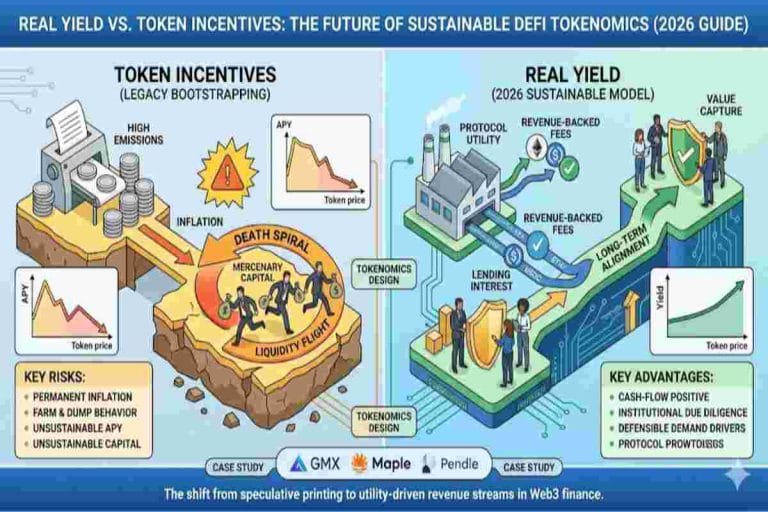
| Structure Type | Outcome |
|---|---|
| Balanced emission + utility | Sustainable growth |
| High inflation + weak utility | Long-term collapse |
| Centralized allocation | Governance risk |
| Deep liquidity + vesting | Institutional readiness |
Protocol Intelligence Score = (DeFi Protocol Analysis Score × 0.5)
+ (Crypto Risk Assessment Score × 0.3) + (Tokenomics Stability Score × 0.2)Several warning signs may indicate elevated risk:
These factors do not automatically indicate failure, but they may warrant deeper investigation.

This Crypto Protocol Evaluation System combines multiple evaluation dimensions into a structured framework designed for modern crypto due diligence.
The framework helps investors, analysts, researchers, founders, and risk managers:
Rather than focusing exclusively on price action, the system emphasizes the underlying drivers that influence long-term protocol health and sustainability.
Users begin by selecting a protocol and defining the evaluation environment.
Inputs include:
These variables create the foundation for both crypto protocol analysis and crypto risk assessment.
The first layer focuses on DeFi protocol analysis and long-term project quality.
| Pillar | Weight |
|---|---|
| Team | 20% |
| Technology | 25% |
| Adoption | 20% |
| Tokenomics | 20% |
| Market Position | 15% |
Team (20%)
Technology (25%)
Adoption (20%)
Tokenomics (20%)
Market Position (15%)
Output
Protocol Quality Score (0–100)
Verdicts:
The second layer focuses on crypto risk assessment and economic attack resilience.
| Risk Vector | Description |
|---|---|
| Flash Loan Risk | Oracle manipulation and price distortions |
| Liquidity Risk | Slippage, extraction attacks, shallow markets |
| Governance Capture | Vote buying and quorum manipulation |
| Emission Risk | Inflation and mercenary farming |
| Team Concentration | Insider control and centralization |
Attack Surface Score (0–99)
Risk Categories:
Unlike traditional crypto due diligence frameworks, the dashboard combines both analyses into a single evaluation model.
Outputs include:
This creates a complete picture of both opportunity and risk.
Access the Tool:
https://ownprocrypto.com/protocol-evaluation-system/
| Metric | Result |
|---|---|
| Fundamental Score | 91 |
| Fundamental Rating | STRONG |
| Attack Surface Score | 42 |
| Security Rating | Moderate Risk |
“Add TWAP oracles, reduce emissions below 2% weekly, and strengthen governance safeguards.”
This Crypto Protocol Evaluation System integrates crypto due diligence, DeFi protocol analysis, tokenomics analysis, and crypto risk assessment into a single institutional framework.
It replaces guesswork with measurable intelligence.
It replaces fragmented research with unified scoring.
And it answers the only two questions that matter:
Is this protocol good?
Can this protocol survive?
Because in crypto:
Fundamentals create opportunity.
Security ensures survival.
| Understand how global institutions view tokenized assets & financial digitization 👉 https://www.bis.org |
A protocol is not successful because it is well-built.
A protocol is successful because:
It is well-built AND survives economic attacks.
The Crypto Protocol Evaluation System is part of a broader initiative focused on improving crypto research, risk analysis, and decision-making. As digital assets become increasingly complex, investors and analysts need frameworks that combine fundamental analysis, tokenomics evaluation, and economic security assessment into a single workflow.
This platform aims to bridge the gap between traditional crypto due diligence and modern protocol risk assessment by providing practical tools, educational resources, and structured evaluation methodologies. Whether you are analyzing established networks, researching emerging DeFi protocols, or stress-testing tokenomic models, the goal remains the same: make more informed decisions using transparent and repeatable analysis.
Explore additional resources, protocol evaluation frameworks, and crypto research tools to continue building a deeper understanding of blockchain ecosystems, investment risk, and protocol sustainability.
The future of crypto analysis belongs to data-driven decision-making, measurable risk assessment, and comprehensive due diligence.
| Verdict | Condition |
|---|---|
| STRONG | High fundamentals + low attack surface |
| BALANCED | Strong fundamentals + moderate risk |
| WEAK | Weak fundamentals or high vulnerability |
| UNSUSTAINABLE | Poor tokenomics + high risk exposure |
Crypto protocol analysis is the process of evaluating a blockchain project’s team, technology, adoption, tokenomics, governance structure, security model, and market position to determine its long-term viability.
A project can have strong marketing and price momentum but weak fundamentals. Crypto protocol analysis helps investors identify sustainable projects and avoid protocols with structural weaknesses.
Common metrics include developer activity, total value locked (TVL), user growth, token utility, governance participation, liquidity depth, treasury health, and ecosystem adoption.
Institutional investors typically combine fundamental analysis, tokenomics analysis, governance reviews, security assessments, competitive benchmarking, and risk modeling before allocating capital.
Crypto protocol analysis evaluates the underlying project and its fundamentals, while technical analysis focuses on price action, chart patterns, and trading indicators.
DeFi protocol analysis focuses on evaluating decentralized finance platforms by examining liquidity, smart contract architecture, governance systems, token incentives, and protocol sustainability.
Important metrics include TVL, protocol revenue, active users, liquidity concentration, token emissions, governance participation, and treasury reserves.
Compare adoption, liquidity, tokenomics, security history, governance decentralization, revenue generation, and long-term sustainability rather than focusing solely on market capitalization.
High TVL can be temporary if driven by unsustainable incentives. Weak tokenomics, excessive emissions, poor governance, or security vulnerabilities often lead to long-term decline.
Strong protocols usually have sustainable revenue, active users, decentralized governance, healthy liquidity, secure infrastructure, and clear product-market fit.
Crypto risk assessment measures the likelihood that a project may experience security failures, governance attacks, liquidity crises, token collapses, or economic exploits.
Fundamentals alone do not protect investors from flash loan attacks, governance exploits, liquidity drains, or unsustainable economic designs. Risk assessment identifies these threats.
Key factors include liquidity depth, governance concentration, token distribution, emissions, attack vectors, oracle design, treasury management, and security controls.
Risk assessment should be updated regularly because protocol upgrades, governance changes, token unlocks, and market conditions can significantly alter risk profiles.
Yes. Many projects demonstrate excellent technology and adoption while maintaining vulnerabilities in governance, tokenomics, or economic security.
Tokenomics analysis evaluates how a cryptocurrency’s supply, distribution, emissions, incentives, utility, and governance mechanisms affect long-term sustainability.
Poor tokenomics can destroy otherwise promising projects through inflation, insider concentration, excessive selling pressure, or weak incentive alignment.
Critical metrics include circulating supply, total supply, inflation rate, vesting schedules, token utility, treasury reserves, emissions, and allocation percentages.
Excessive token supply relative to demand can create inflationary pressure, reducing value and weakening long-term sustainability.
While there is no universal standard, many analysts consider lower team allocations with long vesting schedules healthier than highly concentrated ownership structures.
Crypto due diligence is a comprehensive evaluation process combining crypto protocol analysis, crypto risk assessment, tokenomics analysis, governance reviews, and security evaluations.
A complete crypto due diligence process should examine fundamentals, adoption, tokenomics, governance, liquidity, security history, treasury health, and competitive positioning.
It helps investors identify hidden weaknesses, unsustainable incentives, governance risks, and security vulnerabilities before capital is deployed.
No. Retail investors, traders, analysts, researchers, and founders can all benefit from structured crypto due diligence frameworks.
Many investors focus only on price performance while ignoring tokenomics analysis, crypto risk assessment, and protocol sustainability.
Economic security refers to a protocol’s ability to resist manipulation, governance attacks, liquidity shocks, and incentive failures.
Governance capture occurs when a small group accumulates enough voting power to control protocol decisions for their own benefit.
Flash loan attacks use large amounts of temporary capital to manipulate prices, governance mechanisms, or protocol logic within a single transaction.
Deeper liquidity generally reduces price manipulation risk, improves market efficiency, and makes attacks more expensive.
Protocols often improve resilience through better governance structures, deeper liquidity, stronger oracle systems, emission controls, and decentralized ownership.
Tokenomics analysis identifies structural weaknesses, while crypto risk assessment evaluates how those weaknesses could translate into real-world vulnerabilities.
Combining both provides a complete view of opportunity and risk, helping investors evaluate both growth potential and downside exposure.
A protocol evaluation score is a numerical framework that combines multiple factors such as adoption, technology, tokenomics, governance, liquidity, and security into a single assessment.
No model can predict future performance with certainty, but structured evaluation frameworks improve decision quality and reduce reliance on speculation.
The strongest frameworks combine crypto protocol analysis, DeFi protocol analysis, crypto risk assessment, tokenomics analysis, governance evaluation, and economic security modeling into one unified system.