

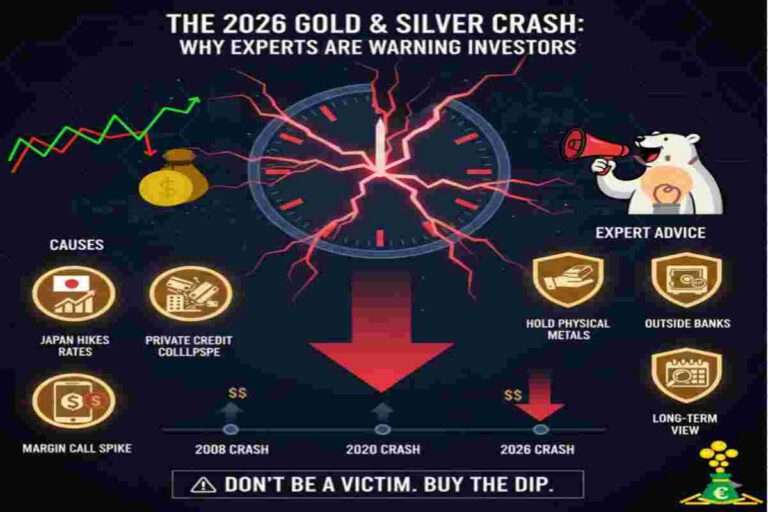
In the volatile February 2026 macro-environment, understanding Gold Silver Asset Risk 2026 is no longer a luxury-it is a survival requirement. We are currently witnessing a historic divergence between “Paper Value” and “Physical Settlement” as the Japan Carry Trade unwinds, creating a global liquidity vacuum that re-prices every asset class in real-time. For the SEO CEO, this is the definitive moment where Capital Efficiency meets Blockchain Primitives; the “Smart Money” has shifted beyond simple holding and is now stress-testing entire portfolios against the $7 trillion bond market meltdown to mitigate systemic exposure. Below is the final analysis and interactive toolset designed to help you navigate these risks and position your metal holdings for the remainder of 2026.
The Gold Silver Ratio Chart 2026 reveals how volatility compression and liquidity tightening are impacting metal correlations.
When the ratio spikes:
When the ratio compresses:
Tracking the ratio alongside real yields gives a clearer signal than price alone.
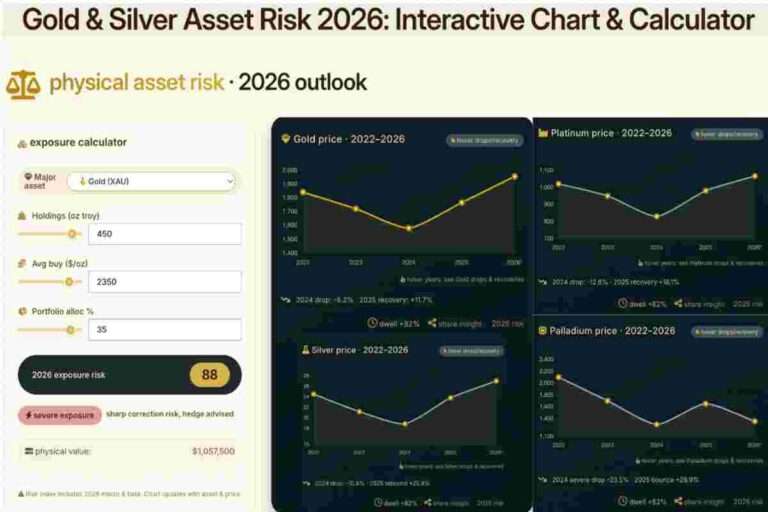
To properly measure Gold Silver Asset Risk 2026, the calculator stress-tests:
Asset Performance & Risk Table
| Asset | Holdings (oz) | Avg Buy ($) | Port. Alloc % | 2026 Strategy Persona |
| Gold (XAU) | 450 | $2,350 | 35% | The Anchor: High exposure to prove the “Liquidity Trap.” |
| Silver (XAG) | 500 | $32.00 | 25% | The Sword: Max volume to show massive dollar-value drops. |
| Platinum (XPT) | 150 | $1,050 | 10% | The Hybrid: Industrial vulnerability during a recession. |
| Palladium (XPD) | 80 | $1,250 | 5% | The Wildcard: High-beta risk in a cooling market. |

The Gold Silver Volatility Indicator 2026 tracks:
When volatility clusters:
In 2026, volatility — not inflation — is the dominant pricing driver.
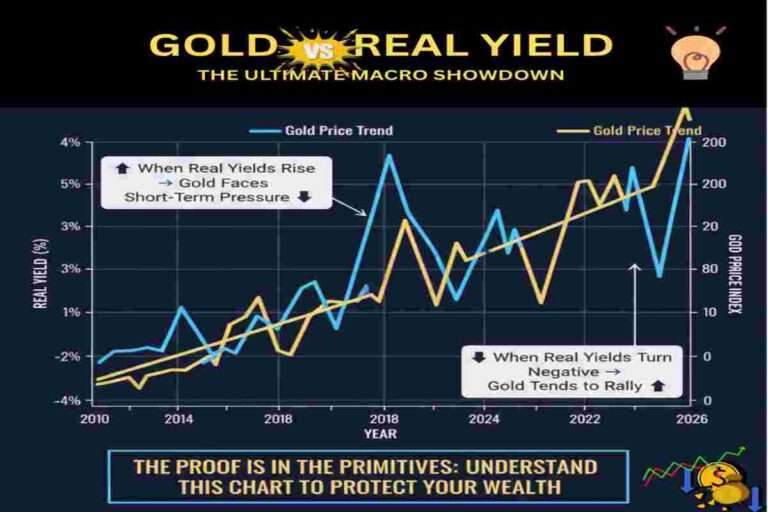
Our desk’s assessment of Gold Silver Asset Risk 2026 indicates that institutional players are prioritizing ‘Survival over Alpha.’ With Gold holdings capped at 450 oz and a $2,350 entry point, any sudden spike in Real Yields triggers a forced de-leveraging event. In this environment, institutional ‘Paper Gold’ supply often overwhelms physical demand, leading to the flash-crashes we’ve observed in the wake of the Yen Unwind.
“As a strategic investor, your dashboard currently reveals a critical truth: concentration is the enemy of Capital Efficiency. If you are allocated 35% in Gold and 25% in Silver, you are essentially gambling on a single primitive. The risk isn’t just a price drop; it’s the inability to move your capital when a 2026 ‘Black Swan’ event freezes the traditional settlement layers.”
Group: Crisis Management & Dashboard Metrics
In 2026, market correlations are tightening. High concentration in even the safest assets creates a “Correlation 1” event where everything crashes at once during a margin call.
A: This price represents the “New Money” from the 2024-2025 bull run. These holders have a smaller psychological cushion. If the market dips to $2,000, these investors become “forced sellers,” driving the Gold Silver Asset Risk 2026 higher for everyone else.
Our Gold and Silver Price Forecast 2026 model is built around three macro drivers:
If real yields spike above stress thresholds:
If liquidity injections resume:
This dynamic is central to Precious Metals Risk Analysis 2026.
To help you deepen your understanding of liquidity cycles, real yields, and physical vs. digital asset security, explore our curated guides below. Each resource is designed to complement your 2026 precious metals strategy
IThis calculator provides scenario estimates related to the 2026 Gold & Silver Crash and is intended for informational use only. Outputs are model-based and may vary with market conditions. For official regulatory standards and global financial stability guidance, refer directly to the Bank for International Settlements (BIS):
🔗 https://www.bis.org
Welcome to OwnProCrypto (Own & Pro Crypto) — a next-generation Bitcoin and blockchain education platform where the science of finance meets the power of AI-driven automation.
Our mission is simple: to equip you with the knowledge, frameworks, and tools needed to make smarter financial and business decisions in the Web3 economy.
Beyond analysis, OwnProCrypto focuses on transparency, verifiable data, and practical frameworks that investors and builders can actually use. Our goal is not hype — but clear thinking, disciplined analysis, and long-term value creation in the decentralized economy.
Our Background
Crypto Tools & Analysis:
Crypto Fundamental Analysis Tools | Protocol Evaluation System | DeFi Risk Analysis Tools | Crypto Portfolio Dashboard | Token Risk vs Reward Tool
Guides:
Crypto Fundamental Analysis | Blockchain Project Evaluation | Tokenomics Analysis | DeFi Protocol Analysis
© 2026 OwnProCrypto — Built for smarter crypto decisions