Frequently Asked Questions (FAQs)
Market Structure & Forced Liquidation Risks
Q: What caused the 2026 gold and silver price decline?
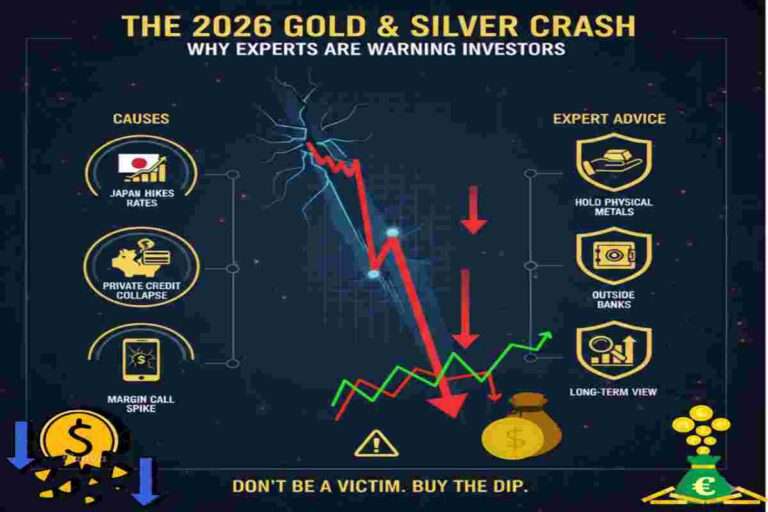
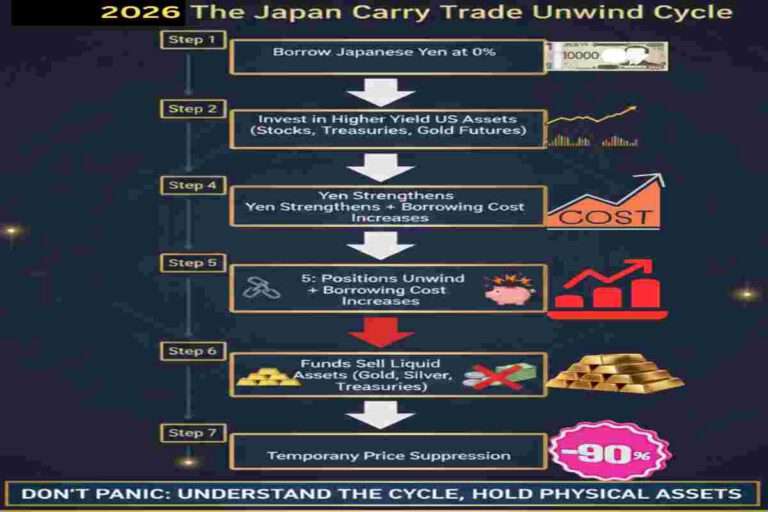
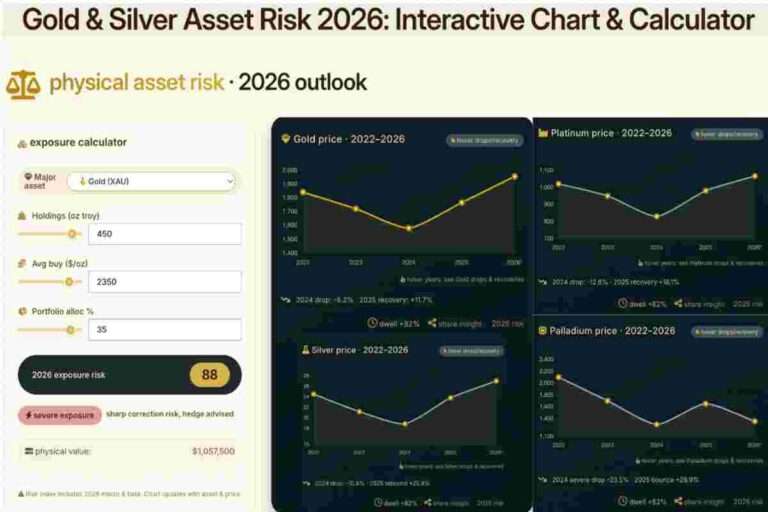
It was driven by margin requirement increases, leveraged positions being unwound, and macro positioning shifts — especially around monetary policy expectations. Large futures margin hikes forced leveraged traders to liquidate positions, putting downward pressure on prices.
Q: Is the 2026 drop in gold and silver prices a crash or a correction?
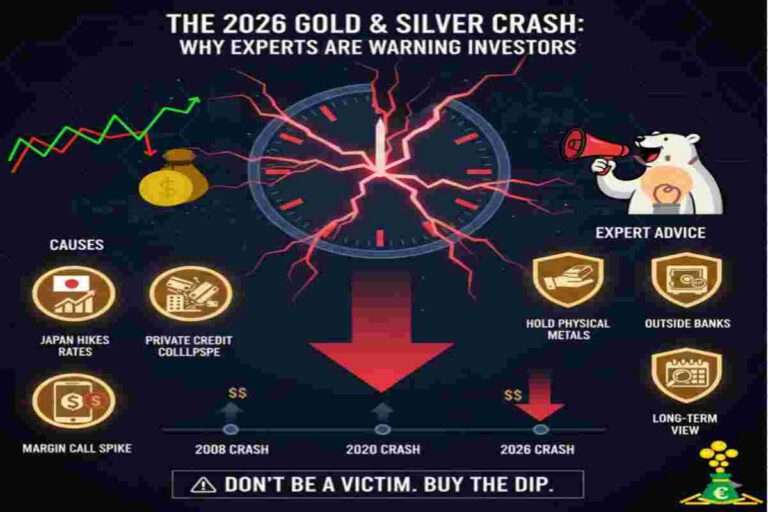
It is widely viewed as a forced deleveraging event rather than a structural collapse. The repricing reflects liquidity stress and crowded positioning unwinds, not a breakdown in long-term demand.
Q: What is a forced liquidation event in the metals markets?
It occurs when leveraged traders must sell assets to meet margin calls or risk thresholds, often triggering rapid price declines when liquidity thins.
Q: What role did CME margin hikes play in the metals sell-off?
Margin increases required traders to post more collateral. Those without sufficient liquidity were forced to sell, accelerating downward pressure.
Q: What are algorithmic or technical drivers in the metals sell-off?
Automated trading systems, stop-loss cascades, and thin after-hours liquidity can magnify declines when key price levels break.
Paper vs. Physical Market Dynamics
Q: What is the difference between “paper” gold and physical metal?
Paper gold reflects futures contracts and ETFs, which are influenced by leverage and liquidity conditions. Physical metal represents allocated bars or coins and may trade at premiums during stress periods.
Q: Why do physical premiums rise during market stress?
When futures prices fall sharply, demand for physical allocation often rises. Dealers charge premiums due to immediate supply constraints even if paper prices decline.
Q: Why did silver fall more sharply than gold?
Silver markets are smaller and more leveraged. When speculative positioning unwinds, percentage volatility is typically higher than gold.
Q: Why are retail investors still buying silver despite price plunges?
Some retail investors view volatility as an accumulation opportunity, particularly in leveraged ETFs or discounted physical supply.
Q: Why do institutions often prefer paper exposure?
Paper instruments offer liquidity, capital efficiency, and ease of trading. However, they also introduce counterparty and rehypothecation risk.
Bitcoin vs. Physical Assets – Market Analysis
Q1: Should I invest only in Bitcoin instead of gold or silver?
A: No. While Bitcoin is a potentially transformative digital store of value, it is still volatile and subject to regulatory risks. Historical precedent shows that physical metals provide stability and legal recognition. A balanced approach — protecting both Bitcoin and metals — is currently more practical for risk management.
Q2: Can governments forcibly take my Bitcoin like they did with gold in the past?
A: No. Bitcoin is decentralized and cannot be seized directly by governments. However, authorities can regulate exchanges, impose taxes, or restrict on-ramps/off-ramps. Full protection requires secure storage strategies, such as cold wallets or hardware wallets.
Q3: If Bitcoin is digital, why should I still consider physical metals?
A: Physical metals remain stable, historically trusted, and less volatile. They act as a safe-haven in times of economic uncertainty or geopolitical crises. Bitcoin and metals serve complementary roles: metals for stability, Bitcoin for growth potential and digital future-readiness.
Q4: Is the shift from physical metals to Bitcoin inevitable?
A: Not necessarily immediate. AI-informed analysis suggests a gradual transition influenced by adoption, regulation, and market confidence. Historical patterns show people shift to new assets when traditional options become less practical or accessible. Bitcoin adoption will likely coexist with metals for years before any potential dominance.
Q5: How much of my portfolio should be in Bitcoin versus metals?
A: Exact allocation depends on your risk tolerance, investment horizon, and financial goals. A common AI-informed strategy is diversification:
- Physical metals: 40–60% for stability
- Bitcoin: 20–40% for growth potential
- The remaining portfolio can include other assets (stocks, bonds, etc.) to manage overall risk.
Macro Drivers: Real Yields, Dollar & Policy
Q: How do real yields affect gold and silver prices?
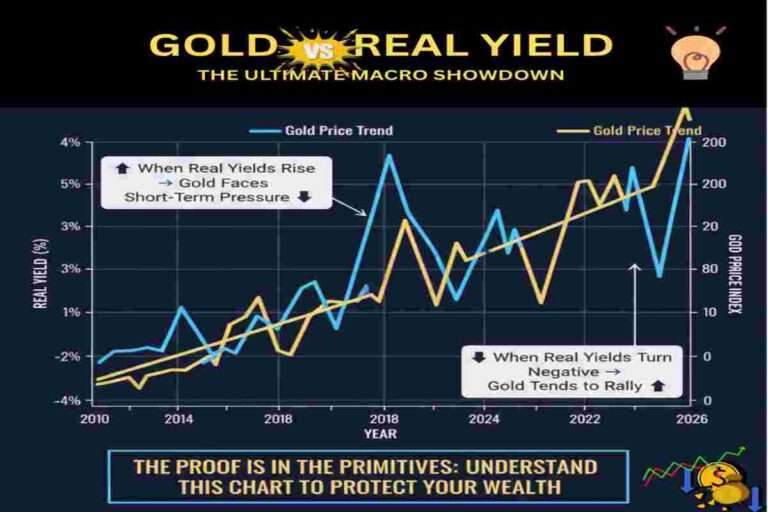
Real yields — nominal yields minus inflation — are a primary driver. When real yields rise, non-yielding assets like gold become less attractive, pressuring prices.
Q: Does a strong U.S. dollar hurt gold and silver prices?
Yes. Since metals are priced in dollars, a stronger dollar often reduces global demand and creates short-term downside pressure.
Q: How do Federal Reserve policy expectations impact precious metals?
Expectations of tighter policy and higher real yields typically create short-term headwinds, even if long-term inflation or debt dynamics remain supportive.
Long-Term Investment Perspective
Q: Is gold still a safe haven after the 2026 repricing?
Yes. Short-term volatility reflects liquidity conditions, while gold’s long-term role as a hedge against macro uncertainty remains intact.
Q: Should long-term investors be worried about this volatility?
Volatility is common during liquidity stress. Structural demand drivers such as diversification, inflation hedging, and central bank allocation remain supportive.
Q: Can gold and silver recover after a forced sell-off?
Historically, liquidity-driven declines have often been followed by stabilization and recovery once deleveraging concludes.
Q: Are gold and silver still effective diversification tools?
Over long horizons, they have provided portfolio diversification and risk mitigation during macro stress environments.
Market Psychology & Positioning Risk
Q: What is the difference between a correction and a crash in precious metals?
A correction is a natural pullback after gains. A crash implies disorderly selling driven by systemic stress or forced liquidation. The 2026 event reflects rapid liquidity repricing rather than structural demand destruction.
Q: What role does speculative positioning play in metals markets?
When positioning becomes crowded, even minor shifts in policy or liquidity can trigger swift unwinds, amplifying price swings.