How to Evaluate Smart Contract Security in DeFi
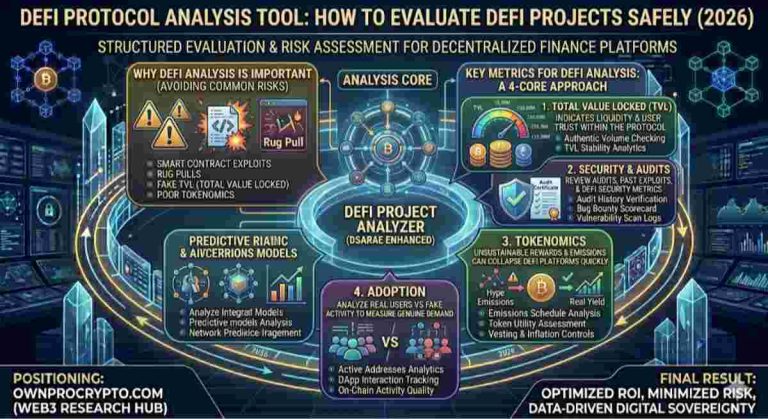
Smart contract security should be treated as a first-class component of DeFi Protocol Analysis. A protocol can have strong revenue, deep liquidity and attractive historical returns, yet a vulnerability in its smart contracts can expose deposited capital to catastrophic loss.
This is why DeFi risk analysis cannot stop at financial metrics. Before deciding whether a protocol deserves further consideration, examine its deployed contracts, audit history, upgrade permissions, administrative controls, oracle dependencies and response mechanisms.
Core principle: An audit is evidence of a security review, not a guarantee that a protocol is safe. The real question is whether the current deployed system, its dependencies and its control structure remain consistent with the security assumptions you are relying on.
What Should You Check Before Trusting a DeFi Protocol?
A useful security review should move beyond the question, “Has this protocol been audited?” Instead, determine what was audited, when it was audited, which version was reviewed and whether the deployed contracts can be changed after the audit.
| Security Layer |
Question to Ask |
Potential Warning |
| Audit Scope |
Which contracts and functions were reviewed? |
Only selected contracts were audited |
| Audit Date |
When was the review completed? |
Audit is substantially older than the deployed system |
| Code Changes |
Has the deployed code changed since review? |
Material changes without corresponding review |
| Upgradeability |
Who can modify the implementation? |
Single wallet has broad upgrade authority |
| Admin Controls |
Who controls critical parameters? |
Unlimited or poorly documented privileges |
| Oracle Security |
How are external prices supplied? |
Single or manipulable price source |
| Emergency Controls |
What happens after a detected exploit? |
No clear containment mechanism |
Audits Are Useful — But Read the Details
An audit should be treated as one piece of evidence within a larger security assessment. The existence of an audit does not establish that every contract is secure, that every vulnerability was discovered, or that future code changes will remain safe.
When reviewing an audit, look for the scope, commit or code version, findings, severity classifications and remediation status. If a protocol has undergone multiple major upgrades, check whether the relevant deployed version was reviewed.
Check 01
Scope
Confirm what was actually included in the review.
Check 02
Version
Compare the reviewed code with the current deployment.
Check 03
Findings
Review severity and whether reported issues were resolved.
Check 04
Changes
Look for material upgrades after the audit.
Upgradeability Creates a Separate Risk
A smart contract may have passed an audit while still allowing an administrator, multisig or governance process to replace the implementation later. This creates a distinction between code security and control security.
When evaluating a protocol, identify who can upgrade contracts, modify parameters, pause markets, change fee settings, alter collateral rules or move assets. The more powerful the control mechanism, the more important it becomes to understand who controls it and how those actions are constrained.
| Control Structure |
Relative Risk Signal |
What to Verify |
| Timelocked Multisig |
Generally stronger control structure |
Signers, threshold and delay period |
| DAO Governance |
Potentially broader control |
Voting concentration and execution mechanism |
| Multisig Without Delay |
Requires closer review |
Signer independence and emergency authority |
| Single Administrator |
High concentration signal |
Exact permissions and ability to revoke control |
These labels are analytical signals, not universal safety ratings. A multisig can still be compromised, and decentralized governance can still be highly concentrated.
Check the Oracle Attack Surface
Many DeFi applications depend on external price information to determine collateral values, liquidations, exchange rates or asset balances. An attacker who can manipulate a critical price feed may exploit a protocol even when the underlying smart-contract code contains no obvious vulnerability.
Therefore, security research should identify where prices originate, how they are validated and what happens if the oracle becomes unavailable or produces an abnormal value. This becomes particularly important for lending, derivatives and leveraged strategies.
Security Dependency Chain
Price Source
→
Oracle
→
Protocol Logic
→
Liquidation / Settlement
Build a Security Evidence Checklist
Before assigning a favorable technical-risk assessment, collect evidence for each of the following:
- Identify the exact contracts holding or controlling user funds.
- Verify the deployed contract addresses and implementation versions.
- Review available independent security audits.
- Check whether material code changes occurred after those audits.
- Identify upgrade administrators and emergency authorities.
- Review oracle and external-protocol dependencies.
- Check publicly documented incidents, vulnerabilities and remediation history.
- Determine how the protocol can respond if a critical component is compromised.
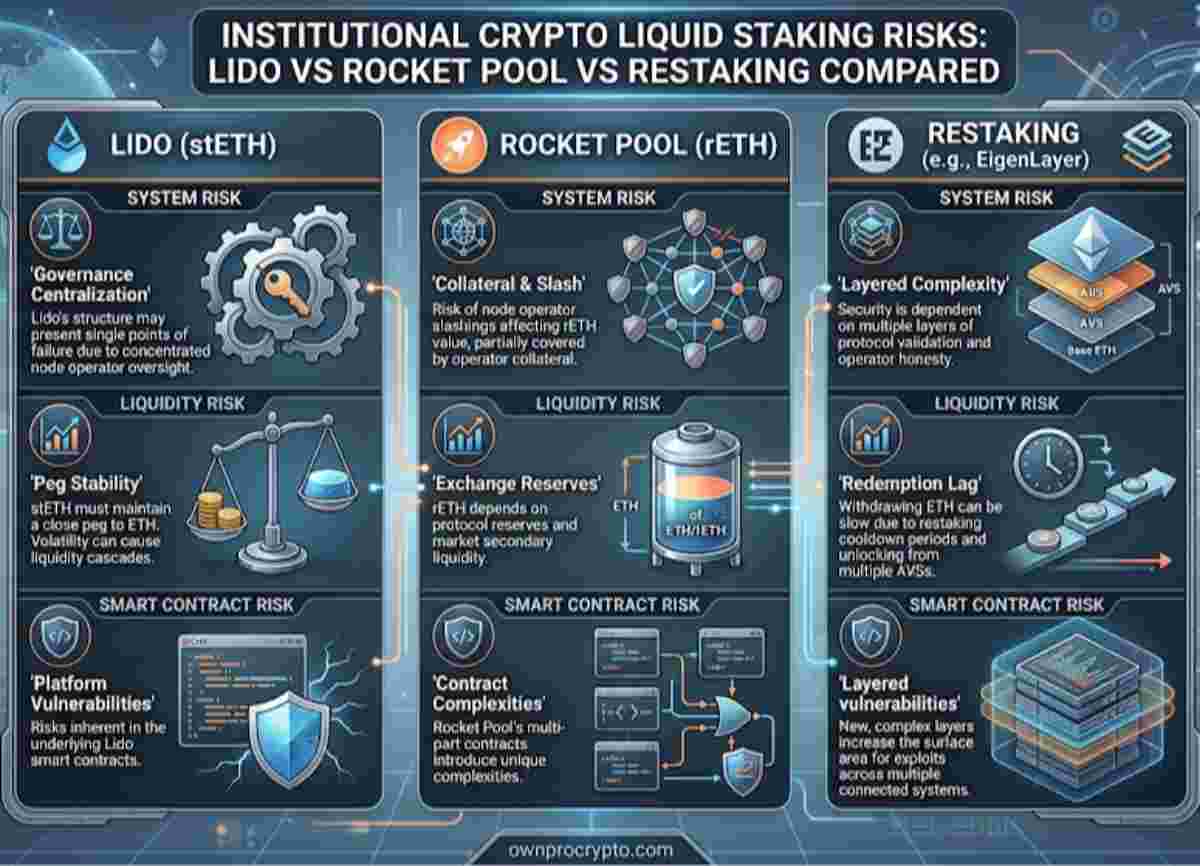
Do not use “audited” as a shortcut for “safe.” Security is a continuously changing property. New deployments, upgrades, integrations, governance decisions and external dependencies can alter the risk profile after an audit has been completed.
The Practical Rule
A strong DeFi security assessment connects code, control and dependencies. Do not ask only whether the contract was audited. Ask whether the current code was reviewed, who can change it, what external systems it depends on and what happens if one of those components fails.