
Search by title, topic or phrase
Use our Crypto Search Engine 🔍 to find the topics and keywords you're looking for.
DeFi derivatives are financial contracts built on blockchain networks where the value depends on an underlying asset. They transform blockchain markets from simple asset ownership into programmable financial systems for managing market exposure and risk.
Table of Contents
Toggle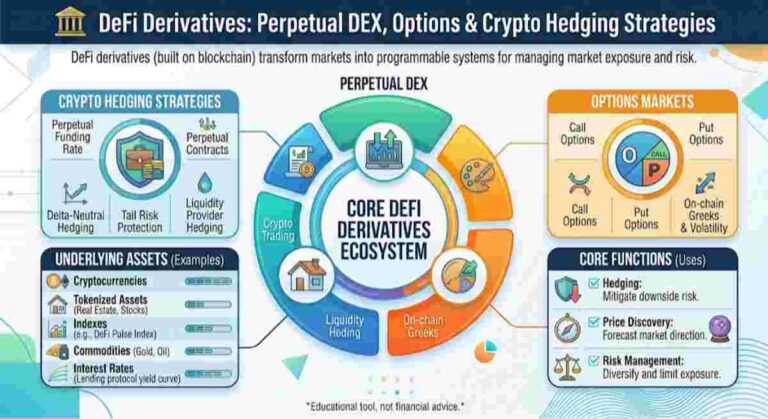
DeFi derivatives represent one of the most advanced areas of decentralized finance. They allow users to access perpetual contracts, options, futures, and other financial instruments through blockchain-based infrastructure.
Unlike traditional derivatives markets, which typically rely on centralized exchanges, brokers, clearing systems, and other intermediaries, decentralized derivatives use smart contracts to automate trading, collateral management, and settlement.
DeFi brings core financial functions on-chain, adding transparency, programmable execution, and non-custodial access.
Applications extend beyond pure speculation to include portfolio protection, transparent markets, automated risk management, and institutional trading infrastructure. The ultimate purpose is managing uncertainty and controlling portfolio risk.
| Traditional Finance | DeFi Derivatives |
|---|---|
| Centralized exchanges | Smart contract protocols |
| Broker-based access | Wallet-based access |
| Closed settlement systems | Transparent blockchain settlement |
| Limited operating hours | 24/7 markets |
| Typically designed around regulated intermediaries | Permissionless or protocol-based market access |
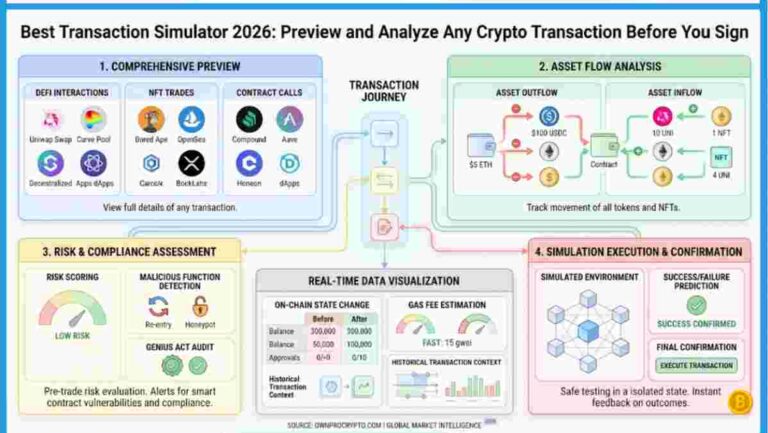
A typical decentralized derivatives transaction follows a structured execution path from wallet interaction to automated settlement.

| Category | Purpose | Main Use |
|---|---|---|
| Perpetual Contracts | Trade asset price movements without expiry | Trading and hedging |
| DeFi Options | Gain upside exposure or protect against downside | Risk management |
| Futures | Establish exposure to an asset at a future settlement price | Trading and hedging |
| Synthetic Assets | Track the price or performance of another asset | Market access |
A perpetual DEX enables trading perpetual contracts without fixed expiration dates. Positions remain open as long as required collateral and margin requirements are maintained.
DeFi options grant the right, but not obligation, to buy or sell assets under predefined conditions. Holding put options provides downside protection while retaining upside exposure.
| Strategy | Purpose & Mechanics |
|---|---|
| Short Perpetual Position | Reduce downside exposure to an underlying asset |
| Buying Put Options | Provide protection against declining asset prices |
| Delta Hedging | Manage sensitivity to changes in the underlying asset price |
| Stablecoin Allocation | Reduce exposure to crypto market volatility |
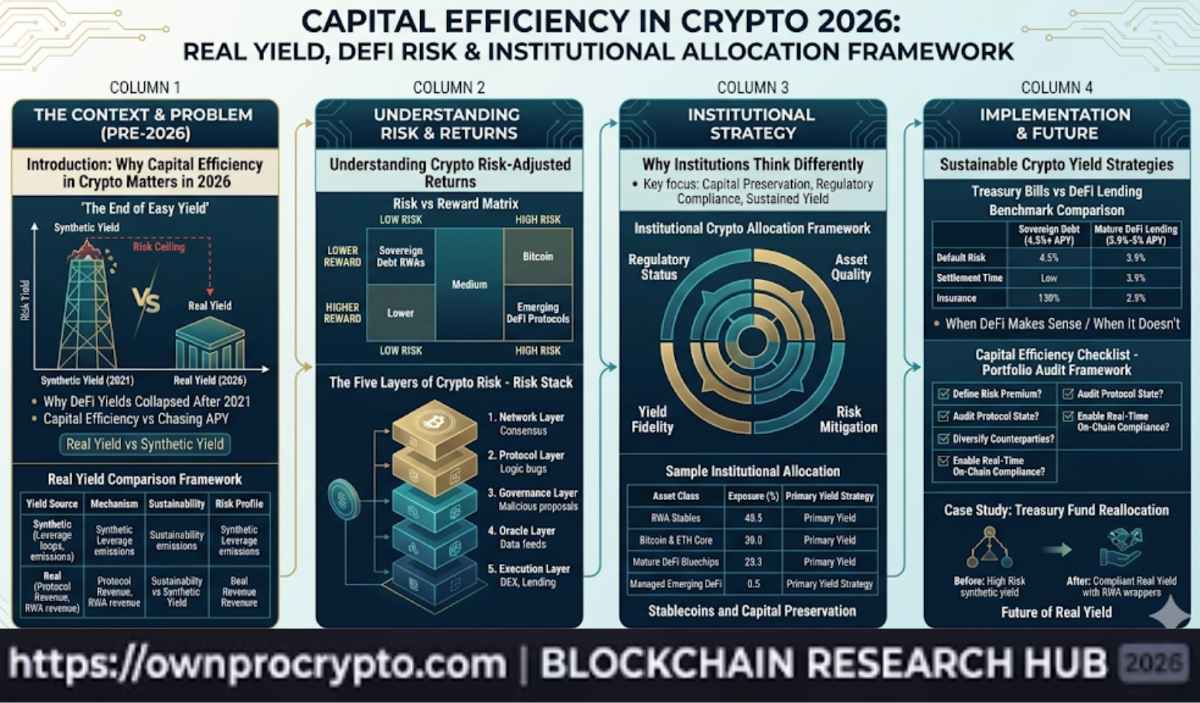
| Evaluation Area | Critical Protocol Checklist Question |
|---|---|
| Protocol Security | Has the protocol code been independently reviewed or audited? |
| Liquidity Depth | Is there sufficient liquidity to enter and exit positions efficiently? |
| Oracle Design | How reliable and resilient is the protocol’s pricing mechanism? |
| Leverage Controls | Are margin and liquidation mechanisms clearly defined and tested? |
| Market Demand | Is trading activity supported by sustainable organic demand? |
| Spot Trading | DeFi Derivatives |
|---|---|
| Buy and hold assets directly | Trade price exposure through contracts |
| No liquidation risk from leverage | Positions liquidated if margin calls fail |
| Direct asset ownership | Contract-based market exposure |
| Simpler operational structure | Supports advanced hedging strategies |
DeFi derivatives are blockchain-based financial contracts that allow users to trade, hedge, and manage exposure to digital assets and other underlying markets.
A perpetual DEX is a decentralized exchange that allows users to trade perpetual contracts without fixed expiration dates.
Decentralized derivatives are financial contracts executed through blockchain protocols and smart contracts rather than relying entirely on centralized intermediaries.
DeFi options are blockchain-based options contracts that can provide the right to buy or sell an underlying asset under predetermined conditions.
Crypto hedging strategies can help reduce portfolio exposure to adverse price movements during periods of market volatility.
No. Perpetual contracts generally do not have expiration dates, while conventional futures contracts typically have defined expiration or settlement dates.
Yes. DeFi derivatives can involve leverage, liquidation, smart contract, oracle, counterparty, and liquidity risks.
Leverage and liquidation risk are among the most significant risks, while smart contract, oracle, and liquidity risks can also materially affect a position.
Yes. Institutions may use decentralized derivatives for portfolio hedging, liquidity management, treasury management, and digital-asset exposure control, subject to regulatory, operational, and risk requirements.
DeFi derivatives provide transparency, programmable execution, and non-custodial access. Centralized derivatives can offer different liquidity, infrastructure, and regulatory characteristics. Users should evaluate specific platform risk profiles prior to entry.
Explore deep-dive analytics and risk evaluation frameworks on OwnProCrypto.
Selected external sources for exploring, verifying, and contextualizing digital-asset intelligence.
DeFi derivatives are becoming an important financial layer within decentralized finance. Their potential extends beyond speculation to portfolio protection, transparent markets, automated settlement, and programmable risk management.
Perpetual DEX platforms, DeFi options, futures, and synthetic assets provide different ways to manage market exposure. However, these instruments also introduce leverage, liquidation, smart contract, oracle, and liquidity risks.
The long-term development of decentralized derivatives will depend on stronger security, deeper liquidity, reliable pricing infrastructure, efficient execution, and responsible risk management.