Where value begins
Property, securities, credit, commodities, funds, and other real-world assets.
Search by title, topic or phrase

Use our Crypto Search Engine 🔍 to find the topics and keywords you're looking for.
RWA tokenization connects real-world assets with digitally represented ownership, creating a bridge between traditional assets and blockchain-based financial infrastructure.
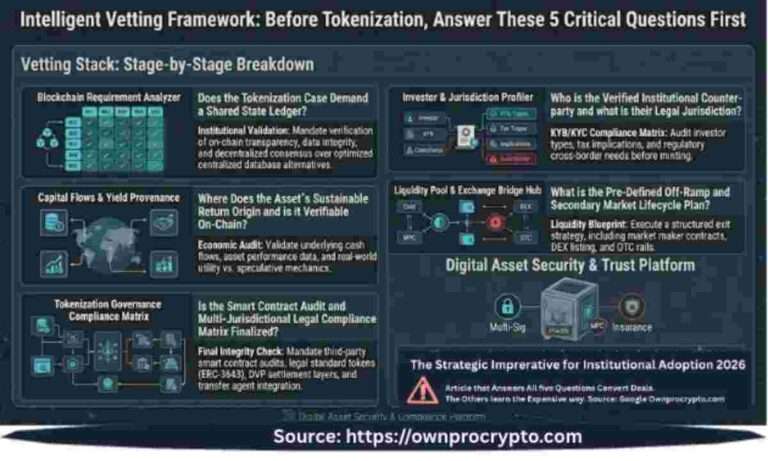
Table of Contents
ToggleThe underlying asset remains connected to the real world. Tokenization provides the digital ownership layer, while legal, financial, infrastructure, and trust systems make that representation usable.
Property, securities, credit, commodities, funds, and other real-world assets.
Legal rights and economic interests can be represented through digital tokens.
Settlement, compliance, custody, liquidity, and investor access connect the asset to markets.
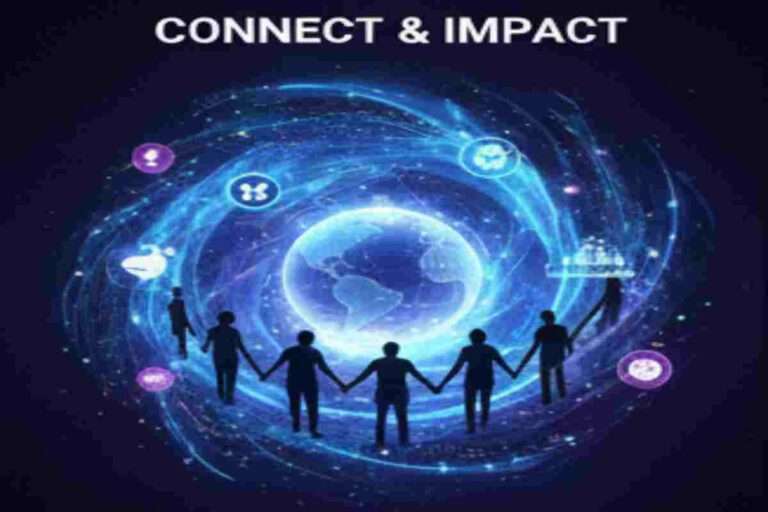
Use this map to identify where your question belongs before moving into a specialist resource.
Property, securities, credit, commodities, funds, and other assets.
Rights, entities, wrappers, jurisdiction, and enforceability.
Digital representation, token standards, and programmable ownership.
Settlement, payments, distributions, custody, and liquidity.
Investors, institutions, funds, exchanges, and secondary markets.

You do not need to read the ecosystem in sequence. Choose the route that matches what you are trying to understand.
Begin with RWA fundamentals, digital ownership, and the basic tokenization model.
Explore RWA foundations →Move into specialist clusters covering different categories of tokenized assets.
Explore asset classes →Follow the route covering legal rights, jurisdiction, KYC/AML, compliance, and ownership structures.
Explore legal & compliance →Move toward asset quality, due diligence, risk, liquidity, yield, and exit considerations.
Explore evaluation →Explore institutional infrastructure, settlement, custody, funds, and adoption.
Explore institutional RWA →Move into blockchain infrastructure, smart contracts, oracles, custody, data, and interoperability.
Explore RWA infrastructure →
These are destinations, not summaries. Each cluster is responsible for its own specialist subject so the RWA hub stays focused on orientation and navigation.
Navigate property ownership, structures, access, and market models.
Navigate government-security tokenization and digital fixed-income markets.
Navigate tokenized lending, credit structures, and settlement.
Navigate blockchains, smart contracts, oracles, custody, and data layers.
Navigate ownership rights, jurisdiction, KYC/AML, and regulatory structure.
Navigate transferability, market depth, redemption, and liquidity systems.
Navigate asset quality, legal structure, custody, liquidity, and risk review.
Navigate funds, asset managers, treasury systems, and institutional infrastructure.
Navigate settlement, programmable payments, distributions, and liquidity rails.
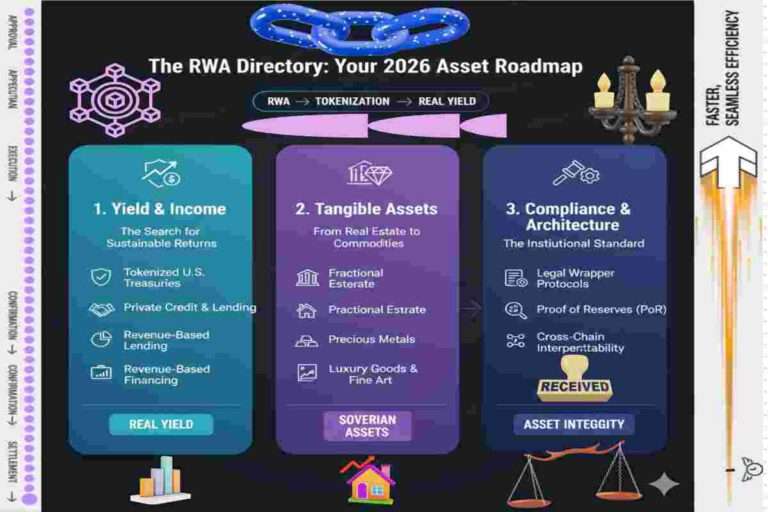
Continue into the specialist research that matches your objective. Explore the RWA Tokenization Guide 2026 for institutional architecture and implementation, the RWA Market Report for market developments and adoption, the RWA Protocol Comparison for infrastructure options, and the Institutional RWA Portfolio Strategy for allocation and risk frameworks. Each resource provides deeper analysis of a distinct part of the real-world asset ecosystem.
For trusted information on Real-World Assets and tokenization, explore the Bank for International Settlements (BIS), which publishes research on tokenized finance and financial market infrastructure.
This hub gives you the map. The specialist clusters provide the depth. Follow the route that matches your objective rather than reading everything.
These answers clarify the core RWA model without turning the hub into another specialist guide. When a question requires deeper analysis, follow the relevant navigation route.
RWA tokenization is the process of representing rights, ownership interests, claims, or economic exposure to real-world assets through blockchain-based tokens. The token is the digital representation; the underlying asset and legal structure determine what that representation actually means.
Explore RWA Tokenization Guide →A typical system connects an underlying asset to a legal structure, tokenization mechanism, blockchain infrastructure, custody, compliance, and market or settlement rails. The exact architecture depends on the asset and jurisdiction.
View the RWA System Map →Common categories include real estate, government securities, private credit, funds, commodities, and other financial or physical assets. Each asset class introduces different legal, liquidity, custody, and infrastructure requirements.
Explore Asset-Class Clusters →No. A blockchain token does not automatically establish ownership of an off-chain asset. The legal rights attached to the token depend on the governing documents, entities, contracts, jurisdiction, and structure used to connect the digital representation with the underlying asset.
Explore RWA Legal & Compliance →Smart contracts can automate token issuance, transfers, permissions, distributions, settlement conditions, and other programmed functions. They operate within a broader infrastructure that may also require oracles, custody, identity, compliance, and off-chain systems.
Explore RWA Technology Stack →Risks can include asset quality, legal enforceability, custody, issuer or counterparty exposure, smart-contract failures, regulatory changes, liquidity constraints, valuation uncertainty, and weaknesses in the connection between the token and the underlying asset.
Explore RWA Risk & Due Diligence →Tokenization can make asset interests digitally transferable, but tokenization alone does not guarantee liquidity. Market depth depends on investor demand, transfer rules, venue availability, redemption mechanisms, settlement, and the structure of the underlying asset.
Explore RWA Liquidity & Markets →Institutional use cases can include tokenized funds, government securities, credit, treasury operations, settlement, collateral, and other financial workflows. Institutional adoption also depends on governance, compliance, custody, interoperability, and operational requirements.
Explore Institutional RWA Adoption →Stablecoins can provide programmable payment and settlement rails around tokenized assets, including subscriptions, redemptions, distributions, and transfers. Their role is part of the financial infrastructure rather than the underlying asset itself.
Explore Stablecoin & Payment Rails →Start with the underlying asset, legal rights, issuer, custody arrangement, token structure, valuation methodology, transfer restrictions, liquidity, technology, and regulatory environment. The goal is to evaluate the complete system, not simply the token.
Explore RWA Risk & Evaluation →Depending on the use case, an RWA system may require blockchain infrastructure, smart contracts, token standards, identity and compliance services, custody, oracles, indexing, payment rails, settlement infrastructure, and interfaces for investors or institutions.
Explore RWA Technology Stack →Start with your objective. If you need to understand the model, begin with fundamentals. If you are building, move toward infrastructure. If you are evaluating, follow the risk and due-diligence path. If you work institutionally, explore adoption, settlement, custody, and market structure.
Use the RWA Navigator →The FAQ answers the orientation question. Use these routes to leave the hub and enter the specialist resource responsible for the deeper subject.
RWA tokenization connects assets, legal structures, digital ownership, infrastructure, financial rails, and market access. This hub provides the orientation layer; the specialist clusters provide the deeper analysis.
Research Discussion
Share your perspective, question, or additional insight.
Excited good work 👏🏻
Fantastic